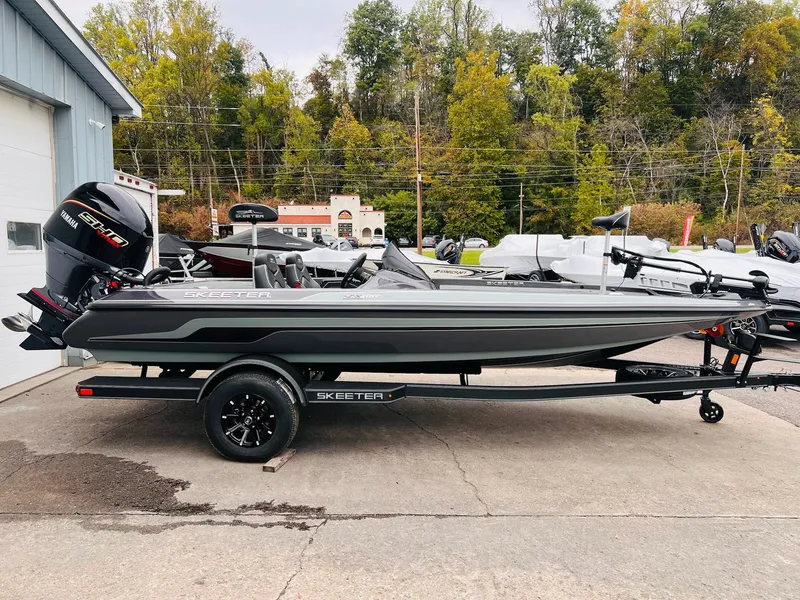
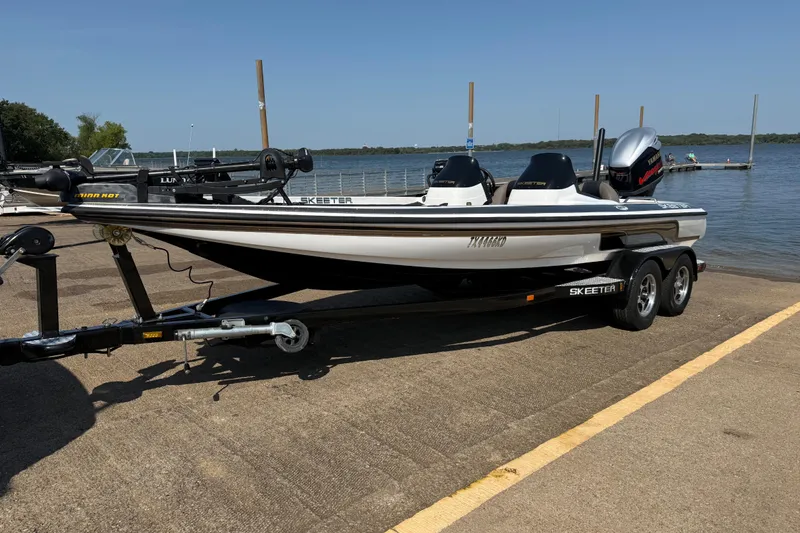
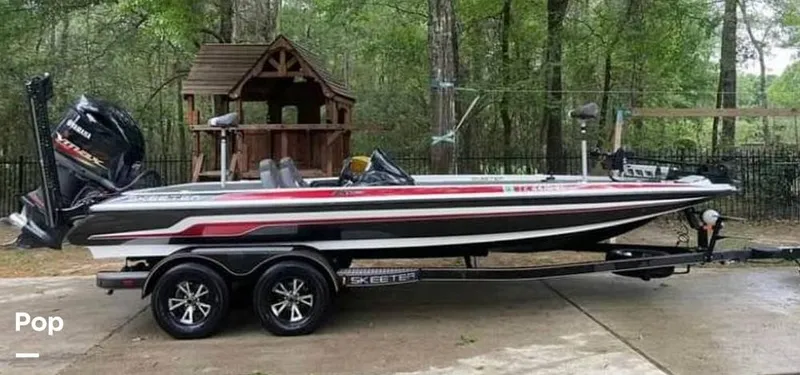
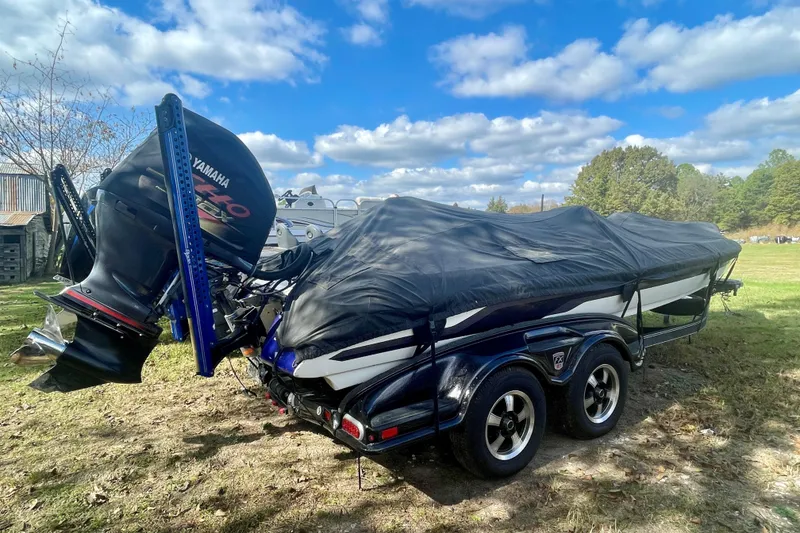
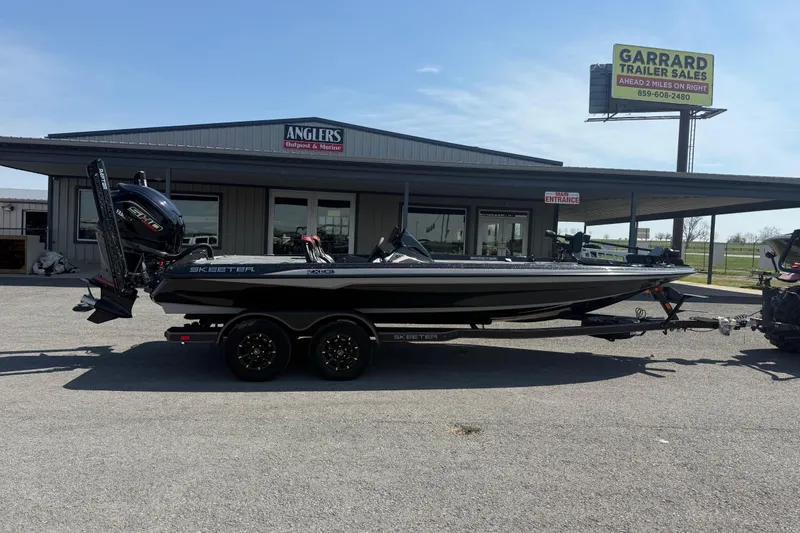
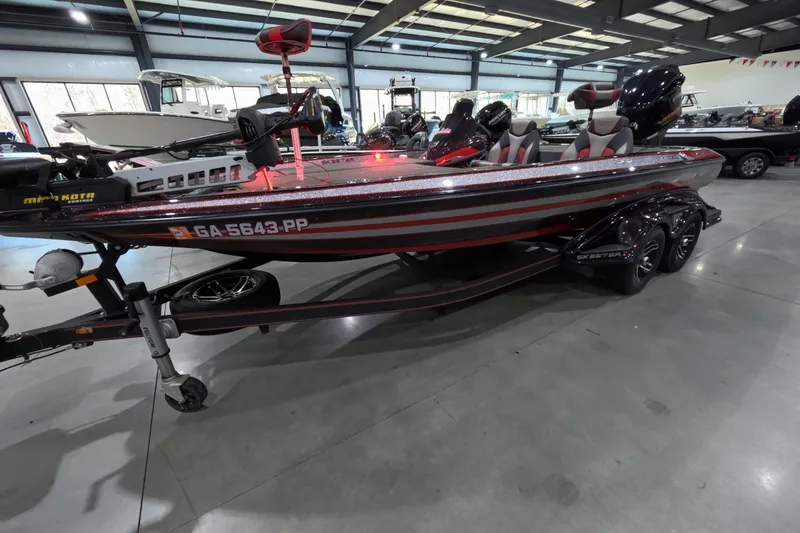
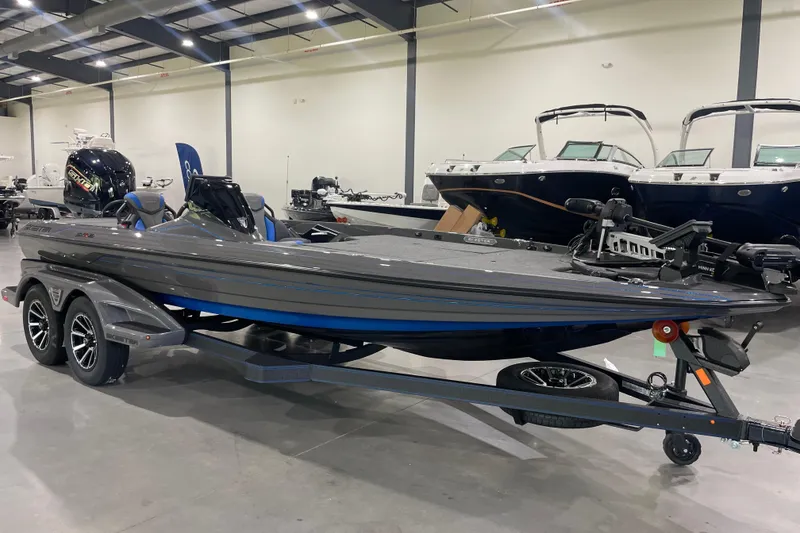
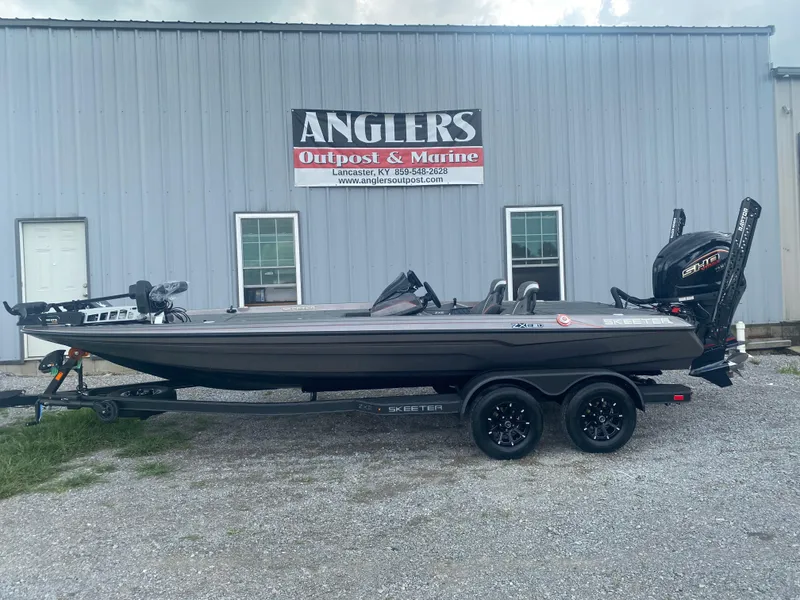
Skeeter
Searching boats for you...
Skeeter – Technical and Historical Guide
ABOUT THIS BOAT BRAND
Skeeter is an American boat manufacturer renowned for high-performance bass boats built around speed, fishability, and tournament-grade durability. Founded in 1948 in Texas, the company helped popularize early fiberglass bass boats and has maintained a competition-driven design philosophy focused on efficient hulls, precise handling, and practical deck layouts for serious anglers. Skeeter is a long-standing leader in the U.S. bass fishing segment, with its boats frequently seen on major tournament trails and backed by a broad dealer network and strong owner community. As a Yamaha Marine brand, Skeeter benefits from deep engineering resources and a tightly integrated outboard and rigging ecosystem, reinforcing its standing as a proven name in modern freshwater fishing.
Specializing in outboard-powered freshwater boats, Skeeter designs tournament fishing platforms for bass tournament competitors, dedicated weekend anglers, and performance-minded owners who want fast runs, stable casting decks, and organized tackle management. The Skeeter lineup is best known for FX Series bass boats, ZX Series performance bass boats, and WX Series multi-species rigs that cross over into walleye and big-lake use. Across these models, Skeeter emphasizes pad-hull performance tuned for quick holeshot and lift, all-fiberglass stringer and transom construction, wide beam deck plans for two-angler efficiency, integrated rod lockers and tackle storage, recessed trolling-motor foot pedal areas, and electronics-ready consoles with clean rigging paths. These technical priorities make Skeeter a preferred choice for anglers who measure a boat by control at speed, efficiency on big water, and repeatable results on tournament day.
WHAT MAKES THIS BOAT BRAND SPECIAL?
Skeeter stands out in the bass boat world by building tournament-focused rigs that balance speed, fishability, and control. Many Skeeter models pair a sharp-entry, performance pad-style hull with carefully managed lift and strakes that help the boat run efficiently while still tracking predictably in wind or boat wakes. That hull geometry, combined with lightweight, high-strength fiberglass composite construction, gives Skeeter owners the fast holeshot, high top-end potential, and confidence-inspiring handling serious anglers want when they are running to their next spot. On the deck, Skeeter leans into practical innovation with wide, stable casting platforms, smart storage that keeps rods and tackle organized, and layouts designed around electronics, shallow-water anchors, and trolling motors so your boat is ready for competitive bass fishing or weekend lake time.
Skeeter boats are built in Kilgore, Texas, where a skilled workforce with deep bass-boat experience focuses on repeatable quality and clean rigging from bow to bilge. That craftsmanship shows up in the details Skeeter buyers care about: premium gelcoat and hardware, robust stringer and transom structures, and tight fit-and-finish around lids, hatches, and consoles that see constant use on the water. Skeeter also designs to meet applicable U.S. Coast Guard and NMMA standards, giving owners added confidence in safety and compliance, and backs many models with limited warranty coverage that reflects the brand’s focus on long-term durability. Ask around at any ramp and you will hear a similar theme: Skeeter earns loyalty for its strong build, tournament-ready layouts, and a reputation as a high-performance fishing machine that still feels solid, quiet, and dependable season after season.
WHAT DIFFERENT TYPES OF BOATS DOES THIS BOAT BRAND BUILD?
Skeeter builds a lineup of fiberglass outboard fishing boats designed around speed, control, and fishability, spanning multiple on-the-water missions. In the bass-boat category, the range runs from the compact ZX150 at 182 through tournament-sized rigs like the ZXE21 and ZXR21 at 214, pairing wide casting decks and organized storage with big outboard capability. For inshore and nearshore versatility, Skeeters bay boats in the SX Series stretch the range to 246 with models such as the SX2550 Fish, blending shallow-water access with family-friendly space and offshore-leaning confidence. The Deep-V Boats line adds a rough-water, big-lake orientation with models like the WXR2060 at 206. Below are the types of boats and models Skeeter builds, along with their key characteristics and uses:
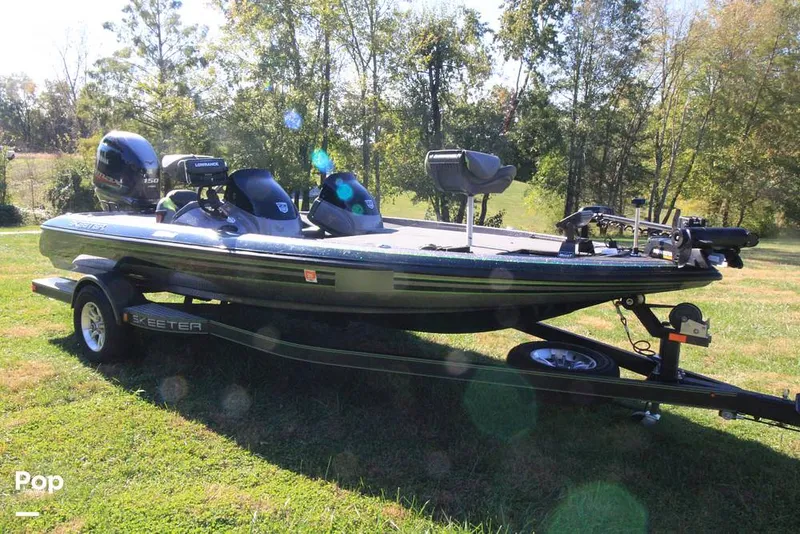
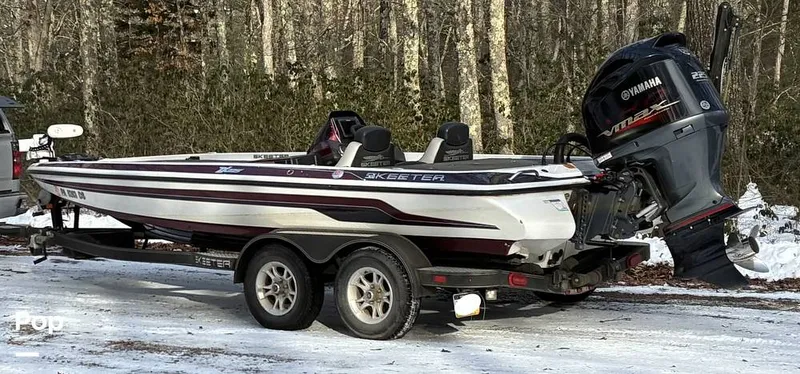
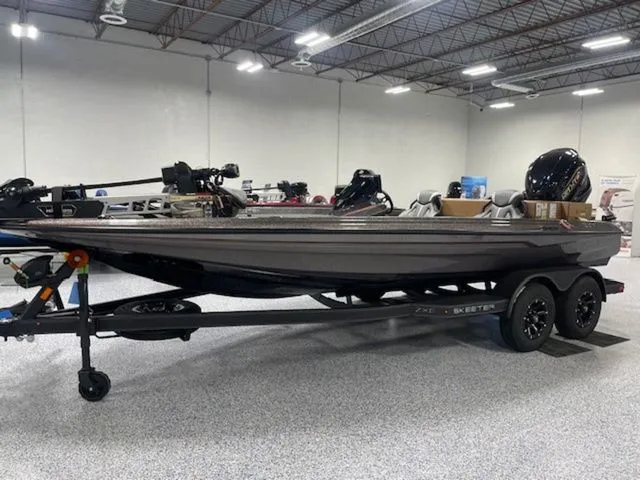
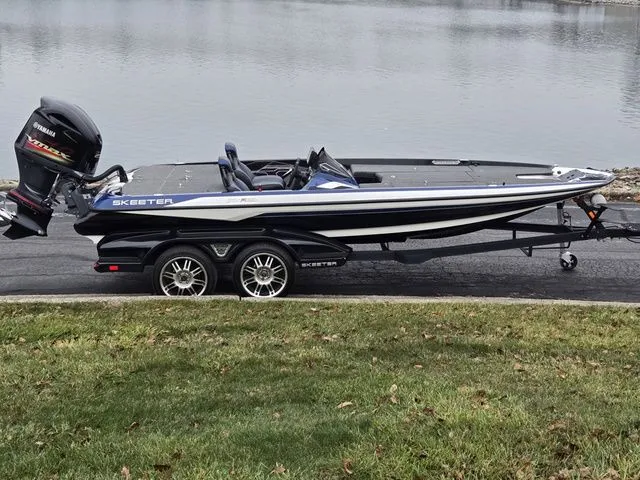
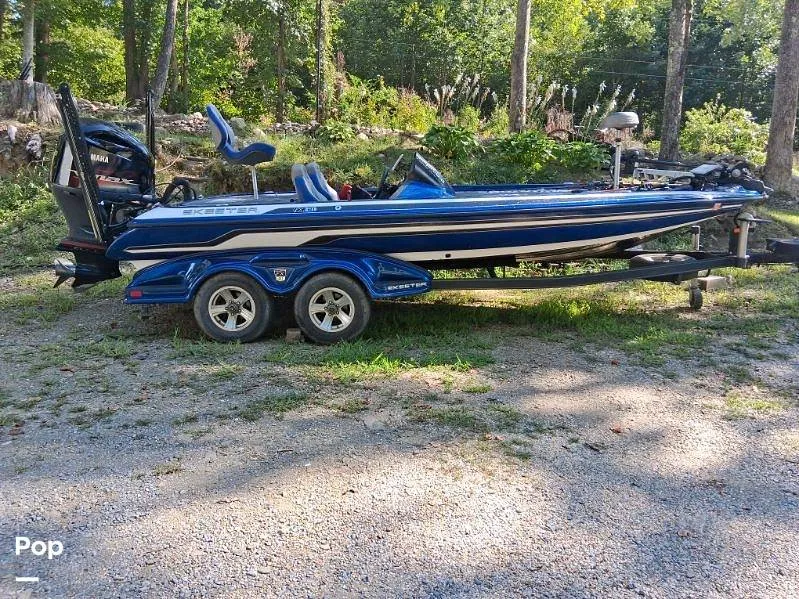
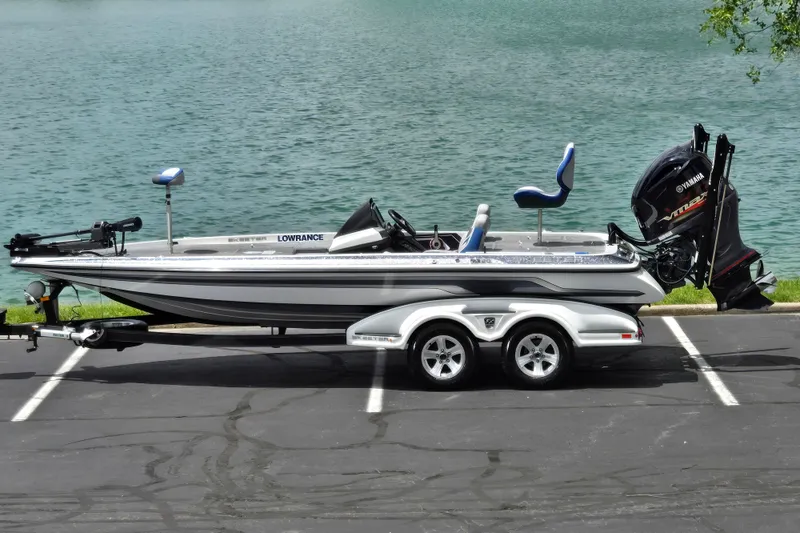
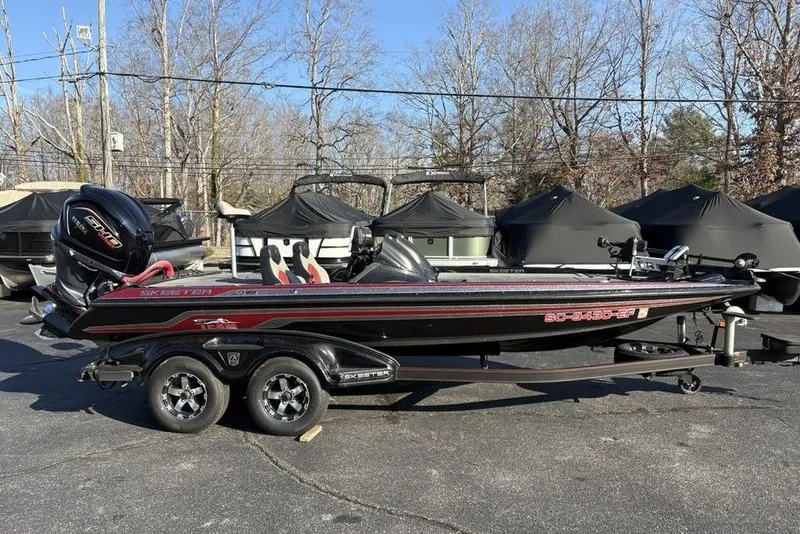
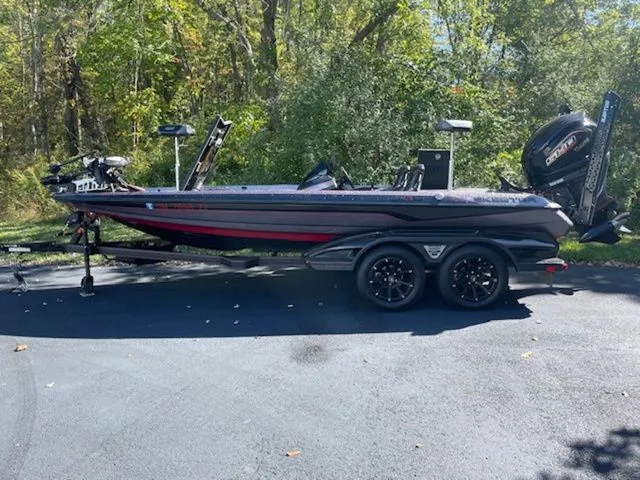
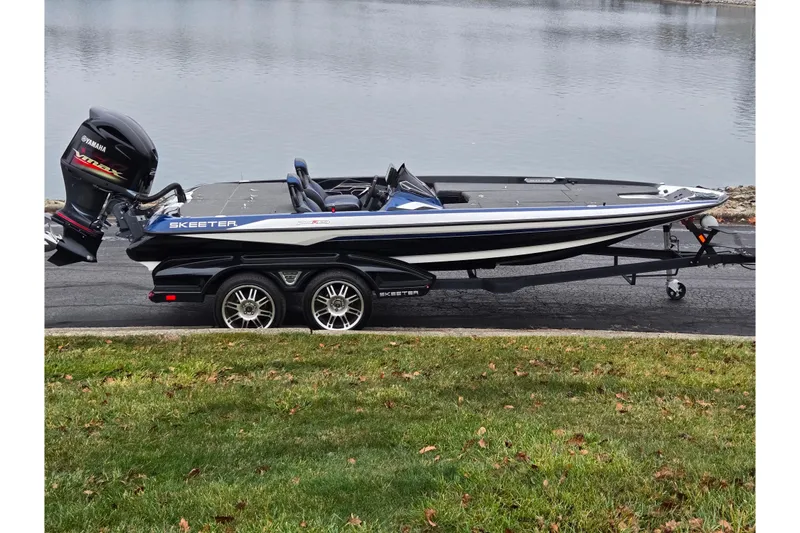
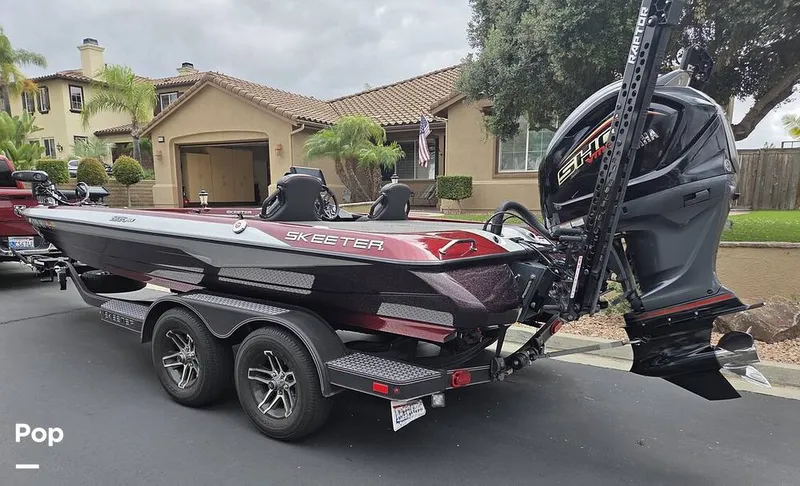
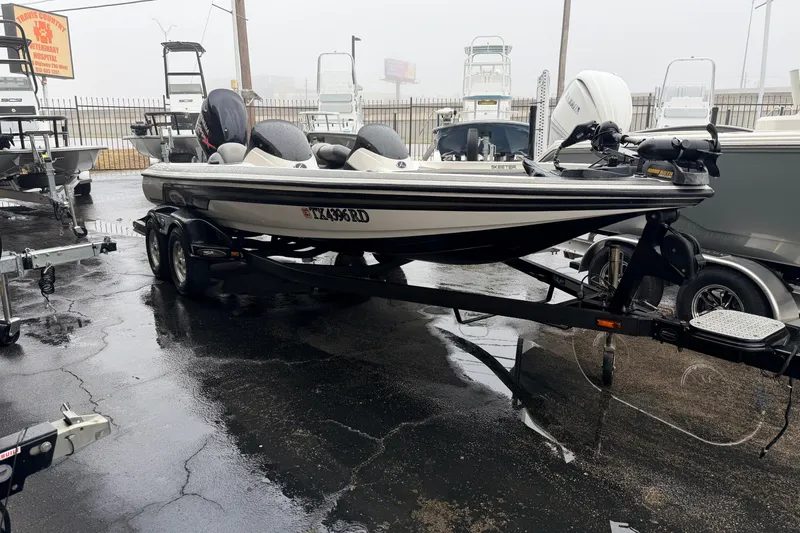
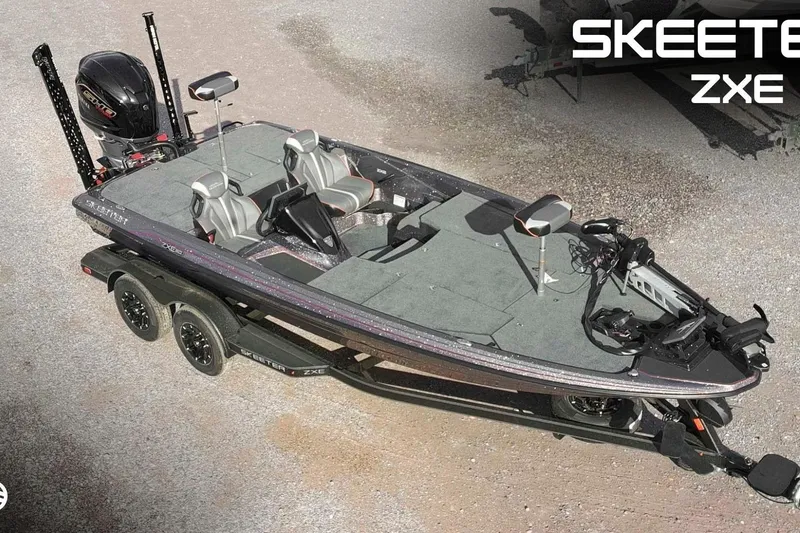
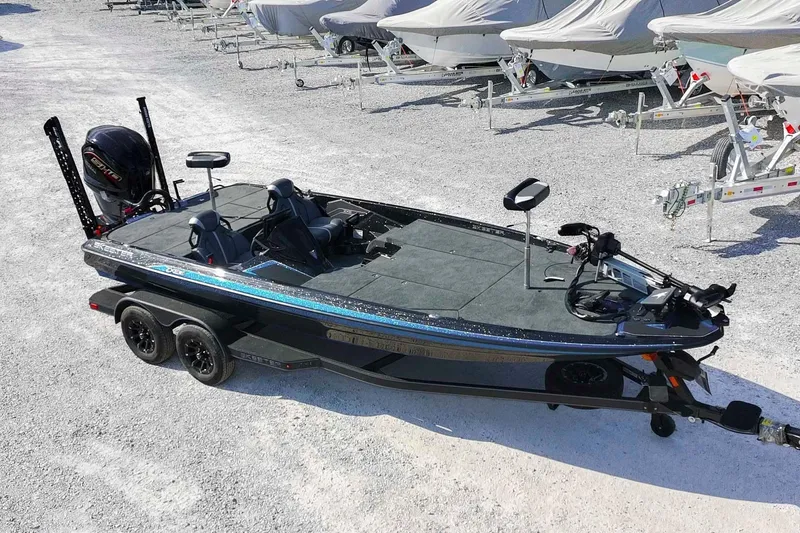
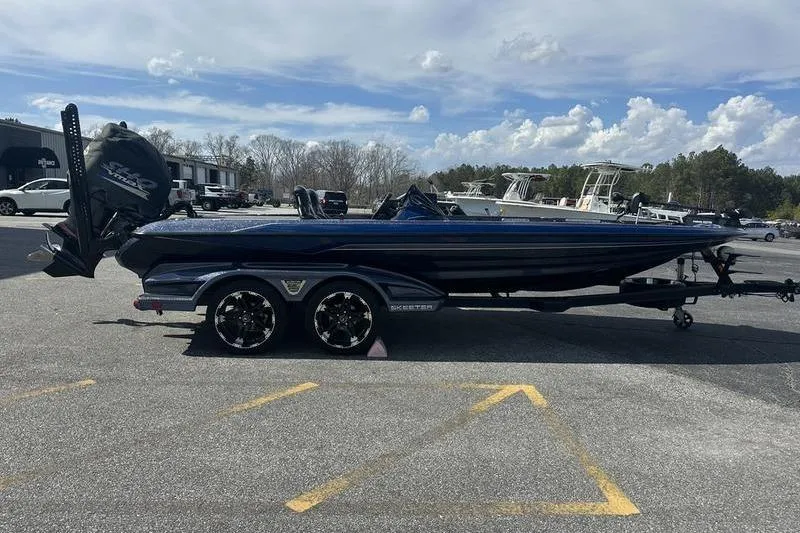
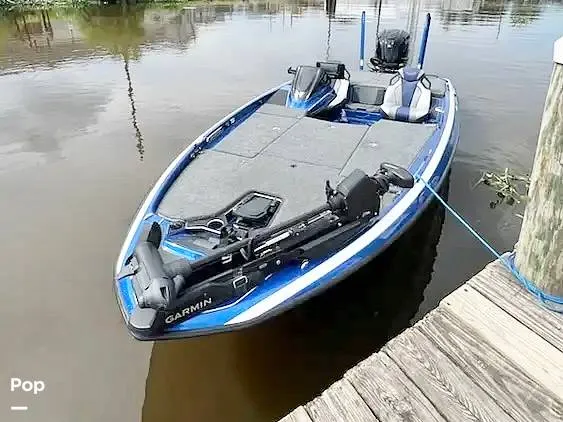
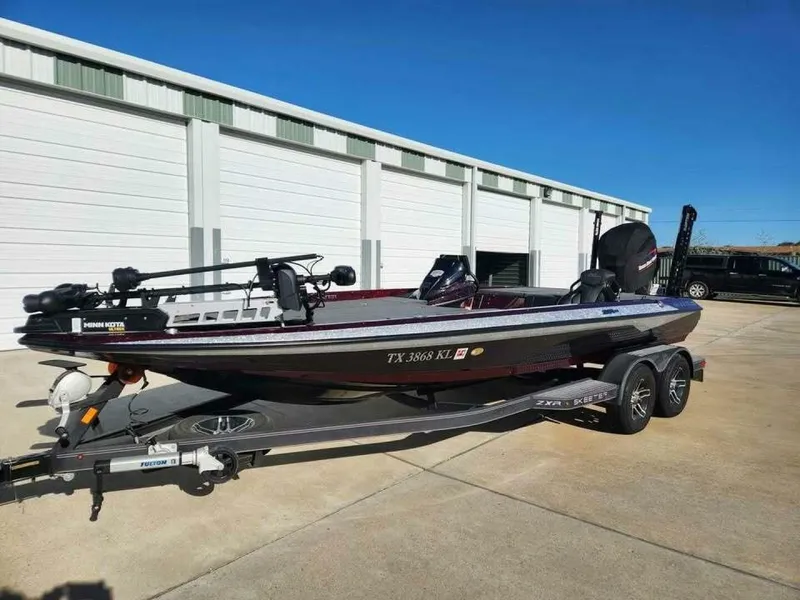
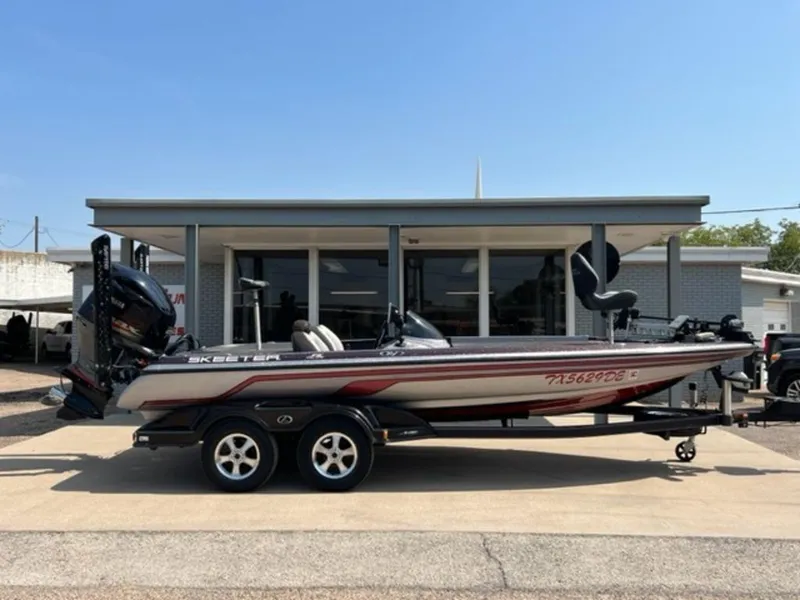
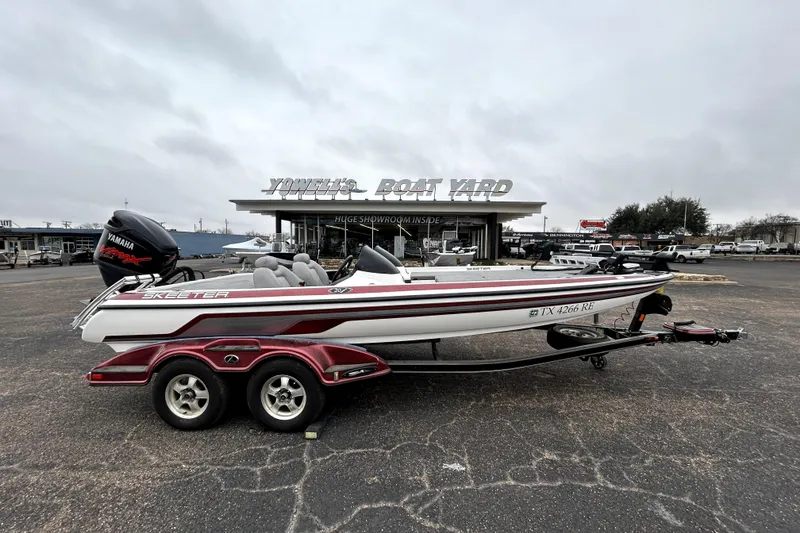
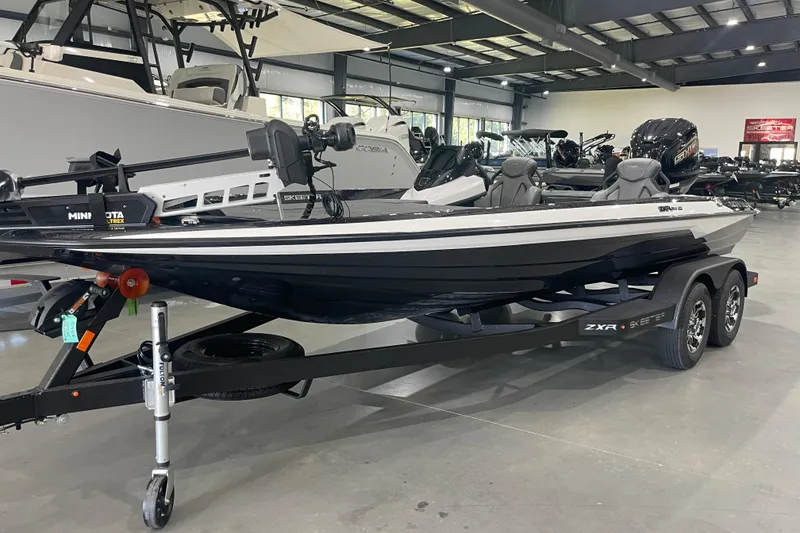
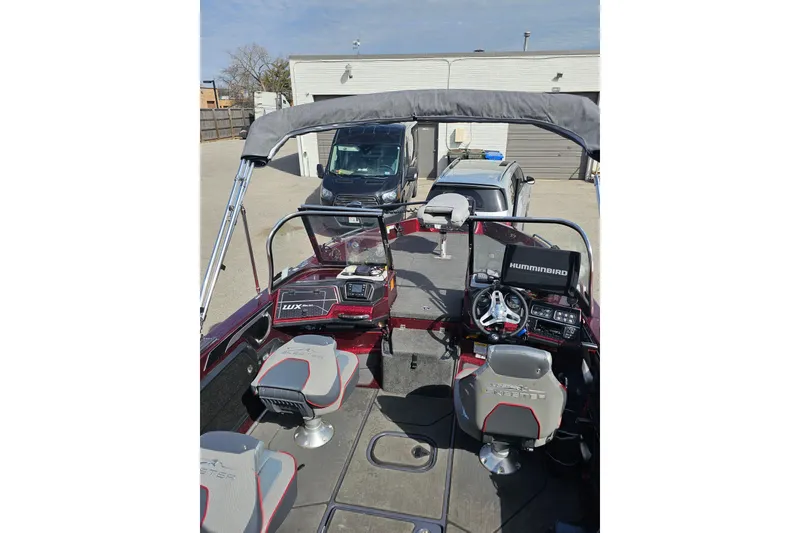
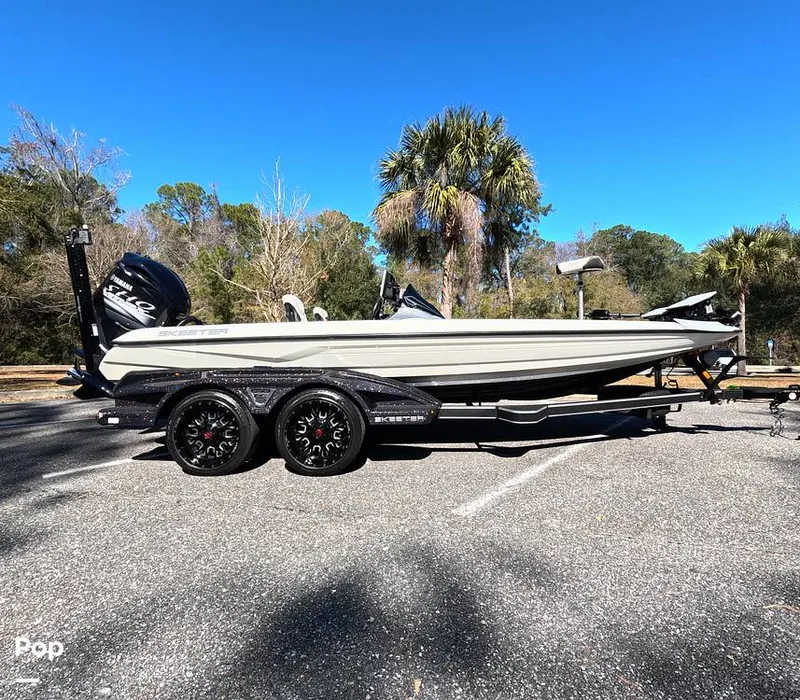
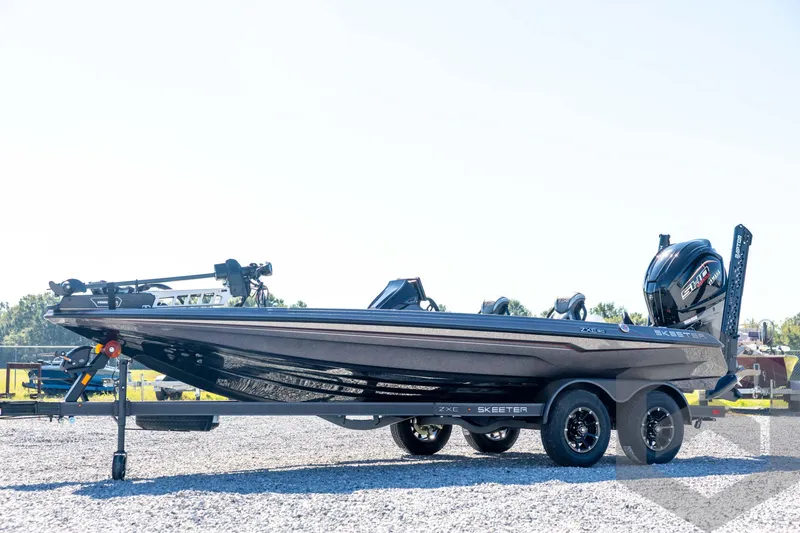
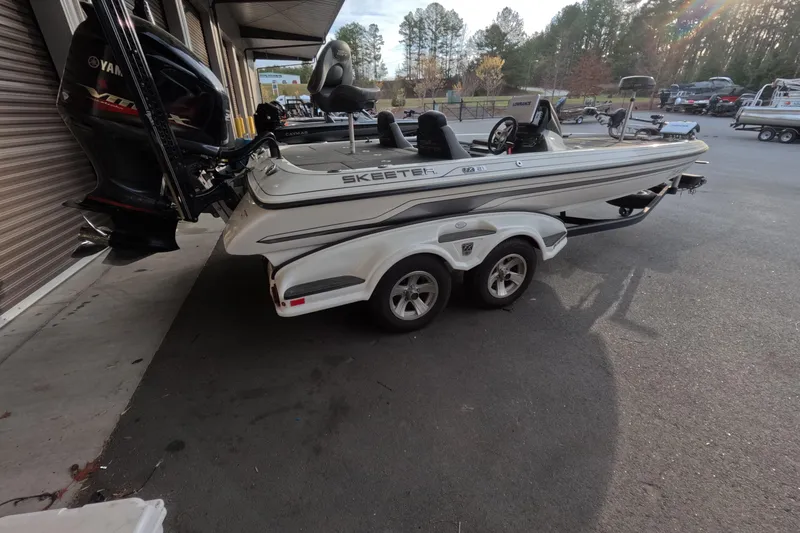
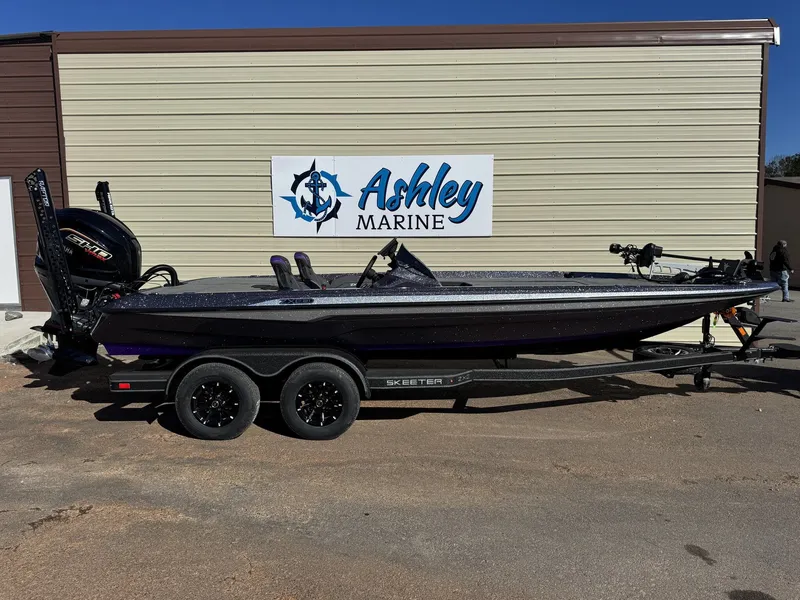
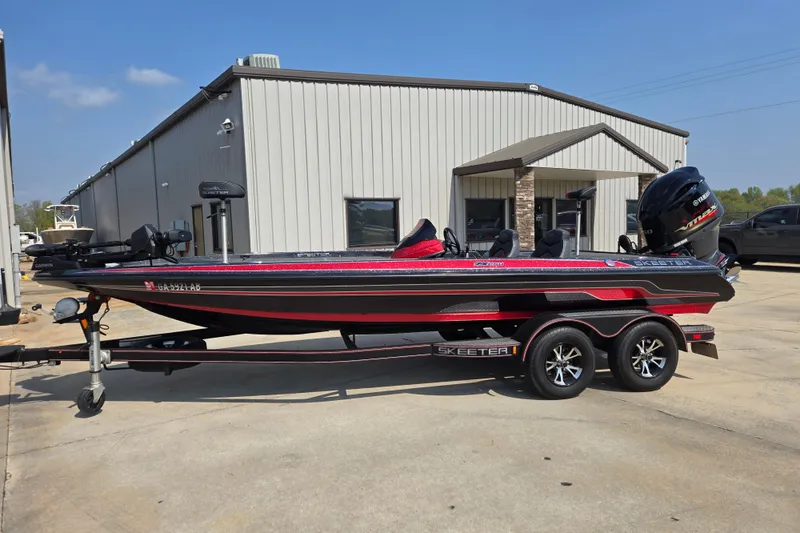
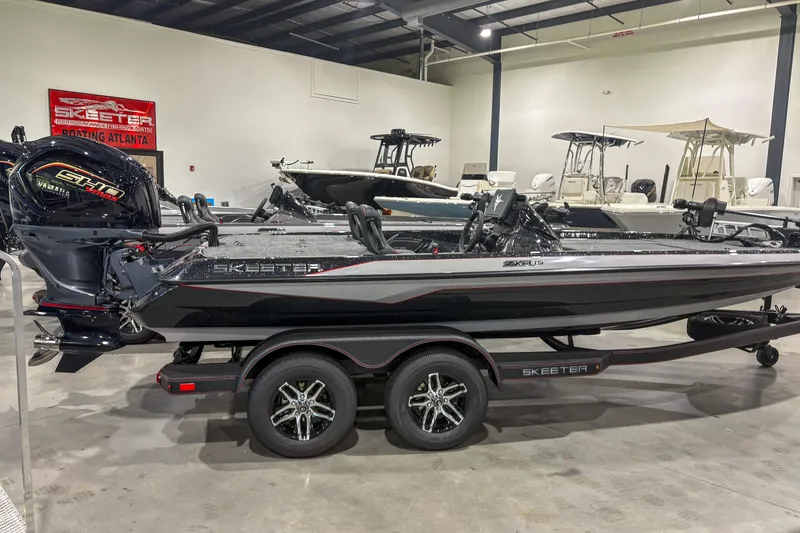
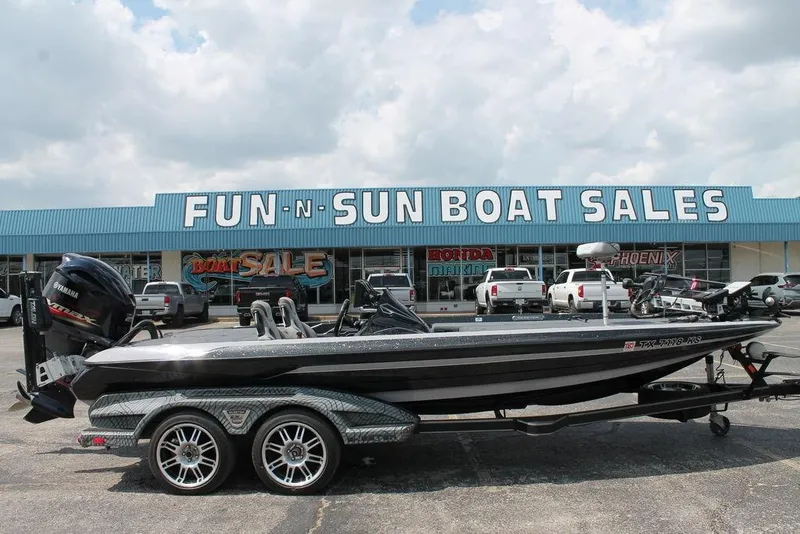
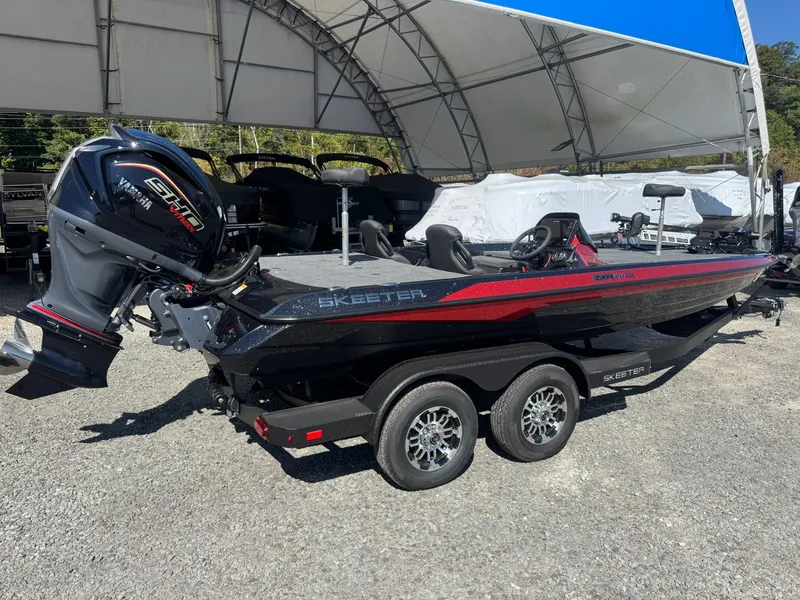
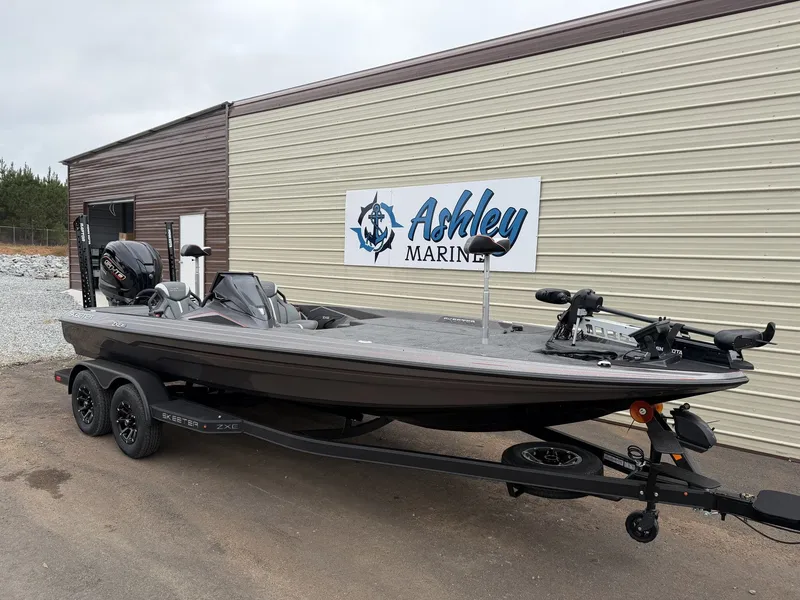
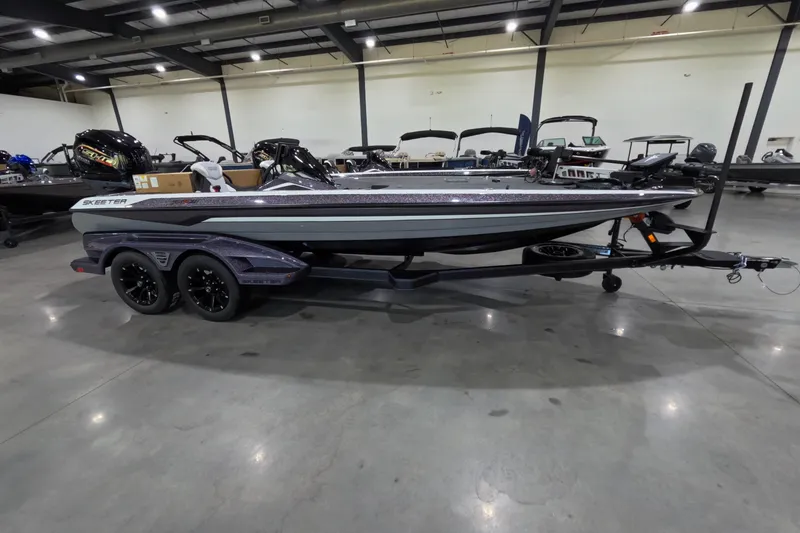
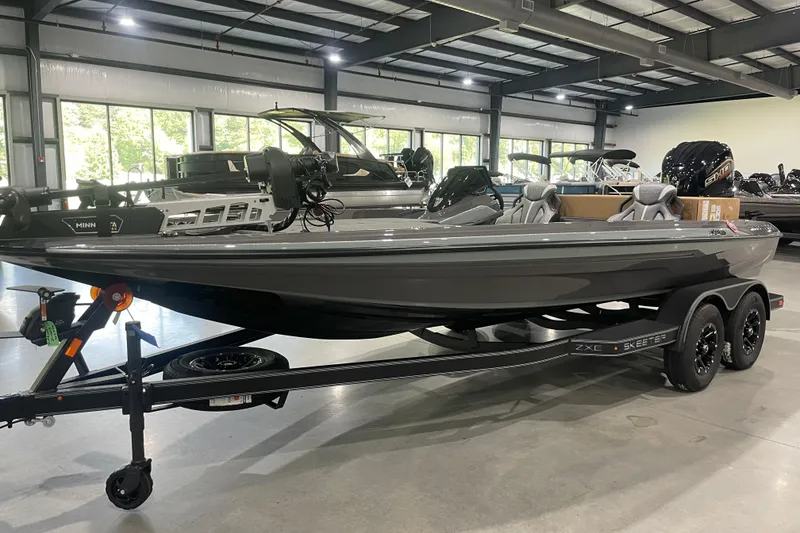
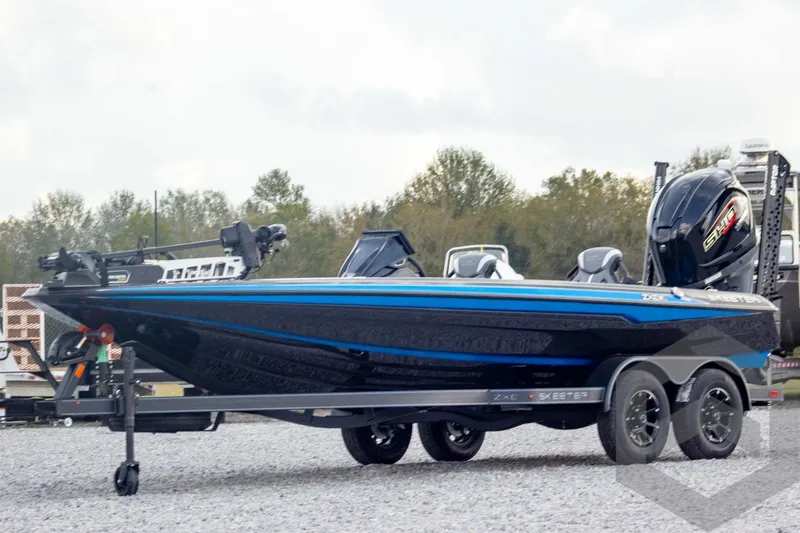
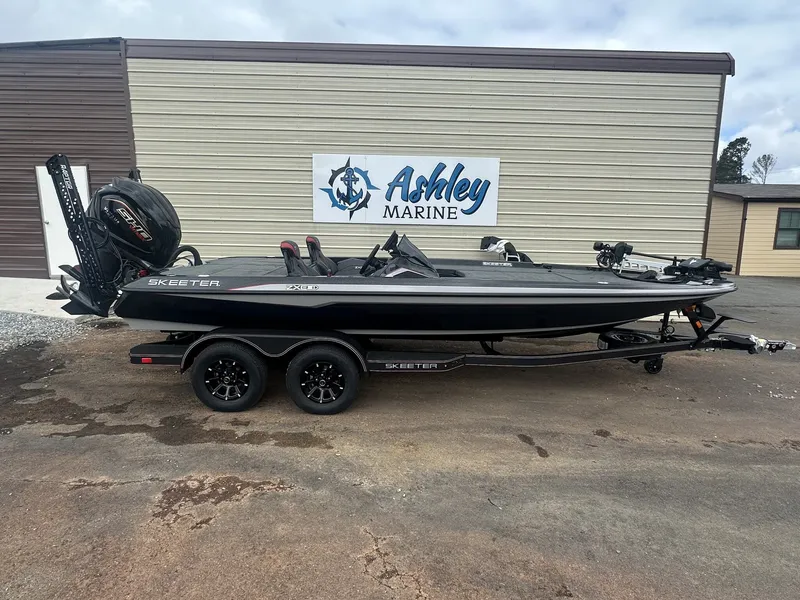
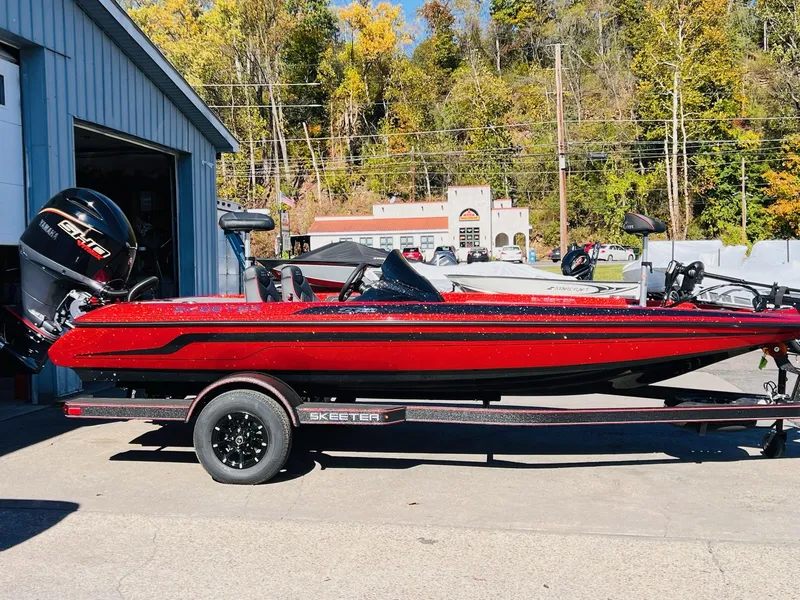
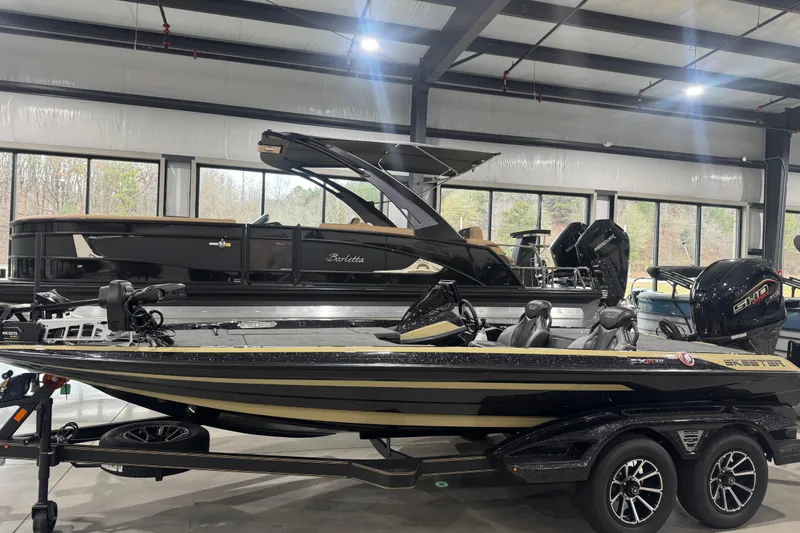
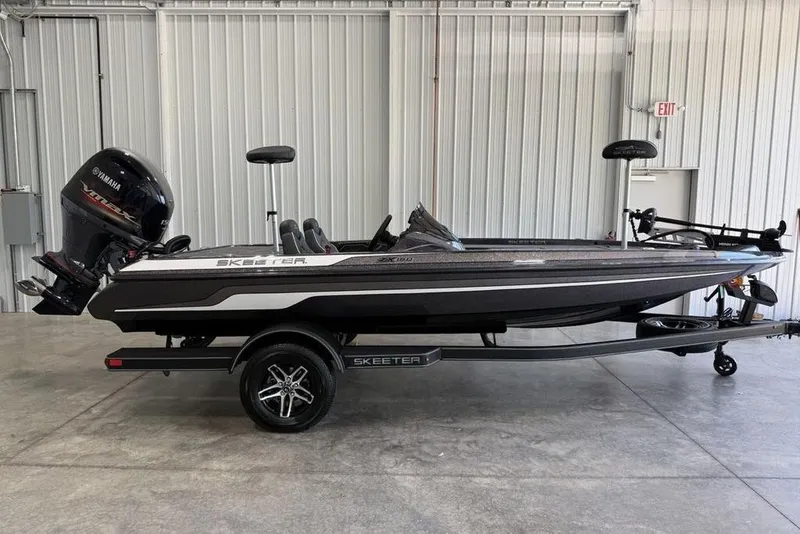
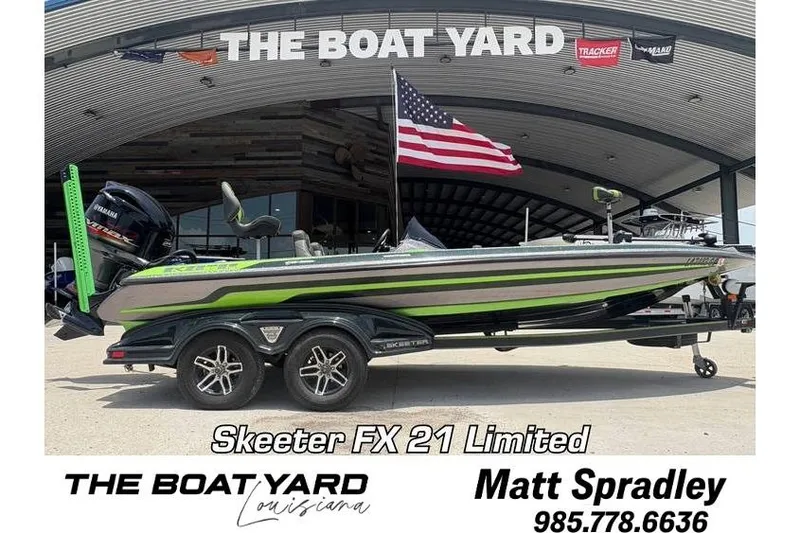
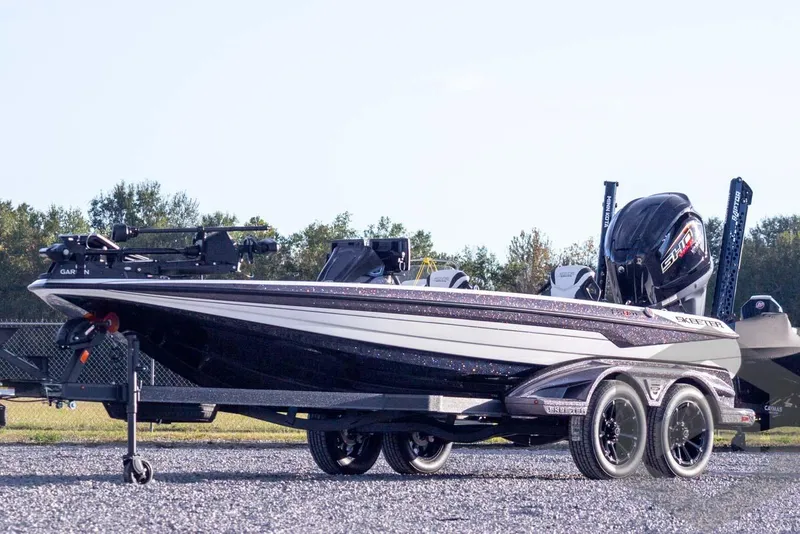
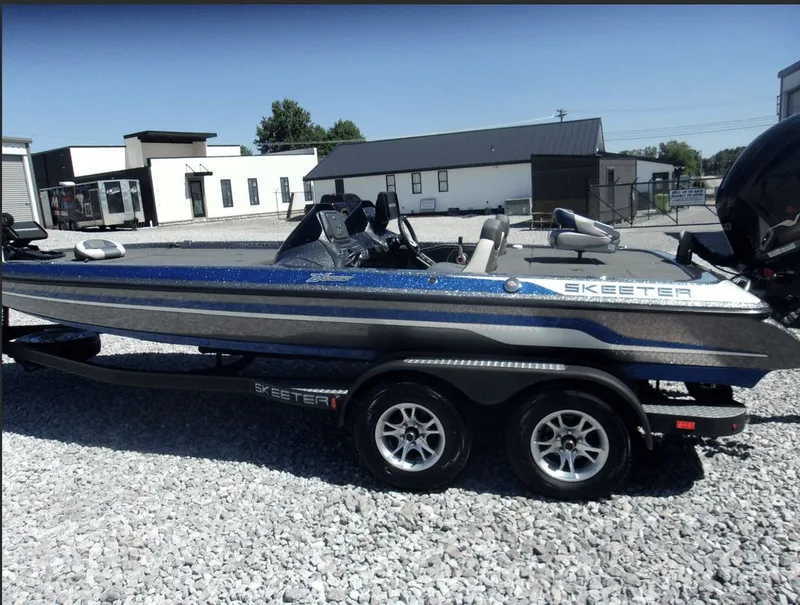
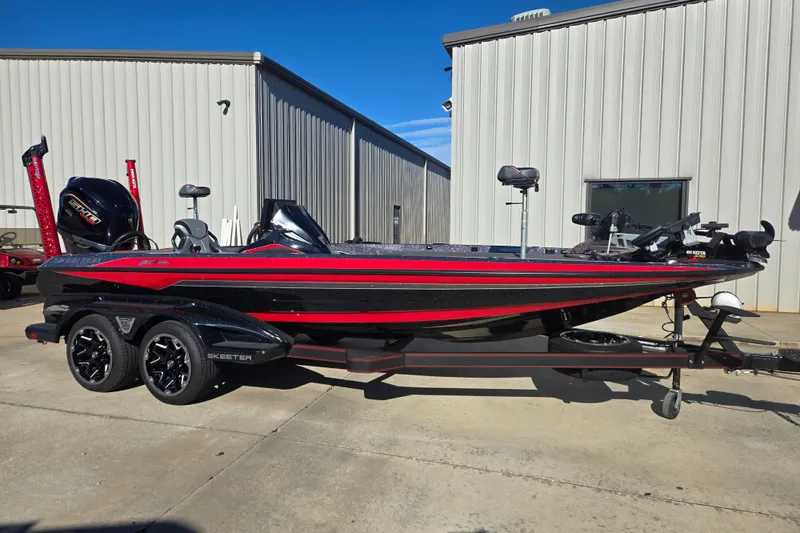
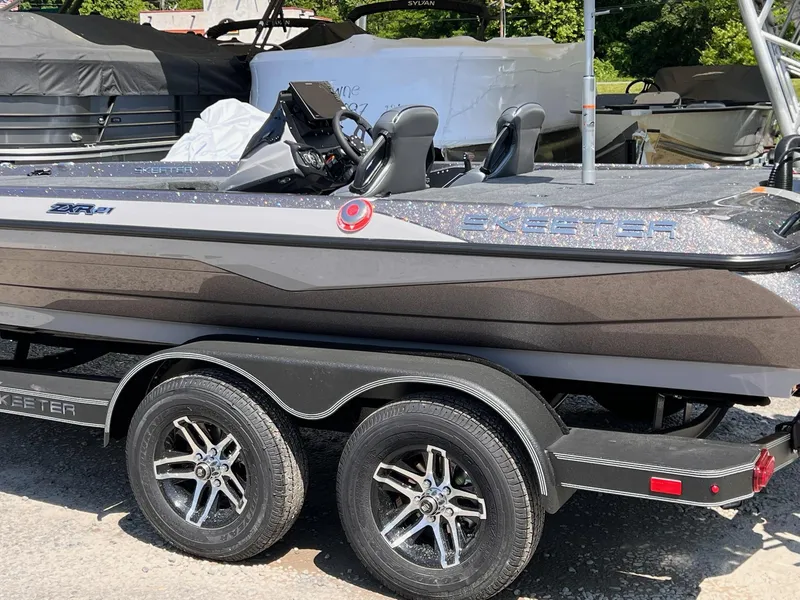
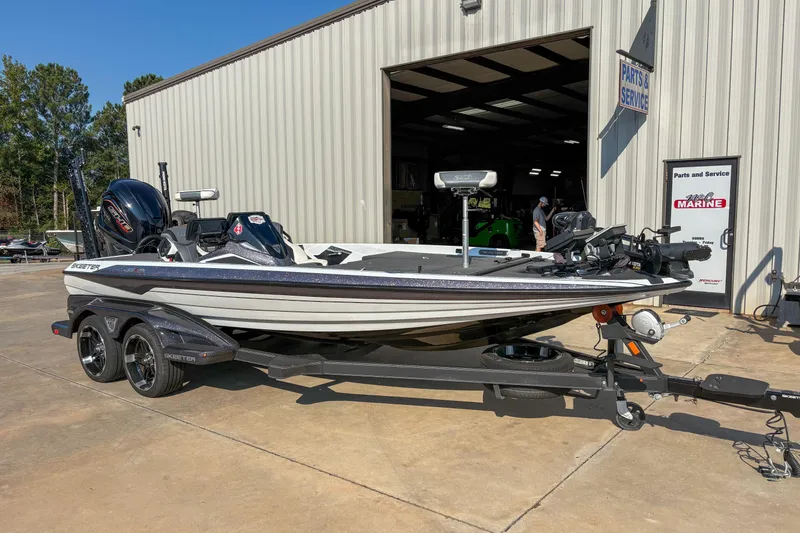
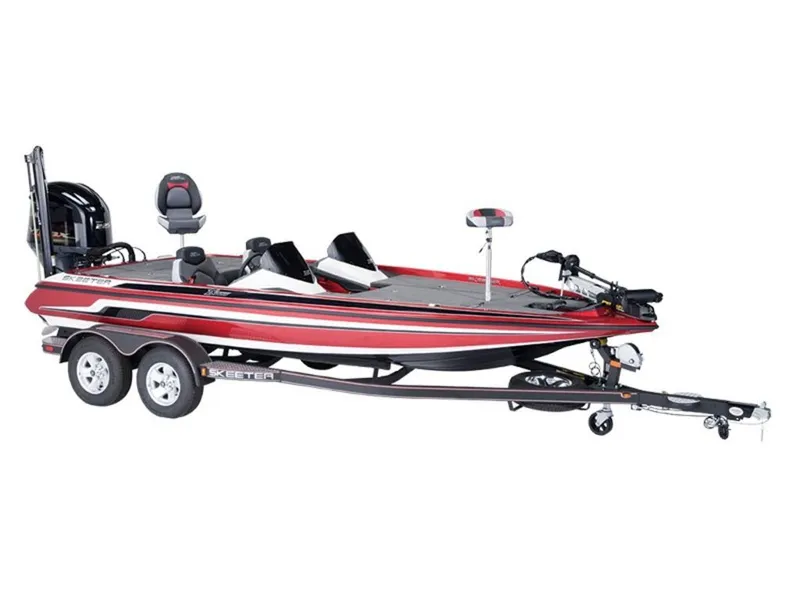
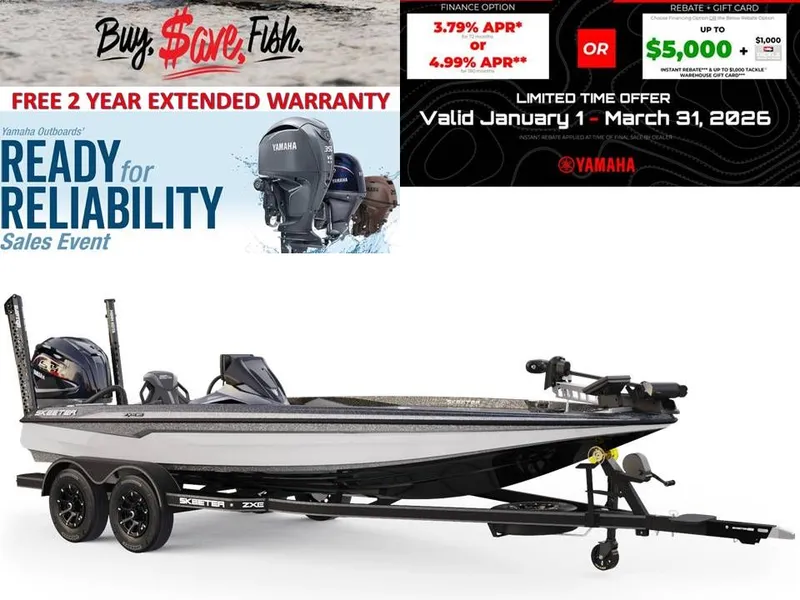
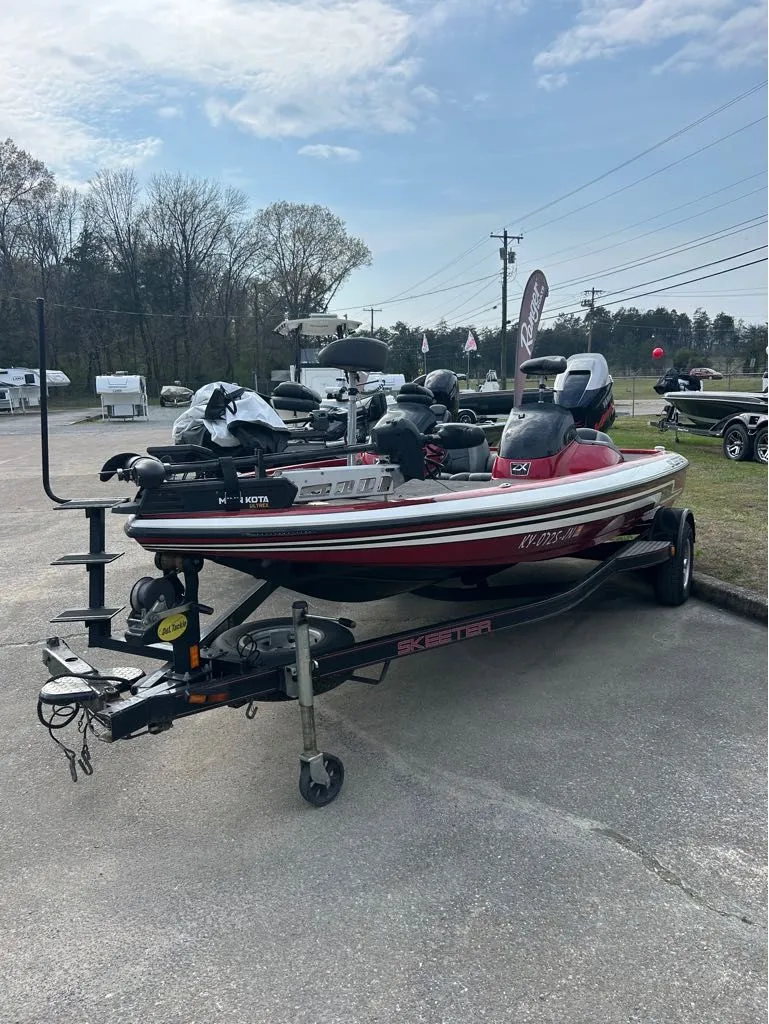
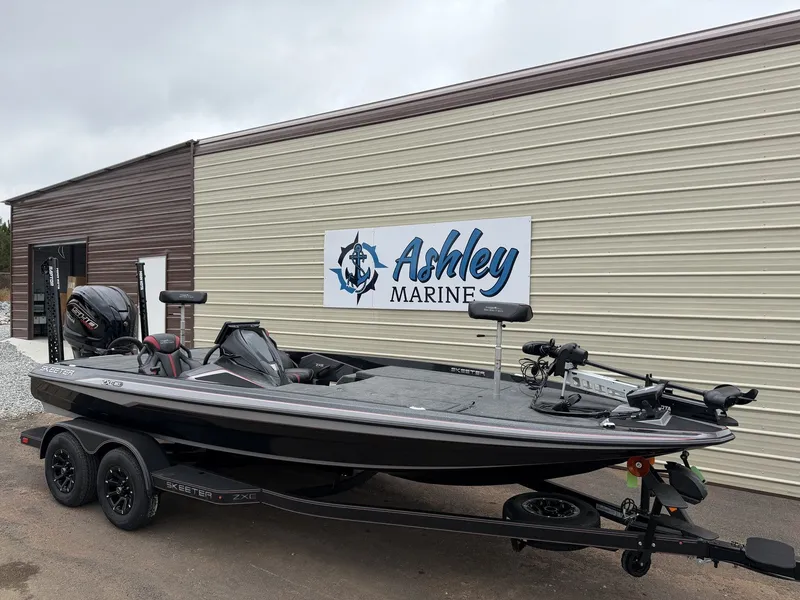
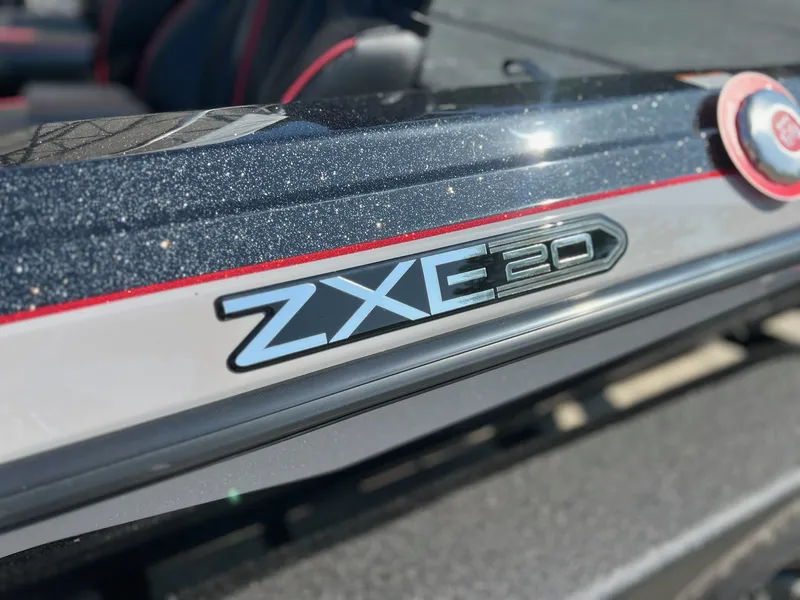
• (Tournament bass boats (fiberglass outboard bass-boat platforms)) Skeeter’s core lineup is tournament-style fiberglass bass boats built around high-speed outboard performance, big fore/aft casting decks, and integrated fishing storage (tackle, rods, livewells). Current bass families include the premium FXR series (FXR20, FXR21 variants by trim/year), the broad ZXR and ZX lines (ZXR19, ZXR20, ZXR21; plus ZX150 and ZX200), and the newer-for-2026 ZXE series (ZXE20, ZXE21). Sizes generally run from about 18'6" (ZX150) up to about 21'4" (ZXR21/FXR21/ZXE21). These are outboard-powered boats, commonly packaged and rigged for bass fishing (trolling motor/electronics options vary by trim and dealer), with typical max horsepower ratings spanning roughly 150–250 hp depending on model. Representative published specs from the current range include: ZX150 (18'6", 95" beam, 32 gal, 150 hp max), ZX200 (19'6", 95" beam, 36 gal, 200 hp max), ZXR19 (19'10", 97" beam, 44 gal, 225 hp max), ZXR20/FXR20/ZXE20 hull class (20'4", 97" beam, 48 gal, 250 hp max), and ZXR21/FXR21/ZXE21 hull class (21'4", 97" beam, 48 gal, 250 hp max).
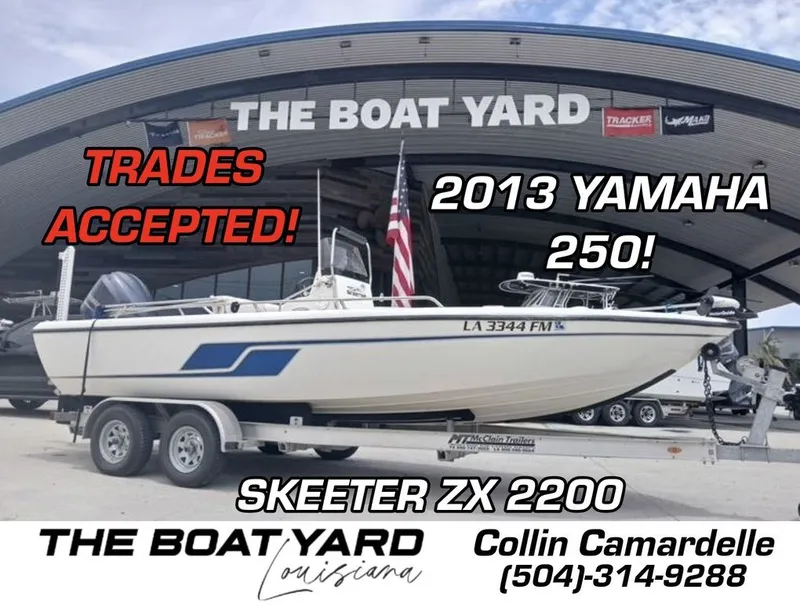
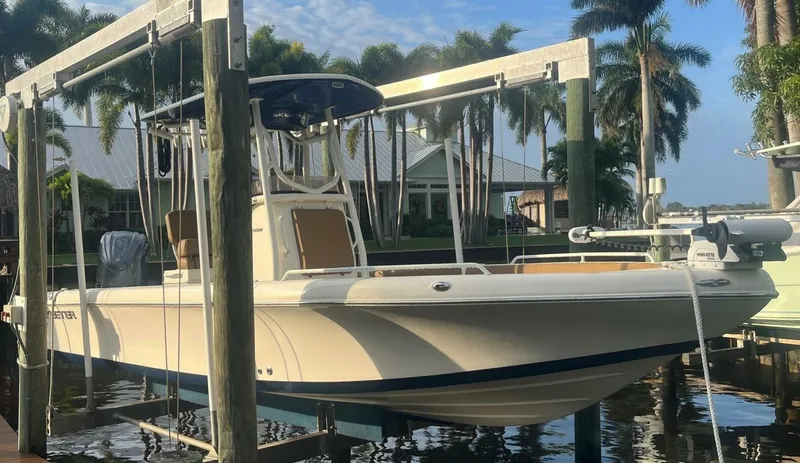
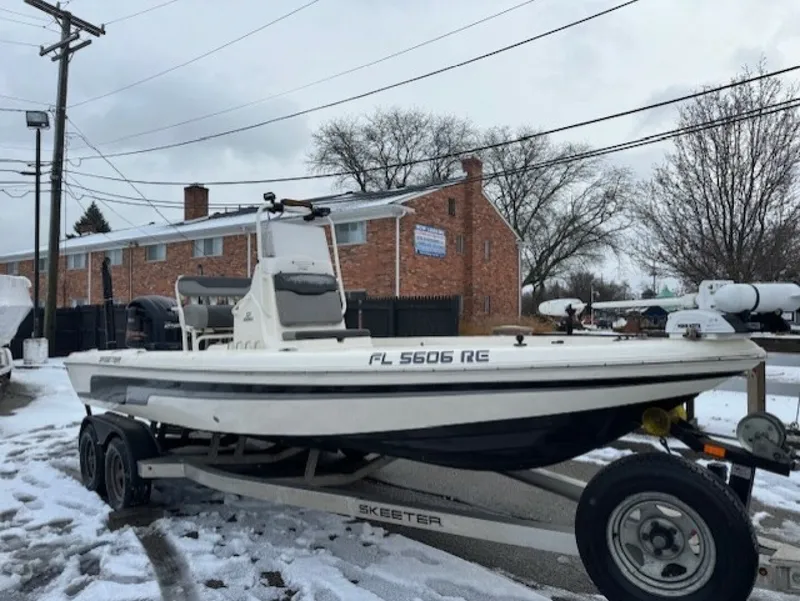
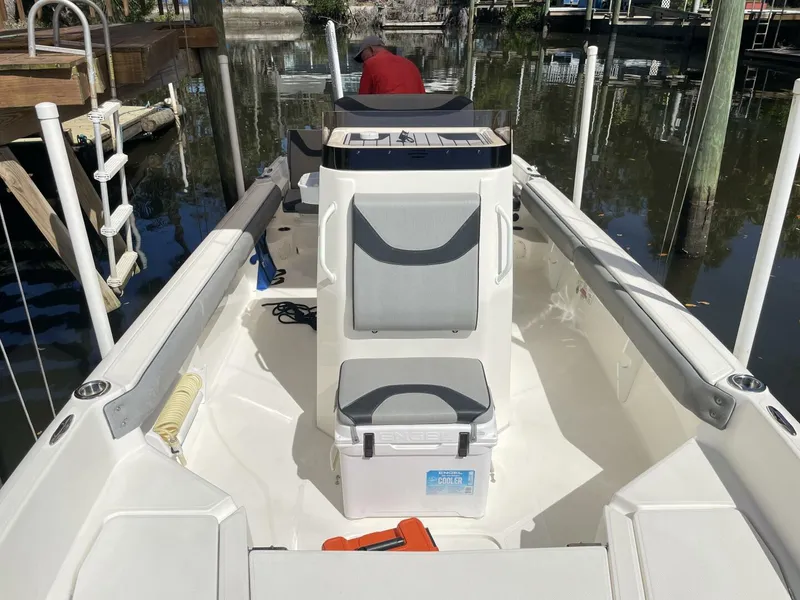
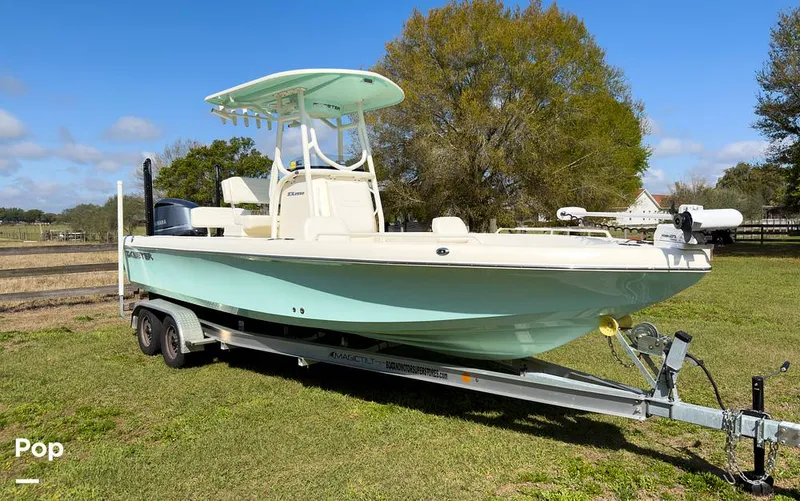
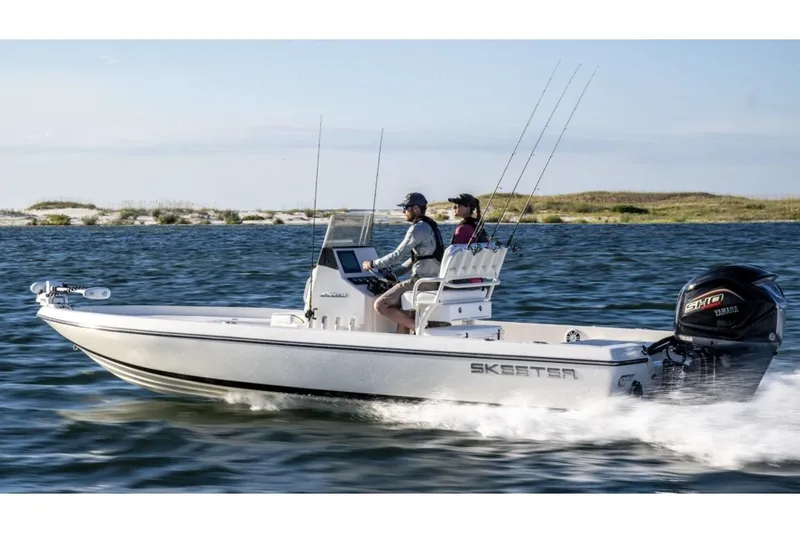
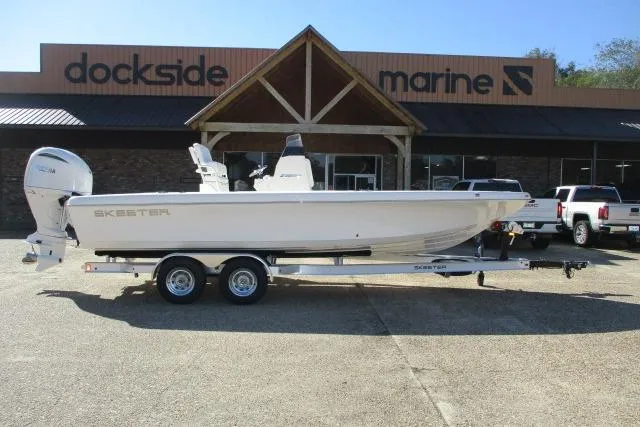
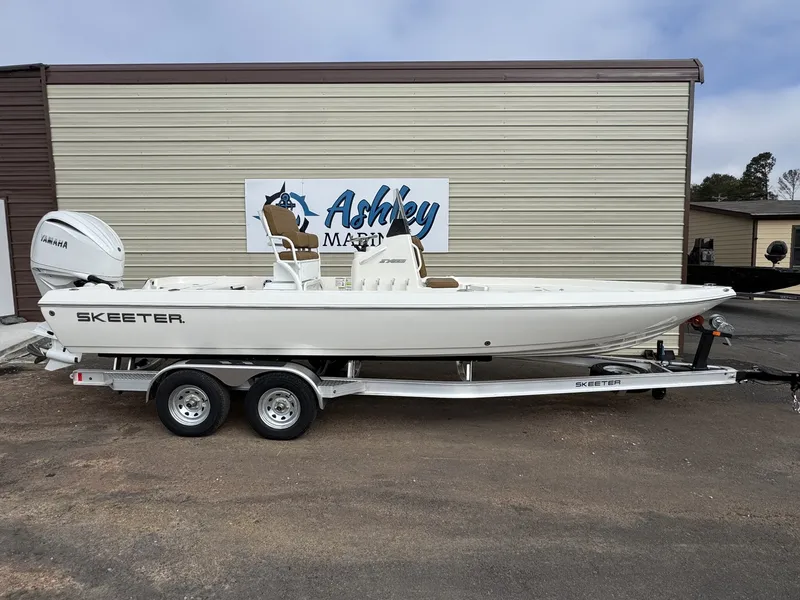
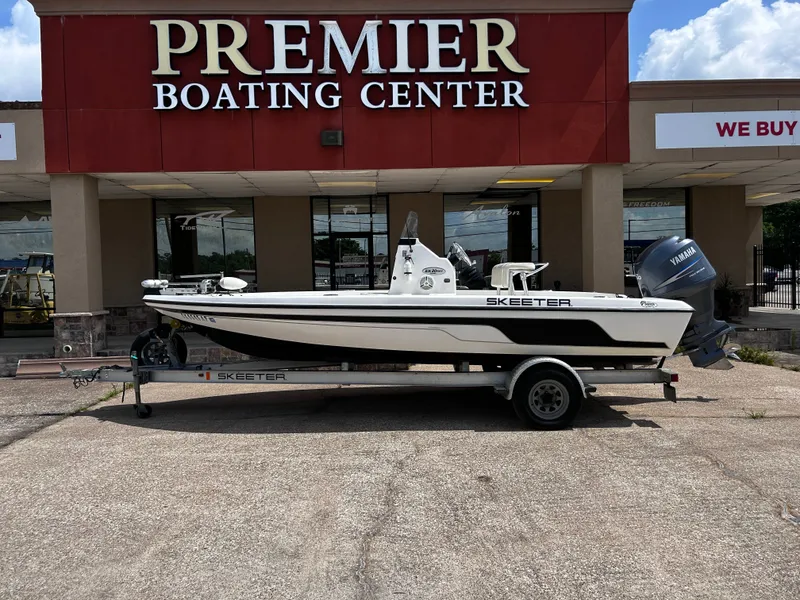
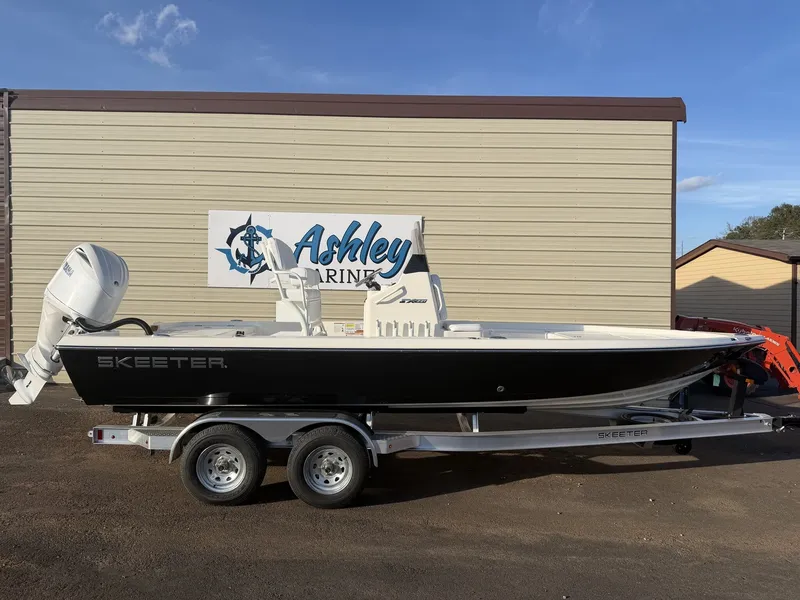
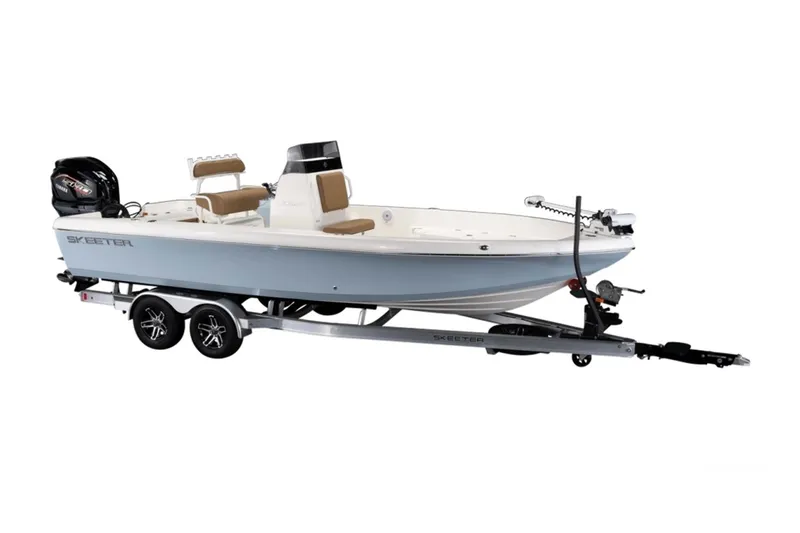
• (Bay boats / inshore saltwater (fiberglass outboard)) Skeeter’s saltwater/inshore lineup is centered on the SX Series—fiberglass, outboard-powered bay boats designed for inshore bays, estuaries, and nearshore conditions with center-console layouts, higher freeboard than bass rigs, and family-capable seating in “Family” trims alongside more fishing-forward “Fish” layouts (depending on model/year). Key models include the SX210, SX221, SX230, SX2350, and SX2550 (often shown in Fish vs Family variants). This category spans roughly 21'6" up to 24'6" LOA, with beams around the high-90" to ~101" range depending on model. Examples of published SX-series specs include: SX210 (21'6", 98" beam, ~10" draft, 46 gal, 200 hp max), SX230 (23'6", 98" beam, ~10" draft, 59 gal, 250 hp max), SX2350 (22'9", 101" beam, ~13" draft, 55 gal, 250 hp max), and SX2550 Fish (24'6", 101" beam, ~14" draft, 76 gal, max hp shown as 300 hp on some model-year pages and 350 hp on some later pages). Overall, these SX boats are positioned as multi-role inshore platforms—fishable layouts with enough comfort and fuel range for longer coastal runs than a typical lake bass boat.
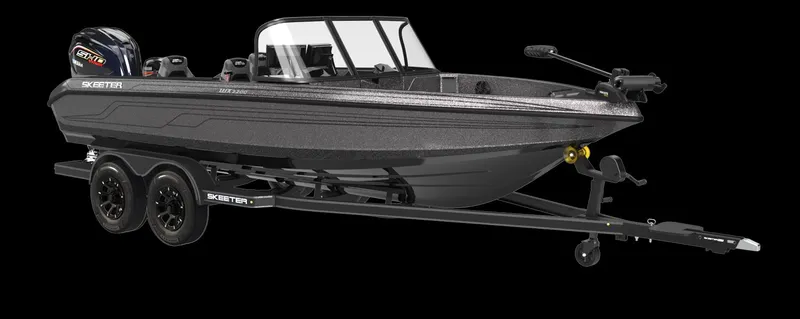
• (Deep-V multi-species / walleye (fiberglass outboard)) For anglers who want more rough-water capability and multi-species flexibility, Skeeter also builds Deep-V fiberglass outboard boats in the WX and WXR families—commonly used for walleye, multi-species trolling/casting, and big-water inland lakes where higher freeboard and deeper-V hull forms are beneficial. Current models include the WX1910 and WX2200 (WX series) and the WXR2060F and WXR2260 (often shown as WXR2260 PRO) in the WXR series. Sizes typically span from about 18'11" (WX1910) to 22'6" (WXR2260). Representative specs include: WX1910 (18'11", 99" beam, ~16" draft, 34 gal, 200 hp max), WX2200 (22'0", 99" beam, ~16" draft, 51 gal, 300 hp max), WXR2060F (20'6", 102" beam, ~16" draft, 48 gal, 250 hp max), and WXR2260 PRO (22'6", 101" beam, ~16" draft, 60 gal, 350 hp max). Compared with the bass lineup, these boats emphasize ride comfort, interior layout versatility for casting and trolling, and better suitability for colder/rougher conditions typical of Great Lakes-style walleye fisheries.
• (Fish & ski / family crossover (fiberglass outboard)) Skeeter’s family-crossover offering is the Solera series—fiberglass outboard fish-and-ski/dayboating models that lean more into comfort seating, open cockpit usability, and watersports-friendly layouts while still retaining fishing features relative to pure runabouts. The current Solera models are the Solera189 and Solera205. This category generally runs from about 18'9" to about 20'5" LOA. Example published specs include Solera189 (18'9", 100" beam, ~16" draft, 34 gal, 200 hp max). A commonly cited dealer package listing for the Solera205 shows 245" (20'5") LOA, 100" beam, 41 gal fuel, and a 250 hp package (note: some dealer listings may not state the true manufacturer “max hp” rating). Solera boats are best understood as Skeeter’s “family first” rigs—more social seating and general dayboat usability than a dedicated bass boat, while still offering a fishing-capable platform for casual angling.
HOW ARE THESE BOATS BUILT?
Skeeter boat construction starts with a precision-molded fiberglass hull engineered for speed, control, and long-term structural integrity. Skeeter’s hull and running-surface geometry are developed with modern computer design tools and extensive R&D testing, then built around a composite structure that replaces traditional wood with high-strength, lightweight materials. On many current bass platforms, the foundation includes Skeeter’s EX-Cel composite components in critical areas, with the transom, stringers, and floor designed as a unified system to manage engine and wave loads. A hallmark of how Skeeter boats are built is the Aluminum Torque Transfer Transom and Stringer System, which is designed to move vertical torque and energy from the outboard into the stringer network and along the keel, reducing localized stress at the transom and sidewalls. The deck is further stabilized with an aluminum deck grid structure, adding stiffness for tight-latching lids and reduced flex underfoot. For flotation and safety, the construction incorporates buoyancy-focused design and materials, including foam-cored composite structures where applicable, supporting stability and reserve buoyancy consistent with U.S. Coast Guard requirements. Skeeter builds to recognized industry practices and states that its boats are certified to meet U.S. Coast Guard, NMMA, and ABYC standards. Exterior finish durability is addressed with a premium gelcoat system, including Skeeter’s Armorcoat gelcoats and a “dry flake” polyflake process that places metallic flake behind clearcoat to help resist flake migration and maintain long-term gloss and color depth. The lamination and bonding work is executed with controlled, repeatable methods, with structural members bonded into the hull and integrated into the hull-to-deck structure using robust mechanical and adhesive techniques appropriate for high-performance fiberglass boats.
Hardware, rigging, and finishing details are specified for corrosion resistance and service life, with marine-grade stainless components commonly used in high-exposure areas and fasteners selected for vibration resistance in high-speed applications. Electrical systems are laid out to meet accepted marine practices for circuit protection, routing, and labeling, while plumbing and livewell systems are installed with marine-rated hoses, clamps, and through-hull fittings designed for dependable aeration, recirculation, and washdown performance. Interior materials prioritize durability in harsh sun and wet environments, with UV-resistant marine upholstery, high-wear deck coverings, and molded composite interior parts used where they improve fit, repeatability, and long-term cosmetic stability. On the manufacturing side, Skeeter emphasizes aerospace-influenced thinking, using computer-based engineering, tight tooling control, and repeatable part fabrication for consistency from boat to boat. Construction techniques vary by component, but the brand’s approach focuses on structural bonding, composite sandwich construction in targeted areas, and integrated reinforcement systems that deliver stiffness without excess weight, a key differentiator in performance fishing vessels. Quality control is treated as part of the build process, not an afterthought, with checks that align workmanship, fit and finish, and on-water functional performance with the expectations of NMMA customer-satisfaction benchmarking. Compared to many conventional fiberglass boats that rely on simpler transom and stringer layouts or heavier layups to achieve stiffness, Skeeter’s philosophy is to engineer load paths into the structure and validate control at speed through demanding handling tests, then back the result with strong warranty coverage. Skeeter warranty protection includes a Limited Lifetime Structural Warranty for the first retail purchaser, a 10-year limited transferable structural warranty, and a 3-year limited component warranty, reflecting a build philosophy centered on measurable durability, safety-focused engineering, and long-term owner confidence.
WHERE ARE THESE BOATS BUILT?
All Skeeter boats are built in the United States at Skeeter Products, Inc.’s manufacturing facility in Kilgore, Texas, where the brand’s fiberglass bass and deep V fishing boat production is centralized in one East Texas plant. Skeeter operates as a Yamaha boat company, and the Kilgore site is the core production hub where the brand’s hulls, rigging, and final assembly come together under one roof for consistent build standards. The Kilgore operation spans about 240,000 square feet across multiple buildings on roughly 35 acres, supporting a marine manufacturing workflow that includes boat building plus related component work. The local employer roster for Yamaha/Skeeter Products Inc. lists about 350 employees in Kilgore, reflecting the scale of workforce dedicated to Skeeter’s daily production cadence.
Skeeter’s roots trace back to 1948, and after operating in several regional locations the company ultimately established long term boat production in Kilgore in the early 1970s, where it has remained the brand’s only plant for decades. Yamaha acquired Skeeter in 1996, and under that ownership the Kilgore production footprint has been strengthened through facility upgrades and added capabilities designed to support higher output and tighter control of component quality. The plant is organized around sequential fiberglass and assembly operations, including dedicated areas for fiber reinforced plastics work, rigging and wiring installation, warehousing and staging, and service and warranty functions that keep production moving while supporting delivered boats. A key vertical integration step was the addition of a 43,000 square foot trailer manufacturing facility in Kilgore, with in house trailer production introduced so Skeeter boats and matched trailers can be completed as a coordinated package. Kilgore’s industrial base, logistics access through East Texas highway corridors, and proximity to a skilled regional labor pool help keep production efficient while supporting the supplier network needed for high volume boat manufacturing.
Skeeter’s quality control is built around repeatable checkpoints through the manufacturing process, including inspection of gelcoat and finish quality, verification of rigging and electrical installation, and final fit and function reviews before boats leave the facility. The brand is associated with NMMA certification for its fiberglass outboard boats, aligning the build process with established marine safety and compliance expectations and reinforcing disciplined documentation and inspection routines. Operationally, the Kilgore plant’s on site capabilities enable tighter process control on critical items such as composite layup, structural bonding, hardware installation, and systems integration, reducing variability that can come from scattered subcontracting. The move toward vertical integration, including Skeeter Built trailer production in Kilgore, supports innovation and consistency because the boat and trailer interfaces can be engineered and validated together as one system. By keeping Skeeter’s core production concentrated in a single primary site, the company can standardize work instructions, training, tooling, and corrective action loops across the full model range for more consistent build quality.
Skeeter boats are built in one main location, Kilgore, Texas, and that single production center is a major reason the brand can hold tight control over manufacturing consistency from hull lamination through final rigging. With a large, established facility footprint and a seasoned workforce, Skeeter continues to modernize its production capabilities in East Texas while maintaining pride in where its boats are built. The result is a clear commitment to American manufacturing and to producing fishing boats that meet demanding performance and durability expectations from the Kilgore facility.
WHAT IS THE BIGGEST BOAT OF THIS BRAND BUILT TODAY?
The biggest boat built by Skeeter today is the Skeeter SX2550 FISH, Skeeter’s flagship center console bay boat at 24' 6" LOA with a 101" beam. In Skeeter’s current production range, no other Skeeter model exceeds the SX2550 FISH’s 24' 6" overall length, making the Skeeter SX2550 FISH the largest Skeeter model for buyers who want maximum inshore and nearshore capability in a performance fishing layout. The Skeeter SX2550 FISH is a single-outboard design rated up to 350 hp, pairing big-bay-boat deck space with a shallow-water friendly 14" draft and a 76-gallon fuel capacity for longer runs between fill-ups. Hull details and a named designer are not specified in the provided reference, but the Skeeter SX2550 FISH is squarely positioned as a high-performance fiberglass outboard platform that prioritizes speed, range, and fishability over a cabin-forward cruising layout; top speed and cruising speed ranges are not specified in the provided reference.
Built for serious inshore fishing with the ability to stretch into nearshore offshore conditions when weather cooperates, the Skeeter SX2550 FISH focuses on an open, tournament-ready center console layout that keeps anglers moving efficiently around the boat, whether you are casting shorelines, working docks, or running a spread across open flats. As a Skeeter bay boat in “FISH” trim, the Skeeter SX2550 FISH is intended to emphasize fishing amenities and working space over purely family lounge seating, with abundant deck room for multiple anglers, dedicated stowage for gear, and a layout that supports the way bay-boat owners actually fish. With its 101" beam, the platform also supports a stable ride at rest and a confident feel when stepping up to larger waters, while the 76-gallon fuel tank extends practical day range for long runs. Helm electronics, livewell and fish box capacities, rod holder counts, and specific console or head compartment details are not specified in the provided reference, but the mission is clear: the Skeeter SX2550 FISH is the largest Skeeter model and Skeeter’s flagship for anglers who want the brand’s biggest center console footprint and highest single-outboard horsepower rating in today’s Skeeter lineup.
WHAT IS THE SMALLEST BOAT OF THIS BRAND BUILT TODAY?
The smallest model in Skeeter's current lineup is the 2025 ZX150, a compact entry-level fiberglass bass boat built to deliver true performance-fishing capability in an easy-to-own, easy-to-trailer package, with an 18' 6" length, a 95" beam, and a maximum 150 hp outboard rating; it also carries a 32-gallon fuel tank and a 16" draft that helps it work well on many freshwater lakes and reservoirs, and while Skeeter does not list an official boat weight or tow rating in the provided specifications, the ZX150's shorter overall length and trailer-friendly footprint make it one of the most practical Skeeter boats for owners who want simpler storage in a standard driveway or garage, quicker launch and load at the ramp, and a manageable towing experience behind a wide range of properly equipped vehicles.
As a tournament-style bass boat, the Skeeter ZX150 is designed around a low-profile, performance-fishing layout with expansive casting space and fishing-first ergonomics, and the 18' 6" hull and 95" beam give the ZX150 a stable platform for working shorelines, docks, and open-water structure while still staying nimble at the ramp and on the road; Skeeter positions the ZX150 as an accessible way into its performance fishing boats lineup, pairing a max 150 hp outboard rating with a 32-gallon fuel capacity for solid range on day trips, and the shallow 16" draft helps the ZX150 explore skinnier water where bass often feed, but details like seating configuration, passenger capacity (comfortable and USCG-rated), specific construction methods, hull technology naming, typical engine pairing, and verified speed or efficiency numbers are not included in the provided data, so the most accurate value summary is that the ZX150 is a purpose-built, trailerable Skeeter bass rig for anglers who want a smaller-footprint boat that still feels like a real fishing machine for weekend tournaments, after-work lake runs, and all-day casting sessions with plenty of room to organize gear and keep the cockpit clean and functional.
HOW MUCH DO THESE BOATS COST?
Skeeter boats span multiple families, but the clearest “official” pricing Skeeter publishes online is typically found on its dealer-style MSRP window-sticker build sheets rather than a single public “starting at” list. On the coastal side, the smallest model shown in the official window-sticker examples is the 2025 Skeeter SX221, which is listed with a boat length of 21 ft 6 in, a 98 in beam, and a max horsepower rating of 200 hp, and that specific Skeeter MSRP build sheet shows an MSRP Sub Total of $91,320 for the boat and engine package and listed options. citeturn1view0 By contrast, in the bass lineup, real-world entry pricing is often represented by the Skeeter ZX150 class (18 ft 6 in length and 95 in beam shown on a current dealer listing), and current market listings for new ZX150 rigs commonly range from about $48,150 to $56,691 depending on engine choice and rigging. citeturn0search3turn0search1
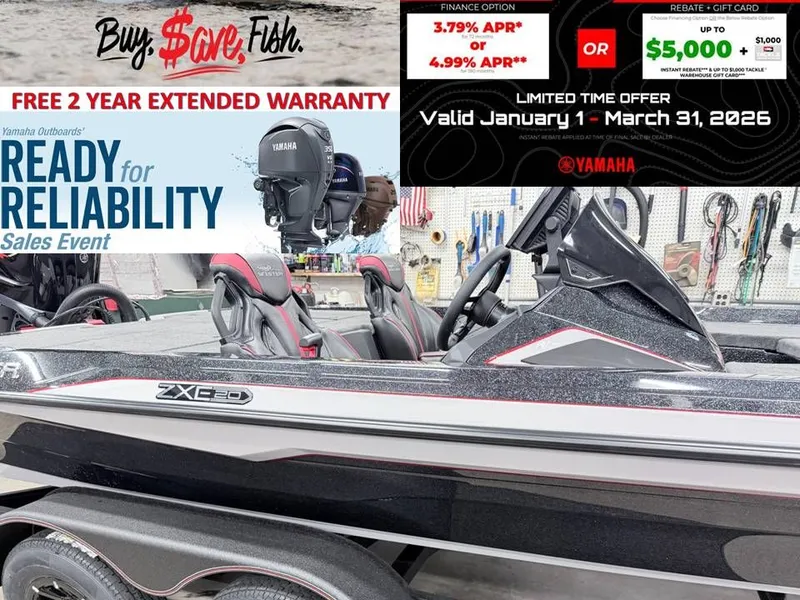
In the mid-range Skeeter bass segment, popular tournament-capable models like the Skeeter ZXR20 SE show a tight cluster of advertised asking prices for new boats, with multiple current listings concentrated between roughly $67,895 and $69,715. citeturn0search0turn0search4 To put MSRP versus market price in context, third-party valuation data for a 2025 Skeeter ZXR20 lists a Suggested List Price (MSRP) of $85,950, which is notably higher than many real dealer asking prices seen for comparable ZXR20 SE packages in the high $60,000s to low $70,000s depending on equipment and promotions. citeturn2search0turn0search0 In practice, year-to-year changes and configurations such as upgraded electronics, shallow-water anchors, trailer upgrades, and engine package differences are major reasons two otherwise similar Skeeter ZXR20 class boats can sit thousands of dollars apart in market price.
At the premium end, Skeeter’s coastal SX series and flagship bass models can move into six-figure territory once you match higher-horsepower engines and option stacks to the hull. For example, an official Skeeter MSRP window-sticker for a 2025 Skeeter SX230 lists a boat length of 23 ft 6 in, a 98 in beam, max horsepower of 250 hp, and an MSRP Sub Total of $129,627 with a VF250XB engine and multiple factory options included on the sheet. citeturn1view1 On the bass side, current market listings for the Skeeter FXR21 FLEX show premium pricing that can vary widely by rig level and dealer, with current advertised listings ranging from about $89,900 up to roughly $99,669 for new 2026 boats. citeturn2search7 Options, engine hours on demo units, and model year are especially influential at this level, so a lightly used premium Skeeter can price well below a new, fully rigged build even when the hull model name is similar.
Overall, Skeeter pricing is best understood as two parallel numbers: MSRP from official Skeeter build sheets for specific boat and engine packages, and market price from current market listings that reflect discounts, incentives, inventory levels, and equipment choices. Using the verifiable examples above, Skeeter boats can run from roughly the high $40,000s to mid $50,000s for entry ZX150 class new listings, around the high $60,000s for new ZXR20 SE listings, and from roughly $90,000 to near $100,000 for new FXR21 FLEX listings, while an optioned coastal build like the SX230 can show an MSRP Sub Total around $129,627 on the official Skeeter window sticker. citeturn0search3turn0search0turn2search7turn1view1 Also note that official MSRP documentation is commonly presented as a configured package and can exclude additional real-world buyer costs such as tax and registration and other dealer-related fees, and many dealer ads similarly disclose that advertised pricing can exclude taxes, title, licensing, destination, and setup. citeturn2search2 Market prices vary by location, condition, model year, and dealer.
WHAT OTHER STYLES OF BOATS DO THEY MAKE?
Today, Skeeter’s lineup is built around performance fishing-first fiberglass outboard boats, with the brand’s most iconic and popular styles being its tournament bass boats and its inshore bay boats. On the freshwater side you’ll see the ZX, ZXR, and flagship FXR series, including dual console versions on select models for anglers who want more wind protection and a more family-friendly cockpit without giving up a true bass boat deck plan. Skeeter has also expanded the ZXR family with the ZXR SE and introduced the ZXE line as another bass boat option, both aimed at delivering Skeeter performance and fishability with different feature and price positioning. citeturn0search3turn0search1 For coastal and brackish water anglers, the SX Bay Boat Series covers classic bay boat use cases like shallow-water fishing, poling and drifting, and nearshore runs, and it includes both fishing-focused and more family-oriented configurations such as the SX2550 FISH and SX2550 FAMILY. citeturn0search2turn2search10turn2search6 Across these styles, Skeeter’s common thread is a trailerable, high-performance outboard package designed around practical storage, big casting space, and purpose-built layouts that cater to serious anglers while still offering certain crossover comforts depending on the series.
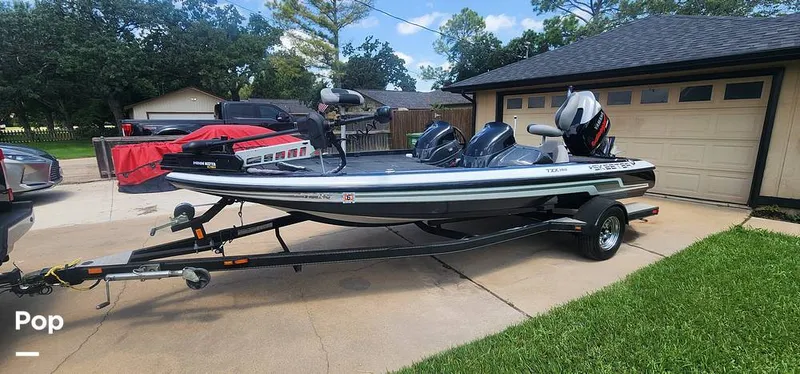
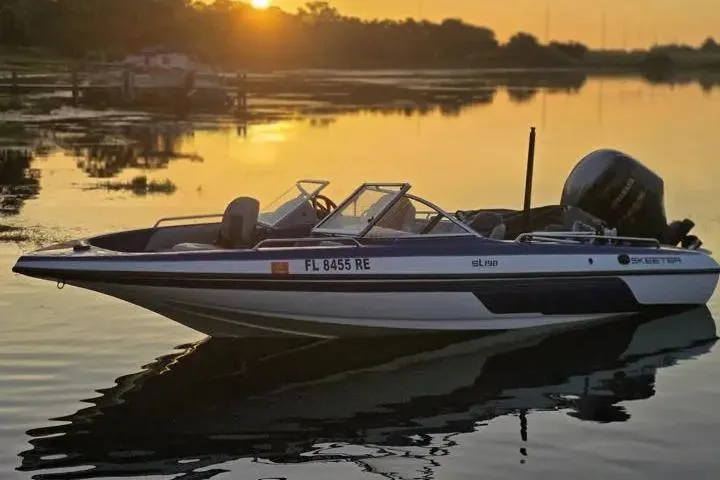
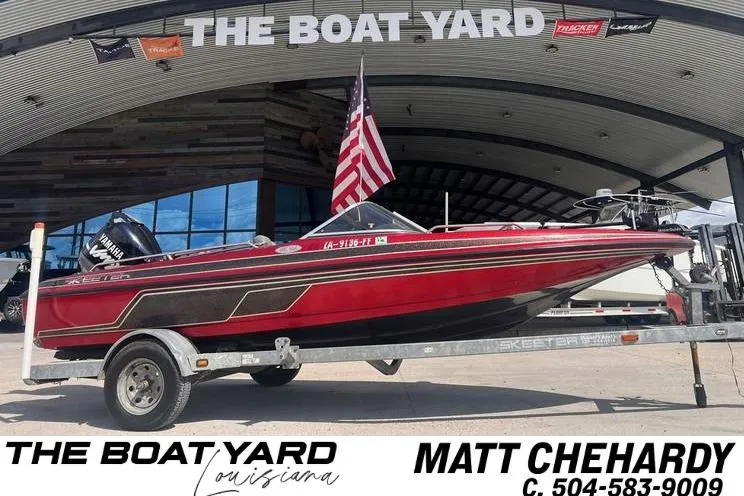
Beyond what Skeeter builds today, the brand has produced several other notable styles over the years that show up regularly on the used market, and they are a big part of Skeeter’s heritage. One widely recognized example is the TZX Series, tournament-style bass boats such as the TZX 190, which offered a more attainable path into a “real” bass boat setup while still keeping the brand’s performance DNA and fishability. citeturn3search6turn1search3 Skeeter also previously offered the SL Series, a fish and ski focused approach that leaned more into family watersports and all-around lake use than a pure tournament deck layout, with models like the SL 1800, SL 190, SL 1900, and SL 210 appearing in earlier model years. citeturn3search6 Additionally, Skeeter’s history goes back decades with the Starfire name appearing in earlier catalogs, underscoring that the company’s roots include broader “fish and play” oriented outboard runabout-style offerings in prior eras, even though modern Skeeter is best known for specialized fishing platforms. citeturn3search2
What Skeeter does not really try to be is a broad, everything-for-everyone boat builder, and that focus shows in the segments it largely avoids under the Skeeter badge. You typically will not see Skeeter competing head-to-head in pontoon boats, dedicated wake and surf inboard ski boats, or larger cabin cruisers and luxury yacht categories, because its identity is built around high-performance, fishing-first layouts rather than multi-cabin accommodations or tow-sports centric inboard architectures. The brand’s modern catalog instead stays tightly centered on specialized fishing boat categories such as bass boats, bay boats, and big-water multispecies oriented deep-V fishing platforms, which you can see reflected in how the Skeeter model families are organized across bass oriented ZX, ZXR, and FXR lines plus the saltwater-capable SX Bay Boat Series and the walleye and multispecies oriented WX and WXR lines. citeturn0search2turn3search0 That narrower lane is intentional, because it lets Skeeter keep refining the things its owners tend to care about most, including speed and handling, smart storage and rigging, and layouts designed around casting, boat control, and long days on the water.
In summary, if you are asking what other styles of boats Skeeter makes beyond “just bass boats,” the short list is that the brand spans multiple fishing boat styles, with tournament bass boats at the center, bay boats for inshore and nearshore fishing, and dedicated multispecies and walleye-capable deep-V boats in the WX and WXR families, plus family-crossover fish-and-play options like the Solera series that blend fishing features with cruising and watersports touches. citeturn0search2turn2search0turn2search11 Looking ahead, Skeeter’s recent pattern of adding sub-lines like ZXR SE and launching new model families like ZXE suggests the brand is evolving within its core mission by offering more “crossover” value and feature packages without abandoning its performance-fishing roots. citeturn0search3turn0search1 Rather than chasing every market segment, Skeeter’s strategy remains focused on improving the boat styles that define its reputation, so anglers and fishing families get a more refined, purpose-built platform generation after generation.
WHAT KINDS OF ENGINES DO THESE BOATS USE?
Skeeter boats are built around four stroke outboard power, which fits their mission as high performance bass and multi species fishing platforms where reliability, service access, and fast setup are priorities. Across current Skeeter families like FXR, ZXR, ZXE, ZX, and the deep V SX series, the typical layout is a single outboard on the transom rather than an inboard, sterndrive, or jet system, keeping weight aft and maintenance straightforward while also allowing the motor to trim up for trailering and shallower water approaches. Configuration differences mostly come down to maximum rated horsepower by model rather than moving to twin outboards, because these tournament style hulls are designed to run efficiently and balance well with one high output outboard.
Horsepower across the Skeeter lineup generally runs from the mid range bass boat class up to 250 horsepower at the top end, with real world examples showing how that scales by size. A 21 foot class SX210 is rated for up to 200 horsepower, positioning it as a single engine rig that can be matched to a strong midrange outboard for both cruising and loaded fishing performance. On the flagship bass side, models such as the FXR21 and ZXR21SE are commonly rigged at 250 horsepower, and Skeeter has highlighted 250 horsepower packages on new releases like the ZXE20 and ZXE21 as well, underscoring that 250 is a frequent maximum for their 20 to 21 foot performance bass hulls. A specific test configuration for the ZXR21SE shows a single Yamaha VF250 setup, which is consistent with this single high horsepower strategy.
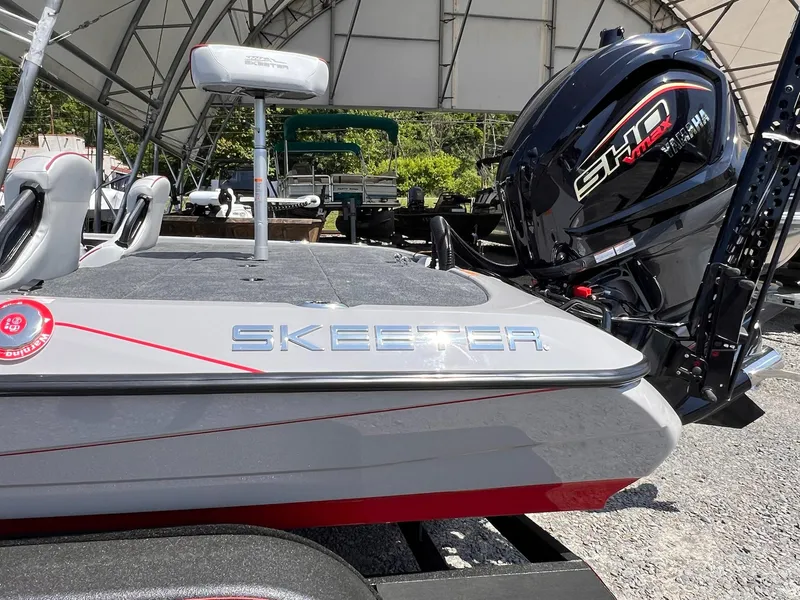
Skeeter’s primary engine partner is Yamaha, and many Skeeter packages are built around Yamaha V MAX SHO outboards, which are high performance four stroke outboards using electronic fuel injection. Manufacturer announcements for models like the ZXR SE and the ZXE line call out Yamaha V MAX SHO 250 horsepower power, and Yamaha’s own performance bulletins document Skeeter test boats such as the FXR21 and ZXR21SE running a single VF250. On smaller or lower max rated models, Skeeter rigs may be packaged with Yamaha options in the 200 horsepower class as well, keeping controls, gauges, and rigging aligned as a factory matched system rather than a mix and match approach.
From a boater benefits perspective, Skeeter’s outboard centric setup supports quick holeshot, strong midrange acceleration, and easy everyday ownership, since a four stroke outboard keeps major service points accessible and simplifies winterization compared with many inboard systems. Modern Yamaha rigging commonly pairs with digital controls and integrated engine data at the helm, which helps with smooth throttle response, clean shifting, and accurate fuel and performance monitoring when you are dialing in props and engine height for tournament loads. The ability to trim and tilt the outboard also improves shallow water access and makes loading, trailering, and storage easier, while keeping the cockpit and bilge layouts focused on batteries, pumps, and tackle storage. Overall, Skeeter’s consistent use of single Yamaha four stroke outboard power matches the brand’s focus on fast, efficient fishing hulls that are straightforward to own and ready to run hard on big water or back lakes.
WHY BUY THIS BRAND OVER A COMPETITIVE BRAND?
When you ask “Why choose Skeeter” in the fiberglass outboard fishing-boat segment, the most defensible answer starts with how the brand says it builds the boat. Skeeter states that its production process uses advanced manufacturing techniques and materials, including materials first used in aerospace applications, and that its X-Treme and EX-Cell composite construction is designed to deliver a smooth, dry, and safe trip to the water. Skeeter also backs that engineering focus with a clearly defined hull and structure warranty approach on its fiberglass boats: a limited lifetime structural warranty for the original owner covering the hull, stringers, and transom against major structural defects in materials or workmanship, plus a 10 year limited transferable structural warranty window for a second owner, and a 3 year limited component warranty for factory installed components. In practical terms, that combination of composite construction messaging and long-horizon structural coverage is aimed at long-term durability and confidence in real conditions, especially for anglers who run hard, trailer often, and want a boat platform built to stay tight and fishable over years of use.
Value is where Skeeter’s own standard-equipment philosophy can be especially compelling, because many models are promoted as arriving tournament ready with major fishing systems already integrated from the factory. For example, on select bass models Skeeter lists standard features such as a SkeeterBuilt trailer, Performance Designed Seats, an oversized bilge compartment with a raised battery shelf, and a modular center tackle storage system, alongside integrated trolling motor and electronics packages like Minn Kota Ultrex iPilot 112 and gimbal-mounted Humminbird Helix or Humminbird Xplore displays depending on model. Skeeter also emphasizes practical deck and day-to-day fishing usability on newer offerings, including items like a full fiberglass front deck with slam latches, an updated front deck layout, a quick access bow electronics door, and higher-capacity wiring and fuse-block organization on the ZXE line, all of which support cleaner rigging and easier access when you are troubleshooting on the water. If your search terms include Skeeter boats vs competitors or Skeeter vs other fishing boats, the most factual differentiator Skeeter itself documents is how much fishing-critical hardware and rigging infrastructure can be included as standard equipment in certain trims, reducing the need to immediately add core gear after purchase.
Skeeter also makes a clear case for multi-use comfort without abandoning fishing utility, especially in its Deep-V WX line and multi-species positioning. The company states its WX Series Deep-V hulls are built to give maximum control in harsh conditions, and it describes a big-water hull designed to handle very rough water with a comfortable, dry ride, with responsive handling for scenarios like running through rollers or back trolling in crosswinds. For select WX models, Skeeter highlights its REACT keel feature, describing it as helping with precision trolling and drifting by virtually locking the hull to the water so you can stay where you want to be on fish. On the usability side, Skeeter describes a large open cockpit intended for anglers who fish big water from the cockpit, plus standard rear jump seats that can be used to carry up to six people or removed to open cockpit space, deep side gunnels for comfort and safety, and, when the day shifts from fishing to recreation, an optional ski pylon that sets up quickly and stows below the front deck for watersports readiness. That combination is the brand’s own blueprint for a boat that can realistically cover hard fishing and family cruising, supporting customer satisfaction with Skeeter among owners who want one platform that does not force a strict either-or between big-water fishability and onboard comfort.
The ownership case for Skeeter is anchored by longevity, measured customer feedback, and formal warranty structure rather than vague promises. Skeeter states it has over 75 years of history and heritage, and it also states it has been recognized for excellence in customer satisfaction for fiberglass outboard boats for 23 consecutive times, while a Skeeter official news release dated February 15, 2024 notes that the NMMA again recognized Skeeter with a CSI Award in the Fiberglass Outboard Boat category, marking the 22nd consecutive CSI award at that time. Paired with the brand’s limited lifetime structural warranty for the original owner, the 10 year limited transferable structural coverage window, and the 3 year limited component warranty on factory installed components, Skeeter’s own documentation supports a purchase rationale based on long-term ownership confidence and support expectations rather than short-term hype. If your goal is to make a fact-based decision about build quality of Skeeter boats, and to evaluate why choose Skeeter using only manufacturer-verified claims, the clearest reason to buy Skeeter over a competing brand is the combination of its stated composite construction approach, its big-water and bass-boat purpose-driven layouts and standard equipment strategies on certain models, and its sustained, independently administered customer satisfaction recognition alongside defined warranty coverage that is designed for years of use.
WHAT IS THE MOST POPULAR MODEL OF THIS BRAND BEING BUILT TODAY?
For Skeeter’s current lineup, the clearest “most popular” candidate based on how the brand is presenting its boats today is the 2026 Skeeter ZXE21, a 21 foot 4 inch bass boat that sits in the middle of Skeeter’s bass-boat range as a broadly attainable, fully packaged rig. Skeeter does not publish an official “best-selling model” statement on its site, but the ZXE21 is positioned as part of the new ZXE line and is marketed with prominent, general-audience language focused on all-around value and readiness, including “The Evolution, is HERE” messaging and a long list of included equipment and color packages that suggest it is designed to be a high-volume, high-appeal offering rather than a niche build. On Skeeter’s bass-boat lineup page, the ZXE series is presented as a dedicated family within the bass lineup alongside premium FXR packages and the more price-led ZXR and ZX series, and the ZXE21’s 21 foot class size is widely considered the sweet spot for anglers who want big-water capability without stepping into the highest-priced flagship packages. citeturn3view1turn2search2
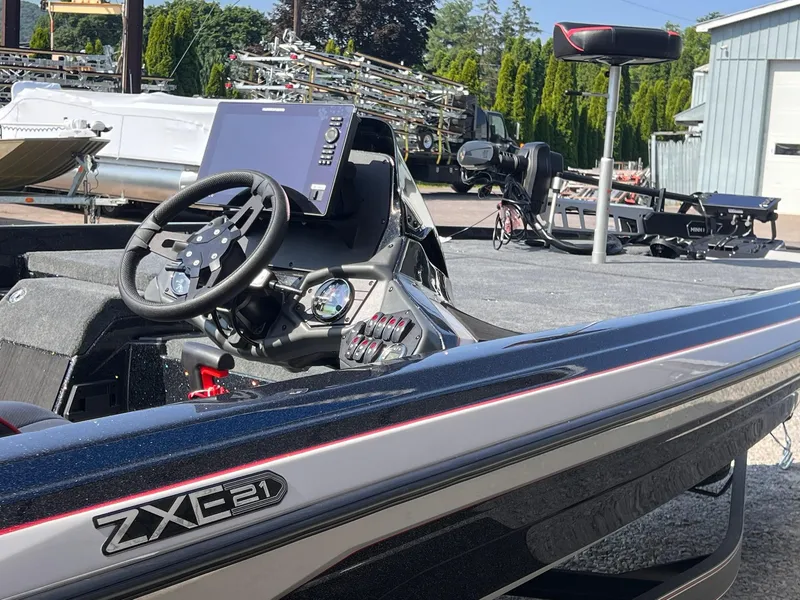
Official specifications for the 2026 ZXE21 list a boat length of 21 foot 4 inches, a 97 inch beam, a 17 inch draft, and a 48 gallon fuel capacity, with a maximum of five persons rated at 737 pounds. Standard power rating is up to 250 horsepower, and Skeeter’s ZXE21 factory package is shown with a Yamaha VF250LB, aligning with the class’s expectation of strong holeshot and high-speed tournament performance when properly propped and loaded. The standard-features list is a major part of the model’s appeal: Skeeter highlights a full fiberglass front deck with slam latches, an updated front deck layout, a cockpit command center with multi-function digital gauges, bolstered full-flex sport seating, expanded day-box and electronics cabinet space, and quick access at the bow electronics area, plus integrated fishing and control upgrades like stomp trim buttons, a Minn Kota Ultrex 112 trolling motor, 8 foot Minn Kota Raptors, and factory-installed Humminbird Xplore electronics at the console and bow. The model is also offered with multiple packaged color options, reinforcing its role as a configurable, ready-to-run mainstream choice. citeturn2search1turn2search2
The ZXE21 typically fits the largest slice of Skeeter’s bass-boat customer base: anglers who want a true 21 foot class platform for tournament fishing, big reservoirs, and long runs, but who also value a clean, factory-integrated setup that reduces aftermarket rigging time and decision fatigue. Skeeter’s own positioning for the ZXE line emphasizes an evolution built from decades of experience, refined with technology and craftsmanship, and aimed at delivering “unmatched performance” and “unmatched reliability,” which aligns with the needs of serious weekend anglers and competitive fishermen looking for a modern, turnkey package. The layout and equipment mix also make it versatile enough for family days because the cockpit seating, console ergonomics, and extensive storage and deck space support comfortable cruising and all-day use, while the included trolling motor, shallow-water anchors, and large electronics capability keep it squarely focused on fishing first. citeturn2search2
In terms of availability and brand investment, Skeeter’s site treats the ZXE21 as a current-production model with a clearly published starting price and a direct “Build This Boat” path alongside “Contact A Dealer,” which is typically reserved for actively marketed, orderable rigs. The fact that the ZXE line is introduced with dedicated launch-style messaging on the model page, combined with extensive standard equipment and multiple packaged color selections, signals ongoing investment to keep this series competitive and easy to spec at the dealership level. While Skeeter does not provide factory build-slot lead times on its public pages, the ZXE21’s heavy emphasis on packaged content and integrated electronics and control systems indicates it is intended to be a high-visibility part of the brand’s marketing and showroom strategy. Taken together, the 21 foot 4 inch ZXE21 format reflects Skeeter’s signature balance of size, performance capability, and packaged value, which is exactly the profile that tends to drive the broadest demand in modern bass-boat buying. citeturn2search2turn3view1
WHAT IS THE HISTORY OF THIS BOAT BRAND AND COMPANY?
Skeeter’s story begins in 1948, when Holmes Thurmond built the first Skeeter bass boat in Shreveport, Louisiana, with the specific goal of creating a purpose built freshwater fishing platform that could run efficiently with the outboards common at the time, and the company later explained that the boats were named “Skeeter” because the long, needle shaped bow resembled a mosquito. From that first just over 13 foot molded marine plywood design with a flat bottom and tumblehome side decks, the brand quickly aligned itself with practical performance for anglers, then moved into early composite progress during the 1950s as Skeeter became one of the first innovators to use fiberglass in boat construction, a step that enabled more sizes and styles to be produced in larger numbers and helped establish the durability and production scalability that would define its identity. In 1961, Ben Cook moved the Skeeter plant from Marshall to a larger operation in Longview, Texas, where Skeeter Marine began and where the first fiberglass boats of that era were built while engineering solutions such as stick steering were developed to better control longer models like the 15 foot Super Skeeter and Skeeter Magnum, and by the mid 1960s the push for bigger boats, more horsepower, and high speed control drove the introduction of a series of tri hulls that reflected the brand’s ongoing emphasis on stability, handling, and fishability as designs grew in size and capability.
In the 1970s, Skeeter expanded operations again to what became its current plant site in Kilgore, Texas, and in 1975 introduced the Wrangler, a 150 horsepower V bottom bass boat that found a natural audience on the developing bass tournament circuits as competitive angling helped shape expectations for speed, layout, and on the water efficiency. Corporate ownership changed in 1983 when The Coleman Company purchased Skeeter, a decade that also saw the launch of the Fish ‘n’ Ski series and the introduction of the first SX model, and although Skeeter noted an economic recession building toward the end of the 1980s, it continued to lean on recognized hull designs that kept the brand prominent. Through the 1990s the lineup broadened and modernized as Skeeter introduced the ZX series with advanced hull designs and updated styling, then responded to the rise of northern walleye tournament fishing by developing a line of deep V boats, highlighted by a 1994 achievement in which the company’s most popular walleye model earned Angler of the Year honors across all three major professional walleye tour circuits. During the same decade Skeeter launched its first saltwater specific boats with the Bay Pro series and pushed into larger bass platforms with models such as the 20 foot 200ZX, followed in 1995 by the 21 foot 300ZX designed to match high output 200 and 225 horsepower engines, while additional sizes like the 190ZX, 150ZX, and other models filled out a broad range for different anglers and budgets. Even as the late 1990s brought intense competition and shifting market demands across the industry, Skeeter positioned its core bass boats around technology and efficiency by introducing the ZX202 in the mid 1990s using aerospace technology and modern computer software as one of the first composite boats available in the United States, then expanding accessibility with an all new SX product line in the late 1990s, and a major turning point arrived in 1996 when Yamaha Outboards acquired Skeeter, a transition the company described as bringing new resources and advancements, followed by a 50 year milestone celebration in 1998.
With Yamaha ownership supporting continued product development, Skeeter entered the 2000s by updating hull designs and graphics on models such as the ZX202 and ZX185 and introducing a ZX Big Water and Deep V line aimed at the saltwater market, while also formalizing structural engineering advances in 2001 with the Torque Transfer Transom and Stringer System on ZX bass boat models, a construction approach designed to transfer engine loads into the stringer system and reduce stress on the transom, deck, and hull sides while providing lift along the keel. In 2006 the company moved further into integrated onboard control and premium ergonomics with the launch of the i Class series featuring modular consoles, comfort and fishability upgrades, and a Digital Multifunctional System that enabled touch keypad control of onboard systems, and as the decades progressed the Kilgore, Texas operation continued to evolve in ways that supported greater vertical integration and manufacturing control. A major facility milestone was reached in 2017 when Skeeter expanded in Kilgore with a 43,000 square foot trailer factory, enabling in house production of Skeeter Built trailers, and by 2020 the brand’s modernization was showcased in the FXR series, described as an all new hull created with CAD design and extensive research and performance testing, with increased deadrise and a modified pad for a smoother ride alongside larger casting decks and a wider cockpit made possible by increased length and beam, plus lighter materials and redesigned structural components throughout. That same year Skeeter expanded its bay boat presence with the SX2550, described as the largest bay boat Skeeter had produced and designed to balance fishing and family use with features including an oversized console with a built in head and a Carolina flared hull.
In the current era Skeeter has continued refining its portfolio across bass, bay, and deep V categories while reinforcing its performance fishing identity from its Kilgore, Texas base, and the company has highlighted long running customer satisfaction recognition through NMMA CSI awards as part of its modern brand positioning. Product development remains active, as shown by a June 11, 2025 announcement introducing the ZXE bass boat model line with the ZXE20 and ZXE21, positioned as a performance oriented offering powered by Yamaha V MAX SHO 250 horsepower outboards and featuring updates such as upgraded gauges with digital functions, all fiberglass front deck updates, and revised seating, with availability stated for June 2025 through select authorized dealers, which signals a continued emphasis on integrating contemporary electronics, wiring, and user focused layouts into mainstream model families. Alongside new model introductions, Skeeter’s owner community remains a visible part of its continuity, including the annual Skeeter Owners Tournament that the brand promotes as a major gathering for its customers, and together these initiatives reflect a company that still ties its reputation to the same fundamentals described in its historical narrative: fishing first layouts, engineering driven hull development, and a steady pattern of investing in construction systems and in house capabilities such as trailer manufacturing. Today Skeeter presents itself as a legacy performance fishing boat builder that traces directly back to Holmes Thurmond’s 1948 concept and continues to pair that heritage with ongoing product line evolution under Yamaha ownership, using decades of hull, materials, and systems development to sustain customer trust and compete in a market that increasingly rewards both on the water performance and manufacturing consistency.
AWARDS AND RECOGNITIONS
Skeeter’s most clearly documented third party honors in recent decades come from the Minneapolis Innovation Awards, a program presented at the Discover Boating Minneapolis Boat Show and administered by the National Marine Manufacturers Association in partnership with Boating Writers International. In 2018, Skeeter earned the Fiberglass Fishing Boats Innovation Award for the WX2060, a recognition aimed at new models or major redesigns that bring meaningful, consumer focused innovation to market. In 2019, the brand followed with another Fiberglass Fishing Boats Innovation Award for the WX2200, a big water Deep V platform noted by judges for engineering that combined materials to deliver strength, weight control, and usable storage improvements suited to tough tournament conditions. Most recently, Skeeter was again honored in 2024, winning the Fiberglass Fishing Boats Innovation Award for the WXR2060F, recognized for adding significant deck space while redesigning the hull structure to reduce flex and improve stability around the console pods, reinforcing Skeeter’s visibility for functional innovation in premium fishing boats.
Alongside model based innovation recognition, Skeeter has built a long running record with the NMMA Marine Industry CSI Awards for customer satisfaction, one of the most cited owner experience benchmarks in the U.S. marine sector. As reported in an NMMA CSI announcement tied to the 2025 Miami International Boat Show, Skeeter received its 23rd consecutive NMMA CSI Award for excellence in customer satisfaction, and it was recognized in both the Fiberglass Outboard Boat category and the Fiberglass Bass Boat category. The NMMA CSI program is based on independently measured, standardized customer feedback from new boat purchasers, and it is designed to help participating manufacturers track satisfaction results and continuously improve the ownership experience. Taken together, Skeeter’s Minneapolis Innovation Awards and its multi decade CSI performance point to a brand reputation built on engineering that solves real on the water problems, consistent product quality, and repeatable service standards that support long term buyer confidence.