Viking Yachts
Searching boats for you...
Viking Yachts – Technical and Historical Guide
ABOUT THIS BOAT BRAND
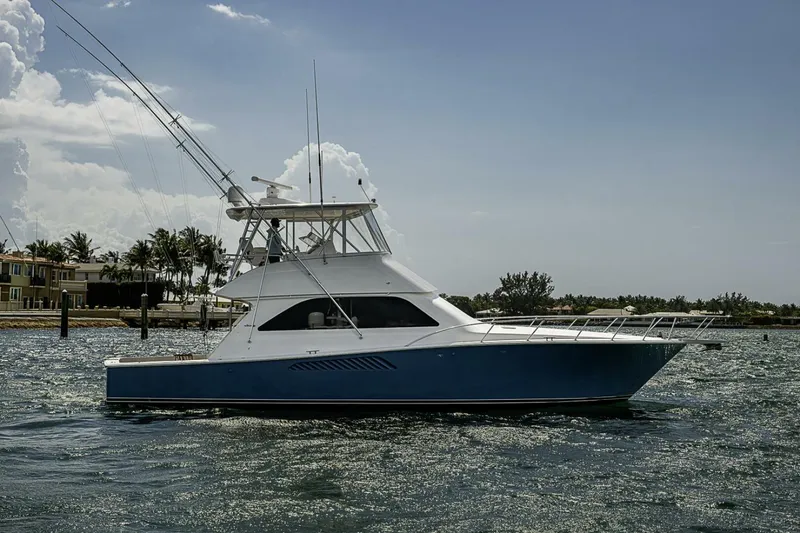
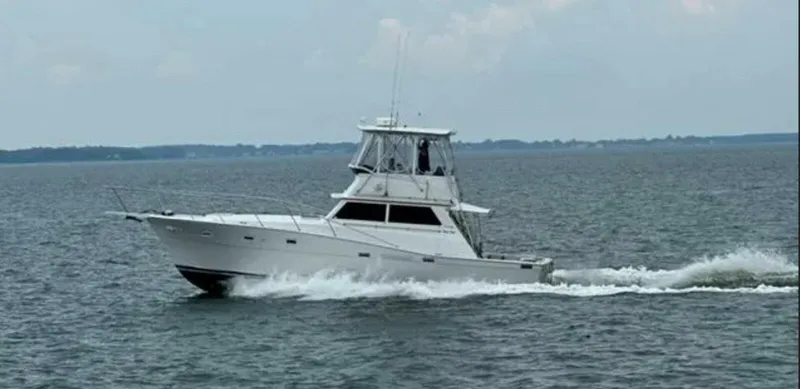
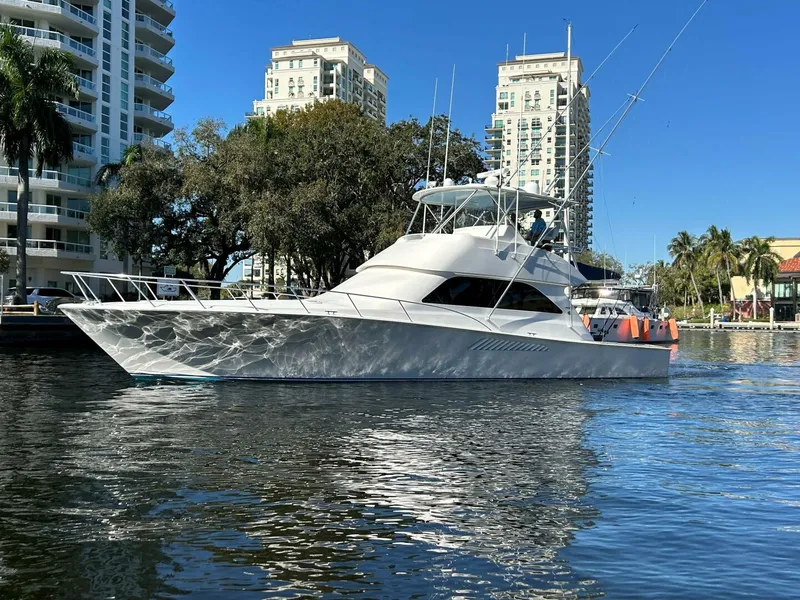
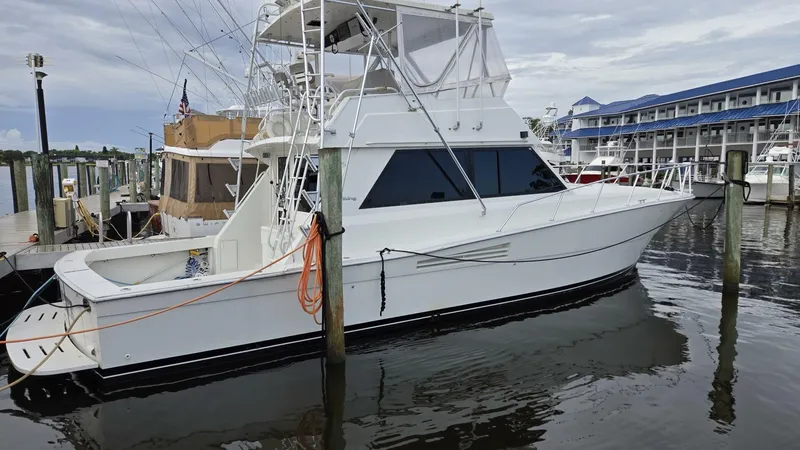
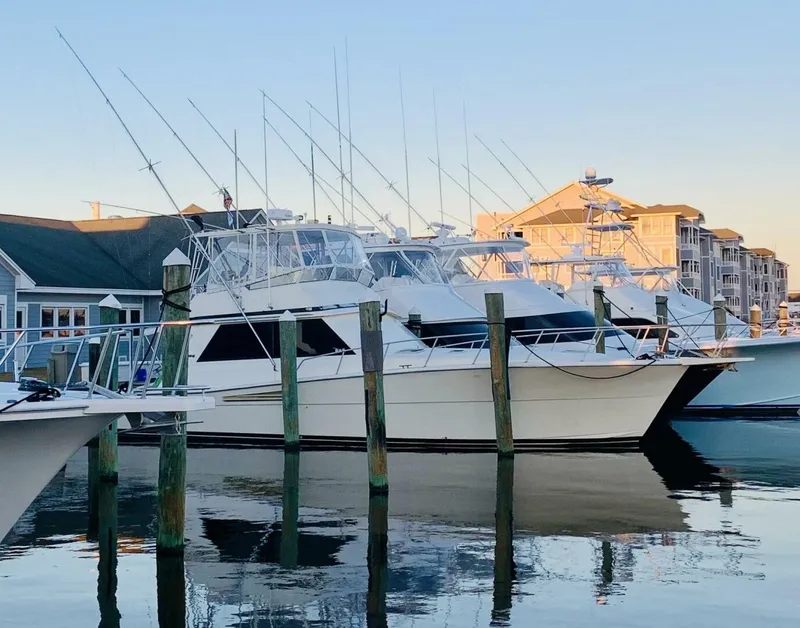
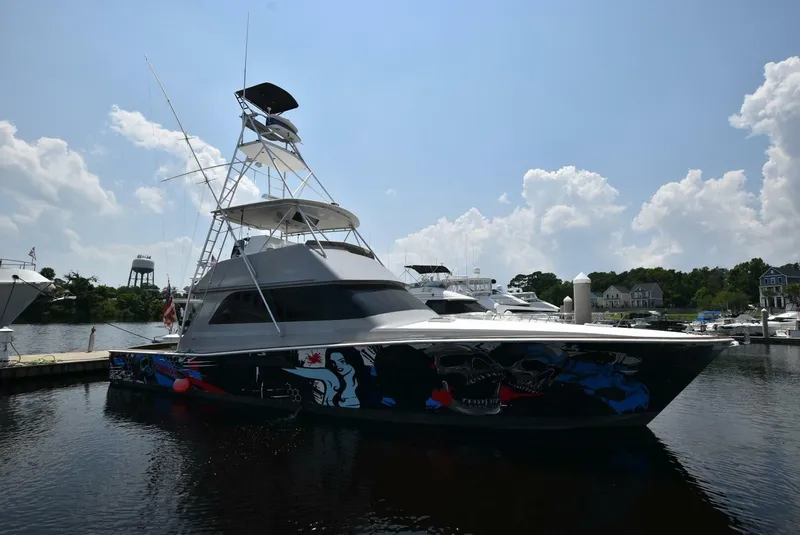
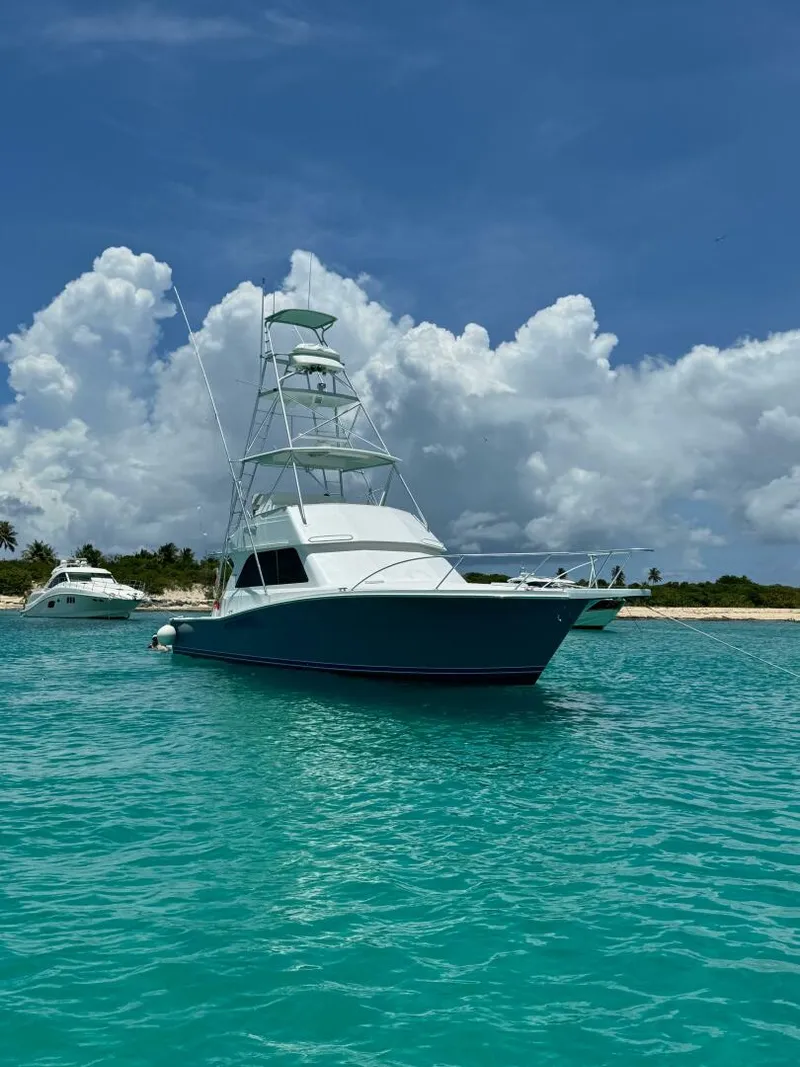
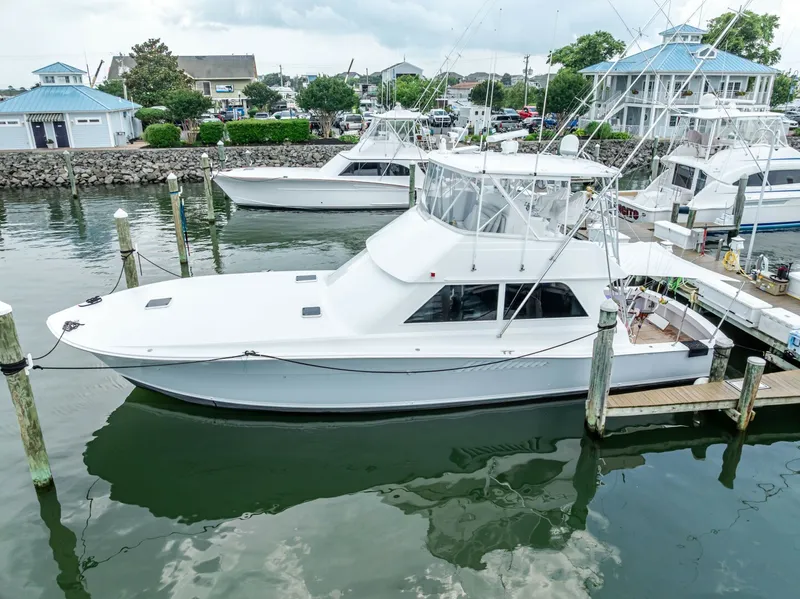
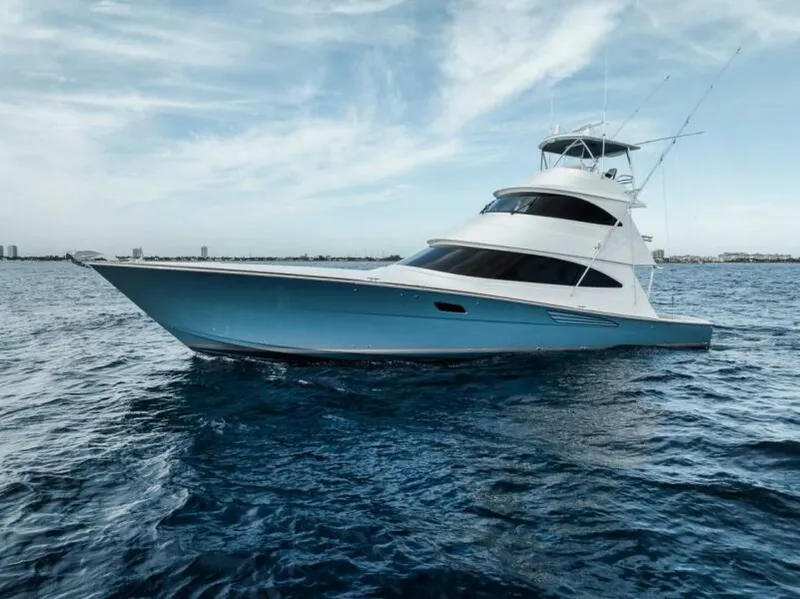
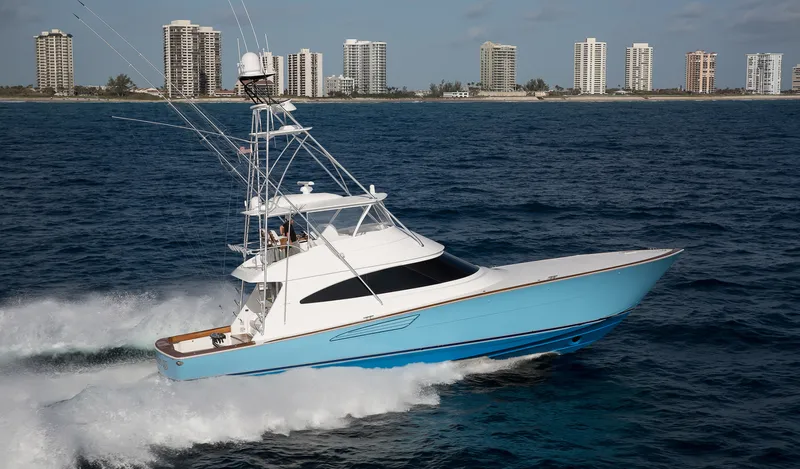
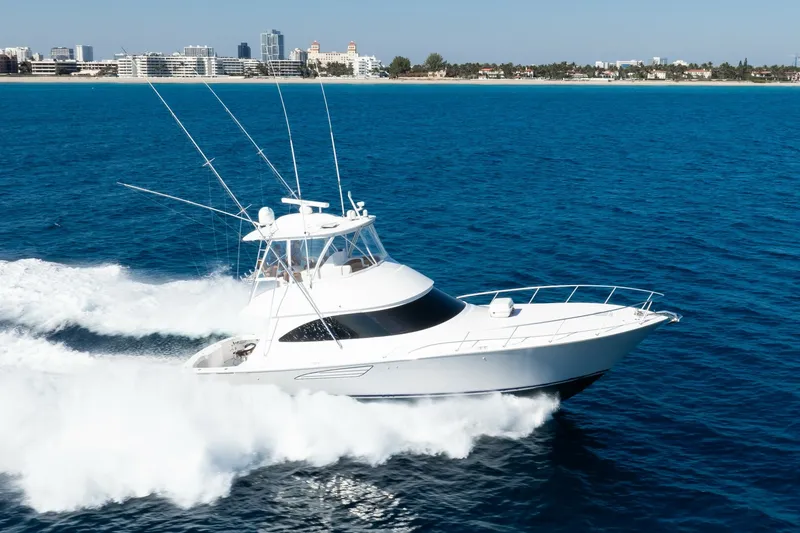
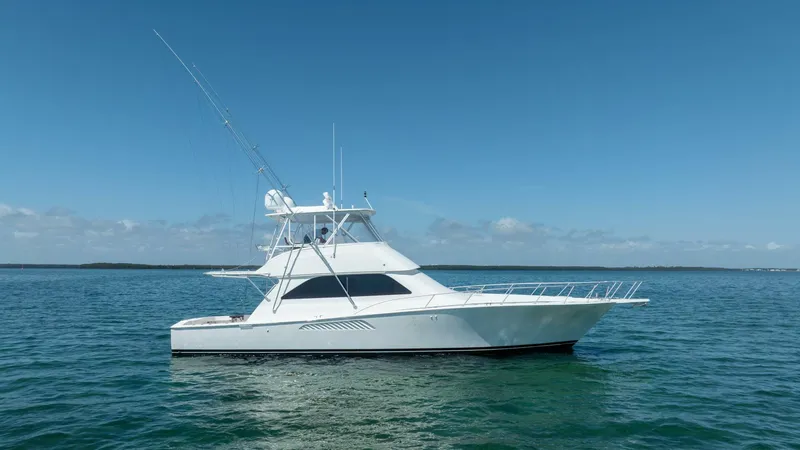
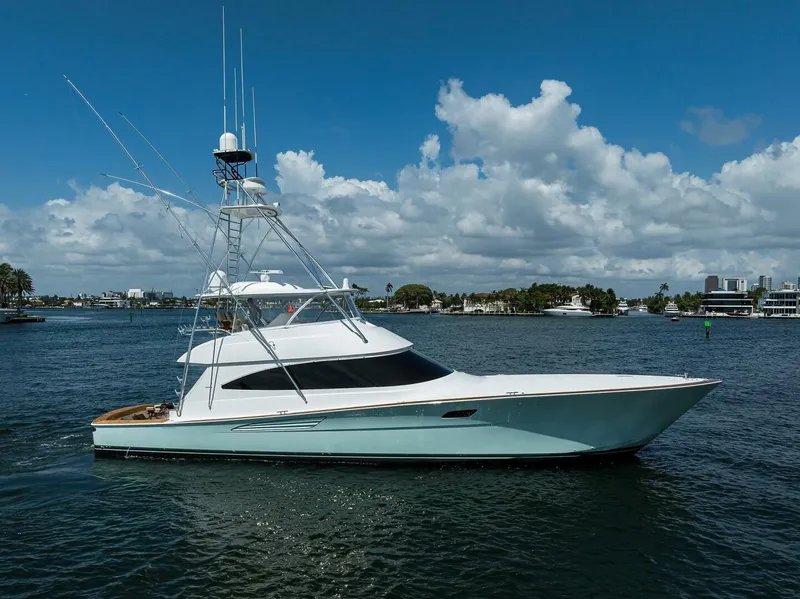
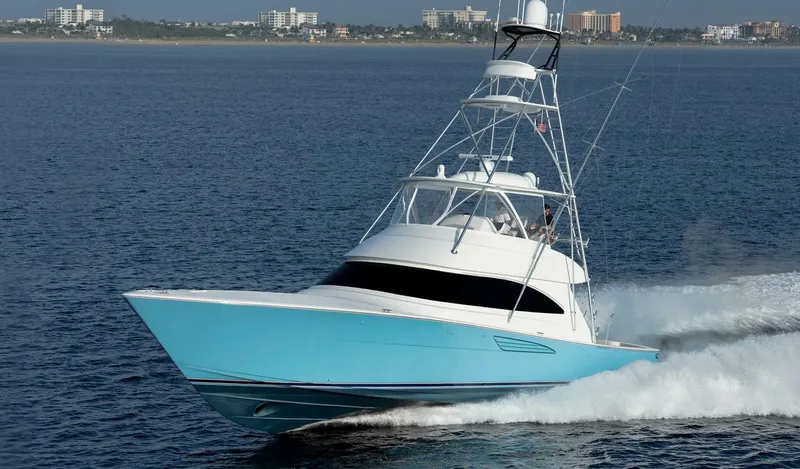
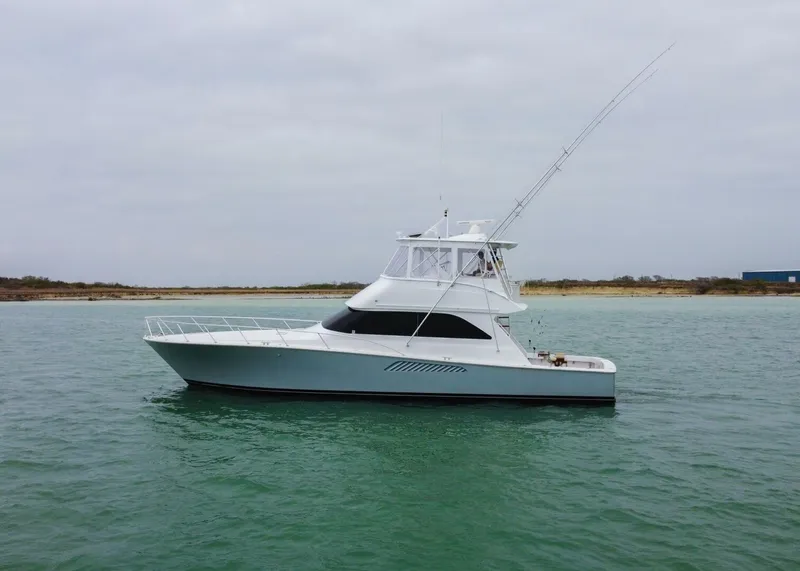
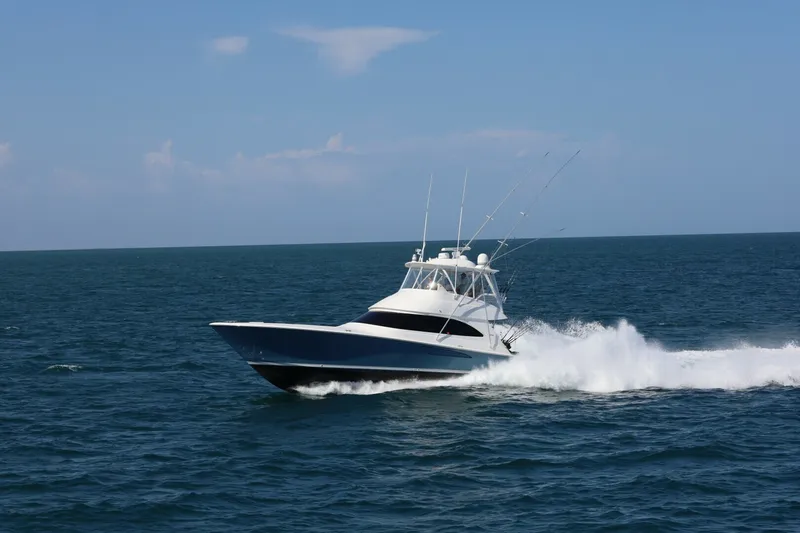
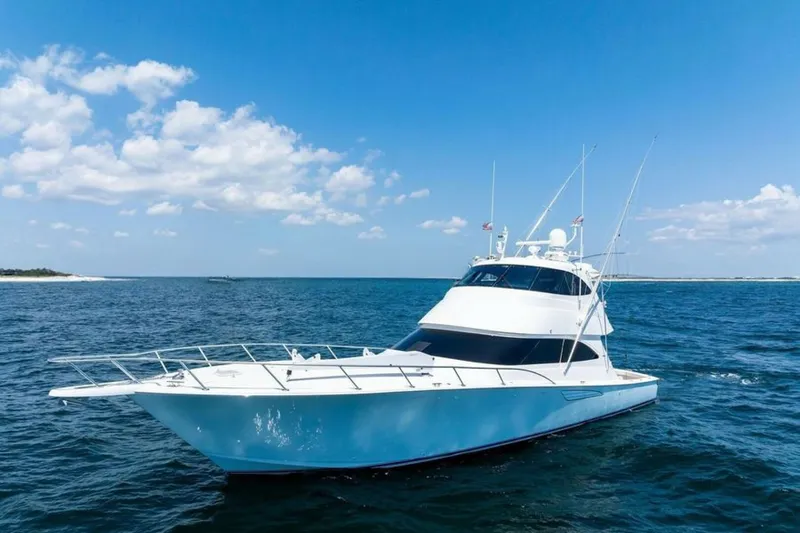
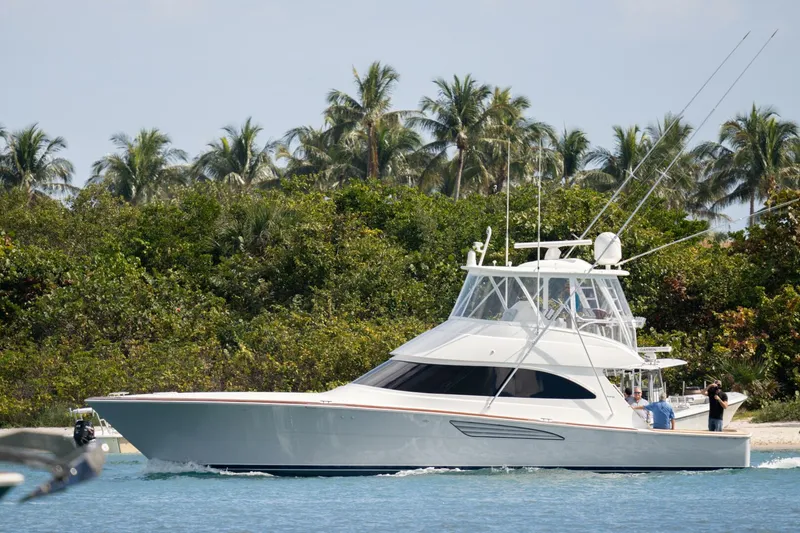
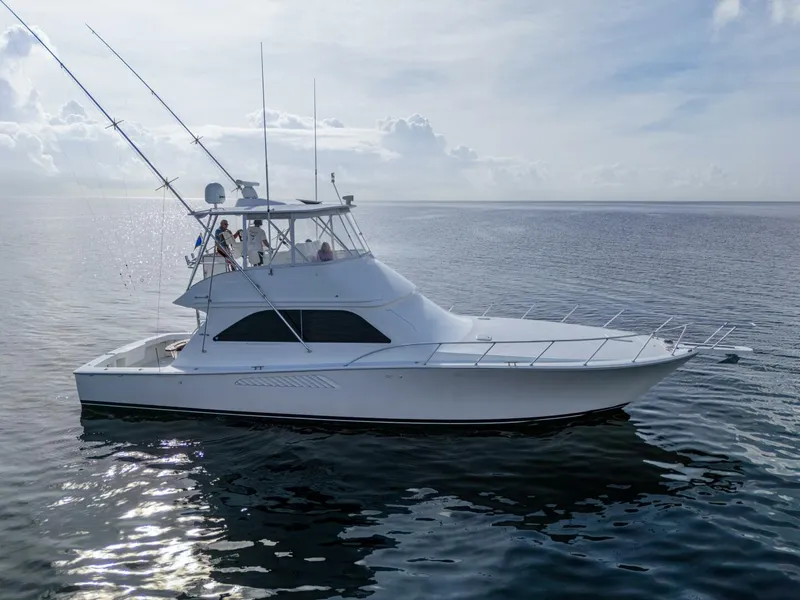
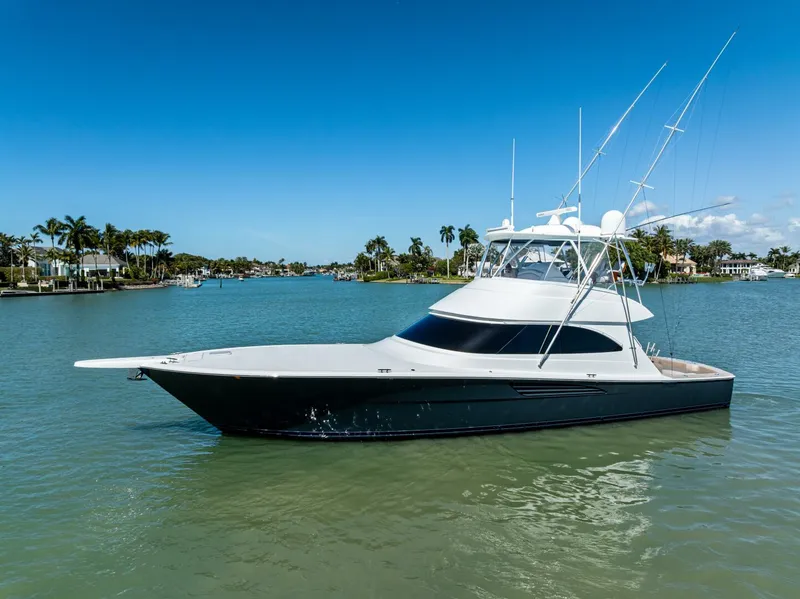
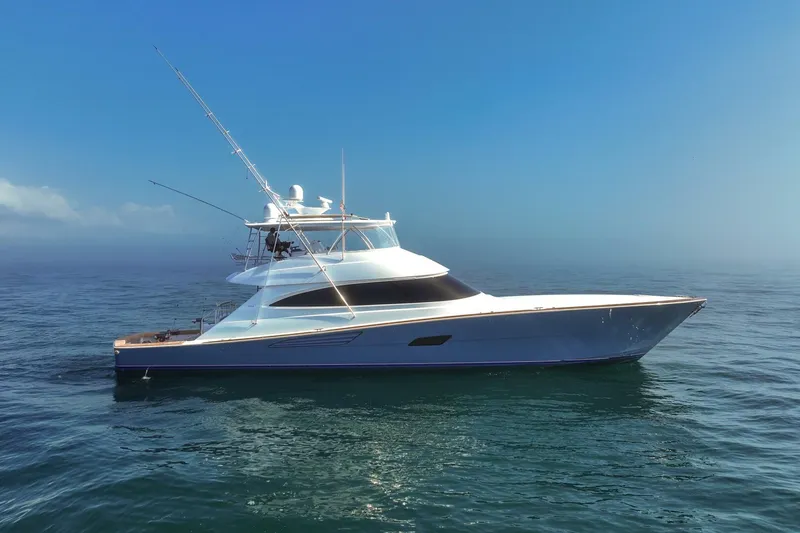
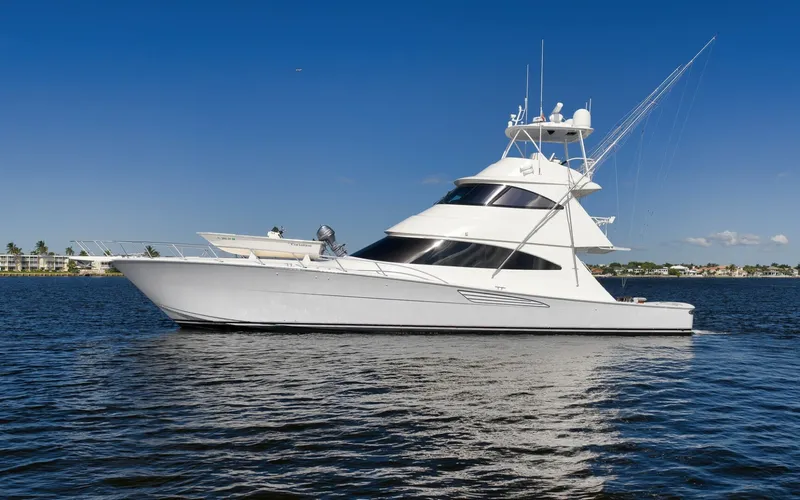
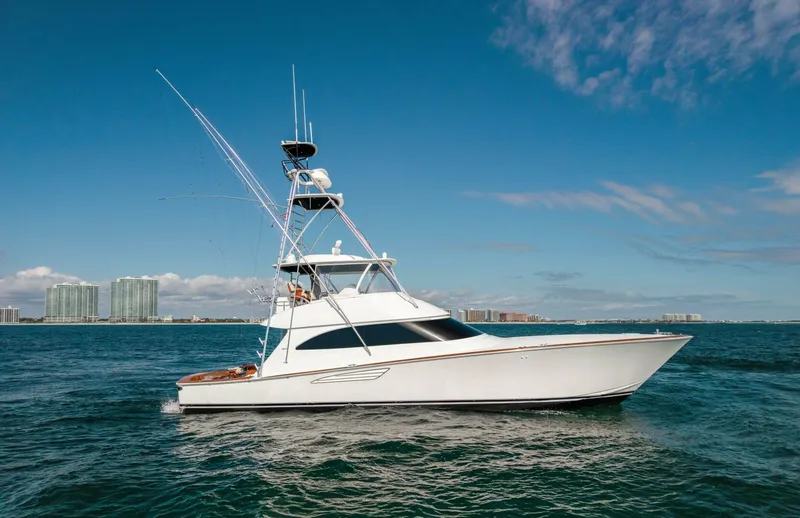
Viking Yachts is an American boat manufacturer renowned for producing high‑performance sportfishing yachts and luxury convertible models since its founding in 1964 in New Jersey. Established by brothers Bill and Bob Healey, Viking Yachts built its reputation on in‑house engineering, aggressive product development, and a focus on “building a better boat every day,” a philosophy that drives constant refinement in hull design, propulsion, and onboard systems. The company is privately held and vertically integrated, allowing tight control over quality from lamination through final outfitting, and it has become one of the most recognized names in sportfishing vessels in the 40 to 90 foot range. With numerous tournament wins, industry awards, and a strong presence at major boat shows, Viking Yachts is widely regarded as a benchmark brand in the premium sportfishing and motor yacht segment, trusted by serious offshore anglers and experienced captains worldwide.
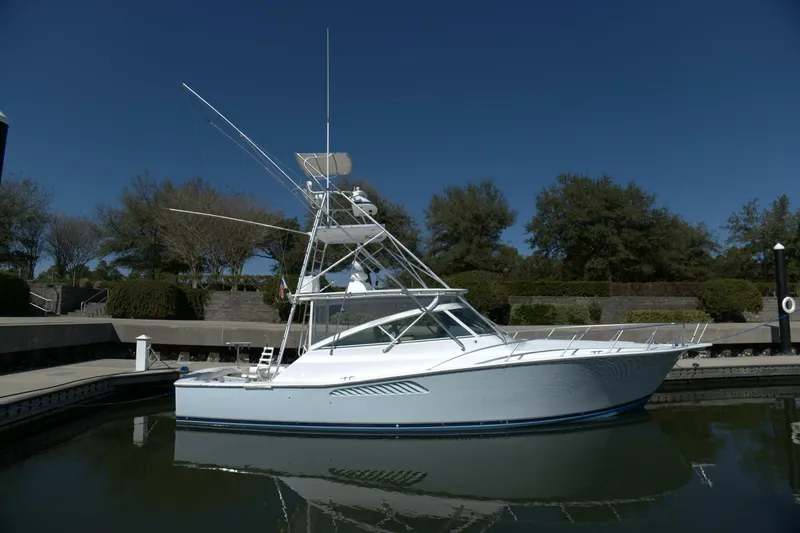
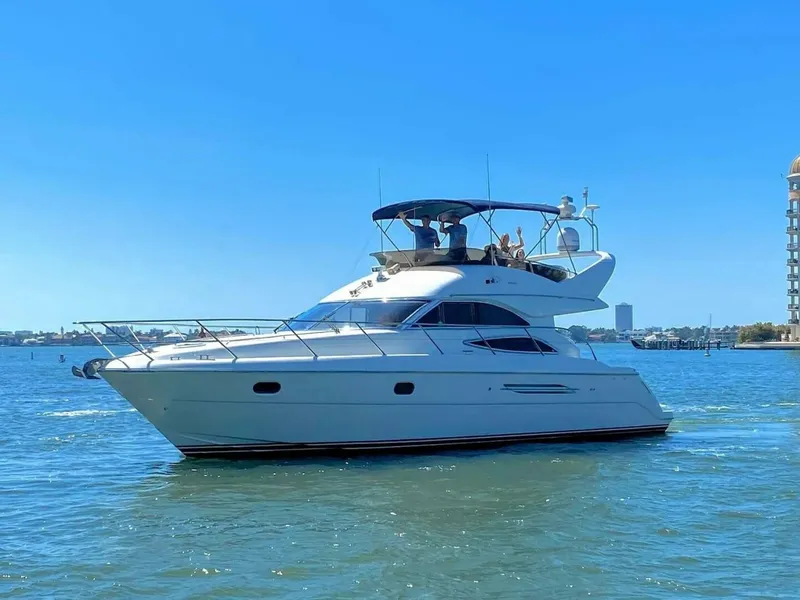
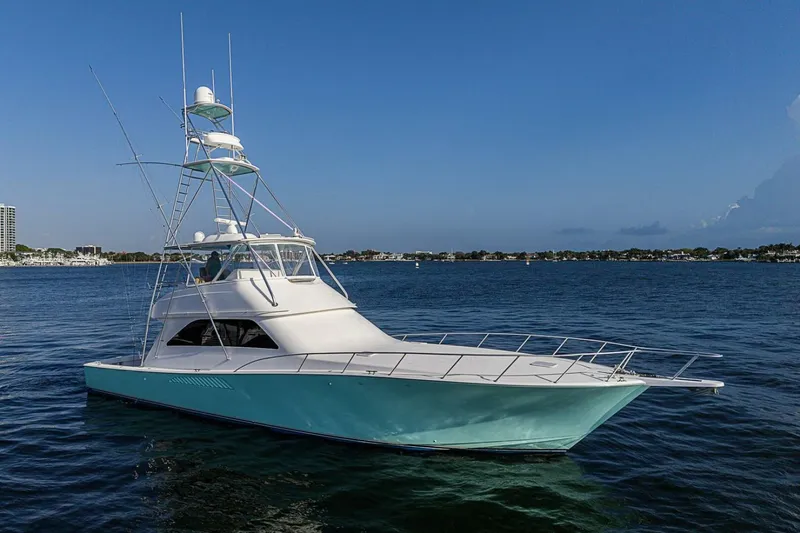
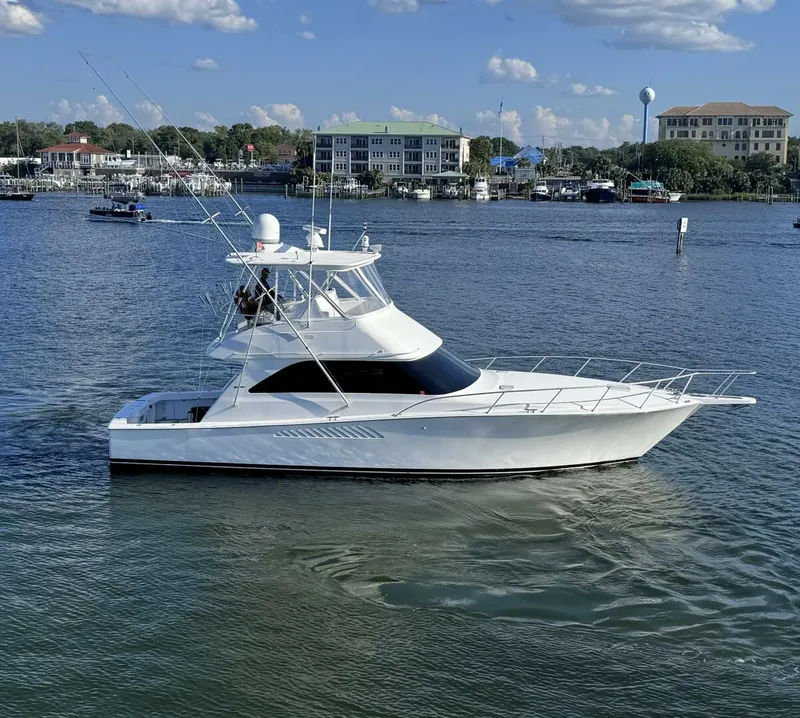
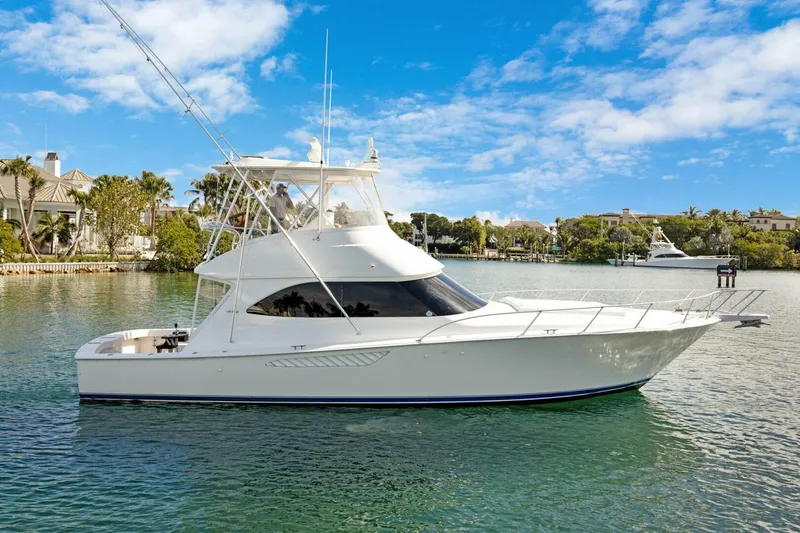
Specializing in diesel-powered offshore boats for blue water use, Viking Yachts targets serious offshore anglers, owner‑operators, and sportfishing tournament teams who demand speed, range, and fishability without sacrificing comfort. The brand is best known for its convertible sportfishing yachts, open series, and enclosed bridge models, along with select motor yacht and sky bridge configurations. Drawing on decades of in‑house naval architecture, many Viking Yachts hulls feature advanced resin‑infused construction, deep‑V running surfaces optimized for high cruise speeds, and tournament‑proven cockpit layouts with integrated livewells, fish boxes, and mezzanine seating. Technical highlights commonly include integrated hardtops with tower options, sophisticated helm electronics packages, Seakeeper gyro stabilization, optimized engine room access, and carefully engineered weight distribution for efficient, ocean‑capable performance. This focus on purpose‑built center console–style fishability in large sportfishing yachts, combined with robust construction and continual design evolution, makes Viking Yachts a preferred choice for demanding offshore crews and tournament fishing programs.
WHAT MAKES THIS BOAT BRAND SPECIAL?
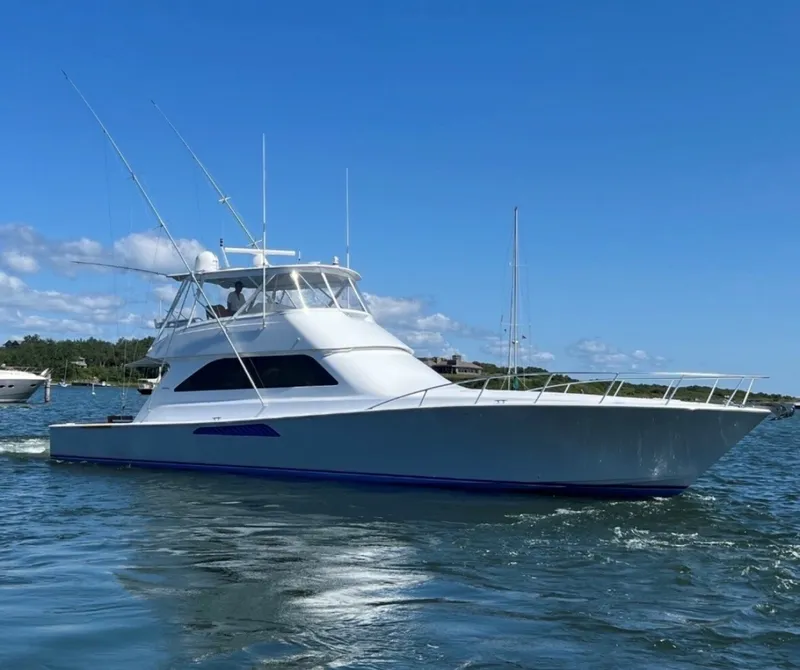
Viking Yachts stands apart in the sportfishing and luxury convertible market with aggressive, tournament-proven hull designs, in-house engineered running surfaces, and an obsessive focus on performance. From their sharp entries and convex deadrise to optimized weight distribution, Viking Yachts hulls are built for fast, dry, and confident runs offshore in rough conditions while maintaining impressive fuel efficiency. Advanced resin-infusion, vacuum-bagging, and composite coring create a strong, lightweight structure that feels solid in a head sea yet remains nimble around the dock. Viking Yachts also integrates custom-engineered propulsion packages, hardtop and tower designs, and ergonomically planned cockpits to give anglers every advantage when chasing billfish, while interiors deliver the comfort, storage, and livability serious owners expect for extended bluewater adventures.
From their vertically integrated manufacturing campus in New Gretna, New Jersey, Viking Yachts controls nearly every step of the build process under one roof, which allows for tight quality control and true semi-custom flexibility. A highly skilled workforce of long-tenured shipwrights, laminators, electricians, and joiner craftsmen blend modern CNC precision with traditional hand-finished cabinetry to give each Viking Yachts model a distinct, yacht-level feel. Premium materials such as high-strength fiberglass laminates, engineered coring, marine-grade alloys, and yacht-quality hardware are paired with ABYC and NMMA-compliant systems for added safety and reliability, backed by comprehensive factory support and strong warranty coverage. Owners consistently praise the solid ride, resale value, and pride of ownership that come with Viking Yachts, positioning the brand as a top choice for serious offshore anglers and cruising families who want a fast, capable, and luxuriously finished sportfishing yacht.
WHAT DIFFERENT TYPES OF BOATS DOES THIS BOAT BRAND BUILD?
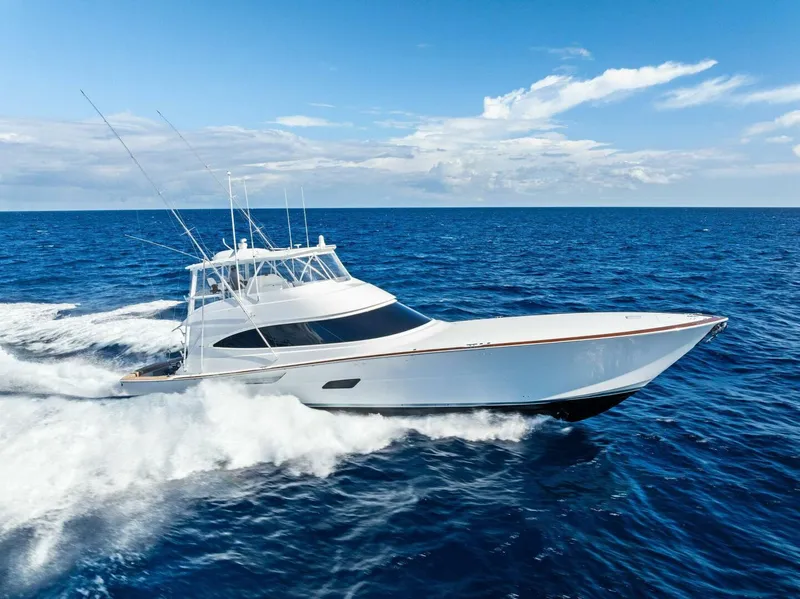
Viking Yachts is a premier builder of luxury sportfishing and cruising yachts, renowned for powerful inboard propulsion and offshore capability. While specific sizes are not listed here, Viking Yachts is widely associated with a comprehensive range of large, tournament-ready sportfishing convertibles and sophisticated motor yachts designed for extended bluewater cruising. The brand’s lineup typically spans enclosed-bridge and open-bridge configurations, as well as express and open series that cater to serious anglers and upscale family boating alike. Across this range, Viking Yachts emphasizes performance, seakeeping, and finely crafted interiors that support both hardcore fishing and comfortable long-distance travel. Below are the types of boats and models Viking Yachts builds, along with their key characteristics and uses:
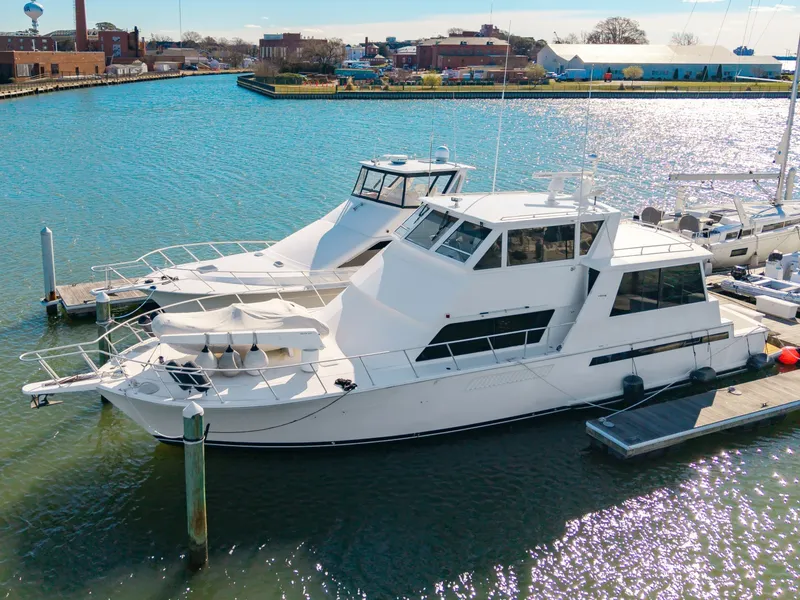
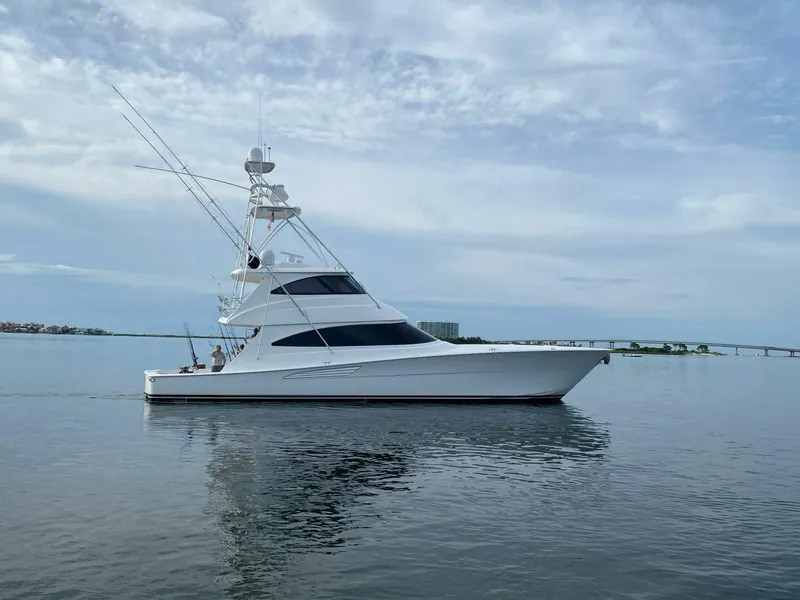
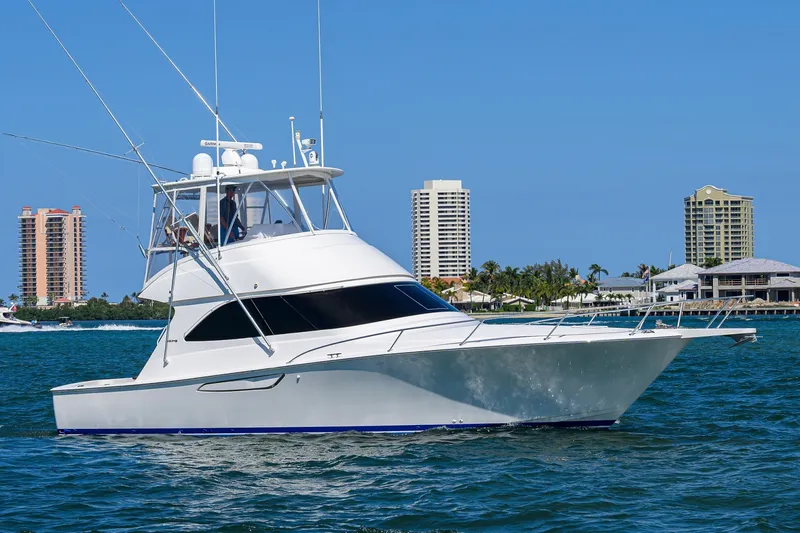
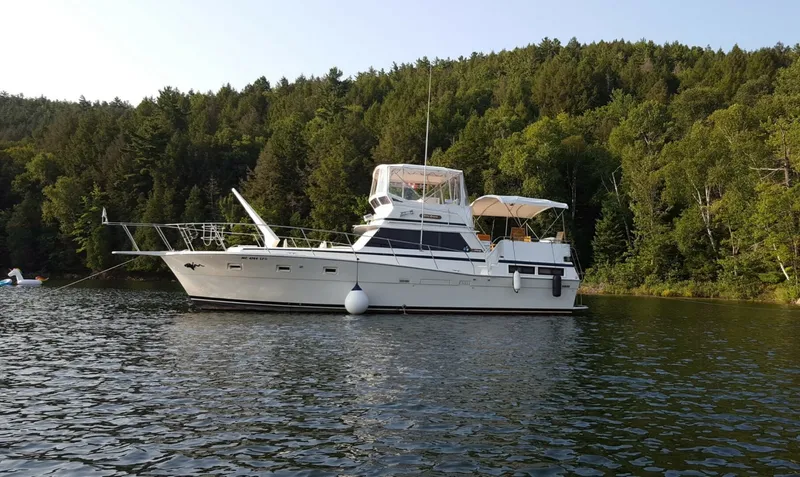
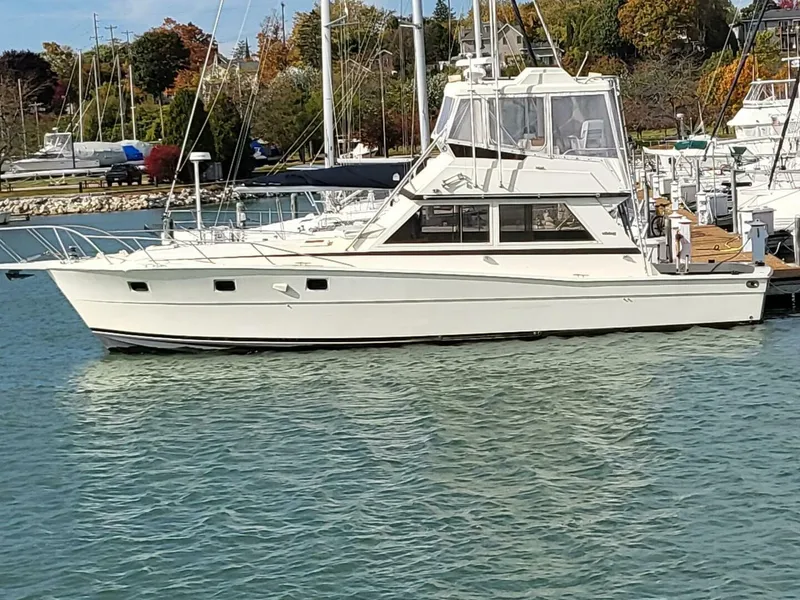
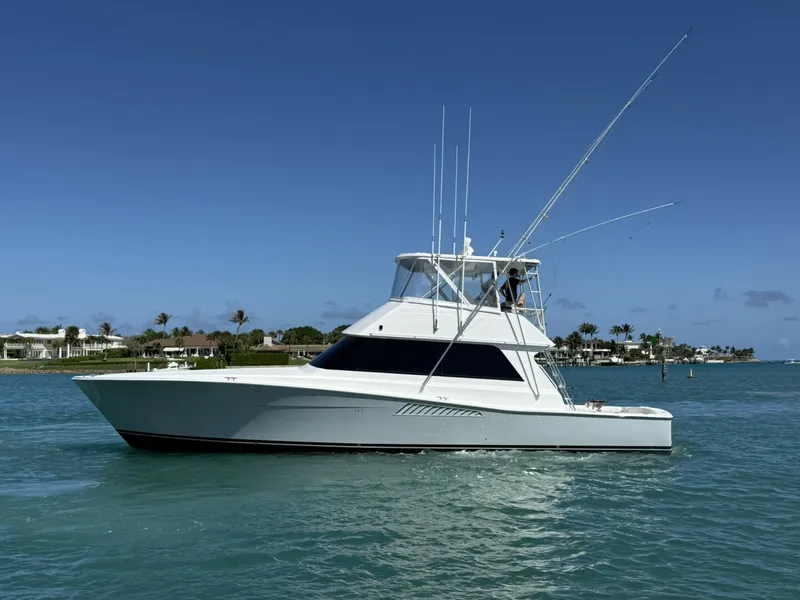
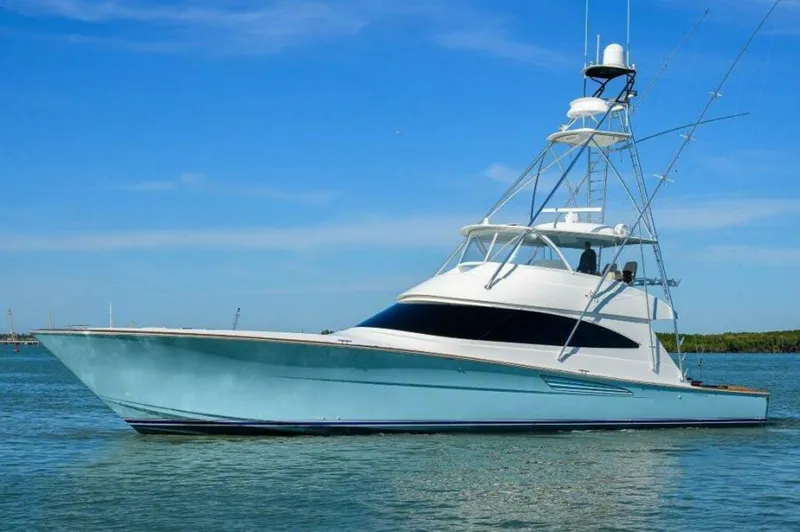
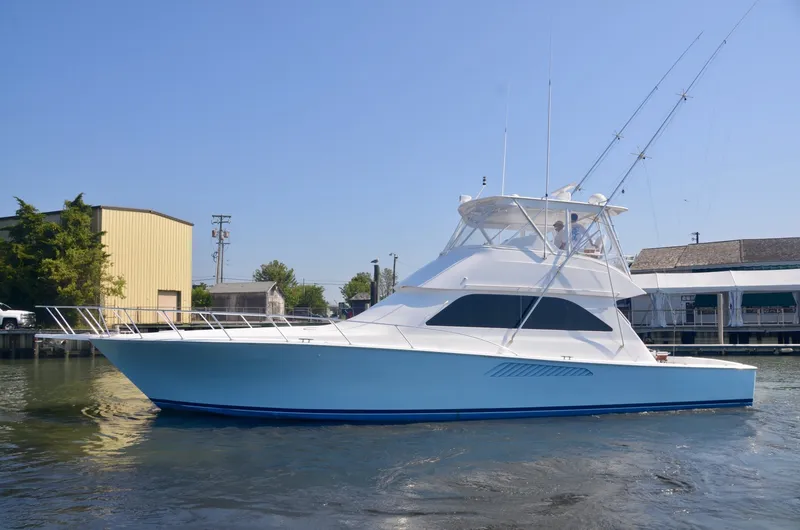
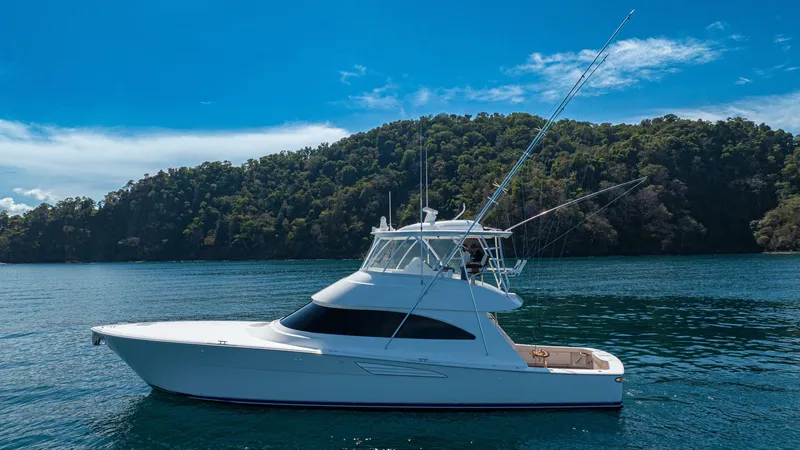
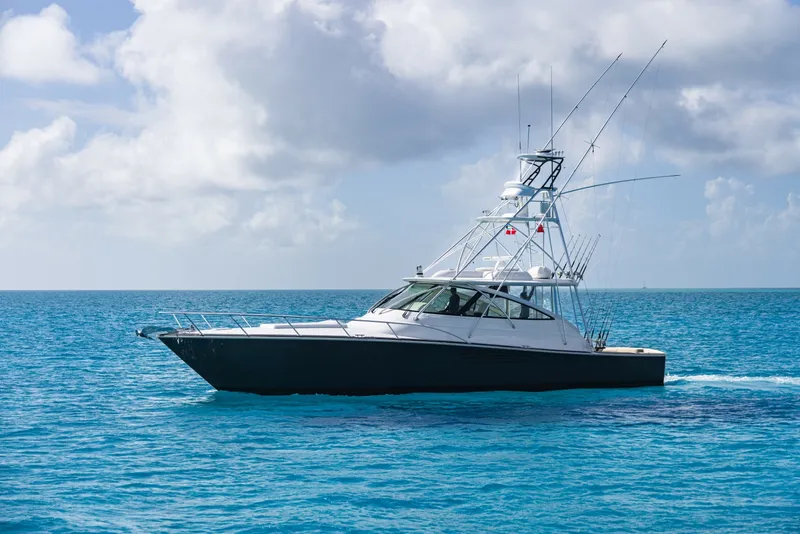
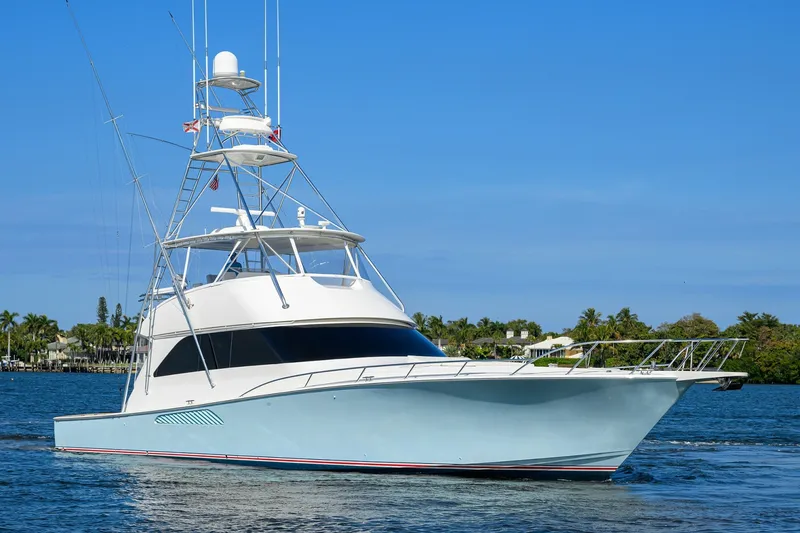
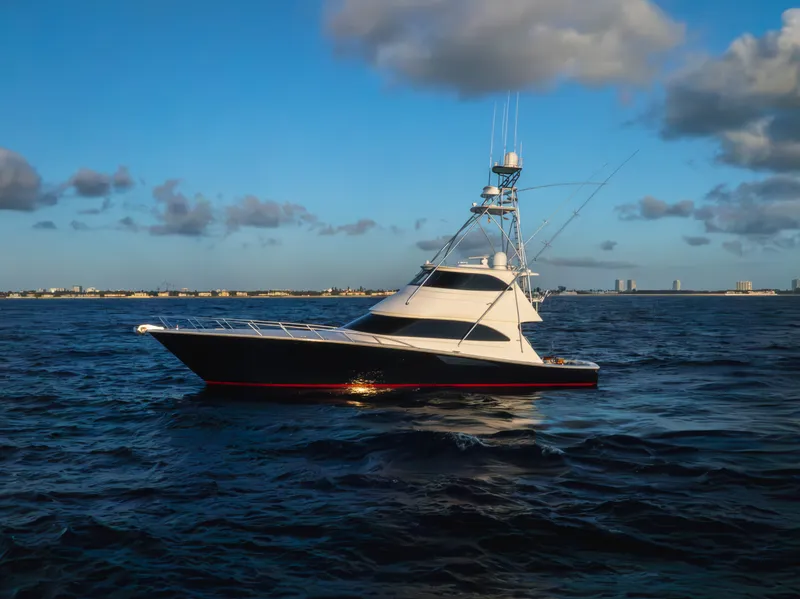
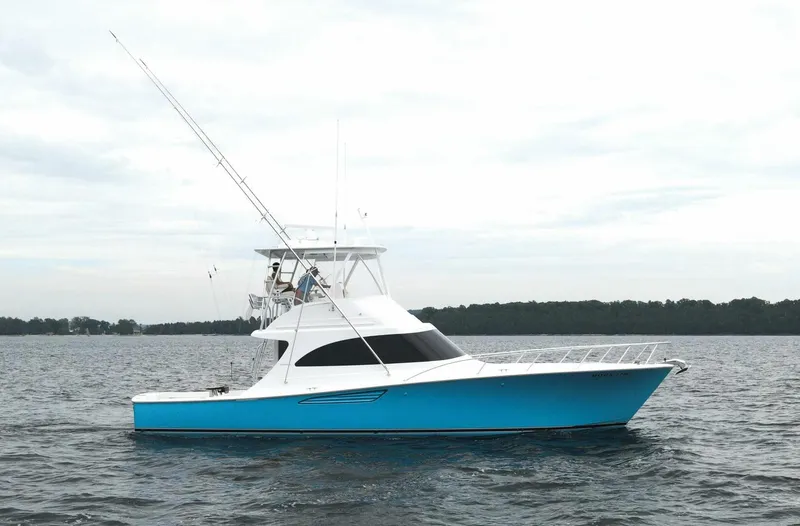
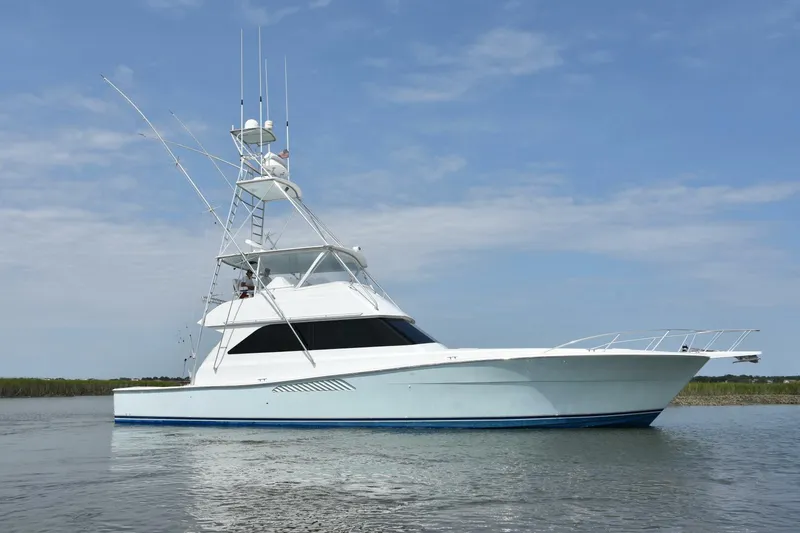
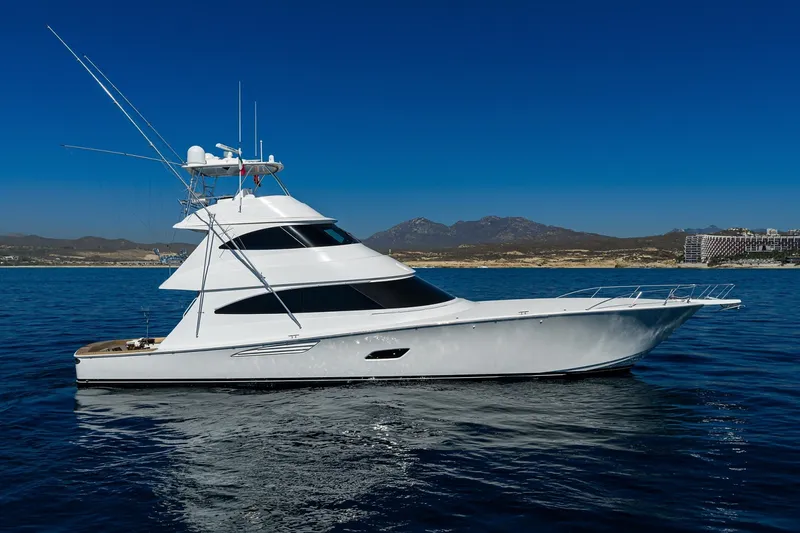
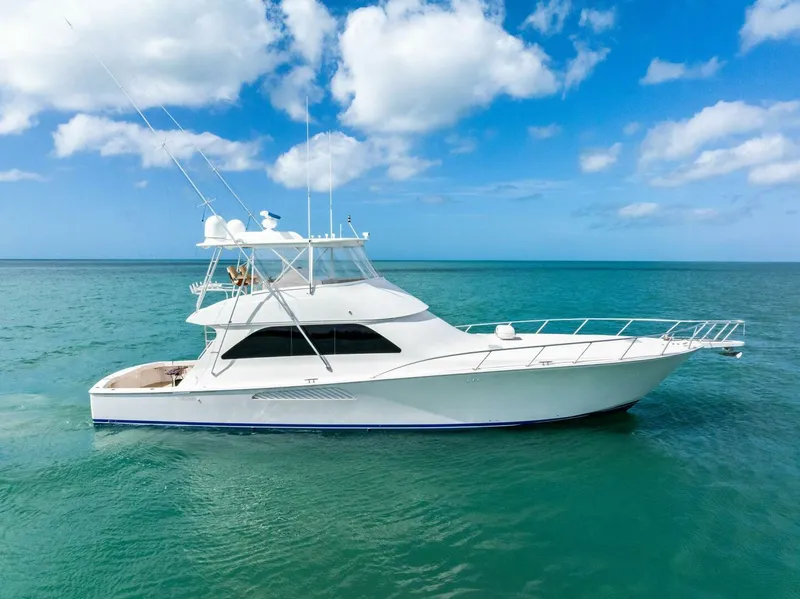
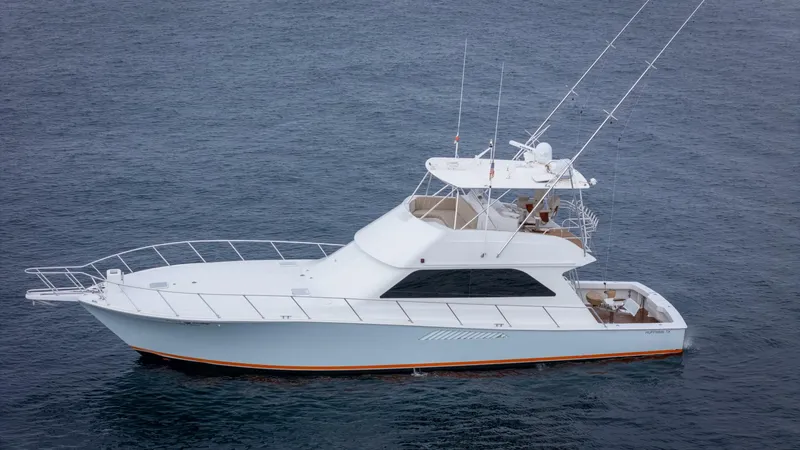
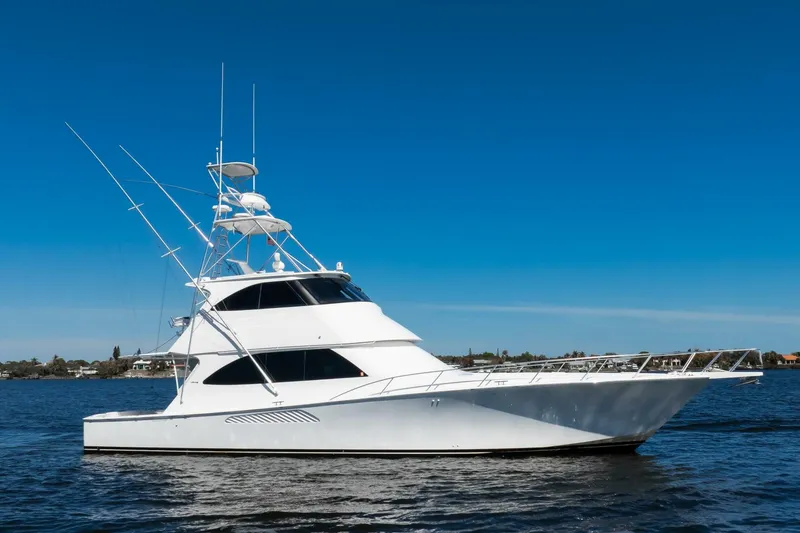
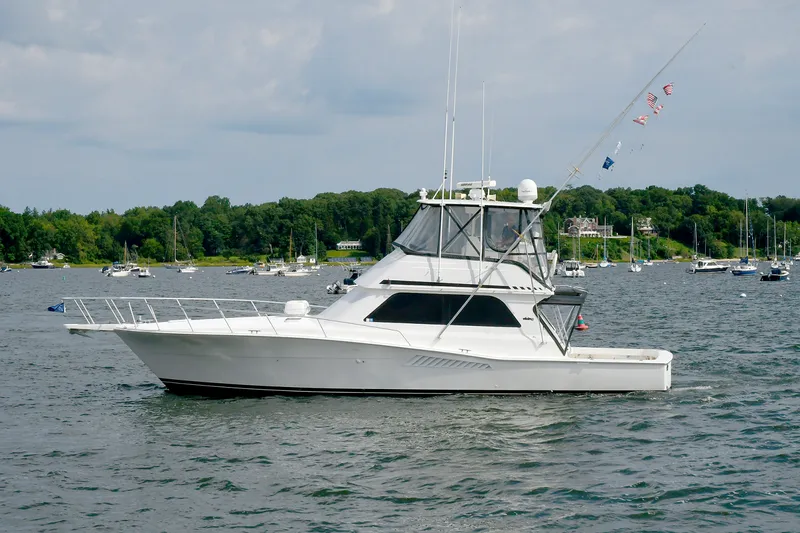
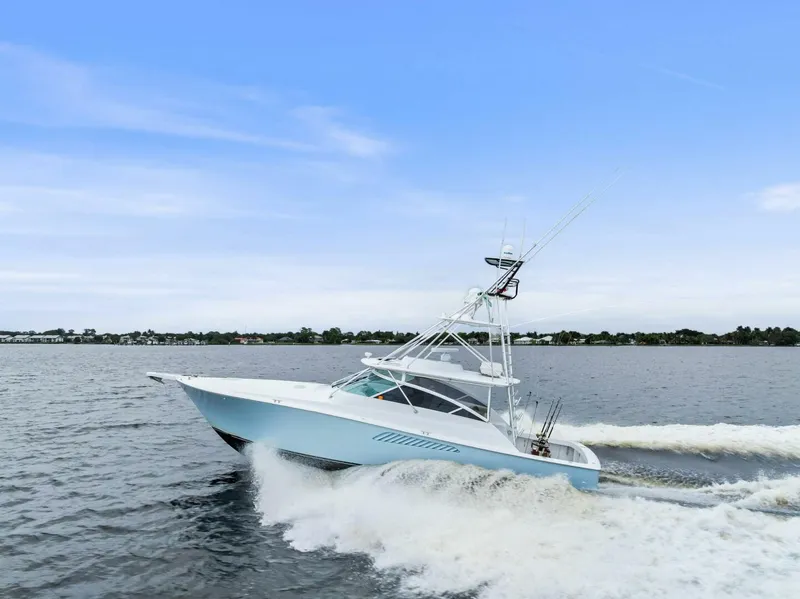
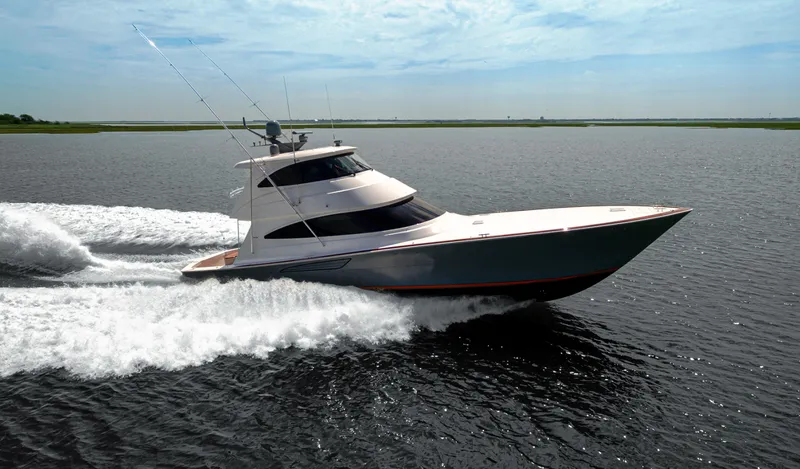
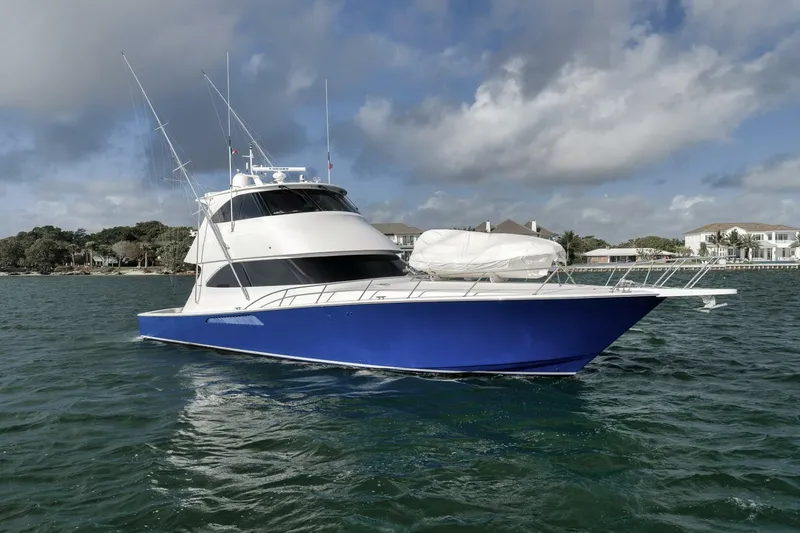
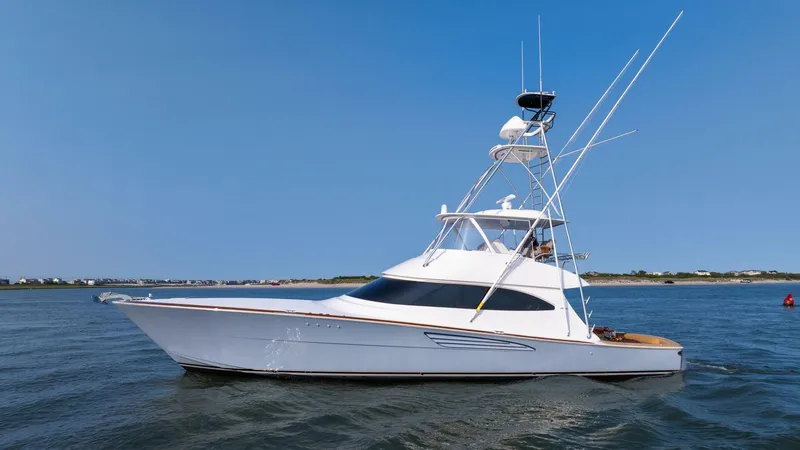
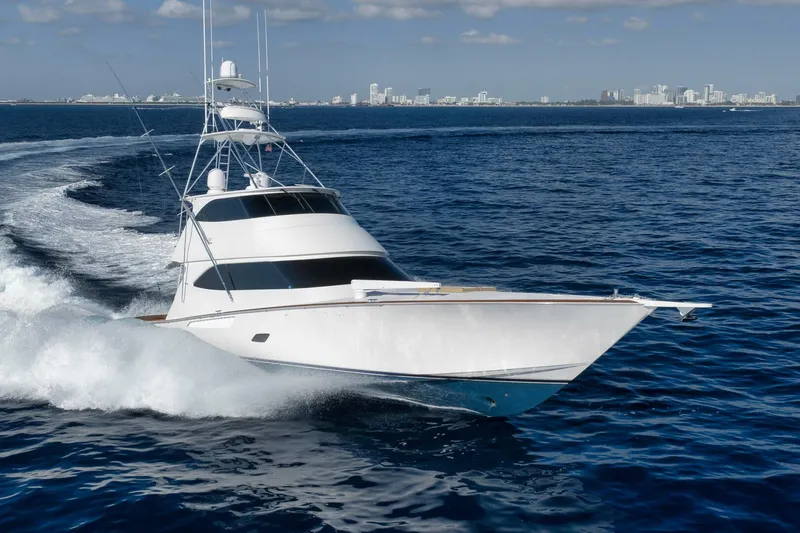
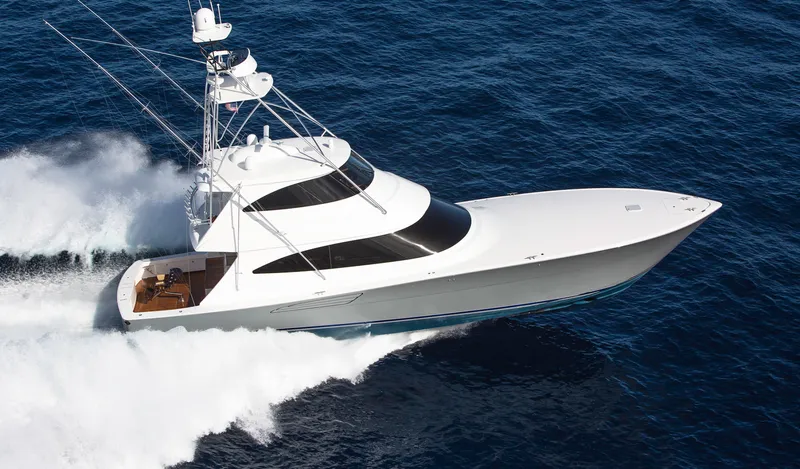
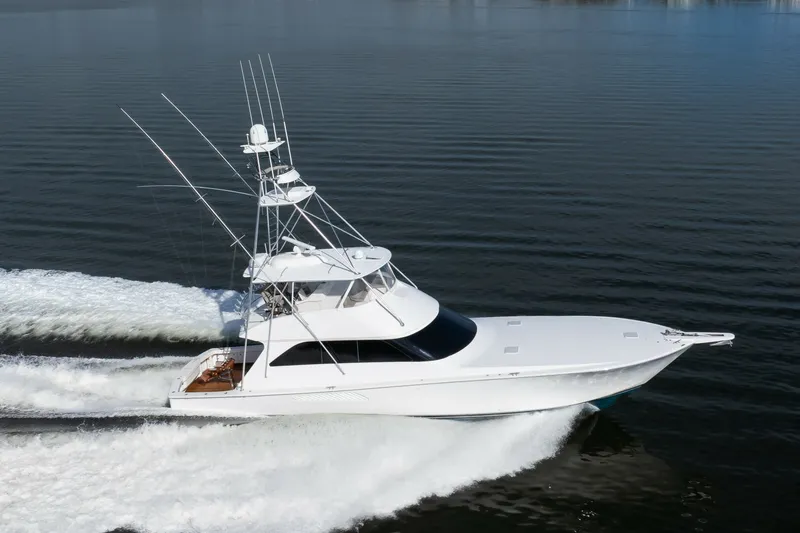
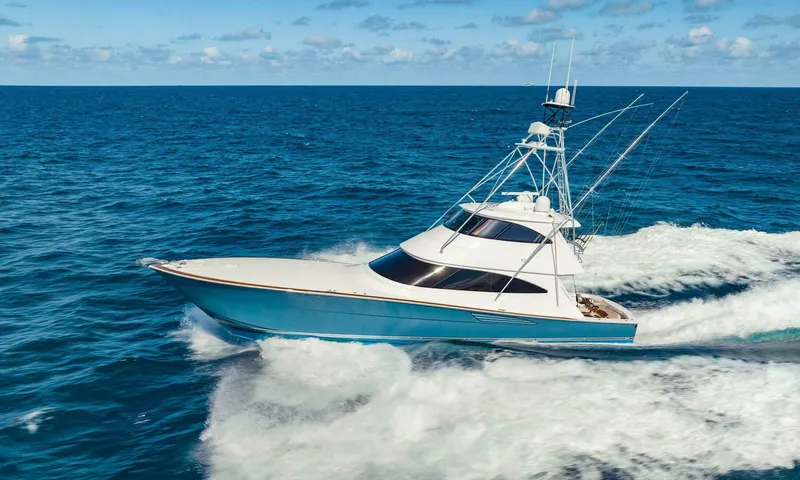
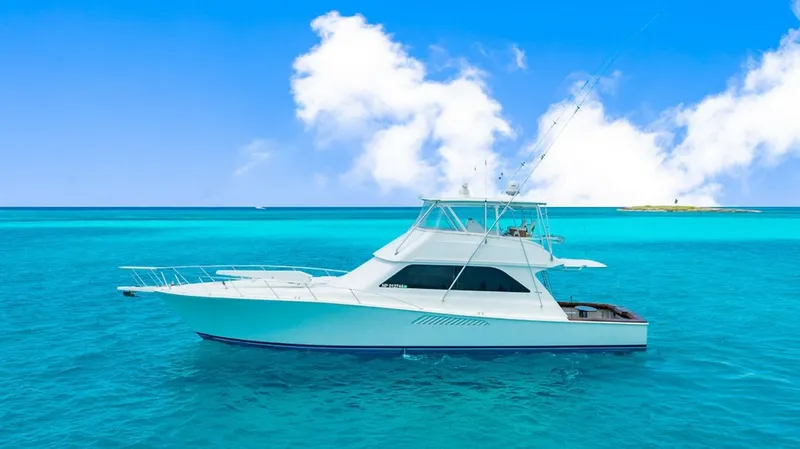
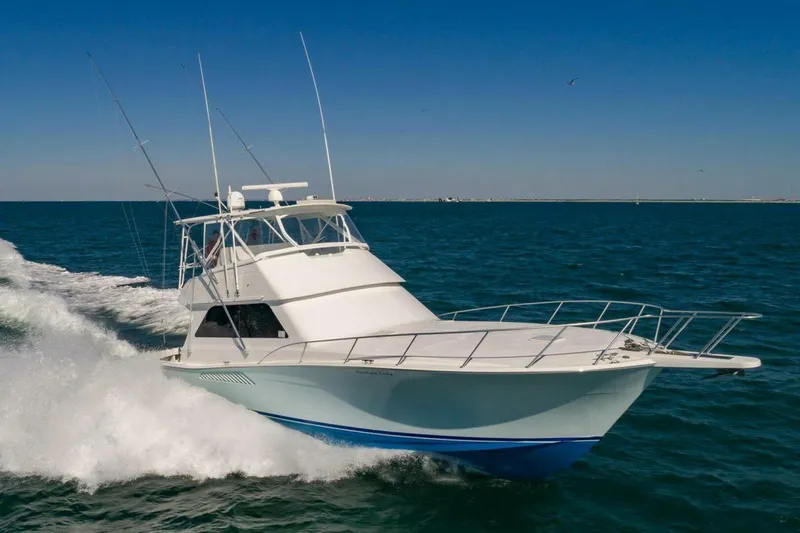
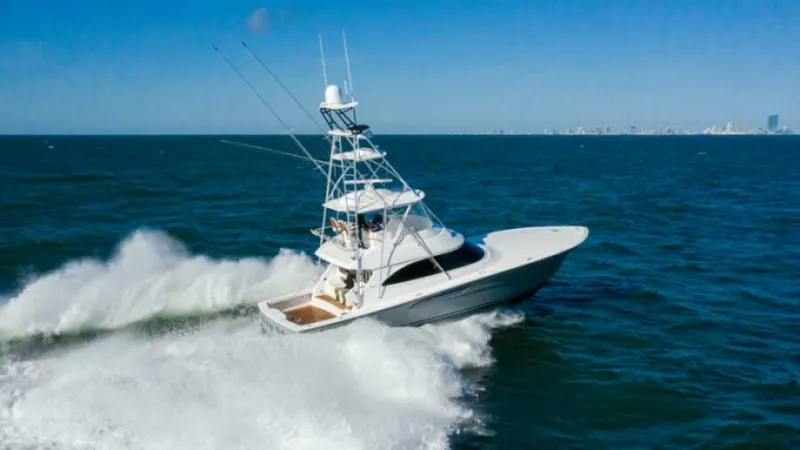
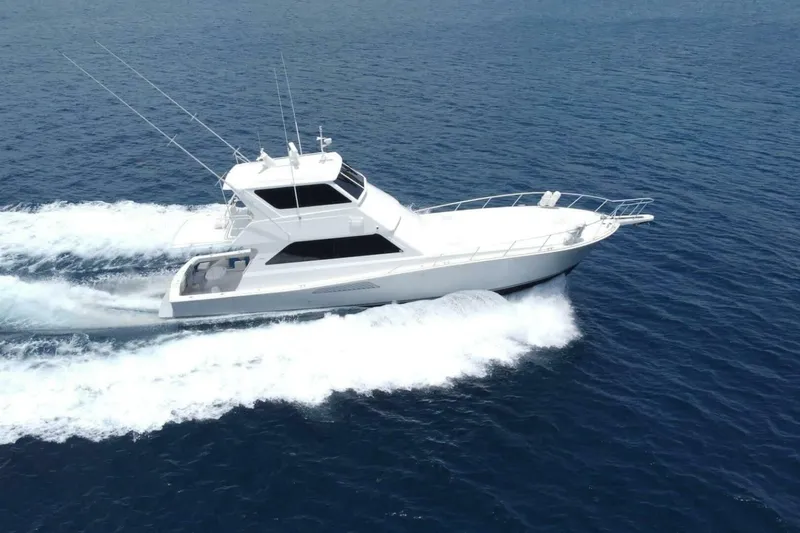
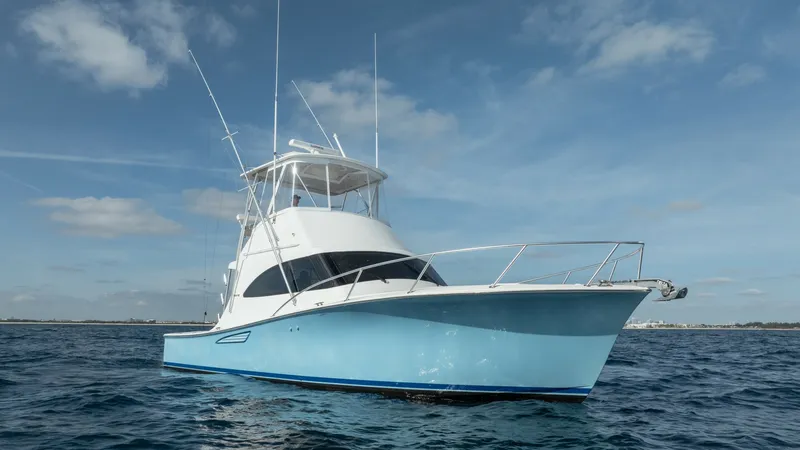
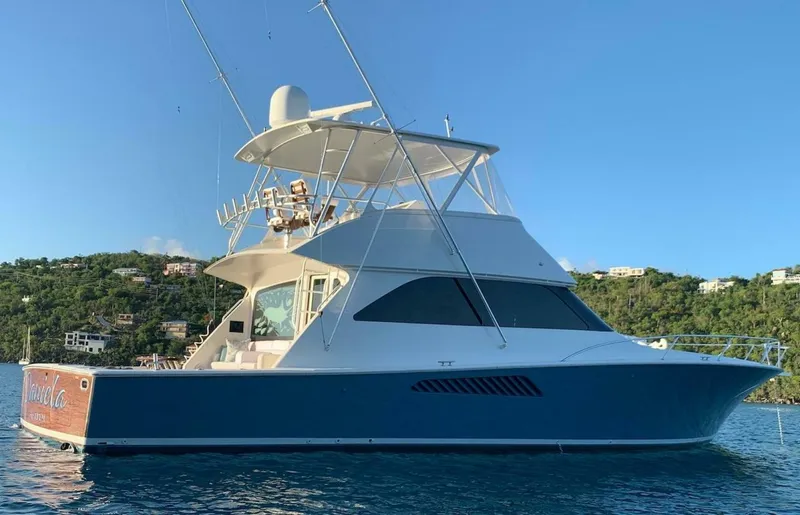
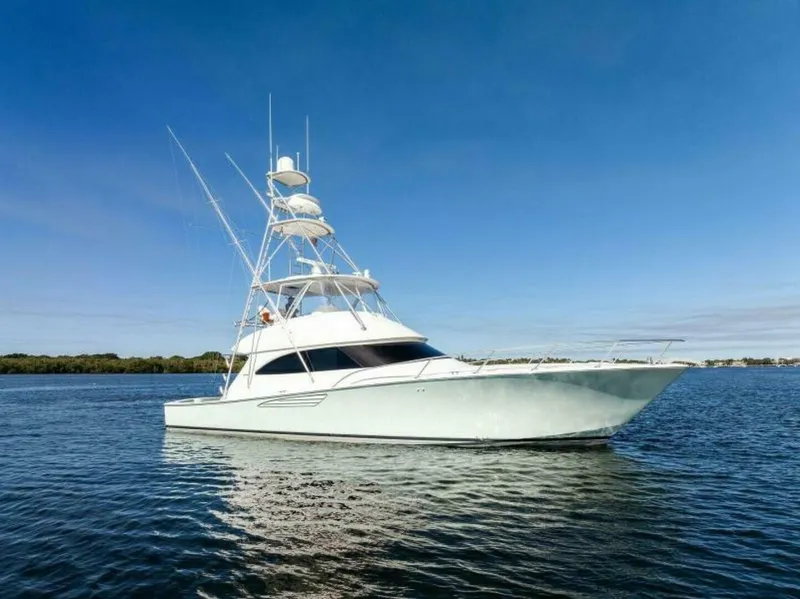
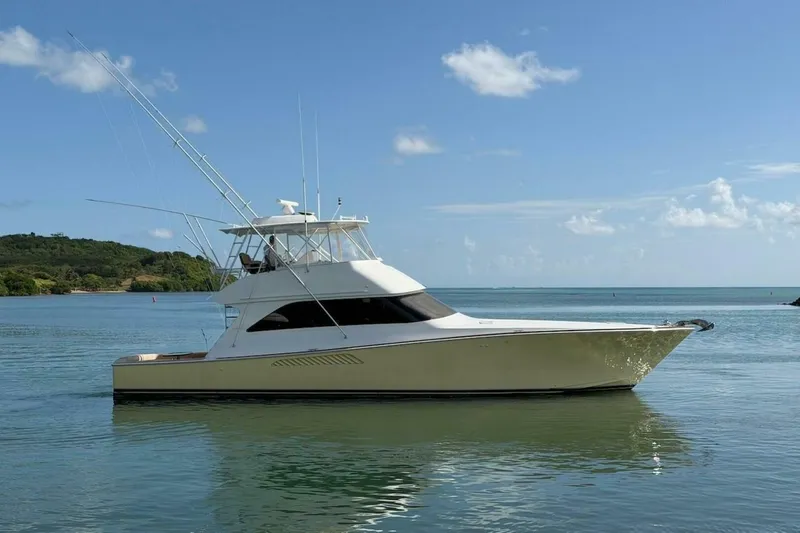
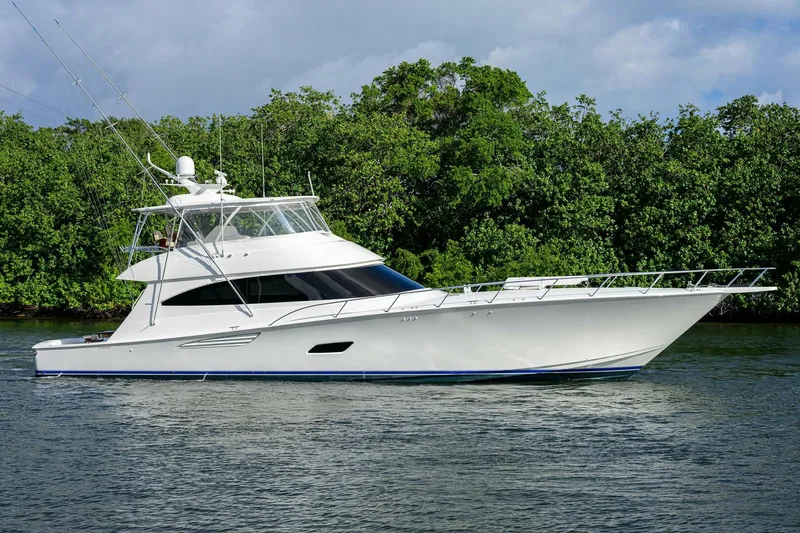
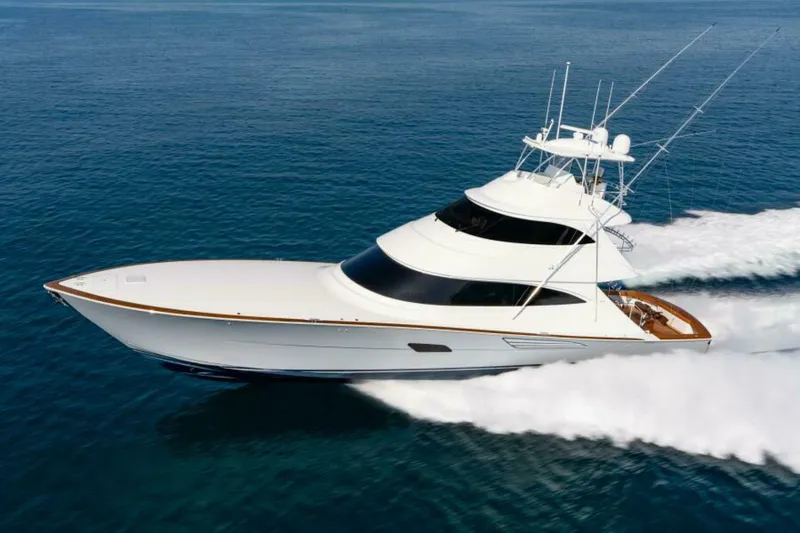
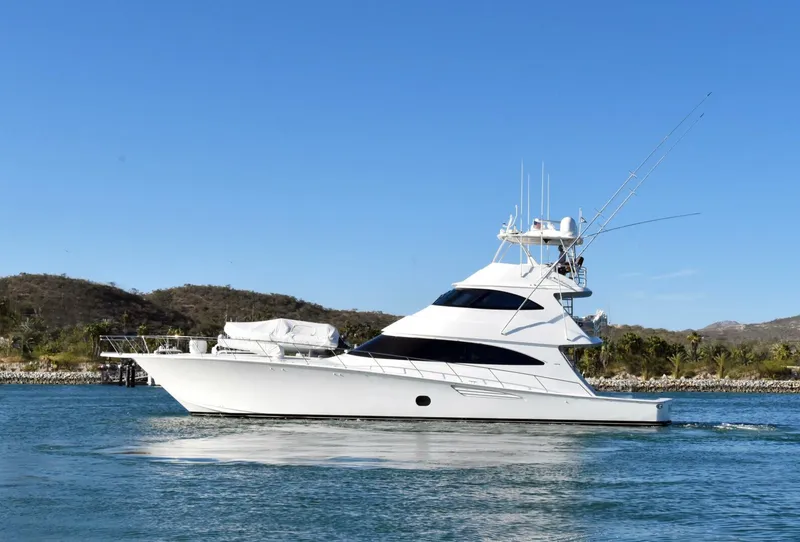
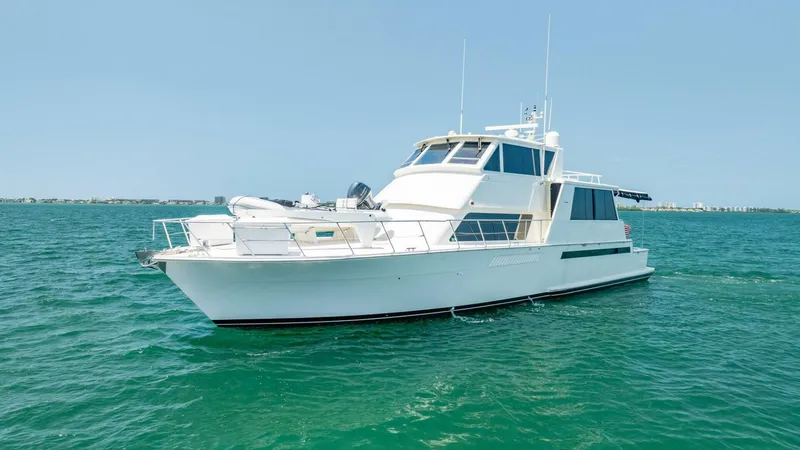
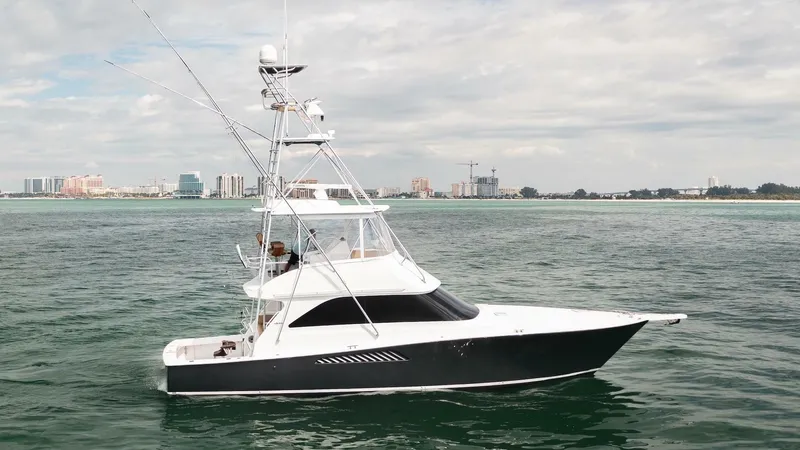
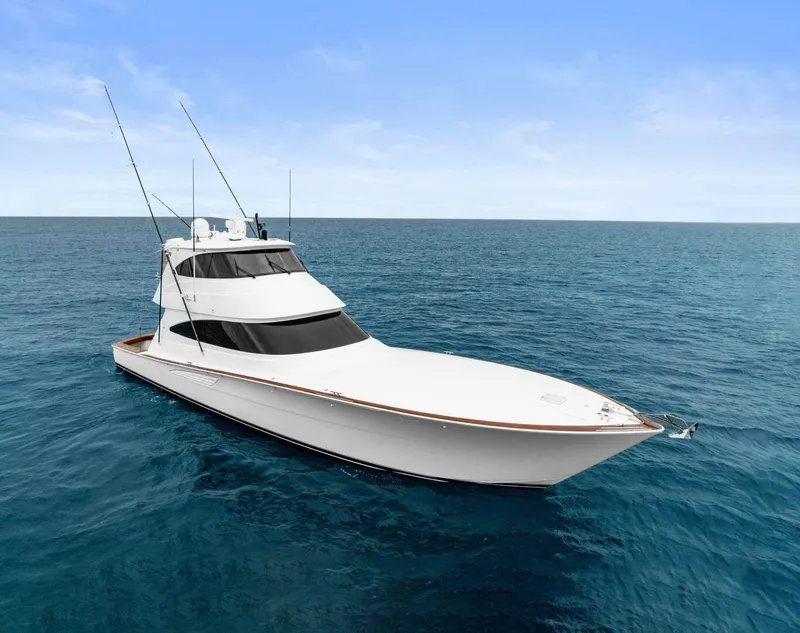
• (Convertible & Enclosed-Bridge Sportfishing Yachts) Viking’s core products are its inboard-powered convertible and enclosed-bridge sportfishing yachts, purpose-built for long-range blue-water tournament fishing and luxury cruising. Ranging from roughly 62 to 90 feet, these resin-infused fiberglass yachts feature deep-V running surfaces, broad beams around 19–23 feet, and diesel inboards with high-horsepower options commonly in the 1,800–2,000+ MHP class per side. Models such as the 62 Convertible (LOA about 63’1” with 18’11” beam), 64 Enclosed Bridge (63’10” LOA, 18’11” beam), 68EB (68’7” LOA, 19’2” beam), 74EB (74’8” LOA, 19’9” beam), 82EB (82’11” LOA, 21’5” beam) and 90C/90EB (90’0” LOA, 23’2” beam) carry fuel capacities from about 1,800 to 3,800 gallons for serious range. These yachts combine massive cockpits with mezzanine seating, expansive flybridges or climate-controlled enclosed bridges, sophisticated helm electronics, and semi-custom interiors that can be tailored to owners’ fishing and cruising needs. Their primary roles include tournament-level offshore fishing for billfish and pelagics, extended family cruising, and captain-run sportfishing motor-yacht duties in demanding sea conditions.
• (Outboard-Powered Performance Center Consoles) Through sister brand Valhalla Boatworks, Viking builds a full line of premium outboard-powered, deep-V center consoles aimed at hardcore anglers and performance-minded cruisers from the low-30-foot range into the mid-50s. The V Series currently includes the V-33 (32’10” LOA, 9’9” beam), V-37 (36’9” LOA, 10’0” beam), V-41 (40’6” LOA, 11’7” beam), V-46 (46’7” LOA, 13’4” beam) and flagship V-55 (55’7” LOA, 15’6” beam), with smaller V-28 and V-29 models and sport-yacht variants expanding the family. All ride on Michael Peters’ patented Stepped-V Ventilated Tunnel hulls, with 22.5–24 degrees of deadrise and twin to quad (or quint on the V-55) high-horsepower outboards delivering top speeds well above typical center consoles. Fuel capacities span roughly 327 gallons on the V-33 up to about 1,200 gallons on the V-55, supporting canyon-range offshore runs. Standard and optional features focus on fishability and versatility: multiple livewells, large insulated fish boxes, abundant rod storage, integrated or optional Seakeeper gyro stabilization, joystick controls with station-keeping, and flexible seating and cabin options so the boats can serve as offshore fishing platforms, fast sport cruisers or superyacht tenders.
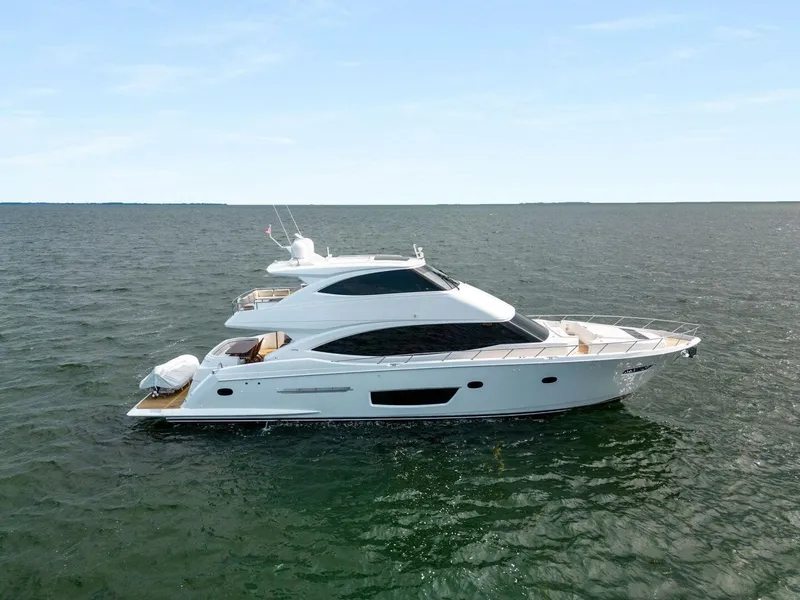
• (Luxury Sport Yacht / Sportfish-Hybrid Center Consoles) At the top of the Valhalla range, Viking builds the 55-foot platform in both a hardcore center-console configuration (V-55) and a more cruising-oriented 55 Sport Yacht, blending center-console fishability with sportfishing-yacht style accommodations. Both share a 55’7” LOA and 15’6” beam and run on a Michael Peters Stepped-V Ventilated Tunnel hull with about 22.5 degrees of deadrise. The V-55 is optimized as a large, tournament-ready center console with massive cockpit space, dual 65-gallon livewells, extensive fish boxes and storage, and up to 3,000 HP from quad or quint Mercury V12 600-hp outboards feeding off roughly 1,200 gallons of fuel. The 55 Sport Yacht variant reimagines the same hull for luxury cruising, with a fully enclosed, climate-controlled command deck, multiple seating and galley layouts, and belowdecks accommodations featuring two private staterooms, a full galley and separate shower-equipped heads, while still carrying about 1,100 gallons of fuel and 2,400 HP from quad 600-hp outboards. Together, these models serve owners who want big-boat speed and 360-degree on-deck access, but also demand Viking-level comfort for extended cruising, entertaining and destination-based fishing.
HOW ARE THESE BOATS BUILT?
Viking Yacht hulls are engineered as fully infused composite structures, using female tooling and a vacuum resin infusion process that bonds outer skins, core and inner laminates into a single, high strength sandwich. Below the waterline, Viking specifies premium vinylester and modified epoxy vinylester resins for superior blister resistance and fatigue performance, combined with NPG isophthalic gelcoats and hybrid clear vinylester barrier coats to maximize osmotic protection and allow close monitoring of the laminate during infusion. Structural fabrics include stitched E‑glass, biaxial and triaxial reinforcements, with carbon fiber selectively used in high load areas, all laid into precisely prepared molds before infusion. The hulls are partially cored with high density closed cell foam or end grain balsa, with solid laminate in key impact zones, through hull “core windows,” chines and keel. A resin infused, encapsulated foam and fiberglass stringer grid is glassed into the hull to create a monolithic structure, tying longitudinal stringers, transverse frames and watertight bulkheads into a single structural network that supports engines, Seakeeper gyros, tankage and machinery. Integrated structural reinforcements at the keel, shaft logs, rudder posts and lifting points are heavily overbuilt for offshore loads and bluewater abuse. Flotation and sound attenuation are achieved through carefully placed closed cell foam in voids and compartments, improving buoyancy, dampening vibration and reducing noise. The hull to deck joint is typically bonded with high strength methacrylate adhesive and then mechanically fastened and tabbed with fiberglass from the inside, creating a rigid sheer structure that far exceeds ABYC and NMMA certification requirements for offshore sportfishing and cruising yachts, and all composite, mechanical and fuel systems are designed to align with current ABYC standards and U.S. Coast Guard regulations.
Above the waterline, Viking specifies robust, yacht grade hardware and systems to complement the infused composite structure, using extensive 316L stainless steel for cleats, chocks, railings, hinges and custom pipework, with anodized aluminum backing plates and substantial through bolting at all primary load points. Electrical systems are engineered to ABYC E‑11 and related sections with tinned marine grade copper conductors, heat shrink terminals, organized wire runs and properly protected breaker panels, while plumbing systems use corrosion resistant seacocks, composite or bronze through hulls, and high quality hoses and manifolds laid out for serviceability and compliance with ABYC and NMMA programs. Interior and exterior upholstery relies on high density marine foams, UV stable performance vinyl and premium textiles, with composite substrates to resist moisture and long term use. Throughout the build, Viking leverages advanced CAD and finite element analysis, CNC cut cores and patterning, and extensive resin infusion alongside targeted hand laid laminates where appropriate, integrating complex components such as structural stringer grids, tankage and deck liners as infused modules that are bonded into the hull. Quality control is rigorous and continuous, from gel time and cure testing of each resin batch, to vacuum leak tests before every infusion, detailed laminate schedules, and systematic inspections of mechanical, electrical and finish work before sea trial. Compared to typical industry standards, Viking Yachts emphasizes higher glass to resin ratios, more extensive coring, heavier structural margins and more robust system installations to support high speed offshore use and tournament loads. This engineering intensive approach supports Viking’s multi year limited structural warranties and reflects a clear build philosophy: to construct bluewater sportfishing yachts and cruising convertibles that prioritize structural integrity, safety, long term durability and ease of service, delivering owners a tangible advantage in real offshore conditions.
WHERE ARE THESE BOATS BUILT?
Viking Yachts boats are built in the United States at two dedicated manufacturing facilities located in New Gretna and Mullica, New Jersey, where the Viking Yacht Company and its Viking Marine Group are headquartered on Route 9 along the Bass River. The main New Gretna facility spans roughly 880,000 square feet across multiple interconnected buildings on about 55 acres and serves as the central production, engineering and administrative hub for the brand as well as related operations such as Valhalla Boatworks and other Viking Marine Group companies. Viking’s New Gretna and Mullica plants together employ well over 1,400 skilled boatbuilders, designers and support staff focused exclusively on semi custom fiberglass sportfishing and motor yacht production for the Viking fleet from approximately 37 to 90 feet. This concentrated footprint in southern New Jersey allows Viking to keep the majority of manufacturing, outfitting and finishing processes in house while leveraging shared infrastructure, logistics and supplier relationships across its brands for consistent, high quality boat building.
Viking Yacht Company began boatbuilding in New Jersey in 1964 when brothers Bill and Bob Healey acquired Peterson Viking Builders, and over the following decades the operation evolved from a small wooden boat shop into a large scale fiberglass manufacturing complex on the Bass River in New Gretna. The original building of about 26,000 square feet has been expanded in multiple phases into the current 880,000 square foot production campus, including a major 120,000 square foot expansion building completed around 2007 that linked existing structures, reorganized multiple assembly lines and provided a 50 foot high mezzanine to support larger convertible models. Production today is organized into dedicated lines for different size ranges, with New Gretna handling design, plug and mold creation, resin infused hull and deck lamination, metal fabrication, cabinetry, wiring harnesses and interior module manufacturing, while the Mullica facility just 15 miles away focuses on building smaller Vikings in the 37 to low 50 foot range using modules and components supplied from the main plant. Viking acquired the Mullica facility, formerly operated by Ocean Yachts, in 2016 and invested heavily in retrofitting the buildings with overhead cranes, improved insulation and HVAC systems to support year round fiberglass and finish work and to increase build efficiency as demand for midsize sportfishing boats grew. The southern New Jersey location provides direct access to the Intracoastal Waterway and nearby deep water inlets for sea trials, close proximity to regional suppliers and logistics hubs, and a long established local workforce with generations of boatbuilding experience, all of which underpin the brand’s vertically integrated production model.
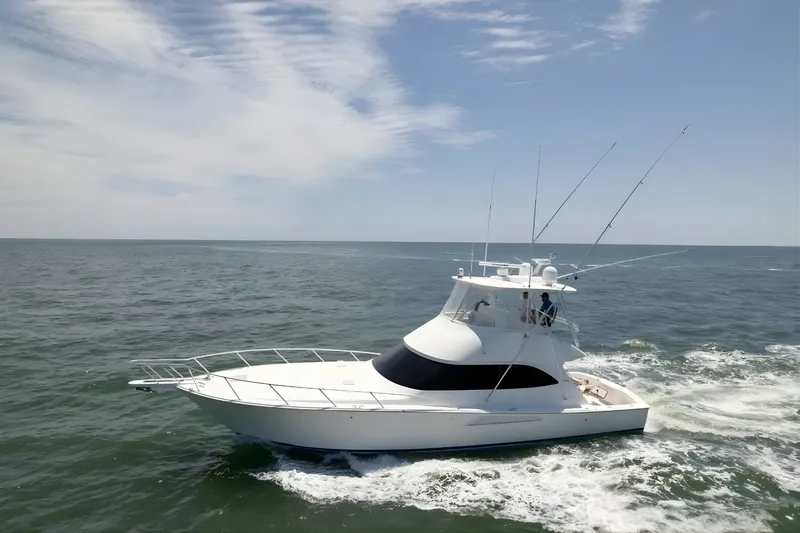
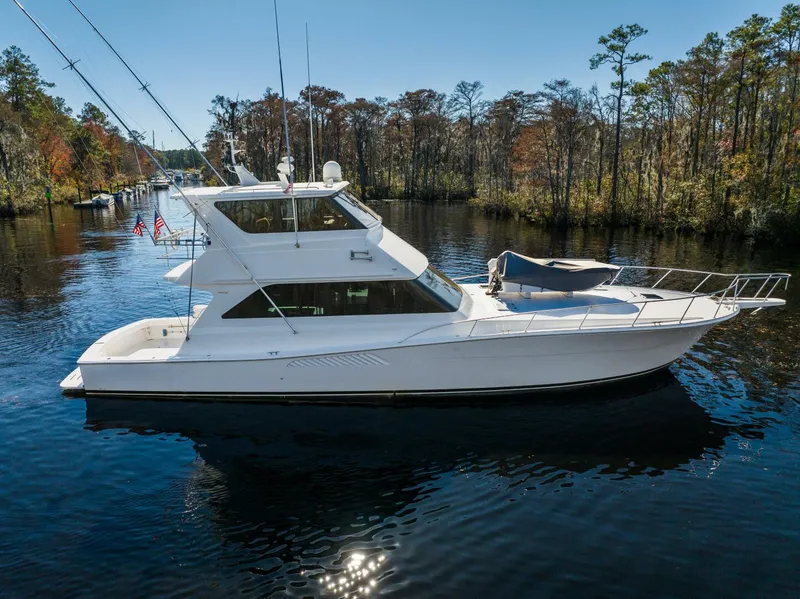
Quality control and innovation are central to Viking’s manufacturing philosophy, with more than 90 percent of each yacht’s components designed and manufactured within the New Gretna and Mullica facilities to maintain tight control over fit, finish and performance. Dedicated quality control personnel inspect every hull, deck and major fiberglass component after lamination, monitor resin infusion schedules, verify structural details such as stringer systems and bulkheads, and document each stage of the build from bare hull through final outfitting, electrical testing and sea trial signoff. The plants employ advanced production technologies including CNC routers, a large five axis profiler for plug and mold work, precision metal fabrication equipment and in house joinery shops, allowing Viking to standardize critical structures while still delivering semi custom layouts and specifications. Shared engineering, design and procurement resources across Viking Yachts and sister brand Valhalla Boatworks create efficiencies in systems integration, wiring harness design and structural tooling, while the centralized manufacturing campus ensures that proven innovations in hull forms, composites and equipment installations can be rapidly applied across the entire product line. By concentrating yacht production in these two New Jersey facilities rather than dispersing it globally, Viking is able to enforce consistent quality standards, streamline testing and commissioning procedures and maintain a direct feedback loop between the factory floor, engineering teams and customers.
All Viking Yachts sportfishing and motor yacht models are built exclusively in the company’s New Gretna and Mullica, New Jersey manufacturing facilities, keeping every stage of production firmly rooted in the United States under a single, family owned organization. This domestic manufacturing base leverages a large, experienced workforce, modernized buildings and continuously updated production equipment to deliver high performance yachts that are recognized worldwide for their engineering, craftsmanship and reliability. Viking’s long term commitment to building in New Jersey, reinvesting in its facilities and workforce and controlling its own manufacturing processes underscores the company’s promise to “build a better boat every day” and to keep that boat proudly built along the Bass River in southern New Jersey.
WHAT IS THE BIGGEST BOAT OF THIS BRAND BUILT TODAY?
The largest Viking Yachts model currently in production is the Viking 90 Enclosed/Open Bridge, a flagship sportfishing convertible introduced as the successor to the renowned Viking 92 and designed from the keel up as the brand’s ultimate blue‑water battlewagon. The Viking 90 Enclosed/Open Bridge measures a full 90’ 0” (27.41 m) in length overall with a massive 23’ 2” (7.05 m) beam and a 5’ 11” (1.80 m) draft, delivering immense volume, cockpit space and interior accommodations compared with smaller Viking convertibles such as the 82EB and 74EB. Power comes from twin inboard diesel engines in multiple large‑displacement, high‑output configurations, with mega‑yacht‑scale horsepower packages engineered to deliver high cruising speeds and strong efficiency over long ranges. With 3,801 gallons of fuel capacity, the Viking 90 Enclosed/Open Bridge offers extensive offshore range for tournament runs and extended expeditions. The hull is a resin‑infused fiberglass deep‑V design optimized by Viking’s in‑house engineering team for speed, seakeeping and load‑carrying ability in demanding offshore conditions, and buyers can choose between the open‑bridge convertible layout or the Viking 90 Enclosed Bridge configuration that adds a climate‑controlled command center while retaining full fishability.
Purpose‑built as Viking’s flagship offshore sportfishing yacht, the Viking 90 Enclosed/Open Bridge is designed around hardcore blue‑water tournament fishing and luxurious extended cruising. A vast cockpit supports serious offshore fishing with oversized in‑deck fish boxes, livewell capacity, abundant rod holders and rocket launchers, and space for a full tower and outriggers, while integrated mezzanine seating keeps crew and guests comfortable and engaged in the action. Above, the open bridge or enclosed bridge helm positions offer excellent sightlines for chasing billfish and pelagics, incorporating advanced navigation and helm electronics, redundant displays, joystick and bow‑thruster controls, and integrated systems monitoring to match the expectations of professional captains. Inside, the Viking 90 Enclosed/Open Bridge provides multiple staterooms with ensuite heads, a full galley, generous salon seating and climate‑controlled comfort that make it as capable for family cruising as it is for the tournament circuit. Generous storage throughout the boat, from tackle and gear lockers to interior cabinetry, supports long campaigns away from the dock. As the largest Viking model and true Viking flagship, the Viking 90 Enclosed/Open Bridge stands at the top of the brand’s lineup, showcasing the company’s maximum capabilities in sportfish design, engineering, craftsmanship and blue‑water performance.
WHAT IS THE SMALLEST BOAT OF THIS BRAND BUILT TODAY?
The smallest model in the current lineup from Viking Yachts and its performance outboard division, Valhalla Boatworks, is the Valhalla V-28 Bay, a premium bay-boat platform designed for shallow-water fishing, inshore versatility, and light coastal use. Measuring approximately 28 feet in length overall with a wide beam for its class, the V-28 Bay delivers a stable, efficient footprint that is easy to store, trailer, and operate, making it the most accessible entry point into the Viking–Valhalla family. Its relatively compact size allows owner-operators to enjoy high-end construction and performance without the space, dockage, or operating demands associated with larger offshore center consoles.
Unlike Valhalla’s deep-V offshore models, the V-28 Bay is built around a stepped bay-boat hull optimized for shallow draft, quick acceleration, and efficient midrange cruising in protected coastal waters, bays, and estuaries. The hull form emphasizes stability at rest and predictable handling at speed, while still offering enough freeboard and deadrise to handle light chop and nearshore conditions when needed. With its manageable dimensions and trailer-friendly profile, the V-28 Bay is well suited for anglers who want to fish multiple regions, access remote ramps, or store the boat at home between outings.
On deck, the Valhalla V-28 Bay is purpose-built for serious inshore fishing, featuring a large forward casting deck, flush-mounted rod storage, integrated livewells, and wide, uncluttered walkways that allow anglers to move freely while sight-fishing, casting, or working structure. The cockpit layout supports both tournament-style fishing and relaxed day use, with thoughtfully placed storage for tackle, safety gear, and personal items to keep the deck clear and functional. While fishing performance is the primary focus, the boat also incorporates comfortable seating options and shade configurations that make it suitable for family cruising and sandbar outings.
Power typically comes from a single high-horsepower outboard, delivering strong hole shot, efficient cruising speeds, and excellent fuel economy for long days on the water. Advanced composite construction, premium hardware, and refined fit-and-finish reflect the same build philosophy found in larger Valhalla and Viking models, scaled intelligently to a bay-boat platform. As the smallest model in the Viking and Valhalla portfolio, the Valhalla V-28 Bay offers anglers and coastal boaters a rare combination of elite craftsmanship, shallow-water capability, and everyday practicality—providing a true gateway into the brand for those who prioritize inshore performance without sacrificing quality or pedigree.
HOW MUCH DO THESE BOATS COST?
Viking Yachts positions itself firmly in the premium sportfishing and convertible yacht segment, and while the factory site at vikingyachts.com provides detailed specifications on models like the 38 Billfish, 44 Convertible, 54 Convertible, 72 Convertible, 80 Convertible and up to the 90, it does not publish official MSRP figures, instead routing all pricing through its dealer network. The smallest current sportfishing model with broad market data is the Viking 38 Billfish, a 38 foot, twin diesel Cummins powered sportfish that serves as a practical entry point into the modern Viking lineup, with dealers quoting base pricing by request rather than listing a public MSRP. In the real world market, current listings for the 38 Billfish and closely related 38 Open Billfish generally show asking prices from about $975,000 for 2019 boats up to roughly $1,150,000 for late model, highly optioned 2021 to 2022 examples, with many boats clustering around the $1,050,000 to $1,150,000 band depending on hours and equipment, which gives a realistic sense of today’s market price for entry level Viking Yachts models rather than an official MSRP number. Market prices vary by location, condition, model year, and dealer.
In the mid range of the Viking Yachts portfolio, models like the Viking 46 Billfish and the Viking 54 Convertible or 54 Sport Coupe represent the most popular tournament capable platforms, and dealer published information shows a base price for a new 54 series boat around $3,662,000 for a standard specification hull with base engines before options, freight and commissioning, which is the closest practical analog to an MSRP. On the market side, current Billfish listings in the mid 40 foot range are typically advertised from the high $1,400,000s to around $2,000,000 for new or nearly new 46 Billfish examples, while late model 38 Billfish and 38 Open Billfish listings tend to fall just under or slightly above $1,000,000, illustrating how equipment, size and series within the Viking Yachts line drive a wide mid range spread in market price. For the 54 series specifically, dealer commentary and sportfish transaction patterns indicate that while the base boat starts in the mid $3,000,000s, realistic tournament ready builds equipped with Seakeeper gyro stabilization, full tower packages, premium décor and full electronics often land closer to $4,000,000 to $4,500,000 or more, and late model pre owned 54s are generally listed roughly 10 to 25 percent below the cost of an equivalent new build depending on hours, options and overall presentation. Market prices vary by location, condition, model year, and dealer.
At the premium end of the Viking Yachts lineup, larger convertibles and enclosed bridge sportfish such as the Viking 72 Convertible and Viking 80 Convertible sit just below the current flagship 90 in size and prestige, and Viking again leaves exact MSRP to dealer quotation, with brokers often referencing base boat and replacement cost figures in private when building full spec proposals. Market data for the Viking 72 Convertible and 72C shows late model 2019 to 2022 examples typically advertised with asking prices in roughly the $6,300,000 to $7,200,000 range, while mid decade boats from around 2016 to 2018 more often appear in the mid $5,000,000 to low $6,000,000 band, with higher asks tied to upgraded MTU engines, dual Seakeeper gyros, full towers and tournament level electronics. For the Viking 80 Convertible, current listings in the United States indicate that recent model year boats are generally priced from the mid to high $5,000,000s for late 2010s builds up to around $8,500,000 to $9,000,000 for new or near new 2023 to 2024 boats, making it clear that premium models in this size range command multi million dollar market prices that can vary by several million dollars based on year, hours, equipment, décor and remaining engine warranty relative to whatever the confidential base MSRP may be. Market prices vary by location, condition, model year, and dealer.
Across the full Viking Yachts range, practical pricing spans from roughly the high six figure to low seven figure market price territory for entry level models like the 38 Billfish up through the multi million dollar mid range of the 46 Billfish and 54 Convertible and into the $6,000,000 to $9,000,000 plus spectrum for premium 72 Convertible, 72C and 80 Convertible yachts, with the current 90 foot flagship line expected to sit even higher and quoted strictly on request. Because Viking does not publish an official MSRP table, the best available guidance uses dealer base boat numbers, such as the approximately $3,662,000 base price for a new 54 Convertible, combined with the real world spread of current market listings, which show how popular configurations, options and delivery costs push contracted new build prices significantly above that base while pre owned yachts are generally discounted versus replacement cost. Buyers should also factor in freight, commissioning, bottom paint, local dealer prep and taxes, all of which commonly add mid five figures to low six figures or more on larger Vikings and help explain why a quoted base MSRP style figure rarely matches what owners ultimately pay. Taken together, current information suggests that market price for a well equipped new Viking will usually sit meaningfully above any base dealer MSRP proxy, while late model used Vikings typically transact below new build cost but still carry strong residual values in line with the brand’s position at the top of the sportfishing yacht market. Market prices vary by location, condition, model year, and dealer.
WHAT OTHER STYLES OF BOATS DO THEY MAKE?
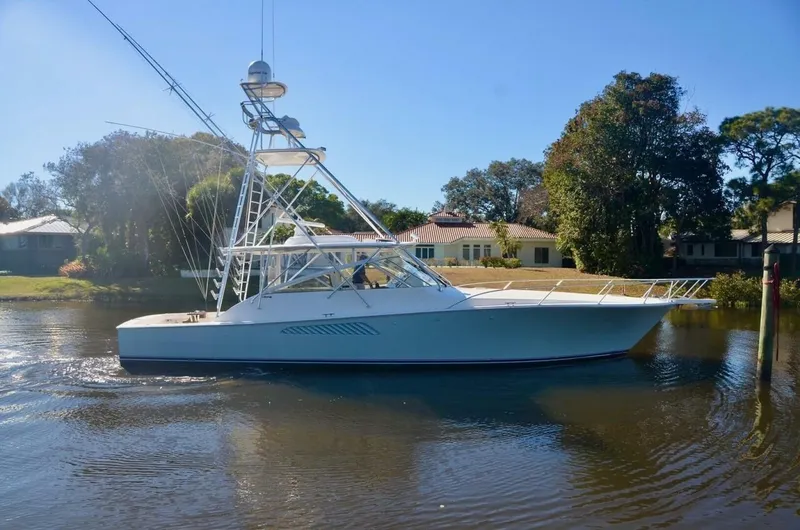
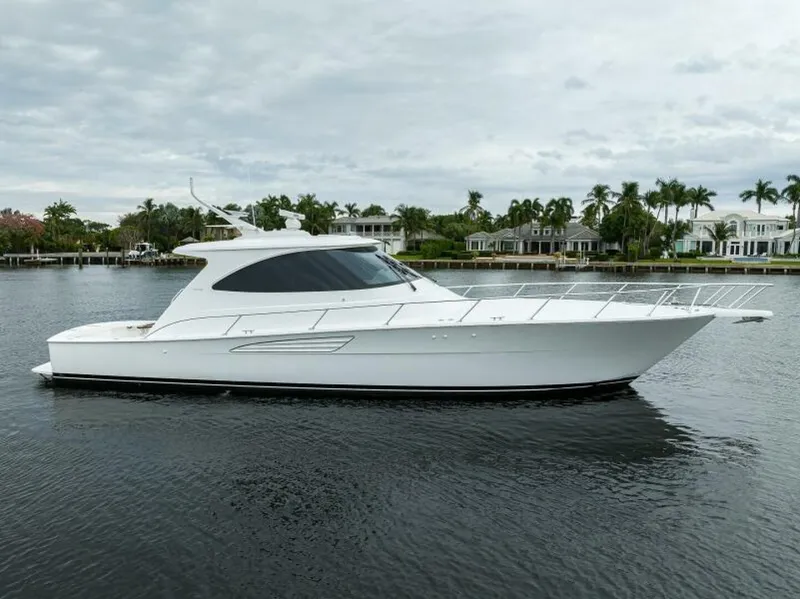
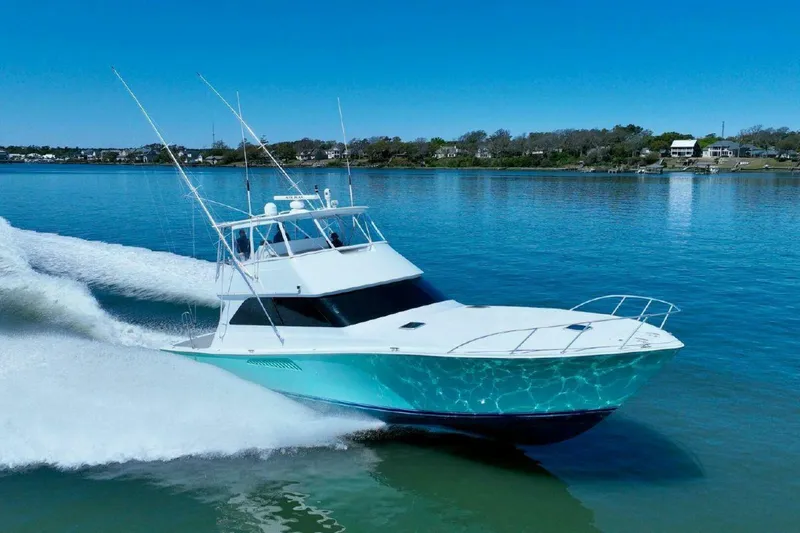
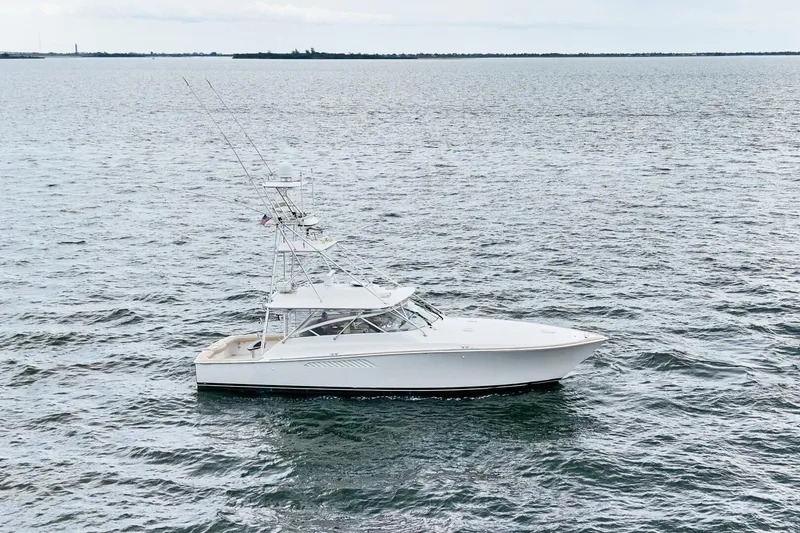
Viking Yachts today focuses on a tightly defined family of bluewater sportfishing and luxury cruising platforms built around the convertible sportfish, enclosed bridge, sky bridge and open or express layouts, with models currently running from the 38 Billfish up through the flagship 90 series. In the heart of the lineup you will find tournament proven convertible fishing boats like the 50 Convertible, 54 Convertible, 58 Convertible, 64 Convertible, 68 Convertible, 74 Convertible, 82 Convertible and 90 Convertible, all designed as serious offshore fishing boats with large cockpits, mezzanine seating, spacious salons and multi stateroom interiors that double as comfortable family boats for extended cruising. Alongside the open bridge convertibles Viking offers enclosed bridge models such as the 64 EB, 68 EB, 74 EB, 82 EB and 90 EB, which add a climate controlled upper salon and helm for long range travel, and sky bridge variants like the 74 SB, 82 SB and 90 SB that marry the visibility of an open bridge with the protection of an enclosed bridge. At the smaller end, the Billfish and Sport Series boats including the 46 Billfish, 50 Billfish, 50 Open, 50 Sport Coupe, 50 Sport Tower, 54 Open, 54 Sport Coupe, 54 Sport Tower, 64 Sport Coupe and 64 Sport Tower give owner operators express and coupe options with convertible level fishability and strong performance, creating a portfolio that is almost entirely inboard powered, tournament capable and optimized for offshore fishing, hardcore cruising and all around bluewater adventure rather than watersports or casual day boating.【turn0search2】【turn0search1】【turn0search0】
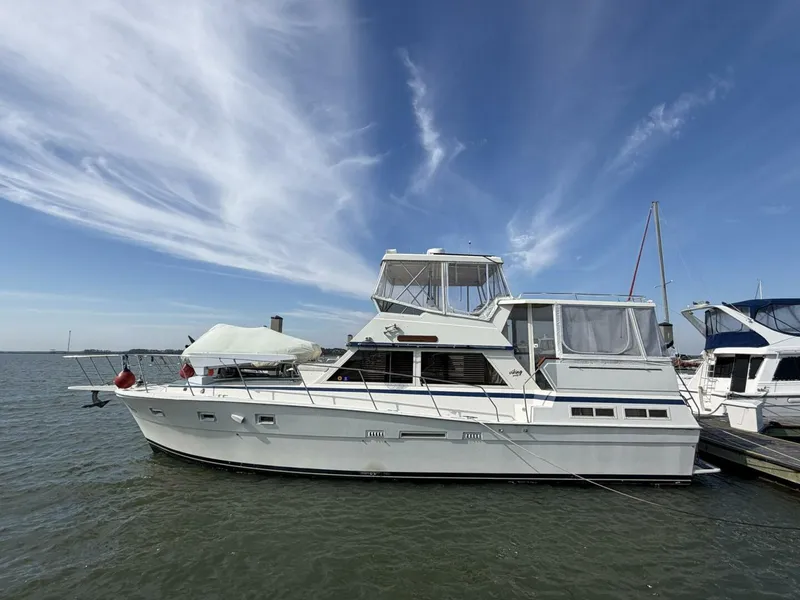
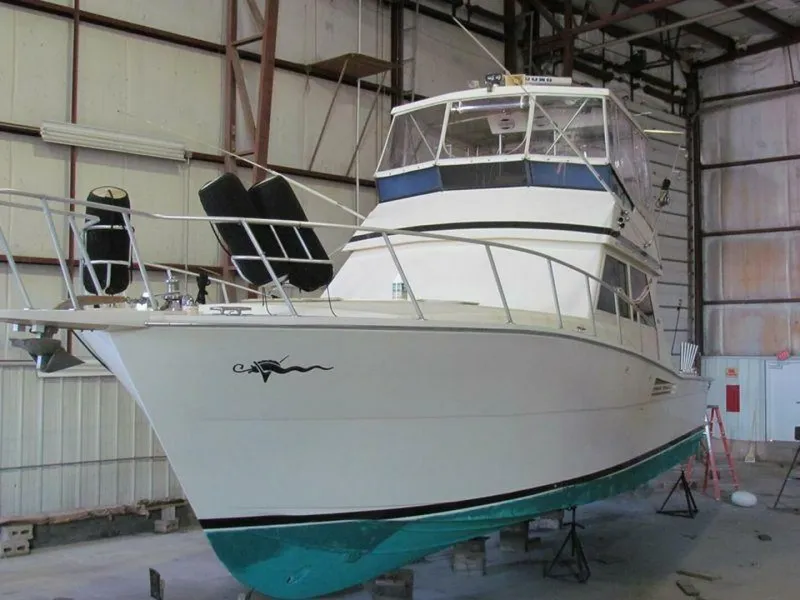
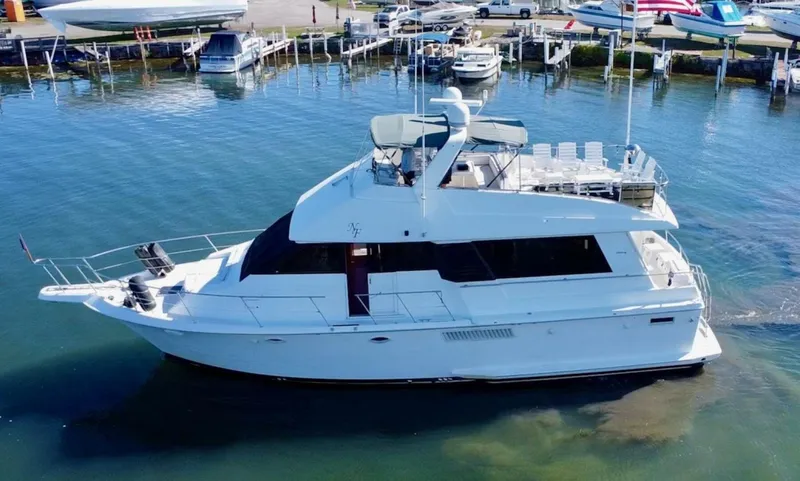
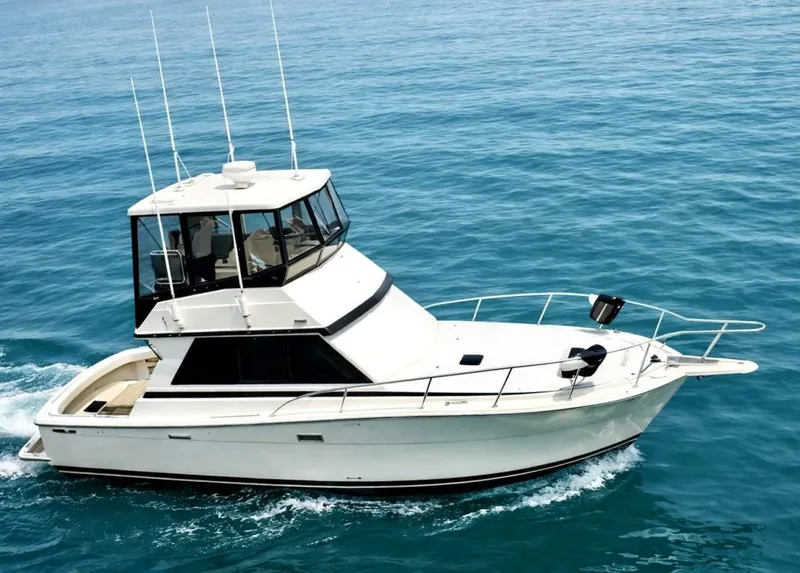
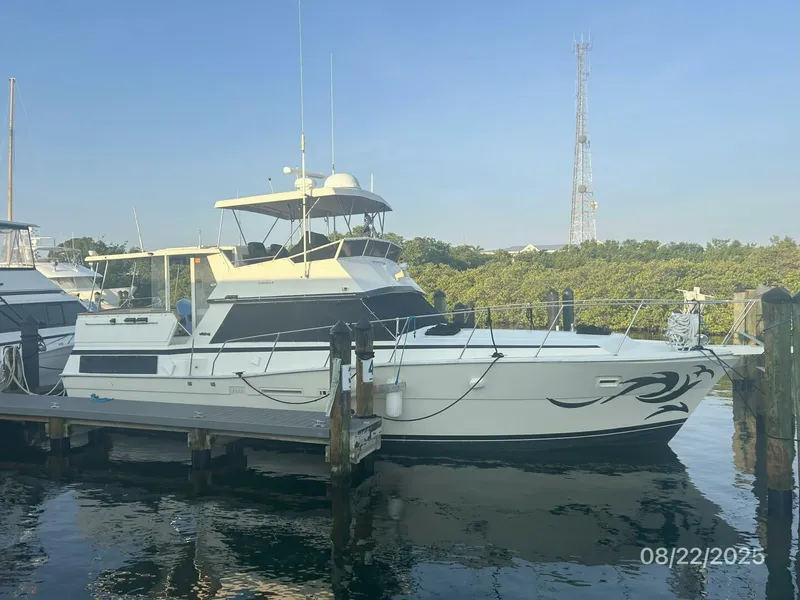
Over its six decades of boatbuilding Viking Yachts has experimented with and refined a range of other styles that have helped shape the brand’s reputation even if some of those exact configurations are no longer in production today, including earlier generations of convertible fishing boats, enclosed bridge yachts and specialty sport models that laid the groundwork for the current fleet. Historic standouts include predecessors to today’s 90 series such as the 92 Convertible and 92 Enclosed Bridge, which proved that a large sportfishing yacht of that size could consistently win on the tournament circuit while delivering megayacht level comfort, as well as earlier enclosed bridge pioneers like the original 58 based designs that showed how a fully enclosed upper helm could function as a second salon for long range cruising. Viking has also cycled through multiple generations of mid size and larger open and express boats, from earlier Billfish models through previous 40 and 42 foot classes, which gave owner operators walkaround style deck layouts, compact cabins and twin diesel inboard power that made them highly sought after on the brokerage market. While specific model names change as Viking continually “builds a better boat every day,” the company’s history of walkaround capable cockpits, overnight ready cabins and express or sport coupe variants means there is a deep pool of discontinued convertibles, enclosed bridge, sky bridge, Billfish and Sport Series boats that still carry the Viking badge and heritage on the used market even though the focus of current production has shifted to the latest generation of C, EB, SB, Billfish, Open, Sport Coupe and Sport Tower designs.【turn0search1】【turn0search2】
Equally important to understanding Viking Yachts is knowing what they do not build, because the company has deliberately chosen not to compete in mass market segments such as entry level bowriders, pontoon boats, ski and wake specific towboats or large displacement trawler style yachts, instead concentrating its New Gretna facility and engineering resources on high performance inboard powered sportfishing yachts and related express or coupe derivatives. Outboard powered center console fishing boats and bay boats are also not sold under the Viking Yachts badge, with that part of the market handled within the same corporate family by sister brand Valhalla Boatworks, which offers a separate line of performance center consoles while Viking itself stays focused on larger convertible, enclosed bridge, sky bridge and Billfish or Sport Series platforms. This clear division of labor allows Viking Yachts to maintain a brand identity built around saltwater toughness, tournament winning fishing layouts, luxurious yet practical interiors and long range performance rather than spreading into every possible powerboat niche, and it ensures that when a customer shops Viking they are looking at purpose built offshore fishing boats and family cruising yachts designed from the keel up for bluewater conditions rather than generalist deck boats or party platforms.【turn0search3】【turn0search2】
Putting it all together, Viking Yachts today is best known for its convertible sportfishing boats, enclosed bridge and sky bridge sportfishing yachts and a growing family of Billfish, Open, Sport Coupe and Sport Tower models that give anglers and cruising families a range of lengths and layouts without straying from the brand’s core identity as a builder of high performance offshore fishing boats. The evolution from earlier flagships like the 92 series into the current 90 Convertible, 90 Enclosed Bridge and 90 Sky Bridge, the expansion of the Billfish concept into larger sizes such as the 50 Billfish, and the introduction of multiple 50, 54 and 64 foot express, coupe and tower configurations all show how Viking is willing to blend traditional sportfish DNA with more crossover friendly layouts while still prioritizing fishability, seakeeping and speed. Looking ahead, customers can expect Viking to keep iterating within these families rather than branching into unrelated categories, refining hull designs, propulsion packages and interior plans and occasionally reviving or reimagining past ideas such as express and coupe hybrids whenever they enhance the fishing and cruising experience. That focused yet innovative strategy helps Viking continually sharpen the styles it is famous for so that each new convertible, enclosed bridge, sky bridge, Billfish, Open, Sport Coupe or Sport Tower model delivers a more capable, more comfortable and more thoroughly thought out bluewater platform for the anglers and families who are at the heart of the brand.
WHAT KINDS OF ENGINES DO THESE BOATS USE?
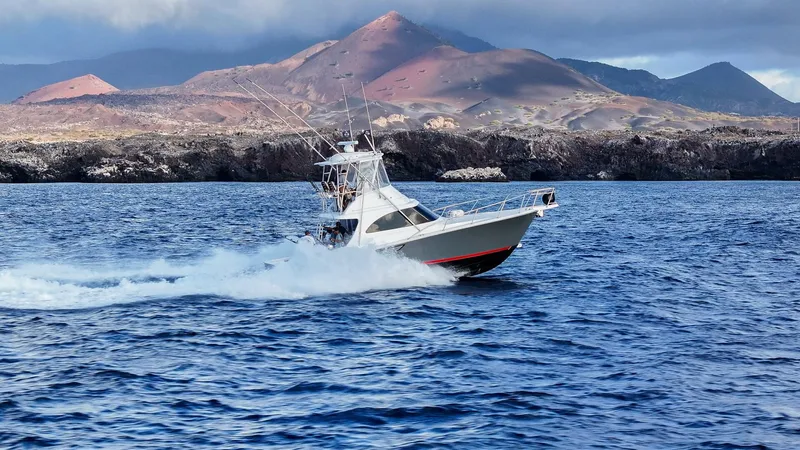
Viking Yachts is first and foremost an inboard diesel brand, with its sportfishing convertibles, enclosed bridge models and open series from roughly 38 to 90 feet powered almost exclusively by high horsepower twin inboard diesels for bluewater reliability, long range and optimal shaft drive efficiency, while its affiliated Valhalla Boatworks line covers the outboard center console segment. On the core Viking fleet you will find straight inboard shaft drives in deep running hulls designed for offshore performance, with every model from the 38 Billfish and 44 Open up through the 48 Convertible, 58, 64 and 90 Convertible using twin inboards mounted in a stand‑up engine room that allows easy service and excellent weight distribution for seakeeping and tournament fishability. By contrast, Valhalla center consoles such as the V‑33, V‑37, V‑41, V‑46 and V‑55 are all outboard powered, typically with twin, triple, quad or even quint four stroke outboards on the transom, giving shallower draft, huge cockpit space and the ability to tilt engines clear of the water, so across the Viking Marine Group buyers can choose proven inboard diesels for traditional sportfishing yachts or powerful outboards for high speed center console applications.
Looking at horsepower ranges, most Viking Yachts convertibles and open models are equipped with twin diesel inboards from roughly 1,000 to well over 2,000 horsepower per side depending on size, with a popular mid fleet example being the Viking 48 Convertible and 48 Sport Coupe, which offer MAN V8 1000CRM engines at 1,000 horsepower each as standard and optional MAN V8 1200CRM or even 1300CRM packages that can push these 48 footers to cruise speeds around 30 to 36 knots and top speeds in the high 30 knot range when lightly loaded. Larger models like the 64 or 72 Convertible can be ordered with higher output V12 diesels that deliver combined horsepower in the 3,000 to 4,000 plus range for mid 30 knot performance, while the smallest Billfish series still runs robust twin inboards sized for efficient 25 to 30 knot cruising on long canyon runs. On the outboard side, Valhalla V‑33 center consoles are engineered for up to 900 total horsepower on the transom, typically via twin 300 to 450 horsepower engines, while the flagship V‑55 is designed specifically around quad or quint 600 horsepower Mercury Verado V12 four stroke outboards for an eye opening 2,400 to 3,000 total horsepower and high 50 knot class performance with strong midrange cruise.
When it comes to preferred engine brands, Viking Yachts has a long and well documented relationship with premium European diesel manufacturers such as MAN, which supplies the V8 1000CRM and V8 1200CRM engines listed as standard and optional packages on models like the 48C and 48 Sport Coupe, along with larger V12 MAN power on the bigger convertibles, and Viking has also historically offered MTU options in certain larger yachts where buyers want maximum output for tournament speeds. These are all modern, electronically controlled four stroke common rail diesels mated to straight shaft inboards rather than pods, chosen for their torque, longevity, service network and fuel efficiency at 25 to 35 knot cruise. On the Valhalla side of the house, Viking’s outboard partner is primarily Mercury, with the Valhalla V‑46 and V‑55 transoms engineered specifically for quad or quint Mercury 600 horsepower Verado V12 four stroke outboards, while smaller V‑series models like the V‑33 can be rigged with Mercury or Yamaha four stroke outboards in twin, triple or quad configurations according to owner preference. Factory packages are sold as complete propulsion systems, including engines, digital controls, integrated power steering and rigging, so buyers receive a fully dialed in package rather than a bare hull that has to be matched to power afterward.
Across both Viking and Valhalla lines the propulsion packages are engineered to showcase advanced technology and make big boat performance more approachable, with fly by wire digital controls, electronic throttle and shift, and in many outboard packages joystick steering systems that integrate bow thrusters or Mercury’s Joystick Piloting to greatly simplify docking in close quarters. The deep V, resin infused running surfaces on the convertibles and the stepped SVVT hulls on Valhalla models are optimized around these engine options to improve fuel efficiency, reduce drag and deliver strong hole shot acceleration while maintaining a soft, dry ride at speed, which is crucial when running long distances offshore. On the inboard sportfishing yachts, straight shaft drives, large diameter props and high torque MAN or MTU diesels provide easy low speed maneuvering around docks and backing down on fish, while gyro stabilization options like Seakeeper work seamlessly with the engine room layout to reduce roll without compromising service access. For Valhalla owners, the combination of multiple four stroke outboards, digital controls and joystick steering means effortless station keeping, the ability to trim and tilt engines for shallow water access, and generally lower day to day maintenance compared with larger inboard machinery, so taken together Viking’s engine strategy pairs heavy duty diesel inboards for serious offshore anglers with high performance four stroke outboards for center console enthusiasts, aligning propulsion technology closely with how each segment of its customer base actually uses their boats on the water.
WHY BUY THIS BRAND OVER A COMPETITIVE BRAND?
Why choose Viking Yachts over competing brands begins with the build quality of Viking boats and the company’s long-standing philosophy of “building a better boat every day,” a mantra that has guided its design and engineering for more than 60 years. Founded in 1964 and now operating roughly a million square feet of manufacturing space in New Gretna and Mullica, New Jersey, Viking controls nearly every aspect of construction in-house, an approach the company highlights as key to maintaining consistent quality and performance. From its early transition into fiberglass with the landmark Viking 40 Convertible in the 1970s to today’s high-performance sportfishing hulls from 38 to 90 feet, the brand emphasizes advanced hull design, structural engineering and a vertically integrated production process to deliver yachts that lead the industry in performance, innovation, engineering and luxury. Models such as the Viking 90 and 64 series are described by the builder as high-performance platforms designed for serious offshore use, backed by decades of refinement proven in real conditions and supported by a manufacturing philosophy that prioritizes strength, reliability and long-term durability for demanding anglers and cruisers alike.
Viking boats vs competitors also stands out in how the company equips and arranges its yachts for real-world use, with sportfishing models engineered from the keel up for both hardcore fishing and comfortable cruising. The builder highlights “industry-leading fishability” on models like the 64 Sport Coupe, which is built on the proven 64 Convertible hull and can be outfitted with a Palm Beach Towers tuna tower and integrated electronics from Atlantic Marine Electronics, both Viking subsidiaries, giving owners a turnkey-ready package from a single vertically integrated source. Cockpit layouts across the convertible and open models are designed for tournament-level fishing with large cockpits, thoughtful rigging and equipment placement, while interior layouts deliver luxury accommodations and practical storage for extended trips. With the 50 Convertible, scheduled for world premiere at the 2025 Fort Lauderdale International Boat Show, Viking points to three-stateroom layouts and a history of nearly 200 boats built across previous generations as proof that the model combines performance, smart space utilization and ride quality in a way that appeals to both serious anglers and family cruisers, offering tangible value in standard equipment and functionality compared with many other fishing boats.
The way Viking blends utility with comfort is central to the brand’s positioning, making the question of Viking vs other fishing boats as much about lifestyle versatility as pure performance. The company describes its yachts as high-performance luxury sportfishing platforms, and models like the Viking 90 Sky Bridge and the 93 Motor Yacht underline how “size, luxury and quality come together” with engineering excellence and performance prowess, allowing owners to enjoy both tournament-level fishability and motor-yacht grade comfort. Helm designs, which Viking singles out as a defining feature, are the result of 60-plus years of building, fishing and running boats, with clean, ergonomic layouts, raised helm pods and fully integrated electronics that enhance both serious offshore operation and relaxed cruising. Rich interior finishes, multiple stateroom arrangements and spacious salons give families the environment they expect from a premium cruising yacht, while large cockpits, mezzanine seating and fishing amenities remain ready for offshore duty, allowing owners to use a single Viking as their primary platform for fishing, entertaining, travel and water-based recreation.
Beyond the boats themselves, customer satisfaction with Viking is reinforced by the company’s longevity, family ownership and broad support infrastructure, which together provide long-term confidence that can be a decisive factor when evaluating Viking boats vs competitors. Since 1964, Viking has delivered more than 5,500 yachts and grown into the Viking Marine Group, a vertically integrated family of businesses that includes yacht construction, electronics, towers, sales, marinas and dedicated service centers in New Jersey and Florida, all focused on supporting owners throughout the life of their boats. The company emphasizes its role as a global leader in semi-custom fiberglass yachts and points to continuity of leadership within the Healey family and a management team with decades-long tenures as reasons it has “a leg up on the competition” and remains committed to constant improvement. This scale and stability, combined with turnkey delivery, factory-backed service and a reputation as one of the industry’s premier builders of luxury sportfishing and motor yachts, give buyers compelling reasons to choose Viking Yachts over cheaper or more expensive alternatives, knowing they are investing in a balance of performance, reliability and long-term value from a brand with a proven legacy.
WHAT IS THE MOST POPULAR MODEL OF THIS BRAND BEING BUILT TODAY?
Among Viking Yachts’ current production models, the Viking 50 Convertible, measuring 51 feet 8 inches in length overall, clearly stands out as the brand’s core offering in the latest lineup of new builds. On Viking’s official site, the company highlights an all new 50 Series built around this hull, announcing “four new models at 50 feet” with the 50 Convertible specifically described as leading the charge in this family, which also includes the 50 Open, 50 Sport Coupe or Sport Tower and 50 Billfish. Viking further notes that previous generations of the 50 Convertible have been among its most successful models with nearly 200 hulls delivered across two prior generations, positioning the new third generation 50 Convertible as the modern evolution of a proven volume leader. As a dedicated sportfishing convertible with an open flybridge and tournament ready cockpit, situated in the heart of Viking’s 38 to 90 foot range, this new 50 footer clearly represents a sweet spot for owners seeking a serious bluewater battlewagon in a size band the builder has historically dominated, and its prominent launch coverage and leadership role in the 50 Series signal its status as a flagship mid size model. While more recent award headlines focus on the 54 Convertible’s Best of Show recognition, Viking’s emphasis on the multi model 50 Series and the heritage of the 50 Convertible underscore its importance as a category defining boat in the fleet.
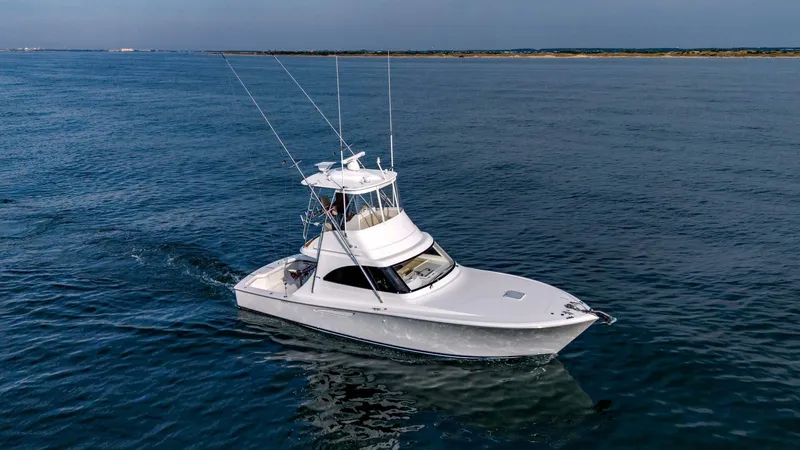
The new Viking 50 Convertible is built on a hull that carries a length overall of 51 feet 8 inches with a beam of 17 feet 1 inch and a draft listed around 4 feet 10 inches, giving it the volume and stability expected of a serious offshore sportfishing yacht in this class. Viking’s specifications for the 50 Series show fuel capacity of approximately 1,000 gallons with options to increase fuel on related variants, along with a water capacity of about 180 gallons, supporting extended cruising and tournament campaigns. While Viking’s literature focuses more on performance and layout than on a fixed passenger number, the three stateroom accommodations plan and expansive salon are clearly optimized for a full crew plus family or guests. Standard features that make the 50 Convertible so appealing include a large mezzanine equipped cockpit with abundant insulated boxes for fish and gear, integrated refrigeration and freezer storage, and a tournament style center helm on the flybridge with Palm Beach style controls and space for a full array of Atlantic Marine Electronics navigation and fish finding systems. Below, Viking’s signature joinery, fully appointed galley and multiple staterooms and heads deliver the yacht level comfort that has made the brand a leader in this segment. Power is provided by twin inboard diesels with options from major manufacturers in the 1200 to 1600 horsepower class depending on final specification, giving the 50 Convertible the fast cruise and high 30 knot plus performance envelope buyers expect, while the broader 50 Series adds Open, Sport Coupe or Sport Tower and Billfish configurations to tailor the same proven running surface to different fishing and cruising styles.
The typical buyer for the Viking 50 Convertible is an experienced owner operator or tournament team looking for a serious bluewater sportfisher that can also serve as a capable family cruising platform, which is why this size and configuration appeal to such a broad audience within Viking’s customer base. Viking describes its convertibles as designed and built specifically for sportfishing, with excellent cockpit visibility from the open bridge helm and extensive storage, refrigeration and fish handling capacity, making the 50 Convertible a natural choice for offshore anglers targeting pelagic species in destinations ranging from the Mid Atlantic canyons to the Gulf of Mexico and the Caribbean. At the same time, the three stateroom layout, refined salon and fully equipped galley provide the comfort and privacy needed for extended family trips, and features such as mezzanine seating and air conditioned interior and command spaces make non fishing days enjoyable for spouses and children. Convertible seating in the salon, entertainment systems integrated by Atlantic Marine Electronics and the option to customize interior finishes through Viking’s build process all contribute to a dual purpose environment where the boat can switch seamlessly between hardcore tournament mode and relaxed cruising. Viking’s official descriptions of the 50 Series emphasize quality, versatility and the brand’s commitment to “building a better boat every day,” positioning the 50 Convertible as a modern expression of this philosophy in one of its most proven size segments.
In terms of availability and brand investment, Viking’s recent press materials around the 50 Series, including the February 2025 announcement that the 50 Convertible would premiere at the Fort Lauderdale International Boat Show, confirm that this model line is a current production priority with multiple configurations being tooled and brought to market. The company refers to the third generation 50 Convertible as the latest evolution of a model that has already seen nearly 200 deliveries across earlier generations, and the decision to expand the 50 foot platform into four distinct versions demonstrates a significant allocation of engineering, tooling and marketing resources at this length. Official content highlights the 50 Convertible as leading the new 50 Series, and Viking’s broader messaging about offering the largest and most diverse fleet in the industry underscores how critical a flexible, mid size convertible is to anchoring dealer inventories and meeting demand from both fish first and family oriented owners. While exact dealer stock levels and build slot timelines are managed through Viking’s dealer network, the high visibility of the 50 Convertible and its sister models on the brand’s website and in recent news updates indicates an active production stream and strong confidence in continued market uptake. Taken together, the proven sales history of prior 50s, the launch of an all new third generation hull, and the creation of a full family of 50 foot variants make the Viking 50 Convertible the signature offering in today’s lineup, blending tournament level performance, refined accommodations and a strategic price and size position that aligns closely with core market demand.
WHAT IS THE HISTORY OF THIS BOAT BRAND AND COMPANY?
Viking Yachts traces its origins to April 1, 1964, when brothers Bill and Bob Healey acquired Peterson Viking Builders, a small struggling New Jersey yard known for 37 foot wooden sportfishing boats, and set up the Viking Yacht Company on 17 barren acres in New Gretna, New Jersey, with little more than a winter storage shed and a determination, in Bill’s words, to build a better boat every day as the guiding philosophy for all future designs, so from the outset the brand focused on high quality, performance oriented sportfishing yachts with teak cockpits and carefully finished hulls that reflected Bill’s hands on approach on the shop floor and Bob’s business and legal acumen, and as the 1960s progressed those early wooden 37 footers established Viking’s reputation among serious offshore anglers while the company invested in tools, craftsmen, and processes that would allow it to transition from traditional wooden construction to more advanced materials and layouts, culminating in a major milestone in 1971 with the launch of its first fiberglass 33 foot model, a boat that signaled Viking’s commitment to composite construction and set the stage for a growing range of sportfishing and cruising yachts built from New Gretna and carrying the Viking name as a symbol of rugged capability and American boatbuilding pride.
Through the 1970s and 1980s Viking steadily expanded its model line and refined its fiberglass construction techniques from its New Gretna base, growing from those initial 33 and 37 foot boats into larger, more sophisticated sportfishing and cruising yachts and building the foundation for what would become a world leader in semi custom fiberglass yacht production, but the brand also faced industry headwinds such as the early 1990s US luxury tax on boats, which depressed demand for larger yachts and posed a serious challenge even as Viking continued to design new models; nonetheless, by the mid 1990s the company was back on the ascent, and in 1997 it introduced a 55 foot sportfishing yacht that became one of its defining models of the era, with 115 boats sold in its first five years, demonstrating that Viking’s emphasis on performance, fishability, and interior comfort resonated strongly with customers and helping to pull the company decisively out of the downturn, while ongoing investments in its New Gretna plant and in house manufacturing capabilities reinforced the family owned firm’s long term strategy of maintaining tight control over quality and delivering most of each yacht from within its own walls rather than outsourcing key components.
As Viking entered the 2000s and 2010s it modernized aggressively, broadening its range of high performance convertibles, enclosed bridge and open models while deepening its vertical integration so that roughly ninety percent of each yacht, apart from major equipment like engines, transmissions, air conditioning and electronics, was designed and manufactured in house at New Gretna, and the company complemented this core operation with the development of the Viking Marine Group, a family of closely related businesses including Atlantic Marine Electronics for factory engineered electronics packages and Palm Beach Towers for custom tuna towers and hardtops, which allowed Viking to deliver fully outfitted boats with harmonized systems; the model lineup evolved into a comprehensive sportfishing portfolio extending from under forty feet up to large flagships, supported by a growing second manufacturing facility on the Mullica River that would later become home to Valhalla Boatworks center consoles, all while Viking invested in advanced tooling such as five axis profiling for plugs and molds, sophisticated hull forms and running surfaces for improved speed and seakeeping, and continual refinements in interior layouts and systems that kept its bluewater convertibles and open yachts at the forefront of the tournament sportfishing and luxury cruising markets.
In recent years Viking has celebrated its sixtieth anniversary and underscored its ongoing growth with an 880,000 square foot New Gretna manufacturing headquarters, an additional Mullica plant, and a diversified Viking Marine Group that now encompasses multiple facilities in New Jersey and Florida, including service centers and the Valhalla Boatworks brand for high performance outboard powered center consoles from twenty eight to more than fifty feet, while the core Viking fleet has expanded to include a wide array of models from thirty eight to ninety feet and new flagships such as the Viking 90 as well as the announced third generation Viking 50 Convertible and the Viking 82 scheduled to debut at major boat shows, reflecting the company’s continuing commitment to pushing design, construction and performance; still led by members of the Healey family and having delivered more than 5,500 yachts, Viking today positions itself as a premier builder of semi custom sportfishing and cruising yachts that embody the long standing mantra of building a better boat every day, and its vertically integrated production, strong brand loyalty, and sustained investment in facilities and technology all reinforce a market stance rooted in heritage, innovation, and confidence in its future as a global sportfishing icon.
AWARDS AND RECOGNITIONS
Viking Yachts’ reputation for award winning performance and design began building long before its most recent headlines, with notable recognition across the sportfishing segment as its convertible and enclosed bridge models set benchmarks for bluewater capability and luxury. A standout early milestone came in 2014 when the Viking 92 Enclosed Bridge was honored as Best Fish Boat 60 feet and over in the AIM Marine Group Editor’s Choice Awards, while the Viking 52 Convertible captured Best Fish Boat 50 to 59 feet in the same program, signaling that Viking’s large tournament ready sportfishers were setting the pace for offshore anglers seeking speed, seakeeping and lavish accommodations in one package. That momentum continued into the next decade as Viking’s design language and engineering focus culminated in the Viking 54 Convertible, which made its world debut at the 2020 Fort Lauderdale International Boat Show and was crowned Best of Show by NBC Sports Group in conjunction with the show organizers, who praised its unmistakable Viking profile, 154 square foot cockpit and three stateroom, two head layout as the standard bearer for midsize convertible sportfishing yachts. Building on that win, Viking’s affiliated center console brand Valhalla Boatworks extended the group’s innovation story in 2023 when the Valhalla V 55 center console received the Miami Innovation Award in the Center Console and Walkaround Fishing Boats category from the NMMA and Boating Writers International, with judges highlighting how the V 55 translates big sportfishing yacht features into a highly engineered, owner operable center console platform with protected mechanical spaces, a towering offshore capable helm arrangement and a cabin space more akin to a larger convertible yacht.
Alongside its high profile product trophies, Viking Yachts has also earned recognition through the National Marine Manufacturers Association’s Marine Industry Customer Satisfaction Index awards, which focus squarely on the ownership experience rather than boat show glamour. The NMMA CSI program surveys thousands of new boat buyers each year and benchmarks brands on key aspects such as overall product quality, delivery, sales process and after the sale service support, requiring participating manufacturers to achieve an independently verified satisfaction rating of 90 percent or higher before they can be honored. Viking has appeared on the NMMA’s roster of CSI award recipients in the inboard fishing and cruising segments in multiple years, reflecting a consistent level of customer loyalty among owners who use their convertibles, enclosed bridge models and Valhalla center consoles for demanding offshore duty where reliability, dealer responsiveness and factory backing are critical. While the organization does not publicly rank brands by consecutive streak in the same way it does for some other builders, Viking’s recurring presence among the CSI award winners underscores that its commitment to building a better boat every day is matched by an equally serious focus on standing behind those boats once they leave the New Gretna production line, helping to sustain strong resale values and a vibrant repeat buyer base across the Viking and Valhalla fleets.
In the most recent few years Viking Yachts and Valhalla Boatworks have continued to add fresh industry accolades that keep the brand at the forefront of marine innovation and media attention, particularly in the fiercely competitive offshore fishing and performance segment. At the 2023 Discover Boating Miami International Boat Show the Valhalla V 55 center console took home the prestigious Miami Innovation Award from the NMMA and Boating Writers International for center console and walkaround fishing boats, with judges calling out its integration of big sportfishing yacht systems into an owner friendly platform, including its below deck mechanical room that safeguards critical equipment while remaining easily accessible and its supersized tower and generous console cabin that echo the feel of a larger convertible. That same engineering and design DNA was recognized again on the show circuit when the Valhalla 55 Sport Yacht made its debut at the 2025 Fort Lauderdale International Boat Show and captured the Fox Sports Best of Show award, an honor reserved for the single standout vessel across hundreds of entries, with coverage from leading marine titles emphasizing its blend of quad outboard power, high speed capability and a layout that merges the fishability of a center console with the comfort and livability of a Viking convertible. Together with the ongoing editorial praise for Viking’s flagship convertibles and enclosed bridge models in major yachting magazines, these recent trophies confirm that the brand’s newest designs are not only competitive but often category defining in terms of performance, layout and offshore readiness.
Taken as a whole, Viking Yachts’ portfolio of awards and recognitions paints a clear picture of a builder whose reputation rests on more than just heritage, combining independent validation of its hull designs and layouts with documented strength in customer satisfaction and long term ownership support. Product focused distinctions like Best of Show at Fort Lauderdale and the Miami Innovation Award demonstrate that Viking and Valhalla boats routinely impress seasoned judges on criteria ranging from engineering efficiency and seaworthiness to onboard ergonomics and finish quality, while recurring NMMA CSI honors show that those same strengths carry through years of real world use by serious anglers and cruising families. For prospective buyers, this record of achievement offers tangible assurance that a Viking or Valhalla is not only designed to turn heads on the dock but also built to deliver reliable performance offshore, backed by a factory and dealer network committed to responsive service. That combination of cutting edge innovation, refined product execution and verified owner satisfaction has helped Viking maintain its standing as a leader in premium sportfishing and performance yachts, and it continues to support buyer confidence for anyone considering joining the fleet today.