Sun Tracker
Searching boats for you...
Sun Tracker – Technical and Historical Guide
ABOUT THIS BOAT BRAND
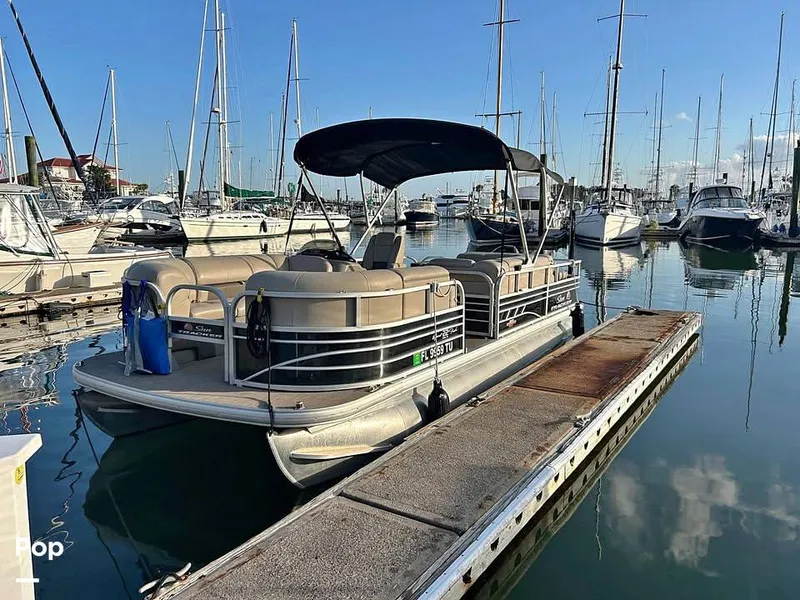
Sun Tracker is an American boat manufacturer renowned for building value-focused pontoon boats with a simple philosophy: maximize usable deck space, comfort, and easy ownership without inflating cost. Launched in 1983, the brand grew into one of the most recognizable names in pontoon boating by pairing high-volume production with standardized, family-friendly layouts. Sun Tracker operates under White River Marine Group, a major U.S. boating conglomerate that also supports a large dealer and service network. Known for approachable pricing and consistent, repeatable build specs, Sun Tracker has become a common entry point for new pontoon owners and a familiar sight on inland lakes, reinforcing its long-standing relevance in the marine industry.
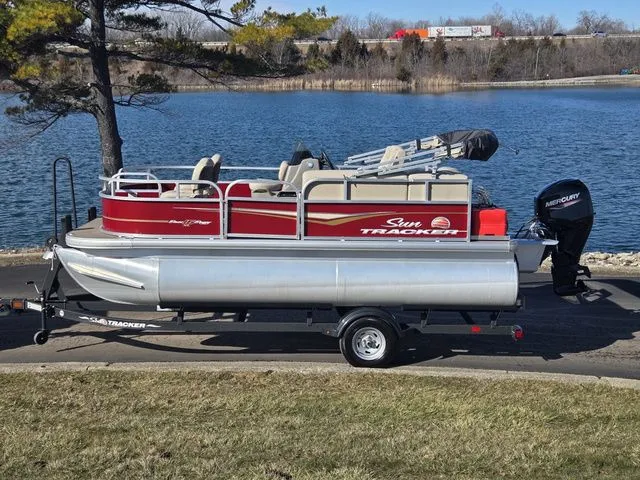
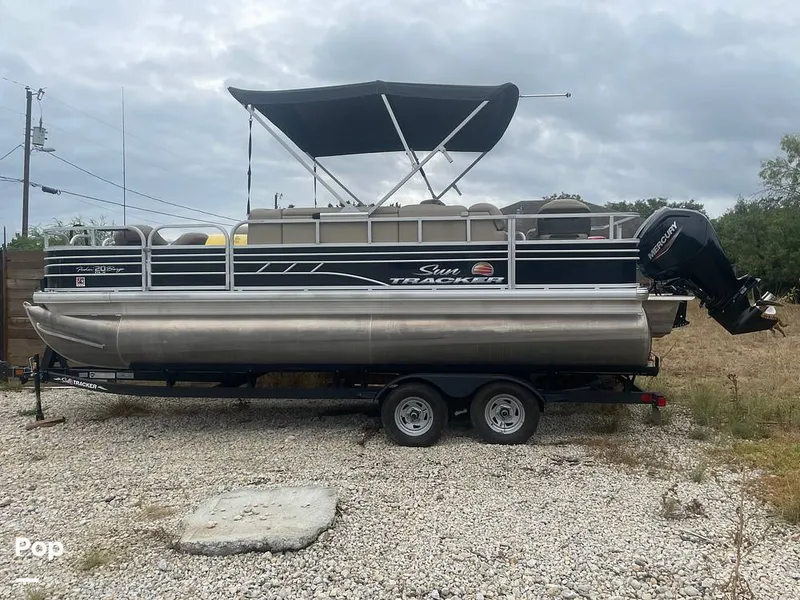
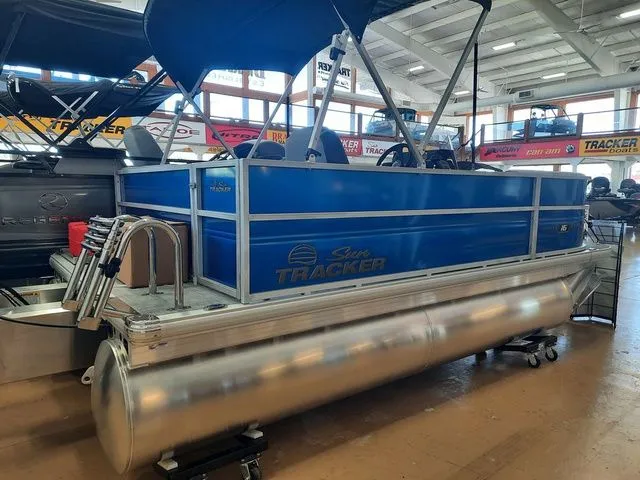
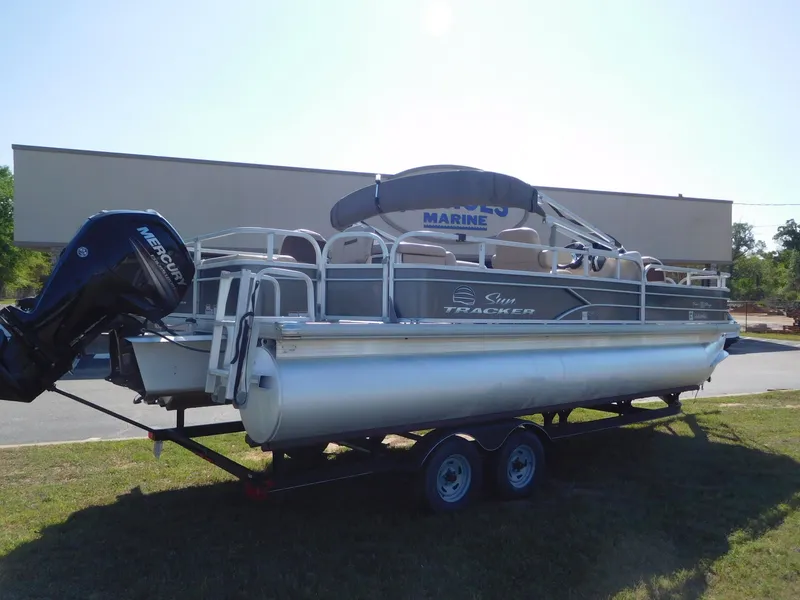
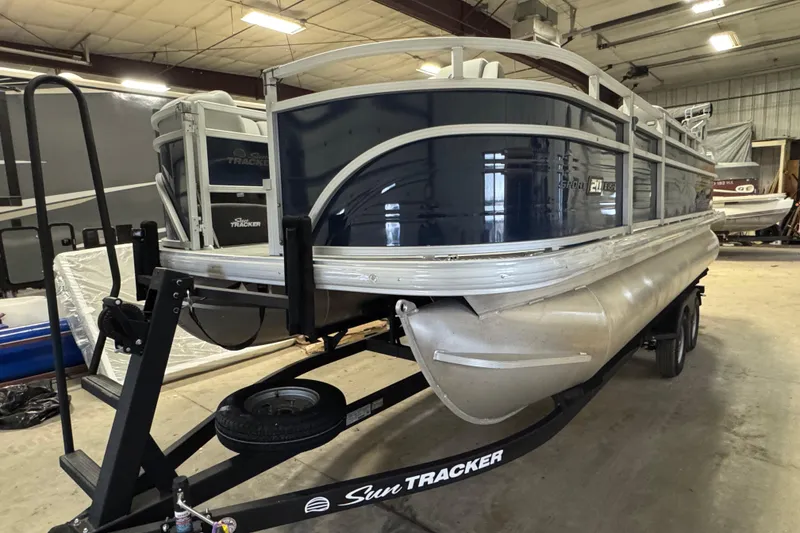
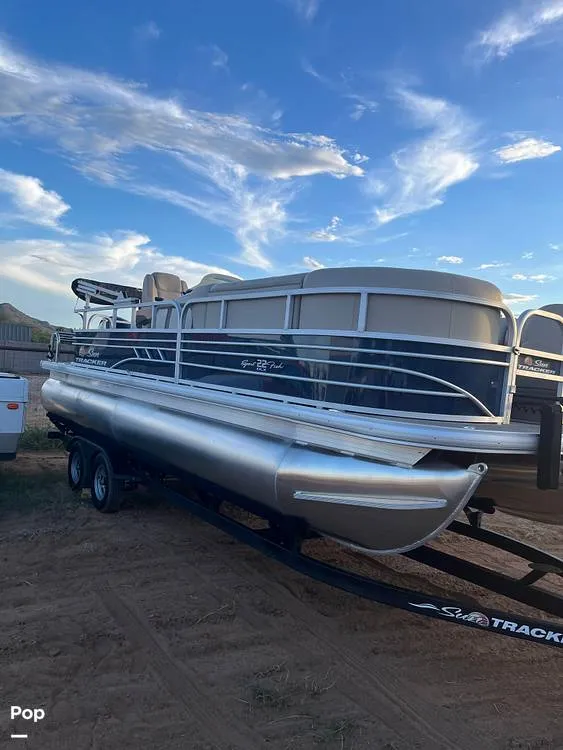
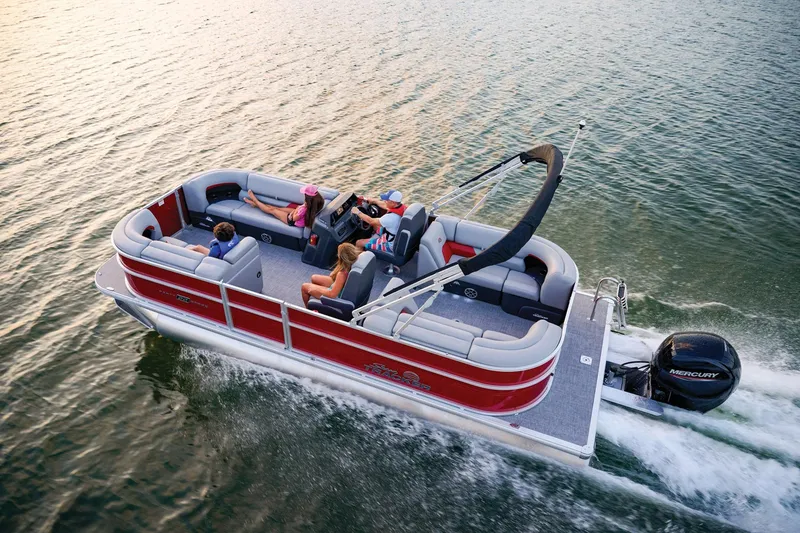
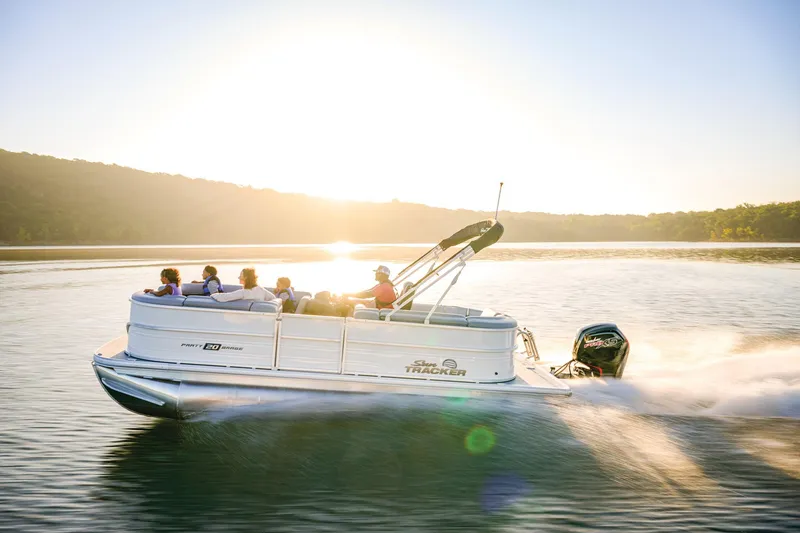
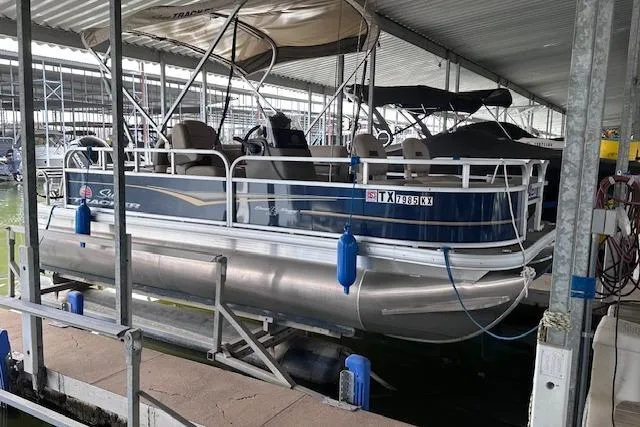
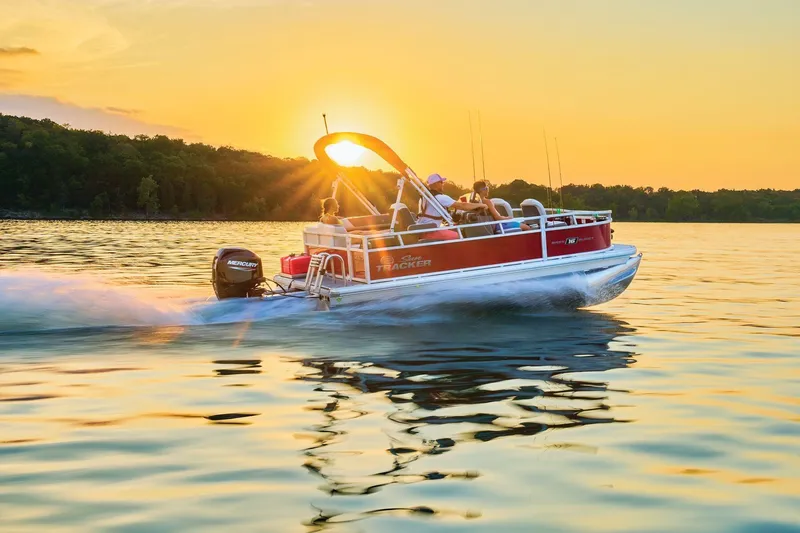
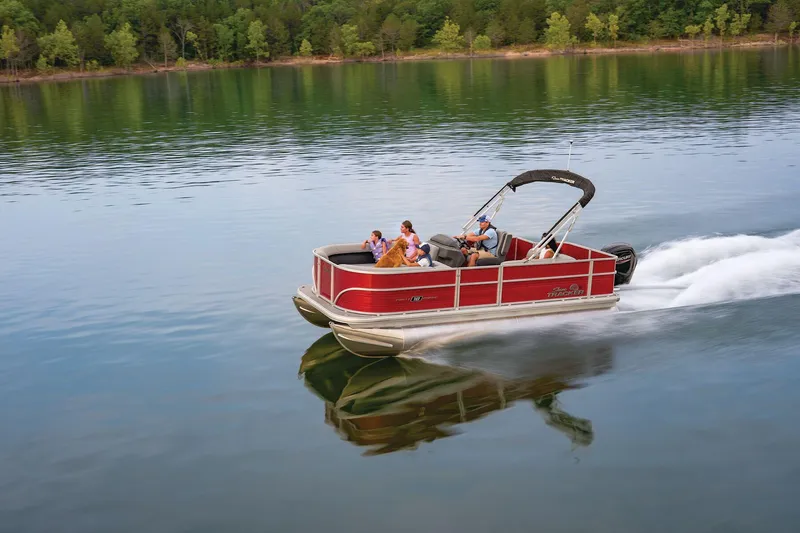
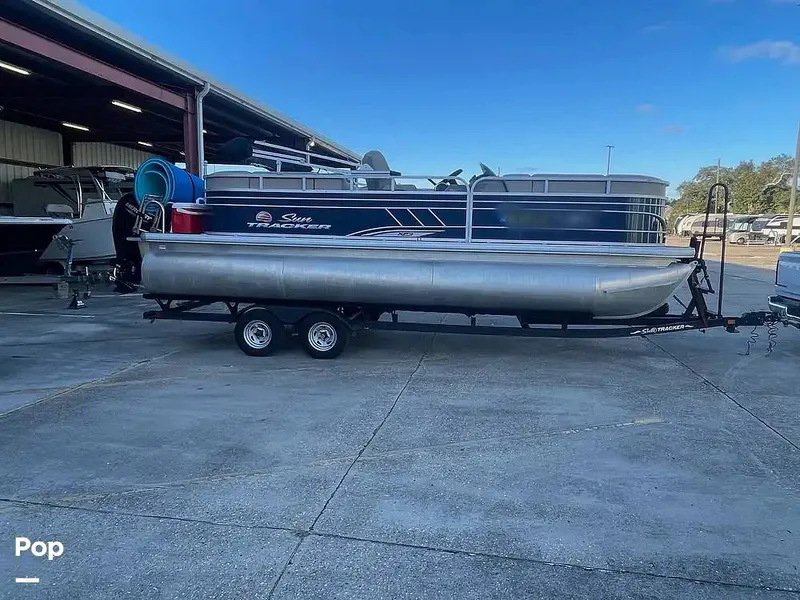
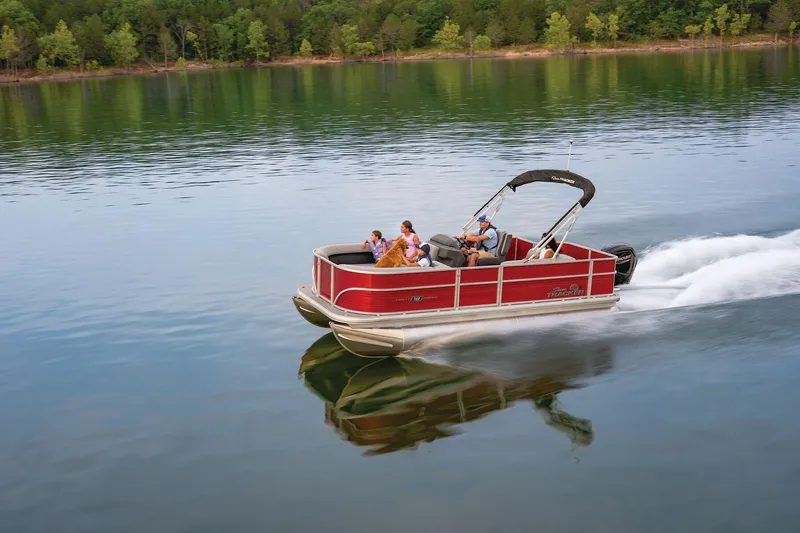
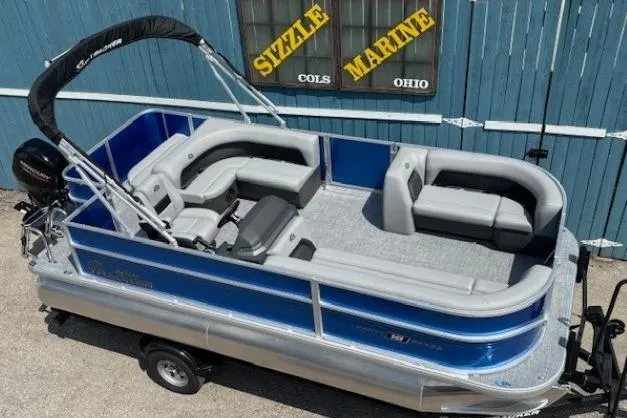
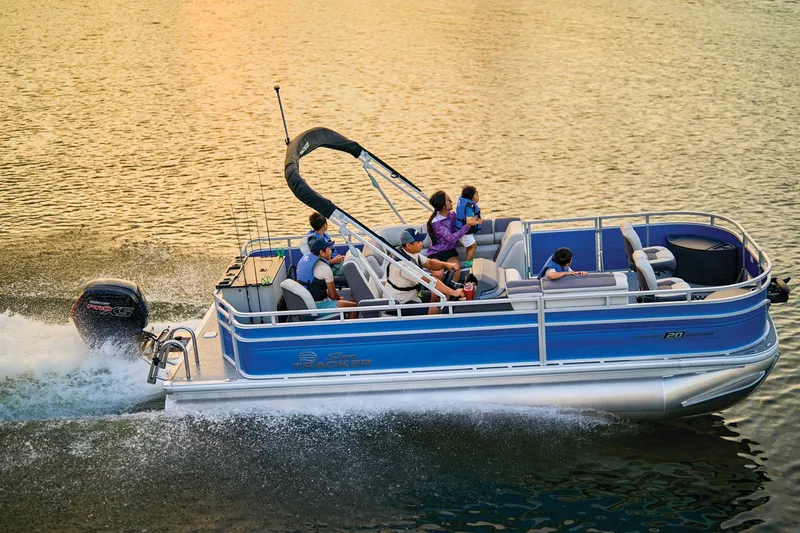
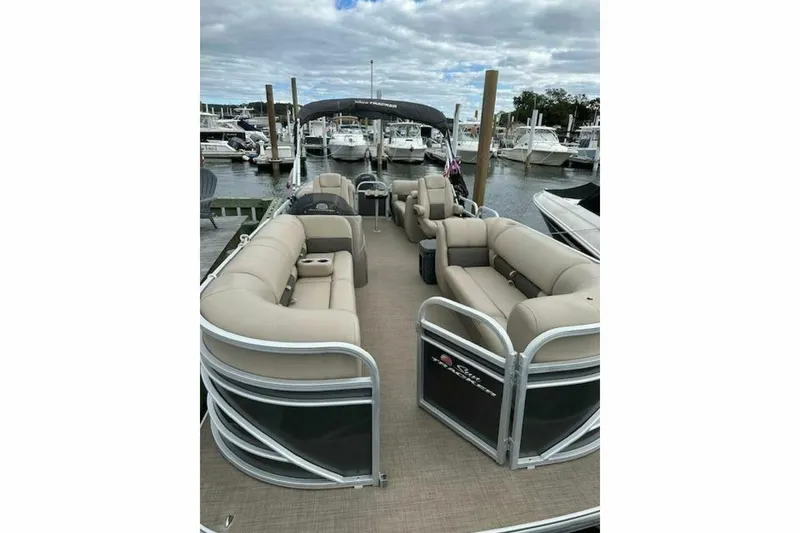
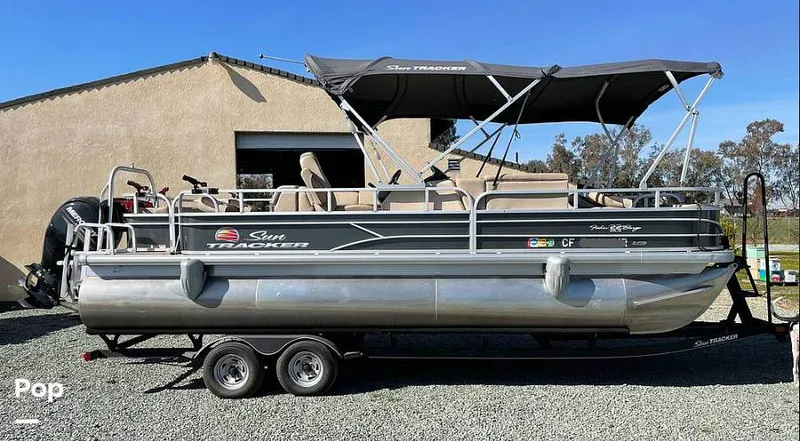
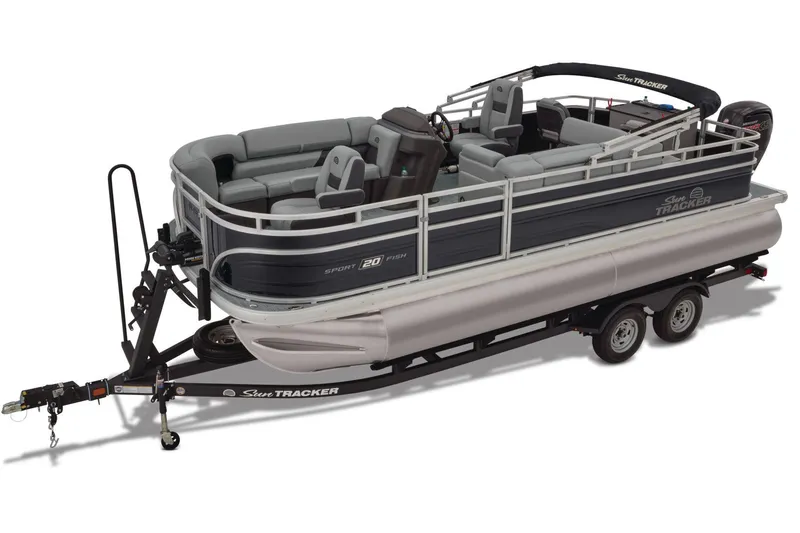
Specializing in outboard-powered freshwater boats, Sun Tracker focuses on pontoons aimed at family boaters, first-time owners, and recreational cruisers who want easy handling and social seating. Core lines commonly include the BASS BUGGY fishing pontoon series, the PARTY BARGE cruising pontoons, and the SPORTFISH DLX models that blend casting space with lounge seating. Across the lineup, Sun Tracker typically emphasizes twin-tube pontoon construction, all-welded crossmembers, under-deck skinning on many models for smoother flow, integrated transom pods for modern outboards, and practical helm layouts with clear gauges and switch panels. Seating often uses rotomolded bases for durability, and decks are designed around open walk-throughs, wide boarding gates, and aft swim platforms with ladders for lake-day versatility. This specialization in accessible pontoon layouts and straightforward systems is why Sun Tracker remains a preferred choice for relaxed cruising and casual angling on inland waters.
WHAT MAKES THIS BOAT BRAND SPECIAL?
Sun Tracker stands out by making pontoon and fishing pontoon ownership simple, fun, and family-friendly without cutting corners where it matters. Sun Tracker engineers focus on stable, confidence-building performance with wide beams, generous tube diameter, and predictable handling that feels secure when kids move around or when you are docking in a crosswind. Many Sun Tracker pontoons pair smart hull geometry with practical performance upgrades like lifting strakes on select models, helping the boat rise onto plane faster and run flatter for better fuel economy and smoother cruising. Underfoot, Sun Tracker uses sturdy deck construction and marine-grade flooring and upholstery built to handle sun, spray, and weekend wear, while layouts are purpose-built for how people actually boat: wraparound lounges for sandbar days, fishing stations and livewells on SPORTFISH models, and easy-access gates, swim ladders, and integrated storage that keep gear organized for lake days.
Sun Tracker is built in modern U.S. manufacturing facilities with production teams trained to deliver consistent fit-and-finish at scale, so buyers get a repeatable level of quality from boat to boat. The Sun Tracker build process emphasizes corrosion-resistant aluminum structures, durable fasteners and hardware, sealed wiring practices, and clean rigging that makes service simpler over the long haul. Sun Tracker models are designed to meet applicable U.S. Coast Guard capacity and safety standards, and they are backed by a factory warranty that adds peace of mind for first-time buyers and seasoned captains alike. Owners often describe Sun Tracker as the best value in pontoons, praising the roomy layouts, easy towing and launching, and the no-drama reliability that makes Sun Tracker a go-to brand for affordable pontoon boats that still feel thoughtfully engineered.
WHAT DIFFERENT TYPES OF BOATS DOES THIS BOAT BRAND BUILD?
Sun Tracker builds outboard-powered pontoons and performance-oriented tritoons designed for relaxed lake days, easy cruising, and accessible fishing. The lineup spans from compact 18' 5" platforms up to 26' 2" models, giving buyers a clear path from trailerable simplicity to larger, higher-capacity configurations. Across its main categories, Sun Tracker offers Recreational Pontoons centered on the Party Barge series for entertaining and family fun, plus Fishing Pontoons that include the Bass Buggy, Fishin' Barge, and SportFish families for casting, livewell-equipped outings, and all-around fish-and-cruise versatility. Many models pair with Mercury FourStroke power, with tritoon XP3 variants positioned for added performance and capability while keeping the signature pontoon comfort and space. Below are the types of boats and models Sun Tracker builds, along with their key characteristics and uses:
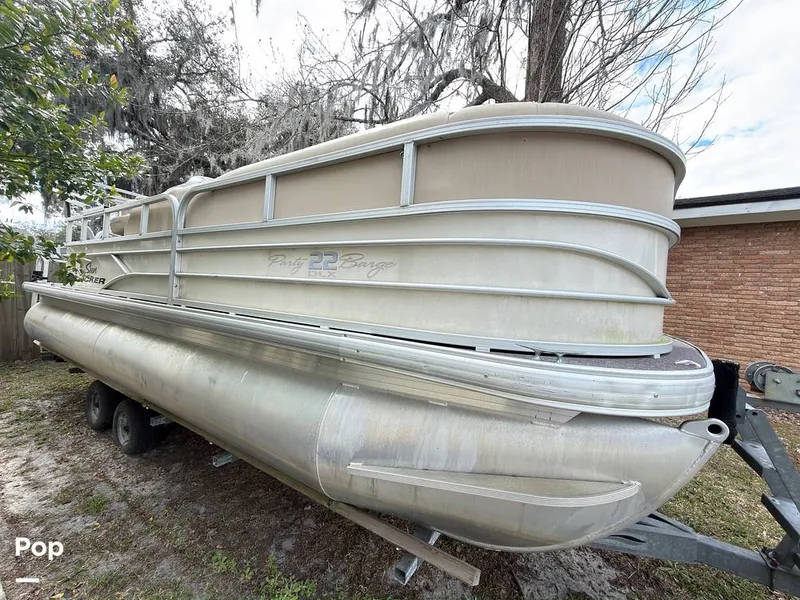
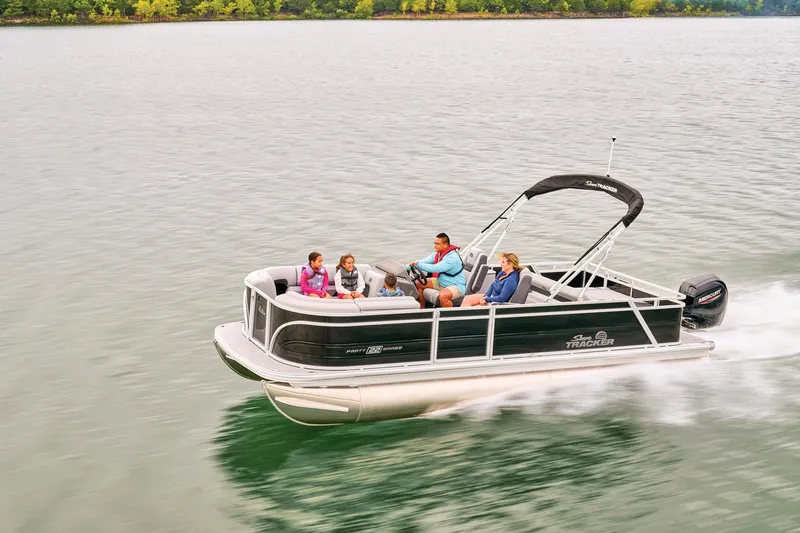
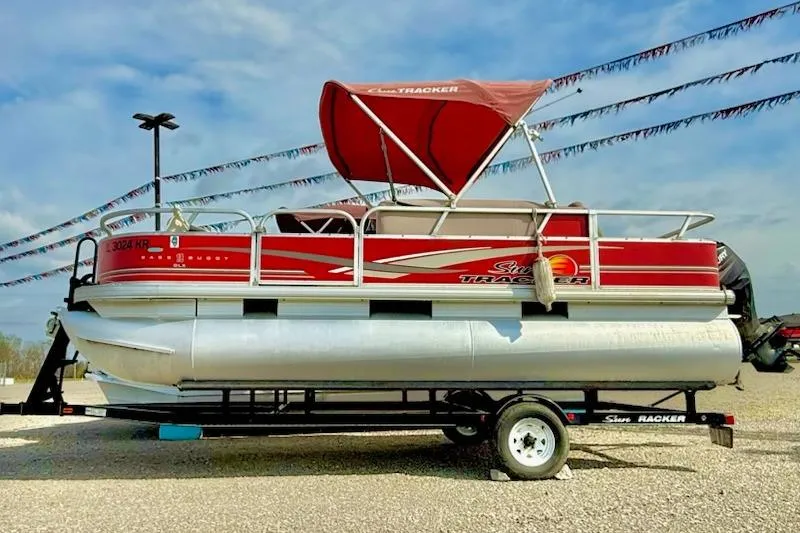
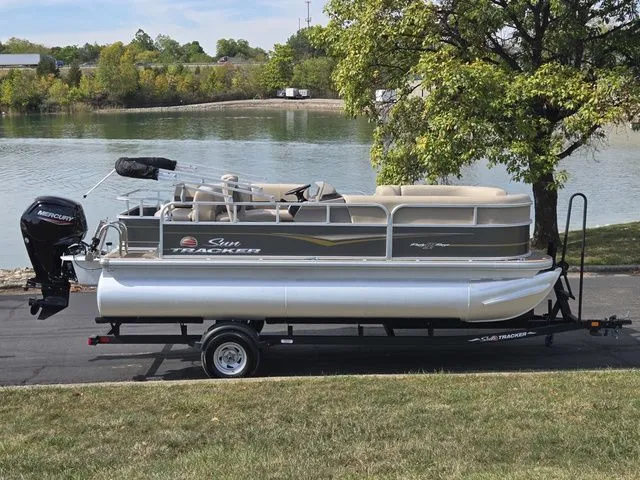
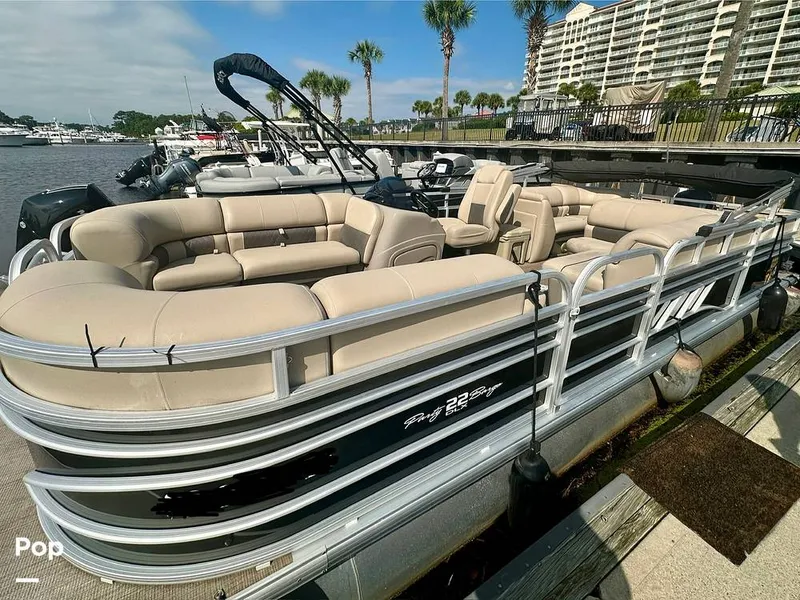
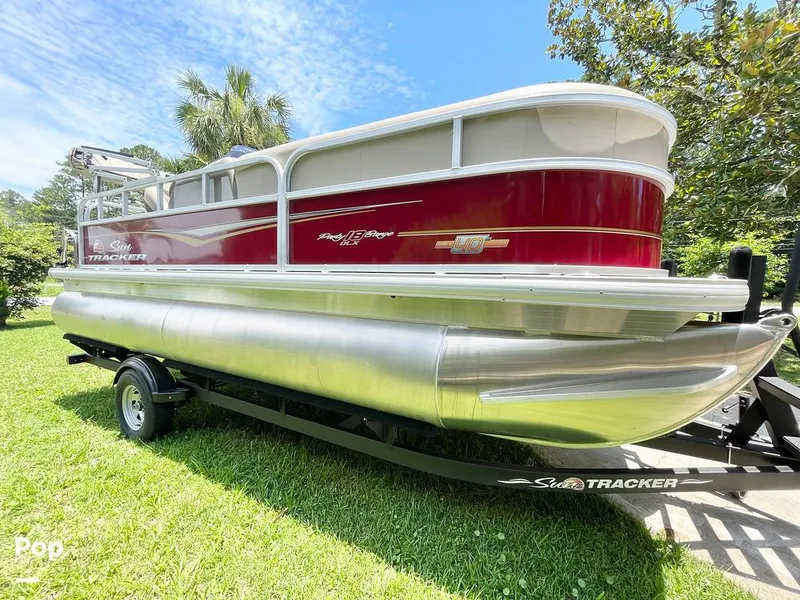
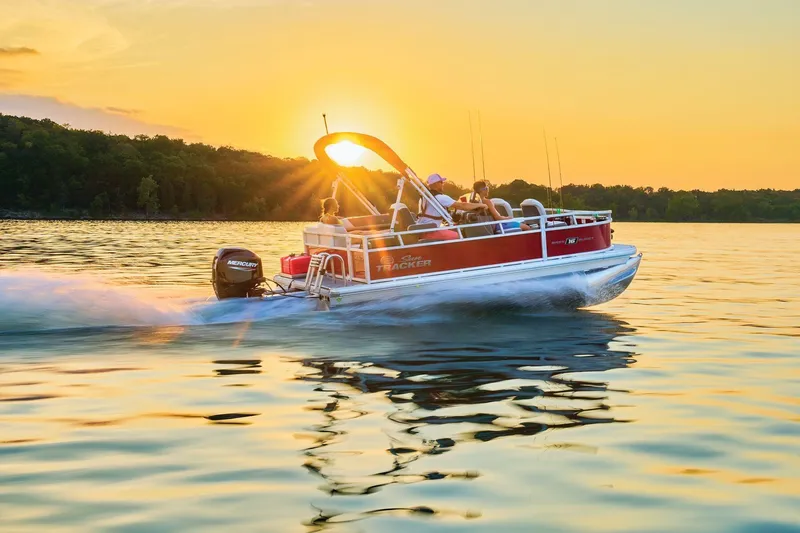
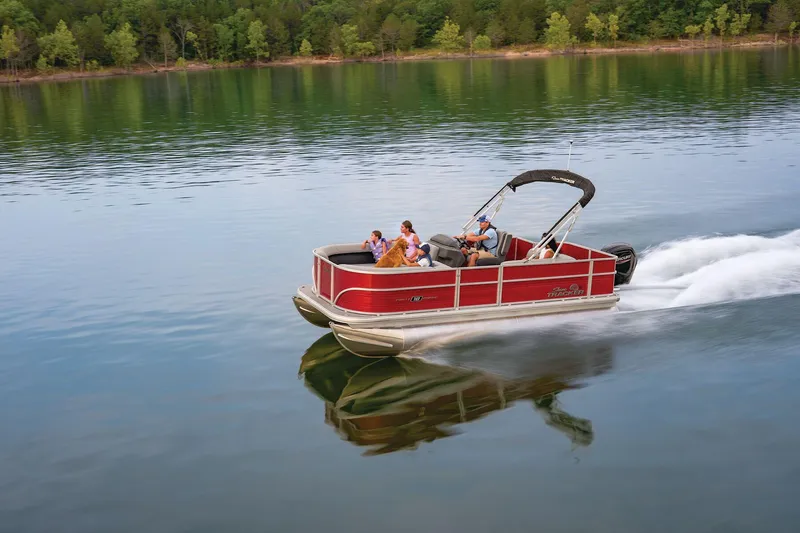
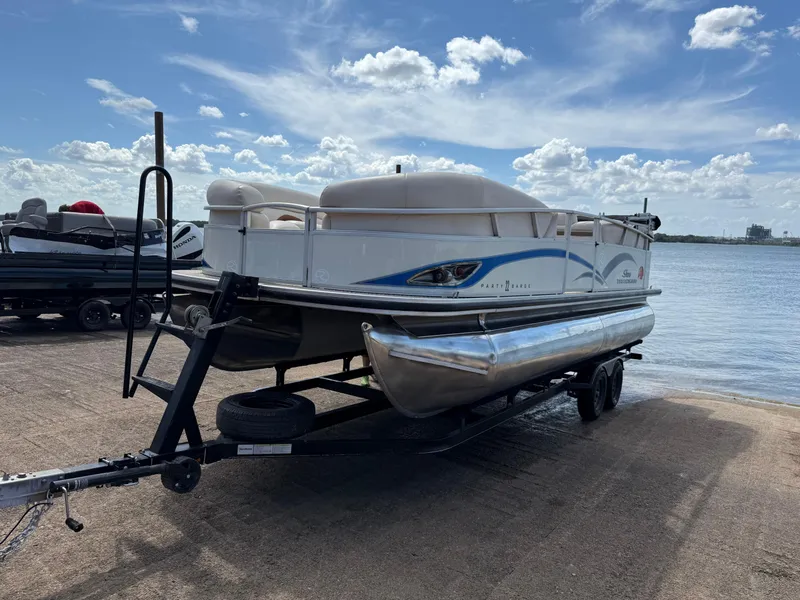
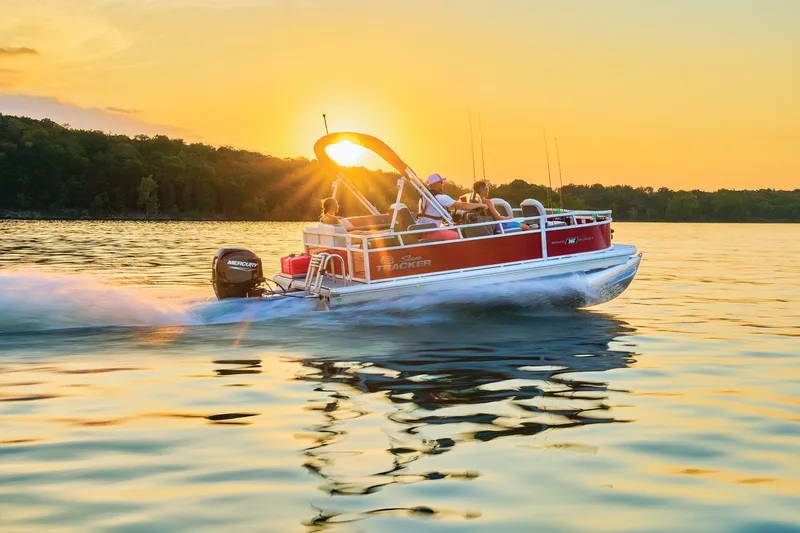
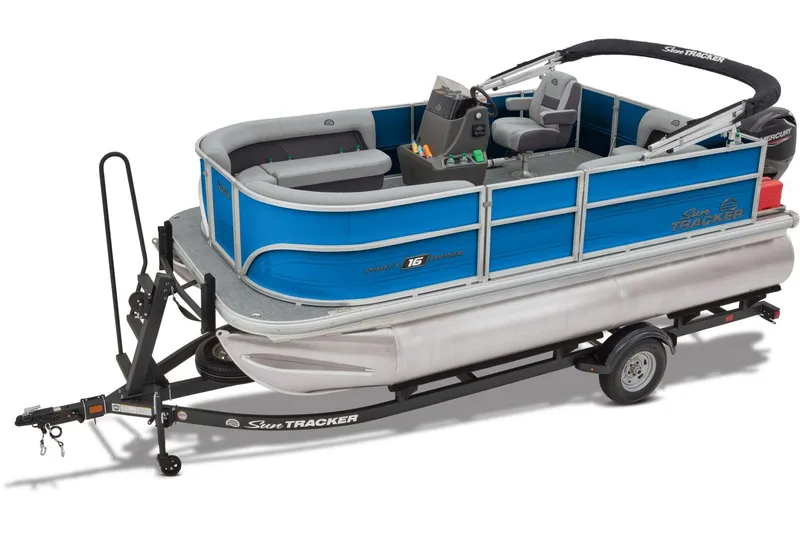
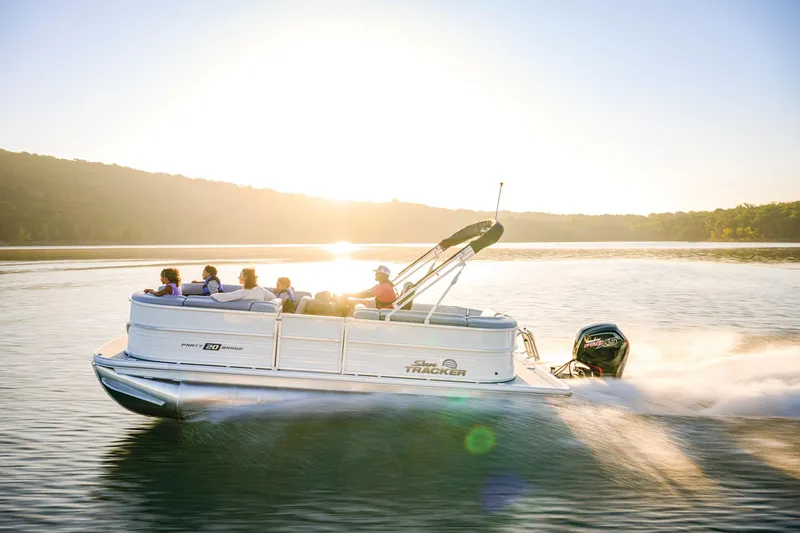
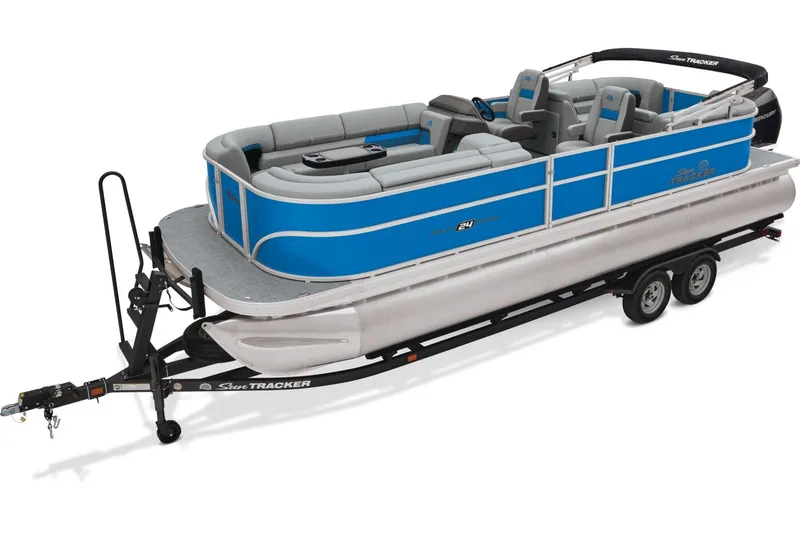
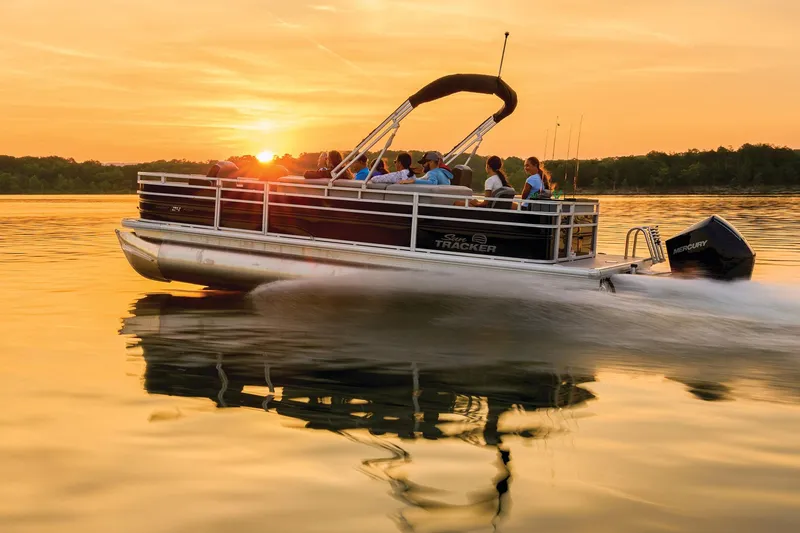
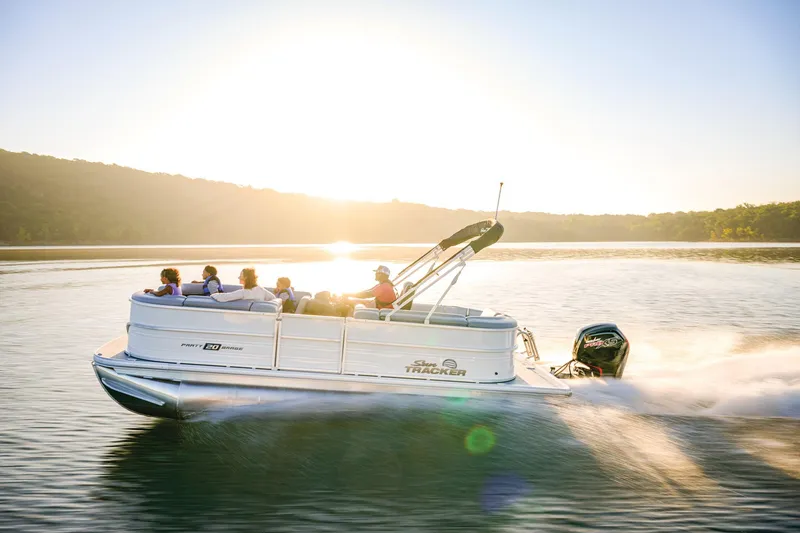
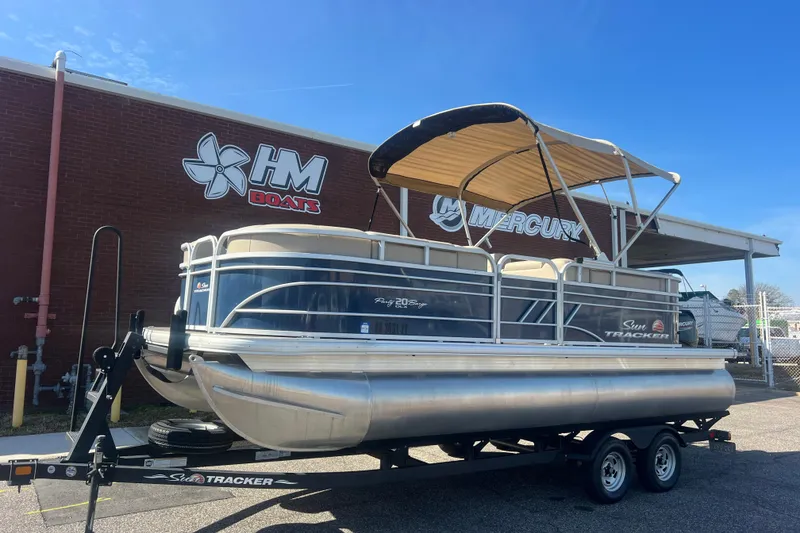
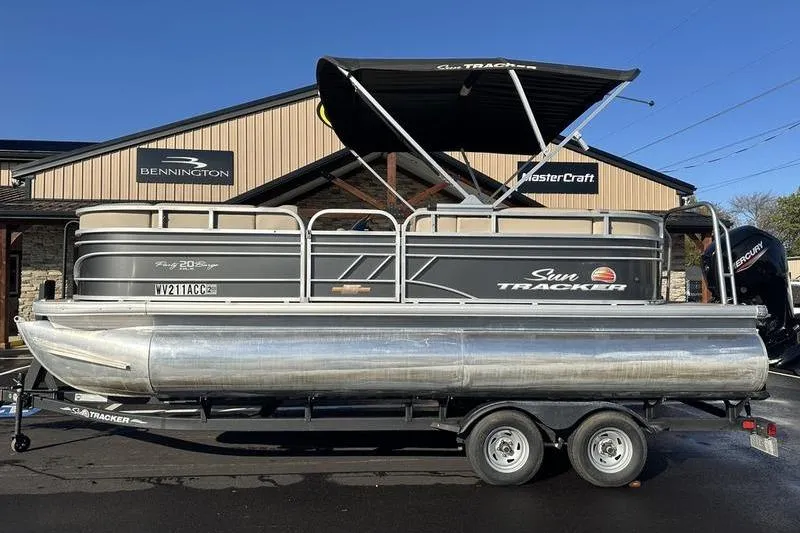
• (Recreational pontoons (PARTY BARGE® series)) SUN TRACKER’s PARTY BARGE® line is the brand’s core family-cruising pontoon range—built primarily for lake days, sandbar/social use, swimming access, and casual tow-sports. Current models span compact entry pontoons through larger 8'6" deck designs, with layouts that prioritize multi-zone seating, easy reboarding (aft swim platforms/ladders), and entertaining features (tables, lounges, Bimini shade). The PARTY BARGE® family typically runs Mercury® outboards and is offered in multiple lengths: PARTY BARGE® 16 DLX (18'5" LOA), 18 DLX (20'0" LOA), 20 DLX (21'11" LOA), 22 DLX (24'2" LOA), 22 RF DLX (24'2" LOA; rear-facing lounge layout), 24 DLX (26'2" LOA), and the higher-performance PARTY BARGE® 24 XP3 (26'2" LOA) tritoon package. Power ranges from small-engine cruising (50–75 HP max on the smallest models) up to higher-output setups on the XP3 tritoon (up to 250 HP max), with larger fuel capacity on the XP3 (52 gal) compared with typical 32.1-gal tanks on many mid-size models.
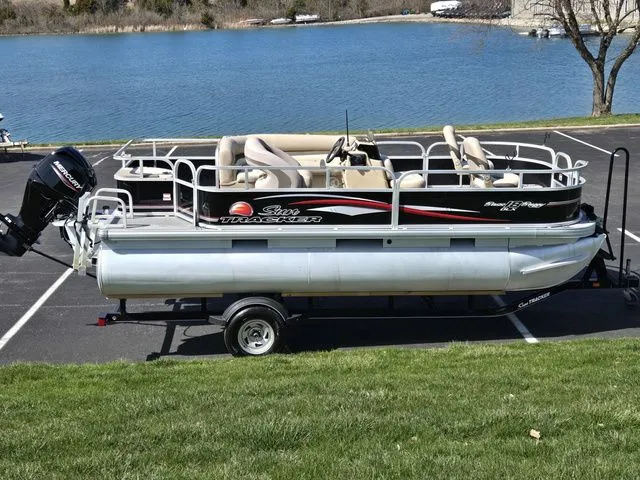
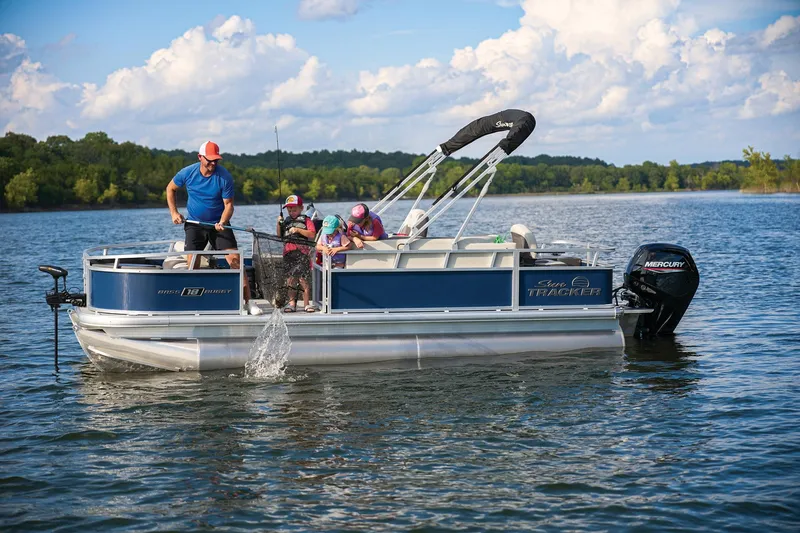
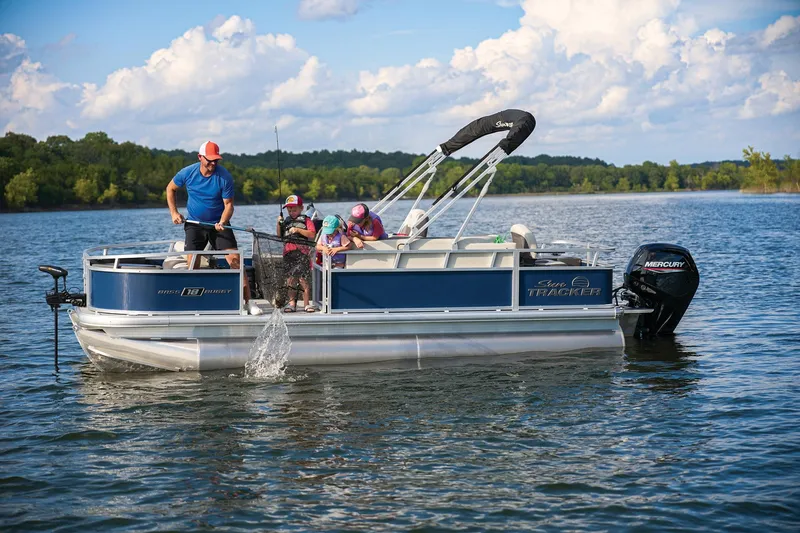
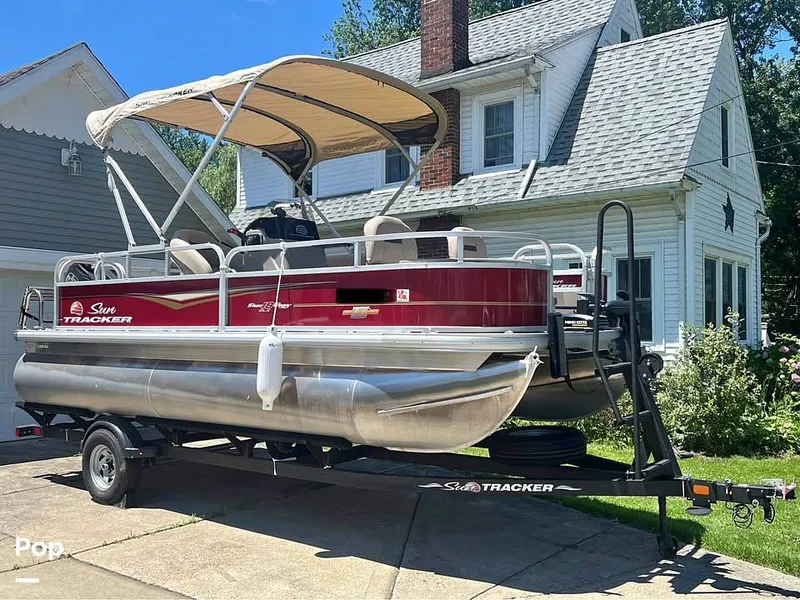
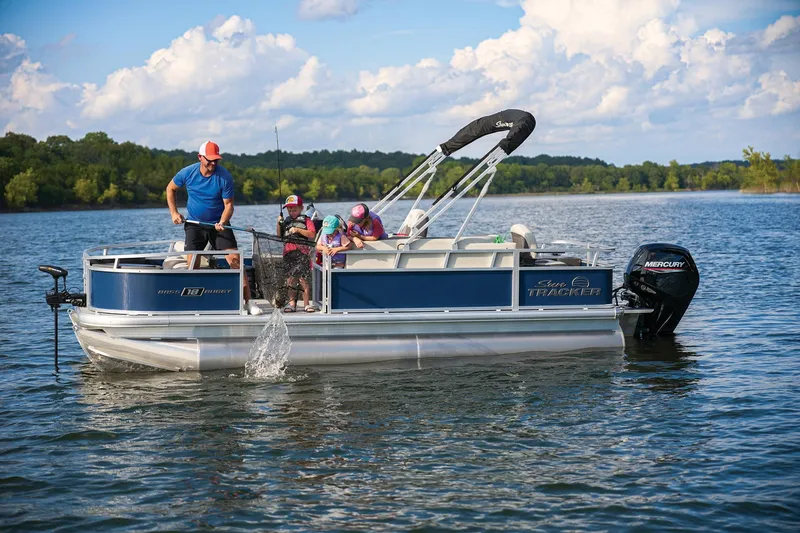
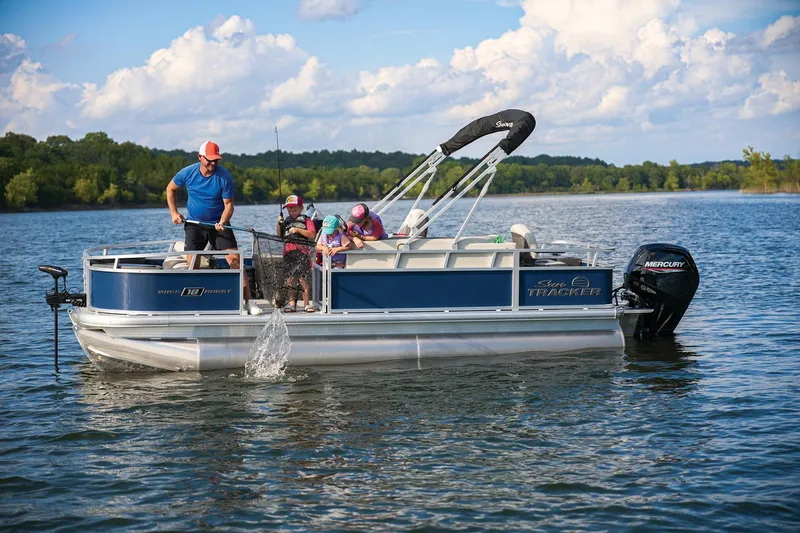
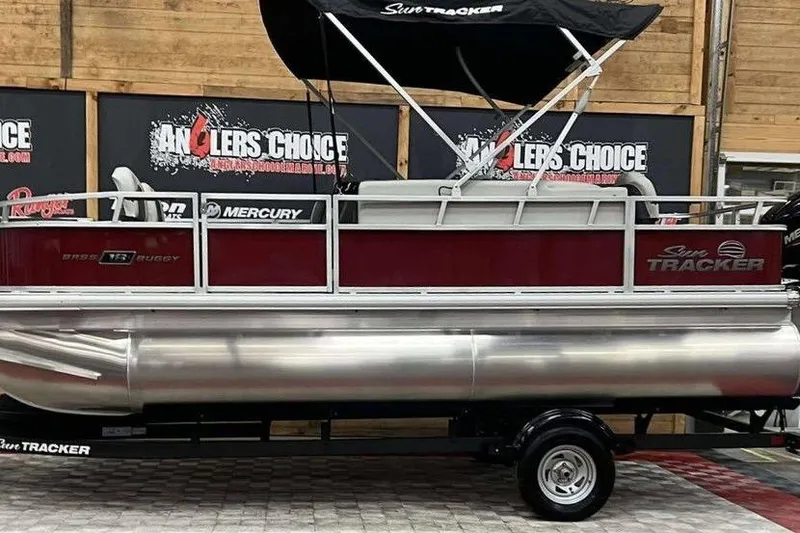
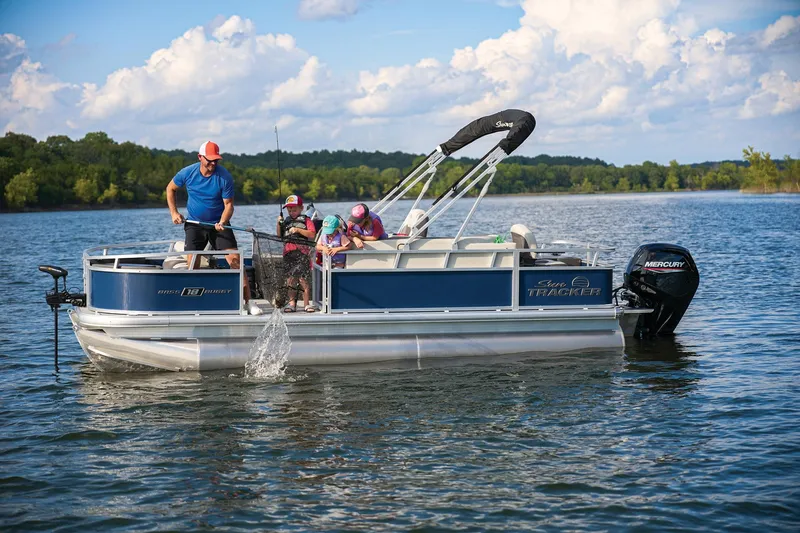
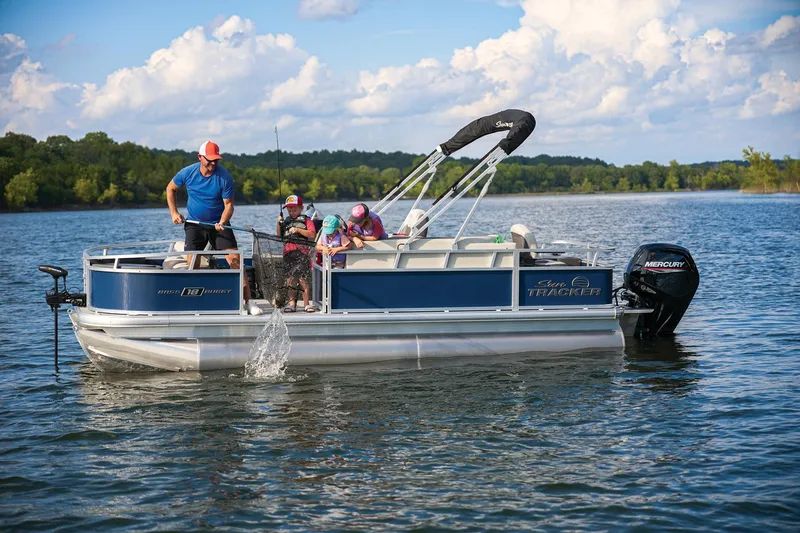
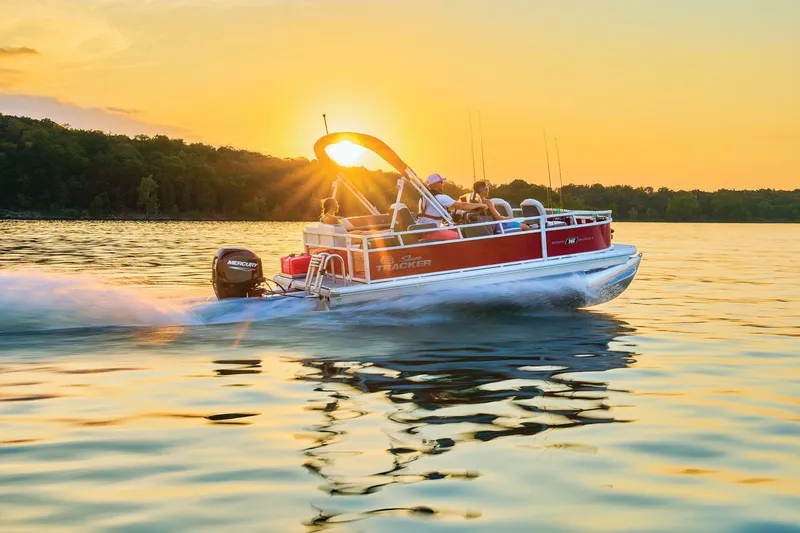
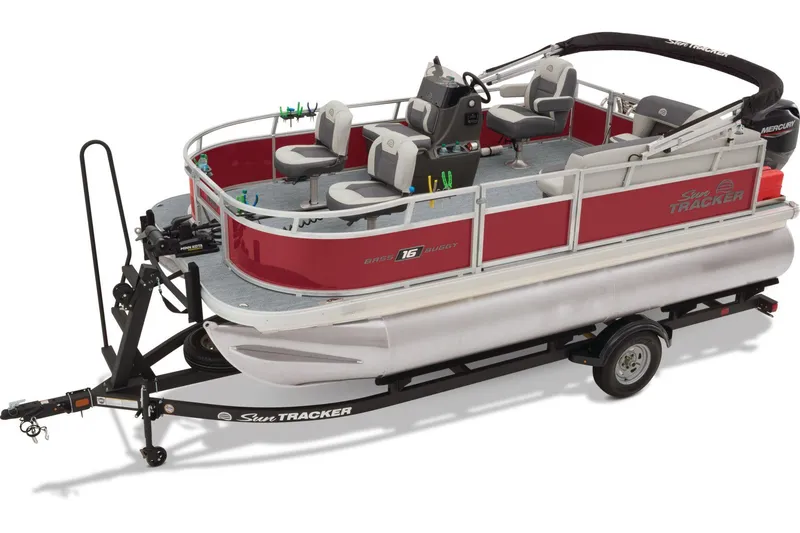
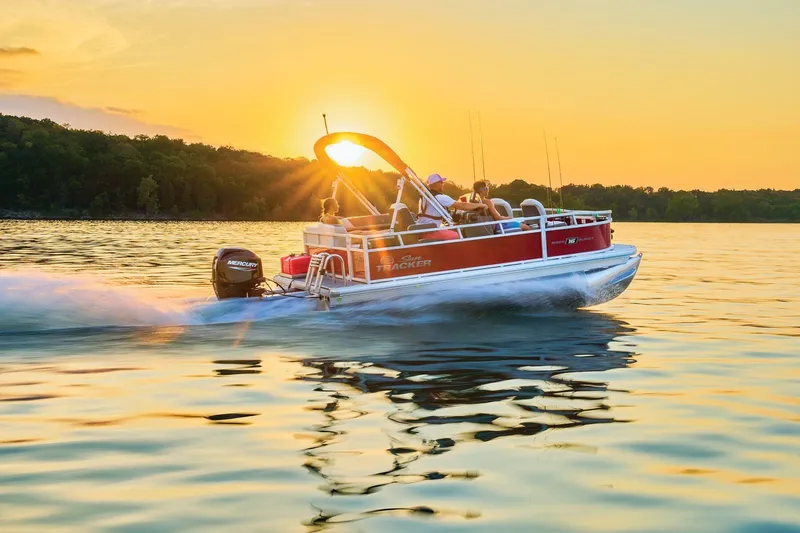
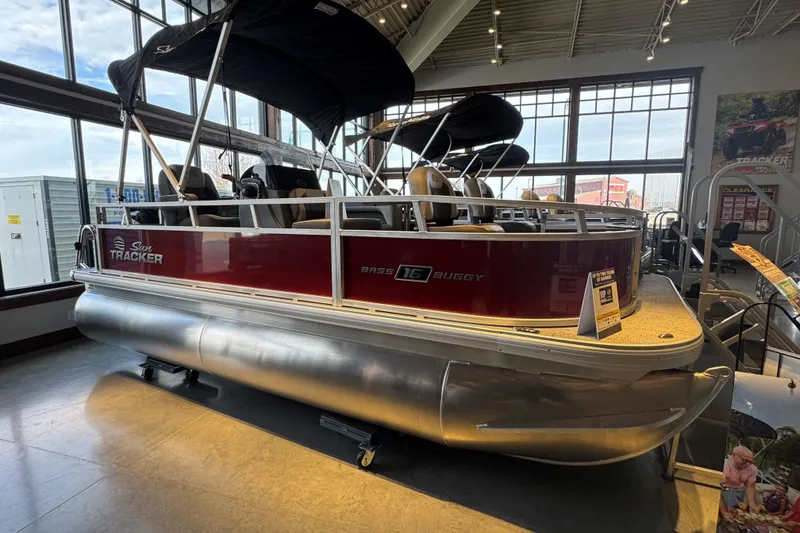
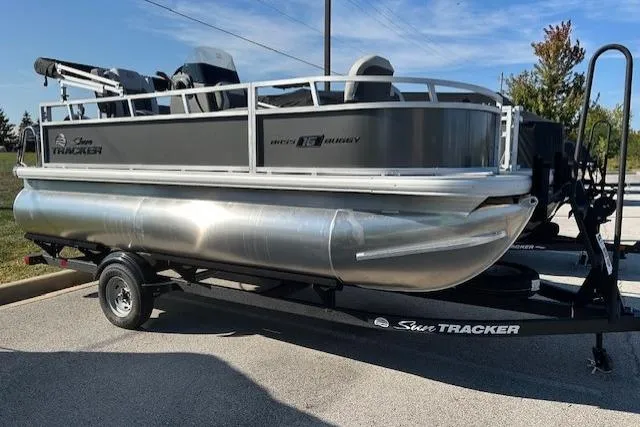
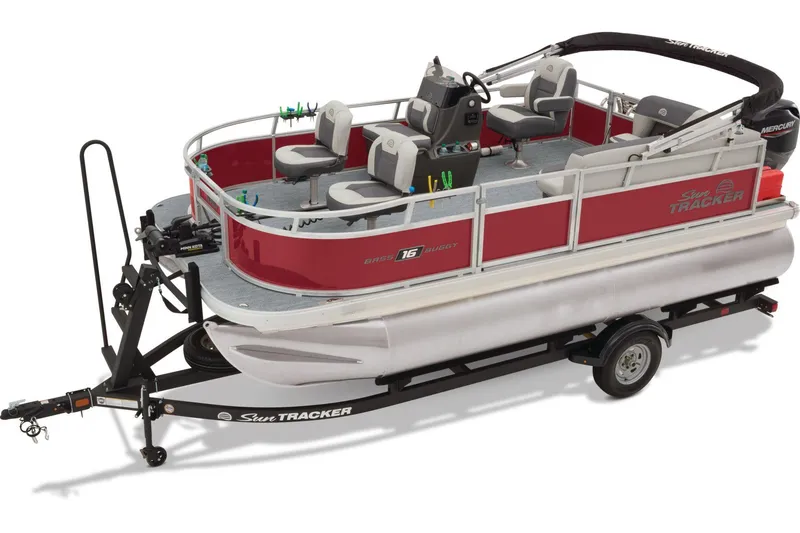
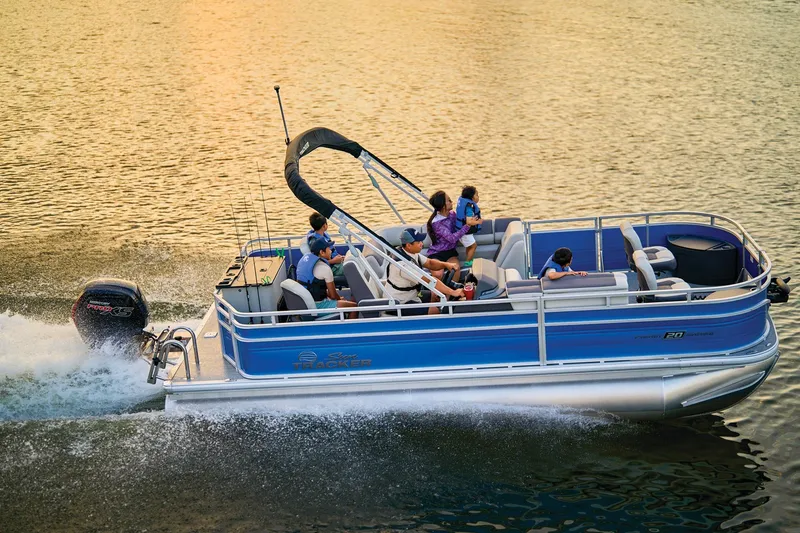
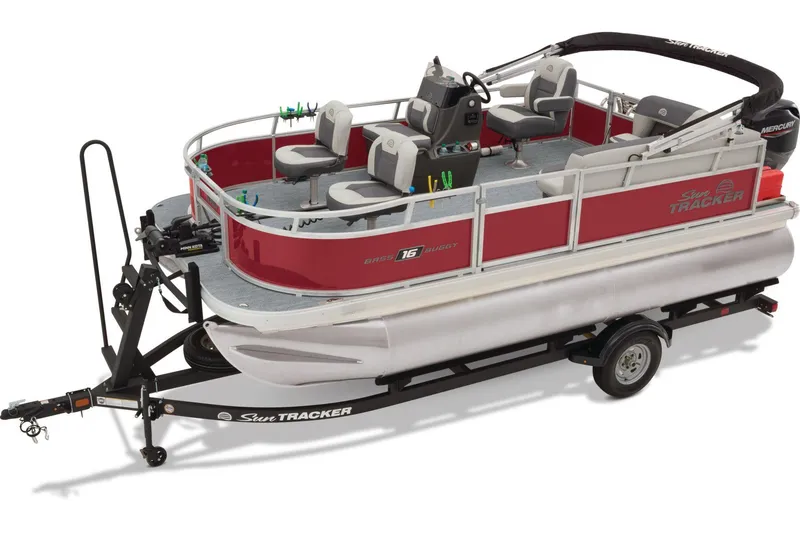
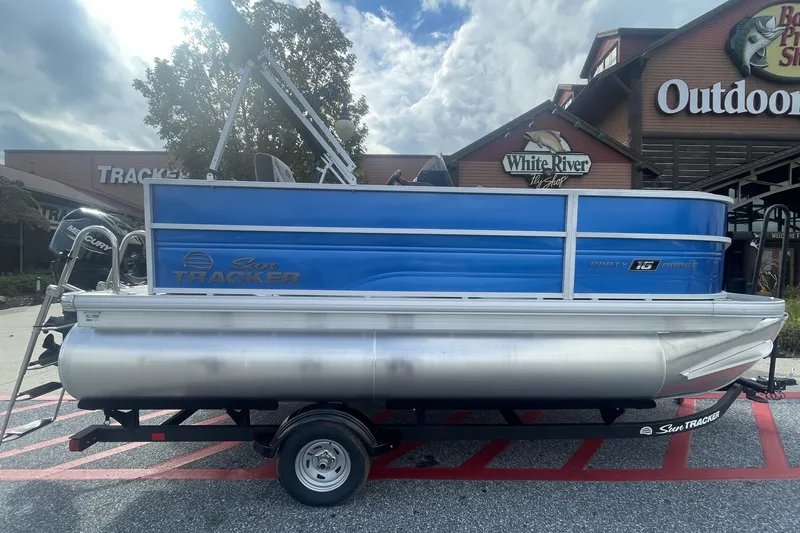
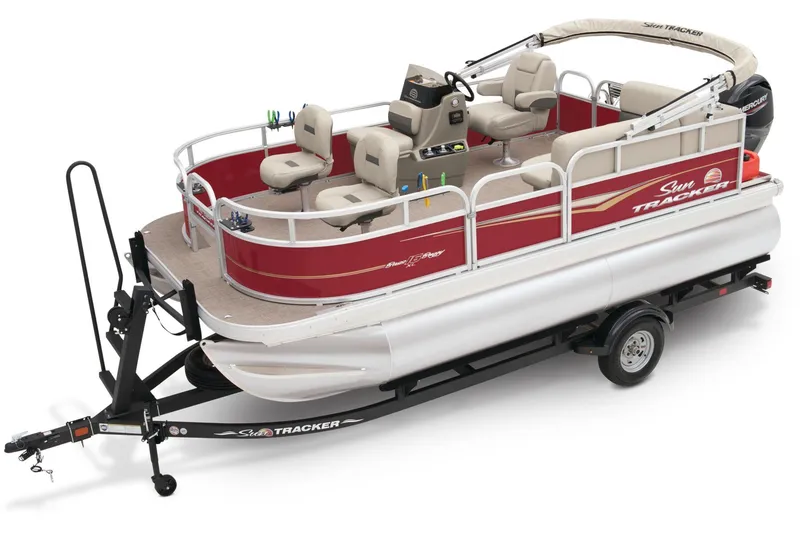
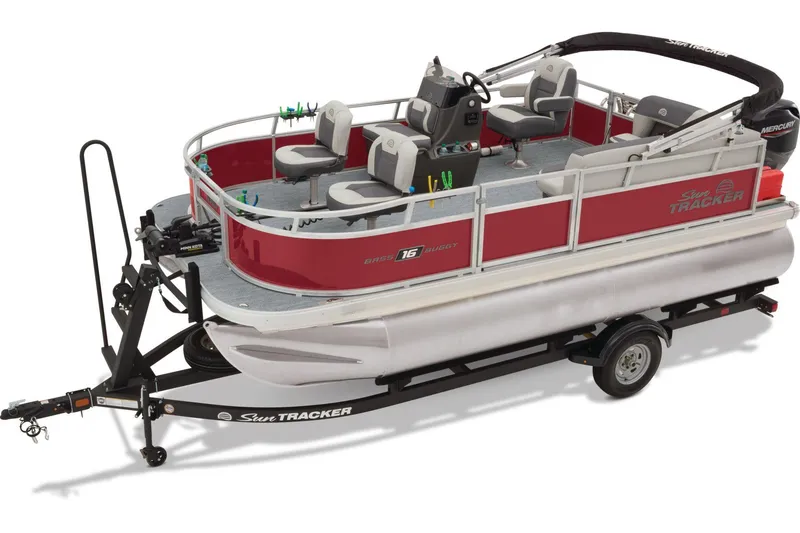
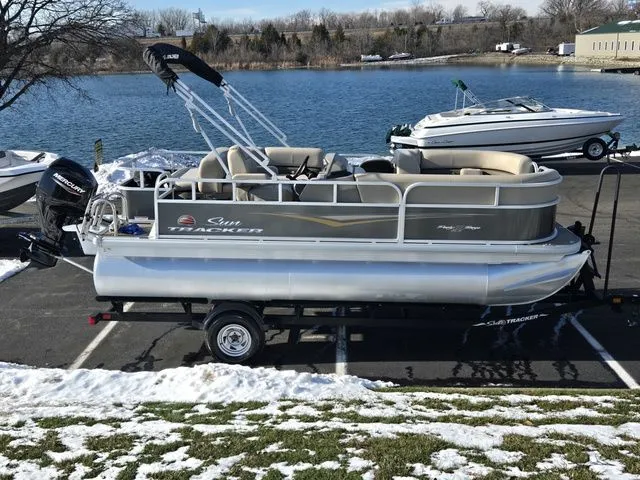
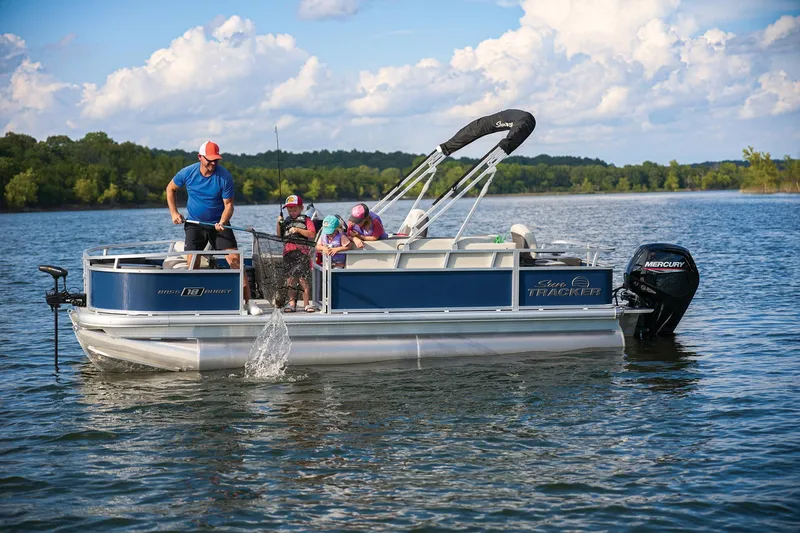
• (Fishing pontoons – compact fishing (BASS BUGGY® series)) BASS BUGGY® models are SUN TRACKER’s most compact, value-oriented fishing pontoons—designed for smaller crews who want simple, stable inshore/lake fishing capability without giving up pontoon comfort. These boats blend aft and bow fishing stations with family seating, making them a common “first pontoon” for anglers and mixed-use households. The current lineup shown includes BASS BUGGY® 16 XL Select (18'5" LOA) and BASS BUGGY® 18 DLX (20'0" LOA). Both are Mercury® outboard-powered and sit at the lower end of the brand’s horsepower ladder (up to 50 HP on the 16 XL Select and up to 75 HP on the 18 DLX). Fuel capacity mirrors that split—9 gal on the smaller 16 XL Select and 32.1 gal on the 18 DLX—supporting either short, economical outings or longer days on the water. Typical use cases include freshwater species and relaxed fishing/drifting, with pontoon stability that also suits families and new boaters.
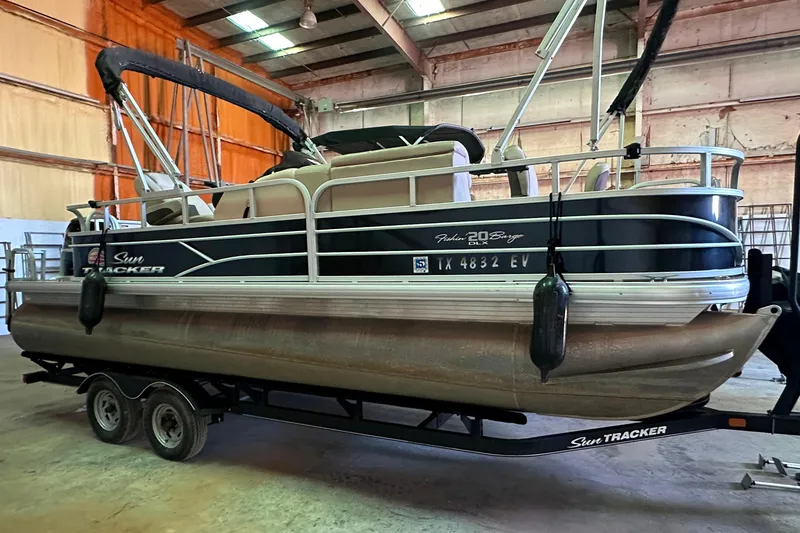
• (Fishing pontoons – fishing + cruising (FISHIN’ BARGE® series)) The FISHIN’ BARGE® line is positioned as a true dual-purpose fishing-and-family platform, with more deck length and interior volume than the BASS BUGGY® models while keeping a pontoon’s easy boarding and social seating. The current model listed is the FISHIN’ BARGE® 20 DLX (21'11" LOA), a Mercury® outboard pontoon sized for all-day lake use: cruising between spots, anchoring up, and spending time at the sandbar while still having dedicated angling features. It carries an 8'6" deck width and is rated up to 115 HP max, with a 32.1-gallon fuel capacity on the official model spec listing. This line generally targets anglers who want fishing chairs/rod storage/livewell capability but also prioritize passenger comfort, shade, and swim access for a mixed group.
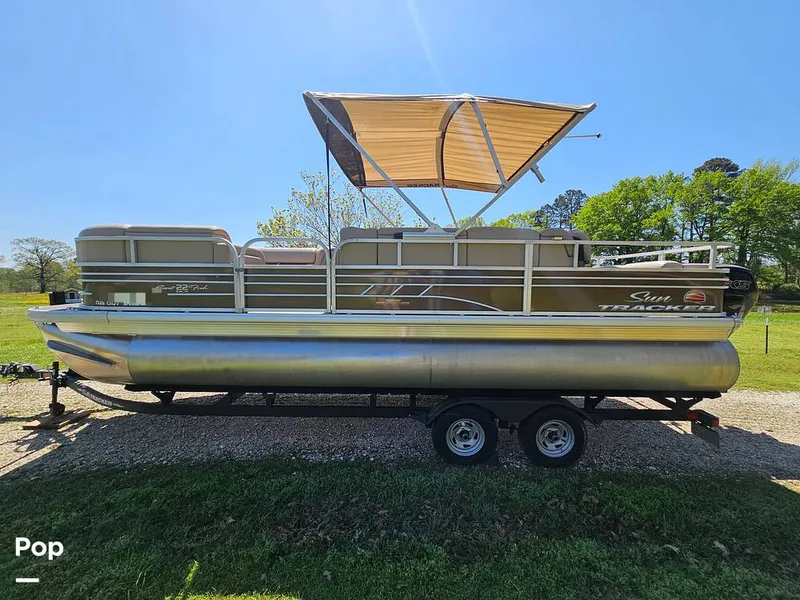
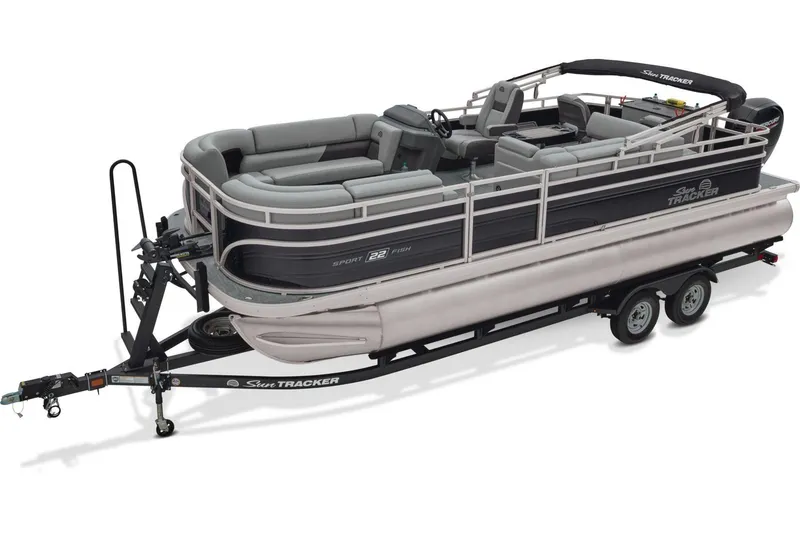
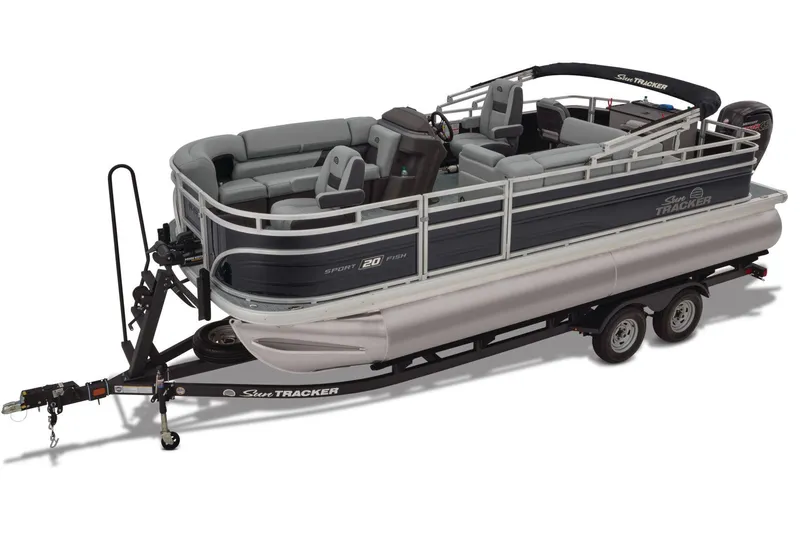
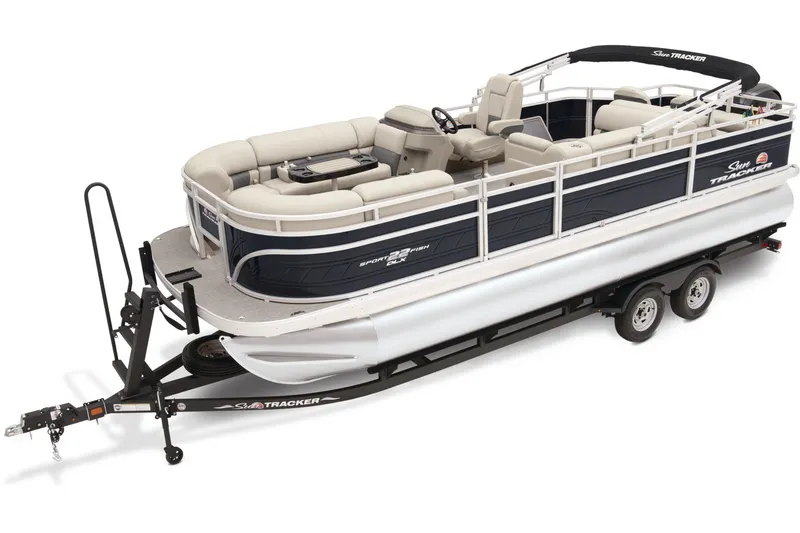
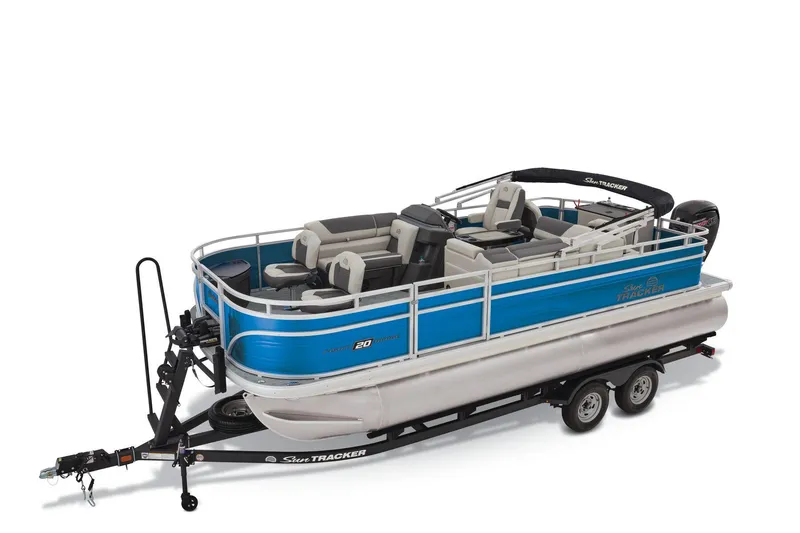
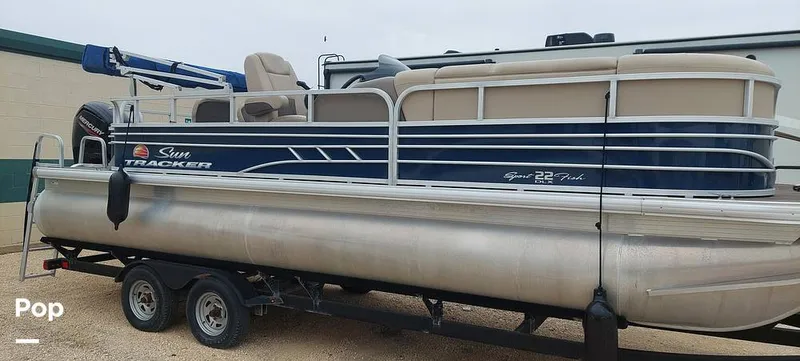
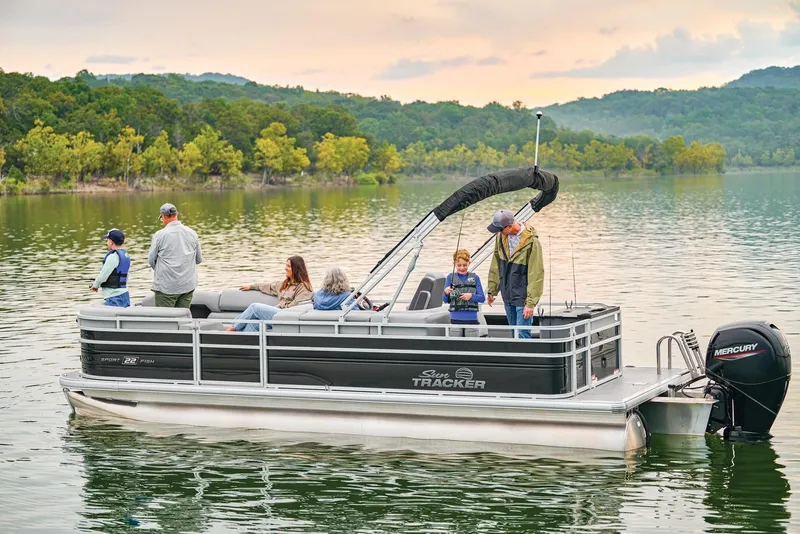
• (Fishing pontoons – sport/fish hybrid (SPORTFISH™ series)) SPORTFISH™ models are SUN TRACKER’s larger, more feature-forward fishing pontoons—aimed at customers who want more room and capacity for both casting and cruising. Compared with compact fishing pontoons, SPORTFISH™ layouts are typically sized to better accommodate multiple anglers plus family seating, with the deck space to move around and the horsepower ratings to cruise comfortably between spots. The lineup includes SPORTFISH™ 20 DLX (21'11" LOA) and SPORTFISH™ 22 DLX (24'2" LOA), both with 8'6" deck widths. The 20 DLX is rated up to 115 HP max, while the 22 DLX steps up to 150 HP max; both list 32.1-gallon fuel capacity on the model specs. These boats are best described as “fish-first but family-capable,” with the extra length of the 22 DLX making it the more comfortable choice for larger groups and longer days on the water.
HOW ARE THESE BOATS BUILT?
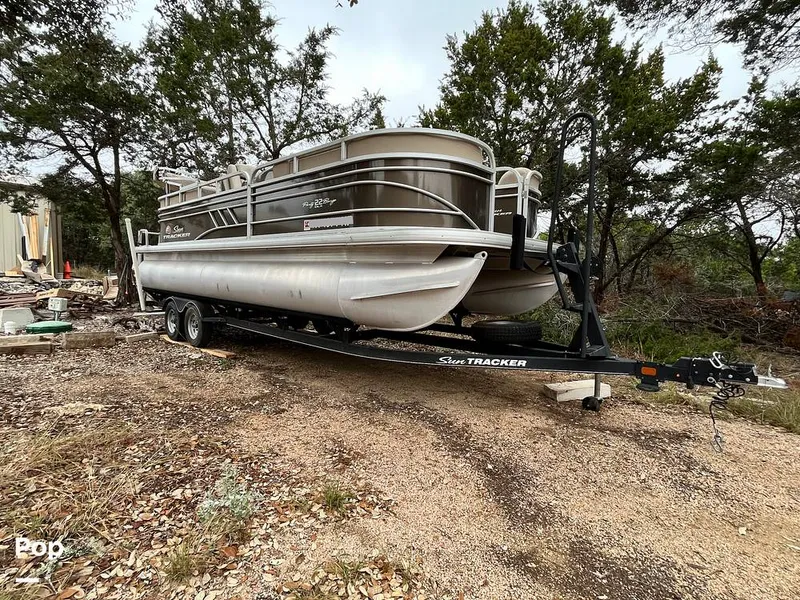
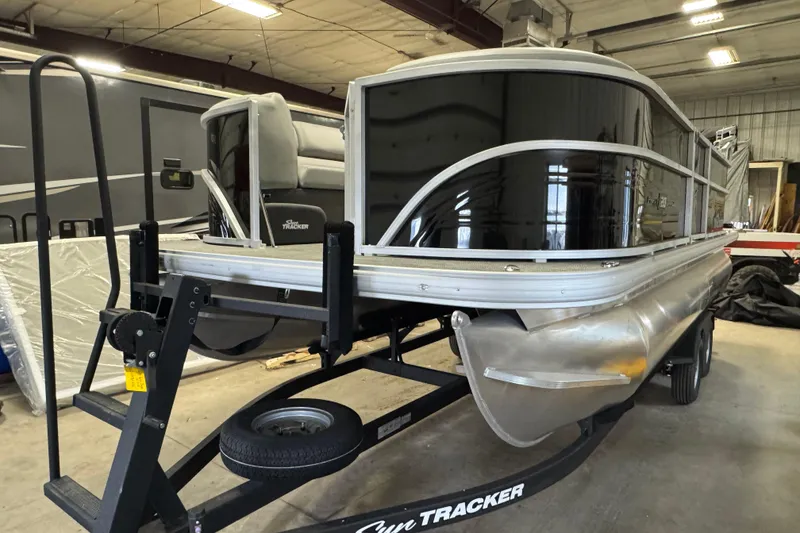
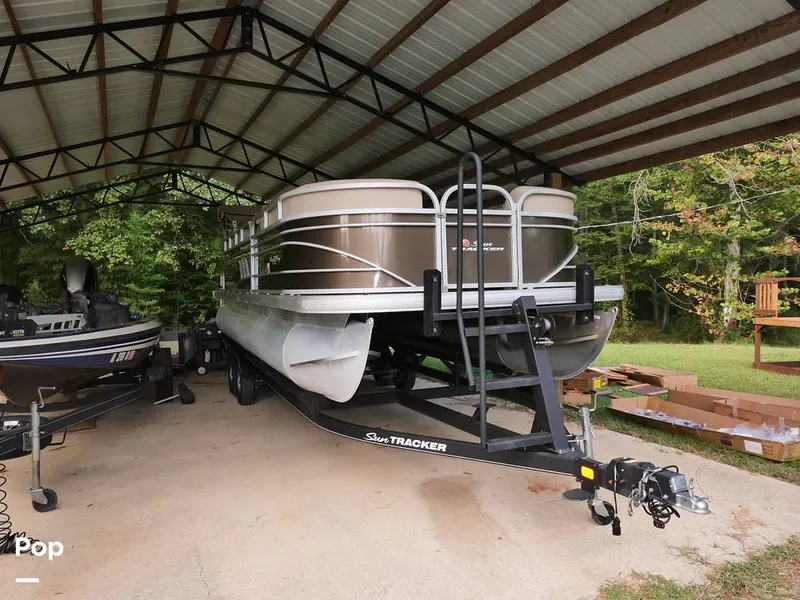
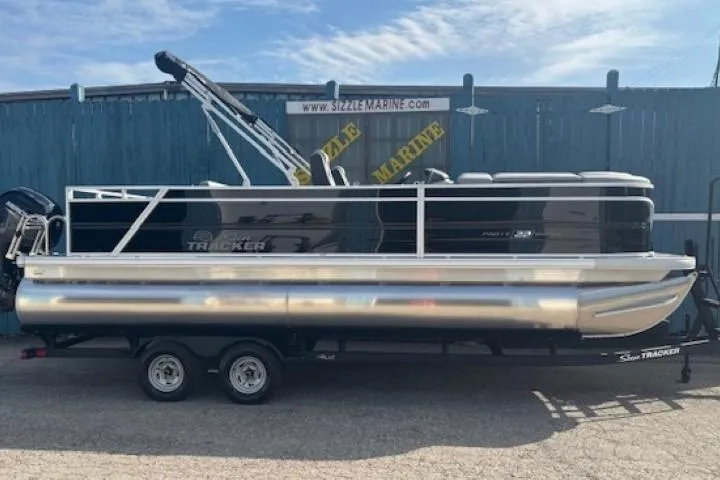
How Are Sun Tracker Boats Built? Sun Tracker pontoon boat construction is engineered around an all aluminum platform designed for durability, buoyancy, and long term value. Instead of a traditional fiberglass hull and molded stringer grid, Sun Tracker uses multichambered, internally braced pontoon logs formed from 5052 marine grade aluminum, with key models specifying 0.080 inch material and performance packages using thicker 0.100 inch aluminum for added strength at higher speeds. The “stringer system” equivalent is a welded aluminum crossmember and deck support structure, including full length longitudinal M bracket deck supports paired with heavy duty extruded Z bar deck supports that are thru bolted, creating a rigid load path from deck to tubes. Structural reinforcements include a heavy duty aluminum U channel reinforcement behind the bow deck trim plus an all welded, all aluminum extended motor pod and an all aluminum box beam transom to handle outboard thrust and docking loads. Flotation comes from the sealed multi chamber pontoon design, and many configurations also integrate an automatic bilge pump as an additional safety feature. Sun Tracker boats carry NMMA Certification, which verifies build compliance with U.S. Coast Guard requirements and ABYC based safety standards across critical systems such as electrical, fuel, flotation, and navigation lighting. Because these are aluminum pontoons rather than fiberglass runabouts, resin and gelcoat selection and hand lamination are not primary construction steps. Instead, corrosion protection and cosmetics rely on anodized aluminum components and formed fence panels, and the hull to deck interface is executed through mechanical fastening and thru bolted structural members, rather than a bonded fiberglass hull to deck joint.
Hardware and systems are selected to support a marine environment and repeated use. Sun Tracker commonly specifies anodized aluminum fence rails and extruded, anodized aluminum deck edging, with corrosion resistant fasteners and robust gate hardware such as heavy duty hinges and nylon gate latches that open inward for safety. Electrical installation follows marine best practices through an easy access marine grade, automotive style fuse panel with a latching door, abrasion resistant wire wrap, and water resistant connectors, supporting reliability and clean troubleshooting. Plumbing and livewell systems, where equipped, are installed as integrated assemblies with shutoff valves and serviceable components to align with NMMA and ABYC intent for safe, maintainable systems. Interior build quality focuses on UV resistant marine grade, top coated upholstery, with rotomolded storage, furniture, and console components chosen for consistent wall thickness, impact resistance, and long term dimensional stability. From a manufacturing standpoint, Sun Tracker leverages modern production technology including CAD driven design and precision fit methods such as plasma and laser cut parts plus robotically welded construction to keep tolerances consistent across high volume builds. This production approach differs from hand laid fiberglass techniques like chopper gun or vacuum infusion, but it still targets the same goals: structural integrity, controlled quality, and repeatable performance. Quality control is reinforced by third party NMMA certification audits and ongoing customer feedback metrics, and the warranty further reflects the build philosophy. Sun Tracker backs its boats with the 10+LIFE warranty program, including a 10 year bow to stern warranty on factory installed materials and workmanship and a limited lifetime structural and deck warranty covering key structural elements such as pontoon logs and deck supports, with provisions for transfer to a second owner. Overall, the build philosophy behind how Sun Tracker boats are built is straightforward: maximize safety, longevity, and serviceability through welded aluminum structures, standardized marine grade systems, and verified compliance with industry standards.
WHERE ARE THESE BOATS BUILT?
Sun Tracker boats are built in the United States at White River Marine Group manufacturing facilities in the Springfield, Missouri area, where the brand’s pontoon and fishing pontoon lines are produced under the Bass Pro Shops umbrella. Sun Tracker is part of White River Marine Group, a vertically integrated boat manufacturing organization that supports multiple brands and shares supply chain and engineering resources across its network. Because White River Marine Group operates several plants and does not publicly attribute all Sun Tracker models to one single address, the most accurate answer is that Sun Tracker production is U.S. based through White River Marine Group facilities rather than a single standalone Sun Tracker factory. Facility size and workforce counts for the specific Sun Tracker production lines are not consistently published by the brand, so those figures should be confirmed directly with Sun Tracker or White River Marine Group if you need plant level numbers for procurement or supplier qualification.
Sun Tracker has long been positioned as a high volume pontoon brand, and its modern production has been closely tied to White River Marine Group’s consolidation of boat building capabilities and purchasing power as the organization expanded and aligned brands under one manufacturing leadership structure. Operationally, the manufacturing approach is typical of pontoon production, with dedicated areas for tube fabrication and welding, deck and furniture sub assembly, rigging and electrical installation, and final assembly where fencing, consoles, and rails are fitted before water ready commissioning. In a scaled facility environment, different assembly lanes are generally organized by model family and options density, which helps maintain takt time for value focused builds while still supporting higher content packages. On site processes commonly include aluminum pontoon tube welding, deck framing, helm installation, wiring harness routing, upholstery and seating installation, engine rigging, and final quality checks, with geographic advantages tied to the Midwest’s established marine manufacturing labor pool and efficient over the road distribution to nationwide dealer networks. Specific expansion years and square footage dedicated solely to Sun Tracker are not disclosed on the brand site, so any exact claims about a named expansion should be verified with the manufacturer.
Quality control in a high volume pontoon manufacturing environment typically relies on in process inspections at each production station plus end of line audits that verify structural weld quality, fastener torque, electrical continuity, fuel system integrity, steering response, and engine control function before shipment. Sun Tracker benefits from being produced within a larger manufacturing group where standardized work instructions, approved component lists, and common testing procedures can be shared across brands, which helps reduce variation and improve repeatability in production. Final inspection commonly includes a full systems checkout of bilge and livewell components where applicable, lighting and navigation circuits, trim and tilt operation, and a detailed cosmetic review of rails, fencing, flooring, and upholstery fit. If third party certifications such as ISO are a requirement for your purchasing or compliance process, those should be requested directly from White River Marine Group, since certification status is not universally presented in consumer facing Sun Tracker materials. The key practical advantage of group manufacturing is cross utilization of engineering, supplier quality, and logistics resources, which supports consistent builds even when multiple brands share the broader facility network.
In summary, Sun Tracker boats are built in the USA through White River Marine Group manufacturing operations centered in Missouri rather than being imported, and the brand’s manufacturing and production benefit from the scale of a parent organization that supports multiple marine lines. That domestic build strategy, combined with standardized processes, skilled trades in aluminum fabrication and rigging, and ongoing modernization across the network, underpins Sun Tracker’s commitment to value focused pontoons built with consistent quality in American facilities.
WHAT IS THE BIGGEST BOAT OF THIS BRAND BUILT TODAY?
The biggest boat built by SUN TRACKER today is the PARTY BARGE® 24 XP3 (Tritoon), the brand’s flagship in both length and performance, and it represents SUN TRACKER’s modern XP3 tritoon push for higher-speed cruising on big lakes. With an exact 26' 2" (7.98 m) LOA and an 8' 6" (2.59 m) deck-width beam, the PARTY BARGE® 24 XP3 (Tritoon) delivers full-size pontoon space while pairing it with a performance-focused three-tube (XP3) hull package designed for lift and stability. Power is Mercury® outboard and configured as a single-engine setup, with a maximum recommended rating of 250 HP, giving this largest SUN TRACKER model the muscle to run faster and carry speed with a load compared with conventional two-log pontoons. Fuel capacity is 52 gal. (196.82 L) for extended range between marina stops, and the XP3 concept is aimed at stronger cruising pace and more capable tow-sports performance; SUN TRACKER positions the PARTY BARGE® 24 XP3 (Tritoon) as the top-end choice when buyers want a pontoon that feels closer to a sport-oriented tritoon than a slow-speed party platform.
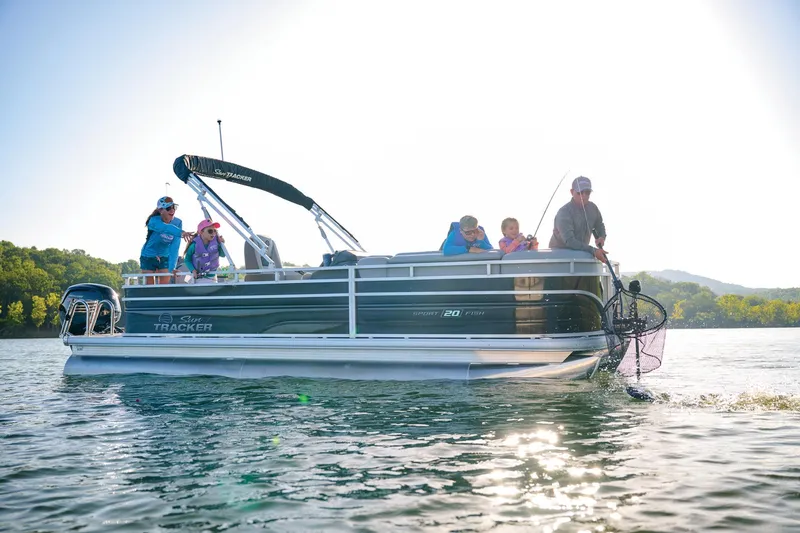
Built for premium lake days, sandbar socializing, swimming, and family cruising, the PARTY BARGE® 24 XP3 (Tritoon) blends an expansive deck plan with the confidence that comes from a tritoon hull underfoot. As a recreational pontoon rather than a dedicated fishing pontoon, the focus is on comfortable wraparound seating, generous onboard storage, and an easy flow from the cockpit to the stern for watersports and water access, making the PARTY BARGE® 24 XP3 (Tritoon) a strong fit for owners who split time between relaxed cruises and higher-tempo fun. At the helm, SUN TRACKER’s current lineup emphasizes modern, simple-to-use control and display tech for everyday boaters, and the overall layout is designed so passengers can spread out without sacrificing clear sightlines for the driver. Practicality stays front and center with pontoon-friendly boarding and stowage capacity that supports coolers, floats, and day gear, while the 52-gallon fuel tank keeps the largest SUN TRACKER model ready for longer runs across the lake. For shoppers comparing SUN TRACKER pontoons, the PARTY BARGE® 24 XP3 (Tritoon) sits at the top of the range as SUN TRACKER’s flagship for space, horsepower capability, and tritoon performance.
WHAT IS THE SMALLEST BOAT OF THIS BRAND BUILT TODAY?
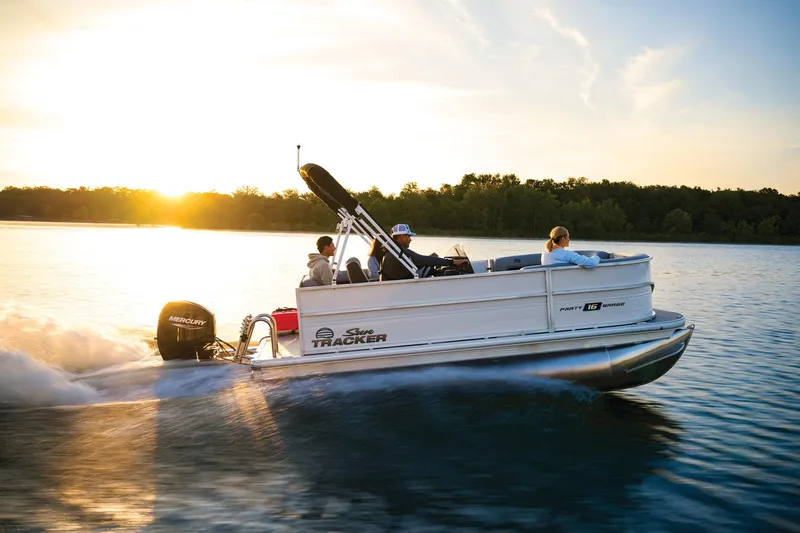
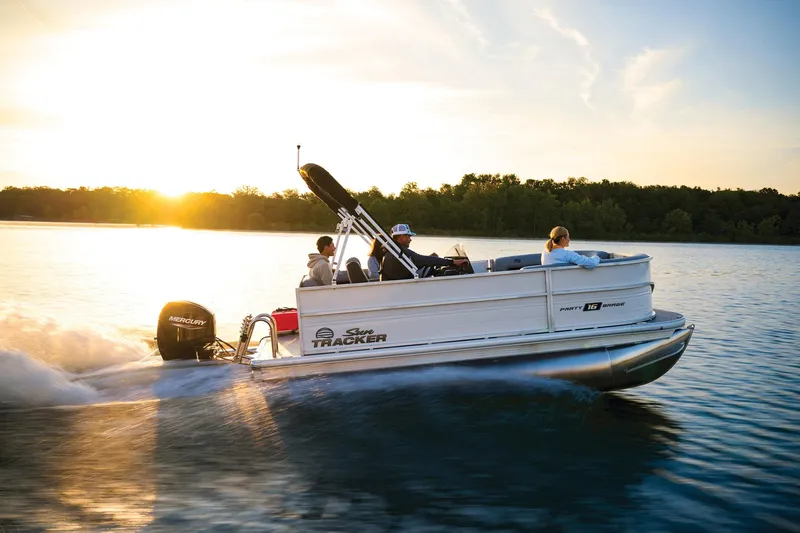
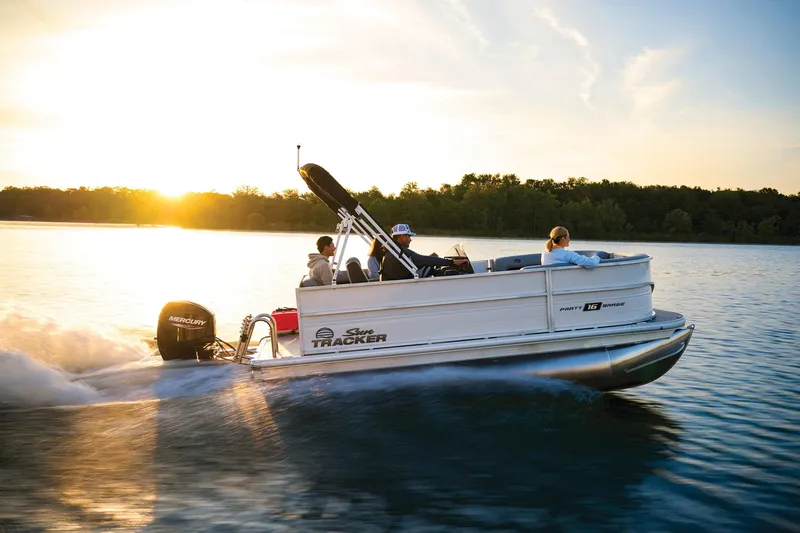
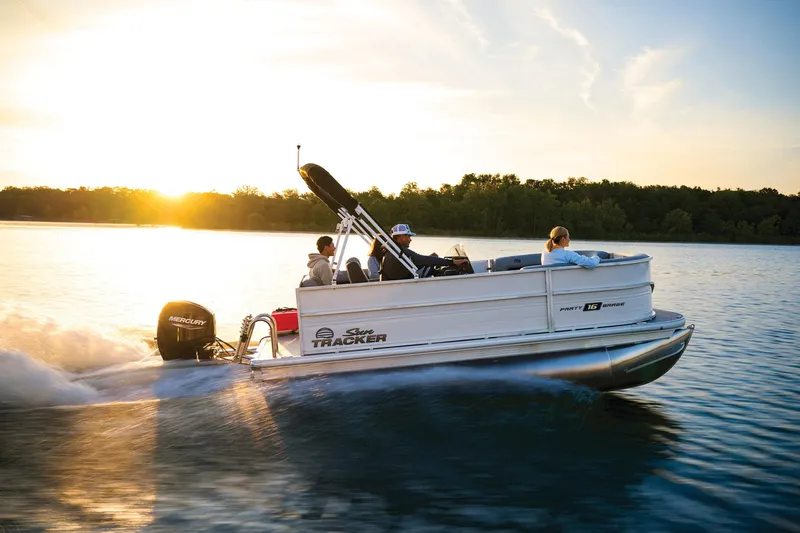
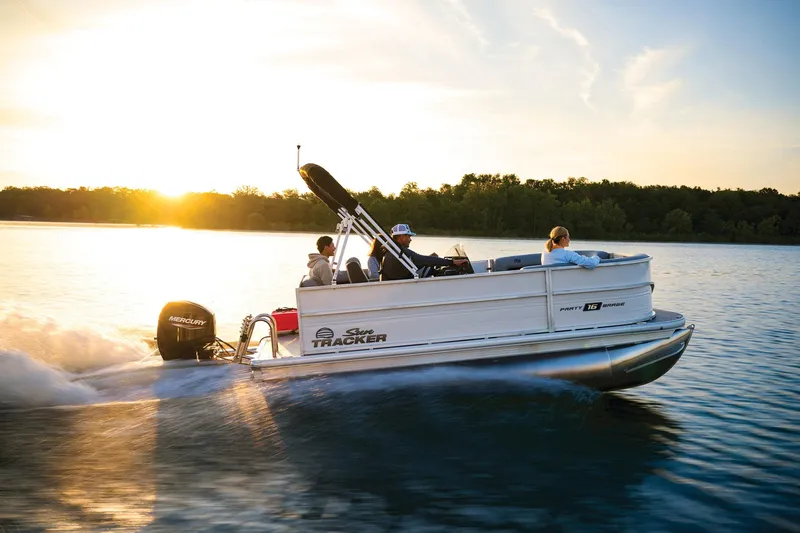
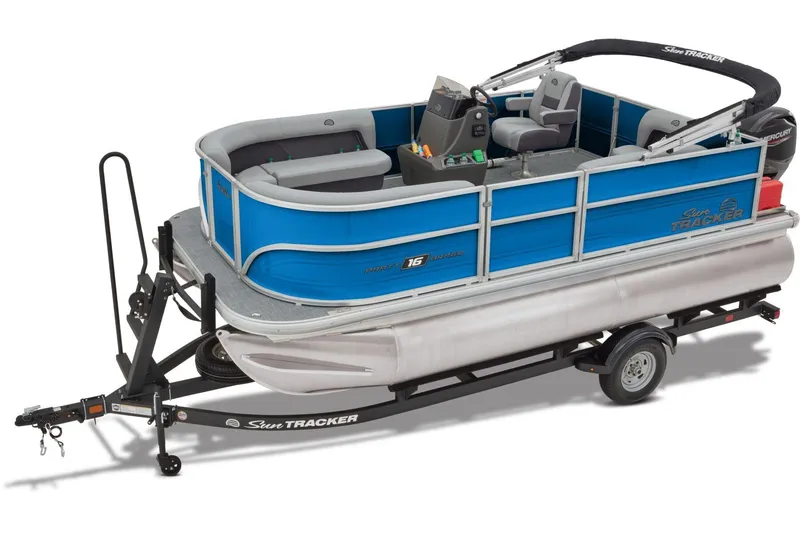
The smallest model in SUN TRACKER's current lineup is the PARTY BARGE® 16 DLX, a compact, value minded recreational pontoon boat measuring 18' 5" (5.61 m) in length overall with an 8' 0" (2.44 m) deck width that is designed as an easy entry point for relaxed family cruising, swimming days, and casual sandbar hopping on smaller lakes and reservoirs, and while SUN TRACKER does not list official weight or towing specifications for the PARTY BARGE® 16 DLX in the provided data, its shorter 18 foot class footprint and standard pontoon layout generally translate into simpler launching and retrieval, easier storage, and a more manageable trailering experience for new and experienced boaters who want pontoon comfort without stepping up to a larger deck.
As a classic recreational pontoon, the PARTY BARGE® 16 DLX focuses on an open, family friendly deck layout with social seating and wide walk-through space that suits cruising and lounging more than hardcore angling, and although the provided specs do not include USCG capacity, exact seating count, hull construction details, or performance figures, the PARTY BARGE® 16 DLX does include a 9 gal. (34.07 L) fuel tank and carries a max recommended 50 HP outboard rating, which makes the PARTY BARGE® 16 DLX a sensible match for an efficient Mercury® outboard setup aimed at smooth, low stress operation, predictable handling, and easy dock manners rather than high speed tow sports, and for many buyers the value is in getting SUN TRACKER pontoon space, shade and swim day versatility in a smaller package that is easier to fit in a driveway or standard storage spot, with practical storage around the deck and a simple, multipurpose mission that works well for couples, small families, and first time pontoon owners who want maximum fun per foot on the water.
HOW MUCH DO THESE BOATS COST?
Sun Tracker boats are positioned as value-focused pontoon boats with transparent manufacturer pricing through the brand’s published NO HAGGLE NO HASSLE National Price, which functions as an MSRP style base price before dealer-added costs and most options. In the current 2026 lineup, one of the smallest models is the 2026 BASS BUGGY 16 XL SELECT, which Sun Tracker lists at a $19,795 USD base price and shows as 18 ft 5 in long with a 7-person capacity and a max recommended 50 HP, while noting that price excludes an optional trailer and that you can view pricing with prep and freight after selecting a dealer. In real market terms, current market listings for entry Sun Tracker pontoons in this size and power band typically range from about $20,000 to $30,000 depending on engine choice, installed options, and whether freight, dealer prep, and a trailer are included in the asking price.
In the mid-range, popular Sun Tracker models commonly include the 2026 BASS BUGGY 18 DLX and 2026 PARTY BARGE 20 DLX, both of which have published base pricing on Sun Tracker’s website. Sun Tracker lists the 2026 BASS BUGGY 18 DLX at a $27,995 USD base price and describes it as a 20-foot class fishing pontoon designed for up to eight people, and Sun Tracker lists the 2026 PARTY BARGE 20 DLX at a $33,595 USD base price as a family recreation pontoon designed for up to 10 people, again noting that the price excludes an optional trailer and that dealer pricing with prep and freight varies by location. In today’s market price reality, new 2026 BASS BUGGY 18 DLX listings are commonly priced in the mid $35,000s, with itemized examples showing dealer prep around $475 and freight roughly $1,400 to $1,525 plus several thousand dollars in included options, while new 2026 PARTY BARGE 20 DLX listings commonly show asking prices in the low to mid $40,000s when equipped with higher horsepower packages and common options, which means many boats transact above the published base MSRP style figure once real-world build choices and dealer fees are added.
At the premium end, Sun Tracker’s tritoon XP3 models and top SPORTFISH offerings carry higher base MSRP and can swing widely in market price depending on motor package and equipment. For example, Sun Tracker lists the 2026 FISHIN’ BARGE 22 XP3 at a $52,995 USD base price, and the 2026 SPORTFISH 24 XP3 at a $56,995 USD base price, with the SPORTFISH 24 XP3 shown as a 26 ft 2 in class fishing tritoon and the manufacturer’s pricing table indicating higher package prices as you step up to larger engines. In current market listings, premium Sun Tracker XP3 models generally command roughly the low $50,000s to the upper $70,000s for new boats, with itemized examples showing how included options, higher horsepower outboards, and added freight and prep can push a SPORTFISH 24 XP3 into the $70,000-plus range, while some listings for a FISHIN’ BARGE 22 XP3 can appear closer to base when configured lightly, and higher when a trailer and popular upgrades are included.
Overall, Sun Tracker boat cost spans from under $20,000 at the published base MSRP level for entry models like the BASS BUGGY 16 XL SELECT to the mid $50,000s MSRP for premium XP3 models like the FISHIN’ BARGE 22 XP3 and SPORTFISH 24 XP3, with real market price asking levels often landing higher once engines, options, freight, and dealer prep are added to the build. Across the lineup, current market listings typically run from around $20,000 on the low end up to roughly $70,000 or more on the high end for new, well-equipped tritoons. Sun Tracker’s own model pages emphasize that base price excludes an optional trailer and provide a way to view pricing with prep and freight after selecting a dealer, and marketplace listings frequently itemize freight and prep as separate line items on top of the base price along with included options. Market prices vary by location, condition, model year, and dealer.
WHAT OTHER STYLES OF BOATS DO THEY MAKE?
SUN TRACKER’s “other styles” really come down to two big families of pontoon boats: recreational pontoons and fishing pontoons, with the PARTY BARGE® series being the most iconic and most recognizable in the current lineup for family cruising, cove hanging, and tow sports-ready lake days. On the recreational side you’ll see PARTY BARGE® models in traditional two-log pontoon form and in XP3 tritoon form for more speed, higher horsepower ratings, and a sportier feel on the water, including layouts like the PARTY BARGE® 16 DLX for easy trailering and small-lake fun, plus larger, entertainment-focused platforms like the PARTY BARGE® 24 DLX and the top-end PARTY BARGE® 24 XP3 that are built to spread out a full crew with multiple lounges, big Bimini coverage, and a broad swim platform. citeturn2search2turn0search8turn0search2turn0search1turn0search3 On the fishing side, SUN TRACKER builds dedicated fishing pontoons that still function as true family boats, led by the long-running BASS BUGGY® series and expanding into the FISHIN’ BARGE® and SPORTFISH™ lines, which add more “hybrid” fish-and-lounge deck plans with livewells, rod storage, pedestal fishing seats, and space for relaxing when the rods are put away. citeturn2search0turn1search1turn1search3turn1search5turn1search2 Across these styles, the common thread is an aluminum pontoon platform designed around roomy deck space and high-capacity seating, typically paired with Mercury® outboard power and trailer-friendly footprints that make the boats approachable for first-time owners as well as upgrade buyers who want more room without jumping into fiberglass runabouts or larger cruisers. citeturn2search1turn0search8turn1search1
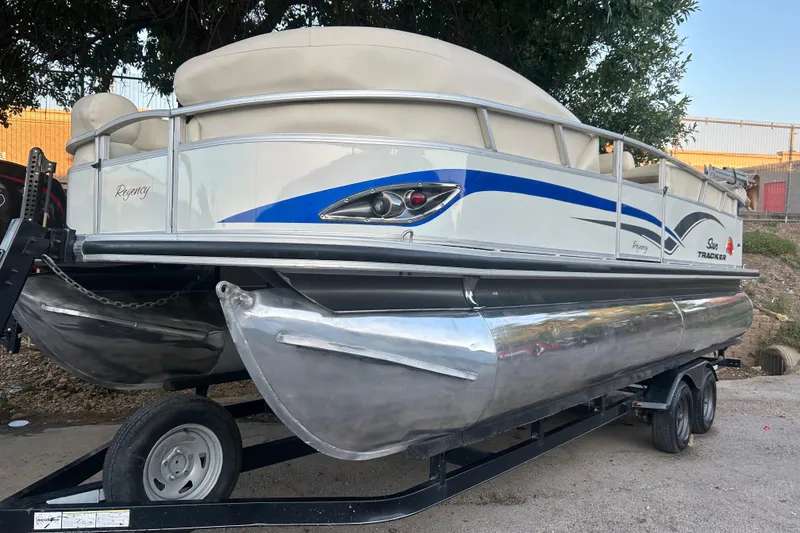
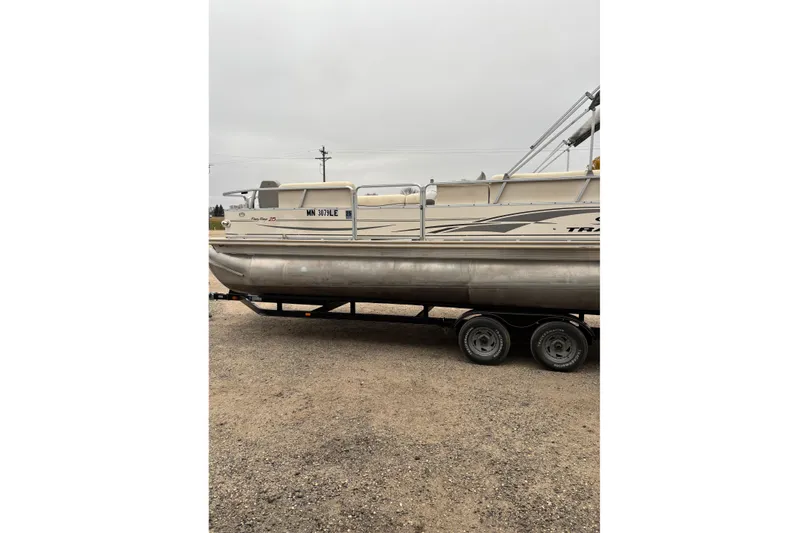
Historically, SUN TRACKER has stayed very consistent in its identity as a pontoon specialist, but within that umbrella there have been notable past and now-discontinued variations you’ll still see on the used market, including older model-year versions of the PARTY BARGE® recreational pontoons, plus prior generations of SPORTFISH™ fishing pontoon packages that blended bow lounges with more serious aft fishing stations, and earlier BASS BUGGY® builds that helped define the “compact fishing pontoon” idea for families who wanted a stable platform for casting and casual cruising. citeturn0search7turn0search0turn0search4turn1search0turn2search0 SUN TRACKER also has a long heritage of offering both two-tube pontoons and higher-performance three-log configurations depending on model and year, which is why you may run across older “XP” and “XP3” style performance builds, along with used boats described as “Regency Edition” in certain older listings and dealer descriptions, reflecting how SUN TRACKER’s broader ecosystem has overlapped at times with more upscale pontoon positioning in the marketplace. citeturn0search6turn3search2turn4search5 Even when the floorplans and features have evolved over the years, those earlier models matter because they show how SUN TRACKER refined the same core formula, a pontoon deck that can shift from relaxed family boat duty to fishing boat duty simply by changing the layout, seating plan, and angler equipment. citeturn2search0turn2search2
What SUN TRACKER does not really do, at least under the SUN TRACKER badge, is compete across the broader spectrum of boat categories like fiberglass bowriders, deck boats, center console saltwater fishing boats, inboard ski and wake boats, or cabin cruisers and yachts; the brand focus stays squarely on pontoon boats, split between recreation-first party platforms and fishing-first pontoons that still keep comfort seating in the mix. citeturn2search1turn2search2turn2search0 The same is true for luxury tritoons that chase premium fit-and-finish and high-horsepower performance at the top of the market, which is typically where a separate luxury pontoon brand such as REGENCY positions itself rather than SUN TRACKER. citeturn4search0 That focus is part of SUN TRACKER’s identity: roomy, value-driven pontoon and tritoon layouts that prioritize easy ownership, social seating, and practical features like integrated storage and fishing amenities, instead of trying to be everything to every boater. citeturn2search1turn2search0
In summary, the “other styles of boats” SUN TRACKER makes are really variations on two proven pontoon pillars: PARTY BARGE® recreational pontoons and tritoons for cruising, swimming, and family fun, and BASS BUGGY®, FISHIN’ BARGE®, and SPORTFISH™ fishing pontoons for anglers who still want a comfortable family boat. citeturn2search2turn2search0turn1search1turn1search3turn1search5 The brand’s reputation is built around keeping these platforms straightforward to shop, buy, and own while steadily updating layouts, consoles, and storage to match how people actually use a pontoon on today’s lakes and reservoirs. citeturn2search1turn0search8turn0search3 Looking ahead, the most realistic “future possibilities” for SUN TRACKER are evolutions within this same lane, meaning more crossover floorplans, more XP3 tritoon performance options, and continued refinements to fish-and-lounge hybrids, rather than a pivot into completely different boat types, and that kind of focused strategy is exactly what lets the company keep polishing the pontoon styles that define the SUN TRACKER name. citeturn0search5turn1search2turn2search2
WHAT KINDS OF ENGINES DO THESE BOATS USE?
SUN TRACKER boats are built around a simple, lake friendly propulsion strategy: single four stroke outboard power on the transom rather than inboards, sterndrives, or jet propulsion. On pontoon platforms, an outboard keeps the layout open, trims up for shallow water approaches, and is easy to service, which fits the brand’s focus on accessible family cruising and fishing. Across the lineup, the setup is typically one engine on smaller and mid size pontoons, and even the higher performance XP3 models stay outboard driven, leaning on hull and pontoon design rather than adding twin outboards to reach higher speeds.
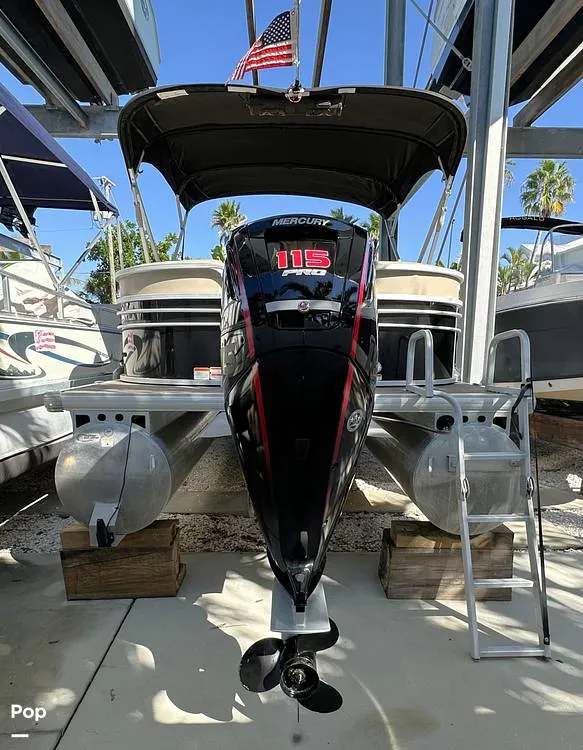
Horsepower varies mainly by length and package, with entry models like the PARTY BARGE 16 DLX coming standard with a 20 hp Mercury ELPT FourStroke and carrying a recommended maximum of 50 hp. In the popular 20 to 22 foot range, packages commonly step up into the 60 to 115 hp zone, such as the 2025 PARTY BARGE 20 DLX standard 60 hp Mercury ELPT FourStroke, and models like the PARTY BARGE 22 RF DLX and SPORTFISH 22 DLX that come standard with 115 hp and list 150 hp max ratings. Performance oriented tri toon XP3 models are built to accept more horsepower, for example the FISHIN BARGE 22 XP3 and SPORTFISH 22 XP3 are rated up to 200 hp, while the SPORTFISH 24 XP3 stretches to a 250 hp maximum for stronger cruising and watersports pull.
From the factory, SUN TRACKER commonly rigs Mercury outboards, and the model pages consistently list Mercury FourStroke packages as the standard engine choice, including ELPT FourStroke models on smaller and mid size boats and larger Mercury FourStroke variants on XP3 packages. In practical terms, that means four stroke outboard reliability, modern controls at the helm, and a turnkey package where the boat is designed around the selected outboard and its rigging rather than leaving propulsion as an afterthought. While dealer availability can vary by market, the manufacturer supported listings highlight Mercury as the primary engine pairing across both recreational PARTY BARGE models and fishing focused SPORTFISH and FISHIN BARGE models.
On the water, SUN TRACKER leans on its pontoon engineering to make a single outboard feel more responsive and efficient, especially on XP3 models that use three 26 inch logs and multiple performance lifting strakes to help the boat plane faster, run at higher top end speeds, and turn tighter, with hydraulic steering standard on XP3 for easier handling. The same XP3 package also adds factory installed underpinning to smooth the ride by reducing water impact on crossmembers, which supports better fuel efficiency and comfort at cruise. Combined with an outboard that trims up for docking, trailering, and shallow coves, this approach keeps ownership straightforward, reduces maintenance complexity versus many inboard systems, and matches SUN TRACKER’s mission of easy to use pontoons for families, cruisers, and anglers who want predictable horsepower and dependable four stroke outboard performance.
WHY BUY THIS BRAND OVER A COMPETITIVE BRAND?
When people ask about the build quality of SUN TRACKER boats vs competitors in the pontoon segment, the most defensible differentiator is how SUN TRACKER documents its structure, materials, and coverage as a complete system rather than a collection of parts. Across its pontoon lineup, SUN TRACKER specifies high buoyancy, multichambered and internally braced pontoon logs, paired with a welded aluminum motor pod and an all aluminum box beam transom designed for strength and longevity, and it supports the deck with full length, one piece longitudinal M bracket deck supports plus heavy duty extruded Z bar deck supports that are thru bolted to the longitudinal structure for a rigid platform underfoot. On performance oriented XP3 models, SUN TRACKER also promotes XP3 performance strakes and a wave deflecting nose cone, along with factory installed underpinning described as under deck shielding for improved performance, which is positioned as a practical upgrade for more demanding water days. Just as important for long term durability, SUN TRACKER backs the structure with a Limited Lifetime Structural and Deck Warranty covering pontoon logs, motor pod and other structural elements, and it adds a 10 year bow to stern warranty on factory installed materials and workmanship, creating a clear, manufacturer stated ownership confidence story that many buyers prioritize when deciding why choose SUN TRACKER.
Value is where SUN TRACKER’s own literature is especially direct because the brand standardizes comfort and convenience features that match how most owners actually use a pontoon, and it does so while keeping layouts functional for both relaxing and active days on the lake. On recreational models like the PARTY BARGE 24 DLX, SUN TRACKER highlights its STOW MORE storage concept with hidden spaces under seats and behind seat backs to help organize gear, plus integrated console storage, drink holders, and a built in footrest, and it pairs those usability touches with a padded, easy to clean floor and a 10 foot QuickLift bimini top for shade. In many models the brand also calls out standard Bluetooth compatible audio, movable table anchor points, and family oriented swim and boarding access, all of which are the kinds of everyday features that can otherwise get pushed into option lists. From an SEO perspective, that is the practical meaning behind SUN TRACKER vs other fishing boats and family pontoons: a focus on documented standard equipment and storage solutions that reduce day to day compromises rather than relying on aftermarket add ons.
SUN TRACKER also makes a strong case for buyers who want one boat that can support both fishing utility and family comfort, without feeling like either use case was an afterthought. For example, the FISHIN’ BARGE 22 DLX is positioned as a true dual purpose layout, with a fishing focused stern station featuring dual gates, two pedestal seat bases, and built in rod and tool holders, while also keeping the lounge and social elements that make a pontoon easy to enjoy with friends and kids. It backs that fishing story with specific, brochure style features including a lockable rod box that holds six rods up to 7 foot 6 inches, and two aerated livewells, one in the bow and one aft, each described with integrated accessories like composite lids with fish rulers, rod holders, drink holders, and shutoff valves. At the same time, SUN TRACKER continues to emphasize comfort and convenience pieces such as a 10 foot bimini top, a removable table, and a Bluetooth capable stereo on this same model, underscoring the brand’s core pitch that fishability and lounge usability can coexist on a single deck plan.
The final reason many buyers cite when weighing SUN TRACKER boats vs competitors is confidence in ownership support that is explicitly documented by the manufacturer, including both warranty structure and measured customer satisfaction. SUN TRACKER’s 10 plus LIFE warranty framework combines a 10 year bow to stern warranty on factory installed materials and workmanship with a Limited Lifetime Structural and Deck Warranty, and the company also states provisions to transfer applicable warranty elements to a second owner, which can support resale considerations for long term ownership. Beyond coverage, SUN TRACKER notes that it has been recognized for eight consecutive years with the NMMA CSI Award for Excellence in Customer Satisfaction in Pontoon Boats, based on owner survey results reporting satisfaction ratings of 90 or higher on a 100 point scale, which is a rare, objective signal that can be referenced when discussing customer satisfaction with SUN TRACKER. Put together, Why choose SUN TRACKER becomes a straightforward, fact based argument: a pontoon brand that pairs clearly described structural engineering and performance options with storage and comfort features aimed at real day use, and it reinforces the package with award recognized customer satisfaction and a warranty approach designed to simplify ownership.
WHAT IS THE MOST POPULAR MODEL OF THIS BRAND BEING BUILT TODAY?
For SUN TRACKER, the clearest “most popular” model you can point to from official, current-production materials is the 2026 SUN TRACKER PARTY BARGE 20 DLX, a 21 ft 11 in recreational pontoon that sits at the center of the brand’s Party Barge lineup and is repeatedly positioned as the do it all lake boat for a full crew. While SUN TRACKER does not publish an explicit best seller ranking, the PARTY BARGE 20 DLX reads like the volume sweet spot because it is the core, mid size Party Barge offering with a 10 person rating, a broad engine menu, and a full “build your own” package approach, plus it is highlighted by SUN TRACKER’s own Party Barge series messaging around entertaining, cruising, and towing watersports. In other words, it is the size and style that best matches the brand’s mainstream mission of family and friends boating, and the 2026 model year is also called out for meaningful updates at the helm and in passenger comfort, reinforcing that it is a key platform in the current lineup.
Official specifications for the 2026 PARTY BARGE 20 DLX list 21 ft 11 in overall length, 8 ft 6 in deck width, 32.1 gal fuel capacity, and a 10 person maximum capacity in the U.S., with a maximum recommended 115 hp rating. Standard and promoted features that support broad appeal include the patented STOW MORE seat back storage system for the couches, a redesigned driver console with integrated storage and ergonomically positioned controls, and the SUN TRACKER FLARE touchscreen gauge display with integrated GPS and stereo control, along with a 9 ft QuickLift bimini and a rear boarding platform with a wider 4 step telescoping ladder. Power choices span multiple Mercury FourStroke options, including a listed 60 hp package with an estimated 18 to 23 mph range and a 90 hp package with an estimated 23 to 29 mph range, giving buyers room to prioritize value cruising or more active tow sports capability.
The buyer profile for the PARTY BARGE 20 DLX is the mainstream lake family or mixed group that wants one boat to cover day cruising, cove time, swimming, and occasional watersports without moving into an oversized platform that is harder to store, tow, or launch. SUN TRACKER’s own Party Barge positioning emphasizes entertaining a large crew, relaxing in the sun, cruising to coves or restaurants, and towing friends and family, and the 20 DLX format supports that versatility with multiple lounge zones, abundant storage designed to keep gear out of the way, and a full width swim platform for in water days. For 2026, SUN TRACKER also notes a refreshed captain’s console, three corner lounges, added storage cubbies and cupholders, plus a standard ski tow pylon anchor point, all of which reinforces the model’s role as a balanced recreation first pontoon that can still be optioned toward higher energy use.
In terms of availability, SUN TRACKER markets the PARTY BARGE 20 DLX as a current 2026 model with national pricing and a dealer based purchase and delivery process, supported by the brand’s online build tool and dealer locator, which is consistent with a high volume model approach intended to be easy to shop and easy to configure. The fact that SUN TRACKER rolled meaningful updates into the 2026 PARTY BARGE 20 DLX, including helm redesign and functional changes tied to watersports and reboarding, signals continued investment in this exact size and layout as a cornerstone of the lineup. Even without an official unit sales claim, the model’s central placement in the Party Barge series, broad engine selection up to 115 hp, and 10 person capacity explain why this 21 ft 11 in pontoon format has become a signature SUN TRACKER offering for buyers who want maximum fun per foot in a widely configurable package.
WHAT IS THE HISTORY OF THIS BOAT BRAND AND COMPANY?
SUN TRACKER was introduced in 1983 by Johnny Morris, founder of Bass Pro Shops (established in 1972), as part of his broader effort to make boating more accessible through high-value, turnkey packages that could be shopped and supported through a large retail and dealer network. Building on the model he brought to market in 1978 with BASS TRACKER as the industry’s first boat, engine and trailer package, Morris expanded into family pontoon boats under the SUN TRACKER name to deliver what the brand describes as quality and value for on-the-water family recreation and fishing. From the beginning, SUN TRACKER’s identity centered on practical deck layouts, roomy seating and storage, and straightforward ownership, with early lines such as PARTY BARGE pontoons positioned as a simple way for families to cruise, relax, swim and tow watersports, while fishing focused variants like BASS BUGGY added angler-ready features while keeping the easy-to-tow, easy-to-use ethos. The brand’s growth was tied to Bass Pro Shops’ increasing role in boating and to the development of a dedicated manufacturing base in Missouri, with SUN TRACKER production associated with the Bolivar operation that would become a major hub for building pontoon boats at scale.
As SUN TRACKER expanded through the following decades, it became part of the portfolio now organized under White River Marine Group, which Bass Pro Shops identifies as the parent company for SUN TRACKER and describes as the world’s largest boat builder by volume, supporting broad distribution through hundreds of dealers worldwide including Bass Pro Shops and Cabela’s Boating Centers. A key manufacturing milestone came with the opening of the Bolivar, Missouri plant in 1988, establishing a long-running production center that helped SUN TRACKER scale output while keeping its core proposition of delivering “more families have owned a SUN TRACKER pontoon boat than any other brand,” as stated in company communications. In the modern era, Bass Pro Shops and White River Marine Group have highlighted strong demand for SUN TRACKER products as a driver for major investment in the Bolivar manufacturing footprint, including a publicly announced expansion intended to double TRACKER’s manufacturing square footage in the area to about 210,000 square feet by converting an existing warehouse into a new manufacturing plant and constructing an adjacent building, with production planned to begin the following spring after the 2020 announcement and new construction targeted for completion by summer. Alongside these capacity moves, the brand has emphasized ongoing product evolution across both recreational and fishing segments, and it has publicized third-party recognition tied to owner feedback, noting repeated NMMA Customer Satisfaction Index recognition for Excellence in Customer Satisfaction in pontoon boats over multiple consecutive years, reflecting an operational focus on quality processes, skilled craftsmanship and after-sale support that aligns with how SUN TRACKER positions its long-standing value and reliability today.
AWARDS AND RECOGNITIONS
Sun Tracker’s most consistently documented recognition is tied to industry benchmark programs rather than one off “best boat” accolades. In recent years, Sun Tracker has been cited in coverage of the NMMA and Boating Writers International Innovation Awards, where Pontoon and Deck Boat magazine noted the brand’s patent pending TRACK FORMED fencing process for 2024, highlighting how the pressed, corrugated style patterns add stiffness and visual identity while supporting efficiency gains intended to help deliver value in the retail market. This type of mention matters because it connects Sun Tracker’s product development to a widely followed innovation program at major winter boat shows, and it frames the brand’s design language and manufacturing approach as a recognizable technical differentiator within the pontoon category.
Sun Tracker’s clearest award track record is its performance in the National Marine Manufacturers Association Customer Satisfaction Index program. On Sun Tracker’s official CSI Awards page, the manufacturer states that it has earned the NMMA CSI Award for Excellence in Customer Satisfaction in Pontoon Boats for eight consecutive years, based on owner surveys reporting satisfaction ratings of 90 or higher on a 100 point scale. NMMA press releases also list Sun Tracker among pontoon boat manufacturers receiving CSI recognition for multiple program years, including the 2018 awards, the 2019 awards, the 2021 awards, the 2023 awards, and the 2024 awards, underscoring that the brand’s customer experience results are repeatable rather than isolated. CSI is significant because it measures the full ownership journey, including product satisfaction, the purchase and delivery process, and service after the sale, so repeated wins indicate durable quality control, dealer support, and owner loyalty. Taken together, these recognitions point to a reputation built on practical innovation, consistent manufacturing standards, and the kind of satisfaction scores that help buyers feel confident in long term ownership.