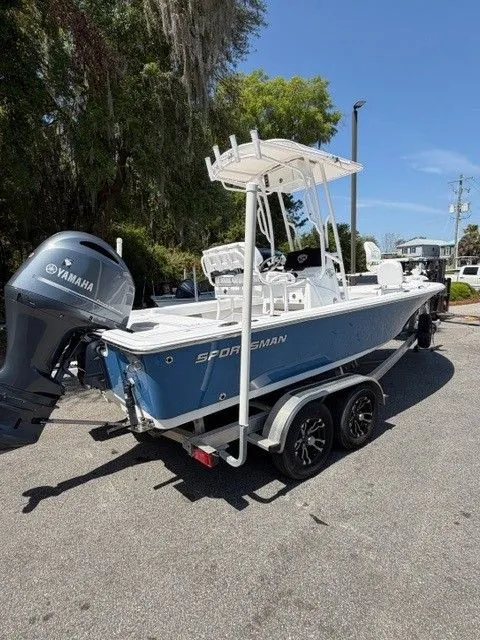
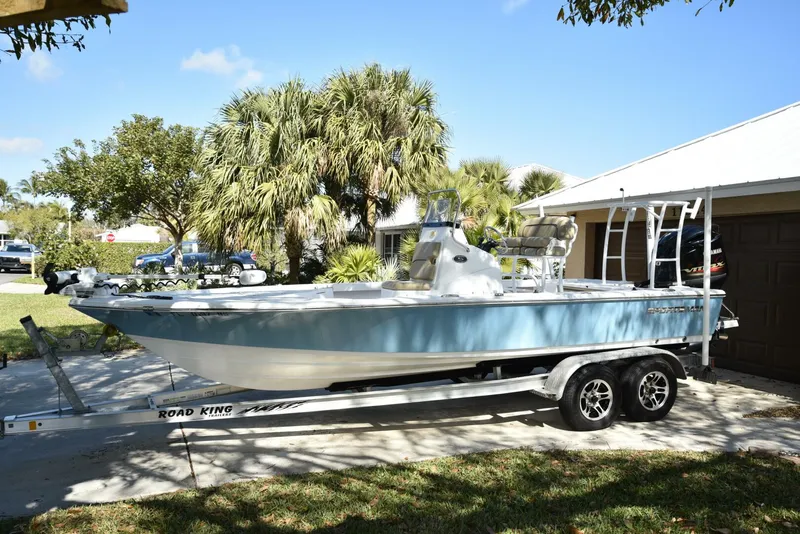
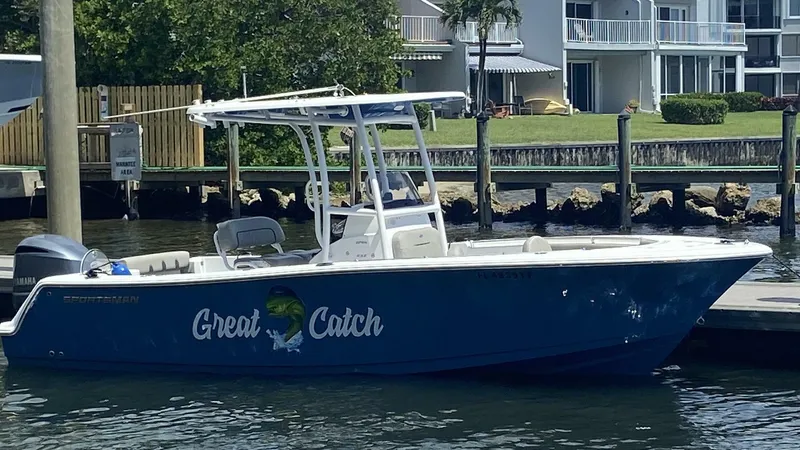
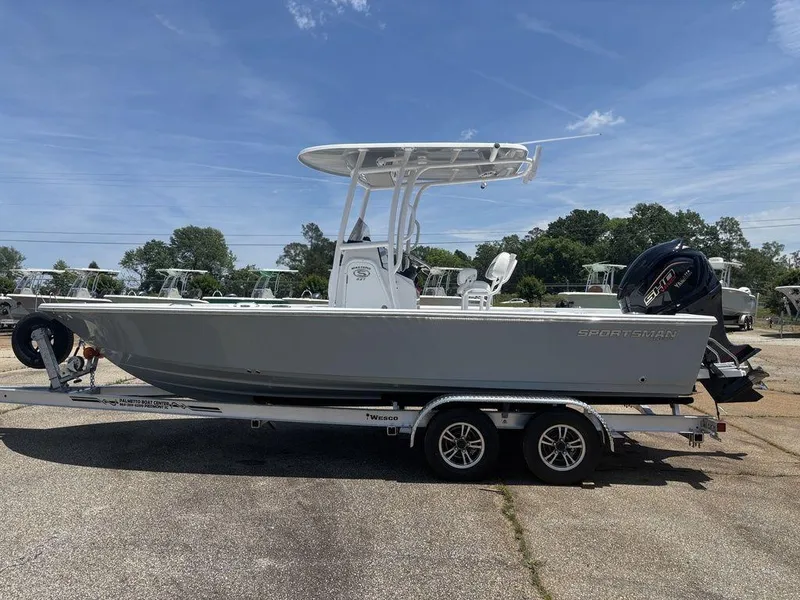
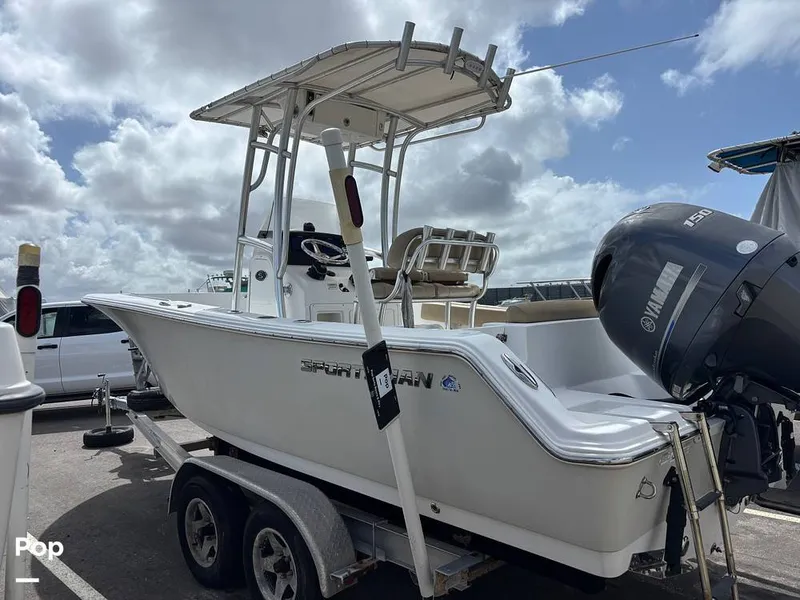
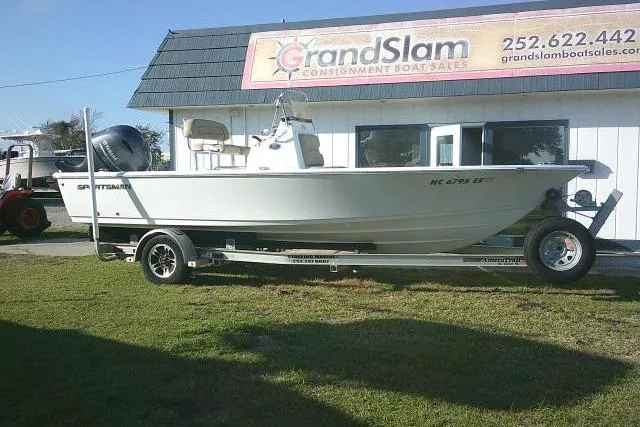
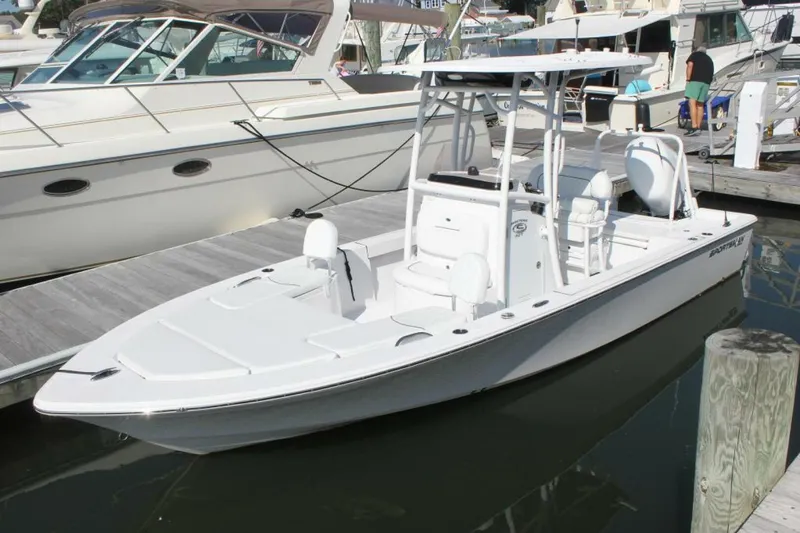
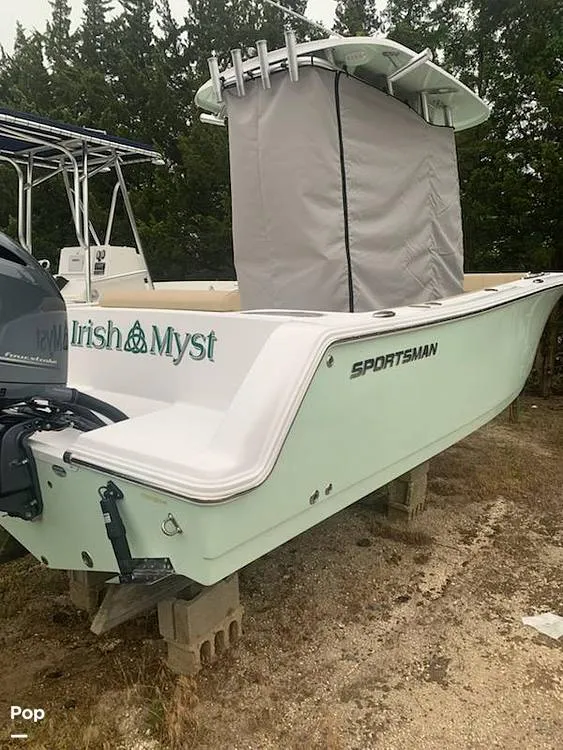
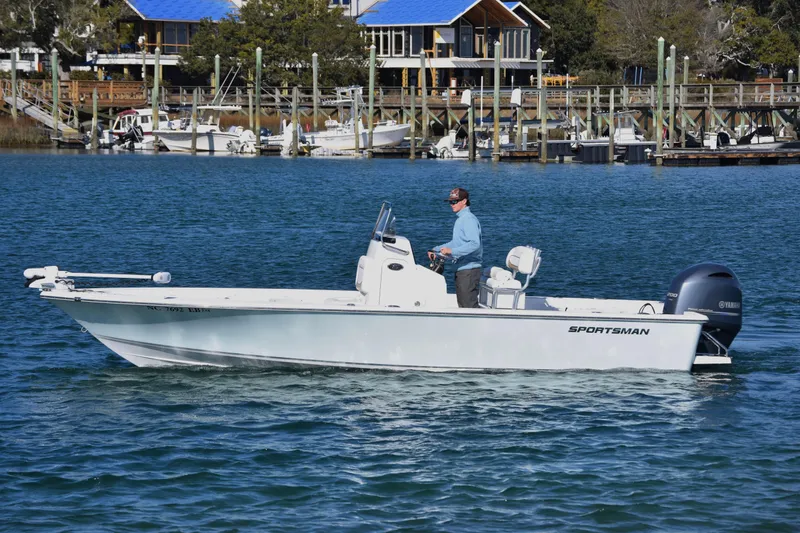
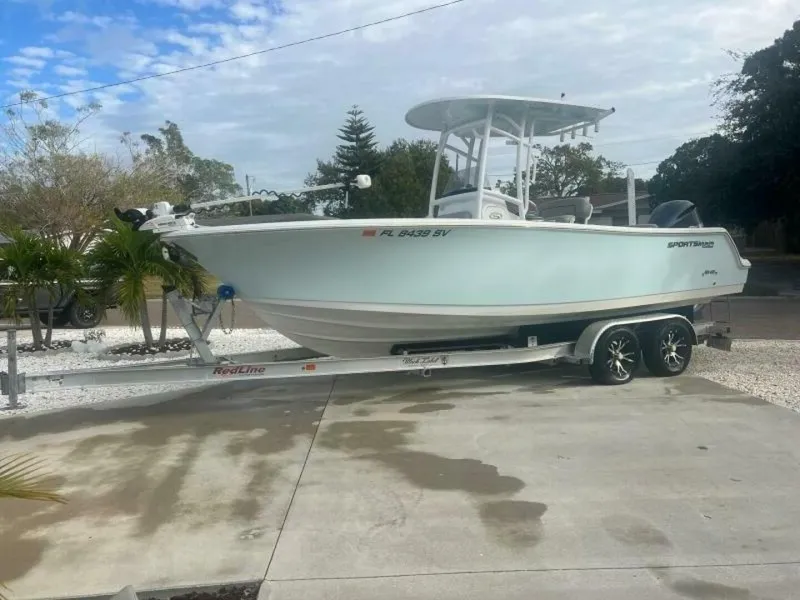
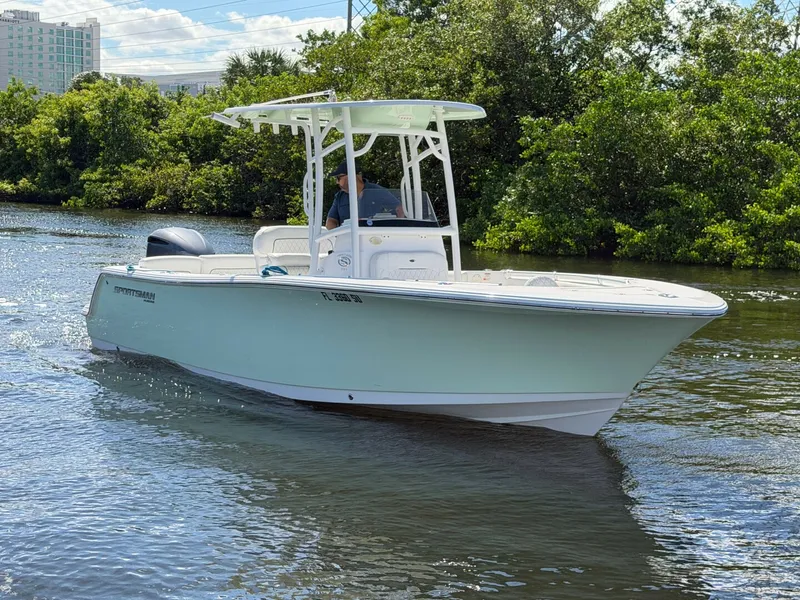
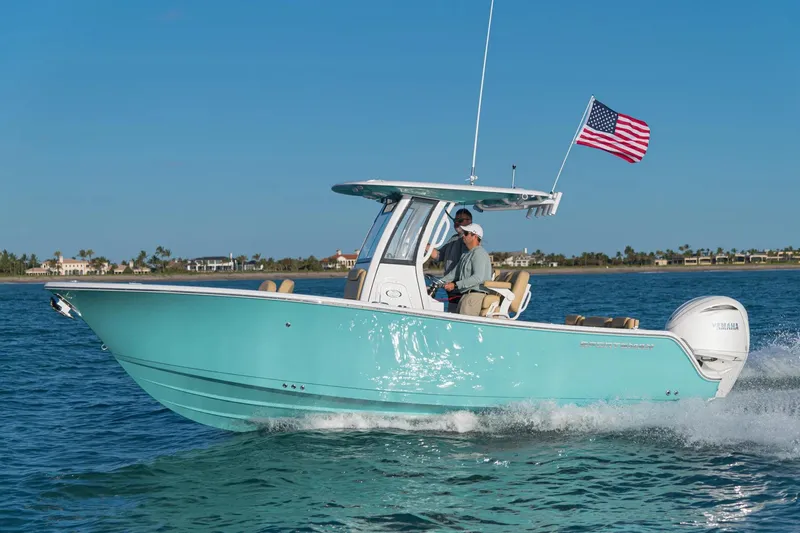
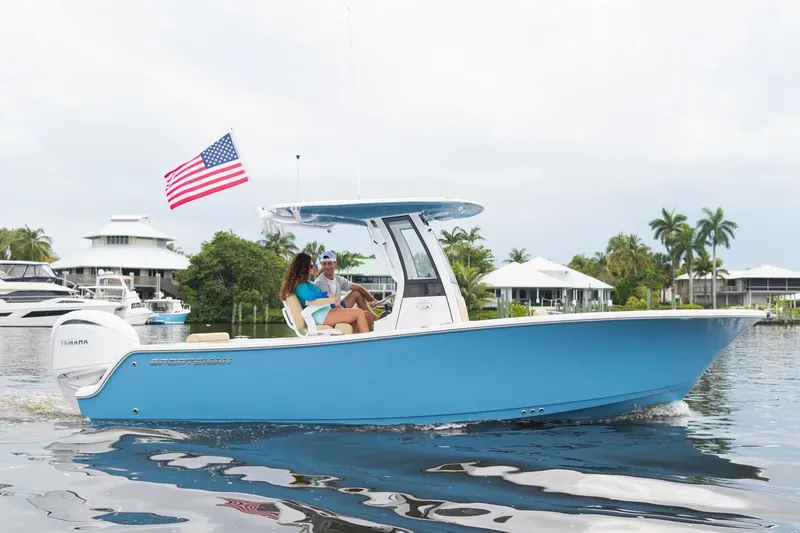
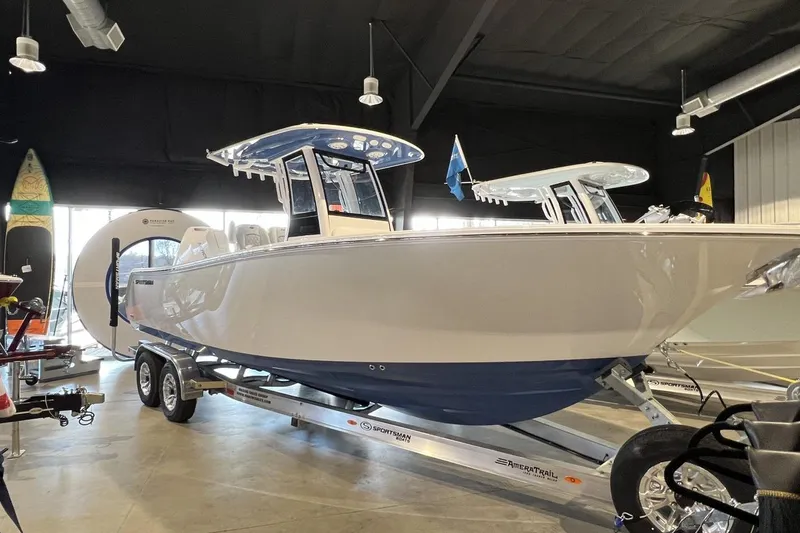
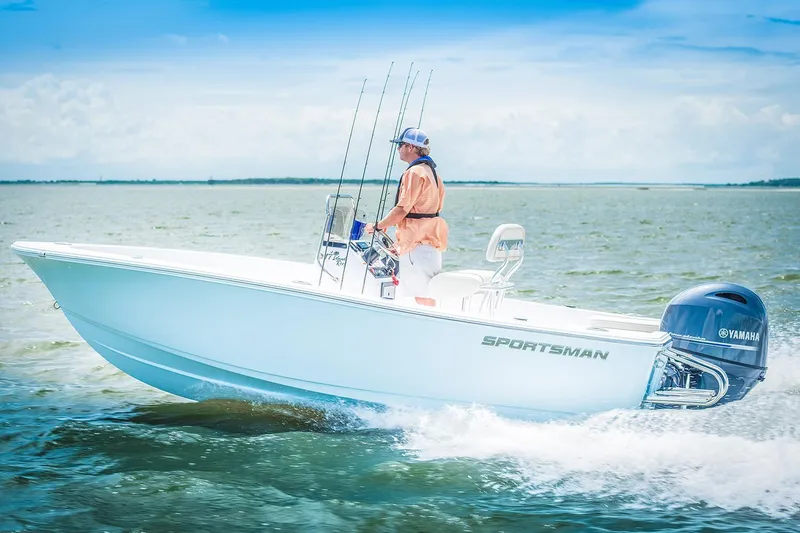
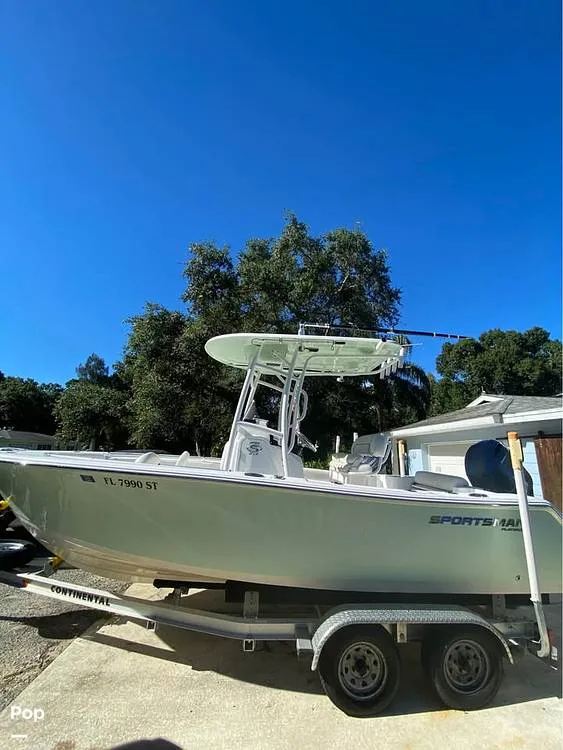
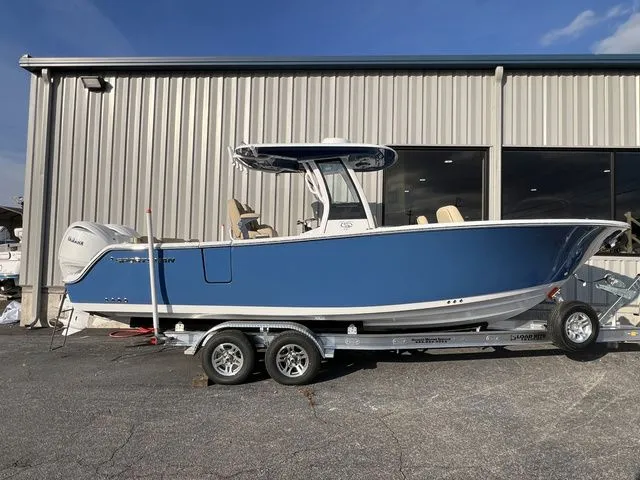
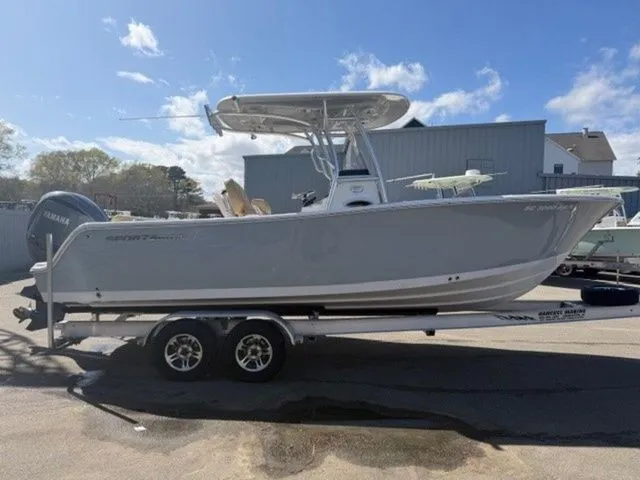
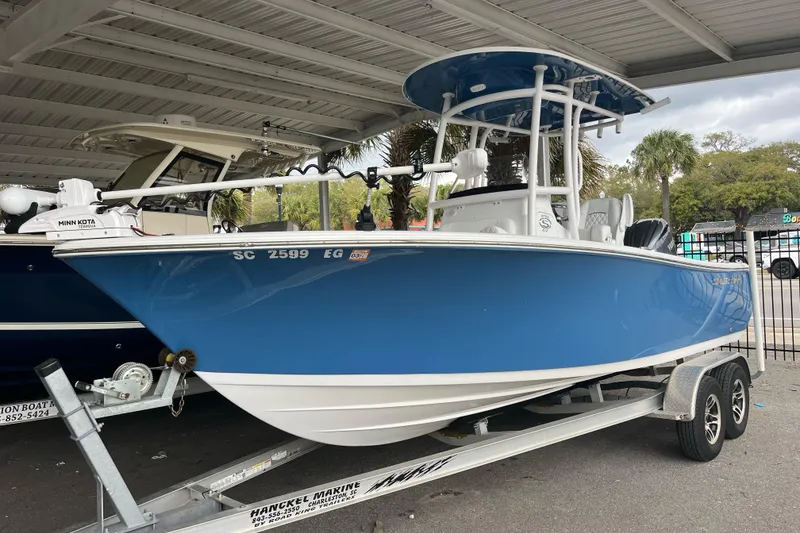
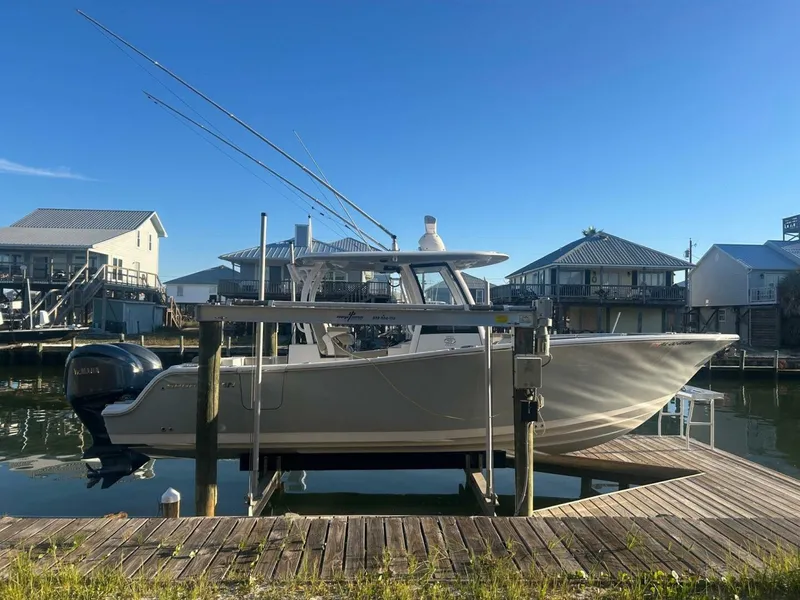
Sportsman Boats
Searching boats for you...
Sportsman Boats – Technical and Historical Guide
ABOUT THIS BOAT BRAND
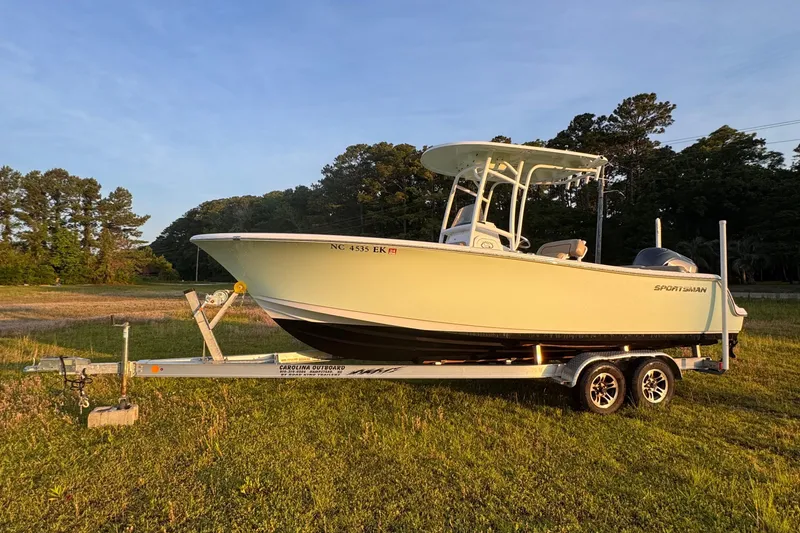
Sportsman Boats is an American boat manufacturer renowned for building saltwater-capable center console fishing boats that blend offshore capability with family-friendly comfort. Founded in 2011 in South Carolina, the company has grown quickly by focusing on high-value fit-and-finish, simplified ownership, and a model range that scales from inshore bay duty to blue-water runs. A signature of the Sportsman Boats approach is delivering “feature-forward” layouts such as convertible seating, substantial standard equipment, and fishing-first deck plans that still work for cruising. The brand’s rise from a modern startup to a major player in the U.S. center console segment is reinforced by strong dealer network coverage and consistent visibility at leading boat shows, positioning Sportsman Boats as a credible, high-volume name in today’s marine industry.
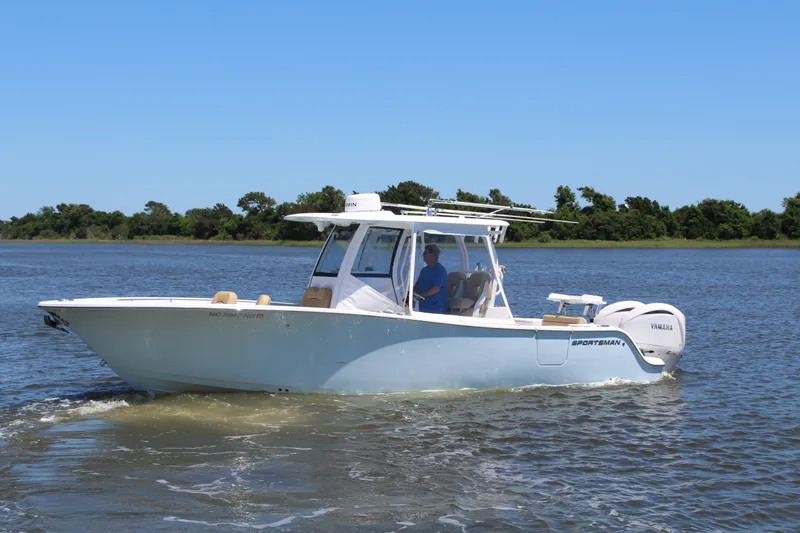
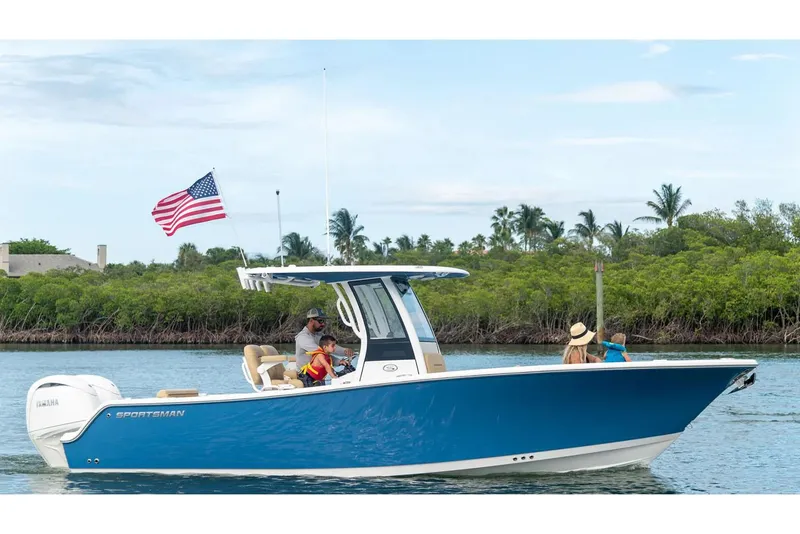
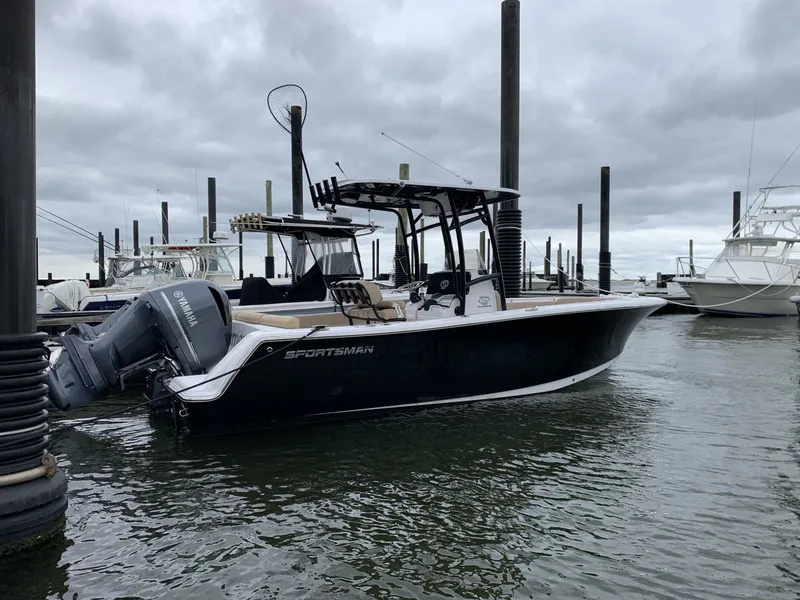
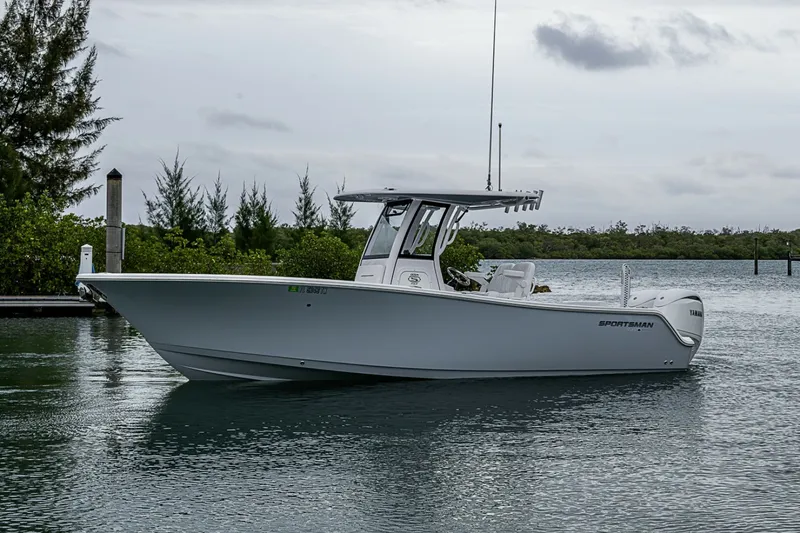
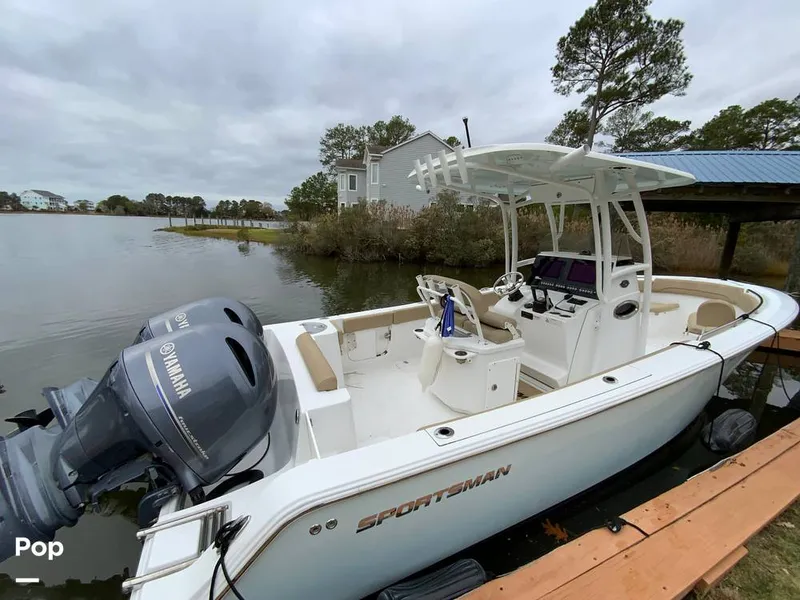
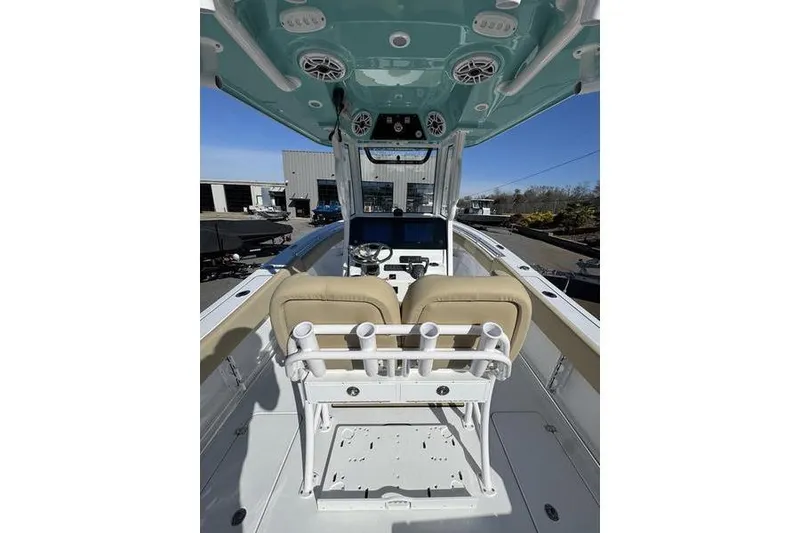
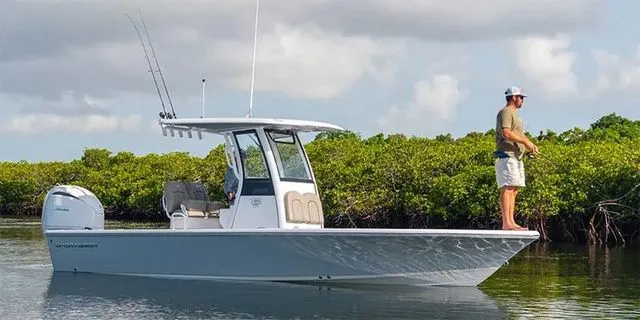
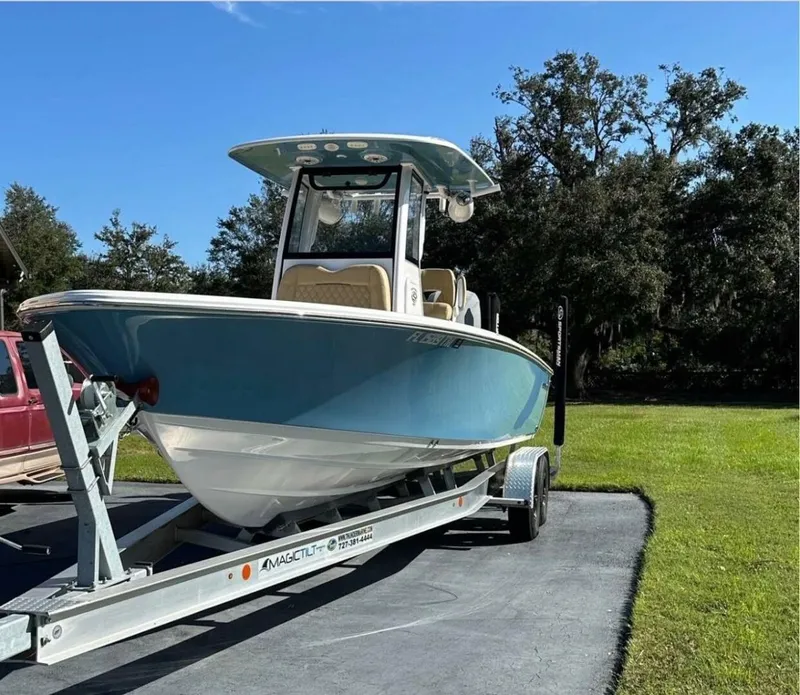
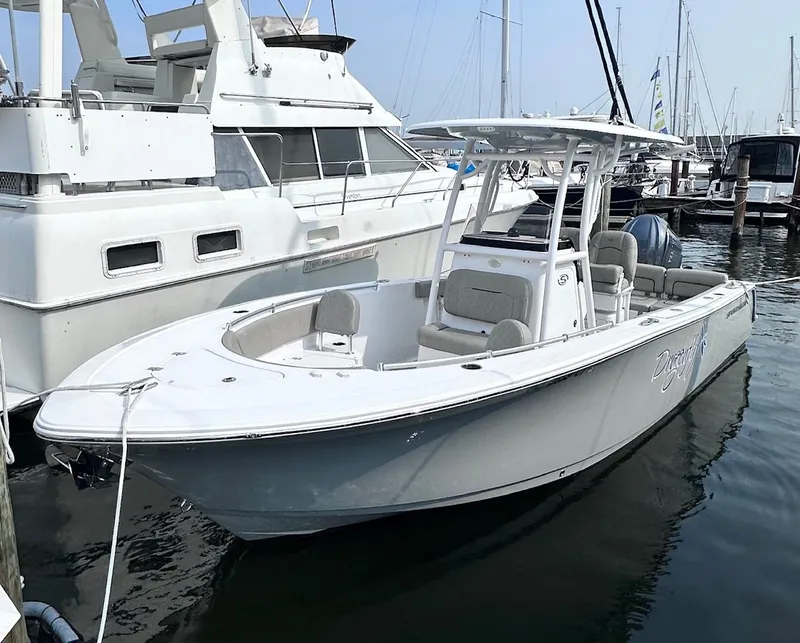
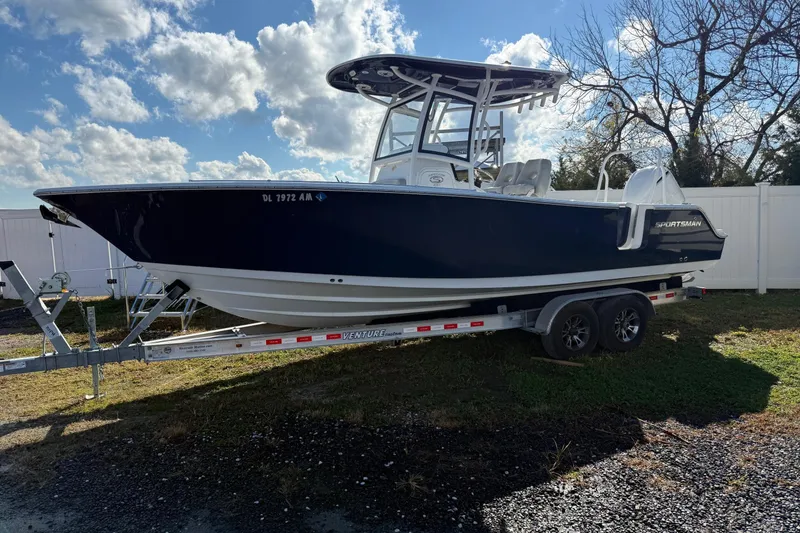
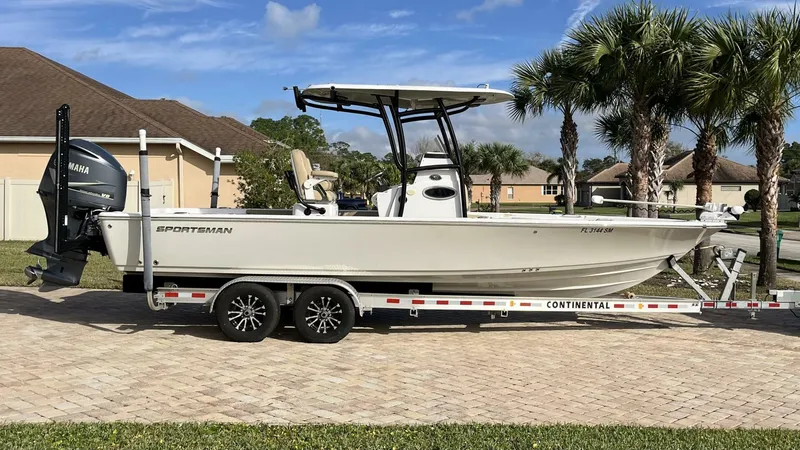
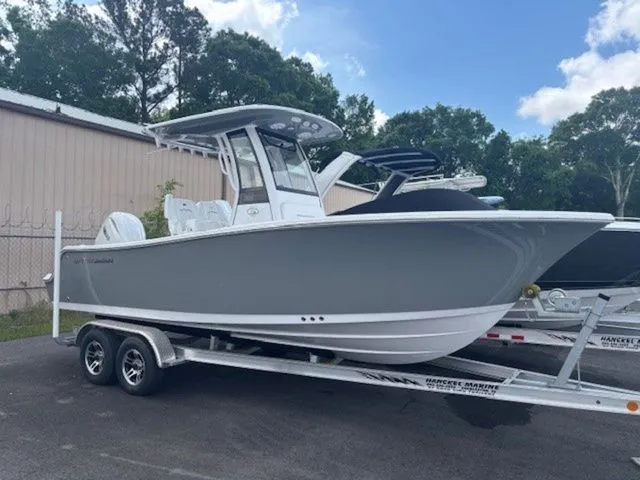
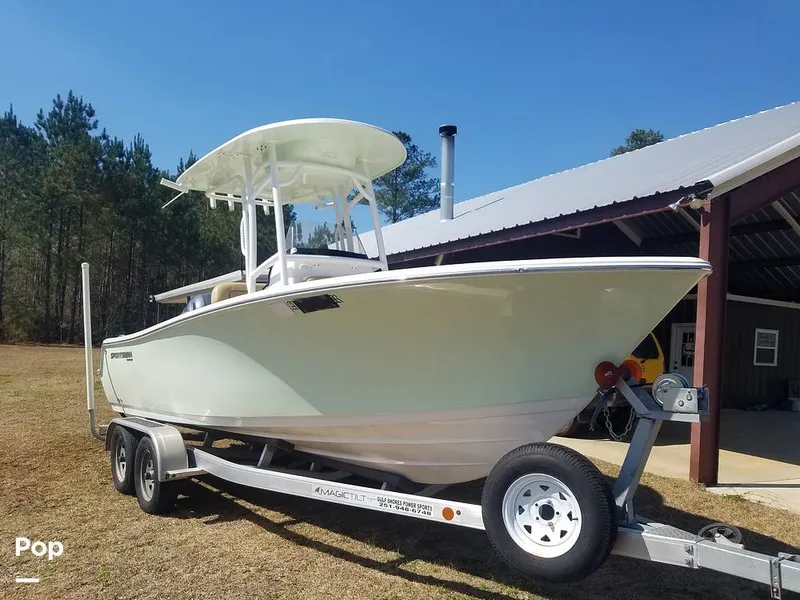
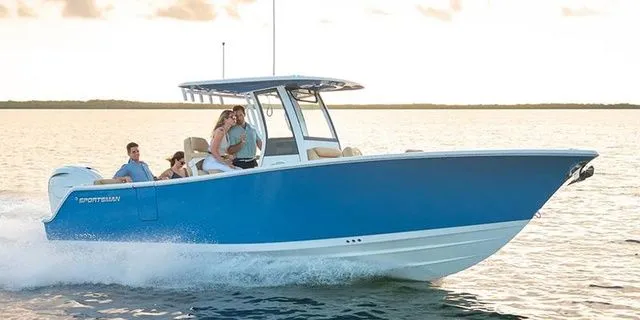
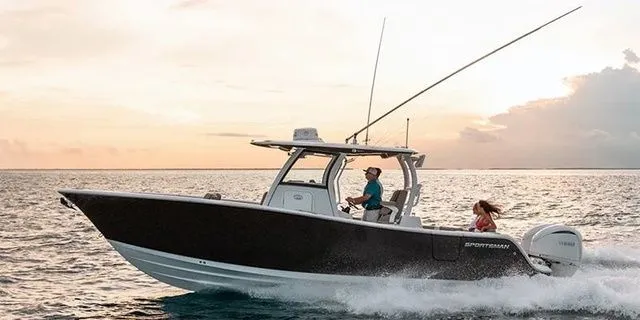
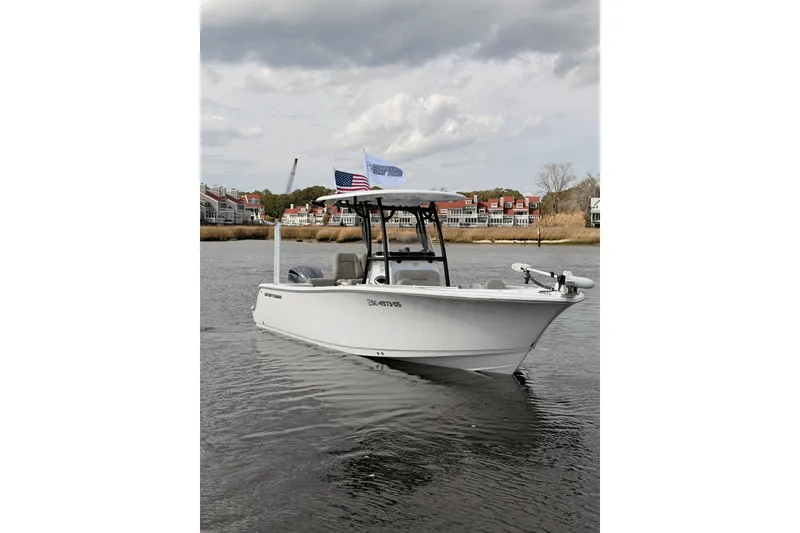
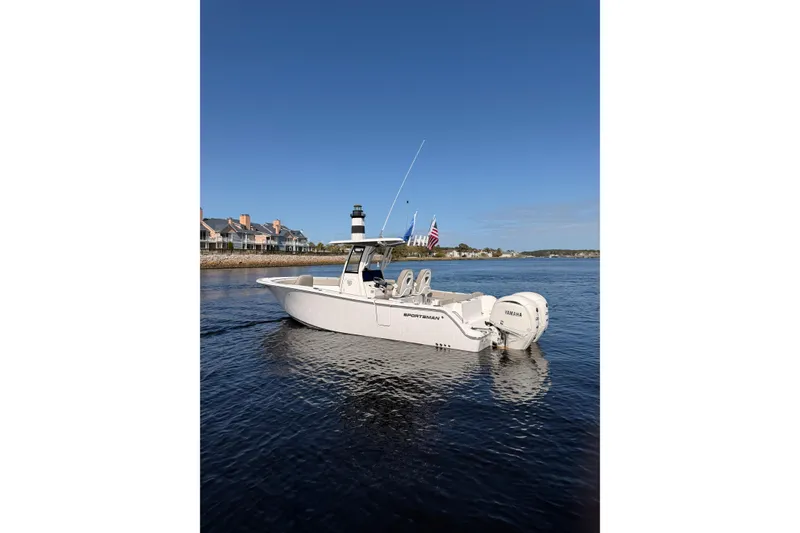
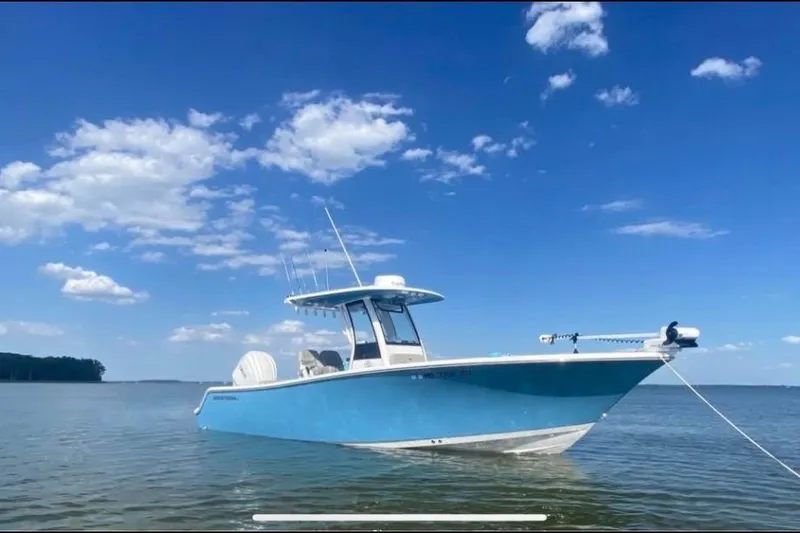
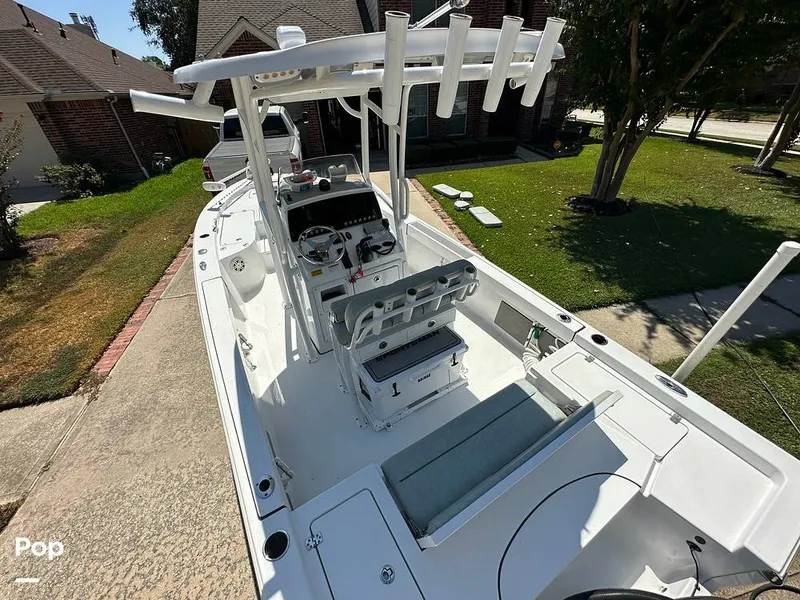
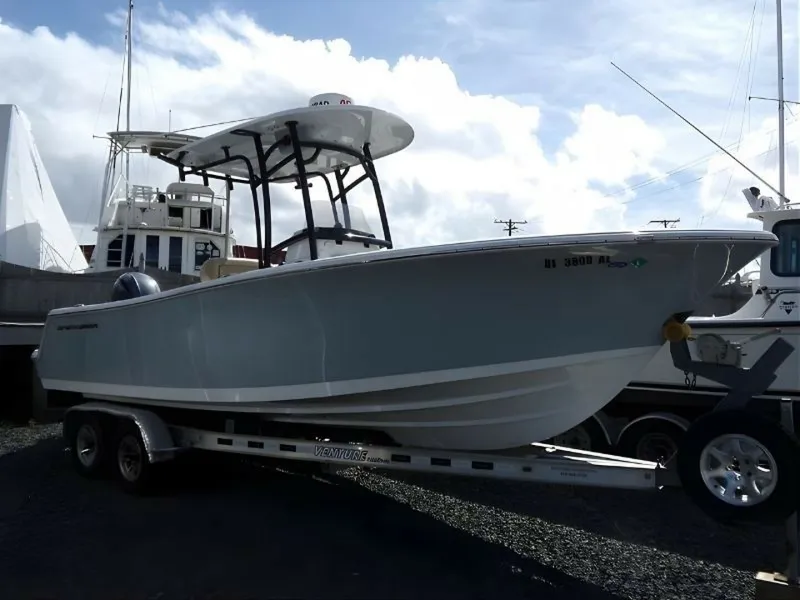
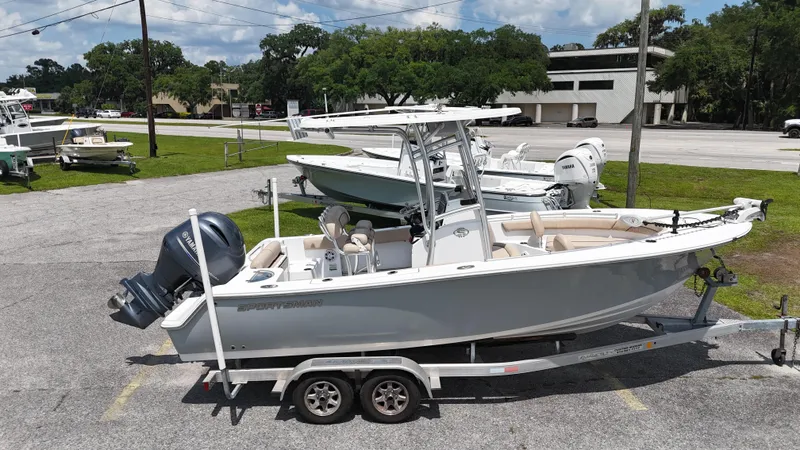
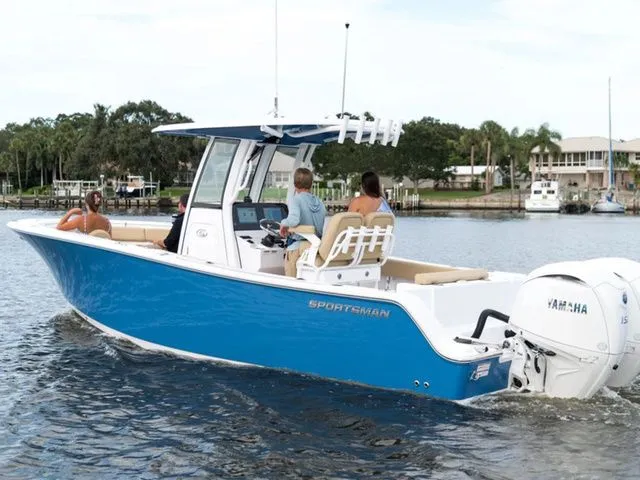
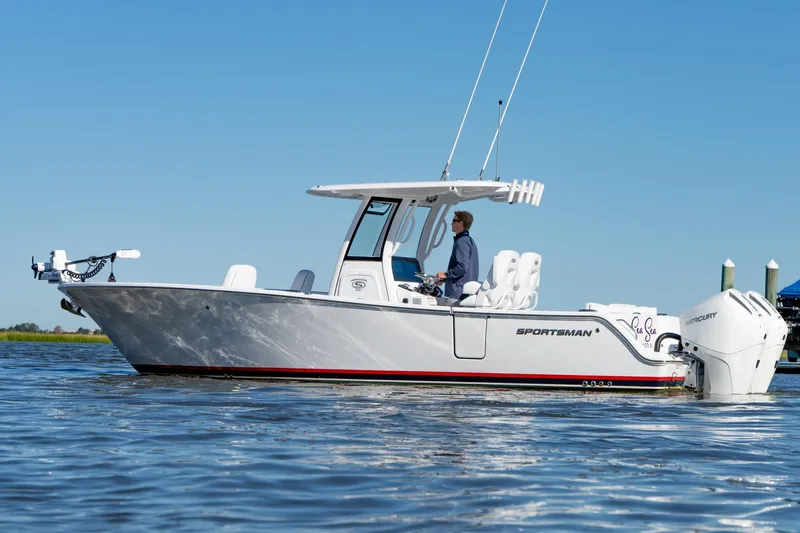
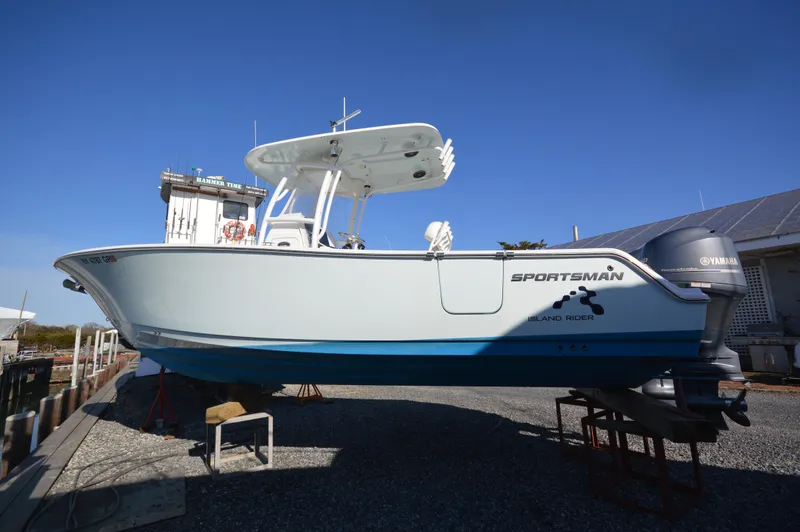
Specializing in outboard-powered saltwater boats, Sportsman Boats targets serious inshore and offshore anglers, active family boaters, and owners who want a single platform for fishing, sandbar days, and coastal cruising. Core lineups commonly include Center Console models, Open models, and Masters series bay boats, with popular configurations featuring family seating forward and fishing utility aft. Across the range, Sportsman Boats typically emphasizes offshore-ready hull designs, integrated fiberglass hardtops, leaning posts with tackle and cooler storage, oversized insulated fishboxes, below-deck rod storage, and wide bow flare for a drier ride. Many models also feature large transom livewells, raw and freshwater washdowns, full coaming bolsters, and modern helm electronics layouts designed for multi-display navigation and sonar. This blend of tournament fishing functionality and day-boat comfort is why Sportsman Boats is frequently selected by owners looking for ocean-capable center console fishing boats without sacrificing versatility.
WHAT MAKES THIS BOAT BRAND SPECIAL?
Sportsman Boats stands out by packing big-water capability and family-friendly comfort into boats that still feel nimble at the helm. Many Sportsman Boats models are built around a modern stepped-hull design, where running surfaces are shaped to reduce drag and help the boat lift efficiently onto plane for a smoother, faster ride with better fuel economy. Under the deck, Sportsman Boats uses a fiberglass stringer grid and all-composite construction in key structural areas to resist rot and keep the hull solid over time, while foam flotation and tight lamination practices add confidence offshore. The result is a predictable, secure ride through chop, sharp tracking in turns, and the kind of stability anglers want when the crew crowds one side. Practical details finish the package, including wide bow seating that converts for fishing, generous insulated fishboxes, smart rod storage, and well-laid-out helm stations with space for large multifunction displays, making Sportsman Boats a strong choice for buyers searching for a versatile center console or dual console that can fish hard and cruise comfortably.
Built in the southeastern United States with a focus on production consistency and hands-on quality checks, Sportsman Boats is known for pairing skilled fiberglass technicians, rigging teams, and finish carpentry specialists with repeatable processes that protect fit and finish. Sportsman Boats commonly specifies premium hardware and marine-grade wiring, robust stainless-steel components, quality upholstery, and carefully sealed through-hull and deck penetrations to help keep systems reliable in a harsh saltwater environment. These boats are designed to meet applicable U.S. Coast Guard requirements for flotation, capacity, and systems where relevant, and Sportsman Boats typically backs that confidence with strong warranty coverage that appeals to owners planning years of use. The small details matter, from clean gelcoat lines to tidy rigging and thoughtful service access, and owners often describe Sportsman Boats as a “family-and-fishing” brand that delivers offshore-ready performance with the polish and resale-friendly build quality buyers expect in a premium center console lineup.
WHAT DIFFERENT TYPES OF BOATS DOES THIS BOAT BRAND BUILD?
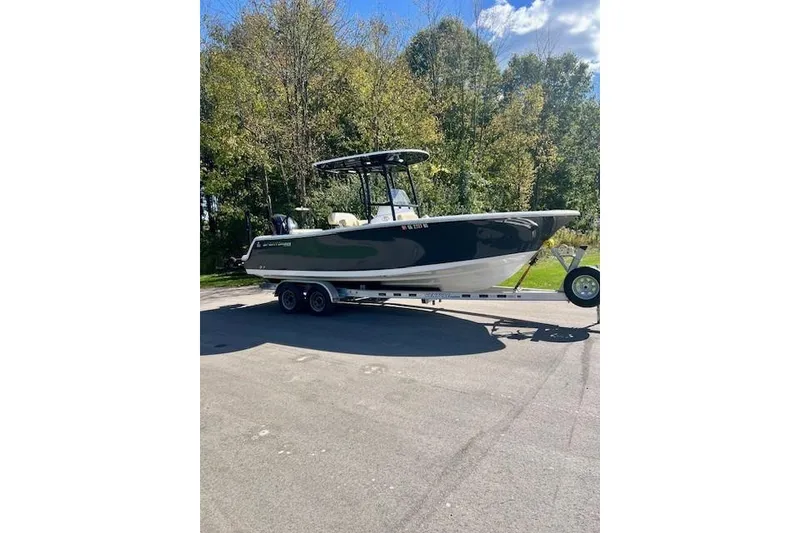
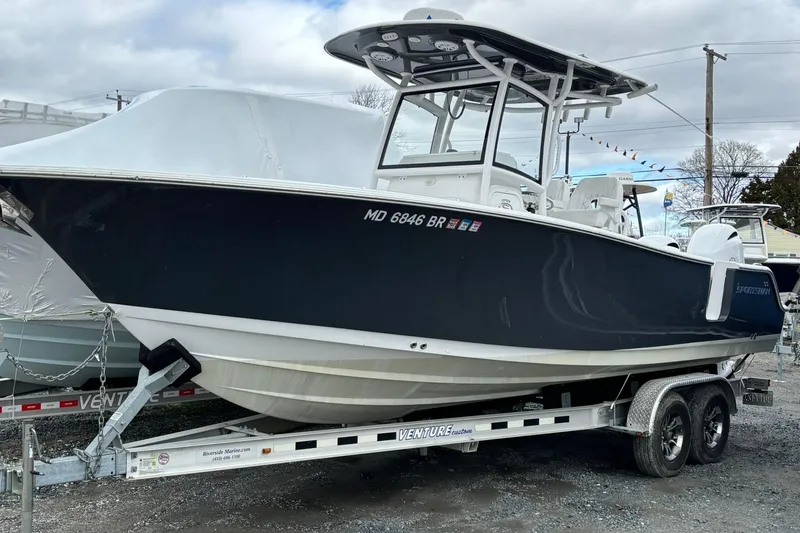
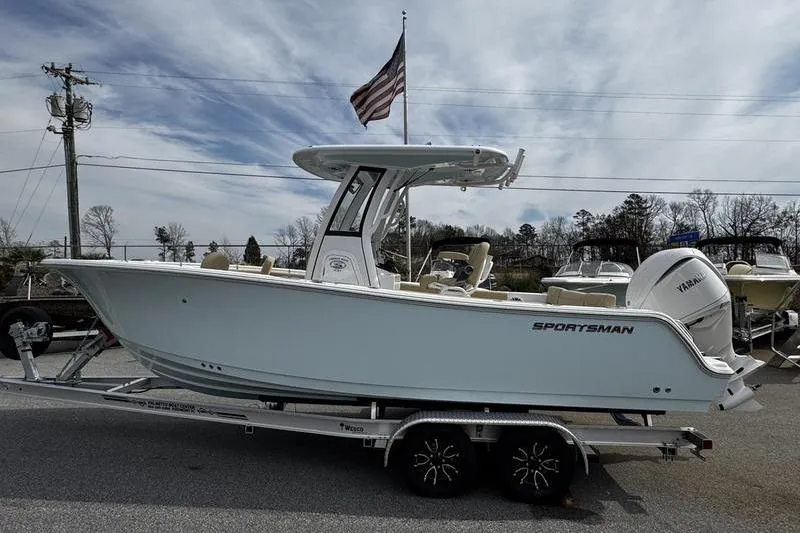
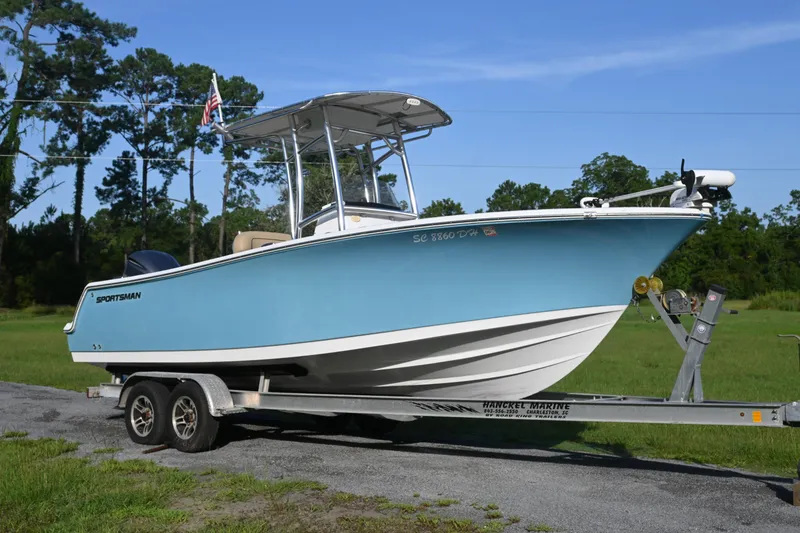
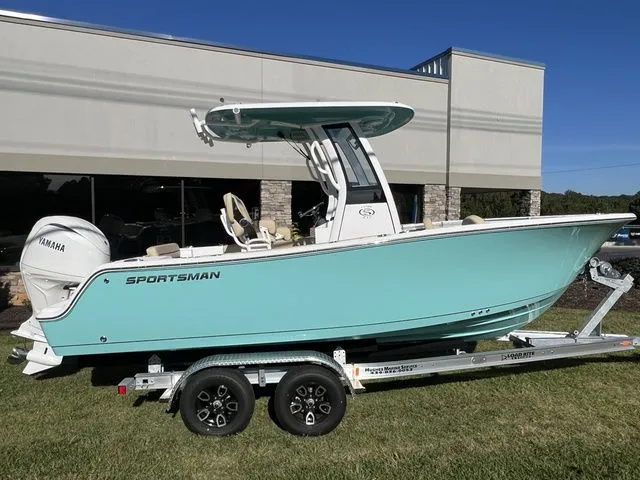
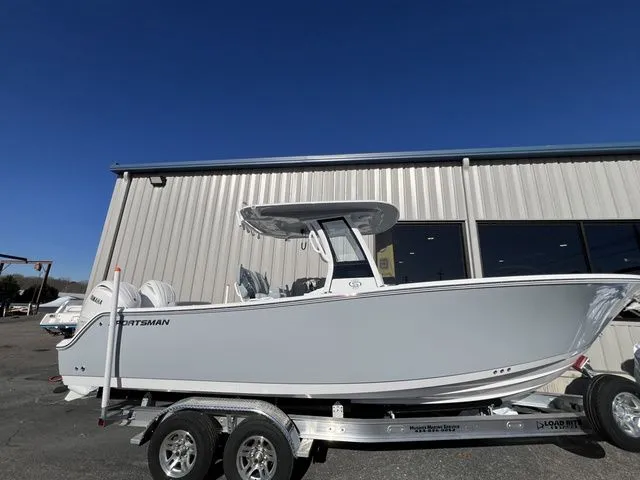
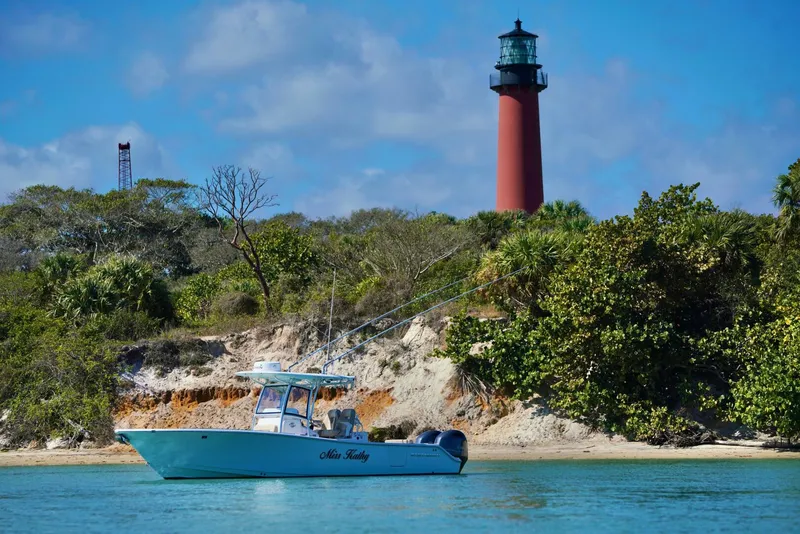
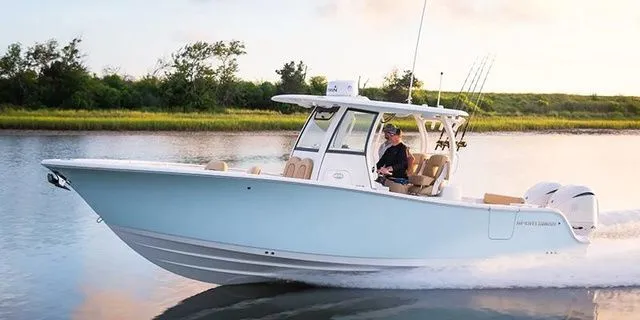
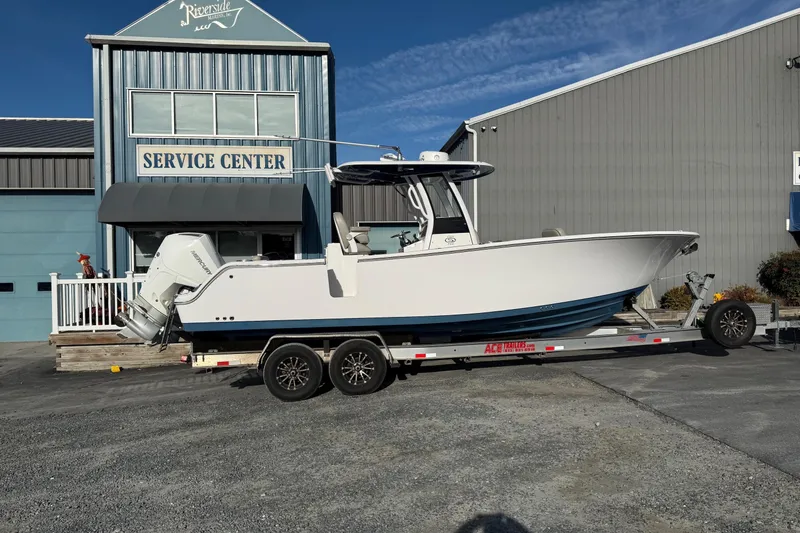
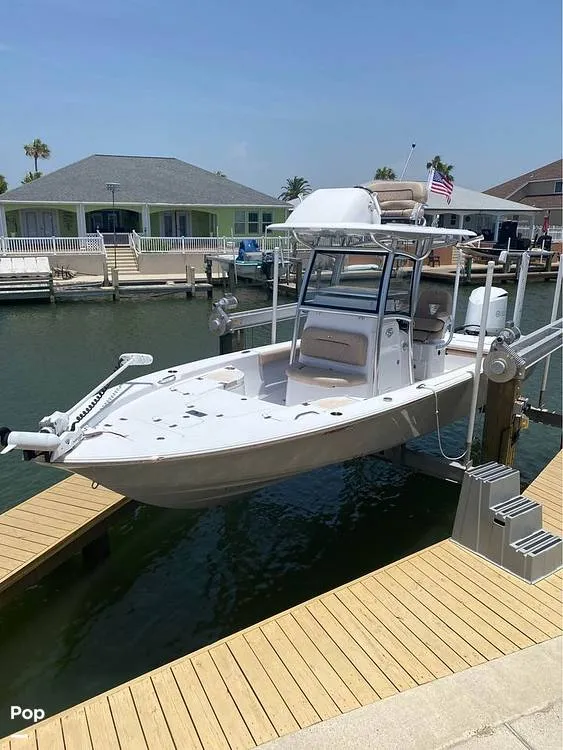
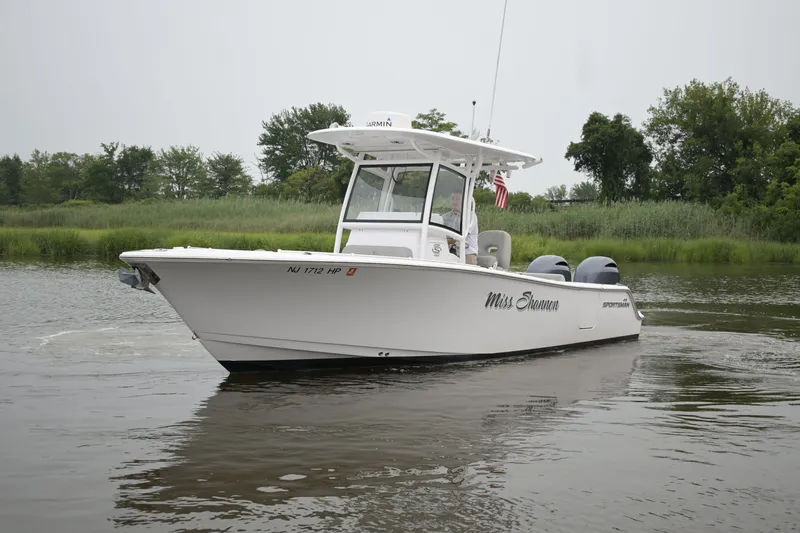
Sportsman Boats builds a broad lineup of outboard-powered saltwater fishing and family crossover platforms, centered on center console designs and complemented by bay boats. In the Open series, Sportsman offers offshore-capable center consoles that span from the 21'5" Open 212 up to the flagship 40'4" Open 402, blending fish-ready cockpits with comfort features for cruising and sandbar days. The Heritage series continues the center console theme with versatile, family-oriented layouts, while the Masters series focuses on shallow-water-friendly bay boats (including Open Edition variants) designed for inshore work with the ability to venture beyond the inlet when conditions allow. Together, the range covers center console boats and bay boats across 21'5" to 40'4". Below are the types of boats and models Sportsman Boats builds, along with their key characteristics and uses:
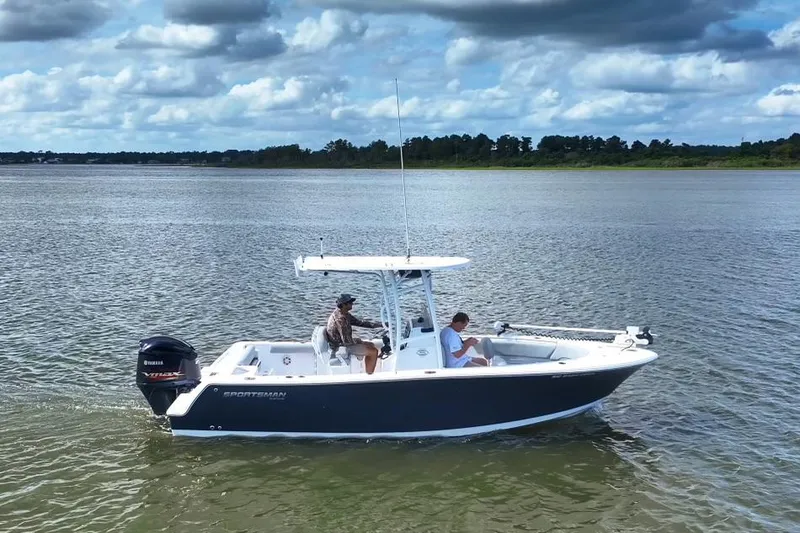
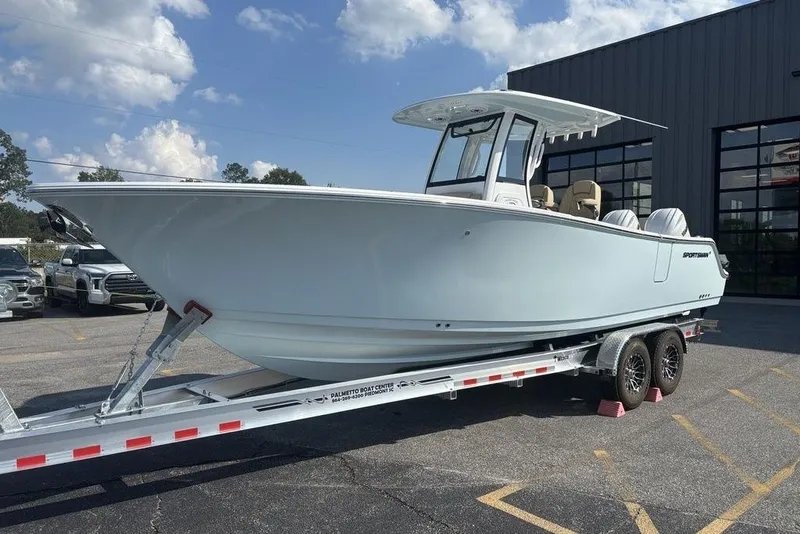
• (Open Series — Offshore/Bluewater Center Consoles) Sportsman’s Open Series is its offshore-capable, deep‑V center-console lineup, built around outboard power and larger fuel capacities for longer-range day boating and serious nearshore/offshore fishing. Current models run from the Open 212 (21' 5") up to the flagship Open 402 (40' 4"). The series typically blends family seating and sandbar features (wraparound bow seating, convertible cockpit seating, swim access) with fishing amenities like large livewells/aquarium wells and in-deck fish boxes. Representative model specs (LOA/beam/draft-up/fuel/max HP): Open 212 (21' 5" / 8' 6" / 16" / 70 gal, ~60 usable / 250 HP), Open 232 (23' 4" / 8' 6" / 16" / 116 gal, ~106 usable / 300 HP), Open 252 (25' 3" / 9' 3" / 20" / 140 gal, ~128 usable / 350 HP), Open 262 (26' 6" / 9' 5" / 22" / 182 gal, ~164 usable / 450 HP), Open 282 (28' 5" / 9' 10" / 23" / 230 gal, ~210 usable / 600 HP), Open 302 (30' 2" / 10' 4" / 22" / 295 gal, ~270 usable / 700 HP), Open 322 (32' 2" / 10' 10" / 330 gal tank / 900 HP), Open 352 (35' 2" / 11' 2" / 355 gal tank / 1,200 HP), and Open 402 (40' 4" / 13' / 30" / 650 gal, ~605 usable / 1,600 HP).
• (Heritage Series — Family/Sandbar Center Consoles) The Heritage Series is Sportsman’s family-entertaining, water-sports and sandbar-oriented center-console line, still outboard-powered but tuned more toward “hang-out” deck plans and water access while retaining fishability. The current Heritage lineup includes the Heritage 231 (23' 4"), Heritage 261 (26' 6"), and Heritage 321 (32' 2"). In practice, these models share much of the brand’s offshore-capable build approach but emphasize seating, lounging and swim-time usability. Representative specs: Heritage 231 (23' 4" LOA, 8' 6" beam, 16" draft-up, 116 gal fuel/~106 usable, 300 HP max); Heritage 261 (26' 6" LOA, 9' 5" beam, 22" draft-up, 182 gal fuel/~164 usable, 450 HP max); Heritage 321 (32' 2" LOA, 10' 10" beam, 24" draft-up, 330 gal fuel/~305 usable, 900 HP max).
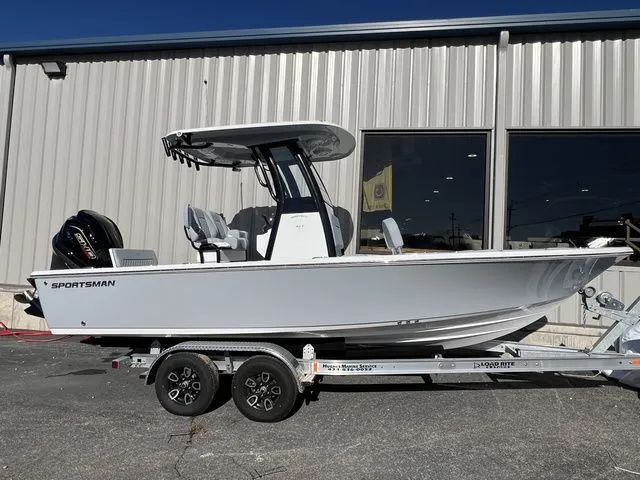
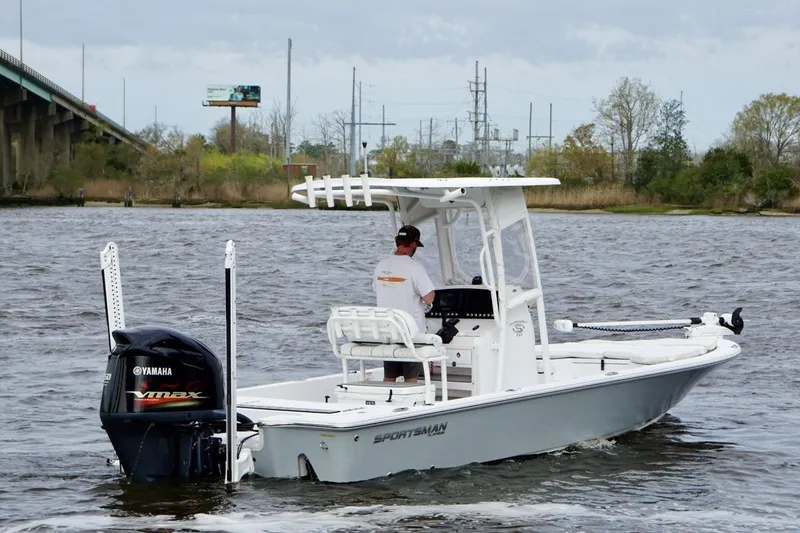
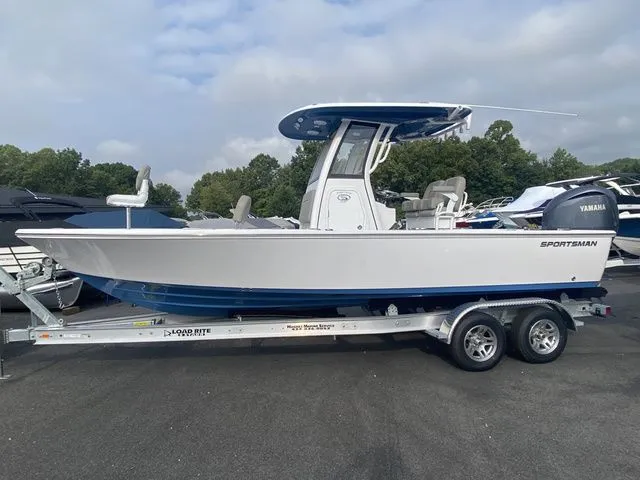
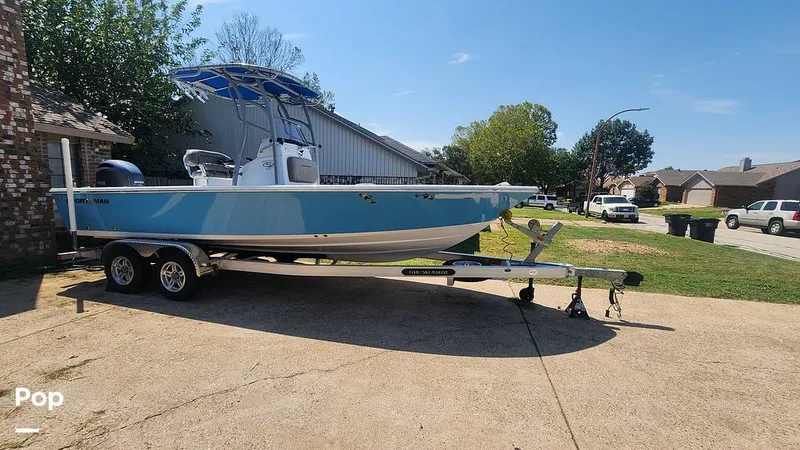
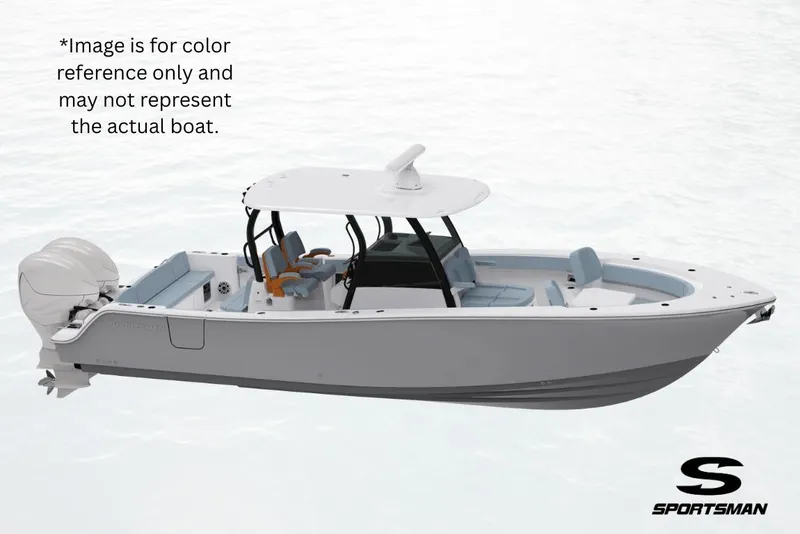
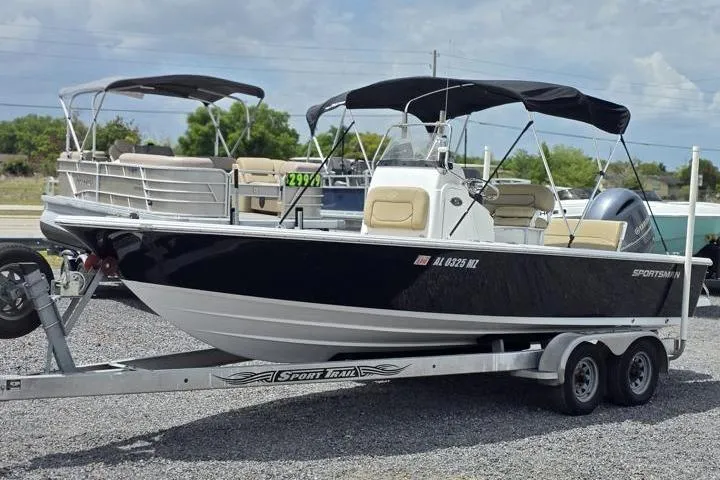
• (Masters Series — Bay Boats / Shallow-Water Inshore (OE = open-bow style deck)) Sportsman’s Masters Series targets bays, inshore waters, and mixed “fish + sandbar” use with shallower draft and generally lower deadrise than the Open/Heritage offshore-oriented boats. All are outboard-powered and offered in both traditional bay-boat layouts and “OE” (open‑bow) variants that lean more toward family cruising while keeping casting decks and livewells. The current Masters lineup includes the Masters 227, Masters 247, Masters 247OE, Masters 267, and Masters 267OE, spanning roughly 22' 5" to 26' 7" LOA. Representative specs: Masters 227 (22' 5" LOA, 8' 4" beam, 70 gal/~60 usable fuel, 250 HP max); Masters 247 (24' 4" LOA, 8' 5" beam, 71 gal/~65 usable fuel, 350 HP max); Masters 247OE (24' 4" LOA, 8' 5" beam, ~14" draft, 65 gal fuel, 350 HP max); Masters 267 (26' 7" LOA, 9' 2" beam, 116 gal/~105 usable fuel, 450 HP max); Masters 267OE (26' 7" LOA, 9' 2" beam, 15" draft-up, 116 gal/~105 usable fuel, 450 HP max).
HOW ARE THESE BOATS BUILT?
Sportsman boat construction starts with a 100% composite hull layup designed to eliminate wood and the long term risk of rot. Each hull is built outside in: a pigmented gelcoat layer is sprayed into a rigorously maintained mold, then thickness is verified at multiple locations using a mil gauge for consistent cosmetic quality. After cure, a vinyl ester resin skin coat is applied as the first barrier layer against water intrusion and osmotic blistering, followed by reinforcement laminates that are rolled out with bubble rollers to drive out entrapped air and minimize voids. The lamination schedule then incorporates strategically placed composite core materials, including core mat and high density PVC foam coring in the hull sides to increase panel stiffness, reduce print through, and improve sound dampening without adding unnecessary weight. High load structural areas receive additional reinforcement, most notably the transom, which uses Coosa Board, a no rot composite core selected for engine loading, fastener holding, and long term durability. Sportsman’s SportTech Advanced Fiberglass Stringer System is molded as a dedicated structural fiberglass grid with zero wood; on larger models a proprietary full grid stringer provides 360 degree contact to the hull for maximum support. The stringer is permanently bonded to the hull using methyl methacrylate adhesive, a high strength structural polymer, creating a unitized hull grid foundation before the boat is capped. For safety and ride quality, closed cell foam flotation is added to foam filled cavities throughout the structure; importantly, Sportsman notes this foam is used for positive flotation, insulation, and noise reduction rather than as a primary structural element. Every model is NMMA Certified, meaning compliance with ABYC standards and U.S. Coast Guard requirements is verified through third party inspections. The hull to deck joint is completed during the capping process using polyester bonding putty and mechanical fasteners through the reinforced pinning flange designed for screw retention, producing a rigid, water resistant hull deck connection that supports long term structural integrity.
Hardware and outfitting are specified for corrosion resistance and service life in saltwater environments. Sportsman commonly uses premium stainless components and fasteners, including AlloChrome4200+ stainless fasteners and robust deck hardware such as Gemlux cleats, latches, hinges, and rod holders, with details like stainless rub rails and stainless drains used to resist pitting and staining. Electrical and plumbing installations are executed as complete marine systems, with pre rigged wiring harnesses that are labeled and loomed to reduce chafe points, simplify diagnostics, and support ABYC compliant circuit protection and installation practices expected in NMMA Certified boats. Fuel and fluid systems are packaged into the molded stringer grid to protect critical components and centralize weight; Sportsman notes that many models use high density polyethylene fuel tanks, while larger models use aluminum tanks, and integrated drainage channels and scuppers are molded to keep decks self bailing and drier underway. Interior comfort is built with SportTech materials such as UV resistant marine upholstery, including SiLeather marine vinyl and multi layer high density foam cushions designed for longer cushion life and improved resistance to flattening, with finished storage compartments and gelcoated interior surfaces in key areas for easy rinse down and cleaner bilge presentation. Manufacturing consistency is supported by modern design and fabrication technology, including CNC cut composite materials for precise fit and repeatable lamination placement, and advanced molded components where the liner, deck, and console are molded as single units to improve alignment, reduce fasteners, and increase structural continuity. Construction is a hybrid of precision lamination and hand laid fiberglass, with controlled resin application methods used where appropriate to achieve repeatable thickness and weight targets. Quality control is embedded throughout the process, from gelcoat thickness checks recorded digitally at stations to final system checks as the boat moves through assembly, reinforcing a build philosophy that prioritizes strength, quieter operation, serviceability, and long term reliability. Compared with typical production practices, Sportsman’s no wood composite structure, bonded structural grid, flotation strategy, and third party certification program collectively target a higher durability and safety baseline than minimum regulatory requirements. Warranty coverage reflects that approach, with a 10 year hull limited warranty for structural hull defects and a 1 year nonstructural limited warranty for Sportsman manufactured or installed components, with the hull warranty transferable one time to a subsequent titled owner subject to the stated transfer process.
WHERE ARE THESE BOATS BUILT?
All Sportsman Boats are built in the United States at Sportsman Boats Manufacturing, Inc.’s single boat building facility in Summerville, South Carolina, where the company designs and produces its full lineup of fiberglass saltwater center console and bay boats. Sportsman Boats is a family owned and operated manufacturer, and its production is centered at its Summerville manufacturing campus at 113 Sportsman Way in Dorchester County. The factory footprint is widely reported at about 225,000 square feet, supporting end to end production under one roof for consistent build execution. Workforce reporting varies by source and by growth phase, but the plant is commonly described as employing more than 250 people as the brand has scaled output.
Sportsman Boats’ modern production story in Summerville began in 2011 as a start up that initially leased industrial space in Dorchester County, with manufacturing operations ramping up in early 2012. As demand increased, the company expanded and relocated within Summerville, including a move in 2013 to a larger plant on Isaac Way providing 72,600 square feet of production space, followed by a major 2014 project to expand that facility by roughly 116,000 square feet to increase manufacturing capacity. The organization of production has evolved into dedicated areas for hull and deck lamination, assembly, rigging, and finishing, with separate work zones to support different model families and option packages while keeping throughput steady. Additional growth initiatives have included a 2016 expansion focused on scaling operations and efficiency, and a 2022 expansion that added a 75,000 square foot climate controlled building to bring more small fiberglass parts manufacturing and powder coating capability in house. Summerville’s Lowcountry location also supports marine manufacturing logistics, with access to regional transportation networks and a coastal workforce familiar with boating and fiberglass production.
Sportsman’s quality control approach is built around repeatable, station based inspections throughout the manufacturing and production flow, including verification at lamination, bonding, mechanical and electrical installation, plumbing, upholstery fitment, and final finish before delivery. The brand states that every boat is built to NMMA certification standards, which reinforces a documented, testable baseline for safety and build quality expectations across the model range. In practice, the facility’s single site manufacturing structure helps standardize work instructions, jigs and fixtures, torque and sealant procedures, and rework loops, improving consistency from hull to hull. Testing and validation typically include functional checks of electrical systems, livewell and freshwater circuits, steering and control setup, and water intrusion prevention measures before shipment. Because all Sportsman Boats are built at the same Summerville facility, the company can concentrate skilled labor, process engineering, and continuous improvement resources into one production environment rather than splitting tooling and expertise across multiple plants.
In summary, Sportsman Boats are built exclusively in Summerville, South Carolina, at the company’s dedicated manufacturing facility, keeping production centralized and traceable. That single site, U.S. boat building focus supports a skilled workforce, ongoing facility upgrades, and consistent build standards across every model. Sportsman’s manufacturing commitment is reflected in continued investment in its Summerville production campus and a quality first mindset aimed at delivering durable, family friendly saltwater boats built close to home.
WHAT IS THE BIGGEST BOAT OF THIS BRAND BUILT TODAY?
The biggest boat built by Sportsman Boats today is the Sportsman Open 402 Center Console, Sportsman’s flagship offshore center console at 40' 4" LOA with a 13' beam, designed as the brand’s maximum-size, outboard-powered platform for serious bluewater range and capability. In the current Sportsman Boats model lineup, the Sportsman Open 402 Center Console also carries the largest published fuel capacity at 650 gallons, pairing long legs with a deep, offshore-ready hull form intended to run dry and stable in open-water conditions. Power is outboard-focused and built for big-water performance, with multi-engine configurations available up to a maximum rating of 1,600 HP, making the Sportsman Open 402 Center Console the largest Sportsman model for shoppers searching for a true 40-foot class center console. With its 30" draft up and wide stance, the Sportsman Open 402 Center Console is positioned for confident high-speed runs and efficient cruise profiles typical of modern offshore center consoles, while still supporting the family-friendly priorities that define Sportsman’s Open Series.
Built for offshore fishing and high-comfort cruising in the same day, the Sportsman Open 402 Center Console is optimized for running to the canyons, island-hopping, and hosting a full crew at the sandbar without giving up hardcore sportfishing function. As the largest Sportsman model, the Sportsman Open 402 Center Console is typically equipped with the brand’s factory-integrated SportLink electronics ecosystem at the helm for clean rigging and seamless navigation, and it is also aligned with Sportsman’s stability and trim technology approach through VACS and Seakeeper Ride integration noted across the lineup. On deck, this 40' 4" center console layout is all about scale: expansive seating and social zones, substantial in-deck and below-deck storage volume, and the kind of cockpit real estate that supports offshore essentials like rod holders, tackle stowage, and fish-focused deck space for rigging and fighting fish. Family comfort is a core part of the package as well, with console amenities that support longer days on the water, plus the wide 13' beam that enhances space at the helm and throughout the cockpit. In short, the Sportsman Open 402 Center Console stands at the top of Sportsman Boats’ lineup as the brand’s biggest, most capable offshore center console, delivering maximum length, maximum beam, and maximum horsepower potential in a single flagship platform.
WHAT IS THE SMALLEST BOAT OF THIS BRAND BUILT TODAY?
The smallest model in Sportsman Boats's current lineup is the Open 212 Center Console, and at 21 foot 5 inches long with an 8 foot 6 inch beam it is positioned as an easy-to-own, entry-level offshore-capable fiberglass center console for boaters who want one rig that can fish, cruise, and hit the sandbar without stepping up to a larger tow vehicle or storage plan; while Sportsman Boats publishes the Open 212’s key dimensions and a 250 HP maximum rating, the brand-provided specs you shared do not list a factory weight or an official towing requirement, so the safest way to frame towing is practical rather than numeric: the Open 212’s 8 foot 6 inch beam is trailer-friendly in most states and its compact 21-foot class footprint typically makes ramp launching, driveway storage, and weekend trailering far simpler than the larger Open Series models, which is a major benefit for new owners looking for manageable center console performance.
As a compact offshore center console, the Open 212 Center Console uses a straightforward, family-friendly fishing boat layout with an open bow area for lounging and casting, a centered helm that keeps sightlines clear, and a cockpit that can transition from trolling and bottom fishing to cruising and sandbar days, and while the brand data you provided does not include passenger capacity, seating counts, construction layup details, hull technology specifics, top speed, or fuel economy numbers, it does confirm several core performance and range anchors that matter in real-world boating: the Open 212 carries a 70-gallon fuel tank (about 60 gallons usable) and is rated for up to 250 horsepower, which makes the Open 212 Center Console a logical match for a single outboard package aimed at strong holeshot, confident midrange cruising, and simple maintenance; paired with its 16-inch draft (up), the Open 212 stays versatile for mixed coastal use where you might run outside on good-weather days but still want to work shallower bays and backwater edges, and that versatility is exactly why the Open 212 Center Console is often the sweet spot for boaters who want one trailerable Sportsman Boats platform that can handle inshore and nearshore fishing, family cruising, and all-day water fun without the size and complexity of a bigger offshore center console.
HOW MUCH DO THESE BOATS COST?
Sportsman Boats sit in the premium, family friendly saltwater fishing segment, and Sportsman publishes public “Starting at” pricing for its current lineup on sportsmanboats.com, which gives buyers a real MSRP style baseline before options and dealer fees. The smallest Open Series model shown with pricing is the Sportsman Open 212, with an official “Starting at” price of $89,830, and in the entry range Sportsman also lists the Open 232 at $100,840 and the Masters 227 at $90,725, which positions a new Sportsman Boats purchase just under $100,000 at base before engine, electronics, and packages. In current market price reality for new boats, entry level Sportsman Boats listings in the low 20 foot to low 23 foot range typically land above the base number once rigged, with current market listings for an Open 232 commonly asking about $109,000 to $121,000 depending on engine selection and dealer equipped packages.
In the middle of the lineup, Sportsman Boats pricing rises quickly as boats move into larger, twin engine capable platforms and higher trim levels across the Open, Heritage, and Masters series. Officially, Sportsman lists “Starting at” MSRP style pricing of $134,330 for the Sportsman Open 252, $104,640 for the Sportsman Heritage 231, $181,565 for the Sportsman Heritage 261, and $174,360 for the Sportsman Masters 267 and Masters 267OE, with the Open 302 listed at $306,090 as a step into larger offshore capable center console territory. In today’s market price environment, new Open 252 listings have been seen around the mid $150,000s, new Open 302 listings commonly ask roughly $332,000 to $351,000, and a new Masters 267 example has been advertised at about $201,000, with pricing swings tied to model year, horsepower, twin versus single engine packages, and electronics and fishing options that push the real world ask above the published “Starting at” number.
At the top end, Sportsman Boats flagship models are priced like serious offshore machines, and Sportsman’s own published “Starting at” numbers provide the clearest MSRP anchor for comparing build levels. On the Open Series side, Sportsman lists the Open 322 at $360,425, the Open 352 at $485,465, and the Sportsman Open 402 at $857,990, while in the Heritage line the new Sportsman Heritage 321 is listed at $366,535. In current market price terms, premium Sportsman Boats in this class are often listed well above base because most dealer inventory is heavily optioned, and current listings show a new Open 402 priced around $976,580, with the spread versus MSRP largely driven by engine package, helm and navigation electronics, comfort and entertainment upgrades, and other high dollar options that also influence resale value alongside model year and engine hours.
Putting the full range together, Sportsman Boats MSRP style “Starting at” pricing spans from about $89,830 for the Sportsman Open 212 up to about $857,990 for the Sportsman Open 402, while real world market price asking levels for comparable new inventory commonly run higher once the boat is equipped, as seen in examples like an Open 232 around $109,000 to $121,000, an Open 302 around $332,000 to $351,000, and an Open 402 near $976,580. Sportsman also promoted a time limited “Ready for the Season Sales Event” dated January 1, 2026 through February 28, 2026 advertising up to $10,000 off eligible in stock 2025 to 2026 boats, which can affect street pricing depending on dealer participation and model eligibility. Beyond MSRP versus market price, buyers should budget for common add ons that are often not reflected in “starting at” figures such as freight, dealer prep, documentation, and local taxes. Market prices vary by location, condition, model year, and dealer.
WHAT OTHER STYLES OF BOATS DO THEY MAKE?
Sportsman Boats primarily builds modern outboard-powered fiberglass fishing and family boats centered around the center console format, with three core series that define what they make today: the Open Series (their offshore-capable center console lineup, including models like the Open 212 up through the flagship Open 402), the Heritage Series (a more family-comfort and sandbar-forward take on the center console concept, including Heritage 231, Heritage 261 and the newer flagship Heritage 321), and the Masters Series (their bay-boat focused lineup that blends shallow-water fishability with lounge-ready seating, including Masters 227, Masters 247, Masters 247OE, Masters 267 and Masters 267OE). citeturn3view0turn1search5turn1search2 Across these styles, Sportsman’s “other” boats compared with a typical offshore center console are really variations on the same theme: bay boats and family-oriented center consoles that still fish hard, commonly featuring wide-open decks, generous livewell and storage capacity, and a design approach meant to flex between inshore fishing, nearshore runs, cruising, and family days like sandbar hopping and swimming.
Beyond the current Open, Heritage, and Masters lines, Sportsman has built additional styles and sub-lines over the years that are no longer part of the main production lineup, most notably the Island Series, which included models such as the Island Reef 17/19 and Island Bay 18/20 before Sportsman discontinued the series in 2018 to focus resources on other models while continuing to support owners. citeturn2search0 Sportsman also previously offered a Tournament Series of bay boats aimed at shallow-water performance and competitive-minded layouts, with models like the Tournament 214 Bay Boat and Tournament 234 Bay Boat and SBX variants appearing in prior model-year walkthrough content and still showing up on the used market even though they are not presented in today’s primary series navigation. citeturn1search3turn2search7 In practical terms, these discontinued styles reflect Sportsman’s heritage of building purpose-built, fish-forward boats with clean deck plans, big casting platforms, and family-friendly seating where it makes sense, and they help explain why many older Sportsman models remain attractive used buys for inshore anglers who want a premium-feeling bay boat layout without moving into larger offshore center consoles.
What Sportsman Boats does not focus on, at least within its current branded lineup, are segments like pontoon boats, true deck boats, dedicated ski and wake boats, personal watercraft, or large inboard cabin cruisers and yachts, because the brand’s identity is built around outboard saltwater and inshore-capable fishing boat DNA expressed through center console and bay boat layouts rather than tow-sports-first interiors or multi-cabin accommodations. citeturn3view0 Even within the styles they do make, you can see the brand focus in how they position and evolve models, such as emphasizing family usability in the Heritage line while staying on a proven offshore running surface and incorporating stability and comfort technologies, which reinforces that Sportsman’s lane is the crossover of serious fishability and day-boat comfort rather than branching into unrelated categories. citeturn1search5
In summary, the “other styles” Sportsman Boats makes are best understood as a spectrum within the center console and bay boat world: Open Series offshore center consoles on one end, Masters Series bay boats for shallow-water performance on the other, and the Heritage Series family-forward center consoles bridging the gap with more lounge, table, and swim-day versatility. citeturn3view0turn1search5 Their past models like the discontinued Island Series, and older Tournament Series bay boats that still circulate on the used market, show that Sportsman has experimented with how to package inshore fishability and family comfort over time, then narrowed the lineup to the series that best serve the broadest set of buyers. citeturn2search0turn1search3 Looking forward, Sportsman’s recent emphasis on new flagships and refined hybrid family-and-fish layouts suggests evolution will likely come through more crossover center console concepts, more comfort-driven cockpit and bow arrangements, and continued tech integration, rather than a wholesale jump into pontoons or wake boats, which ultimately helps them keep improving the boat styles that define the Sportsman brand. citeturn1search5turn2search4
WHAT KINDS OF ENGINES DO THESE BOATS USE?
Sportsman Boats rigs its lineup around modern four-stroke outboard power rather than inboards, sterndrives, or jet propulsion, a choice that fits coastal fishing and family day boating by keeping draft shallow, simplifying service access, and improving saltwater durability with fully tilting motors and easy repower paths. Across the Open, Heritage, and Masters series, the smallest center consoles typically run a single outboard, while mid-size offshore-capable hulls often step up to twin outboards for redundancy and better load carrying, and flagship models can be ordered with triple or even quad outboards for maximum offshore speed and range flexibility.
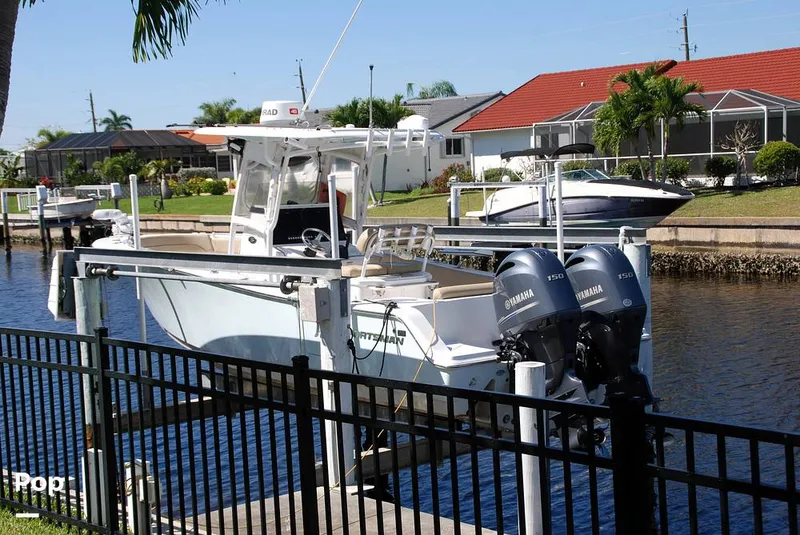
Horsepower varies by size and mission, but Sportsman’s published power options show a clear progression: the Open 212 is offered with single Yamaha 200 to 250 class outboards, while the Heritage 231 commonly runs single 225 to 300 class power, including Yamaha V6 250 and 300 options and comparable Mercury FourStroke choices. In the 25 to 26 foot range, models like the Open 252 use twin Yamaha F150 outboards, and the Open 282 and Heritage 261 list twin Yamaha F200 options, giving strong cruise efficiency with manageable weight. Moving into larger offshore center consoles, the Open 322 offers twin 300 to 450 class outboards from Yamaha and Mercury, and the Open 352 can be configured with triple 300s or high horsepower twins, while the Open 402 is listed with quad Yamaha F350 outboards for serious big water performance.
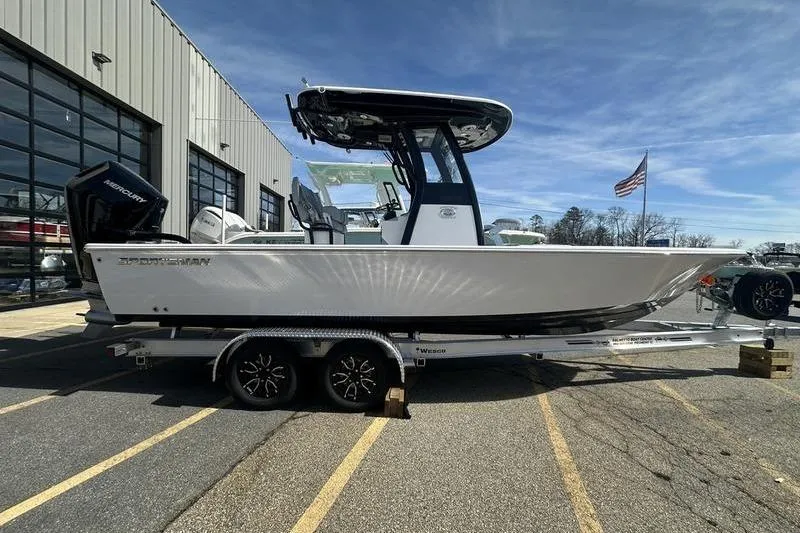
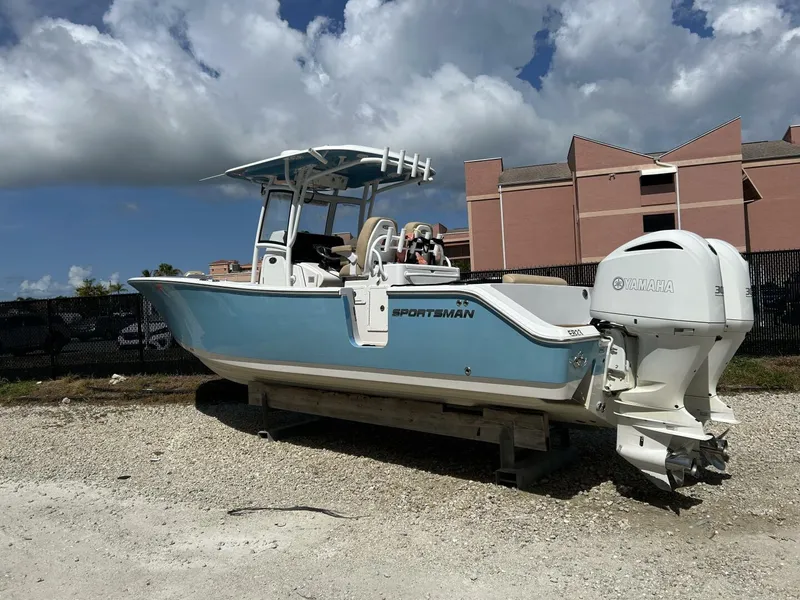
Sportsman is strongly aligned with Yamaha engine packages throughout many models, commonly listing white Yamaha Offshore V6 power with digital controls and integrated steering on its power pages, and it also supports Mercury outboards as an alternate factory-listed option on several larger and mid-size platforms. The emphasis is on four-stroke outboards, including Yamaha V6 4.2L and 4.3L offerings and higher output offshore models, plus Mercury V8 and V10 Verado and FourStroke variants where offered. In practical terms, buyers are generally selecting a factory-supported engine, controls, steering, and rigging package matched to the hull, which helps ensure clean integration for digital throttle and shift systems and power steering features where applicable.
On the water, Sportsman’s outboard strategy unlocks the tech many owners want today, including digital throttle and shift style digital controls, integrated electric steering on certain Yamaha and Mercury packages, and advanced steering and autopilot compatibility on select Yamaha setups, all of which can improve docking confidence and reduce fatigue on long runs. With multi-engine configurations, boaters also gain faster hole shot, better midrange punch, and offshore redundancy, while outboards keep the cockpit layout more open and make routine maintenance like lower unit service and seasonal storage straightforward. Paired with Sportsman’s offshore oriented hulls and features that focus on comfort and control underway, the result is a lineup that targets anglers and families who want strong horsepower, fuel efficiency, and modern digital controls without the complexity and draft penalties of inboard propulsion.
WHY BUY THIS BRAND OVER A COMPETITIVE BRAND?
When you weigh the build quality of Sportsman Boats against other boats in the same fiberglass outboard segment, the clearest differentiator is that Sportsman documents a construction system it applies across the lineup, then backs it with third party safety verification and a defined structural warranty. Sportsman’s SportTech® advanced fabrication process is built around 100% composite construction with no wood in the hull or stringers, paired with a molded, one piece fiberglass stringer grid designed for precise fit and long term durability, and the brand also calls out closed cell foam flotation, GripTex non skid surfaces, and sound dampening materials aimed at a quieter, more comfortable ride. On key model pages, Sportsman further specifies vinyl ester resin in the hull build for durability and resistance to water intrusion, along with deck drainage design that routes deck water overboard through a collector box system, all of which are practical, ownership focused details that matter in real conditions. Just as important, Sportsman states that every model is NMMA Certified, meaning annual third party inspections and compliance with ABYC standards beyond baseline U.S. Coast Guard regulations, and Sportsman points to research that NMMA Certified boats are significantly less likely to be recalled for safety issues, which helps explain why many buyers start their “build quality of Sportsman boats” conversation with the brand’s documented process and certification rather than surface level cosmetics.
Value is where “Why choose Sportsman Boats” often becomes simplest to explain because Sportsman explicitly markets high content, family friendly fishing layouts, and engineered systems that reduce the compromises between offshore capability and everyday usability. Sportsman’s Open Series is positioned by the manufacturer as a family friendly fishing boat concept, combining rod storage, Gemlux hardware, insulated fish boxes and livewells with comfortable seating and sandbar ready conveniences, and Sportsman also highlights features such as Total Access Hatch or Total Access Compartment designs for bilge and systems access to make maintenance more straightforward over the life of the boat. On specific models and catalogs, Sportsman describes proprietary ride control technology through VACS, a first of its kind vessel attitude control system with functions like pitch and roll elimination, auto trim, coordinated turns, and list control, and the brand also promotes Seakeeper Ride integration or standard availability on certain models as a way to improve comfort and stability for the crew. Taken together, this is the manufacturer’s case for Sportsman boats vs competitors in real usage: a boat that is configured from the start for offshore fishing days and for cruising, entertaining, and watersports oriented outings, without forcing owners to immediately add fundamental equipment just to reach the experience the brochure promises.
Sportsman also makes a clear, model specific case for utility plus comfort by leaning into layouts and materials that support both hardcore fishing and relaxed cruising in the same hull. The company’s Heritage line is presented as an example of how seating and storage can be engineered for family use without abandoning fishability, including convertible bow spaces with plush Sileather® upholstery and multiple configurations that can shift between cruising mode, dining mode with a recessed table, and lounging mode with a sunpad arrangement, while keeping storage insulated and secure under the seating. In the Open Series, Sportsman describes open bow layouts and removable bow seating options on certain models so owners can reconfigure for family comfort at anchor and then open up deck space for moving around the boat while fighting a fish, which is a practical way to reduce compromises on a center console that sees mixed duty. For buyers comparing “Sportsman vs other fishing boats” on day to day livability, Sportsman’s own documentation focuses on the combination of stable, comfort oriented ride tech and family seating solutions with the brand’s fishing essentials, effectively positioning many of its boats as true multi mission platforms rather than single purpose rigs.
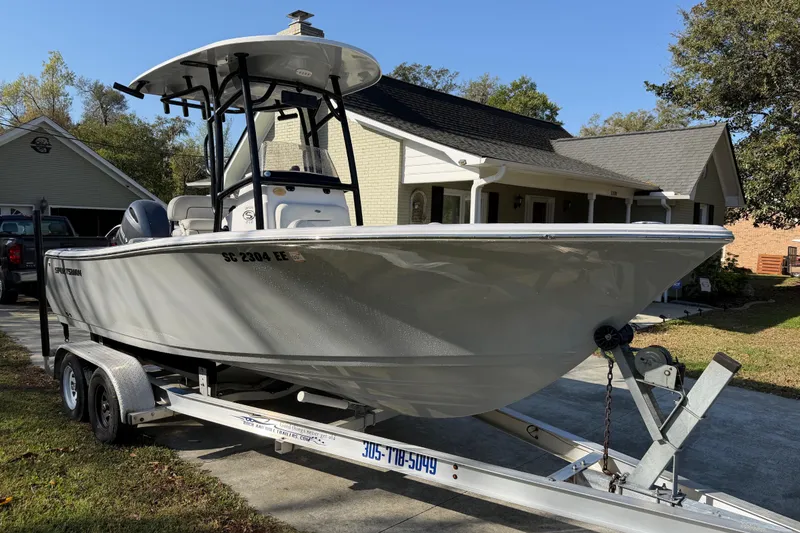
Long term ownership confidence is a core part of the brand’s argument for choosing Sportsman, and Sportsman supports it with specific, official proof points rather than vague claims. Sportsman publishes a limited warranty that includes a ten year hull limited warranty covering structural hull defects for the original purchaser, plus a one year nonstructural limited warranty, and it also states the ten year hull warranty is transferable to a single subsequent titled owner under defined conditions, which can matter for future resale and buyer confidence. On the customer experience side, Sportsman has announced multiple NMMA Customer Satisfaction Index awards based on independently measured customer satisfaction at or above 90 percent, including an announcement that it won the NMMA CSI Award for 2024 for an eighth consecutive year, which directly supports the keyword claim of “customer satisfaction with Sportsman” using an official program and threshold rather than anecdotal reviews. Add Sportsman’s emphasis that all models are NMMA Certified with recurring third party inspections, and the practical case for Why choose Sportsman Boats becomes straightforward: you are buying a boat built on a documented no wood composite construction process, verified against recognized industry safety standards, and backed by a defined warranty and repeatedly recognized CSI customer satisfaction performance, which is a balanced value proposition whether you are cross shopping less expensive boats or more expensive flagship brands.
WHAT IS THE MOST POPULAR MODEL OF THIS BRAND BEING BUILT TODAY?
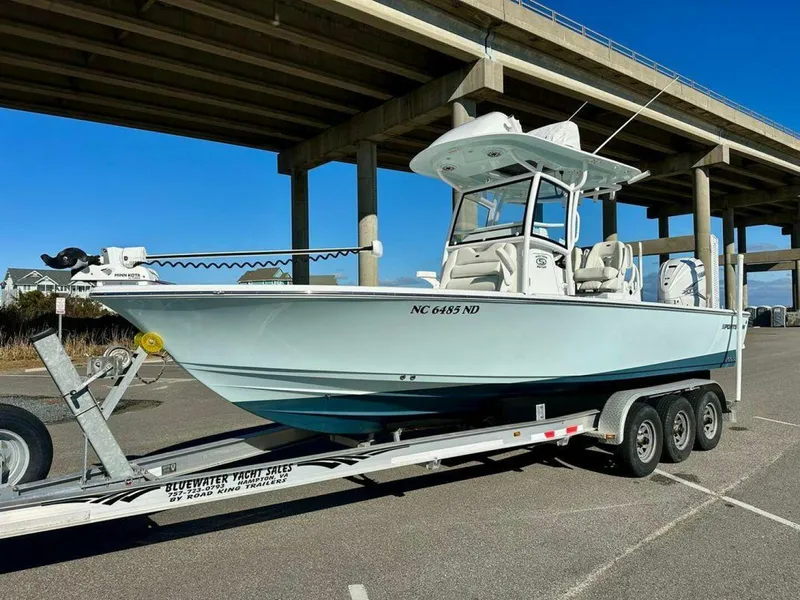
For Sportsman Boats, the Open 232 Center Console, a 23 foot 4 inch center console, appears to be the brand’s closest thing to a current “volume leader” sweet spot model in today’s lineup because it sits in the heart of Sportsman’s Open Series range, is prominently presented as an accessible core model with a dedicated pricing page, and is supported by a full build and option path through Sportsman’s own online tools and model pages. On Sportsman’s official site, the Open 232 is positioned as one of the primary Open models and is offered alongside a complete set of factory pages, including specifications and a model year pricing section, which signals ongoing production focus rather than a limited run or legacy carryover. While Sportsman does not publish a single definitive “most popular” statement on the pages referenced here, the Open 232’s size class is widely marketed by builders as the all around balance point, and Sportsman’s presentation of the model as a key Open Series offering aligns with that role.
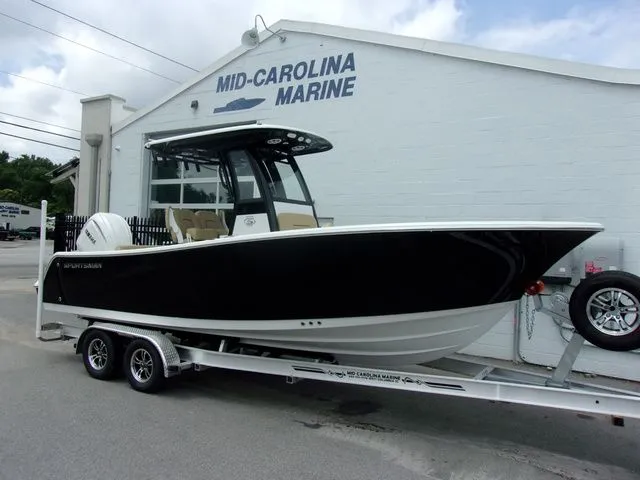
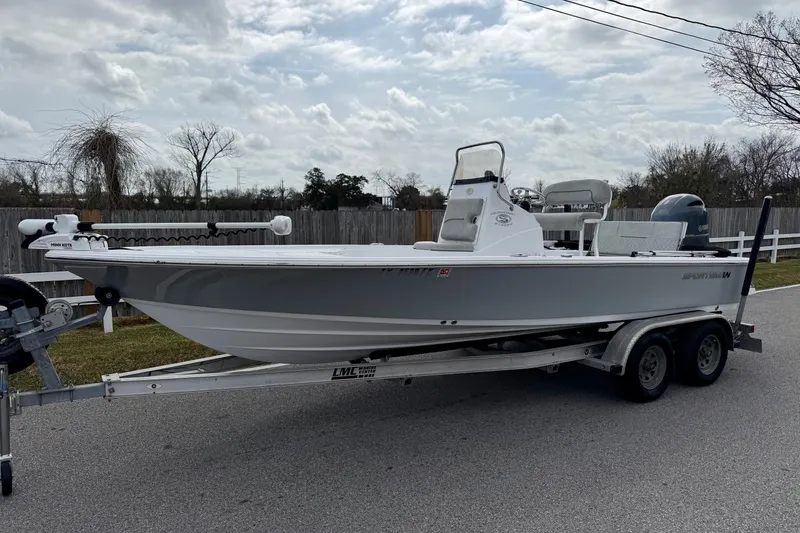
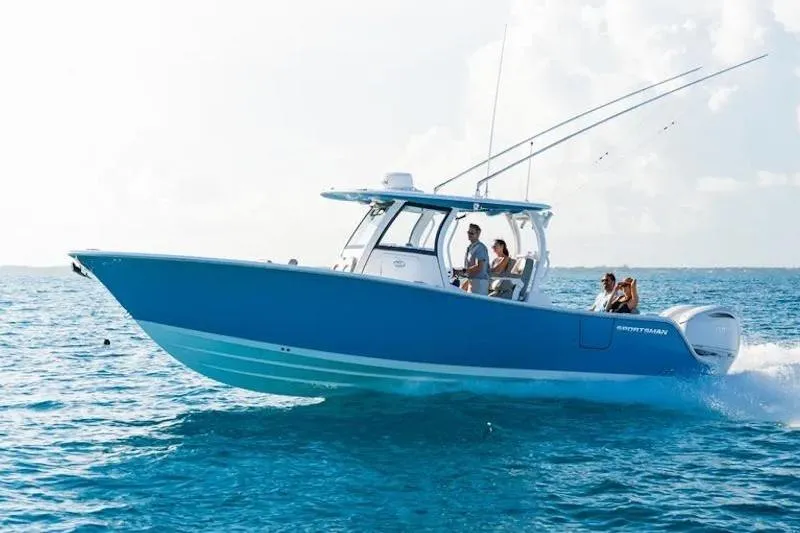
Official specifications for the Sportsman Open 232 list a length of 23 foot 4 inches, an 8 foot 6 inch beam, 16 inches of draft with engines up, 116 gallons of fuel capacity with approximately 106 gallons usable, and a 10 person capacity, with a published maximum horsepower rating of 300 HP. The same factory spec listing also calls out practical, owner facing details that support broad appeal, including a 25 gallon rear livewell, a 48 quart console cooler, and a 15 gallon freshwater tank capacity, which together point to a layout aimed at both fishing days and sandbar or family cruising. For power, Sportsman rates the platform up to 300 horsepower, and third party engine makers publish performance bulletin testing for the Open 232 with a single Yamaha F300 installation, reinforcing that the model is designed around mainstream single outboard packages rather than niche multi engine setups.
In the real market, the Open 232 tends to attract buyers who want one boat that can do a little of everything without moving into the higher cost, larger tow vehicle, and marina footprint that comes with 30 foot class center consoles, and Sportsman’s own standard capacities and onboard systems support that broad use case. A 10 person rating, onboard freshwater capacity, and integrated fishability features like a dedicated livewell and console cooler help the Open 232 function as both a family friendly day boat and a serious inshore to nearshore fishing platform. Just as importantly for mass appeal, Sportsman supports the Open 232 with an extensive option structure and factory configuration workflow through its online Design Studio and model option pages, which encourages buyers to tailor the boat toward cruising comfort, sandbar seating, or a more angling forward setup depending on how they plan to use it.
From an availability and ongoing investment standpoint, Sportsman maintains current model year pricing and specification pages for the Open 232, and it is continuously shown within the active Open model lineup on the manufacturer’s website, which are both strong indicators the boat is a current production priority rather than a discontinued holdover. Sportsman also positions the Open line as a central pillar of its brand presentation, and the Open 232 remains one of the key entry points into that family, with a price and size that typically anchors dealer inventory selection and shopper comparisons. While Sportsman does not provide public factory build slot timing on the pages referenced, the continued presence of the Open 232 across lineup navigation, specifications, pricing, and configurable options demonstrates sustained brand emphasis. Put simply, the Open 232’s 23 foot class center console format has become a signature offering because it blends everyday usability, a meaningful feature set, and straightforward single outboard power in a size that works for the widest segment of buyers.
WHAT IS THE HISTORY OF THIS BOAT BRAND AND COMPANY?
Sportsman Boats traces its modern history to a South Carolina startup era that began in 2011 and moved quickly from concept to production, with the company’s first hull launching in February 2012 after starting with a six person team working out of roughly 20,000 square feet of leased manufacturing space. citeturn0search0 From the start, the brand positioned itself around family friendly saltwater fishing boats, concentrating on center console and bay boat designs intended to blend fishability with comfort and safety for day boating in coastal waters. citeturn2search1turn0search0 As early demand built, Sportsman’s identity became closely tied to rapid scale up in Summerville, South Carolina, where the business began as a startup and then expanded its manufacturing footprint as it added new models and increased production capacity to support growth in the saltwater outboard market. citeturn2search1turn2search7
Through the 2010s, Sportsman evolved from a small leased operation into a dedicated manufacturing campus in Dorchester County, relocating to a larger facility at 113 Isaac Way in Summerville by 2013 and pairing that move with investment aimed at boosting capacity and enabling additional models. citeturn2search7 By mid-decade the company was undertaking substantial physical growth, and by 2016 it had completed a major expansion that included installing a large rooftop solar system as part of an efficiency and sustainability push tied to job growth and long term operating strategy. citeturn2search0 As Sportsman’s product range broadened across center consoles and bay boats, the company also invested in manufacturing systems to support configurable builds at scale, including deploying cloud based ERP and CPQ tools in 2017 with the stated goal of simplifying option driven order entry and reducing errors as volume and complexity increased. citeturn0search0
In the 2020s, Sportsman continued modernizing its boats and its factory operations in tandem, describing its Summerville facility as a large scale plant supporting technologically advanced production and a growing workforce while maintaining its core focus on saltwater fishing platforms. citeturn2search0 In March 2022, the company announced an $8 million expansion in Dorchester County to increase manufacturing capacity, including a new 75,000 square foot climate controlled building intended to bring more small fiberglass parts manufacturing and powder coating capability in house, reinforcing a strategy of vertical integration and throughput improvement to meet sustained market demand. citeturn2search1 On the product side, Sportsman emphasized family friendly center console design and a feature forward approach, and it also advanced electronics standardization partnerships that aligned with the industry’s shift toward integrated digital user experiences onboard, such as the agreement for Garmin Fusion audio packages to become standard fit across its line beginning with model year 2024. citeturn0search1
Recent developments highlight Sportsman’s continued investment in capacity, supplier integration, and brand consistency as it scales a saltwater oriented lineup from its Summerville base, with state and local announcements framing the company as a family owned and operated manufacturer expanding to meet demand while adding jobs and upgrading production infrastructure. citeturn2search1 At the same time, Sportsman’s public facing partnerships underscore a direction centered on delivering a modern, highly integrated on the water experience, using standardized electronics and entertainment packages to reduce complexity for buyers and support seamless control across onboard systems as the model lineup grows. citeturn0search1 Taken together, the record available from official announcements and releases shows a brand built on a fast ramp from first hull in February 2012 into a larger scale South Carolina manufacturing operation, with a heritage defined less by legacy era ownership cycles and more by deliberate capacity expansion, operational systems investment, and an ongoing focus on family friendly saltwater center console and bay boat designs that have become the foundation of Sportsman’s customer trust and forward outlook. citeturn0search0turn2search1
AWARDS AND RECOGNITIONS
Sportsman Boats’ formal recognitions begin with civic and business community honors that documented the company’s early impact in South Carolina. On April 3, 2014, Sportsman Boats was named the 2014 Economic Ambassador for Dorchester County, South Carolina, with founders Tommy Hancock and Dale Martin receiving the recognition during a ceremony at the Governor’s Mansion, presented by the South Carolina Secretary of Commerce. In 2018, the brand’s manufacturing and process discipline earned additional visibility when Sportsman Boats was named a finalist for the Transformation and Operational Excellence Award, a recognition tied to demonstrable results from continuous improvement and operational excellence practices. In recent years, Sportsman’s most prominent, independently administered industry recognition has continued to be tied to ownership experience and after-sale support, culminating most recently in the NMMA Marine Industry Customer Satisfaction Index Award for 2024, announced by Sportsman Boats on February 13, 2025, marking a major, ongoing national benchmark for service performance in the fiberglass outboard boat segment.
Sportsman Boats’ strongest long-running awards record is its performance in the National Marine Manufacturers Association Marine Industry Customer Satisfaction Index program, where the company reports eight consecutive CSI Awards covering model year owners surveyed across eight program years. That streak spans the NMMA CSI Award for 2017, announced February 16, 2018, through the NMMA CSI Award for 2024, announced February 13, 2025, with milestone announcements along the way for the 2019 award as a third consecutive win, the 2020 award as a fourth consecutive win, the 2021 award as a fifth consecutive win, the 2022 award as a sixth consecutive win, and the 2023 award as a seventh consecutive win. In NMMA’s CSI program, manufacturers must survey all eligible new owners during the program period and achieve an independently measured customer satisfaction standard of 90 percent or higher, making the award a direct reflection of customer feedback on the buying and ownership experience. Taken together, this consistency signals a brand reputation built not only on product quality and NMMA certification rigor, but also on disciplined customer support that strengthens loyalty and reinforces buyer confidence over the long term.