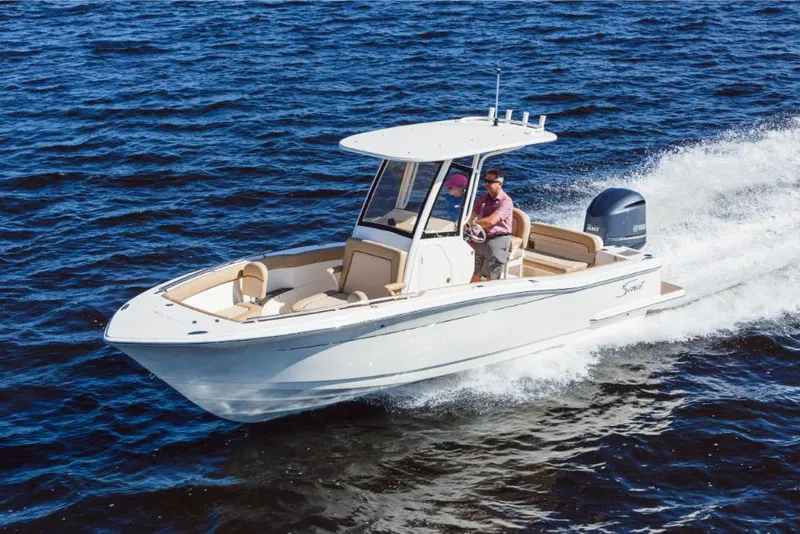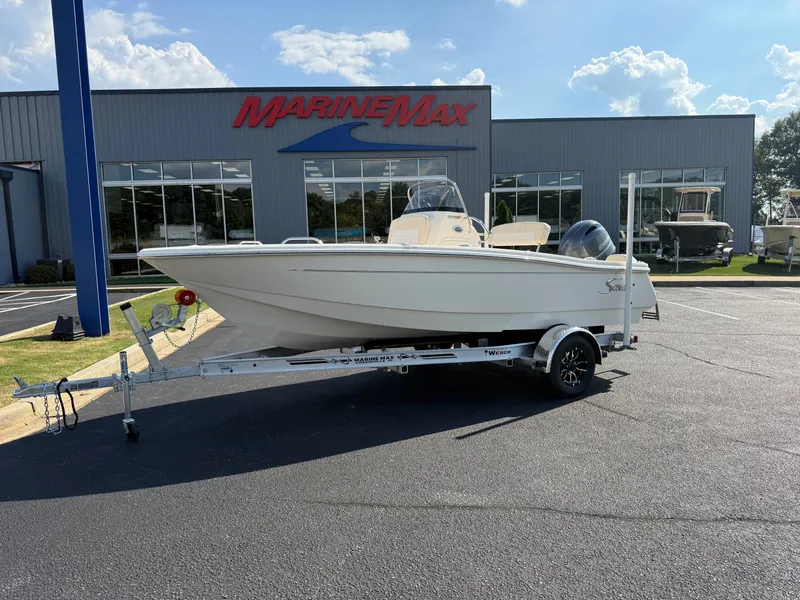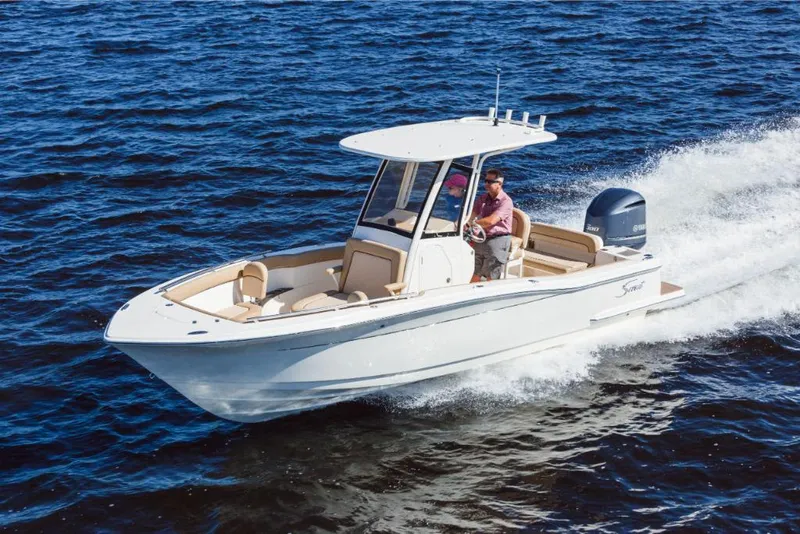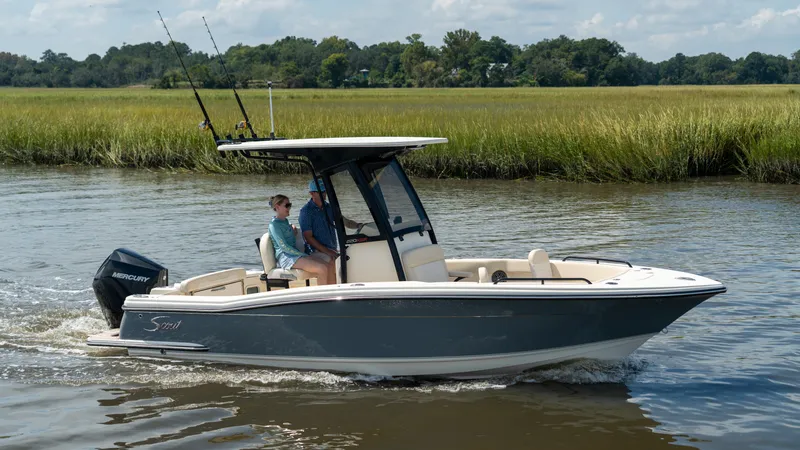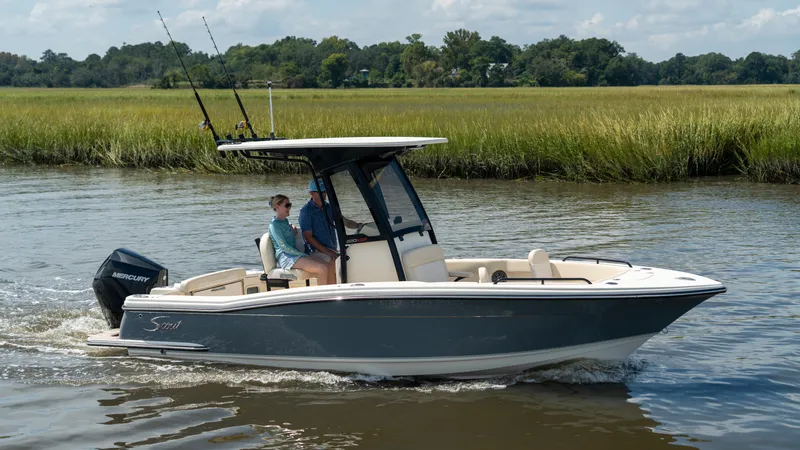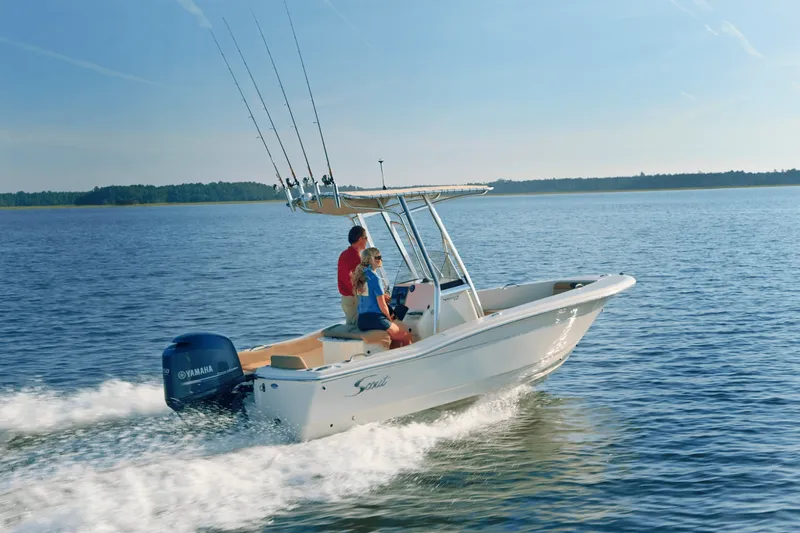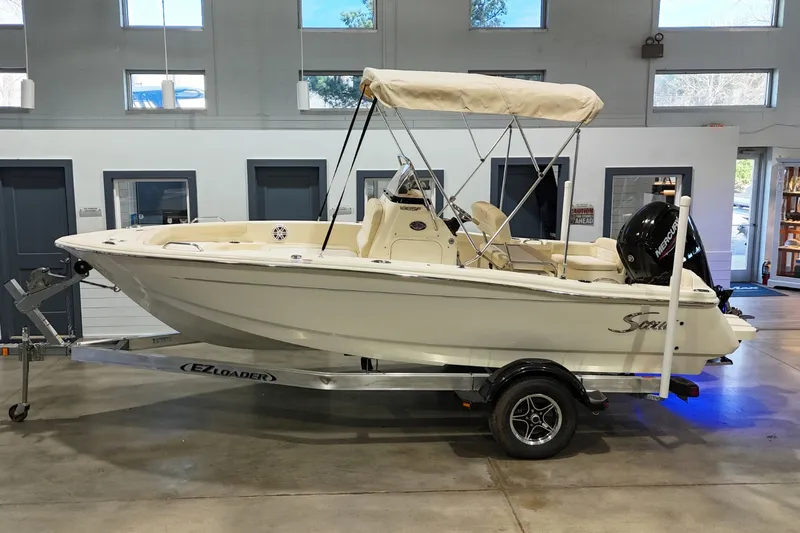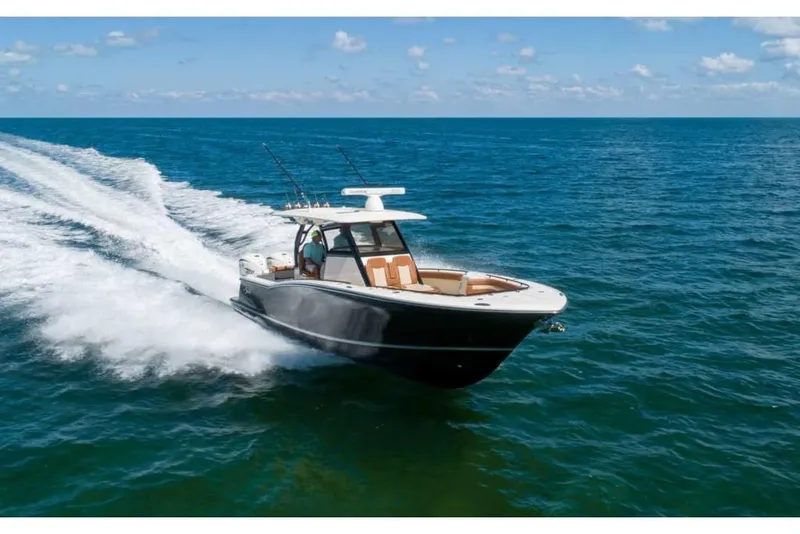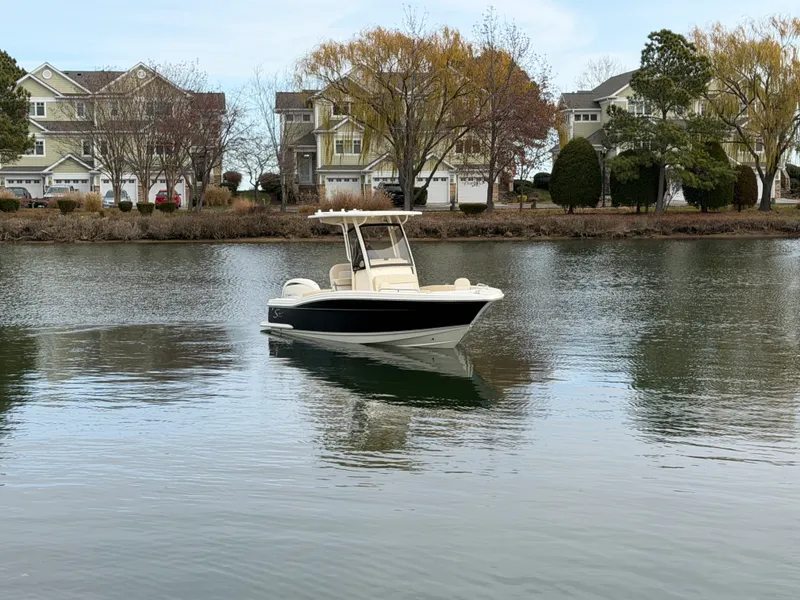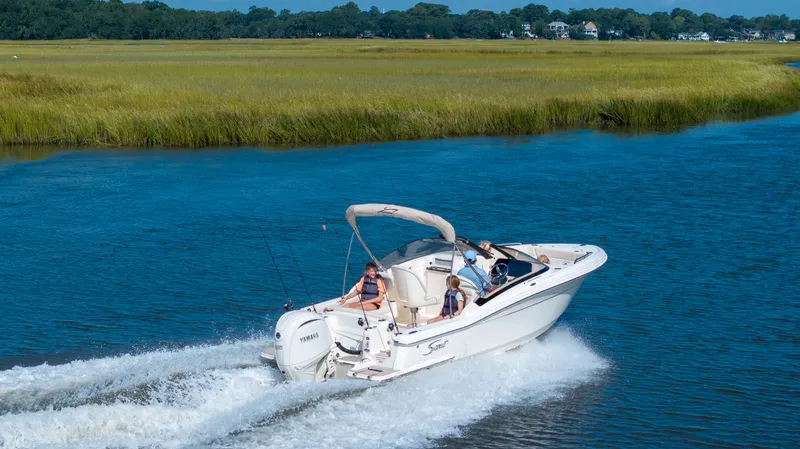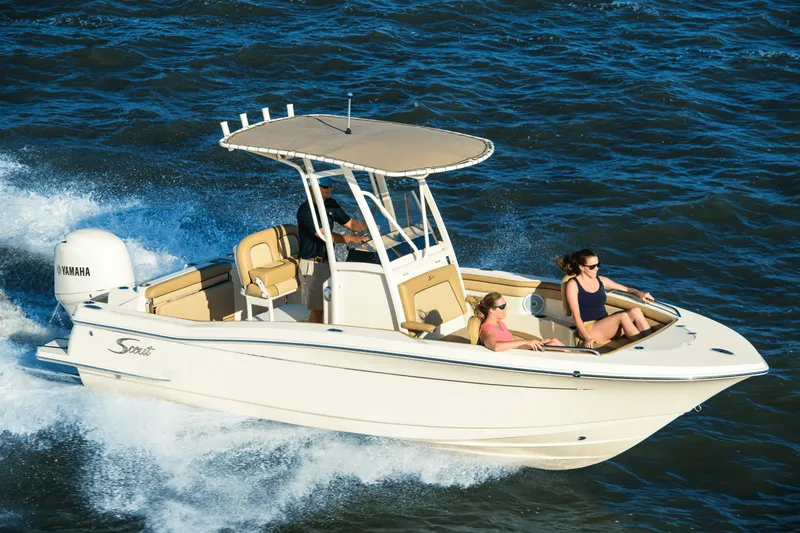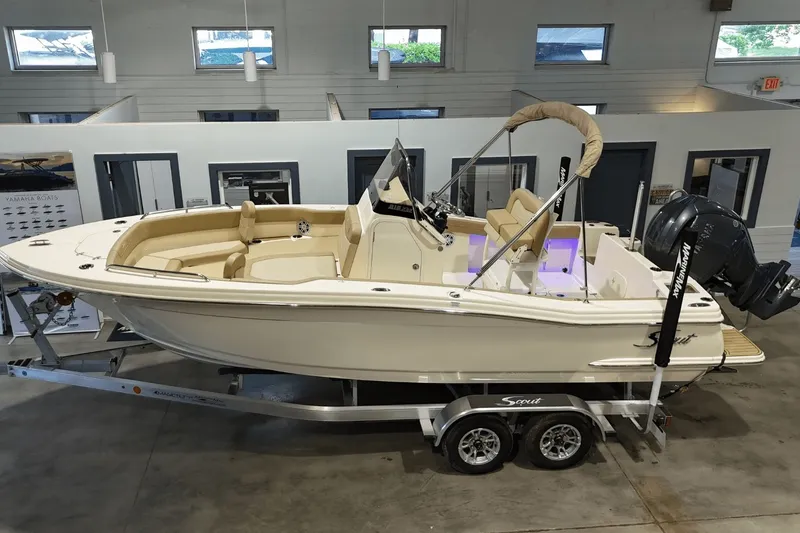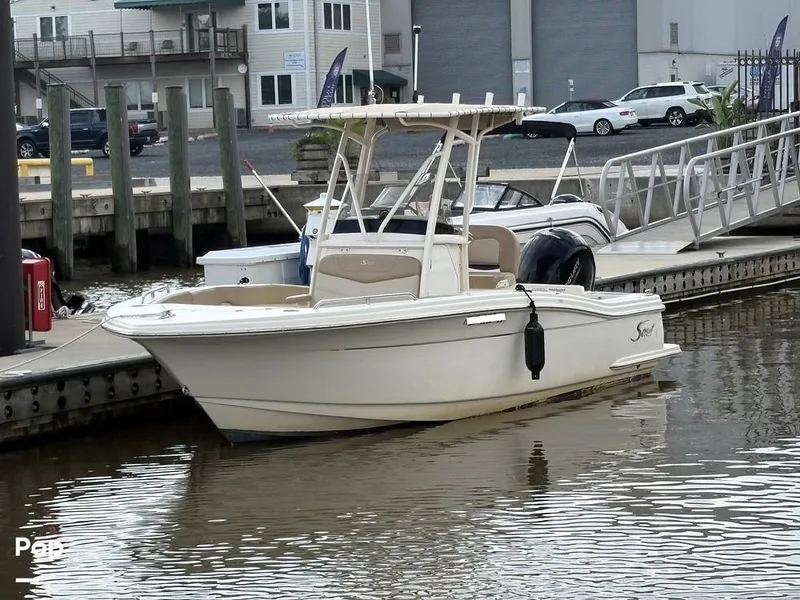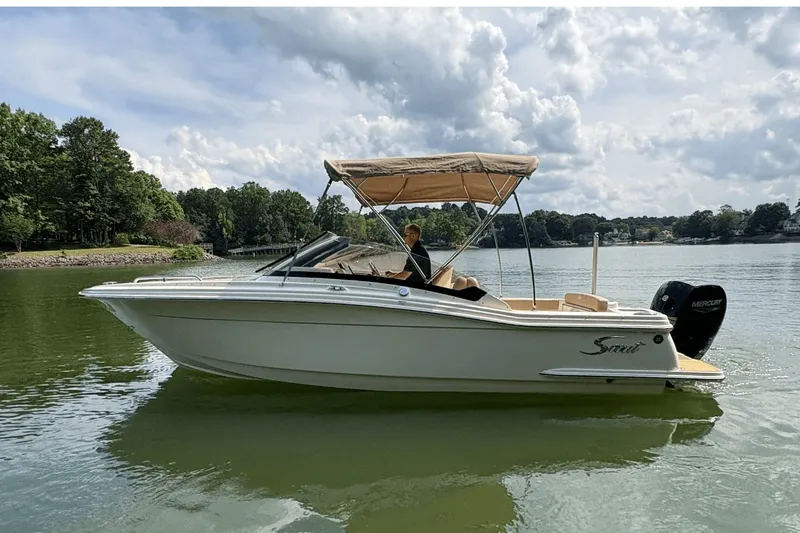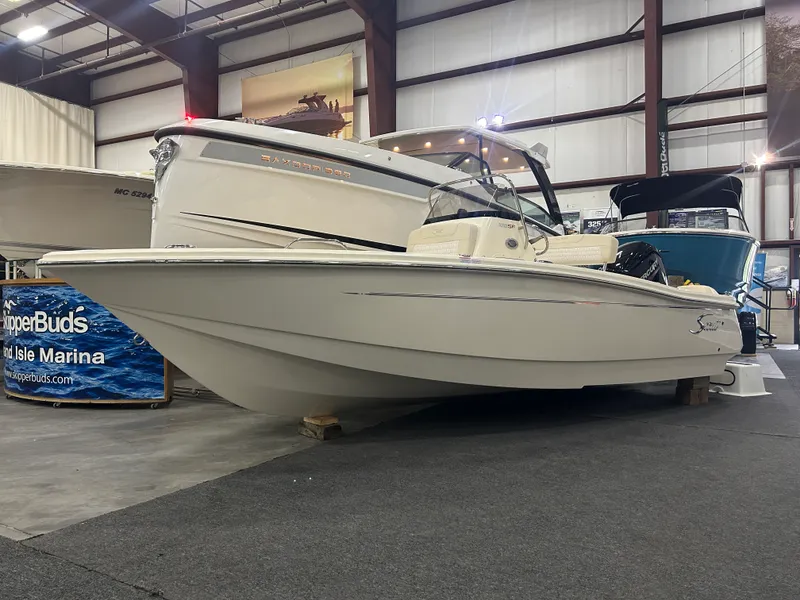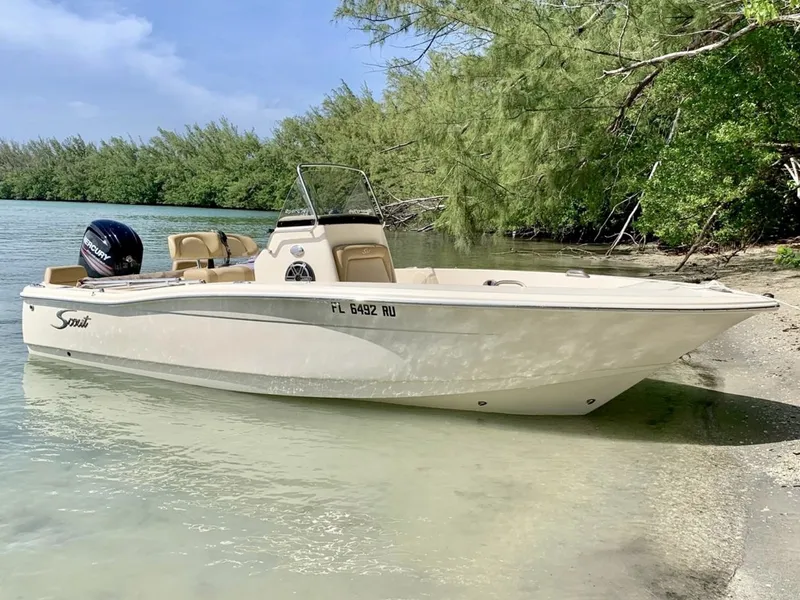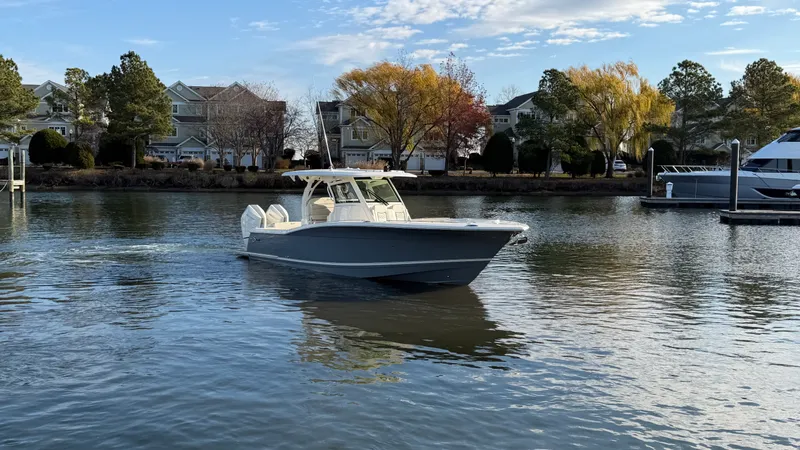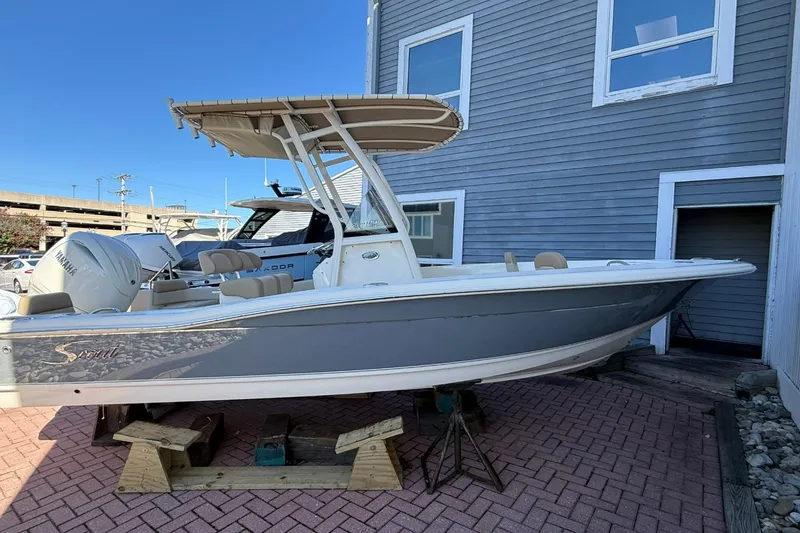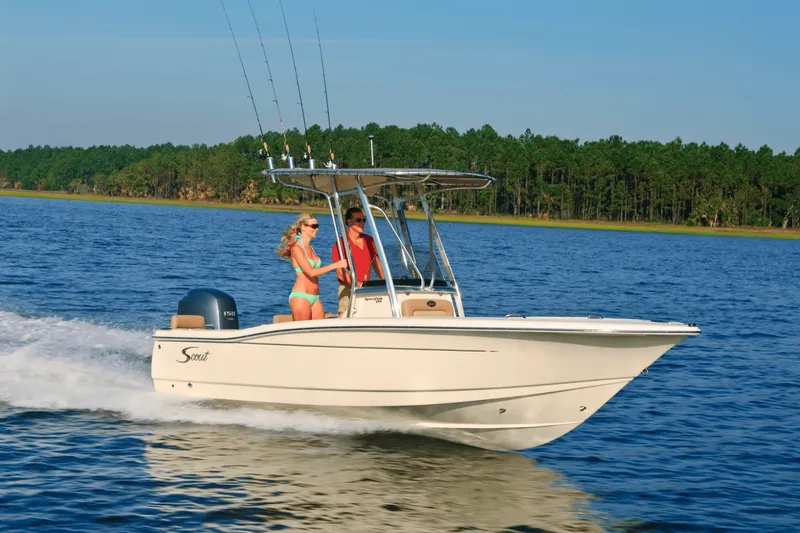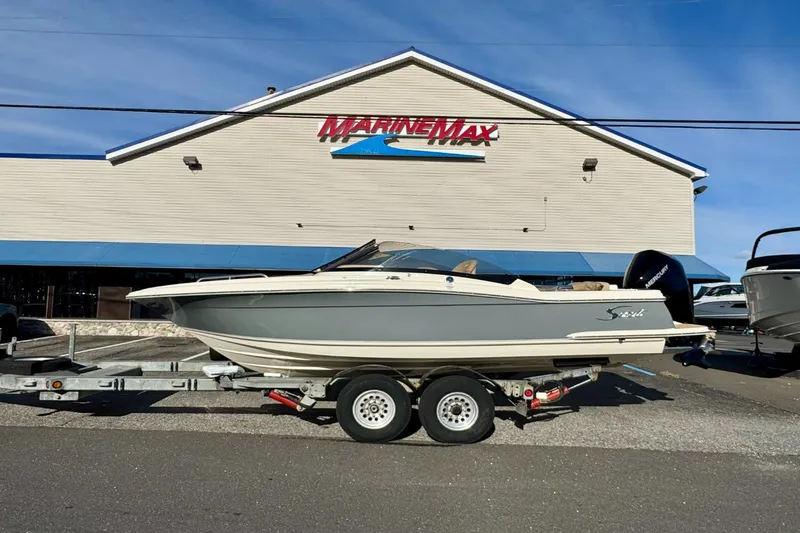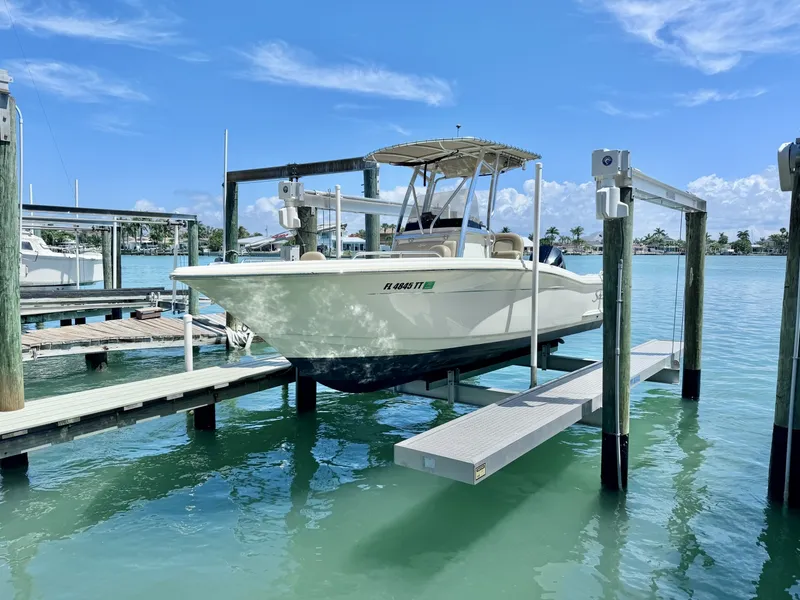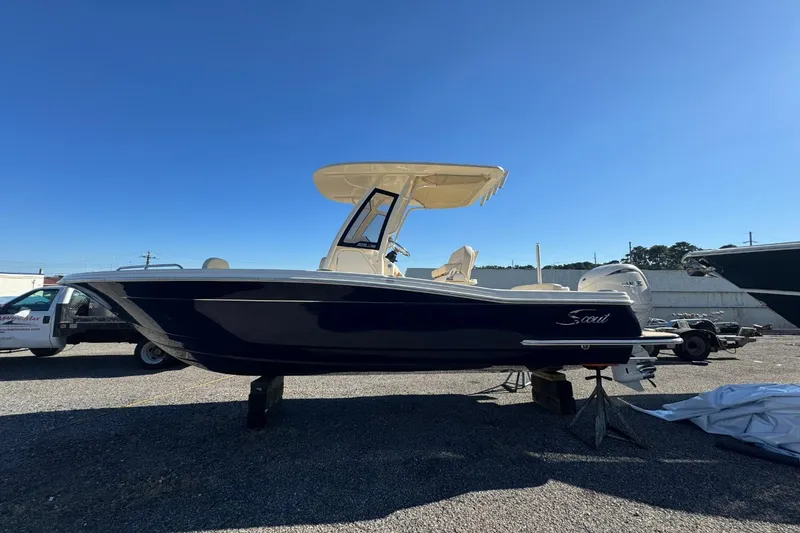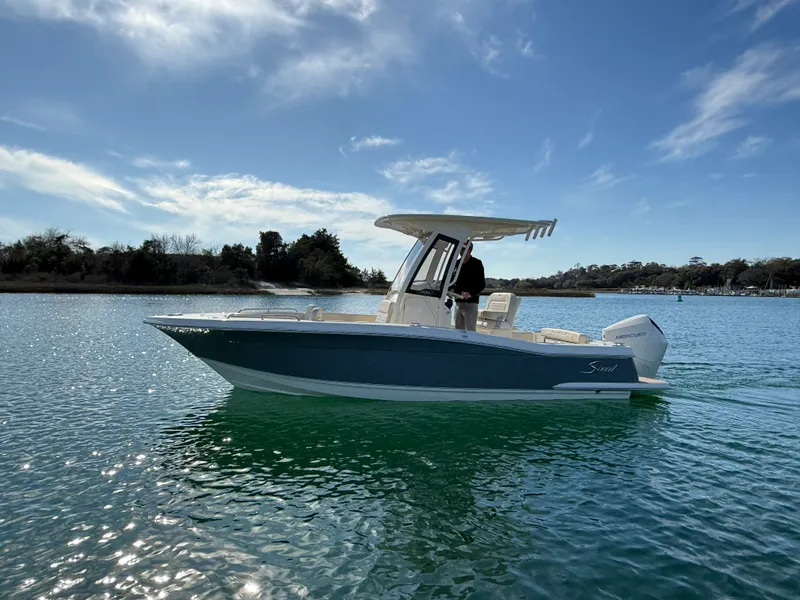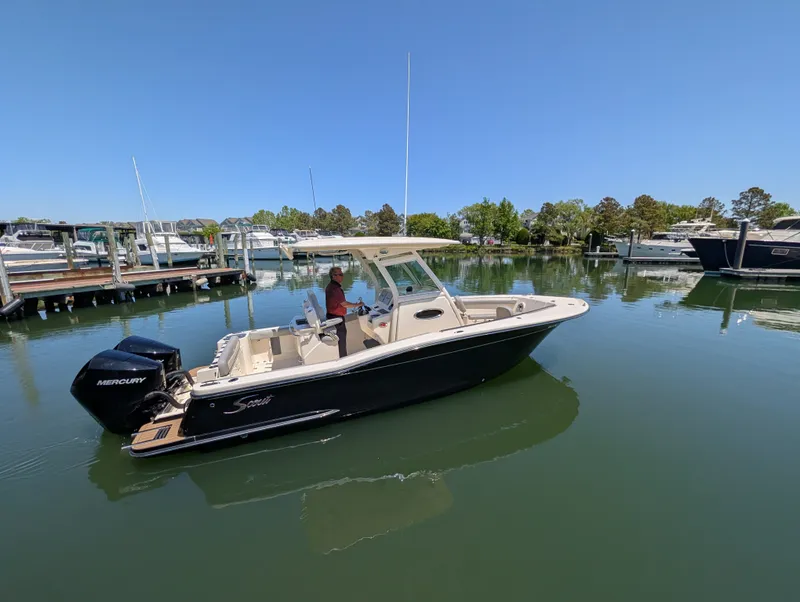
Scout

Filters

Filters

Location

from

Boat Type

Condition

Searching boats for you...

Scout Boats – Technical and Historical Guide


ABOUT THIS BOAT BRAND

Scout Boats is an American boat manufacturer renowned for its luxury center console, bay, and dual console models that blend offshore fishability with refined coastal cruising. Founded in 1989 by Steve Potts in South Carolina following the devastation of Hurricane Hugo, Scout Boats has grown from building a 14-foot high-end fishing skiff into a respected production builder of outboard-powered models ranging roughly from 17 to 67 feet. The company is distinguished by its reverse shoebox hull and deck design, 100% hand-laid fiberglass construction with wood-free, composite coring, and proprietary NuV3 and stepped hull geometries that improve strength-to-weight, efficiency, and ride quality. Through continual investment in epoxy-infusion, carbon fiber/e-glass structures and features like patented glass T-top enclosures and articulating rocket launchers, Scout Boats has positioned itself in the upper tier of the saltwater fishing and family dayboat market, widely regarded among serious coastal owners and dealers as a technology-forward, high-fit-and-finish brand with strong resale value and a loyal owner base in the U.S. marine industry.

Specializing in outboard-powered saltwater boats for inshore and offshore use, Scout Boats targets serious offshore anglers, coastal family boaters, and owner-operators seeking premium center console fishing boats and multipurpose sportfishing vessels. The lineup centers on flagship LXF luxury center consoles, XSF/Sportfish center consoles, Dorado dual consoles, and XS/XSS/XSB bay boats, with standout models such as the 251 XSS hybrid bay/offshore boat, the 281 XSS flagship bay boat, and larger blue water LXF models like the 400 LXF and 530 LXF. Across these series, Scout integrates deep-V and stepped offshore-capable hulls, skinny-draft bay hulls for backwater access, extensive livewell and insulated fish box capacity, large forward and aft casting decks, abundant rod storage, and advanced digital helm electronics with options for Seakeeper gyro stabilization and C-Zone digital switching. Construction details such as epoxy-infused carbon fiber/e-glass laminates on larger models, strata-mount engine systems, premium upholstery, finished bilges and hatches, and thoughtful family amenities make Scout Boats a preferred choice for buyers who want a single platform that can handle tournament fishing, deep-sea runs, and comfortable family cruising on coastal and nearshore waters.

WHAT MAKES THIS BOAT BRAND SPECIAL?

Scout Boats has built its reputation around cutting-edge, luxury fishing and family boats that combine striking style with serious offshore capability. From their epoxy-infused, carbon-reinforced hulls and fuel-efficient NuV3 and Stepped Hull technology to their vacuum-infused construction that delivers exceptional strength-to-weight ratios, Scout Boats are engineered to run faster, flatter, and drier in a wide range of sea conditions. The brand’s signature Carolina-inspired bow flare, high freeboard, and meticulously balanced hull geometry provide a soft, confident ride while keeping spray off the deck, which coastal and offshore anglers appreciate on long runs. Integrated hardtops, intelligent helm layouts, in-deck fish boxes, livewells, convertible seating, and family-friendly amenities like sun lounges and swim platforms make each model in the Scout Boats lineup equally at home trolling offshore, cruising the Intracoastal, or spending the day on a sandbar.
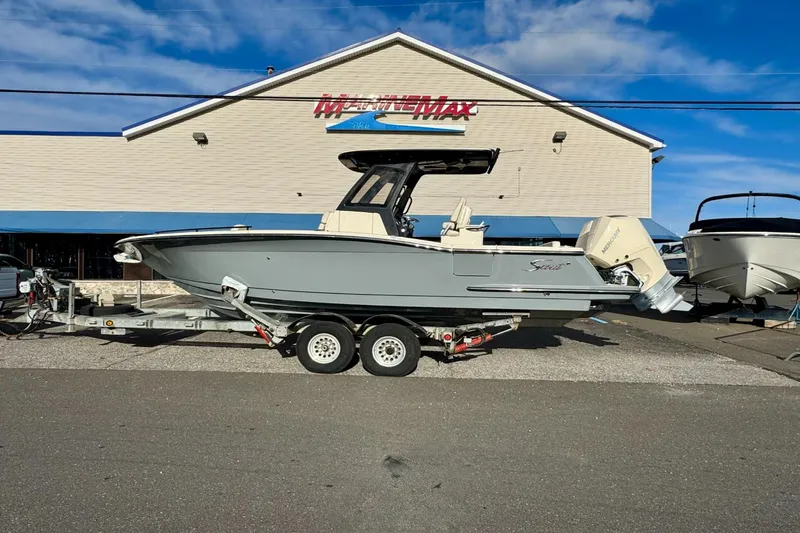
Built in state-of-the-art facilities in Summerville, South Carolina, Scout Boats leverages a highly skilled workforce with deep roots in boatbuilding and a culture of craftsmanship that shows in every detail, from hand-finished gelcoat to precision-fit hardware. The company specifies premium materials throughout, including composite stringer systems, durable vinylester resins, advanced corrosion-resistant metals, and top-tier marine components that meet or exceed ABYC and NMMA certification standards. Scout Boats backs its hulls with strong structural warranties and designs each model to be serviceable and reliable over the long term, reinforcing the brand’s focus on ownership experience. Tight tolerances, quiet rides with minimal rattles, refined upholstery, and thoughtful storage solutions are frequently mentioned in owner feedback, positioning Scout Boats as a premium choice for buyers who want a sophisticated, high-performance fishing boat that doubles as an upscale family dayboat.
WHAT DIFFERENT TYPES OF BOATS DOES THIS BOAT BRAND BUILD?

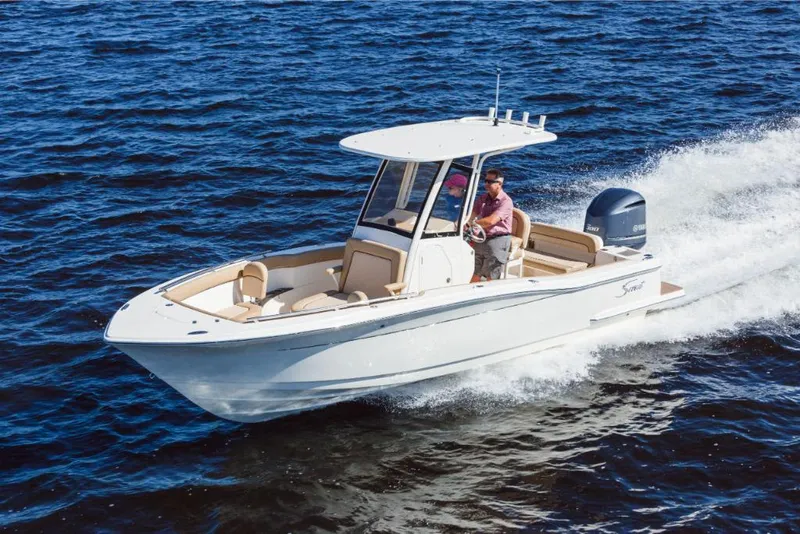
Scout Boats is a respected builder of premium fishing and family boats, known across the industry for sleek design, advanced construction, and efficient performance. The brand’s lineup spans from agile smaller center consoles ideal for inshore angling and day cruising up through larger, offshore‑capable models designed for extended runs and bluewater fishing adventures. Primarily focused on outboard power, Scout integrates modern hull designs that deliver a dry, stable ride and excellent fuel economy while maintaining strong speed and handling characteristics. Across the range, models emphasize smart deck layouts, generous seating, and ample fishing features so owners can confidently split time between serious angling and comfortable family boating. Below are the types of boats and models Scout Boats builds, along with their key characteristics and uses:

(Bay Boat Series) Scout’s XSS/XSB bay boat family blends skinny‑water capability with offshore toughness. Models such as the 231 XSB, 261 XSS, and flagship 281 XSS carry a modified‑V/deep‑V bay hull with shallow draft, large fore and aft casting decks, and low, angler‑friendly gunwales. The 231 XSB is the compact inshore/nearshore option, while the 261 XSS steps up to 26'0" LOA on an 8'6" beam with 90 gallons of fuel, a 17" draft, and up to 400 hp, giving serious crossover range and speed. At the top, the 281 XSS stretches 28'1" with a 9'4" beam, 126‑gallon fuel capacity, about 19" draft, and a 600‑hp rating, positioning it as a true inshore/offshore hybrid. Across the line, standard equipment focuses on fishability—multiple aerated livewells, in‑deck fish boxes, extensive rod storage, and elevated casting platforms—while options like carbon‑epoxy hardtops, trolling motors, Power‑Poles, and advanced electronics let anglers tailor the boats for redfish, trout, snook, and even near‑bluewater pelagics.

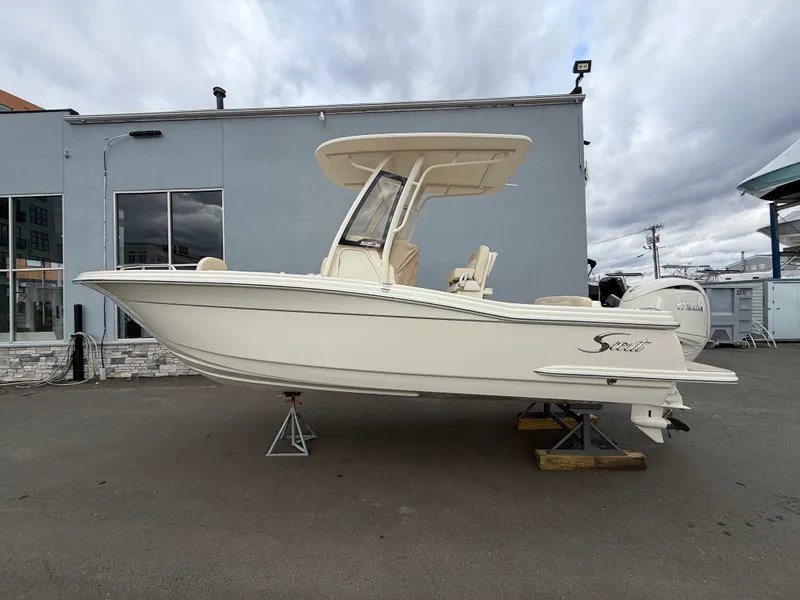
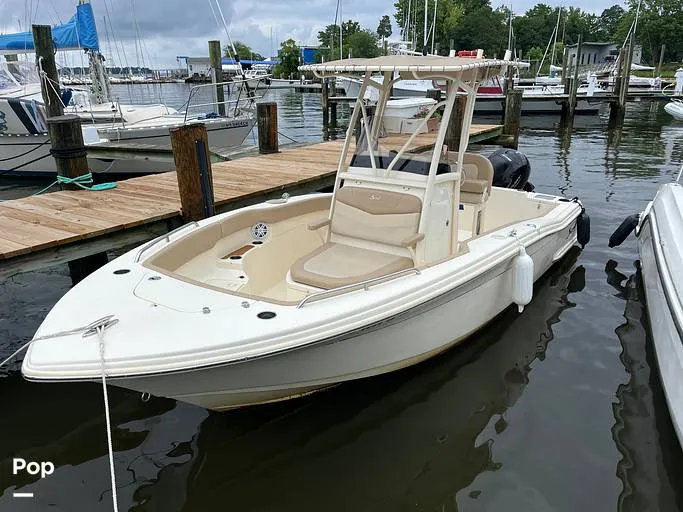
(XSF / Sportfish Series) Scout’s Sportfish/XSF series covers the brand’s smaller center‑console all‑rounders, aimed at owners who split time between fishing and family cruising. Entry models like the 175 Sportfish (17'5" LOA, 7'5" beam, 28‑gallon fuel, max 115 hp) give access to creeks, rivers, and inshore bays with a 10" draft while still packing a large bow casting platform, insulated fish box, aerated livewell, and generous rod storage. The 195 Sportfish moves up to 19'5" LOA on an 8'6" beam, with 43 gallons of fuel, a 13" draft, and 150‑hp max power, adding a standard swim platform, leaning‑post livewell, console cooler seat, and optional T‑top or bimini. These deep‑V/modified‑V outboard‑powered center consoles are designed as versatile inshore/nearshore workhorses: they offer enough freeboard and beam for choppy coastal conditions while remaining easily trailerable and fuel‑efficient. Layouts emphasize 360‑degree fishability with open cockpits and in‑deck storage, but can be optioned with forward seating, ski‑tow hardware, and audio upgrades for family day‑boat duty.

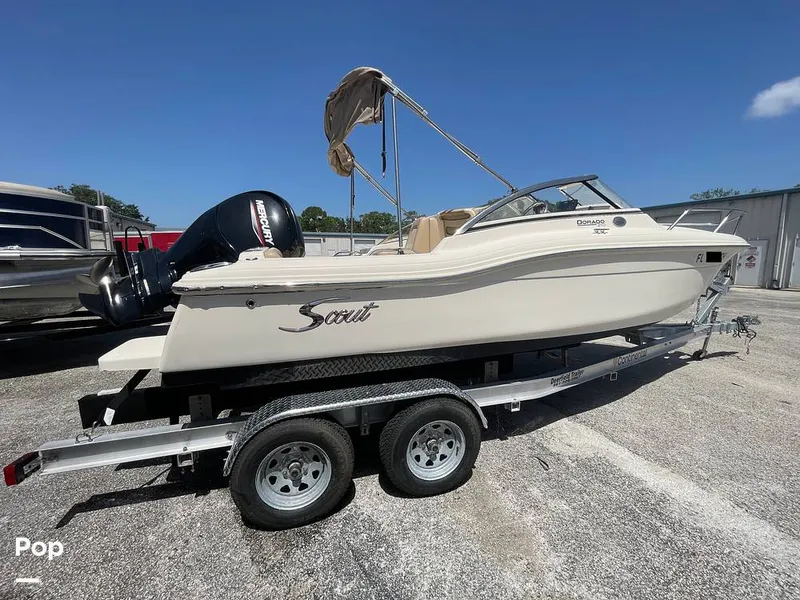
(Dorado Series) The Dorado line is Scout’s dual‑console offering for buyers who want one boat to handle family cruising, watersports, and serious coastal fishing. At the compact end, the 175 Sport Dorado (17'5" LOA, 7'5" beam, 28‑gallon fuel, 10" draft, 115‑hp max) provides a trailer‑friendly platform with bow seating, full bow rail, livewell, rod holders, stereo, and an aft swim platform with ladder. Stepping up, the 195 Sport Dorado (19'5" LOA, 8'6" beam, 43‑gallon fuel, 13" draft, 150‑hp max) adds more cockpit volume, under‑gunnel rod storage, recirculating baitwell, ski‑tow options, and hidden bow storage. Mid‑range models like the 215 Dorado (21'6" LOA, 8'6" beam, 82‑gallon fuel, 150‑hp max) and 240 Dorado (23'8" LOA, 8'6" beam, 100‑gallon fuel, 300‑hp max) introduce features such as frameless wraparound windshields, dual captain’s chairs, full‑beam transom swim platforms, convertible aft seating, entertainment stations, and hardtop options. The 255 and 275 Dorado sit at the top end with about 25–27 feet of length, broader beams, larger fuel tanks, and higher horsepower ratings; they incorporate innovations like electrically actuated aft lounge seating and expanded fishing and entertaining amenities, making them true coastal crossover family boats.

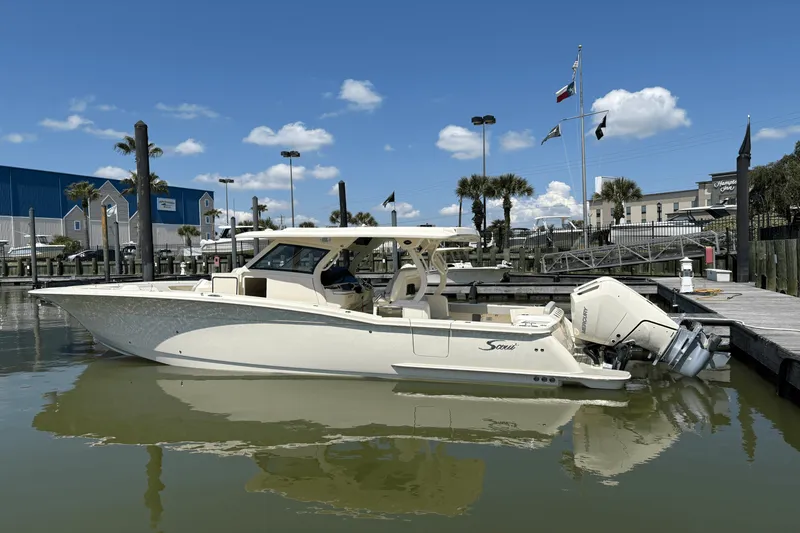
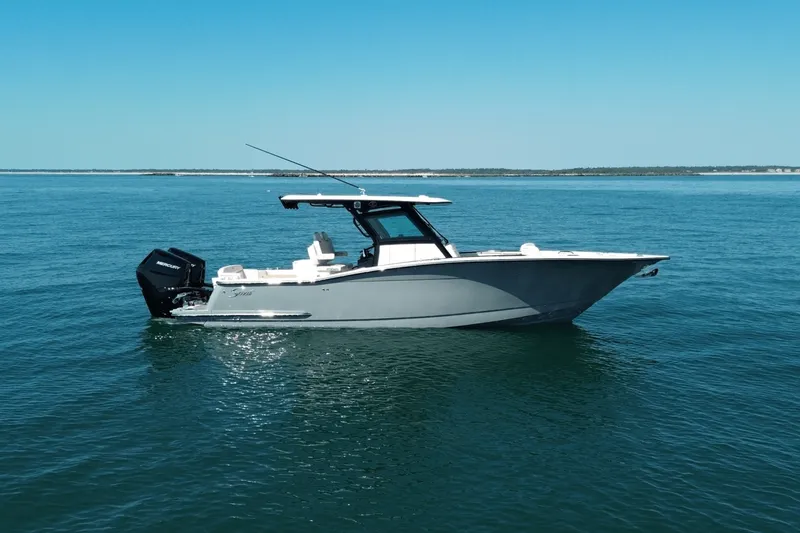
(LXF / LXS / LXZ Series) Scout’s flagship offshore lineup is split among LXF (Luxury Center Console), LXS (Luxury Sport), and LXZ (Luxury Crossover) models. LXF center consoles span roughly the mid‑20‑foot range into the 50‑plus‑foot class (examples include 260, 350, 400, 420, and 530 LXF), all using deep‑V, carbon‑reinforced hulls, generous beams, and high freeboard for blue‑water security. These models pair massive fishing cockpits—multiple livewells, huge insulated fish boxes, tackle centers, and outrigger/tower options—with yacht‑style lounges, air‑conditioned cabins or console berths, high‑end galley modules, and advanced helm electronics. The 350 LXZ around 35 feet LOA carries a roughly 10'‑plus beam, triple outboards totaling 900–1200+ hp, substantial fuel capacity in the 250–300+ gallon range, and an enclosed/partially enclosed helm deck feeding into a well‑appointed cabin, positioning it as a luxury day yacht and weekender. At the top of the brand, the 530 LXF (about 53') and 670 LXS (around 67') move firmly into outboard‑powered yacht territory with quad or higher‑count outboard installations, beams stretching well beyond 14 feet, gyro stabilization, complex electrical and hotel systems, and multiple staterooms. Across all LXF/LXS/LXZ boats, the emphasis is on combining tournament‑ready sportfishing capability with premium finishes, advanced composite construction, and sophisticated social/entertaining layouts.

HOW ARE THESE BOATS BUILT?

Scout Boats builds every hull using 100 percent hand-laid fiberglass with no wood, integrating composite stringer grids and transoms to deliver a rigid, rot-free structure. Hulls across the lineup utilize advanced running surfaces such as NuV3, Air Assist and Scout Stepped Hull Technology, with premium ISO/NPG marine gelcoat applied in the mold followed by a vinyl ester resin barrier coat to resist osmotic blistering, then structural laminates of biaxial and stitched E-glass fabrics. On larger LXF and LXS models, Scout incorporates epoxy infusion and, in select models, carbon fiber and E-glass hybrids to achieve exceptional strength-to-weight ratios and Class A finishes. A fully engineered fiberglass stringer system is chemically bonded and glassed to the hull to create a one-piece monocoque structure, with additional reinforcements around high-load areas such as the transom, engine mounts, T-top bases and hull corners. Closed-cell foam flotation is pressure injected into voids within the stringer grid and key compartments to enhance buoyancy, sound dampening and impact resistance while maintaining compliance with USCG flotation requirements. Scout’s reverse shoebox hull-to-deck joint mechanically fastens the deck cap over the hull flange and then chemically bonds and seals the perimeter for superior stiffness and water integrity compared to typical outward-flange joints. Throughout the structure, lamination follows a precise laminate schedule to control hull thickness and weight, reduce print-through and deliver consistent performance that meets or exceeds applicable ABYC and NMMA construction and systems standards.

Above the hull, Scout specifies robust hardware and systems that match the strength of the composite structure, including 316L stainless steel cleats, grab rails and rod holders, powder-coated aluminum structures and marine-anodized hardware designed for long-term corrosion resistance in saltwater. Electrical systems are rigged to ABYC standards with tinned marine-grade copper wiring, heat-shrink terminals, properly supported harnesses, ignition-protected components in fuel and battery spaces, LED lighting throughout and digital switching on many models, while plumbing systems use reinforced marine hose, double-clamped fittings, high-capacity bilge pumps and pressure-tested livewell and washdown circuits. Upholstery features UV-stable, mildew-resistant marine vinyls over multi-density, quick-drain foam and composite seat bases, complemented by molded non-skid decks and finished bilges that reflect the same attention to detail as topside surfaces. Scout leverages modern manufacturing technology including CAD/CAM design, CNC-cut plugs and molds, precision-cut fiberglass kits and in-house tooling, combined with hand-laid laminates, vacuum bagging and epoxy infusion on select models to control fiber orientation and resin-to-glass ratios. Quality control includes detailed checklists at every station, hull and deck dimensional verification, laminate thickness and weight checks, rigging audits and on-water sea trials to validate performance, safety and systems operation before delivery. Compared with typical industry practices that may rely on chopper guns or partial wood construction, Scout’s all-composite, hand-laid and infused approach delivers lighter, stronger and more efficient boats that are engineered for offshore durability and long-term resale value. This build philosophy underpins Scout’s structural and component warranties, which are supported by the brand’s emphasis on conservative engineering margins, safety-focused design and continuous refinement of construction methods to keep Scout boats at the leading edge of premium marine manufacturing. 

WHERE ARE THESE BOATS BUILT?

Scout Boats are built exclusively in the United States at the company’s integrated manufacturing headquarters campus in Summerville, Dorchester County, South Carolina, where all Scout center console, dual console, bay boat and luxury yacht models are designed and produced under one roof. Independently owned and led by founder and CEO Steve Potts, Scout operates multiple dedicated production plants on this site, including large composite manufacturing halls and product development facilities that support its full model range from 17 to over 60 feet. The Summerville facility has grown to more than 350,000 square feet of combined manufacturing, engineering and office space across a roughly 36 to 40 acre campus as new plants have been added to support flagship models like the 530 LXF and 67 LX series. Across these buildings Scout employs a skilled workforce that has expanded from a few hundred craftspeople to well over 400 team members, with current expansion projects targeting approximately 600 employees on site to support global demand for the brand’s boats.

Scout began production in Summerville in 1989 when Steve Potts launched the brand in a modest facility and then steadily relocated and consolidated operations into a purpose built manufacturing campus along U.S. Highway 78 as volumes and model sizes increased. Early growth led to the development of multiple plants on the site, each organized around specific production functions, with lamination, hull and deck molding, small parts, assembly and final rigging arranged in sequential manufacturing lines so hulls move efficiently from composite layup through systems installation and sea trial preparation. In 2014 the company announced a major expansion that added roughly 30,000 square feet to an existing 182,000 square foot plant to increase composite parts production for new LXF and Dorado series models, followed in 2017 by construction of Plant D, a 120,000 square foot facility dedicated to the 530 LXF and other large offshore models, which brought the campus to more than 350,000 square feet of production space. Subsequent investments have included a 21,000 square foot product development and engineering building completed around 2021 and a further headquarters and yacht division expansion program launched in 2023 that will add tens of thousands of square feet for component manufacturing and support the new 67 LX series. The Summerville location offers significant geographic advantages for production and logistics because it sits near Charleston’s deep water port, interstate highway connections and a strong regional base of marine, composite and advanced manufacturing talent, allowing Scout to keep virtually all key processes in house while still shipping finished boats efficiently to dealers around the world.

Quality control and innovation are central to Scout’s manufacturing operations in Summerville, where each boat follows a documented inspection protocol from the initial gelcoat application and composite layup through stringer bonding, deck and hull marriage, electrical and mechanical installation, cosmetic finishing and final water testing. The company applies advanced composite manufacturing techniques such as vacuum infusion and light resin transfer molding for many structural parts to improve strength to weight ratios and consistency, with in process checks of resin content, laminate schedules and bonding integrity carried out by trained technicians. Dedicated quality teams monitor every production line, recording measurements and system tests at defined stations so issues are corrected before a hull advances, and finished boats are function tested on water with detailed checklists covering engines, electronics, steering, plumbing and structural performance before shipment. The standalone product development and engineering facility on the same campus allows designers and process engineers to develop new hulls, tooling and manufacturing methods side by side with the plants, then transfer those innovations directly into serial production, shortening development cycles and ensuring that materials, assembly methods and rigging practices remain standardized across all Scout models. Because every Scout boat is built and tested at this single headquarters facility, the brand can maintain tight control over workmanship, component specifications and continuous improvement, giving customers consistent quality regardless of model size or configuration.

All Scout Boats are built in this single, continuously expanding manufacturing campus in Summerville, South Carolina, which keeps the brand’s production, engineering and corporate leadership tightly integrated in one U.S. location. The company’s growing team of skilled boatbuilders, laminators, engineers and technicians work in modern, purpose designed plants that incorporate advanced composite processes and organized production flow to support both high volume models and flagship luxury yachts. By retaining domestic manufacturing and concentrating every Scout hull within the same facility, the brand reinforces its commitment to craftsmanship, quality control and long term investment in its South Carolina production base.

WHAT IS THE BIGGEST BOAT OF THIS BRAND BUILT TODAY?

The biggest boat built by Scout Boats today is the Scout 670 LXS, Scout’s premier flagship and the largest Scout model ever produced. Officially unveiled in early 2025 and part of the 67 LX Series, the Scout 670 LXS measures 66 feet 9 inches in length overall with a 16 foot 2 inch beam, riding on an advanced twin stepped deep V hull designed in collaboration with renowned superyacht studio Harrison Eidsgaard. This outboard powered sportfishing yacht is offered with four or five Mercury Verado V12 600 horsepower engines, for a maximum rated output of 3,000 horsepower. With the quint outboard configuration, the Scout 670 LXS delivers a top speed of about 60 miles per hour and a fast cruising speed near 40 miles per hour, supported by a massive 1,500 gallon fuel capacity that yields a range of roughly 500 miles for extended offshore runs. As Scout’s flagship center console style luxury sportfish, the 670 LXS combines cutting edge performance, carbon fiber and E glass composite construction, and serious bluewater capability in the largest Scout Boats model currently in production.

The Scout 670 LXS is purpose built as a luxury offshore center console sportfishing yacht and long range cruising platform, blending serious tournament grade fishability with superyacht level comfort. As Scout’s flagship, the 670 LXS features an expansive aft cockpit with multiple in deck insulated fish boxes, large livewells, abundant rod holders and rocket launchers, dual hydraulic beach platforms, and wide walkaround side decks that make fighting big game fish safer and more efficient. Above deck, the boat is laid out for entertaining with mezzanine style helm deck seating, a full outdoor galley with grill and refrigeration, a spacious bow lounge with U shaped seating and sunpad conversion, and extensive shade from hardtop structures and retractable sunroof systems. Below, the 670 LXS offers a true yacht like interior with three staterooms, multiple heads with separate showers, a refined salon and galley, climate control, premium cabinetry, and generous storage for gear and provisions to support multi day trips. At the helm, the model integrates advanced marine electronics with large multi function displays, joystick and bow thruster controls, Seakeeper gyrostabilization, and integrated systems monitoring for confident offshore navigation. All of these features position the Scout 670 LXS as Scout Boats’ ultimate expression of a luxury offshore sportfish and establish it firmly at the top of the brand’s lineup as the largest Scout model and true flagship of the range.

WHAT IS THE SMALLEST BOAT OF THIS BRAND BUILT TODAY?

The smallest model in Scout Boats's current lineup is the Scout 175 Sportfish, a compact center console that measures 17 feet 5 inches in length with a 7 foot 5 inch beam, a shallow 10 inch approximate draft, a dry weight around 1,260 pounds without engine, and a 28 gallon built in fuel tank that keeps overall towing weight light and manageable for many midsize SUVs and half ton trucks when paired with a single outboard and aluminum trailer, positioning it as an approachable entry level saltwater fishing and inshore family boat that is easy to store at home, launch at smaller ramps, and trailer to new fishing grounds or weekend waterfront destinations.

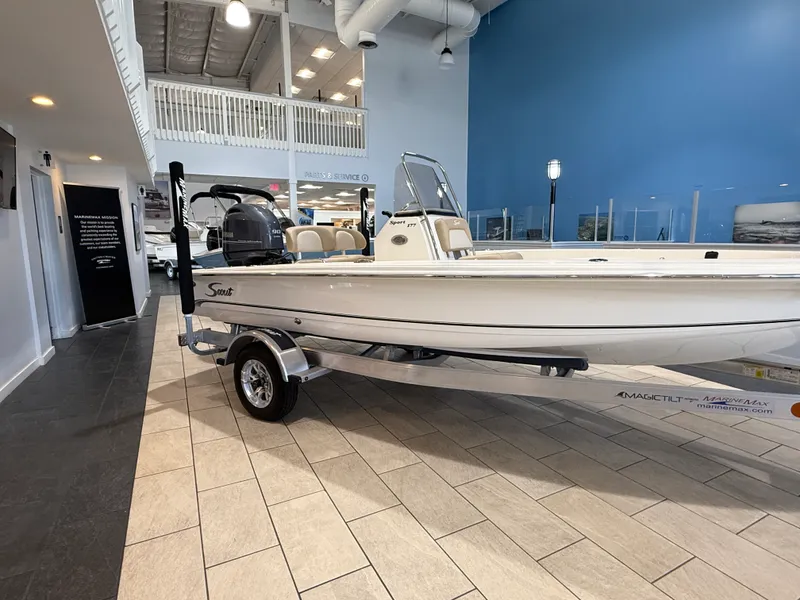
The Scout 175 Sportfish is a small center console fishing boat with a straightforward, open layout built around a central helm with grab rail and captain’s chairs, an expansive forward casting deck with integrated storage and an insulated fish box, and aft jump seats flanking the livewell so it can comfortably carry a crew of four for serious inshore fishing while the USCG rated capacity of about six people allows a small family or group of friends to enjoy coastal cruising and sandbar days, all within a compact and uncluttered footprint. Construction follows Scout Boats’ premium standards with 100 percent hand laid fiberglass and composite materials, a modified V hull with about 13 degrees of deadrise designed for a dry, efficient ride across bays and nearshore chop, and a solid feeling underfoot that experienced boaters will appreciate. The 28 gallon fuel capacity matches well with typical outboard pairings in the 90 horsepower range and a maximum horsepower rating of 115, giving the 175 Sportfish enough power to reach impressive top speeds for a 17 foot fishing boat and to cruise efficiently in the midrange for long runs while keeping fuel consumption modest for budget conscious owners. Practical fishing features such as an aerated livewell, multiple stainless steel flush mount rod holders at the stern, console rod holders, an Igloo 94 quart cooler with cushions that doubles as additional seating, and wide casting space at the bow make the 175 Sportfish a true saltwater fishing platform, yet details like the aft jump seats, optional bimini or T top, integrated swim platform with ladder, and plenty of drink and gear storage turn it into a versatile all around family boat. Within the Scout Boats lineup the 175 Sportfish serves as a compact, easy to own entry point into premium center console boating, ideal for first time boaters learning inshore navigation as well as seasoned anglers who want a highly trailerable skiff for creeks, bays, and nearshore reefs, with the added benefit of simple storage in a driveway or standard garage depth and the flexibility to tow the boat to new coastal and lake destinations whenever adventure calls.

HOW MUCH DO THESE BOATS COST?

Scout Boats positions itself as a premium builder of offshore capable fishing and family boats, and its current lineup starts with smaller center console and bay models that already command upper tier pricing for their size. A representative entry level model is the Scout 215 XSF, a 21 foot 6 inch center console that Scout’s own website shows with a promotional “starting at” price of about $75,995 for a 2026 model year boat including a Mercury 150XL engine, freight to parts of the Eastern United States, dealer prep, fuel, and basic safety gear, which functions more like a delivered promo package than a bare hull MSRP. Independent value guides list recent 215 XSF model years with suggested list prices in the low $60,000s and lower base MSRPs for minimally equipped boats, while average retail values come in around the mid $40,000s, suggesting that the real cost of a typically equipped new 215 XSF sits well above the stripped base MSRP once power, freight, and gear are factored in. In today’s market, new Scout 215 XSF listings from U.S. dealers commonly advertise base to moderately equipped builds roughly in the $67,000 to $90,000 range and heavily optioned versions with larger engines and upgraded packages reaching into the low six figures, so current market listings for this entry segment generally span about $67,000 to $115,000+ depending on engine choice, options, and regional dealer pricing.

Moving into the heart of the lineup, mid range Scout Boats models such as the 255 LXF, 277 LXF, and 305 LXF blend offshore fishing layouts with family friendly seating and upgraded finishes, and factory materials typically present these boats with “starting at” or base MSRP style figures that climb quickly as buyers add twin engines, hardtops, electronics, and seating or comfort packages. While Scout does not always publish a hard MSRP for every configuration, manufacturer and value guide data together indicate that many 25 to 32 foot LXF or XSF models carry base MSRPs roughly in the $150,000 to $350,000 band with standard twin outboards and minimal options, leaving significant headroom for customization. In the real world, new mid range Scout center consoles and luxury fish models in the high 20 to low 30 foot class are typically listed by dealers between about $220,000 and $450,000 or more, with higher numbers tied to up powered engines, joystick controls, premium electronics, and upgraded upholstery packages, while late model pre owned examples of the same boats are usually offered at a 20 to 35 percent discount to comparable new asking prices. As a result, the practical market price a buyer sees for popular mid size Scout Boats models often sits notably above any published base MSRP once realistic fishing and family options are included, yet remains well below the fully loaded “paper” MSRPs some dealers quote on window stickers.

At the top of the range, premium Scout Boats offerings such as the S Class 380 LXF, 425 LXF, and the flagship 530 LXF function as yacht level outboard powered center consoles with complex build sheets, and Scout generally does not post a single fixed MSRP for these larger models, instead routing customers through dealers or factory reps for detailed quotes and build slots. The 530 LXF, stretching more than 53 feet with multiple outboards and extensive luxury and fishing features, is often shown in dealer marketing with quad 600 horsepower outboards, Seakeeper stabilization, flybridge or tower options, and fully integrated electronics, and these highly optioned specs help explain why dealer listed “compare at” or notional MSRPs can climb well over the $3,000,000 mark. Actual asking prices in current listings for new 530 LXF builds typically fall between about $2,000,000 and $3,000,000+ depending on how extreme the options list is, while smaller S Class models like the 380 and 425 LXF are generally priced in a broad band from roughly the high six hundreds to around $1,500,000 for new, fully equipped examples. In the pre owned market, premium Scout Boats in this flagship category often retain strong values but still trade at meaningful discounts to new build numbers, with lightly used S Class boats commonly showing 15 to 30 percent spreads below comparable new asking prices, and hour counts, generator and Seakeeper packages, and electronics suites all making a clear difference in the final market price relative to any base MSRP reference.

Taken together, Scout Boats pricing in the United States runs from roughly the high $60,000s for smaller new center console models like the 215 XSF in base to moderately equipped form through several hundred thousand dollars for mid range 25 to 32 foot LXF and XSF models and up into the multi million dollar range for S Class flagships such as the 530 LXF, with real world market prices consistently higher than stripped base MSRPs once engines, freight, prep, and practical options are included. Across the brand, factory “starting at” or suggested MSRP figures provide a helpful baseline but do not fully capture the cost of the engines, electronics, hardtops, upholstery, and fishing packages that most buyers select, so it is normal to see dealer window sticker MSRPs that sit 10 to 25 percent above the promoted sale price and final negotiated market price. In actual current market listings, entry level Scout Boats often ask about $75,000 to $110,000 when realistically outfitted, mid range Scout models with twin power and modern electronics usually sit between about $220,000 and $450,000 or more, and premium S Class boats from the 380 LXF up to the 530 LXF commonly command anywhere from the high six figures to well over $2,000,000 depending on size and specification. Buyers should also budget for taxes, registration, insurance, storage, and any dealer documentation or delivery fees that may not be included even when freight and prep are rolled into a promotional price, and should treat official Scout Boats MSRP figures as a starting point rather than an all in number when planning a realistic budget, keeping in mind that market prices vary by location, condition, model year, and dealer.

WHAT OTHER STYLES OF BOATS DO THEY MAKE?

Scout Boats currently focuses its production around four core styles of premium outboard powered models: luxury center consoles in the LXF and XSF series, versatile dual console Dorado models, and shallow running XSS/XSB bay boats, all spanning roughly 17 to over 50 feet in length. Their LXF luxury center console line, highlighted by models like the 420 LXF and 380 LXF, blends serious offshore fishing capability with yacht level comfort, including epoxy infused stepped hulls, refined cabins and fishing layouts that appeal to bluewater anglers and cruising families alike, while the smaller XSF and Sportfish center console models, such as the 175 Sportfish and 240 XSF, deliver open deck fishing space, forward seating and fuel efficient NuV3 or stepped hull designs that excel as coastal fishing boats and family boats for day trips and sandbar runs. The Dorado dual console family, with popular models like the 215 Dorado and 220 Dorado, is aimed at boaters who split time between fishing, cruising and water sports, offering wraparound windshields, generous seating, dry storage and family friendly layouts that make them ideal coastal runabouts for mixed use. Rounding out the lineup, Scout’s bay boat series, including technical inshore / nearshore crossover models such as the 231 XS, 251 XS and flagship 281 XSS, pair skinny water drafts and large casting decks with enough hull design, horsepower and construction tech to stretch out into open bays and near offshore waters, giving anglers a single center console bay boat platform that can fish creeks at dawn and run the nearshore reefs by afternoon. Across these series, Scout emphasizes advanced composite construction, features like reverse shoebox hull/deck joints and Strata Mount engine systems, and a blend of fishing first functionality with luxury finishes, so even the most hardcore center console or bay boat in the lineup still carries the upscale fit and finish the brand is known for.

Over the years Scout has also produced notable walkaround and express style fishing boats that helped build the brand’s reputation long before today’s flagship center console and bay boat offerings, with the Abaco Series standing out as a prime example of their earlier express style walkaround designs that catered to owners wanting overnight capability in a serious fishing boat. These Abaco walkaround models were laid out with protected helm areas, berths, marine heads and galleys below, along with cockpit fishing features and outboard power, creating compact express style offshore platforms that could handle weekend cruising and overnight fishing trips while still carrying Scout’s characteristic sleek profile and quality construction. Earlier generations of their center consoles and dual consoles, such as prior XSF and Dorado sizes that have since rotated out of the catalog, continued this evolution by gradually adding more refined seating, improved hull forms and optional hardtops and electronics, and while many of those specific model designations have been superseded by current boats, they remain visible on the used market as sought after fishing boats and family boats thanks to their durable fiberglass construction and timeless layouts. Together, these discontinued and legacy lines, from express style Abaco walkarounds with cabins to older small center consoles and Dorado dual consoles, form a significant part of Scout’s heritage and demonstrate how the company moved from straightforward coastal fishers into today’s blend of luxury center console, bay boat and dual console platforms without losing its fishing DNA.

In terms of what Scout Boats does not build, the company’s focus stays firmly on premium outboard powered fiberglass fishing and family boats rather than branching into segments like traditional pontoon boats, houseboats, large tri deck motoryachts, or dedicated inboard towboats designed purely as ski and wake surf boats, and they also are not known for simple no frills aluminum jon boats or entry level runabouts. Instead, Scout has chosen to concentrate its design and engineering resources on saltwater capable center console, dual console, bay boat and express style platforms, tuned to offshore, nearshore and inshore use, with an emphasis on hull efficiency, strength to weight ratios and upscale appointments that fit a coastal lifestyle. This focus shows up in features like stepped and NuV3 hulls, epoxy infusion, integrated hardtop and glass enclosures, forward seating in many center console models, and multi use decks that prioritize fishability and comfortable cruising over the purpose built wake shaping systems or massive party decks you would expect from wake boats or pontoon brands. As a result, buyers looking at Scout are generally comparing them against other premium fishing first and family friendly outboard boats rather than across every marine category, which reinforces Scout’s identity as a builder of saltwater tough, performance oriented fishing boats and family boats with a luxury edge instead of a one stop shop for every type of vessel.

Summing it up, Scout Boats today is best known for its sophisticated center console fishing boats, versatile Dorado dual consoles and capable XSS/XSB bay boats, along with a heritage that includes Abaco express style walkaround models and earlier generations of compact center console and dual console designs that helped define the brand. The current lineup leans heavily into hybrid thinking within those core styles, particularly in the LXF series where luxury center console models like the 380 LXF and 420 LXF blur the lines between offshore fishing boats and high end cruisers with cabins, as well as in crossover bay boats such as the 251 XS and 281 XSS that can run shallow inshore but still stretch their legs offshore when conditions permit, hinting at continued evolution of inshore/offshore and fish/cruise hybrids rather than radical moves into unrelated segments. Looking ahead, that same innovation in hull technology, materials and layouts is likely to show up as refinements and new sizes within their established center console, bay boat and dual console families, or potentially as updated cabin and express offerings that revisit concepts like the Abaco Series with modern construction and systems, all while keeping the focus on fishing capability and family comfort. By staying disciplined about which boat styles they build and continually upgrading those platforms instead of chasing every category, Scout can keep sharpening the designs that have made the brand so sought after among coastal anglers and boating families, delivering center consoles, dual consoles and bay boats that feel increasingly dialed in to the needs of their core audience.

WHAT KINDS OF ENGINES DO THESE BOATS USE?

Scout Boats is an outboard focused brand, and its entire fishing and luxury crossover lineup is powered by outboard engines rather than inboards, sterndrives, jets, or electric systems, which suits their mission of building low maintenance, shallow draft, trailerable boats that can handle both inshore and offshore saltwater use. Across the range, smaller models such as the 175 Sportfish and 195 Sportfish typically run single outboards for simplicity and lighter weight, while mid size center consoles and dual consoles like the 215 XSF and 240 XSF are also designed around single outboards but with higher horsepower ratings to balance fishing performance with family cruising. As you move into larger LXF luxury center consoles, including models like the 277 LXF, 305 LXF, 330 LXF and up into the 355 and 380 LXF, Scout rigs them for more powerful single or twin outboard installations, and the biggest offshore models can accommodate multiple high horsepower engines to deliver the speed, range, and redundancy offshore anglers expect, all while keeping rigging accessible at the transom for easier service compared with enclosed inboard or sterndrive layouts.

Looking at horsepower, Scout’s smaller sub 20 foot boats generally carry outboards in the 90 to 150 horsepower range, which is plenty for lightweight hulls focused on inshore fishing and family sandbar duty, while a model like the 215 XSF stretches to 21 feet 6 inches with a maximum rating around 250 horsepower and is commonly powered by a 150 to 200 horsepower four stroke outboard that pushes the boat into the mid 40 mph range at wide open throttle with efficient cruise in the upper 20s to low 30s mph. Stepping up to mid 20 foot and high 20 foot hulls such as the 240 XSF or 277 LXF, maximum horsepower climbs from the mid 300s into the 450 to 600 horsepower range depending on model year and configuration, giving owners the option to choose a single high horsepower outboard or twin outboards for better hole shot and offshore security. On these larger boats, combined horsepower typically lands between 300 and 600 horsepower, supporting comfortable cruise speeds in the 25 to 35 mph range with plenty in reserve, and as you move into Scout’s 30 foot plus LXF flagships, triple outboard setups can deliver well over 900 combined horsepower for bluewater runs while still maintaining the brand’s reputation for strong fuel efficiency and long range thanks to their efficient stepped and variable deadrise hulls.

Historically Scout has offered both Yamaha and Mercury four stroke outboard power, and current models are commonly rigged with modern four stroke outboards like the Yamaha F150 on boats such as the 215 XSF or various Mercury Verado engines on larger LXF models, with specific engine brands and horsepower packages often varying by dealer and region. The focus is on clean running, fuel efficient four stroke outboards with electronic fuel injection and modern corrosion protection rather than two stroke, jet, or diesel options, and from the factory the boats are typically sold as complete packages that include the outboard engine, digital or mechanical controls, wiring harnesses, batteries, hydraulic or power steering, and appropriate stainless steel propellers matched to each hull. Scout’s larger premium models are frequently paired with digital controls and integrated engine monitoring, and buyers can step up into multi engine installations with matched twin outboards and factory rigged helm systems that keep everything cleanly installed and easy to service while keeping warranties intact.

On the technology side, Scout Boats leans into features that enhance drivability and efficiency, equipping many models with digital throttle and shift controls, integrated engine data displays, and on larger twin and triple engine packages the option for joystick steering systems that make close quarters maneuvering and docking much easier for family boaters. Combined with Scout’s proprietary hull designs that focus on fuel efficiency and a soft, dry ride, these four stroke outboard setups deliver strong fuel economy at cruise, quick hole shot for getting on plane with a full crew, and quiet operation compared with older generation outboards or many inboard packages. Owners benefit from shallow water capability thanks to the ability to trim or tilt the outboard when running in skinny water or approaching a beach, and ongoing maintenance is typically simpler and less costly than comparable inboard or sterndrive systems because service items are accessible at the transom instead of buried in a bilge. Overall, Scout’s commitment to modern outboard power, digital controls, and premium multi engine options aligns with its brand identity as a builder of upscale, versatile coastal boats that deliver performance, fuel efficiency, and user friendly handling for serious anglers and family cruisers alike.

WHY BUY THIS BRAND OVER A COMPETITIVE BRAND?

Why choose Scout Boats over other premium builders starts with the proven build quality of Scout hulls and structures, which are engineered from the keel up for strength, consistency, and rough-water confidence. Scout’s models are 100% hand-laid using a precise laminate schedule so every hull, deck, box, and console is built to the same engineered thickness and strength for a superior strength-to-weight ratio, rather than relying on chopper-gun techniques that the company itself classifies as traditional across much of the industry. The brand eradicated wood from its construction in favor of composite stringers and transoms and pioneered a reverse shoebox hull/deck design that increases overall hull strength while helping prevent water intrusion at the joint in rough conditions, benefits that translate into durability and safety proven in real conditions offshore and inshore. On larger models, Scout’s epoxy-infused E-glass and epoxy-infused carbon fiber hybrid hulls, backed by aerospace-derived processes and tight weight tolerances, deliver hulls that are significantly lighter yet stiffer than traditional laminates, giving owners stronger, “built like a tank but perform like a jet” hull platforms that maximize performance and fuel efficiency without sacrificing structural integrity. Combined with dedicated NuV3, Air Assist, and Scout Stepped Hull Technology designs tuned to each size class for a dry, soft ride and efficient planing, the documented build quality of Scout boats provides a technical foundation that sets Scout Boats vs competitors apart for buyers prioritizing long-term structural confidence.

Beyond the hull, Scout emphasizes value through standard equipment and thoughtfully engineered layouts that make its boats function at a high level for both anglers and families, minimizing the compromises often felt when comparing Scout boats vs competitors in similar size ranges. Models like the 260 LXF are positioned as “Sleek, Powerful, Unapologetically Refined,” and come standard with features such as an integrated exposed carbon fiber T-top with fully enclosed windshield for protection from the elements, a forward lounge seat widely promoted as one of the best seats onboard, in-floor fish boxes, a side dive door for convenient access, and the Seakeeper Ride vessel attitude control system, along with a step-in console with porcelain head, all of which enhance day-to-day usability for offshore fishing, sandbar days, and coastal cruising. The 255 Dorado dual-console highlights how Scout blends standard fully cushioned bow seating with storage beneath, an ergonomically designed dual-console helm with Fusion Bluetooth stereo and multiple speakers, and a unique standard electric aft-facing lounge that transforms into a lounger at the touch of a button, complemented by fold-down transom and portside seats so owners can reconfigure the cockpit quickly from open fishing space to wraparound seating for entertaining. Across the lineup, livewells, rod storage, in-floor boxes, and premium seating are integrated into multi-use deck plans so buyers comparing build quality of Scout boats to other fishing boats can see how much functionality comes baked into the base design rather than only through option packages.

Scout further differentiates itself by deliberately merging utility with comfort so owners do not have to choose between a hardcore fishing platform and a family-friendly cruiser, a key consideration for shoppers researching why choose Scout Boats or comparing Scout vs other fishing boats. The Dorado dual-console family, exemplified by the 255 Dorado, is explicitly marketed as a “family-friendly sportfishing model ideal for fishing, cruising, entertaining, and watersports,” with a layout that supports towing sports via an available ski pylon, cooking on an optional Kenyon grill, and relaxing on plush bow seating while still preserving fishability through open cockpit space and storage. On the LXF luxury sportfish series, Scout describes the boats as combining the features serious anglers expect, such as livewells, rod holders, and offshore range, with amenities like console berths, optional air conditioning, grills, and wet bars to deliver “luxury fishing boats” that can move seamlessly from chasing pelagics to evening harbor cruises in upscale surroundings. Upholstery, helm ergonomics, and thoughtful touches like side dive doors, lounge-style forward seating, and convertible cockpit modules support a “fishability meets luxury” experience in practice, giving buyers genuine crossover versatility for fishing, entertaining, and watersports without feeling like any single use case was an afterthought.

Finally, the case for Scout Boats vs competitors is reinforced by the company’s documented reputation, long-term investment in its South Carolina manufacturing campus, warranty coverage, and emphasis on quality control. Scout highlights decades of building “award winning sport-fishing boats” and a brand heritage rooted in “Heritage. Elegance. Performance. Innovation.,” supported by a world-class facility with in-house component fabrication, advanced cold-press operations for parts, and a dedicated light tunnel and multi-stage inspection process so each boat is checked repeatedly for finish quality and defects before delivery, contributing to long-term resale and ownership satisfaction. The brand explicitly positions its epoxy-infusion and carbon epoxy construction methods, reverse shoebox hull joint, and hand-laid laminate schedule as “industry bar-raising” processes used by a small fraction of builders, and backs its line with a limited hull warranty and limited stem-to-stern coverage that provide tangible peace of mind compared to minimal coverage from value-oriented brands. When combined with a broad model mix from 17 to over 60 feet, a focus on fuel efficiency that can translate into meaningful savings over the life of the boat, and a stated commitment to innovation and integrity, customer satisfaction with Scout is anchored in a balance of performance, reliability, and long-term value from a builder with a clear track record, making Scout a compelling choice over cheaper alternatives built with older methods as well as some higher-priced options that do not match its documented blend of engineering and everyday usability.

WHAT IS THE MOST POPULAR MODEL OF THIS BRAND BEING BUILT TODAY?

Among Scout Boats’ current production lineup, the 240 XSF center console at 24 feet stands out as one of the brand’s most prominently featured and broadly positioned models, indicating a key sweet spot in the range. On Scout’s official site it is highlighted with strong value messaging, carries a detailed model page with full performance bulletins, and is marketed as “the hottest boat in its class,” suggesting significant focus and demand within the core 23 to 25 foot market segment. Built on Scout’s NuV3 fuel efficient hull and blending offshore capability with family friendly forward seating, the 240 XSF is a versatile center console sized to be easily trailerable yet substantial enough for serious coastal fishing and cruising. While Scout names its much larger 670 LXS as the “premier flagship,” the 240 XSF occupies the central, high interest category for many buyers, reflected in its dedicated media, build tool integration, and positioning as a class leading model in the brand’s mid size lineup.

The Scout 240 XSF measures 24 feet in length with an 8 foot 6 inch beam and is built on a NuV3 hull that is engineered for both performance and fuel efficiency, with a relatively shallow draft suited to coastal and nearshore use and a fuel capacity sized for full days offshore. Standard equipment includes a longer outboard shaft with a full level swim platform for safer access to the water, LED lighting throughout including rope and underside hardtop lights, a fold away stern seat, aerated transom baitwell, and forward lounge seating with a combined fish and storage box with overboard pump out, plus a powder coated leaning post with integrated cooler, rod holders, and cup holders. The model is offered with multiple single outboard power options within its rated maximum horsepower, and Scout publishes factory performance bulletins showing efficient cruise speeds and strong top end capability for its size, underscoring its role as a do it all coastal platform. Buyers can tailor the 240 XSF via factory options and packages, including hull and upholstery color choices, additional electronics, and upgraded fishing or comfort features that let owners emphasize hardcore angling, family cruising, or a balance of both.

The 240 XSF typically appeals to coastal boaters who want a single boat that can handle offshore fishing, nearshore runs, and relaxed family outings without moving into the high cost and complexity of larger multi engine models. Scout’s description of the 240 XSF as blending luxury and performance and as the hottest boat in its class signals a design philosophy aimed at the broad middle of the center console market where buyers demand both comfort and capability. Families are drawn to the wraparound forward seating, integrated lounge with storage, secure transom access, and extensive LED lighting that enhances early morning and evening outings, while anglers appreciate the aerated baitwell, in deck fish and storage solutions, and abundant rod storage around the leaning post. This dual focus allows the boat to serve as a primary family platform during weekends and holidays while remaining fully equipped for dedicated fishing trips, matching the expectations of a wide audience that wants one highly capable, easy to own 24 foot center console rather than multiple specialized boats.

From an availability and investment perspective, Scout supports the 240 XSF with current model year pricing, a live online build and price configurator, downloadable performance bulletins, full standard and optional equipment lists, and a dealer locator link directly from the model page, all of which indicate ongoing production and strong backing from the factory. The boat is included in Scout’s active center console lineup rather than legacy or limited availability status, and its detailed marketing narrative, photography, and video support reflect continued promotional emphasis. While Scout’s largest models define the upper echelon of the brand image, the 240 XSF’s blend of attainable size, premium detailing, and class leading features positions it as a signature offering in the mid size segment where a high proportion of real world buyers shop. That combination of practical operating costs, versatile layout, and offshore ready specifications helps explain why this size and style occupies such a central role in Scout’s current model strategy and appears to function as a key volume driver within the brand’s portfolio.

WHAT IS THE HISTORY OF THIS BOAT BRAND AND COMPANY?

Scout Boats traces its origins to the early 1980s, when lifelong boatbuilder Steve Potts, who had been working in the marine industry since the age of fourteen, set out to create his own high quality small fishing craft in coastal South Carolina, drawing on experience that included serving as a plant manager at American Sail and on memories of a simple but capable 1960s boat he had worked on called the Scout, whose name and straightforward saltwater fishing focus he revived for his own brand, funded with roughly fifty thousand dollars in personal savings and built at first in modest spaces such as garages, barns, and finally a small brick building near Charleston where he and a tiny team hand crafted a finely finished 14 foot high end fishing boat tailored to local dealers in the Carolinas; as word spread in the 1980s, this first 14 foot Scout and its early successors established a reputation for meticulous fit and finish and set the DNA of the company around saltwater ready center console style layouts, while Potts’ insistence on doing things differently in construction, eschewing shortcuts and favoring hand laid fiberglass and composite structures, began to form the innovative identity that would later define Scout Boats as it grew from a little known startup into a recognized coastal fishing boat builder by the end of the decade, even as Hurricane Hugo in September 1989 destroyed the original brick shop and forced the fledgling company to salvage molds and equipment and rebuild at a new location, a challenge that ultimately cemented its resilient culture and laid the foundation for subsequent expansion.

Coming out of the Hugo devastation, Scout resumed production by the end of 1990 from a new facility in the Summerville area of Dorchester County, South Carolina, and through the 1990s steadily broadened its range of coastal fishing boats while refining a distinctive broken sheer line styling element introduced around 1990 and adding an advanced reverse transom design by 1996, visual cues that helped the brand stand out as its dealer network expanded beyond the Carolinas; during these years Scout also began to formalize its reputation for structural innovation by pioneering a reverse shoebox hull and deck joint that improved overall hull strength and water integrity and by eliminating wood from its boats in favor of composite stringers and transoms, moves that positioned the firm as an early proponent of rot free construction and higher strength to weight ratios, and as the company entered the 2000s it built on this engineering base with proprietary hull geometries such as its NuV3, Air Assist, and later Scout Stepped Hull designs, which increased efficiency, improved handling, and reduced wetted surface for better performance and fuel economy, all while the privately held, debt free ownership under Steve Potts and his family allowed Scout to navigate industry cycles without being absorbed by larger corporate groups, so that even in the 2008 to 2009 recession, when many builders were consolidating or closing, Scout instead used the downturn as a catalyst to launch approximately eighteen new models between 2008 and 2010, moving decisively into larger sizes and fresh styles that effectively reinvented the lineup and supported annual growth reported at about twenty five percent from 2009 onward.

As Scout modernized in the 2000s and 2010s, its model portfolio evolved from small coastal sportfishers into a comprehensive family of bay boats, dual consoles, and luxury offshore center consoles built in its Summerville manufacturing campus, where every boat was produced with fully hand laid fiberglass, finished bilges and lids, and increasingly sophisticated systems; the company organized its offerings into series that now include the Dorado dual consoles, spanning family friendly fish and ski style models, the bay oriented XSS and XSB lines for shallow water and inshore use, and the XSF and LXF center console families that range from versatile 17 to 24 foot sportfishers up into large offshore luxury fishing platforms in the 30 to 50 foot class, many incorporating Scout’s reverse shoebox joint, rot free composite structure, and innovations such as its Strata Mount engine system that carries engine loads deep into the stringer grid and its patented integrated T top and glass enclosure that elevates comfort and weather protection; at the same time the firm pushed manufacturing technology forward on its largest LXF and later LXS luxury sport models by adopting epoxy infusion and carbon epoxy construction for stepped hull flagships, integrating state of the art digital helm electronics and entertainment systems, and continually enhancing ergonomics, upholstery, and creature comforts so that the boats would feel as refined as luxury automobiles or aircraft, a philosophy that earned Scout industry recognition, high customer satisfaction, and demand robust enough that by the mid 2010s the company was expanding production capacity while keeping its focus on meticulous build quality and trendsetting design.

Recent years have seen Scout leverage this heritage into a true luxury sportfishing and coastal boating brand with an international footprint, highlighted by facility expansions at its Dorchester County headquarters that added tens of thousands of square feet of composite and component manufacturing space to support new models and job growth, by a broadened export program that ships its boats to markets such as Mexico, Brazil, several European countries, and Australia through South Carolina’s export assistance initiatives, and by the rollout of ever larger outboard powered flagships culminating in models like the 670 LXS, one of the largest outboard driven sportfishing yachts in the world, alongside substantial LXF offshore center consoles and an updated Dorado and bay boat line; supported by a debt free balance sheet, ownership of its land, buildings, and logistics assets, and a dealer network whose members have appeared prominently in Boating Industry Magazine’s Top 100 Dealers lists, Scout today positions itself as a manufacturer of world class hand built luxury fishing and family boats from 17 to 67 feet that blend Carolina inspired lines, advanced composite engineering, fuel efficient high performance hulls, and a culture of uncompromising quality, with its brand identity centered on heritage, elegance, performance, and innovation, attributes that foster strong customer loyalty and underpin the company’s confidence in continued global growth and ongoing product development anchored in the same passion that drove Steve Potts to build his first 14 foot Scout decades ago.

AWARDS AND RECOGNITIONS

Scout Boats, founded in 1989, began building its reputation for cutting edge design and construction in the 1990s and early 2000s, earning industry recognition for pioneering features such as its reverse shoebox hull and deck joint and its family of efficient NuV3 and stepped hulls that delivered a softer, drier ride and better fuel economy, achievements repeatedly highlighted in major marine buyer’s guides and product reviews as setting new benchmarks in composite construction and performance. As the brand’s offshore and luxury center console segment evolved, specific models like the Scout 355 LXF drew editorial acclaim in publications such as Marlin’s 2019 Boat Buyers Guide for blending hardcore fishability with luxury comforts, including epoxy infused dual stepped hull technology, advanced helm seating and integrated bow camera systems that underscored Scout’s image as an innovative builder of premium fishing boats. More recently, flagship models in the LXF series such as the 420 LXF and 530 LXF have been showcased by leading marine media and at major boat shows for their combination of yacht level appointments, carbon epoxy construction and offshore capability, reinforcing the brand’s position among top tier center console manufacturers.

In parallel with product specific accolades, Scout Boats has built a strong record with the National Marine Manufacturers Association Marine Industry Customer Satisfaction Index awards, consistently appearing on NMMA’s annual list of honorees for fiberglass outboard categories by maintaining independently measured owner satisfaction scores of 90 percent or higher. These CSI awards are based on surveys sent to every new boat buyer in a given program year and measure satisfaction not only with the boat’s performance and quality but also with the sales, delivery and service experience, meaning Scout’s recognition reflects both its factory build standards and the strength of its dealer network. Earning this acknowledgement year after year in the competitive fiberglass outboard segment signals that Scout owners report a high level of satisfaction long after the initial purchase, which in turn supports strong resale values and repeat purchase behavior as families and anglers move up through the brand’s bay boats, dual consoles and luxury center console line.

In the past several years, Scout’s newest models have continued to attract formal recognition and media spotlights, with recent introductions such as the 355 LXF and other S Class luxury center consoles debuting at major events like the Miami International Boat Show and subsequently being profiled by respected industry magazines for their advanced epoxy infusion construction, gyro stabilizer ready decks, integrated solar charging and high performance stepped hulls. Editorial coverage in prominent marine titles has called out these boats as among the most sophisticated luxury fishing platforms in their size ranges, often singling out Scout’s attention to fit and finish, innovative electronics integration and clever deck layouts that serve both hardcore offshore anglers and family day boating. This pattern of recent press and boat show attention across multiple models highlights how Scout continues to refresh its lineup with award calibre designs that align with evolving expectations for comfort, technology and efficiency in premium center console fishing boats.

Taken together, the formal awards and consistent NMMA CSI recognition earned by Scout Boats over the years paint a clear picture of a builder that pairs innovative engineering with long term owner satisfaction, where advanced hull designs and cutting edge construction methods are matched by strong after sale support and service. Industry buyer’s guides and marine magazine accolades validate Scout’s leadership in areas like hull efficiency, composite technology and luxury fishable layouts, while CSI awards confirm that these strengths translate into positive real world ownership experiences for customers across multiple product lines. For buyers evaluating a new offshore center console, bay boat or dual console, this history of third party recognition offers added confidence that Scout’s reputation for quality, innovation and customer care is backed by independent measurement and enduring loyalty from a broad base of owners.

Be the First to Know

Get notified when new boats become available.

Logo