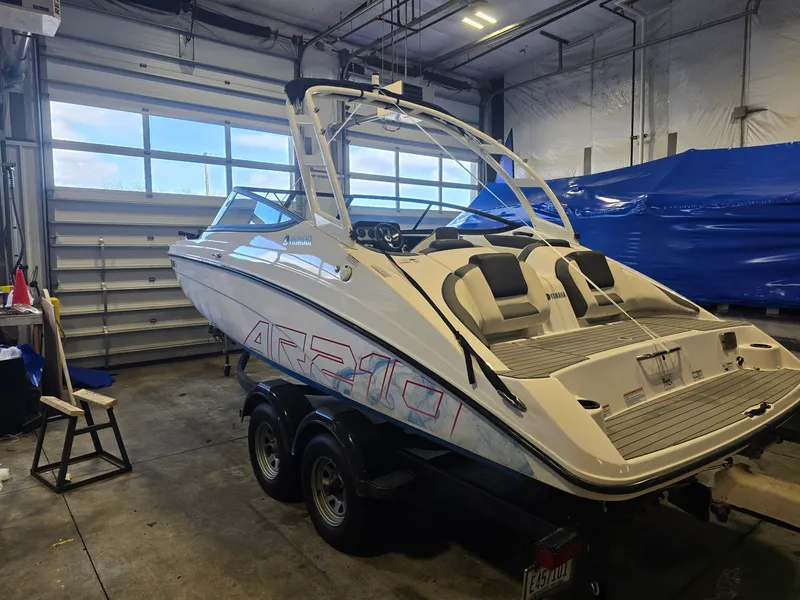
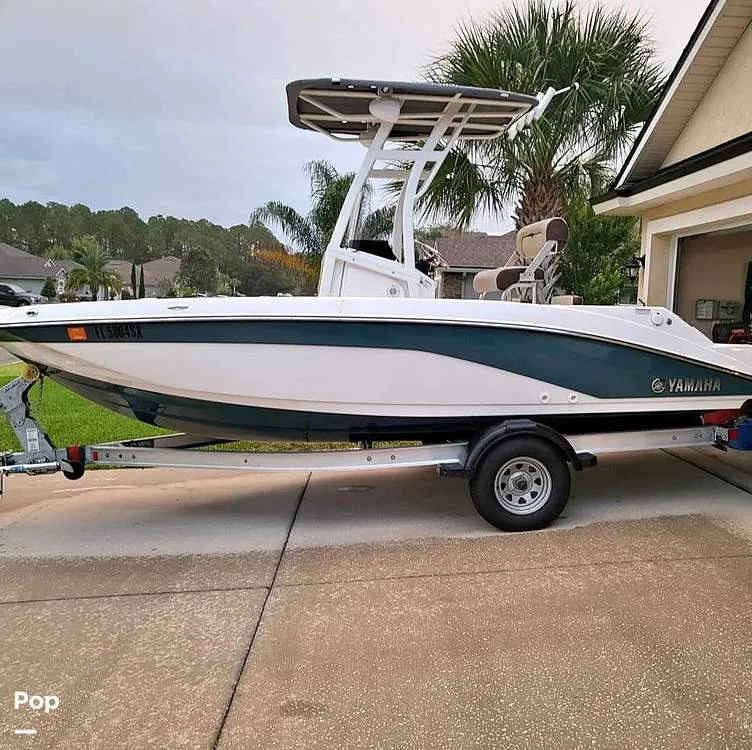
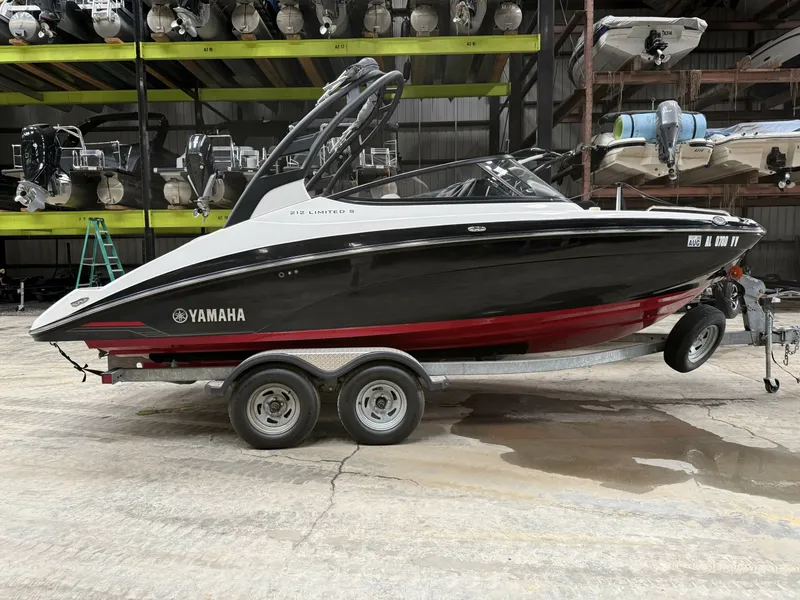
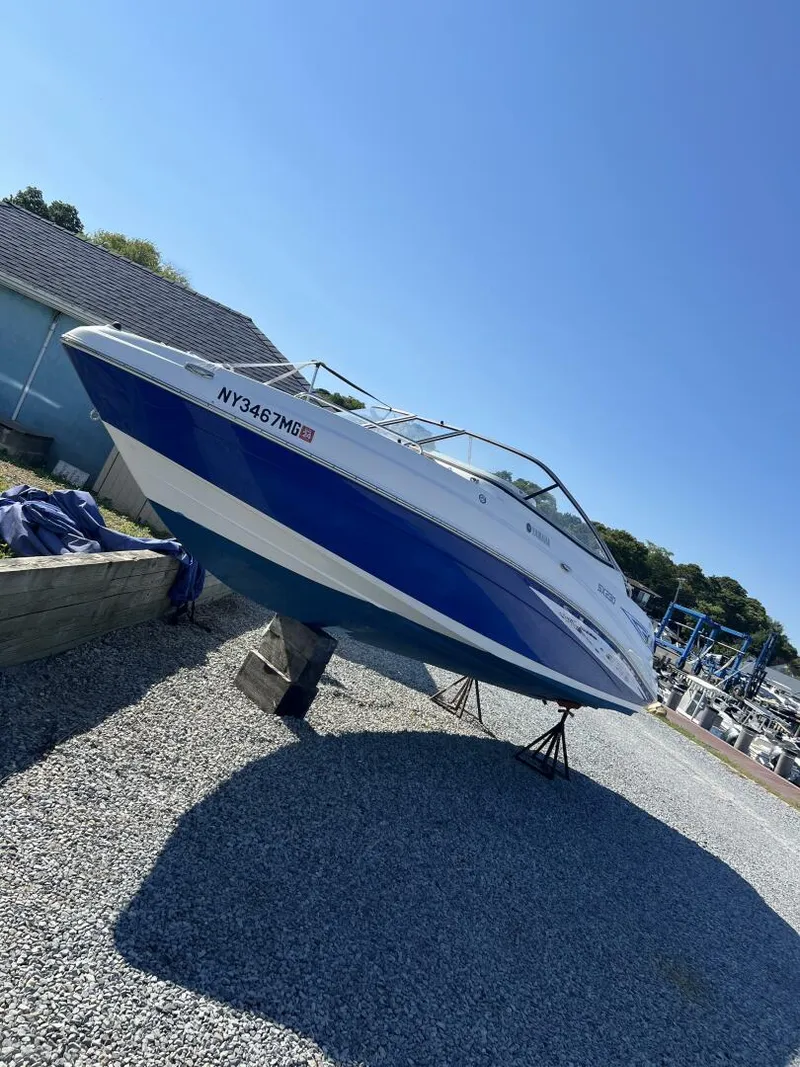
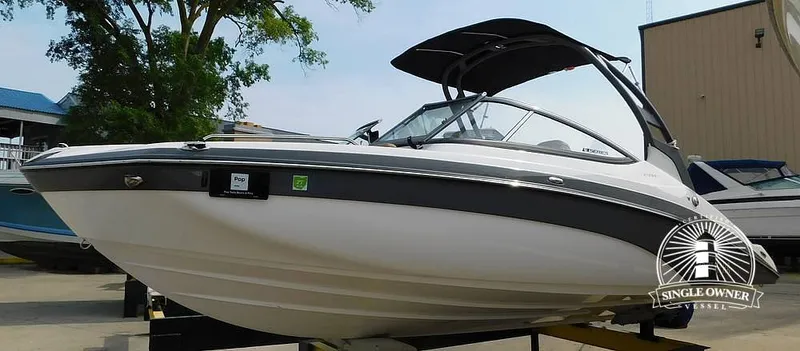
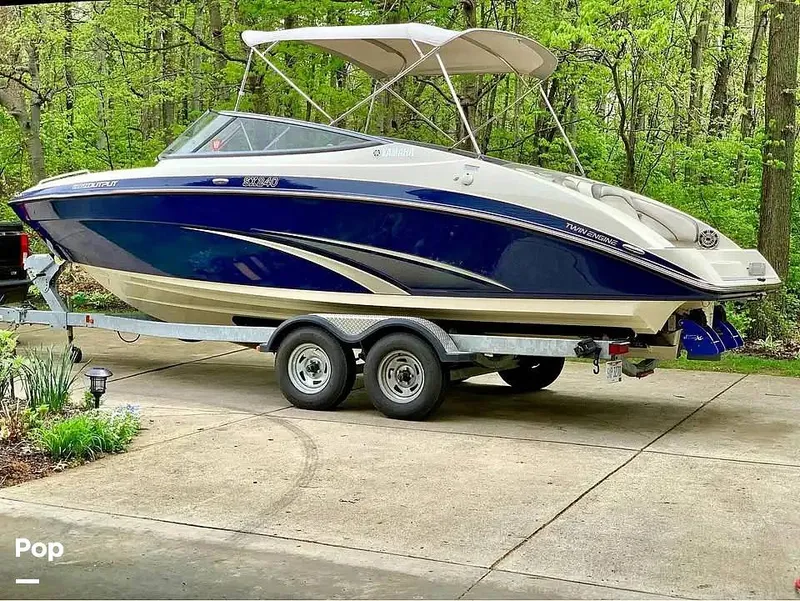
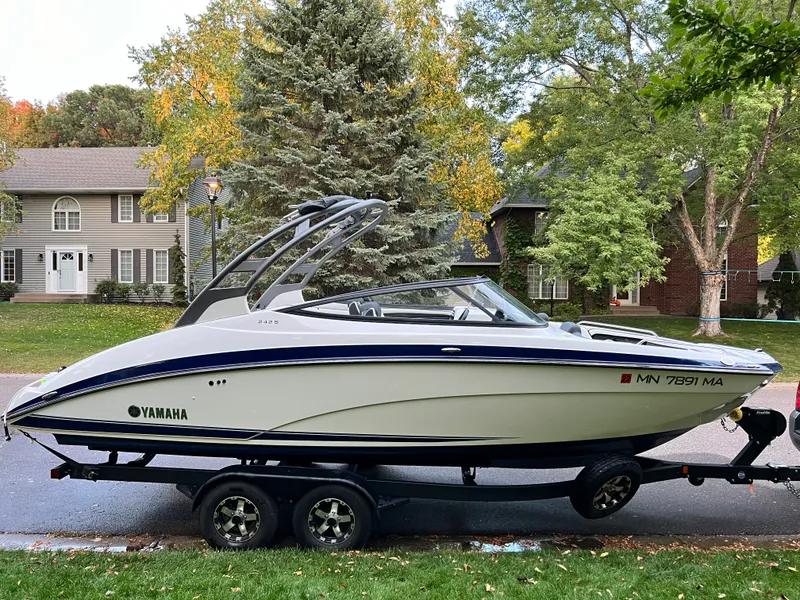
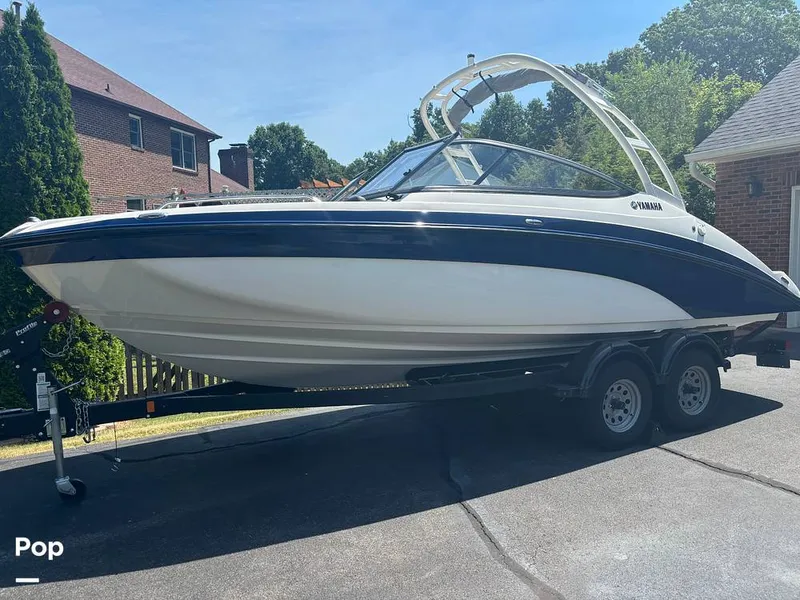
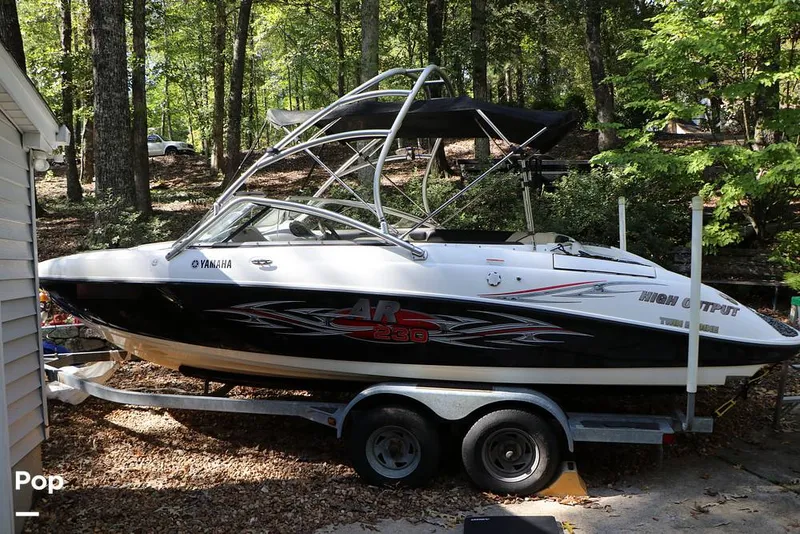
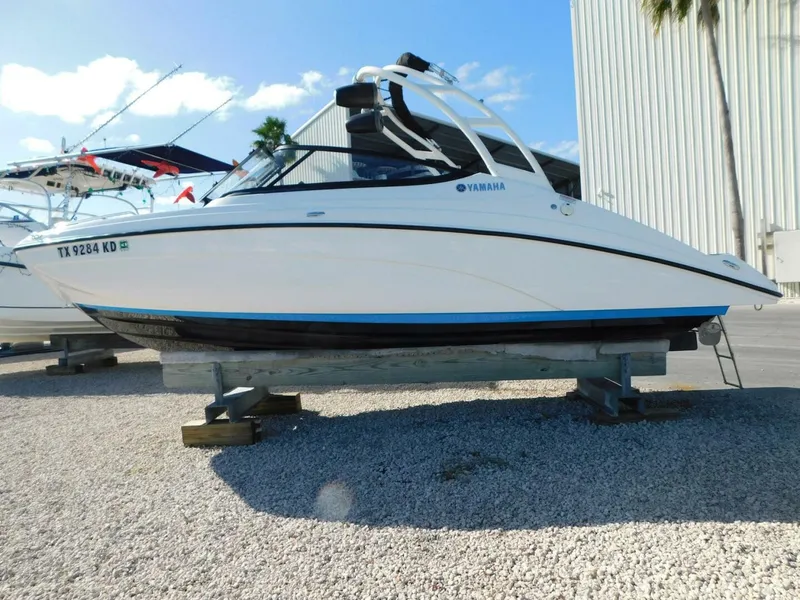
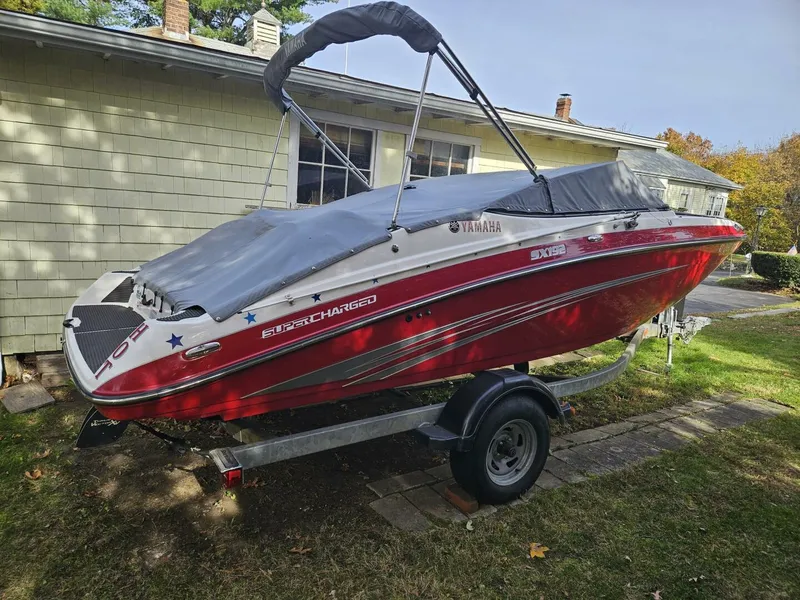
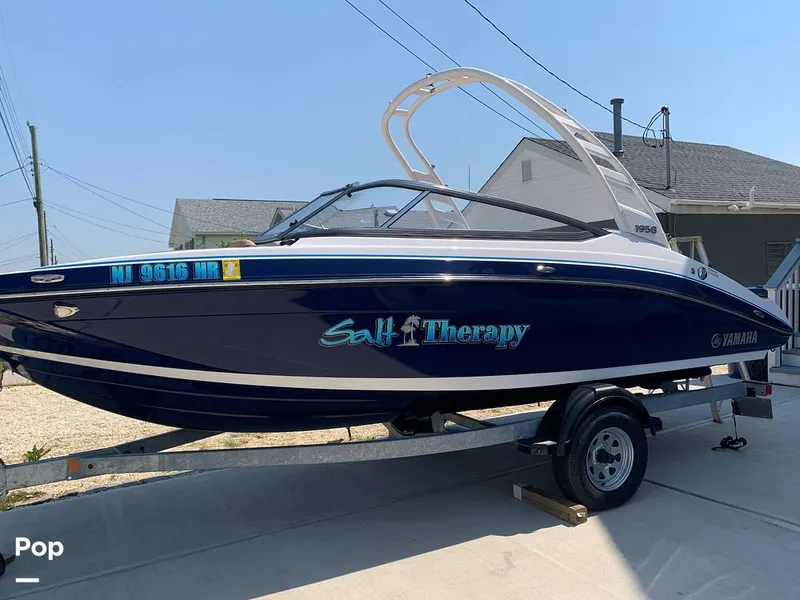
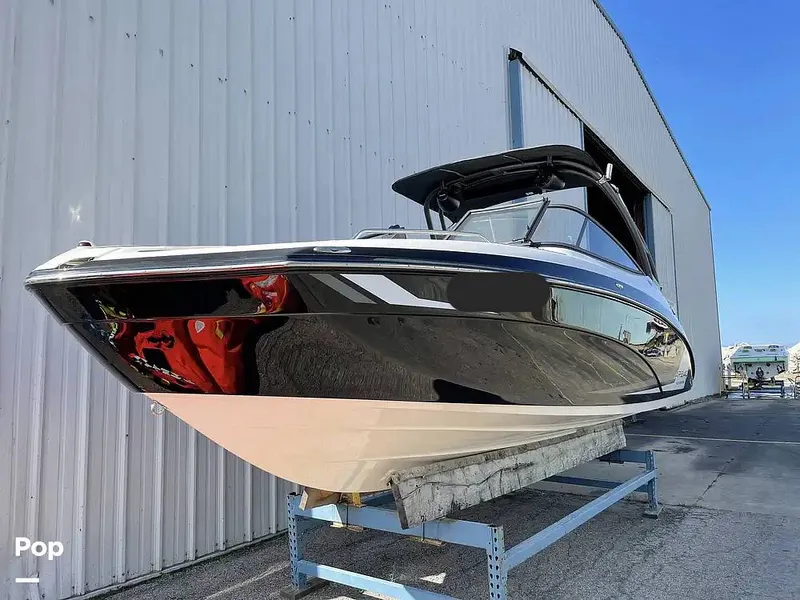
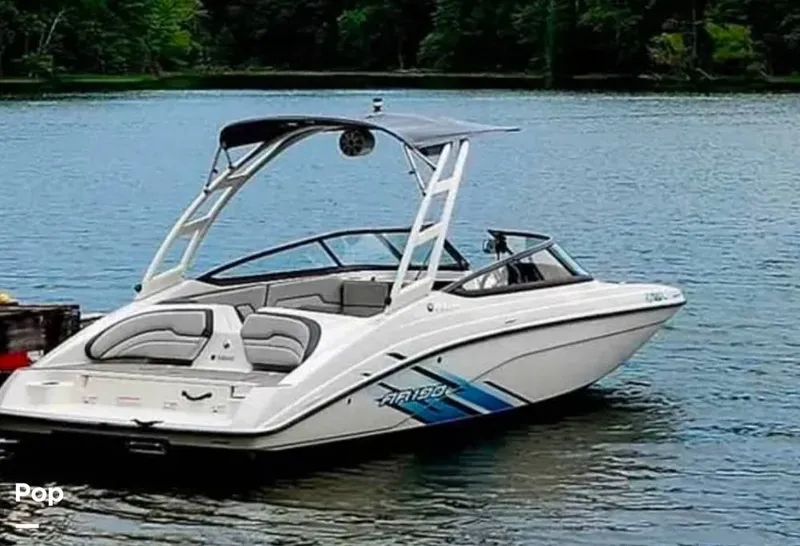
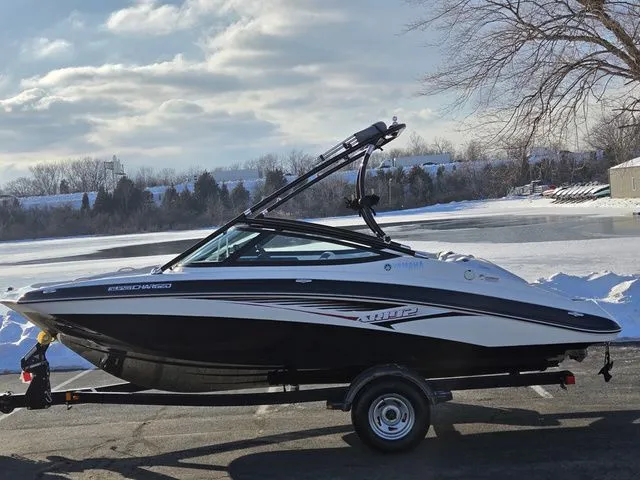
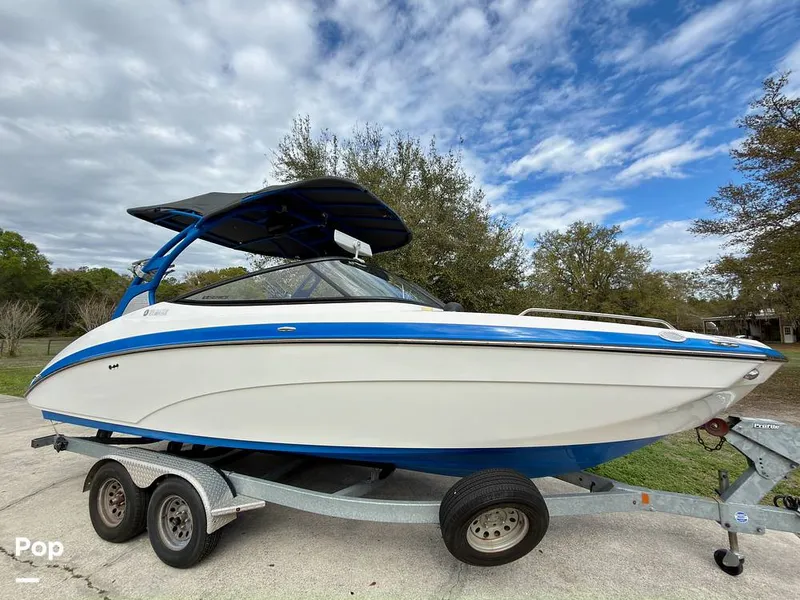
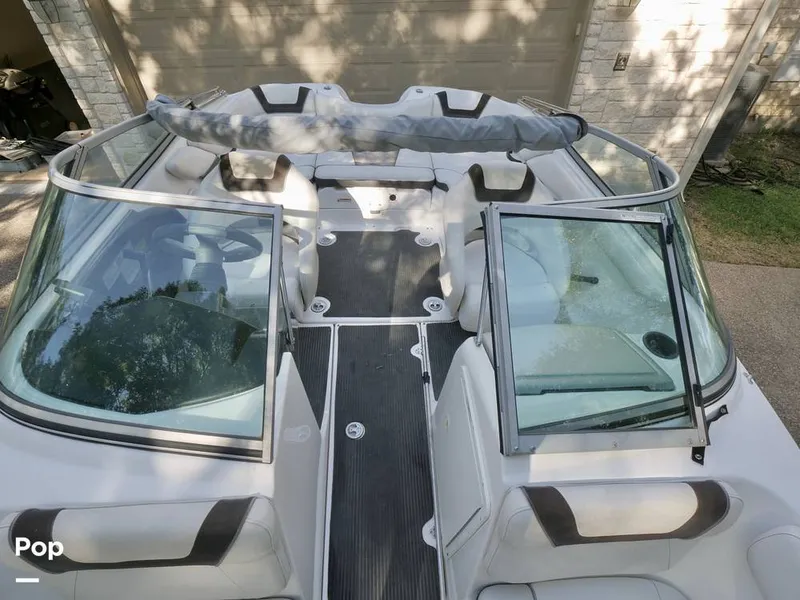
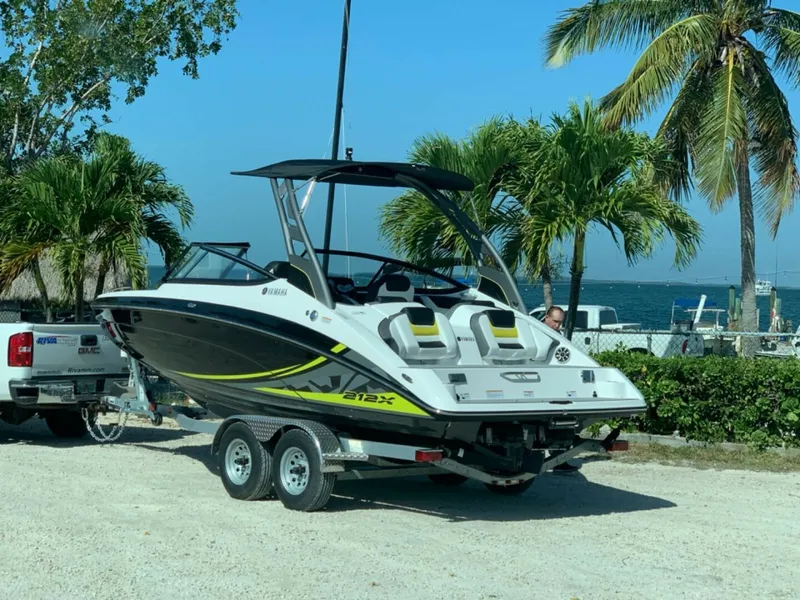
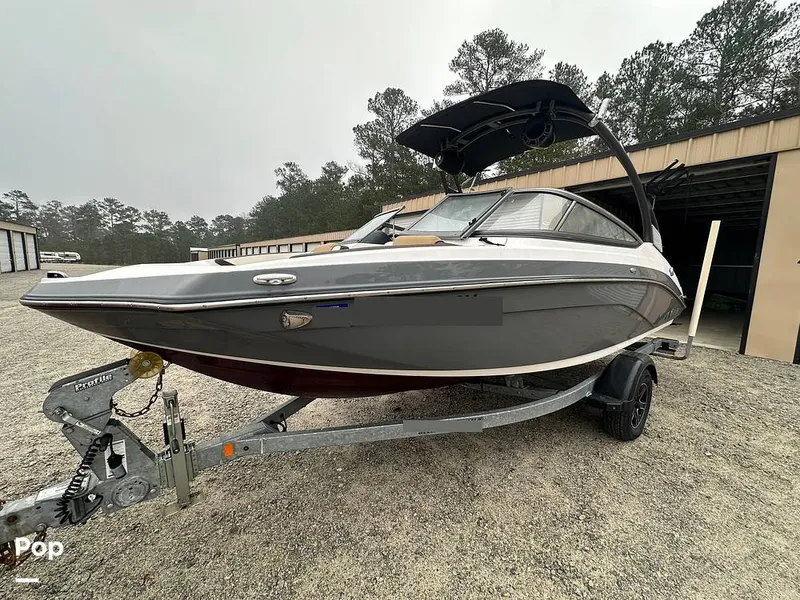
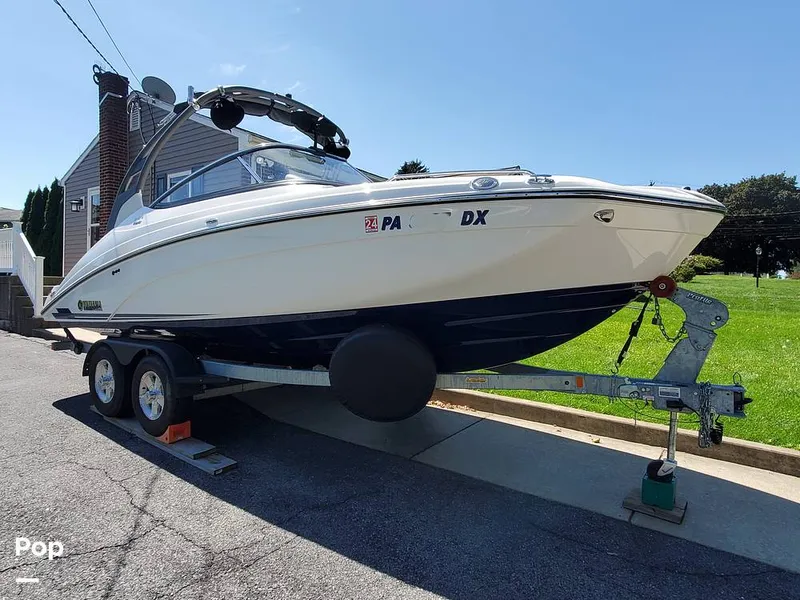
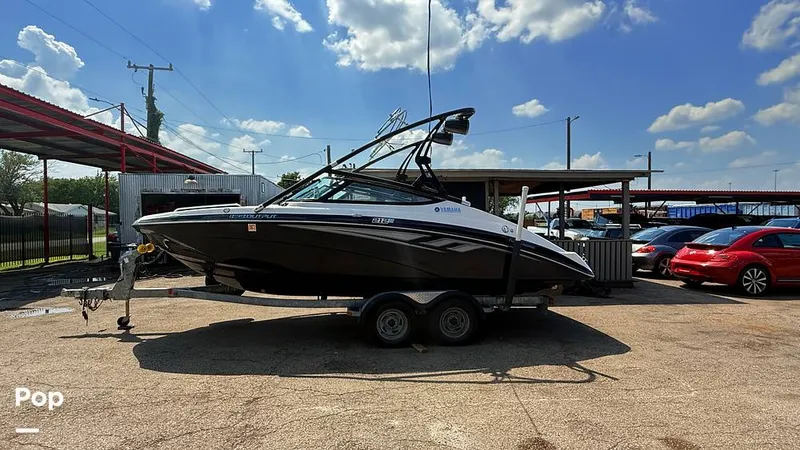
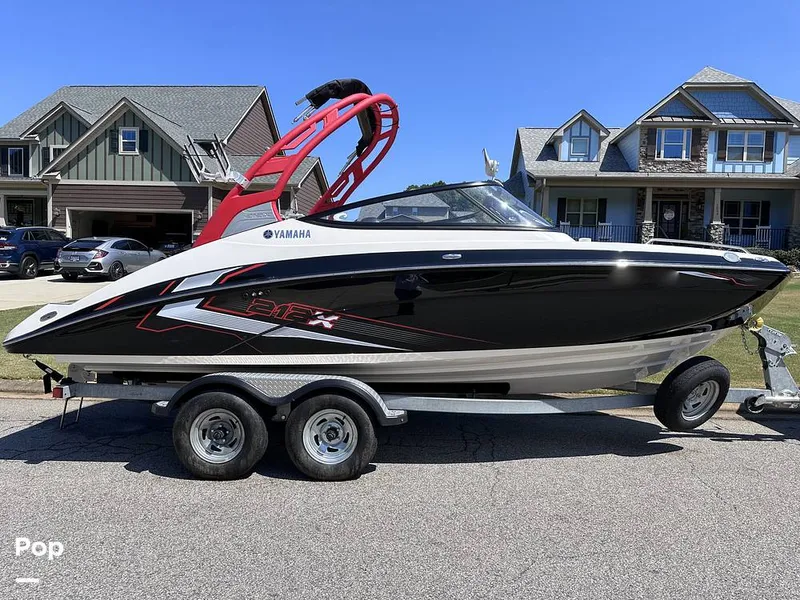
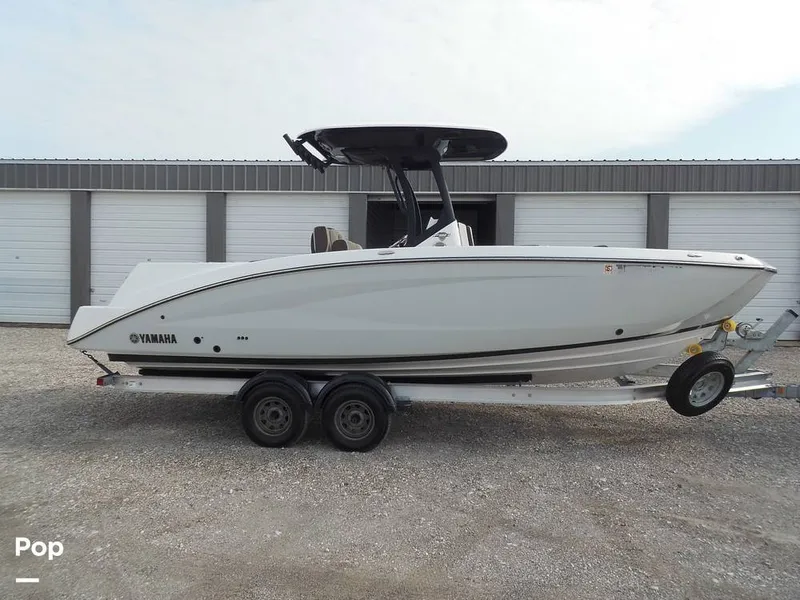
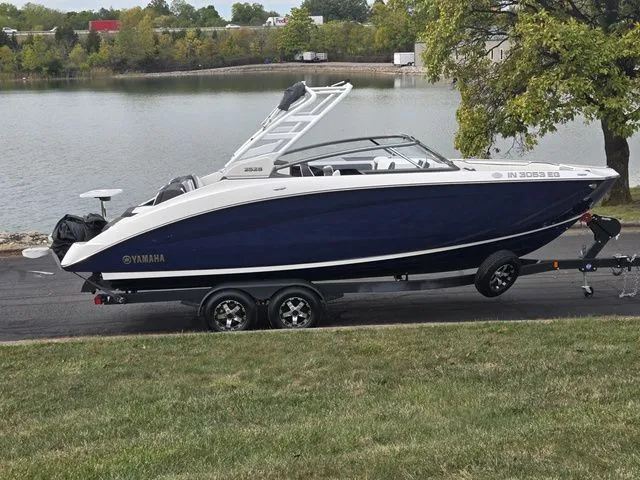
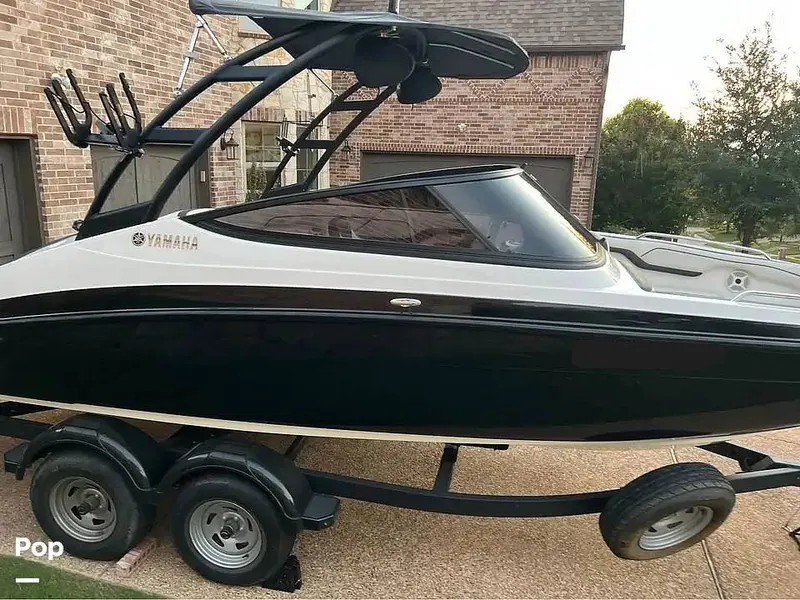
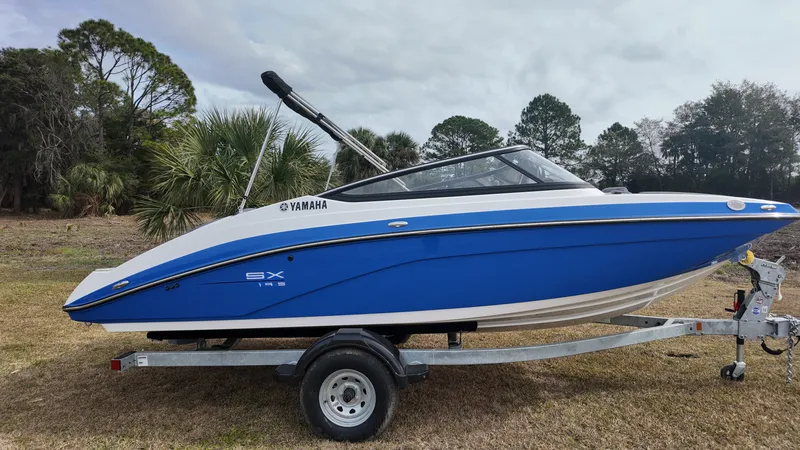
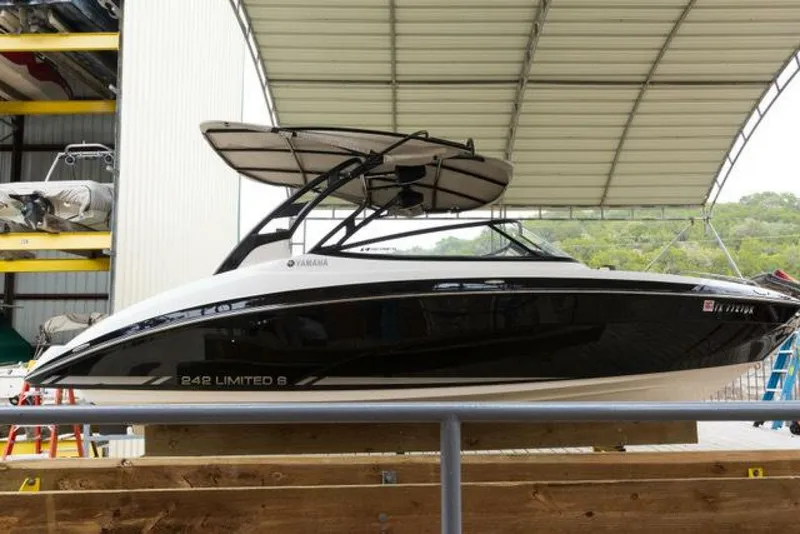
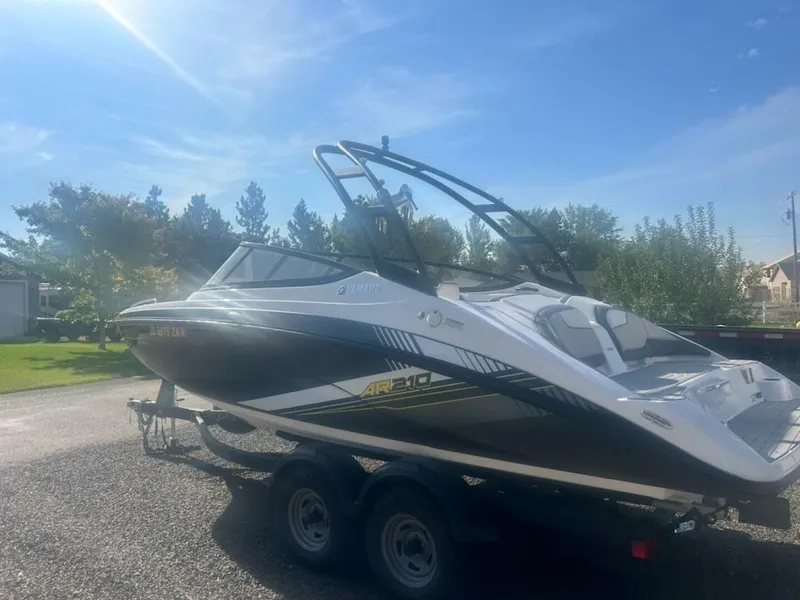
Yamaha
Searching boats for you...
Yamaha – Technical and Historical Guide
ABOUT THIS BOAT BRAND
Yamaha is a Japanese boat manufacturer renowned for integrating high-revving marine propulsion with streamlined, automotive-inspired ergonomics in its jet-boat lineup. The company’s marine roots trace back to the early 1960s, when Yamaha expanded from its 1887 origins into outboard motors and broader marine engineering, building a reputation for dependable powerplants and precise manufacturing. Yamaha’s signature philosophy is system-level design: hull, jet pump, and engine are engineered as a package to deliver predictable handling, low draft, and reduced exposed running gear compared with traditional sterndrive setups. Within the personal and family jet-boat segment, Yamaha has become a reference brand for mass-produced, feature-rich sport boats, backed by the scale of Yamaha Motor Co., Ltd. and a global dealer and parts network that supports long-term ownership confidence across the marine industry.
Specializing in gasoline-powered freshwater and coastal-capable jet boats, Yamaha serves family boaters, watersports enthusiasts, and owners who want sporty handling without a propeller below the swim platform. Core Yamaha offerings include the 19-foot SX series, the 21-foot AR series, and the flagship 25-foot 252 series, all built around twin-engine jet propulsion for strong holeshot and towing performance. Across the range, Yamaha emphasizes a shallow draft profile, high freeboard for passenger security, and integrated ballast and tow-focused layouts on select models for wake sports. Common technical features include twin jet pumps with thrust-vector control on many boats, swim platforms designed for in-water staging, molded-in non-skid surfaces, dedicated transom storage, digital helm instrumentation, and fiberglass-reinforced hull construction tuned for responsive turning. This specialization makes Yamaha a preferred choice for buyers prioritizing jet-drive safety around swimmers, strong acceleration for watersports, and consistent, package-engineered reliability.
WHAT MAKES THIS BOAT BRAND SPECIAL?
Yamaha stands out for jet-boat innovation that blends sport performance with family-friendly safety, and that starts with the brand’s waterjet propulsion approach: no exposed propeller, quick hole-shot acceleration, and confident maneuvering in shallow areas. Many Yamaha models pair lightweight, durable fiberglass hulls with an articulated keel system for better tracking so the boat feels less “loose” at speed and more predictable when docking, especially for newer captains. Add responsive steering, strong midrange punch from Yamaha marine engines, and layouts designed for day boating, towing, and sandbar hangouts, and Yamaha consistently delivers a fun, easy-to-own package with smart storage, swim platforms, and tow-ready features that make watersports simple.
Yamaha boats are produced in the United States at Yamaha’s dedicated boat manufacturing operation in Vonore, Tennessee, where experienced technicians build to tight tolerances and repeatable quality standards. That facility focuses on consistent lamination, robust stringer and deck structures, and premium hardware and upholstery materials selected for UV resistance and high-traffic durability, along with ABYC-aligned rigging practices and compliant safety labeling where applicable. Yamaha backs this build approach with a clear warranty program and a reputation for straightforward ownership, and owners often describe Yamaha as the brand that brings motorcycle-like engineering discipline to the water: fast to respond, easy to maintain, and built to keep its value for families who want a dependable jet boat with big fun and low stress.
WHAT DIFFERENT TYPES OF BOATS DOES THIS BOAT BRAND BUILD?
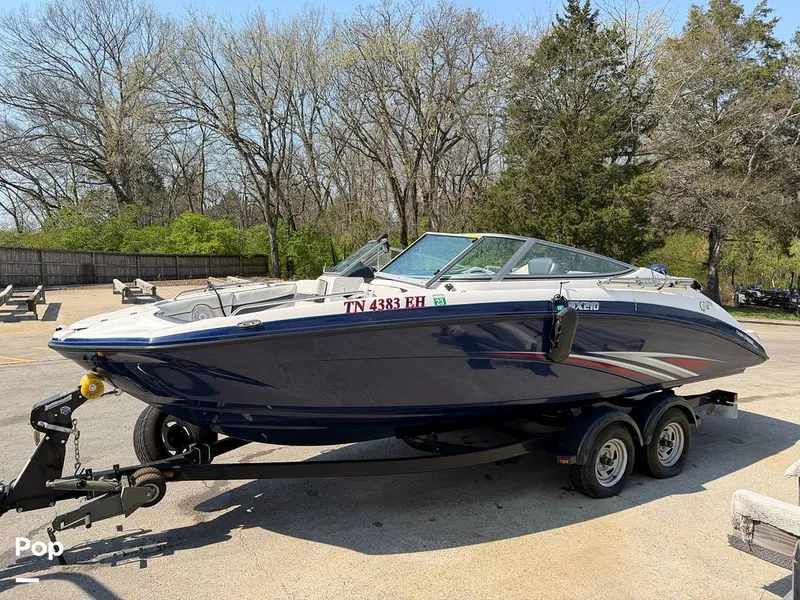
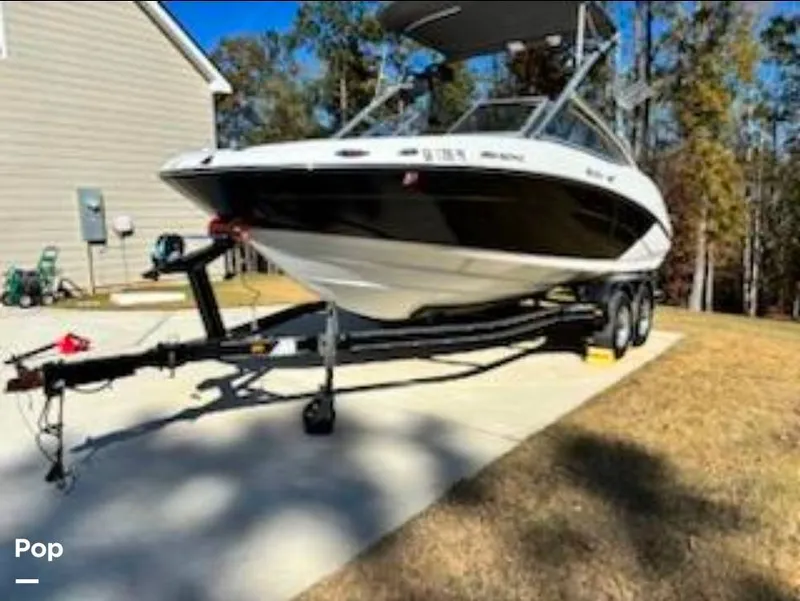
Yamaha builds jet-powered inboard sport boats and center console boats designed for watersports, day cruising, and entertaining with the safety and simplicity of internal jet propulsion. The lineup spans from 19-foot sport boats up through the brand’s largest Wake Series platform at 28' 5", giving shoppers a clear progression from compact, trailer-friendly runabouts to big, yacht-certified-style surf and lounge boats. Across the range, Yamaha covers sport boats, center console boats, and Wake Series boats, with configurations aimed at family fun, tow sports, and fish-and-play versatility. Sizes and series are organized around key footprints such as 19, 22, 25, and 27 feet, making it easy to match space, capacity, and features to your home water. Below are the types of boats and models Yamaha builds, along with their key characteristics and uses:
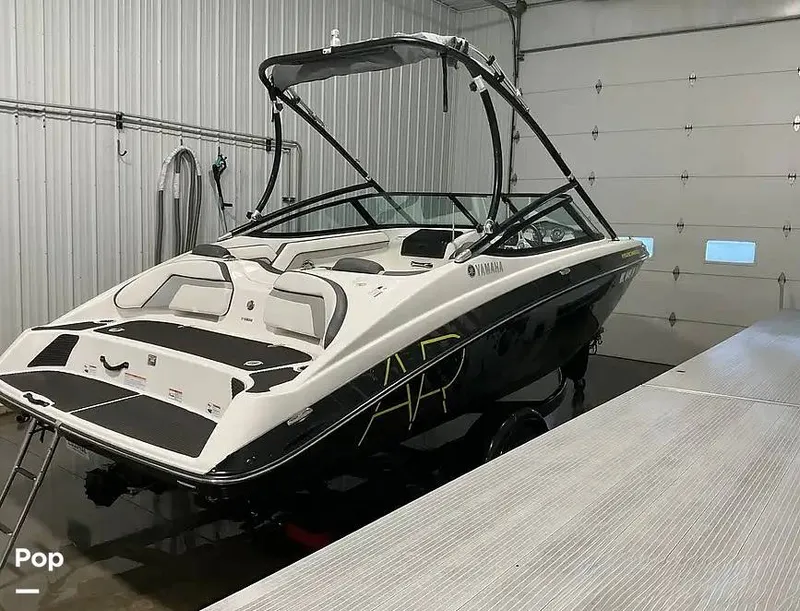
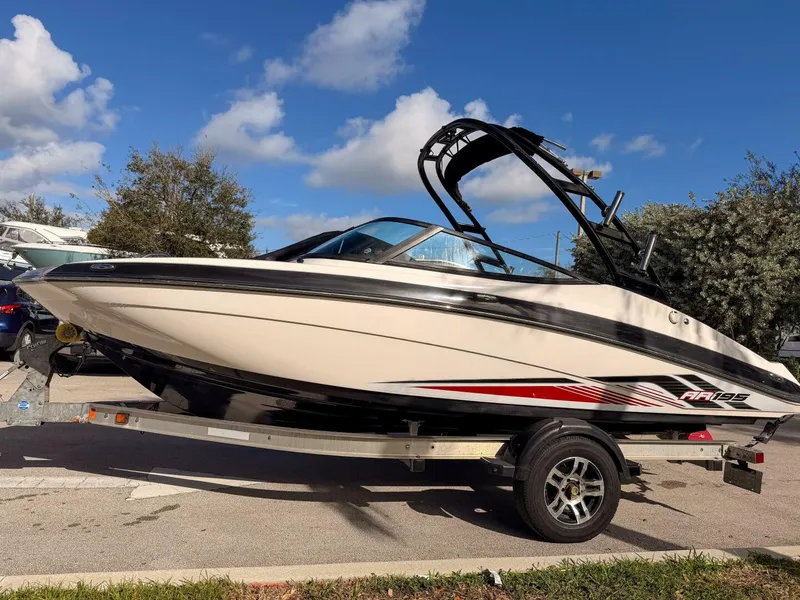
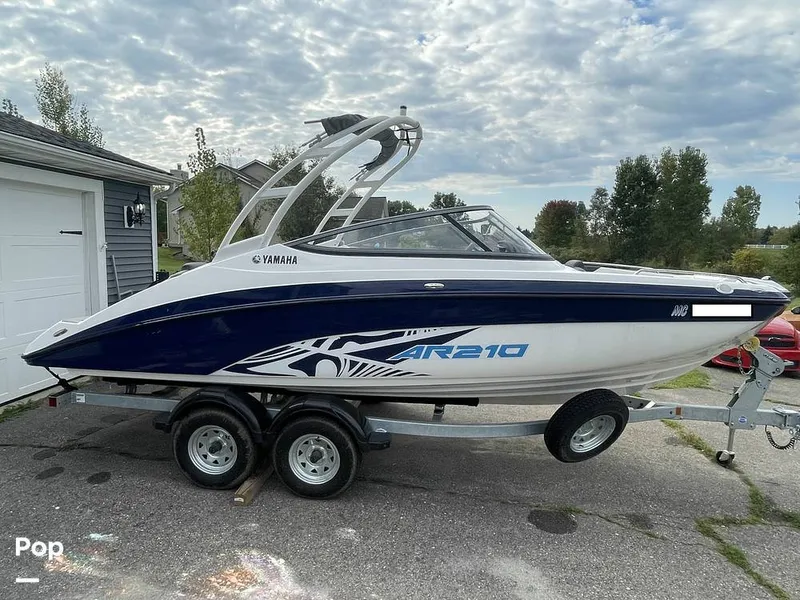
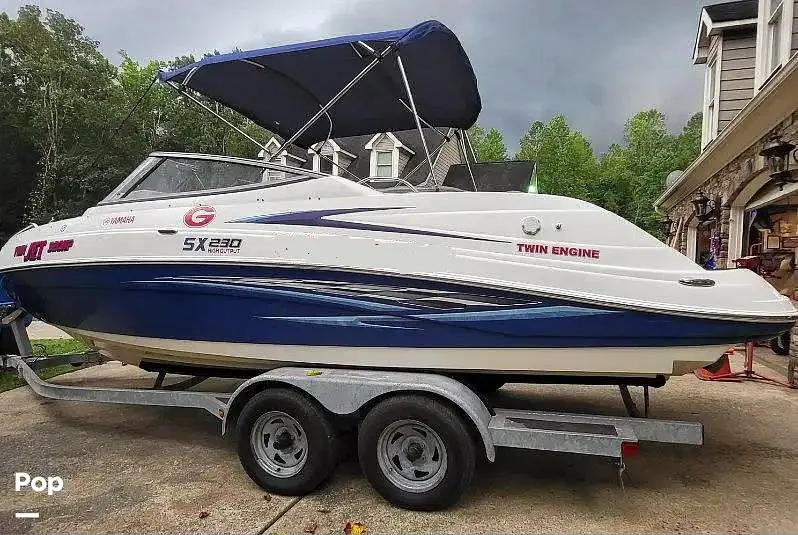
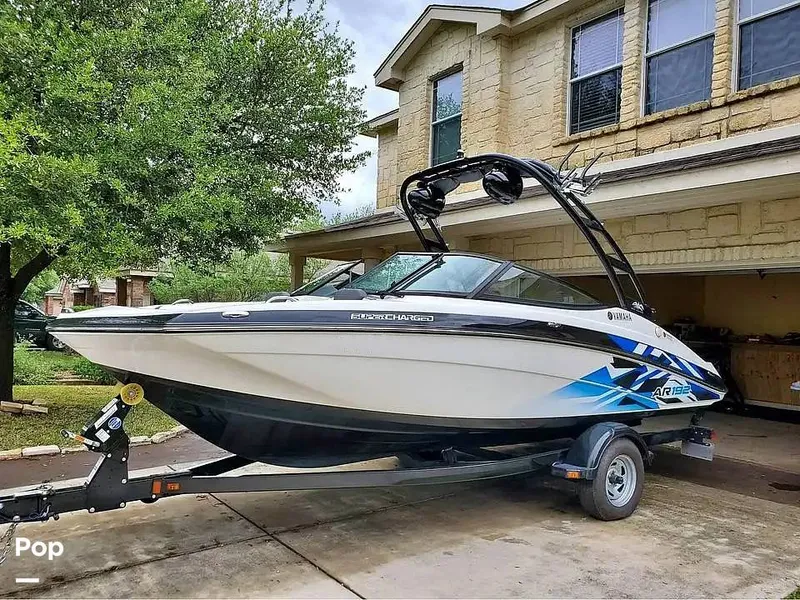
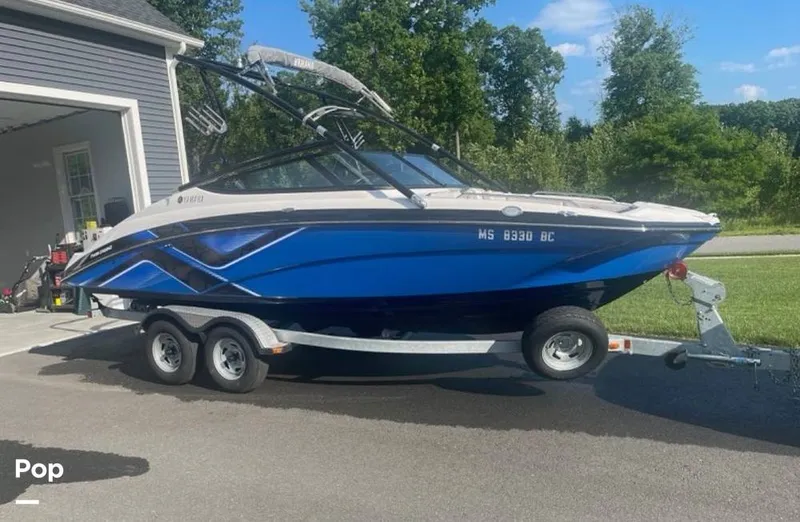
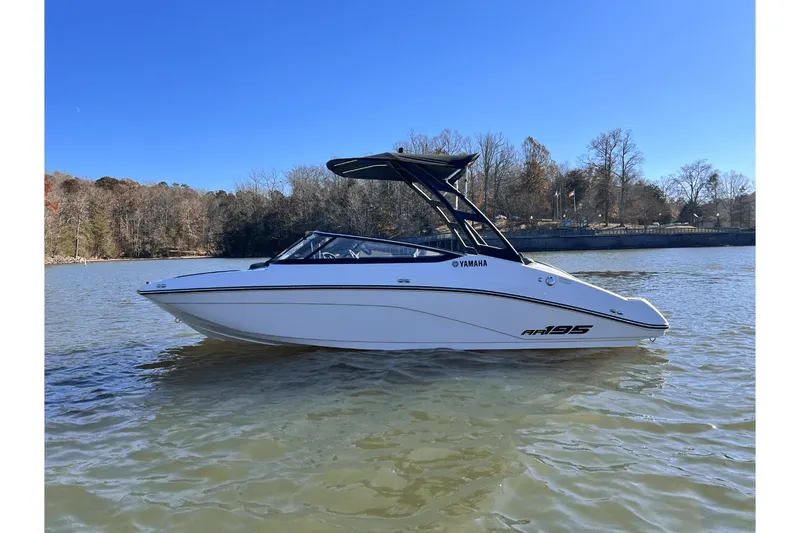
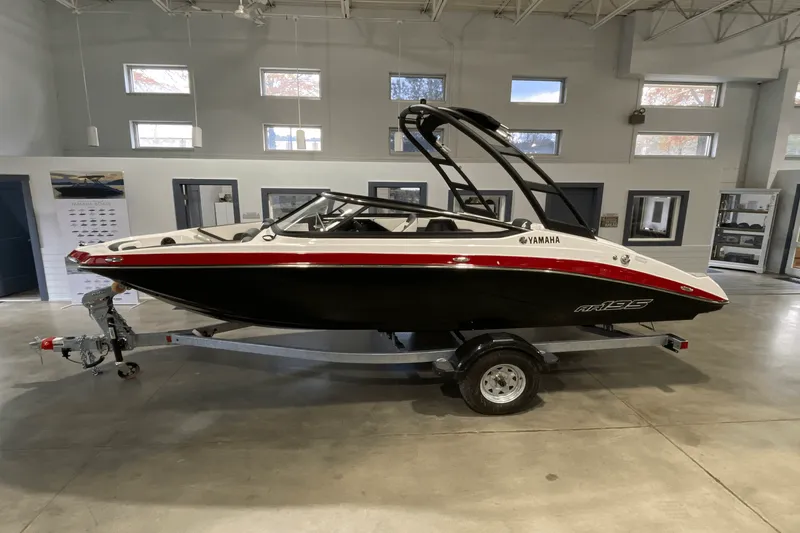
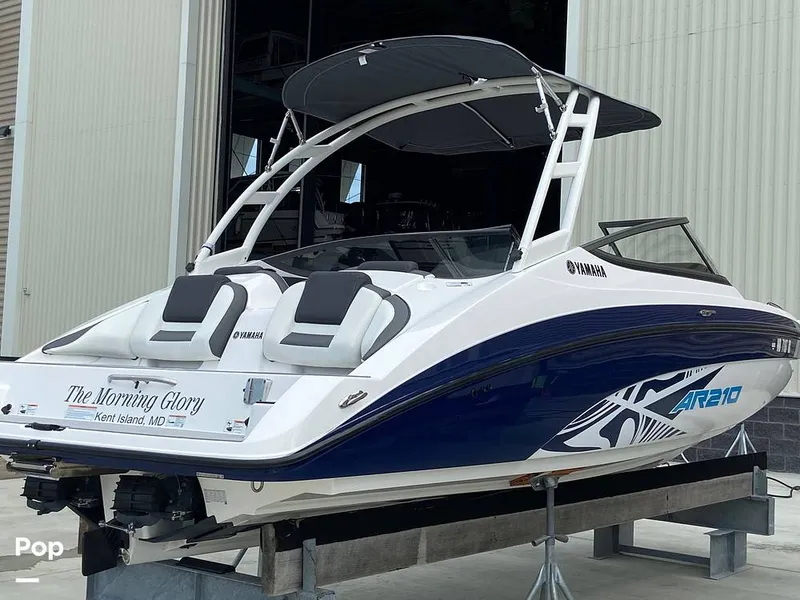
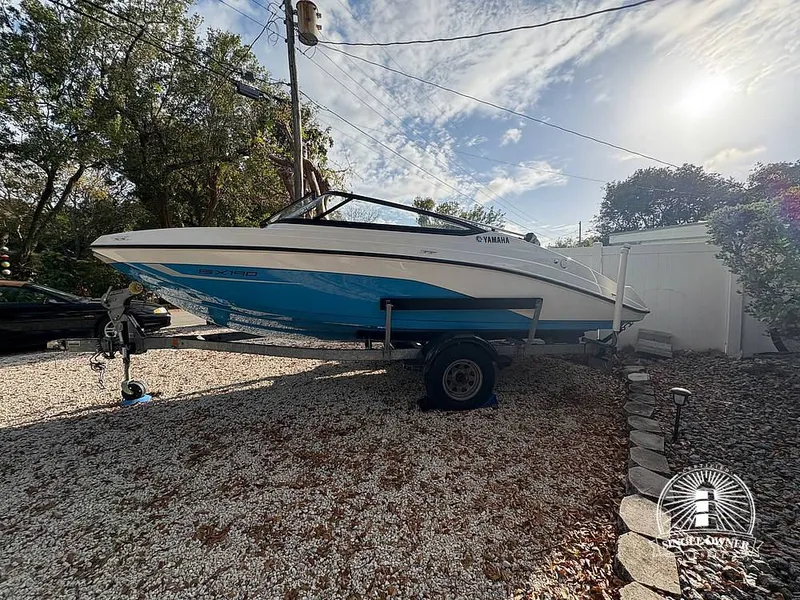
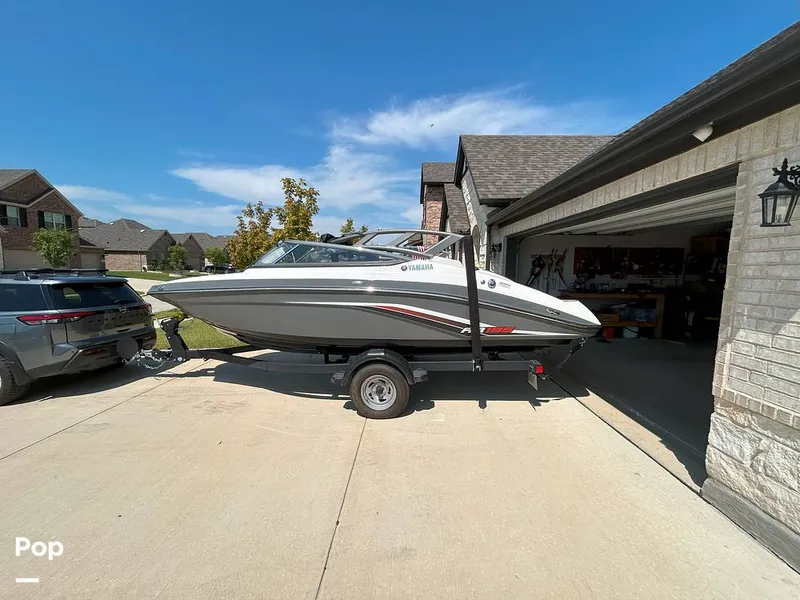
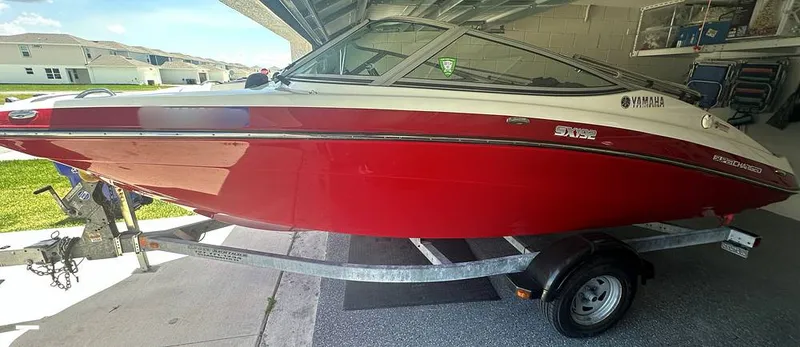
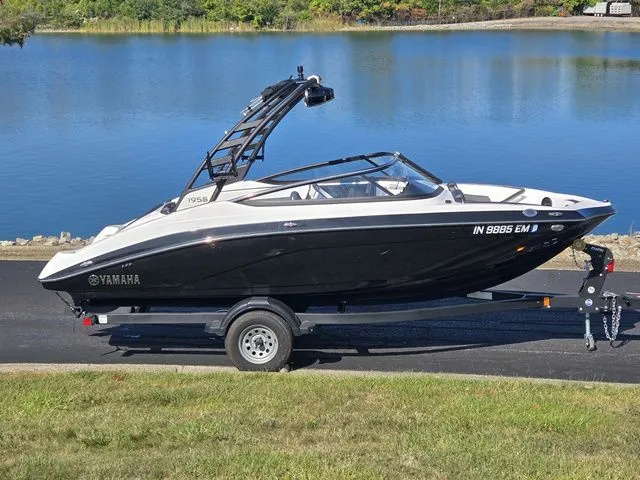
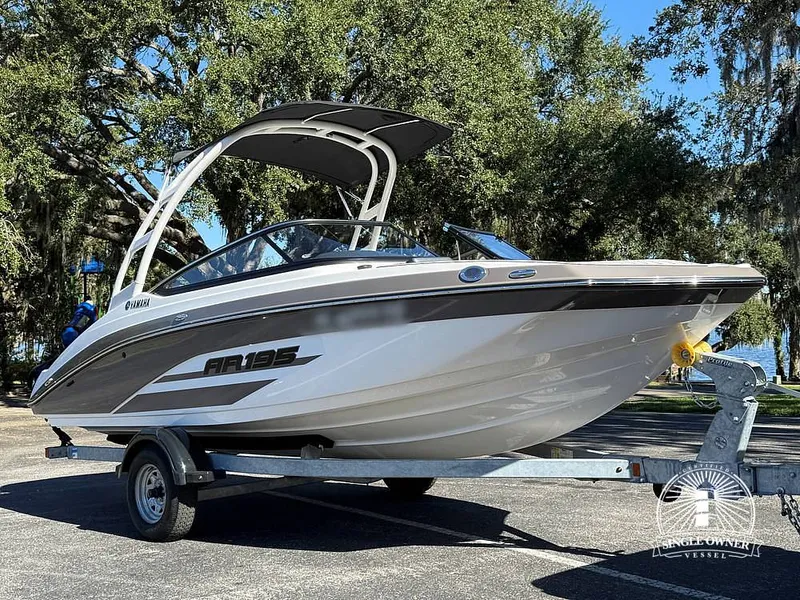
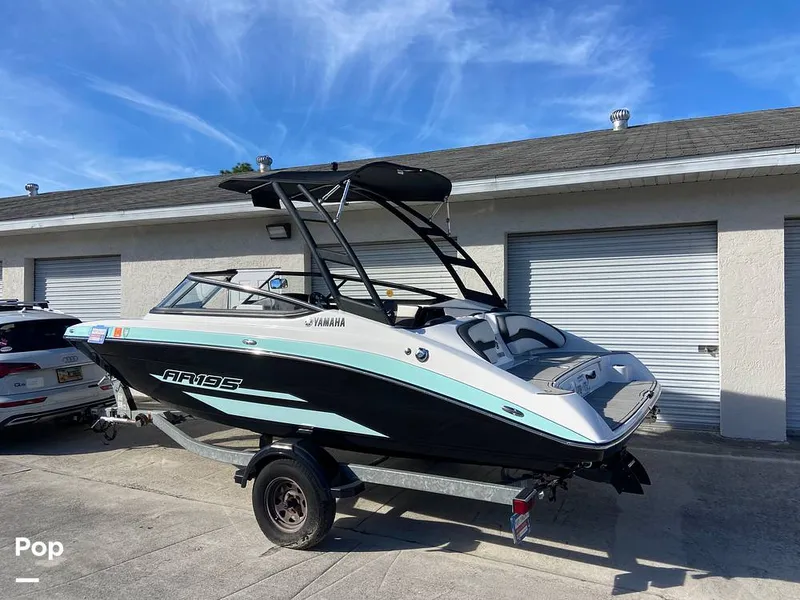
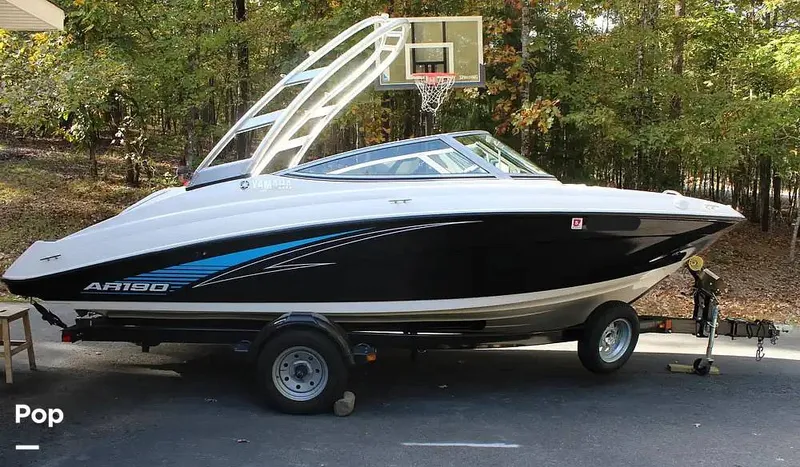
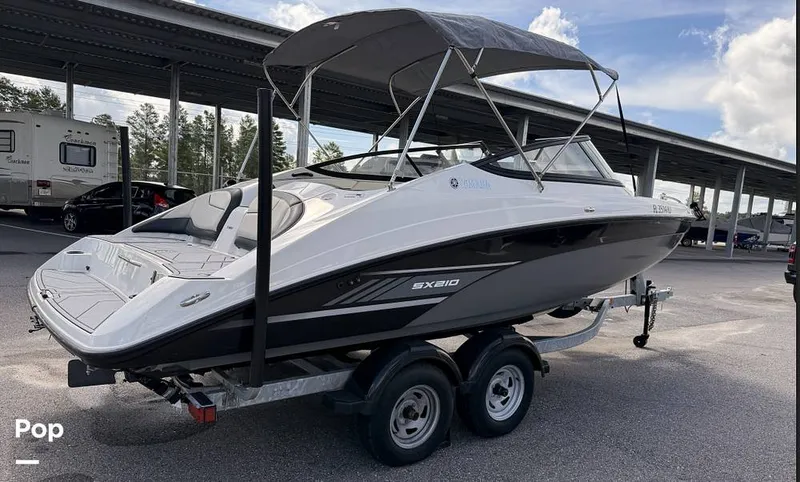
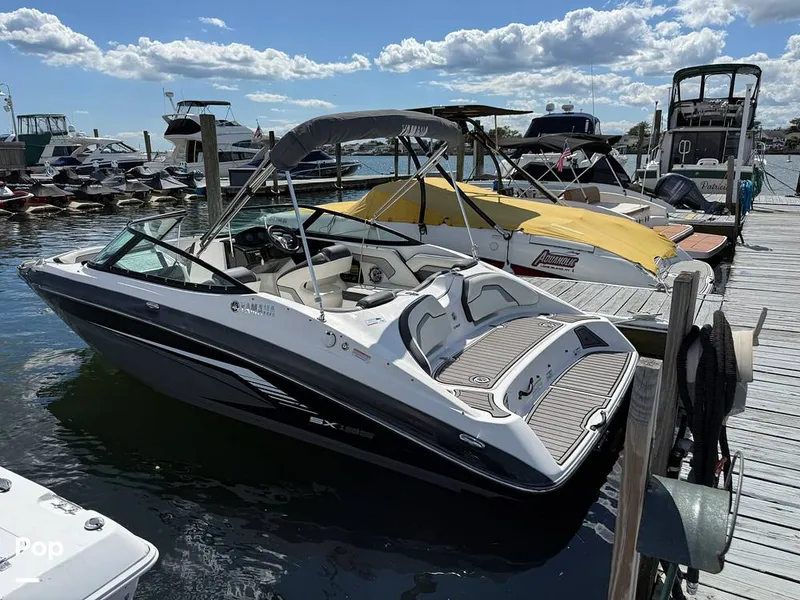
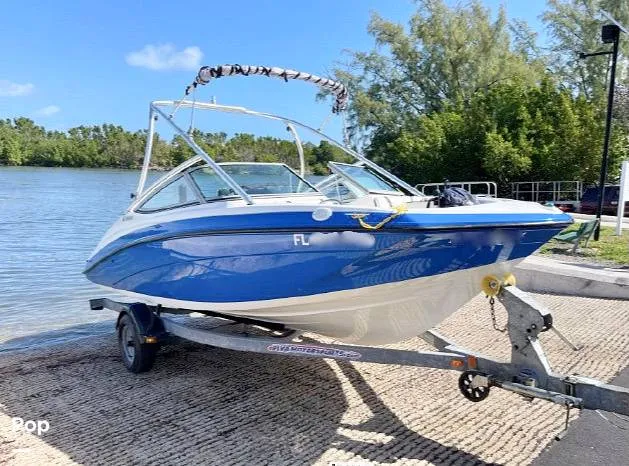
• (19 FT Jet Runabout / Bowrider (single-engine jet, 19-foot series)) Yamaha Boats’ entry runabouts are 19'5" jet-powered bowriders built for family cruising and tow sports, with Yamaha’s prop-free jet pump and a shallow-draft, beach/sandbar-friendly profile. The current 19-foot line includes SX190, AR190, SX195, AR195, and 195S, all in the same size class but with different feature/tower and performance packages. The SX195 and 195S are 19'5" (beam 8'2", draft 15", deadrise 18°, fuel 40 gal), emphasizing compact handling and value while still offering Yamaha staples like the integrated swim platform and pump cleanout access. Power is Yamaha gasoline marine engines driving a single jet pump (single-engine layout), with higher-trim models marketed around supercharged performance in this size. Typical use-cases are day boating, swimming, tubing, and wakeboard/wakesurf “recreational” sessions, with Yamaha’s Connext® touchscreen helm on many trims and safety benefits of no exposed propeller for families.
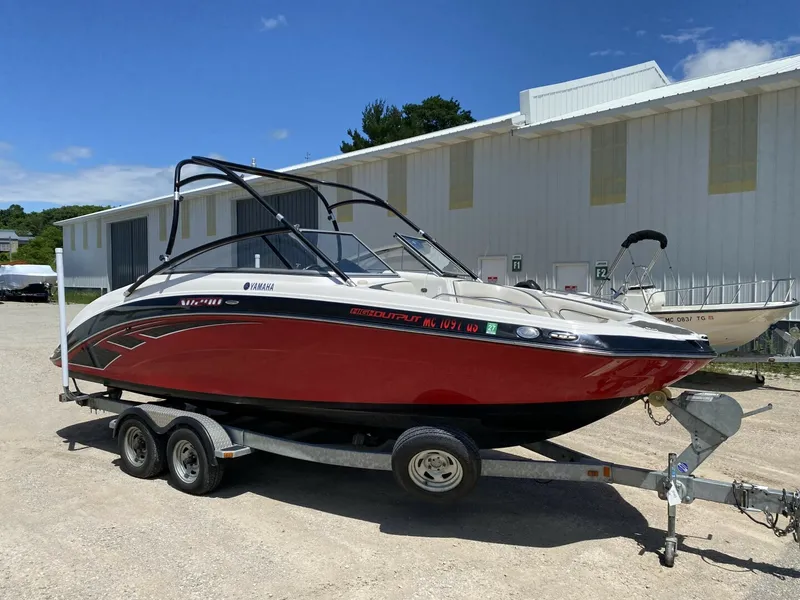
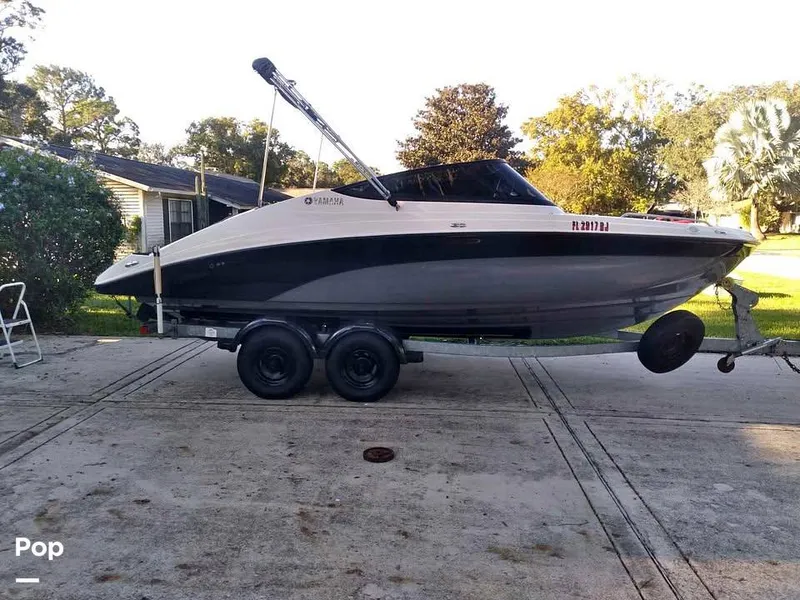
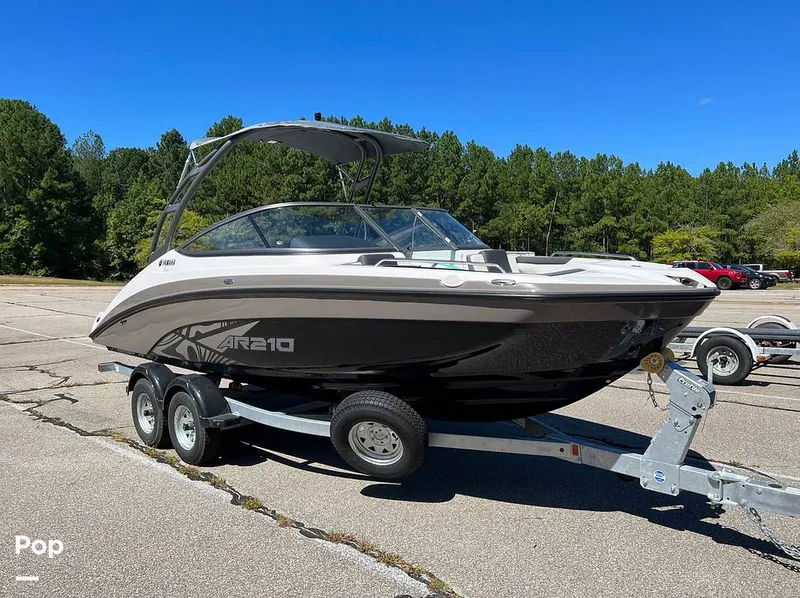
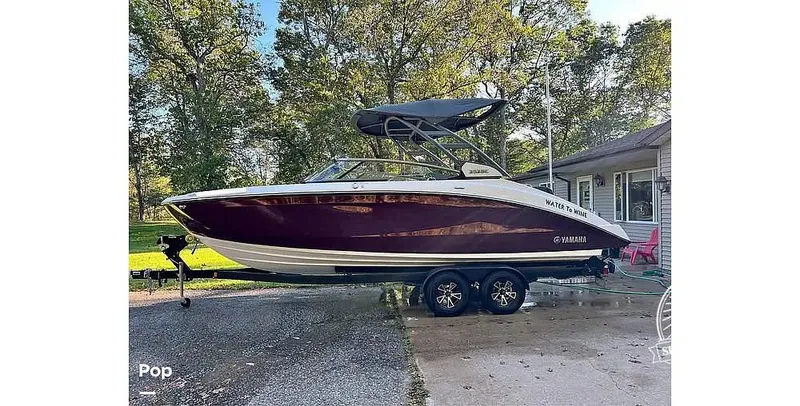
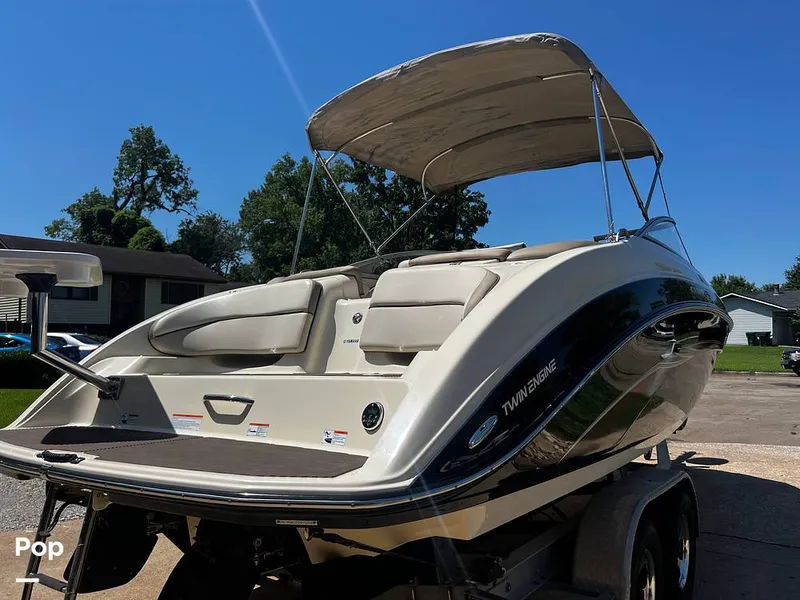
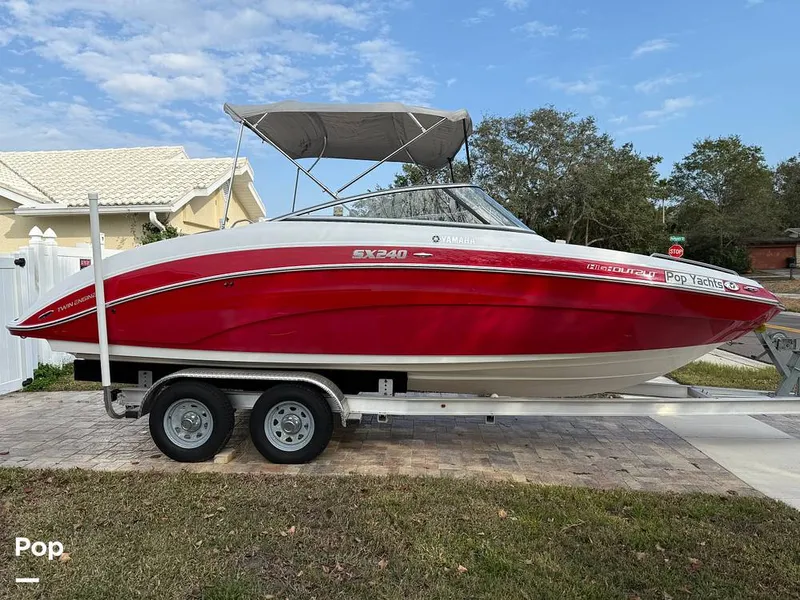
• (22 FT Jet Runabout / Bowrider (twin-engine jet, 22-foot series)) Yamaha’s 22-foot series steps up in interior volume and twin-engine confidence for bigger crews and more time on the water, while retaining the brand’s jet-drive advantages (fast acceleration, shallow-water utility, prop-free stern). The current 22-foot models are SX220, AR220, 222S, 222SE, and 222SD (all 22'). The 222S provides a good reference spec point for the platform: LOA 22', beam 8'6", draft 19", deadrise 20°, and 70-gal fuel—balancing stability at rest with a moderate-V running surface. Feature differentiation centers on helm tech and low-speed control: the “E-Series” (222SE) adds drive-by-wire conveniences, while the “SD/DRiVE” variants (e.g., 222SD) add enhanced dock/low-speed maneuvering features. These boats are aimed at families who want a versatile bowrider for cruising, entertaining, and watersports with room for 10 passengers (model dependent) and upgraded audio/infotainment options.
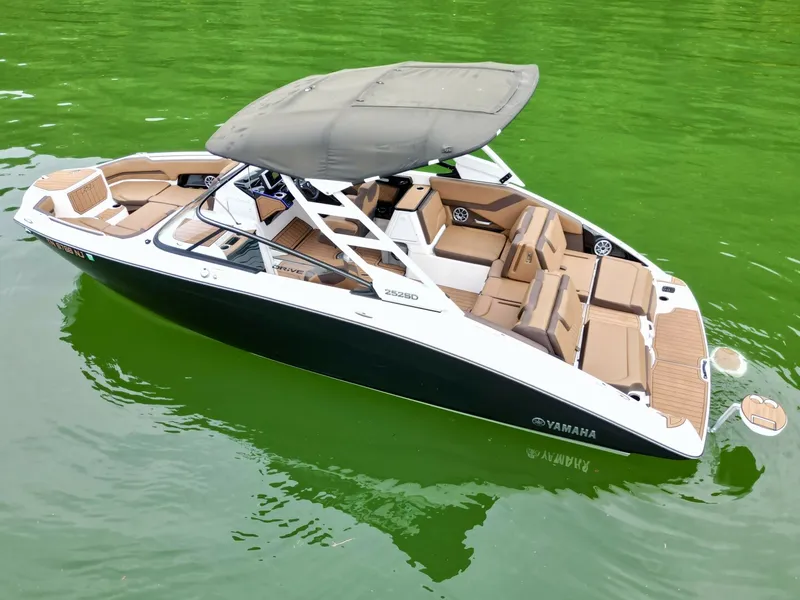
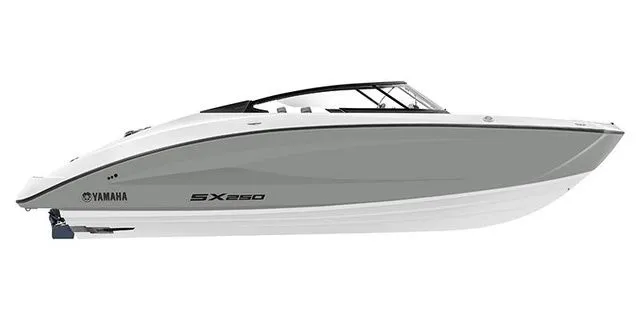
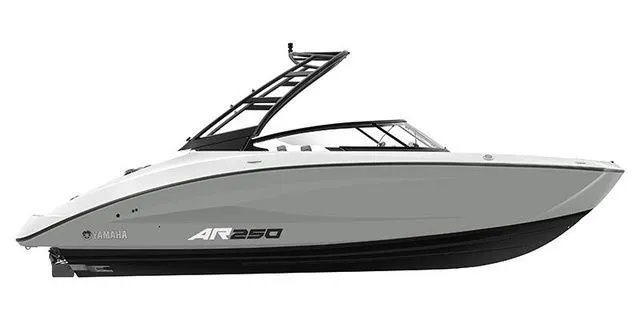
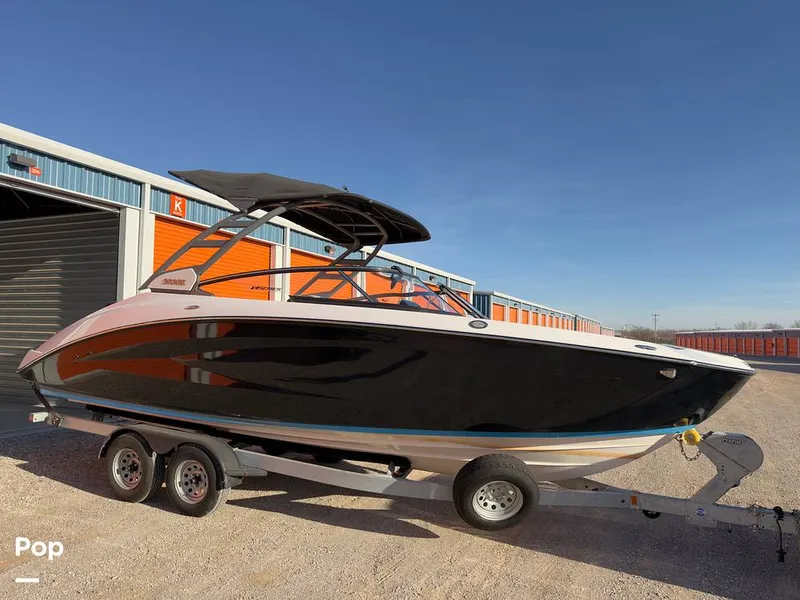
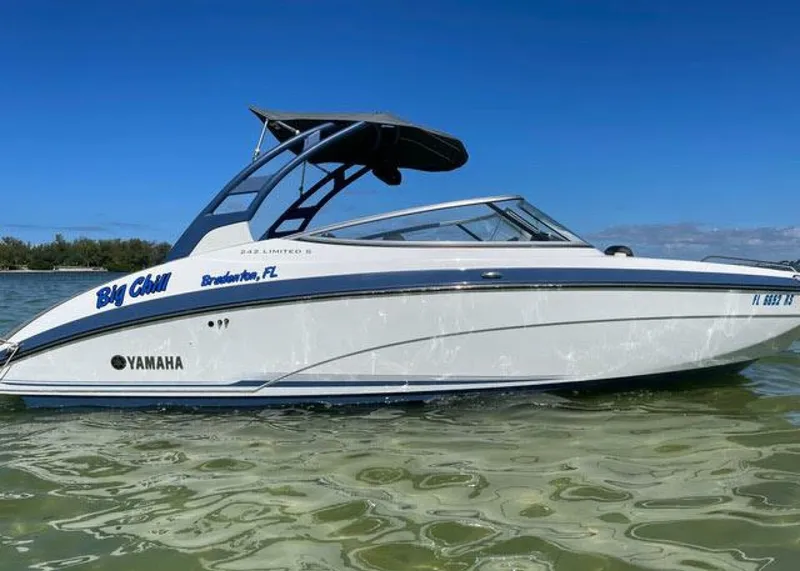
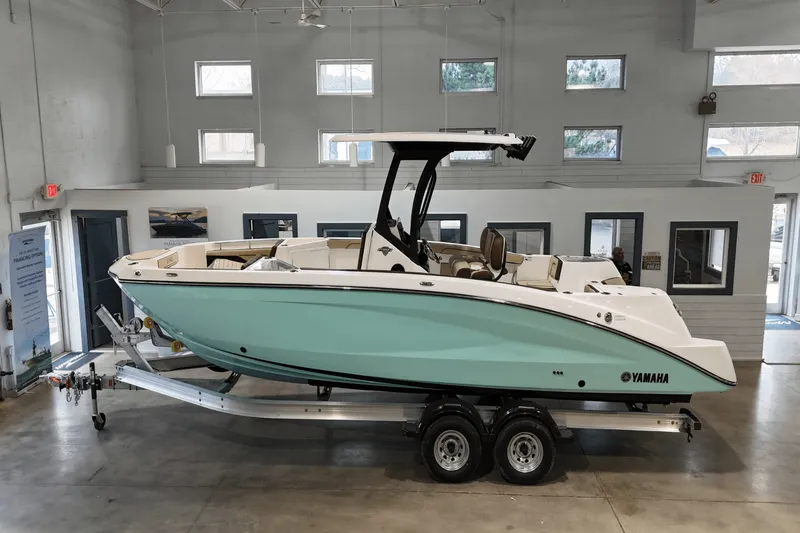
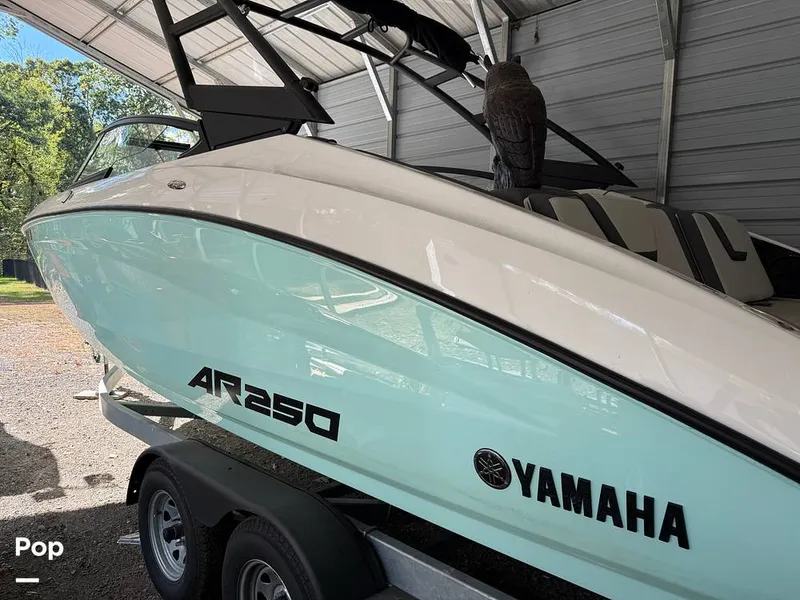
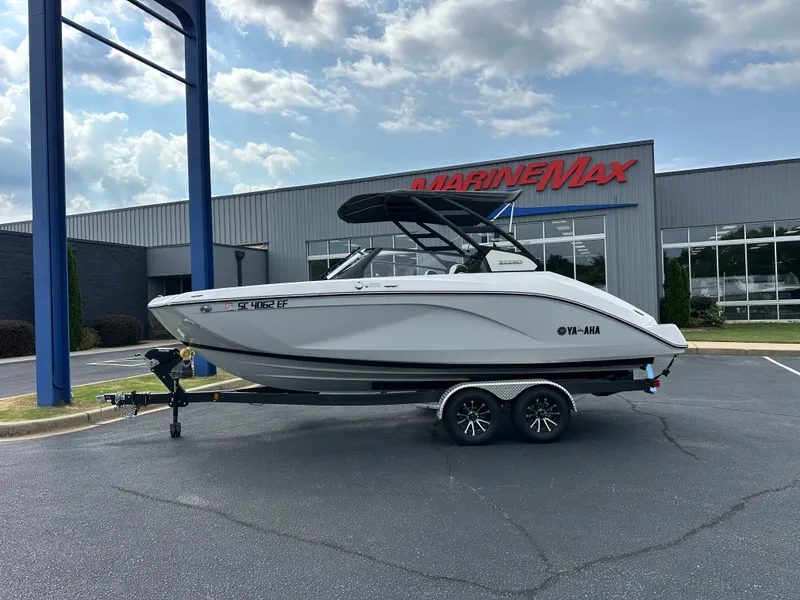
• (25 FT Jet Runabout / Bowrider (twin-engine jet, 25-foot series)) The 25-foot series is Yamaha’s core big-bowrider platform—designed for all-day entertaining, more storage, and stronger towing/docking authority via twin jet propulsion. Yamaha’s current 25 FT Boats include SX250, AR250, 252S, 252SE, and 252SD, all at 24'6" LOA. The AR250 (24'6") is a representative baseline for the platform with beam 8'6", draft 19", deadrise 20°, and 75-gal fuel. The 252SD (24'6") keeps the same hull dimensions (beam 8'6", draft 19", deadrise 20°) but adds Yamaha’s latest steering-wheel-based dock-assist technology (DRiVE X) and a 10-gal water system, positioning it as the maneuverability/feature flagship within the runabout line. Across the series, Yamaha emphasizes an integrated swim platform with “in-water” lounge capability via accessories, premium seating configurations, and Connext® touchscreen integration. Best use-cases: large-family cruising, sandbar hosting, and tow sports where jet thrust and quick planing are valued.
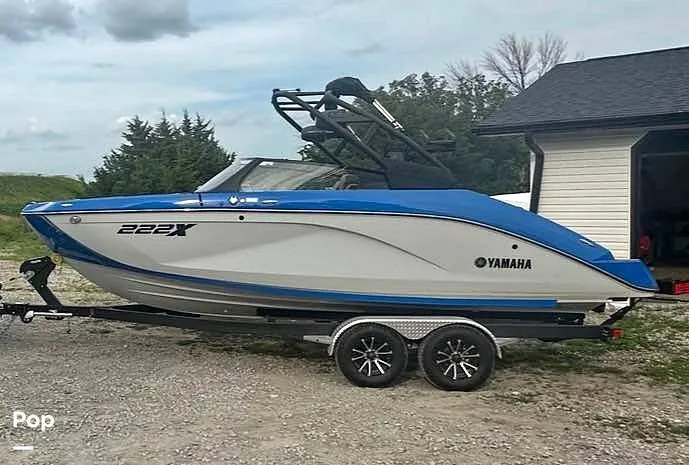
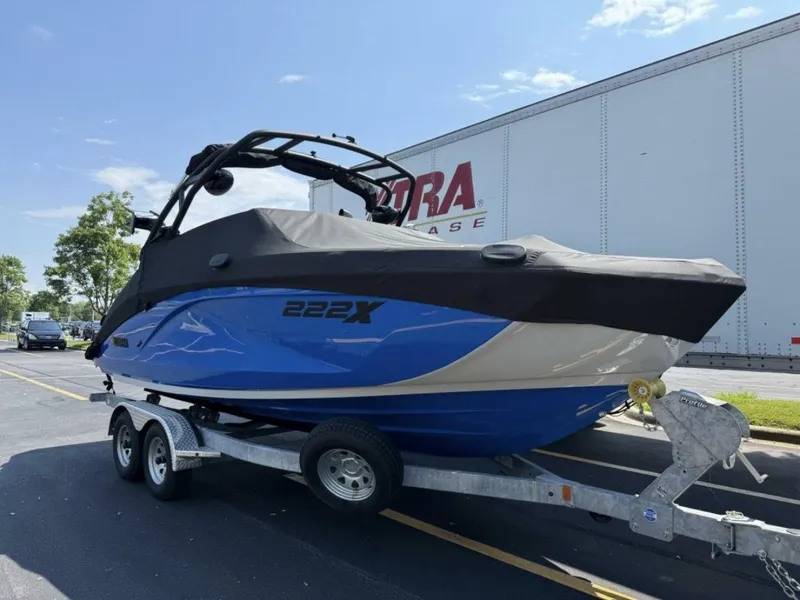
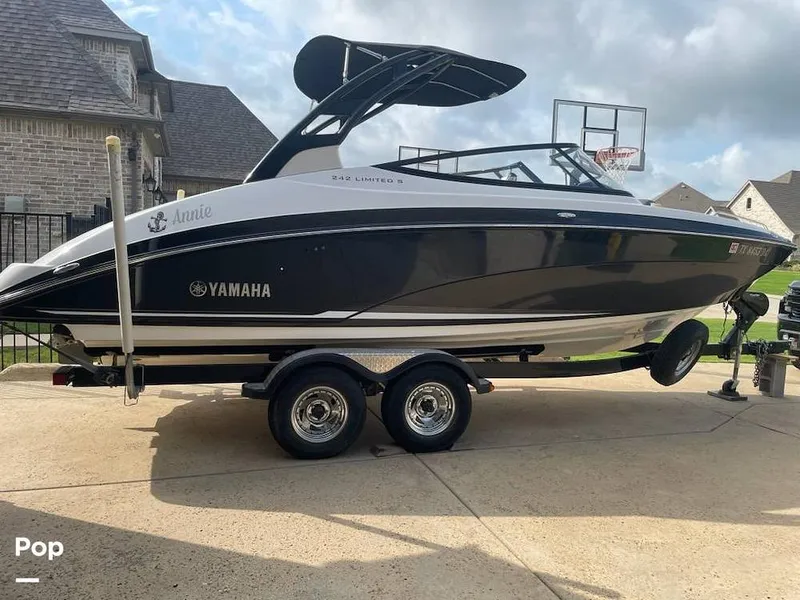
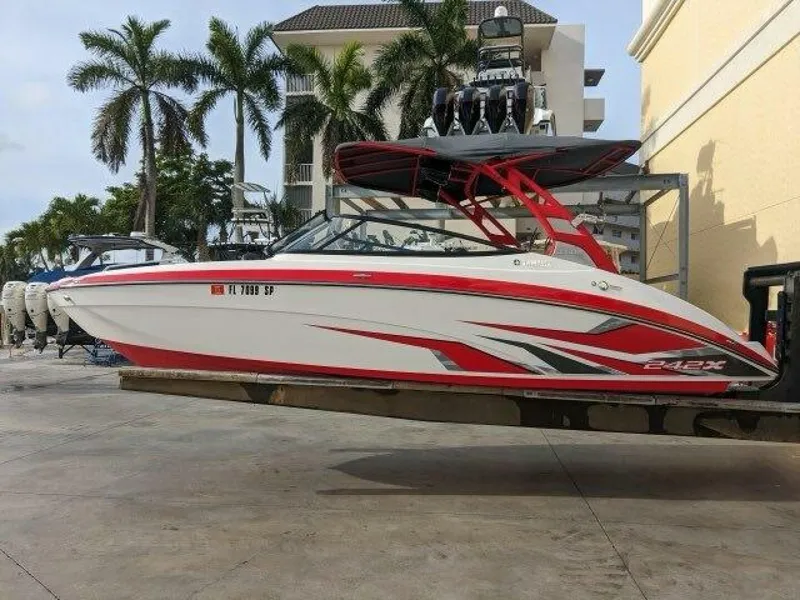
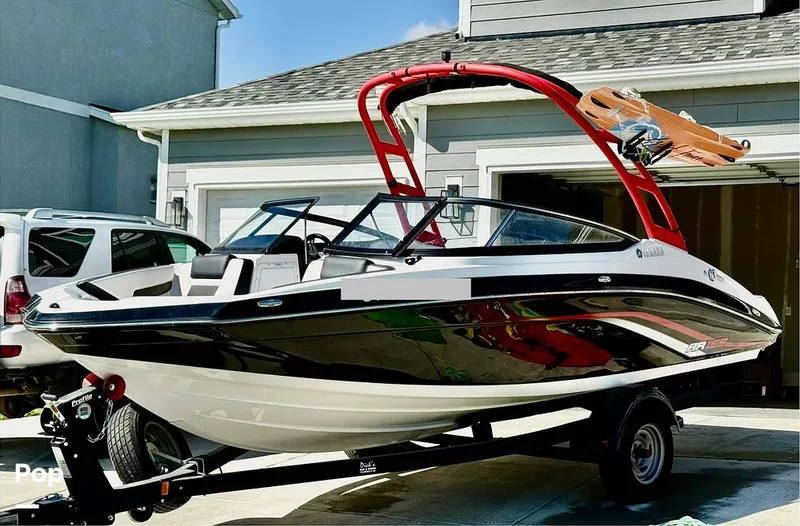
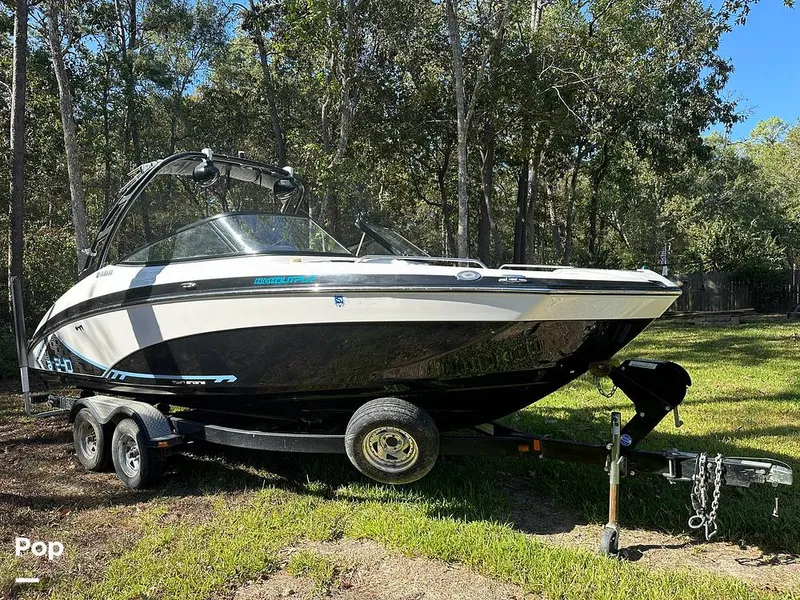
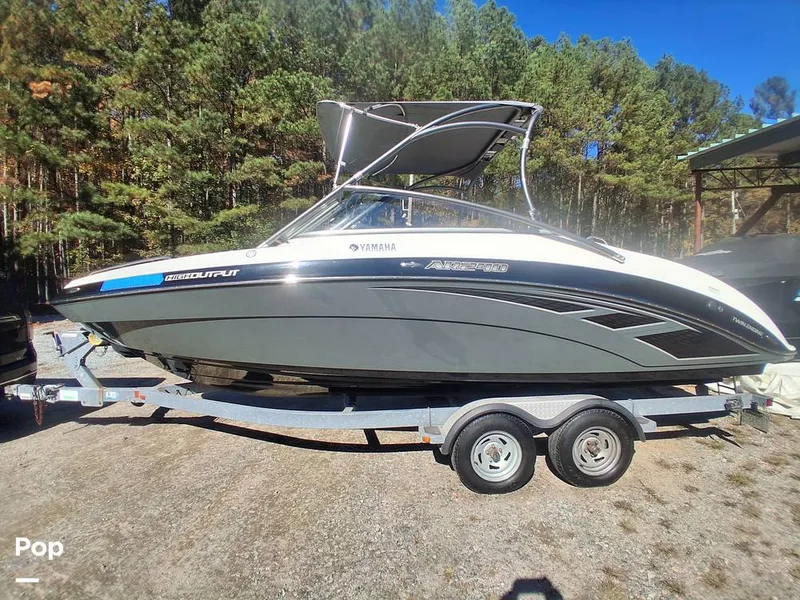
• (Wake / Wakesurf Jet Boats (dedicated tow + surf features)) Yamaha’s Wake Series is purpose-built for wakeboard and wakesurf days while leveraging jet drive (no prop) and Yamaha’s integrated systems approach. Current models span from 22' to 28'5" and include 222XE, 222XD, 252XE, 255XE, 255XD, and the flagship 295XD. The 222XD (22') illustrates the family’s core platform specs—beam 8'6", draft 19", deadrise 20°, fuel 70 gal—paired with wake-focused hardware like towers and Yamaha’s integrated WakeBooster® system (model dependent). The 255XE shows the larger wake platform spec set at 24'6" LOA, beam 8'6", draft 19", deadrise 20°, and 75-gal fuel, commonly paired with factory ballast packages and premium audio. At the top, the 295XD is a yacht-certified, luxury-leaning wakesurf flagship (28'5" LOA, beam 9'1", 111-gal fuel, twin supercharged engines) aimed at buyers who want big-water comfort, advanced helm tech, and premium entertaining space while still prioritizing surf performance.
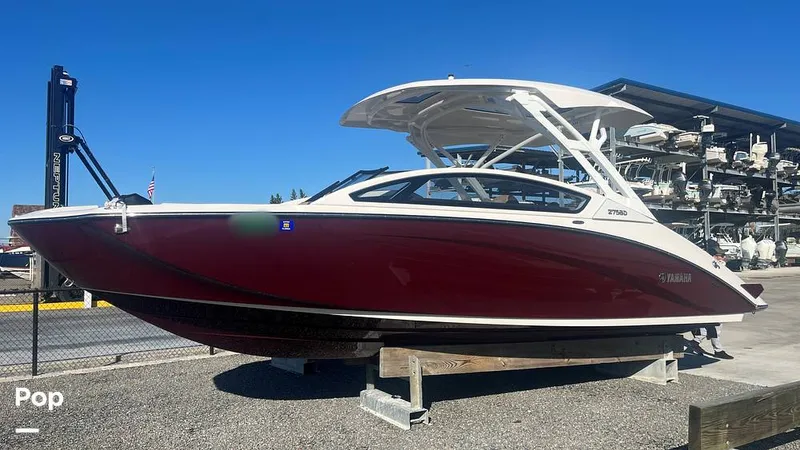
• (27 FT Luxury Jet Boats / Day Cruisers (yacht-certified)) Yamaha’s 27-foot 275 series moves into premium day-cruiser territory with yacht-certified capacity, expansive lounges, and upscale entertaining amenities—while keeping Yamaha’s hallmark jet propulsion. The current lineup includes 275SE and 275SD (both 27' LOA) with 90-gal fuel and a wide 9' beam for added interior volume. The 275SD’s full-spec dimensions highlight the platform: LOA 27', beam 9', draft 22", deadrise 20°, fuel 90 gal. Differentiation between SE and SD is largely technology and cockpit/galley-style feature packaging, with the SD emphasizing advanced low-speed maneuvering/docking assistance. Typical use-cases include premium day entertaining, big-crew cruising, and sandbar lounging, where Yamaha’s integrated swim platform and flexible seating/transom layouts are major selling points.
• (29 FT Flagship Luxury Jet Boats / Day Cruisers (yacht-certified)) The 295 Series is Yamaha Boats’ flagship day-cruiser platform, pairing jet propulsion with yacht-certified capacity, a fully integrated head compartment, and true “day yacht” amenities like a windlass anchor and galley-style prep features on SD trims. The current 29-foot family includes 295SE and 295SD, both listed at 28'5" LOA on Yamaha’s model pages, with beam 9'1", deadrise 20°, and 111-gal fuel. The 295SD is positioned as the most advanced luxury model, adding Helm Master® EX joystick control for precision low-speed maneuvering (in addition to Yamaha’s Connext® helm ecosystem). Yamaha also publishes an overall-length reference of 29'5" when measured “with anchor roller” for the 295 series, clarifying why some materials call these “29-foot” boats even though the standard listed length is 28'5". These are designed for premium entertaining, all-day cruising, and owners who want big-boat features without stepping into a traditional prop/inboard day yacht.
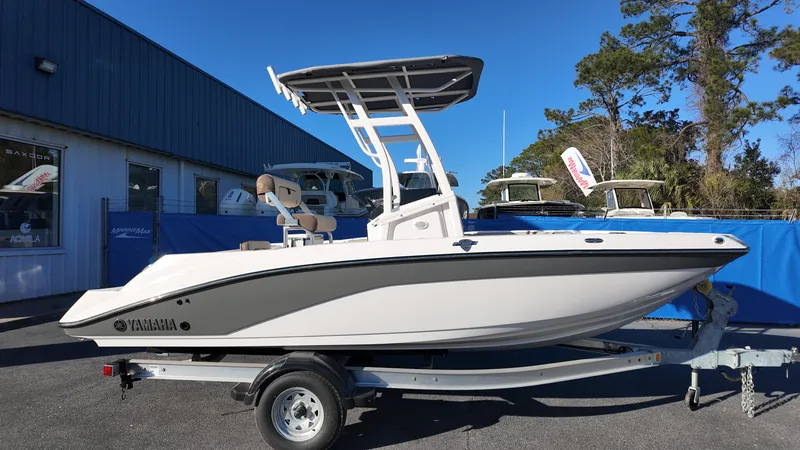
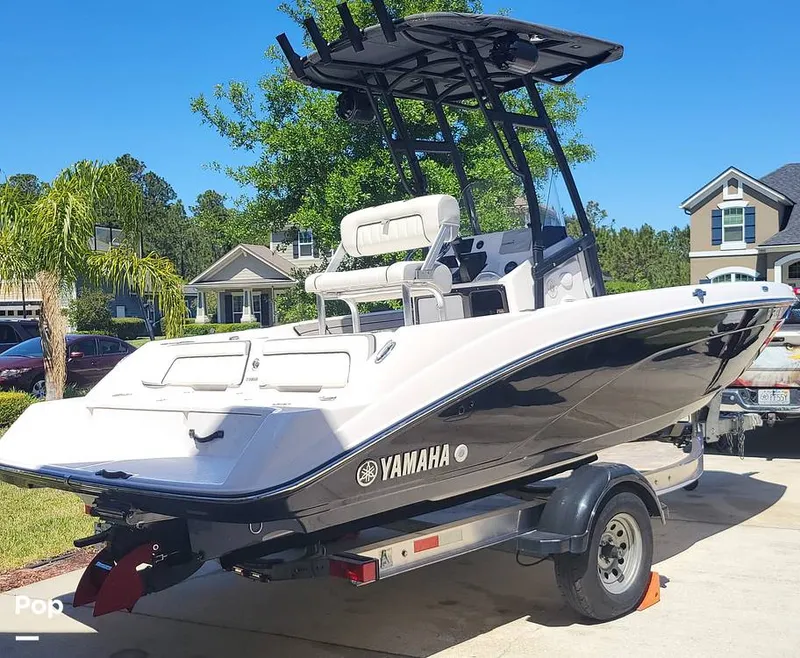
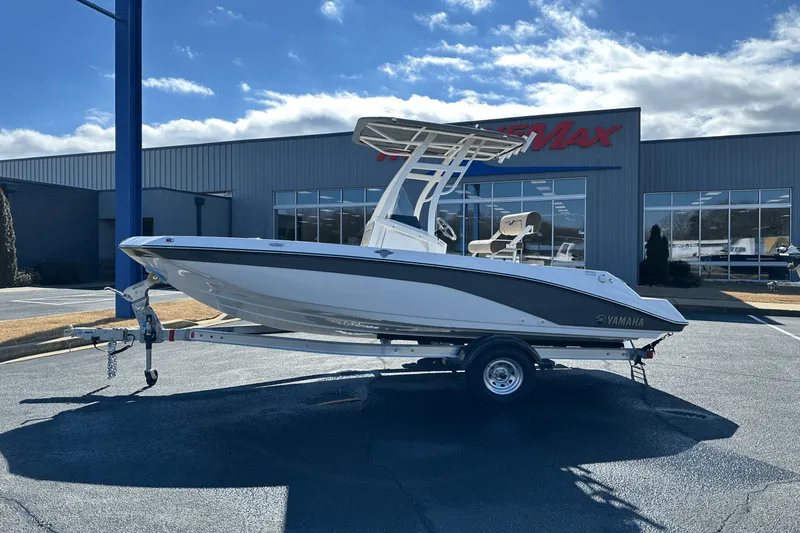
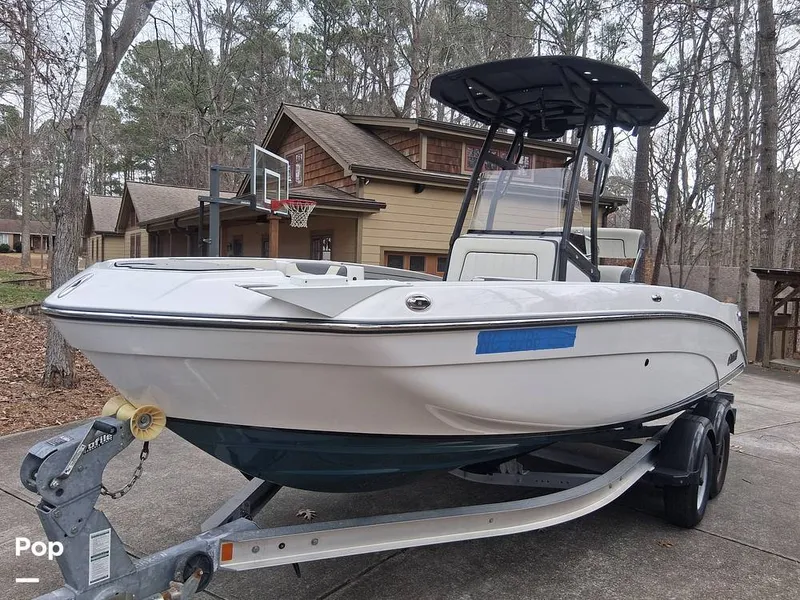
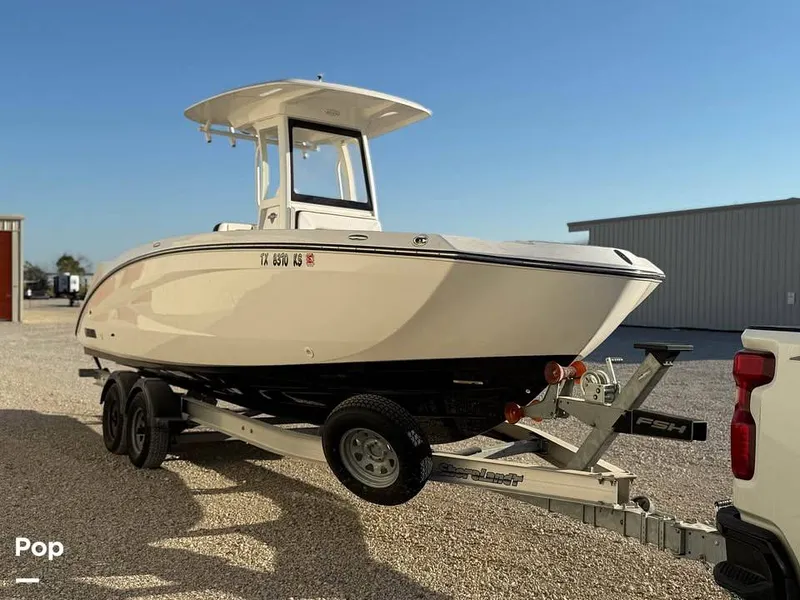
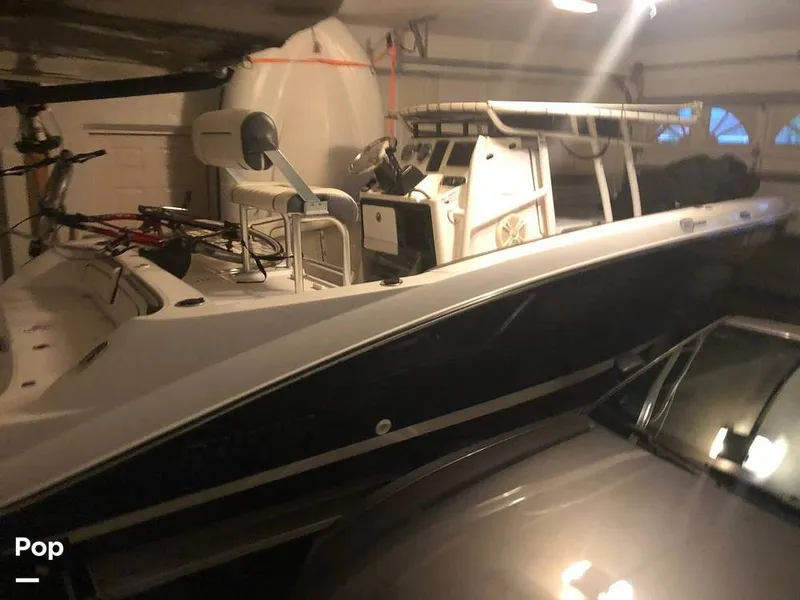
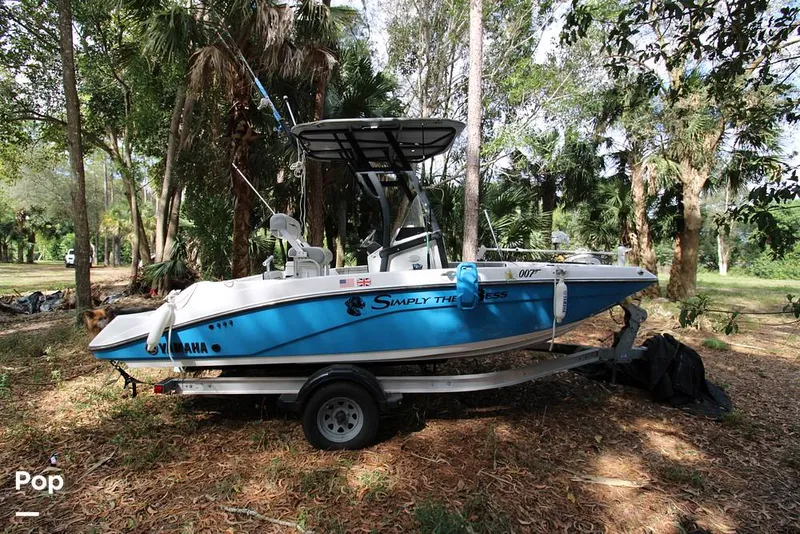
• (Center Console Jet Boats (FSH® “Fish Sport Hybrid” / family + fishing)) Yamaha’s FSH® (Fish Sport Hybrid) center consoles combine jet drive with fishing-specific layouts—targeting coastal/inshore anglers who also want family water-sports versatility and a clean, prop-free stern. Current models include 190 FSH Sport, 195 FSH Sport, 220 FSH Sport, 222 FSH Sport, 222 FSH Sport E, 252 FSH Sport, 255 FSH Sport E, and 255 FSH Sport H. The smallest, the 190 FSH Sport, is 19'5" LOA with beam 8'2", draft 16", deadrise 18°, and 40-gal fuel—providing an entry point with center-console functionality and fishing staples like livewell/fishbox storage (equipment varies by trim). At the top end, the 255 FSH Sport H is 24'6" LOA with beam 8'6", draft 22", deadrise 20°, and 111-gal fuel, and it’s marketed around Helm Master® EX joystick control for dock-assist handling plus twin supercharged engines. Across the series, expect rod storage, T-top options (canvas or hardtop depending on model), livewell capacity (trim dependent), 360° fishability around the stern, and comfort features that keep them viable as “fish in the morning, cruise in the afternoon” boats.
HOW ARE THESE BOATS BUILT?
How are Yamaha boats built? Yamaha jet boats are engineered as fiberglass reinforced plastic (FRP) composite structures designed to deliver high stiffness, low noise, and long term durability in a high load, high vibration jet propulsion environment. Hulls and decks are built as molded composite shells, with laminate schedules that combine stitched fiberglass biaxial fabrics and fiberglass mat in high wear zones to manage point loads, impact resistance, and print through control. Structural support is provided by an integrated, fiberglass stringer grid that is chemically bonded to the hull and then tabbed with fiberglass to create a continuous load path from the keel and running surface into bulkheads and deck structures. High stress areas such as engine beds, jet pump mounting regions, transom sections, and lifting strakes are reinforced with additional glass laminates and localized backing plates to reduce flex and improve fastener retention. For safety and rigidity, Yamaha boats incorporate foam flotation in void spaces and under-deck cavities where appropriate, using closed-cell polyurethane foam so buoyancy is retained even if the material is exposed to water. The lamination process follows controlled resin-to-glass ratios and cure schedules to ensure consistent mechanical properties, with resin systems selected for marine chemical resistance and fatigue performance. Exterior finish begins with an automotive-grade marine gelcoat (typically ISO-NPG-based for improved blister resistance and UV durability) applied in the mold prior to laminate layup, followed by a carefully staged cure to optimize gloss, adhesion, and long term color stability. Throughout construction, Yamaha boats are built to applicable U.S. Coast Guard requirements and commonly referenced marine industry standards, and the production approach is aligned with ABYC recommended practices and NMMA program expectations for safety, capacity labeling, and system installation. The hull-to-deck joint is executed as a unitized structural seam, using a bonded flange with marine-grade polyurethane adhesive or methacrylate structural adhesive, then mechanically fastened on a controlled spacing pattern and protected with a robust rub rail system to resist shear loads, deck working, and dock impact.
Above the structure, Yamaha specifies marine hardware and systems intended for corrosion resistance, serviceability, and vibration control. External cleats, rails, hinges, latches, and fasteners are specified in marine-grade stainless steel (commonly 316 for exposed deck hardware and 304 where sheltered), with backing plates or load-spreading inserts used at high load tie-down and towing points. Thru-hull fittings and valves are selected for marine service and installed with proper bedding compounds, double stainless hose clamps below the waterline, and anti-chafe hose routing to meet accepted plumbing best practices. Electrical design targets ABYC style methodology: tinned copper conductors sized for voltage drop, crimped and heat-shrink sealed terminations, circuit protection at the source, and dedicated bonding and grounding where required to reduce fault risk and galvanic issues. Interior upholstery and soft touch surfaces use UV-stabilized marine vinyl, mildew-resistant foam, and corrosion-resistant staples and thread, while high traffic cockpit zones receive durable non-skid textures and gelcoat or composite finish panels that are easy to clean and designed to resist abrasion. Yamaha’s manufacturing technology leverages 3D design workflows, CAD-driven mold development, and precision machining methods such as CNC to control hull geometry, repeatability, and part fit, which supports consistent panel gaps and a cleaner final assembly. Depending on component, construction methods may combine hand layup in structural areas with closed-mold or compression-molded composite parts where dimensional repeatability is critical, helping reduce excess resin, improve surface finish, and keep weight predictable from boat to boat. Quality control is layered: incoming material checks, in-process inspections of laminate thickness and cure, torque and sealing verification at hardware installs, electrical continuity and functional testing, water testing of critical systems, and final cosmetic review under controlled lighting. Compared to typical runabout and jet boat industry norms, the emphasis is on a unitized composite structure, corrosion-resistant hardware, ABYC-style wiring discipline, and repeatable fit and finish supported by modern design and machining. Warranty coverage is clearly defined by Yamaha’s limited warranty, including structural coverage terms for hull and deck and separate coverage periods for components and cosmetic items, reinforcing an overall build philosophy centered on safety, durability, and consistent manufacturing quality over time.
WHERE ARE THESE BOATS BUILT?
All Yamaha Boats are built in the United States at Yamaha Jet Boat Manufacturing (YJBM) in Vonore, Tennessee, a dedicated sport boat production facility owned by Yamaha Motor Corporation, U.S.A. and positioned on Tellico Lake in Monroe County, about 45 minutes south of Knoxville. This is the brand’s primary manufacturing and production hub for the U.S., Canada, and select international markets, and it operates as part of Yamaha’s broader marine division footprint that also includes separate U.S. facilities for other marine products. The Vonore boat building campus is commonly described as a 42 acre site, and recent recruiting materials indicate the workforce is about 700 employees supporting day to day fabrication, assembly, and final rigging.
Yamaha’s modern U.S. boat production story in Vonore traces back to 1995, when Yamaha Motor Corporation, U.S.A. purchased a boat building facility there to support jet boat development and domestic manufacturing for the North American market. Over time, the operation evolved into a purpose focused factory flow that moves hulls from molded component creation through structural bonding, mechanical installation, and final fit and finish, with separate work zones sized around different model lengths and takt times to maintain throughput. The site has seen multiple capital upgrades, including a widely reported 64,000 square foot expansion completed in 2009 and a later investment announced in 2014 to add an adjacent building with more than 36,000 additional square feet that Yamaha indicated would support future production growth. Located directly on Tellico Lake, the Vonore facility benefits from immediate access to local waterways for on water validation, a strong regional labor pool in East Tennessee, and efficient trucking routes for inbound materials and outbound dealer distribution.
Quality control at the Vonore manufacturing facility is built around repeatable processes, in process inspections, and end of line verification that checks structural fit, systems installation, and cosmetic standards before shipment. Yamaha has also invested in advanced manufacturing technologies at this plant, including automated gelcoat application, CNC cutting, and proprietary foam injection methods that help tighten tolerances and improve consistency from hull to hull. On the environmental and continuous improvement side, Yamaha positions its U.S. marine operations within a Global ISO 14001 environmental management framework, reinforcing standardized procedures for waste reduction, energy management, and compliance across facilities. Because Yamaha Boats production is concentrated in one primary U.S. site, the engineering, manufacturing, and quality teams can feed lessons learned from service, testing, and production directly back into the same factory workflow, improving process control and model year updates without fragmenting build standards across multiple plants.
In practical terms, Yamaha Boats are built in one core location: Vonore, Tennessee, where a single manufacturing team and facility support the brand’s jet boat lineup for North America. With long running production roots, continued expansion, and a workforce dedicated to marine assembly and finishing, the Vonore plant reflects Yamaha’s emphasis on modernized processes and repeatable build quality. The result is a consistent, U.S. built product backed by a clear commitment to where and how Yamaha chooses to manufacture its boats.
WHAT IS THE BIGGEST BOAT OF THIS BRAND BUILT TODAY?
The biggest boat built by Yamaha Boats (Yamaha Motor Corporation, U.S.A.) today is the Yamaha 295SD, which anchors the brand’s 29 FT Flagship Luxury Jet Boats as Yamaha’s flagship in the jet-boat lineup. Introduced as part of Yamaha’s modern 29-foot flagship family, the Yamaha 295SD carries an exact length overall (LOA) of 28' 5" with a 9' 1" beam and a 20" draft, delivering big-water confidence while keeping the prop-free advantages of a center console style jet boat and luxury runabout in one package. Power is twin supercharged SVHO Yamaha Marine engines driving twin jet pumps for a combined 500 horsepower class, giving the Yamaha 295SD the strongest factory performance ceiling in the largest Yamaha model category, and it pairs that output with a 110–111 gallon fuel capacity for longer day trips and entertaining runs. Like the rest of the brand, the Yamaha 295SD uses Yamaha’s fiberglass jet-boat hull architecture optimized for quick planing, strong acceleration, and shallow-water-friendly operation, with signature handling aids such as Yamaha’s articulated keel and low-speed docking control available on select flagship configurations, helping a 28' 5" platform feel manageable at the helm.
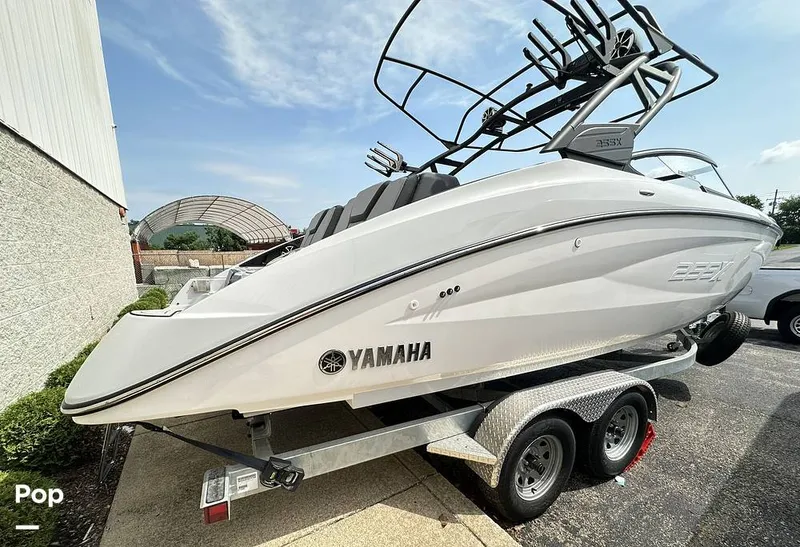
Built first and foremost for upscale family cruising, sandbar days, and high-energy watersports, the Yamaha 295SD blends premium social space with the safety and convenience that define Yamaha’s jet propulsion approach. As the largest Yamaha model, the Yamaha 295SD emphasizes versatile seating and transom access for swimming and lounging, leveraging Yamaha’s integrated swim platform concept and cleanout-access design to keep the aft zone functional when the day revolves around the water. At the helm, Yamaha’s Connext® touchscreen integration and modern controls support confident navigation and system monitoring, while the wide 9' 1" beam adds noticeable stability for boarding, gear management, and moving around the cockpit in choppy conditions. Storage volume scales with the platform size, making it easier to bring tow sports equipment, day-coolers, and beach gear without compromising passenger comfort, and the flagship layout is designed to keep the cockpit organized during fast transitions between cruising, anchoring, and towing. For buyers who want Yamaha’s signature prop-less jet performance in the biggest possible package, the Yamaha 295SD stands as Yamaha’s flagship and the clearest expression of what a full-size luxury jet boat can be in the current Yamaha lineup.
WHAT IS THE SMALLEST BOAT OF THIS BRAND BUILT TODAY?
The smallest model in Yamaha’s current lineup is the Yamaha SX190, a compact 19 foot jet-powered runabout designed as an easy-entry platform for family days on the water, tubing, and general lake cruising, and while Yamaha keeps the SX190 simple and approachable it still delivers the brand’s prop-free jet drive benefits for swimmer safety and shallow-water confidence; however, based on the reference information provided here, the exact SX190 specifications for beam, weight, and towing capabilities are not available, so those figures cannot be stated without guessing, but the key ownership advantage remains that a 19 foot Yamaha boat like the SX190 is typically easier to store at home, simpler to launch and retrieve, and more manageable to trailer than larger 22 to 29 foot Yamaha Boats models.
As a small jet boat runabout, the Yamaha SX190 is built to keep the cockpit layout straightforward for first-time and experienced boaters alike, with an emphasis on open social space and quick access to the water that fits Yamaha Boats’ fiberglass, prop-less jet propulsion identity, yet the reference provided does not include the SX190’s seating configuration, comfortable versus USCG-rated passenger capacity, hull technology details, fuel capacity, typical engine package, maximum horsepower rating, speed expectations, or efficiency notes, so those specifics cannot be confirmed here; what can be stated is that the Yamaha SX190 sits at the entry end of the Yamaha Boats range and is best viewed as a practical, trailer-friendly jet propulsion option for day boating, sandbar hopping, and watersports where jet-drive acceleration and the absence of an exposed propeller are key value points, and the Yamaha SX190’s smaller footprint can also translate into easier storage and simpler on-ramp handling for owners who want the Yamaha boating experience without stepping up to the larger 22 foot and 24 foot 6 inch platforms.
HOW MUCH DO THESE BOATS COST?
Yamaha boats in the USA are best known for jet propulsion family sport boats and larger wake focused models, and Yamaha publishes clear “Starting at” pricing on its official model pages. The smallest current Yamaha boat in this lineup is the Yamaha SX190, which is listed at 19' 5" length with an 8 person seating capacity and a published Starting at MSRP of $39,999. On current new boat market listings, Yamaha SX190 asking prices typically range from about $39,999 to $42,499, with the spread often explained by itemized dealer freight and prep; one representative listing shows a $39,999 base price plus $500 prep and $2,000 freight for a $42,499 ask.
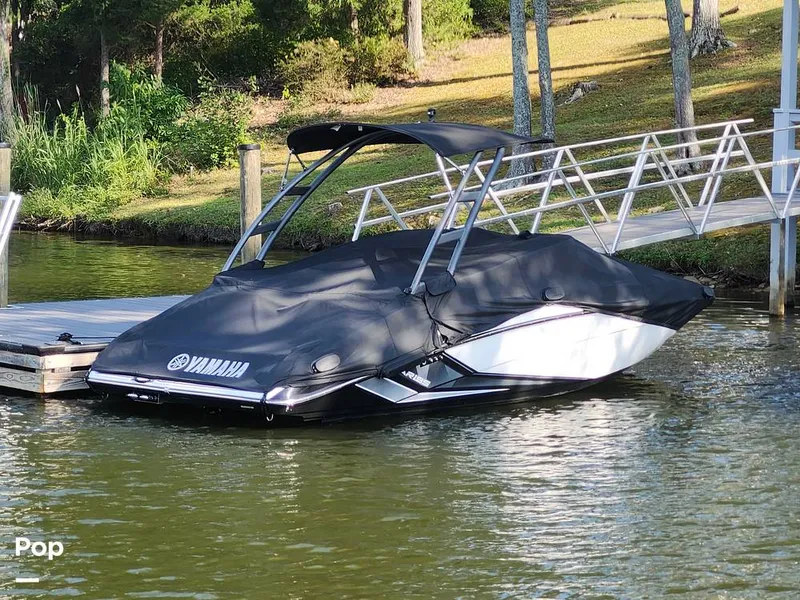
In Yamaha’s popular 19 foot watersports tier, the Yamaha AR190 is also 19' 5" long with an 8 person capacity and shows a Starting at MSRP of $42,999 on Yamaha’s site, and current market price behavior for new units often clusters right around that base number when listings are advertised as MSRP only. At the same time, some dealer ads explicitly show how add ons can lift the out the door direction, with disclosed transportation and additional mark up pushing totals well above base MSRP in certain cases. Moving up to the 25 foot wake category, Yamaha lists the 252XE at 24' 6" with 12 person capacity and a Starting at MSRP of $102,999, and the 255XE at 24' 6" with 12 person capacity and a Starting at MSRP of $114,999; current market listings for new units commonly show asking prices around those base figures, but the fine print frequently notes destination, freight, and dealer prep can be additional.
At the top of the Yamaha wake lineup, the flagship Yamaha 255XD is listed by Yamaha at 24' 6" length with 12 person seating capacity and a Starting at MSRP of $126,999. In today’s market, premium Yamaha 255XD listings commonly land from about $126,999 at base advertised pricing up to roughly $131,449 when higher freight and prep are itemized, and one example shows $126,999 base plus $500 prep and $2,000 freight for a $129,499 ask. For Yamaha’s center console jet boats, Yamaha lists the 255 FSH Sport E starting at $104,499 and the 255 FSH Sport H starting at $116,999, and current market listings for the 255 FSH Sport H often show asking prices around $119,099 to $123,999 depending on whether upgraded trailer spec, freight, and prep are included or separately disclosed.
Putting it together, Yamaha Boats MSRP style Starting at pricing on the official Yamaha website currently spans from $39,999 for the Yamaha SX190 up to $126,999 for the Yamaha 255XD, while real world market price asking ranges commonly run from roughly $39,999 to $42,499 for an SX190 and from about $126,999 to around $131,449 for a 255XD, with mid range models like the AR190, 252XE, and 255XE frequently advertised near their base MSRP but subject to dealer fees. Based on listing disclosures, the most common gap between MSRP and market price comes from freight and dealer prep, and some sellers also disclose additional transportation charges or dealer markups, which can materially change what you actually pay compared to Yamaha’s published starting figure. Market prices vary by location, condition, model year, and dealer.
WHAT OTHER STYLES OF BOATS DO THEY MAKE?
Yamaha’s current boat lineup is focused primarily on jet boats, with their most iconic styles being sporty runabouts and larger family-oriented jet-powered models designed for cruising, watersports, and day-boating on lakes and coastal waterways; within that umbrella you’ll commonly see bowrider-style layouts with open seating up front, transom-facing social zones, and swim platforms built around the brand’s signature jet propulsion rather than stern drives or outboards, and Yamaha also offers center-console-style jet boats aimed at owners who want a more fish-and-cruise-friendly deck plan with 360-degree walkaround space while still prioritizing sandbar-hopping, towing, and easy shallow-water operation that jet drives are known for.
Historically, Yamaha has also produced additional jet-boat variants and generations that aren’t always represented in the current catalog, including earlier AR and SX series models and prior-year versions of its larger 24-foot and 25-foot class boats, which often stood out for high passenger capacity, multiple lounge configurations, and features tailored to wake sports like integrated ballast or wake-enhancing setups on certain models; while specific trim names and feature packages have evolved year to year, these older Yamaha jet boats helped define the brand’s reputation for combining PWC-derived propulsion know-how with family-boat layouts, and many of these discontinued or superseded models are still common on the used market where buyers look for the same core Yamaha traits like strong acceleration, low-speed handling aids on newer generations, and a layout that favors social seating over enclosed cabin accommodations.
What Yamaha does not generally compete in under the Yamaha Boats brand is the broad range of outboard fishing boats such as bay boats, offshore center consoles, and walkaround cabin fishing boats, and it also is not positioned as a builder of pontoon boats, traditional deck boats, luxury yachts, or dedicated inboard ski and wake boats built around a single-prop drivetrain; instead, Yamaha’s brand focus is very clearly jet-powered family boats and performance-leaning day boats, where the design philosophy centers on watersports utility, low draft, a prop-free swim area, and cockpit layouts that maximize seating and swim access, which is why their lineup feels intentionally concentrated around jet propulsion and social, activity-first deck plans rather than expanding into cabin cruisers or offshore fishing platforms.
In summary, Yamaha is best known today for jet boats that span runabout and bowrider-style family boats, plus center-console-style jet boats that blend open-deck versatility with jet-drive advantages, and that focus is a big part of why the brand has a clear identity among buyers who want easy watersports capability and a swim-friendly stern without the complexity of a stern drive or the setup of an outboard fishing boat; looking forward, the most realistic evolution for Yamaha tends to be refinement and crossover thinking within the jet-boat space, such as more fish-and-cruise-capable layouts, smarter low-speed control systems, and incremental feature updates that make the same core categories more versatile, which ultimately lets Yamaha keep improving the boat styles that define the brand for its core audience of active, day-boating families and watersports-minded owners.
WHAT KINDS OF ENGINES DO THESE BOATS USE?
Yamaha Boats are primarily jet boats, meaning they use inboard mounted marine engines that drive jet pumps rather than propeller based outboards, sterndrives, or traditional inboards with shafts. This jet propulsion approach is a core part of the brand because it delivers shallow draft operation, strong low speed maneuverability, and added peace of mind around swimmers and watersports since there is no exposed prop. Across the lineup, you will typically see twin engine, twin jet pump setups for balanced handling, traction in turns, and responsive acceleration, with smaller family and watersports models still commonly using twins and the larger 24 foot class and up also remaining twin jet driven rather than moving to triple outboards or sterndrives.
Horsepower varies by model and generation, but Yamaha’s jet boat lineup generally spans from roughly 200 total horsepower on smaller boats using twin 1.0 liter class engines to about 500 total horsepower on larger performance oriented 24 foot models that pair twin 1.9 liter engines. For example, several 19 to 21 foot boats are commonly configured with twin 1.0 liter engines for a compact package that still has strong hole shot for towing, while many 22 foot models step up with larger displacement or higher output options, and the 24 foot class can be found with twin 1.9 liter engines for the highest output in the range. Because jet boats keep thrust aligned and respond quickly, owners often focus on acceleration, towing pull, and confident cruising rather than only peak speed.
Instead of sourcing a separate outboard brand, Yamaha rigs its boats around Yamaha marine engines matched to Yamaha jet pumps, with modern four stroke based powerplants that prioritize reliability, smoothness, and straightforward maintenance access. Depending on model year and family, you will see the TR 1 and 1.9 liter engine platforms, typically in twin configurations, and the boats are built as integrated packages where the engines, jet drives, controls, and helm systems are designed to work together from the factory. This integrated approach helps ensure consistent rigging standards and predictable performance, and it is also why Yamaha Boats are so clearly defined as jet boats rather than dealer selected outboard packages.
Yamaha’s engine and jet drive strategy supports the watersports focused experience the brand is known for, with quick planing and strong midrange pull for towing, plus responsive low speed handling that benefits from modern digital controls and model specific maneuvering aids that make docking less stressful. The absence of an exposed prop supports beaching and shallow water access, and the ability to trim the thrust by varying engine output can help with control in tight areas. Many owners also appreciate that there is no prop to ding and no outdrive hanging below the transom, which can reduce certain maintenance concerns compared with sterndrives. Overall, Yamaha’s twin jet propulsion setup aligns with the brand mission of family friendly boating that emphasizes safety, fuel efficiency minded cruising, and fun performance for wakesports and day boating.
WHY BUY THIS BRAND OVER A COMPETITIVE BRAND?
When shoppers ask about the build quality of Yamaha boats vs competitors, Yamaha’s case starts with a propulsion and hull architecture that changes how the boat is packaged and how it behaves in real conditions: Yamaha’s internal Jet Drive System eliminates an exposed drivetrain, helping the boat plane quicker with less bow rise and allowing minimal draft for shallow-water access, while also removing the hazard of an exposed propeller or lower unit near swimmers. Yamaha also backs that handling with brand-defined control technologies designed to make jet boats feel more predictable at low speed and in tight quarters, including the Advanced Responsive Handling Package with No Wake Mode, the Thrust Directional Enhancer, and a patented Articulating Keel for immediate steering response, plus DRiVE which Yamaha describes as the marine industry’s first dual paddle control system for effortless low-speed handling and docking. Combined with the way Yamaha places compact, lightweight engines and driveline deep inside the hull to keep bow rise minimal and open up more usable deck space, the result is a design approach that is engineered for confident maneuvering, quicker planing, and practical safety around the stern, all aligned with what Yamaha positions as its “gold standard” jet boat heritage and built for everyday use on busy lakes, rivers, and coastal waterways.
Beyond construction approach, Why choose Yamaha often comes down to how much functional technology and day-to-day convenience Yamaha integrates into the helm and systems as standard, since Connext touchscreens are positioned across the lineup as a central hub for entertainment functions, GPS mapping, and vital boat system data while underway, with larger 12.3-inch Connext configurations highlighted on key series. Yamaha also promotes E-Series throttle control as a drive-by-wire system that adds push-button start and stop, RPM engine synchronization, and single-throttle lever pairing for simpler operation, and on specific models and series Yamaha lists wireless charging at the helm and additional charging pads for devices. For boaters comparing Yamaha vs other fishing boats in Yamaha’s own center-console FSH lineup, the brand highlights practical, purpose-built details like a transparent live bait well and organized storage pods and overhead storage options designed to keep the deck clean, along with the option of integrated marine electronics on select models, all aimed at reducing compromises between fishing utility and family runabout convenience.
Yamaha’s strongest comfort and crossover argument is how the jet-boat layout translates into usable space and a true multi-use stern, because the brand repeatedly emphasizes its “engineless” design and walkthrough transom that enable a signature swim platform and stern lounge area sitting right above the waterline. On multiple series Yamaha calls out comfort features tied directly to that layout, including beverage mounts, plush backrest cushions, reboarding ladders, and in some models swim-up seating that attaches to the stern and sits just below the waterline, creating a social, family-forward hangout zone without giving up the performance benefits of internal jet propulsion. For watersports-focused owners, Yamaha also markets technology that supports surfing behind a jet boat, such as integrated WakeBoosters that deploy with a push of a button on the Connext touchscreen on applicable models, helping position the boat as both a watersports platform and an easy-to-use cruiser. Taken together, this is the practical reason many shoppers land on Yamaha boats vs competitors when they want one boat that can handle cove days, towing, and active water time with a layout that keeps people closer to the water while preserving open deck space for gear and guests.
For long-term ownership confidence and customer satisfaction with Yamaha, the brand points to independently measured recognition and clear warranty terms rather than vague claims: Yamaha Boats have been recognized by the National Marine Manufacturers Association with the CSI Award for excellence in customer satisfaction in the Jet Boat category, and Yamaha states it is the only jet boat brand to have won that honor in the CSI Awards’ two-decade history. Yamaha also publishes a detailed limited warranty that, for model year 2019 and newer boats in pleasure use, provides a structural limited warranty on hull and deck for the duration of ownership of the first retail owner, with defined transfer provisions to a second owner within the first ten years, alongside separate time periods for components, cosmetic coverage, and the engine and jet pump system. Add in a U.S. assembly footprint in Vonore, Tennessee and a direct customer relations channel through Yamaha Motor Corporation, U.S.A., and the net reason to choose Yamaha over cheaper or more expensive options is that the brand pairs jet-drive safety and low-speed control technologies with a space-efficient, family-friendly stern layout and a documented track record of customer satisfaction and warranty support that is easy to verify from Yamaha’s own official literature.
WHAT IS THE MOST POPULAR MODEL OF THIS BRAND BEING BUILT TODAY?
For Yamaha Boats, the closest thing to a single “most popular model being built today” that can be stated from official, current-production sources is the 255XD, a 24'6" Yamaha Wake Series sport boat that Yamaha itself positions as “Our Flagship Wakesurfer.” On Yamaha’s current Wake Series lineup page, the 255XD is explicitly labeled as the flagship model, and the main 2026-model rollout content repeatedly spotlights the 255XD as a featured platform for major upgrades and differentiators, including a first-time black gel coat deck color and premium Hertz audio, which signals it as a focal point of Yamaha’s marketing and product investment for the current model year. As a wake focused, open-bow jet boat in the brand’s key 25-foot class, it represents the “sweet spot” between size, seating, and performance that Yamaha promotes for high-end family surf and watersports use.
Official specifications for the 255XD list a length of 24'6", an 8'6" beam, a 19" draft, a 75-gallon fuel capacity, and a 12-person seating capacity, with a 20 degree deadrise and an in-water height of 8'1". Standard and included equipment called out in the full specifications emphasizes premium multi-use comfort and surf functionality, such as an enclosed head compartment with wardrobe storage, an integrated ballast system, an integrated electric WakeBooster, an aluminum folding wakeboard tower with tow hook and wakeboard racks, a walk-through bow door, bow filler inserts for multiple seating configurations, a removable dinette table at the stern, and a 12.3-inch Connext helm screen with mapping. Power is listed as twin supercharged Super Vortex High Output Yamaha Marine Engines, aligning the 255XD with Yamaha’s top performance wake package and the brand’s DRiVE X low-speed handling technology for docking and maneuvering.
The 255XD is typically aimed at buyers who want a true wakesurf and wakeboard platform but still need a full-day, full-family runabout, and Yamaha’s own positioning supports that dual-purpose intent by combining wake hardware and ballast with flexible seating and onboard amenities. In practical terms, its 12-person capacity, multiple seating configurations enabled by bow filler inserts, and an entertainment oriented cockpit layout help it serve mixed crews where some riders want to surf while others want comfortable lounging and social time at anchor. At the same time, dedicated surf and tow features such as the integrated ballast system, integrated electric WakeBooster, tower and racks, and a premium multi-speaker audio package are the performance and lifestyle cues that appeal to watersports focused owners. Because Yamaha markets the Wake Series as wakesurf boats designed for wakesurfing while being built for entertaining family and friends, the 255XD fits the broadest use case within the brand’s wake segment by pairing flagship surf capability with the space and comfort expected in a 25-foot platform.
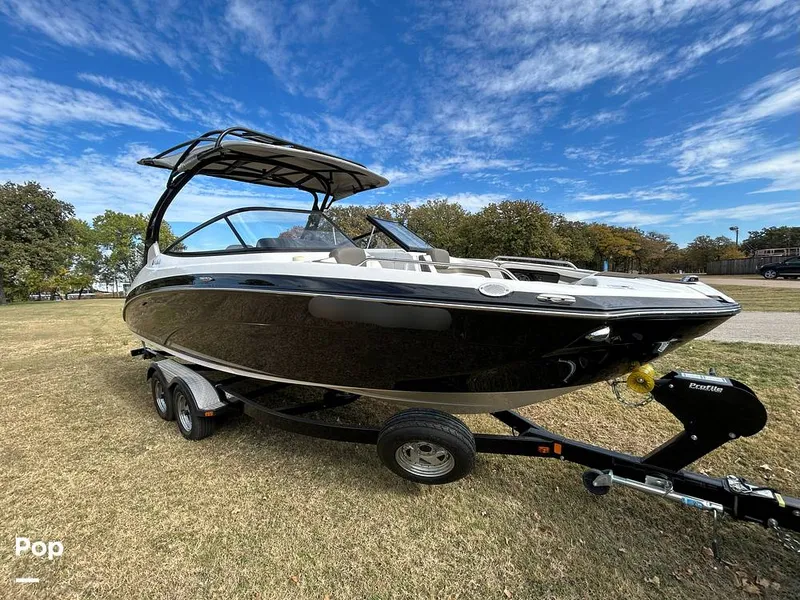
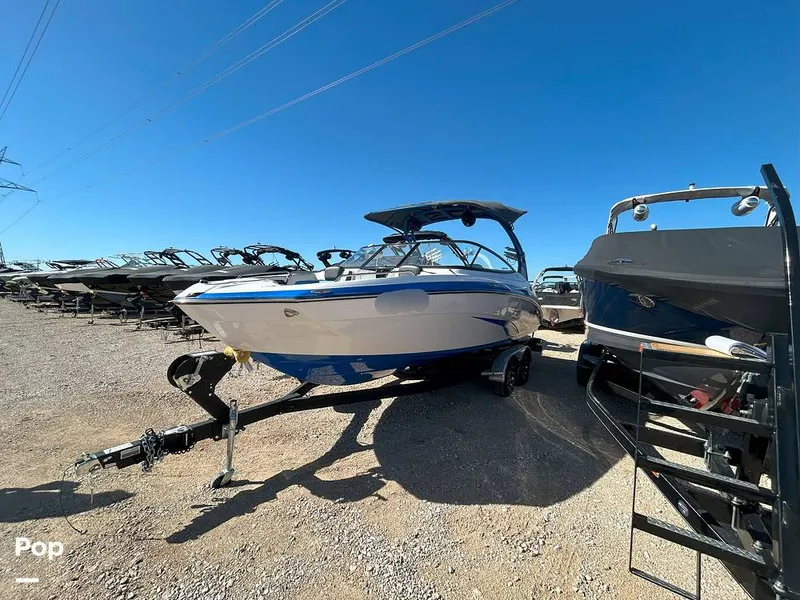
From an availability standpoint, Yamaha’s current online tools for the 255XD include Build and Price and a See In Person dealer locator, indicating it is an active, orderable current-production model within the brand’s 2026 lineup and supported through Yamaha’s dealer network. Yamaha’s continued investment is evident in how the 255XD is used to headline multiple 2026 feature callouts, including the first-time black gel coat deck color and the premium Hertz audio system, reinforcing that the model remains central to Yamaha’s marketing narrative and technology showcase for the season. While Yamaha does not publish unit sales by model on its public site, the combination of explicit flagship designation, prominent featured placement during the 2026 rollout, and the concentration of premium features and upgrades on this specific model are the strongest official indicators of its importance within current production. In short, the 255XD has become a signature Yamaha wake offering because it concentrates top-tier surf hardware, premium comfort features, and the brand’s current technology package into the widely demanded 25-foot sport-boat footprint.
WHAT IS THE HISTORY OF THIS BOAT BRAND AND COMPANY?
Yamaha’s boat story begins with Yamaha Motor Co., Ltd., founded on July 1, 1955 under first president Genichi Kawakami after the motorcycle business was spun off from Nippon Gakki, the musical instrument maker that would later become today’s Yamaha Corporation, and from the start Kawakami’s leadership emphasized building new categories through engineering and manufacturing discipline rooted in Yamaha’s earlier industrial capabilities and Shizuoka based production footprint. That marine direction became explicit almost immediately, as Yamaha Motor’s corporate history records development work on fiberglass reinforced plastic boats in 1959, and in May 1960 Yamaha released its first production powerboats, the CAT-21 and the Run-13, with the CAT-21 using a catamaran hull influenced by what was becoming prominent in U.S. boat racing at the time and standing out for a wide beam and FRP construction, a forward leaning approach that helped set the brand’s early identity in boats around modern materials, performance minded hull concepts, and the idea of bringing marine leisure to a growing customer base. Over the same era, Yamaha’s marine ambitions broadened beyond hulls into propulsion, and the company notes that outboard motor production began in 1960 with the P7, anchoring a long running marine products business that would later encompass engines, watercraft, and boats as a coordinated lineup rather than a single product experiment.
By the 1980s Yamaha was shaping the modern personal watercraft market, and Yamaha Motor documents that it launched the WaveRunner 500 in 1986, a milestone that expanded Yamaha’s jet propulsion know how and created a technology and usage bridge to larger consumer craft that would follow. Yamaha Boats’ own historical timeline traces the jet boat program to 1989, when engineers in Japan began prototyping a larger jet propelled boat concept in the wake of WaveRunner success and, facing the limitation that Yamaha’s then available 50 horsepower engine was not sufficient for a roughly 20 foot boat, they pushed toward a twin engine configuration; the concept gained international attention at the Tokyo and Osaka Boat Shows in early 1991 and, as interest from the U.S. market accelerated, Yamaha Motor Corporation U.S.A. purchased a boat building facility in Vonore, Tennessee in 1995 to produce jet boats. That same year, Yamaha debuted its first jet boat, the Exciter, and the company positioned the layout as a family friendly alternative to conventional bowriders by maximizing usable space with the engines mounted inside the hull to support an open, “engine less” stern area, setting a distinctive brand signature that would carry forward. In parallel with its global consumer growth, Yamaha’s broader boat operations also faced macroeconomic headwinds in Japan during the late 1990s, and Yamaha Motor reported that domestic boat demand after 1998 fell materially below expectations amid recession and competition, driving declining sales through fiscal 2000 and leading to further restructuring announced in 2001, including the liquidation of Yamaha Gamagori Works, a long running FRP boat producer that had built medium and large and special order boats since operations began in 1973, reflecting how Yamaha’s boat business had to periodically rebalance capacity, product focus, and geography to match shifting markets while continuing to develop customer oriented marine products and services.
From the 2000s onward, Yamaha’s boat and marine strategy increasingly read as a technology platform business spanning hulls, jet propulsion, and a full marine products segment, and company disclosures show that “boats” remain part of Yamaha Motor’s Marine Products portfolio alongside outboards and personal watercraft, underlining that boats are treated as an enduring, planned category rather than a short lived program. In the U.S. jet boat line, the Vonore, Tennessee operation established in 1995 became the center of product development and manufacturing continuity, and Yamaha’s own narrative emphasizes iterative refinement of design and technology since the mid 1990s to elevate usability for families, with the brand’s core differentiator remaining jet propulsion paired with interior packaging that prioritizes social space and water access. At the corporate level, Yamaha’s management communications in the mid 2000s describe boat demand as still challenging and highlight a push toward profitability through new products, promotion of smaller outboard powered boats, and the establishment of a lower cost production system, which collectively signals how Yamaha sought to modernize the business not only with product evolution but also with manufacturing and operating discipline. Across these decades, Yamaha’s approach to innovation in boats is best understood as the extension of its wider marine engineering competencies, combining accumulated hull, powertrain, and manufacturing expertise into a broader lineup designed to serve multiple on water uses, from personal watercraft and sport boats to outboard powered applications, even as the company adapted production structures and market priorities to keep the boat category sustainable.
In recent years Yamaha Boats has continued to present its jet boat lineage as a long running, continuously refined product family that traces directly back to the 1989 engineering prototype work and the U.S. manufacturing launch in Vonore in 1995, and this continuity is central to how the brand frames trust, with an emphasis on design iteration, jet propulsion performance, and family oriented layouts as enduring traits. On the broader corporate side, Yamaha Motor’s integrated reporting continues to list boats within the Marine Products segment and describes the company’s core competencies as spanning powertrain, chassis and hull, electronic control, and manufacturing technologies accumulated since its founding, reinforcing that the boat business remains part of a globally managed portfolio rather than a standalone niche. Taken together, Yamaha’s boat history is best seen as a multi era progression from early FRP experimentation and first production boats in 1960, to jet propulsion leadership through the WaveRunner era beginning in 1986, to the launch and steady evolution of U.S. built Yamaha jet boats from 1995 onward, all while navigating cyclical demand and restructuring when necessary; today the brand’s market position in boats is grounded in that heritage of engineering driven development, disciplined manufacturing, and a consistent focus on making on water recreation accessible, spacious, and high energy, which continues to shape both product direction and customer loyalty as Yamaha looks forward.
AWARDS AND RECOGNITIONS
Yamaha Boats recognition in the marine industry includes a mix of product innovation awards and major media honors tied directly to specific models and technologies. One of the earliest, most visible examples of Yamaha’s design impact came when Boating magazine named the Yamaha 210 FSH center console its 2018 Boat of the Year, an editors choice award that highlighted the brand’s jet powered, multi mission approach that blended fishability with family utility in a competitively priced package. In the innovation arena, Yamaha’s WakeBooster Wake Enhancer earned an Innovation Award at the 2019 Discover Boating Miami International Boat Show Innovation Awards program presented by NMMA and judged by Boating Writers International, with judges noting how it uses jet thrust to shape a surf wake at an accessible price point and with retrofit friendly installation. That momentum continued into 2020 when the Water Sports Industry Association honored the Yamaha WakeBooster with a WSIA Innovation Award, recognizing its influence on towed water sports by helping make more of the Yamaha Boats lineup wakesurf capable through an accessory and ballast approach.
On the customer experience side, Yamaha has also built a clear track record with the NMMA Marine Industry Customer Satisfaction Index awards, and this recognition matters because it is based on independently measured customer survey results rather than marketing claims. Yamaha Watercraft reported receiving the NMMA CSI Award for excellence in customer satisfaction in both the Jet Boat and Personal Watercraft categories at the 2022 Miami International Boat Show, and Yamaha’s WaterCraft Group again reported being recognized by NMMA for CSI excellence in those same two categories at the 2023 Miami International Boat Show. While publicly available Yamaha releases confirm these CSI wins in specific years, they do not consistently state a single verified consecutive year count for Yamaha Boats as a standalone brand across the full history of the program, so the most accurate takeaway is sustained, repeat recognition in the jet boat category in recent years. In practical terms, the CSI program measures owner satisfaction across the purchase and early ownership experience, so Yamaha’s repeat appearances in the Jet Boat category reinforce a reputation built on product execution, dealer support, and long term owner confidence that many buyers prioritize alongside performance and innovation.