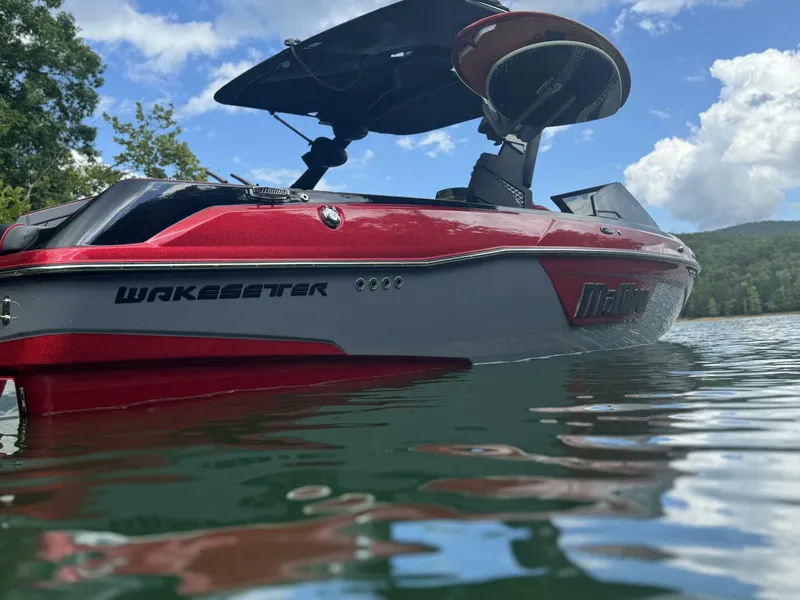
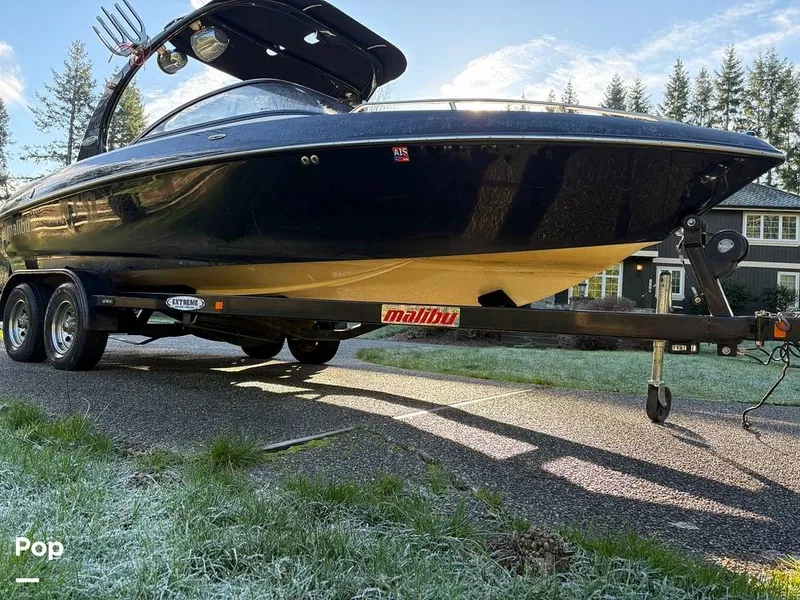
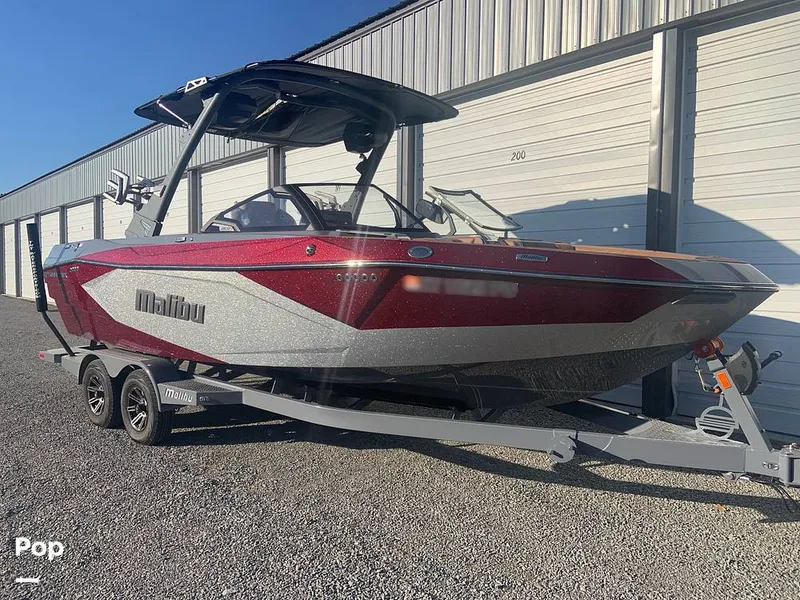
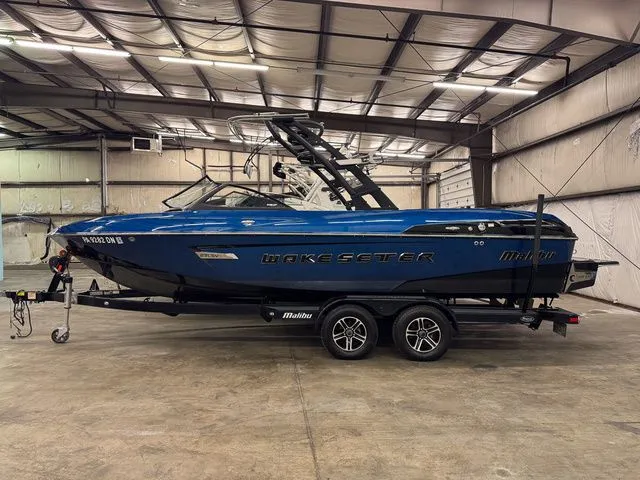
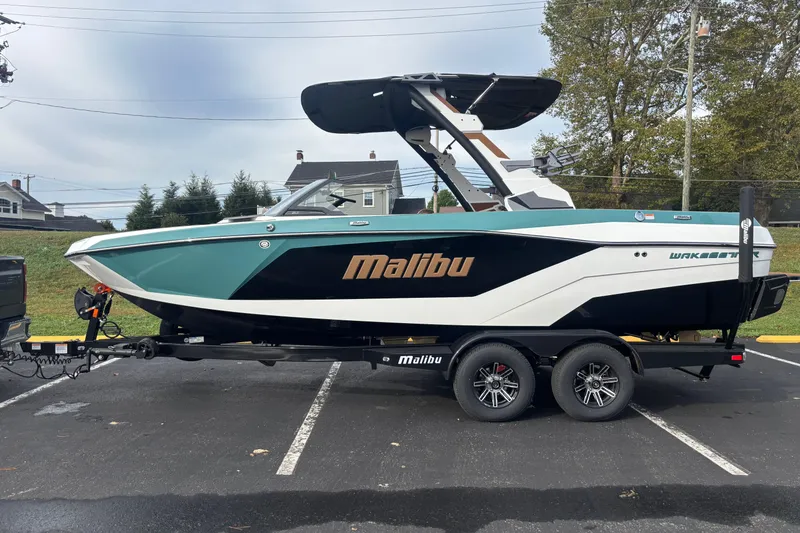
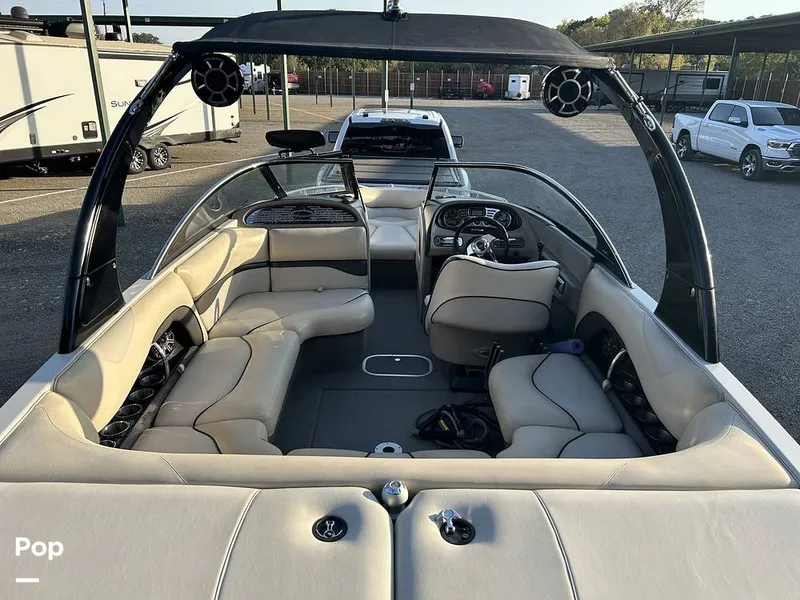
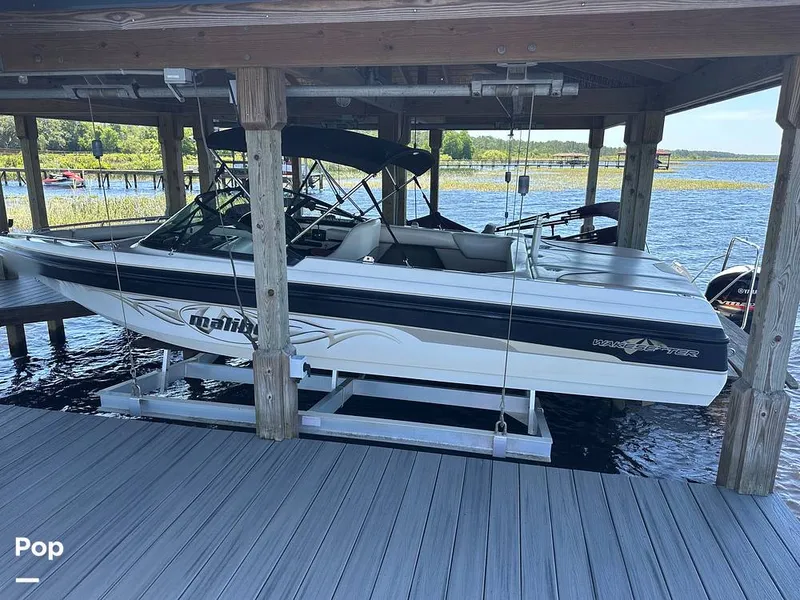
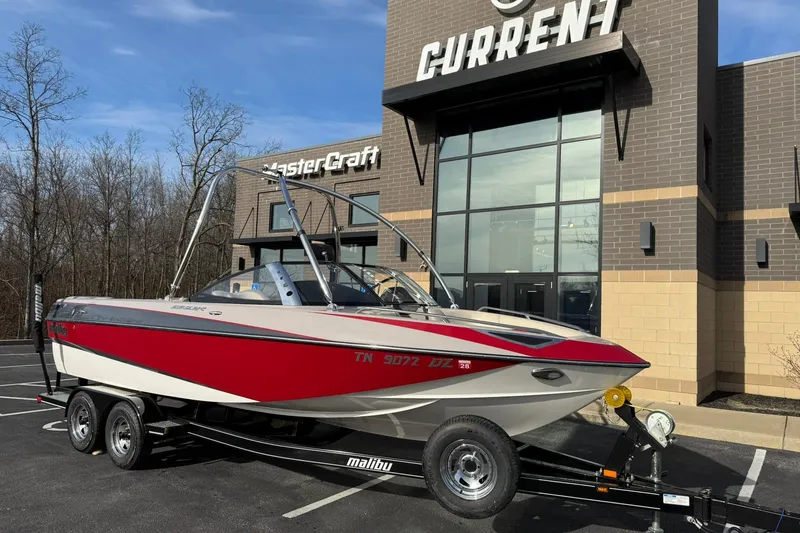
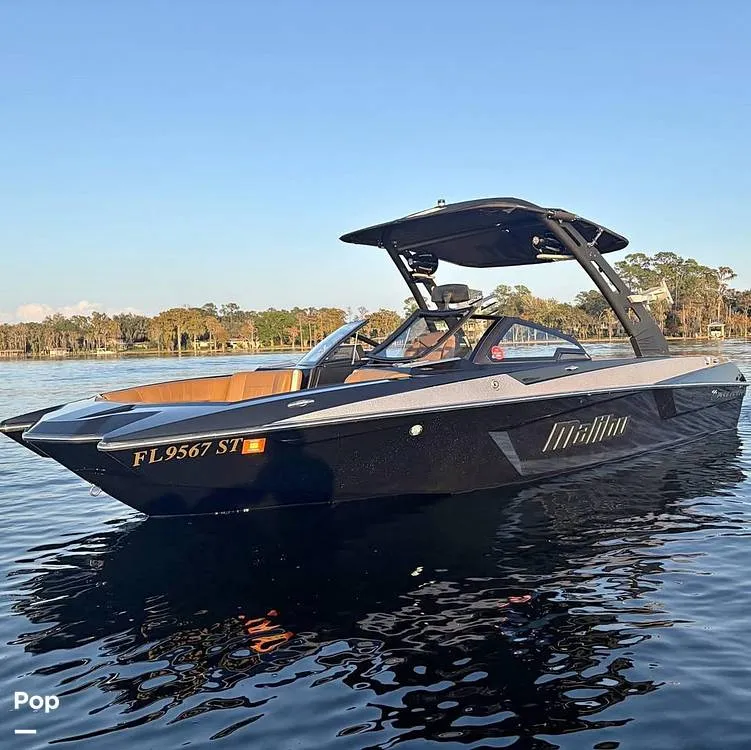
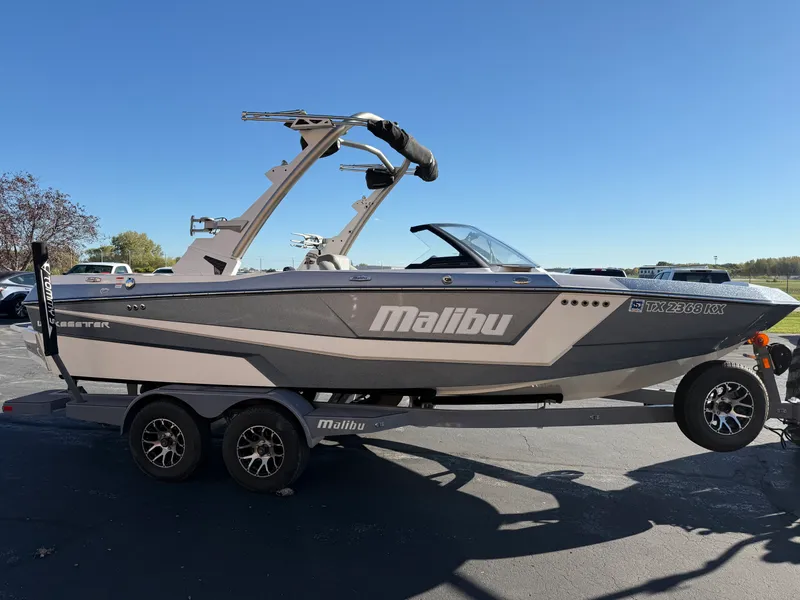
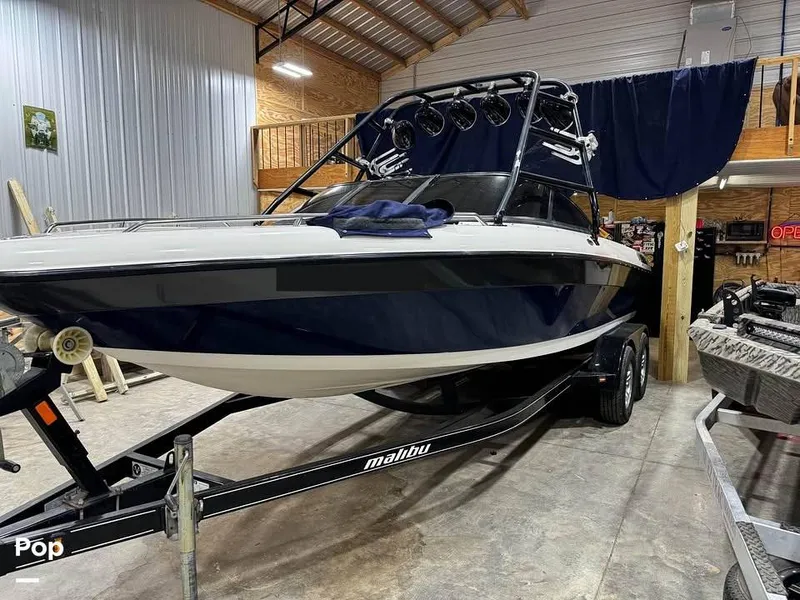
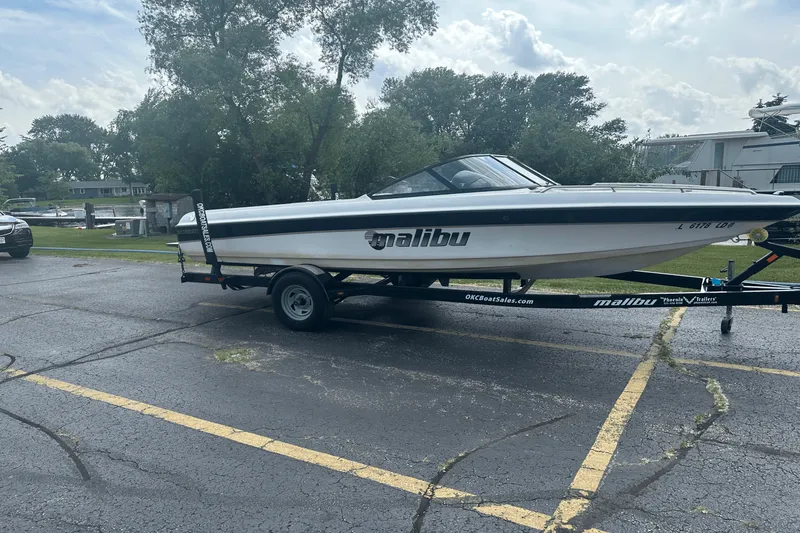
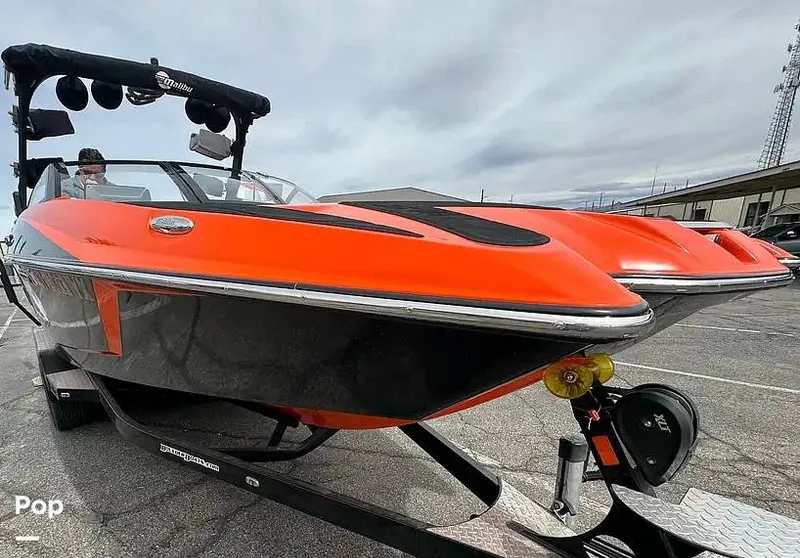
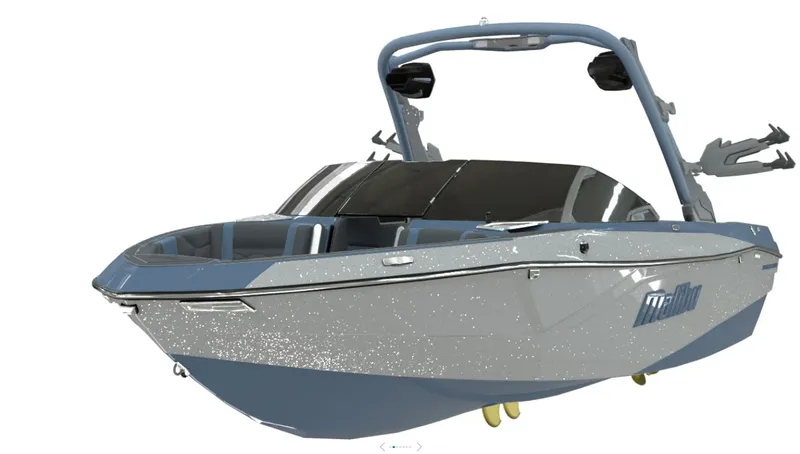
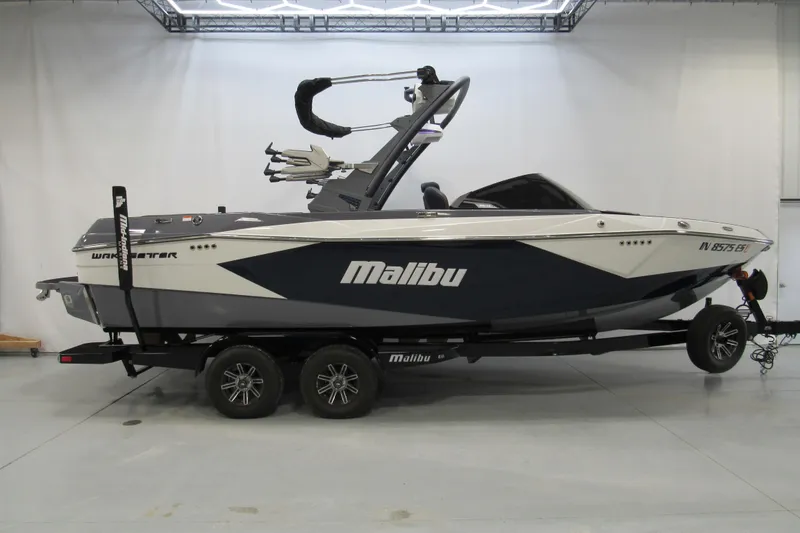
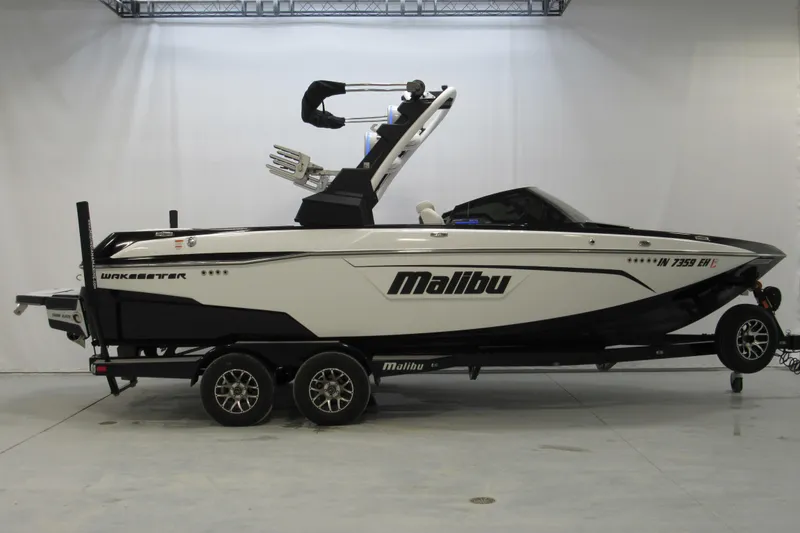
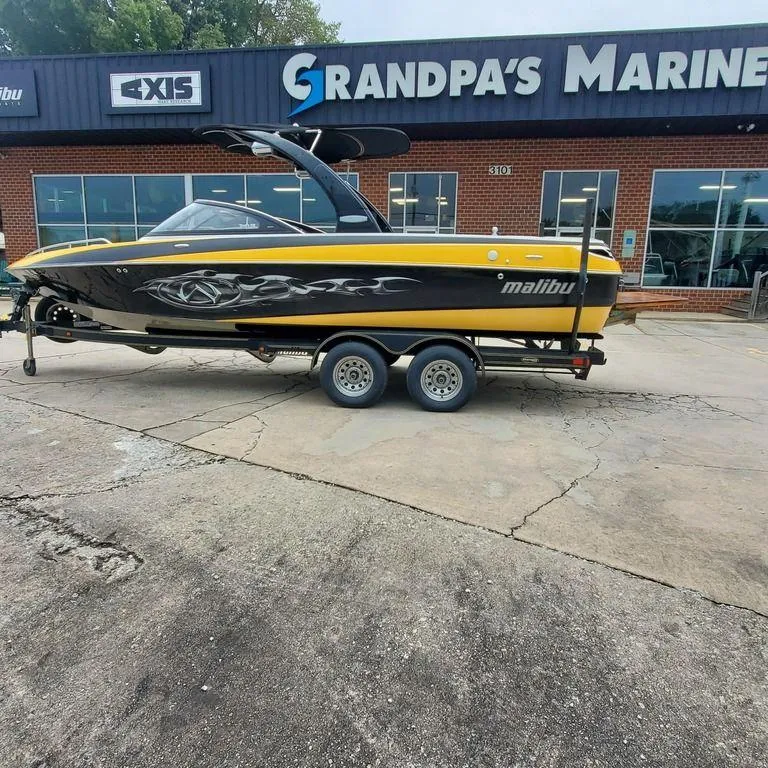
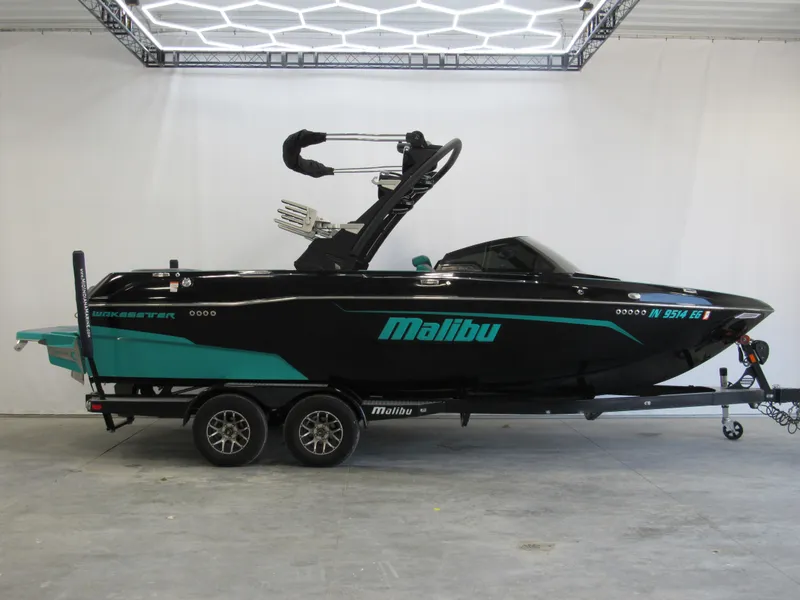
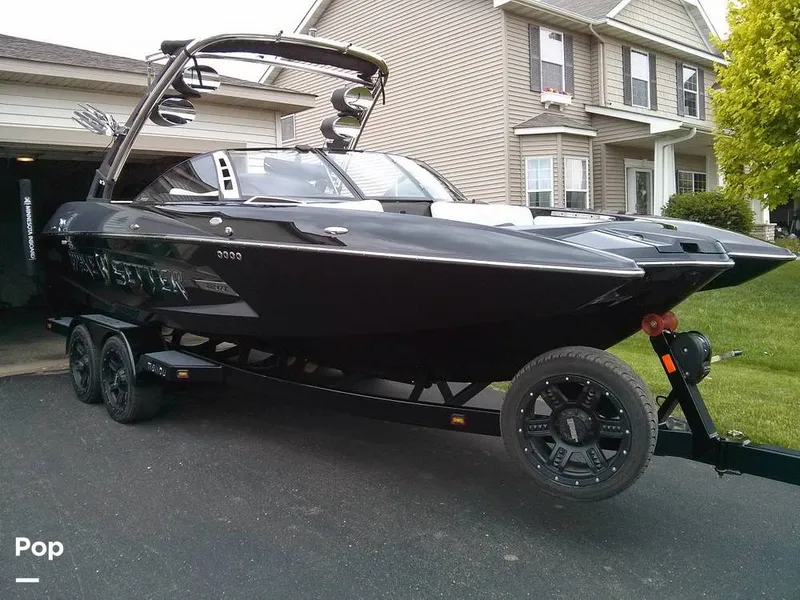
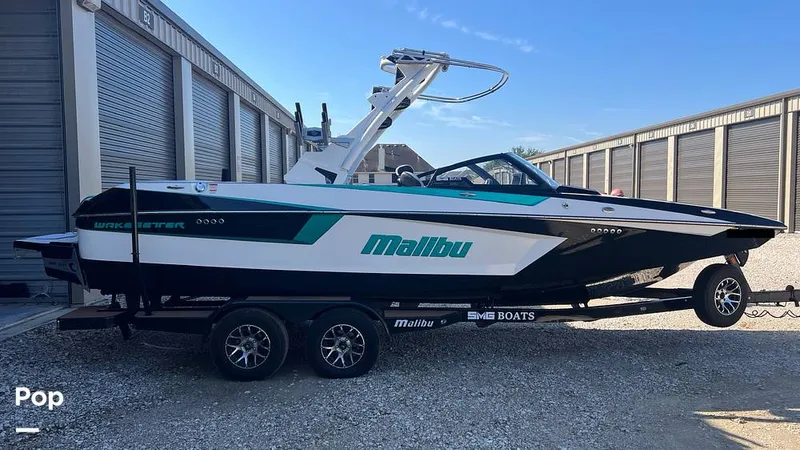
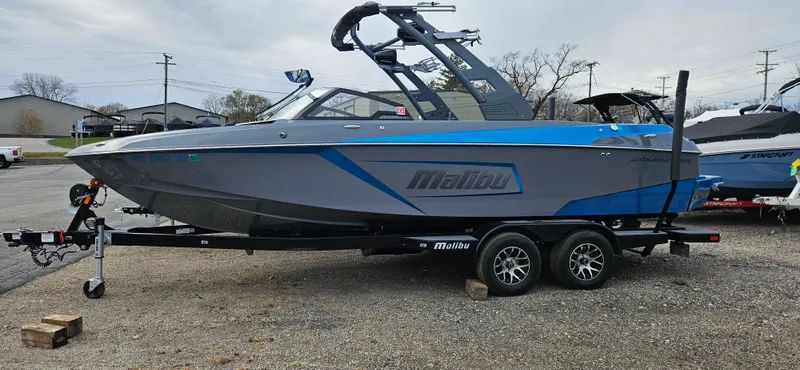
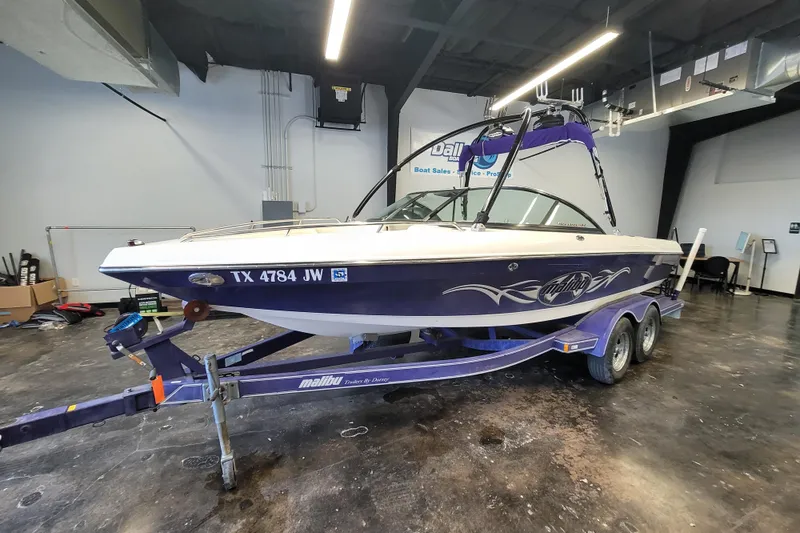
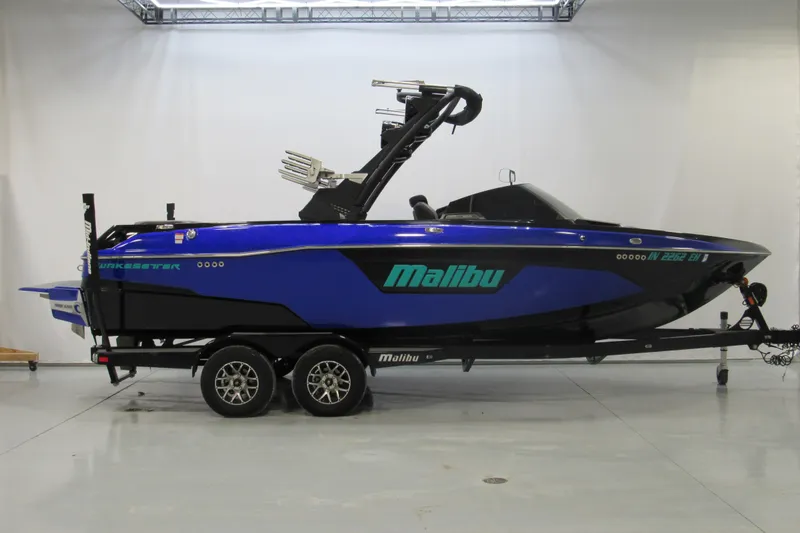
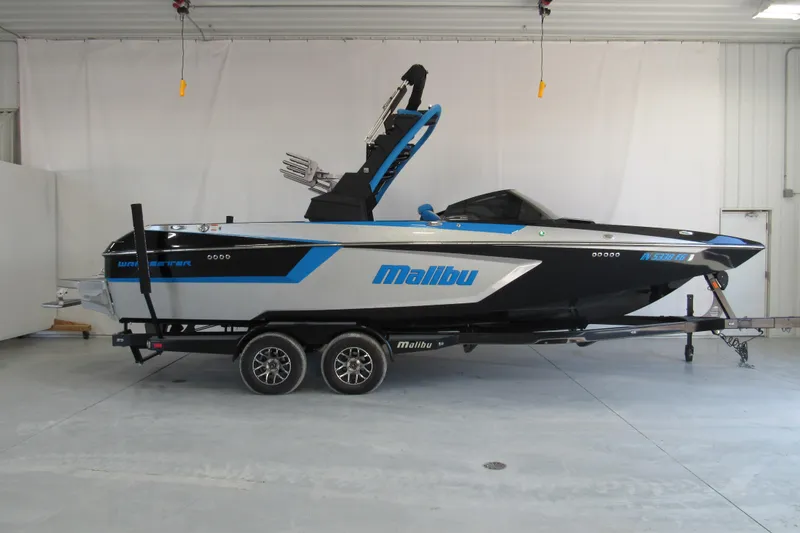
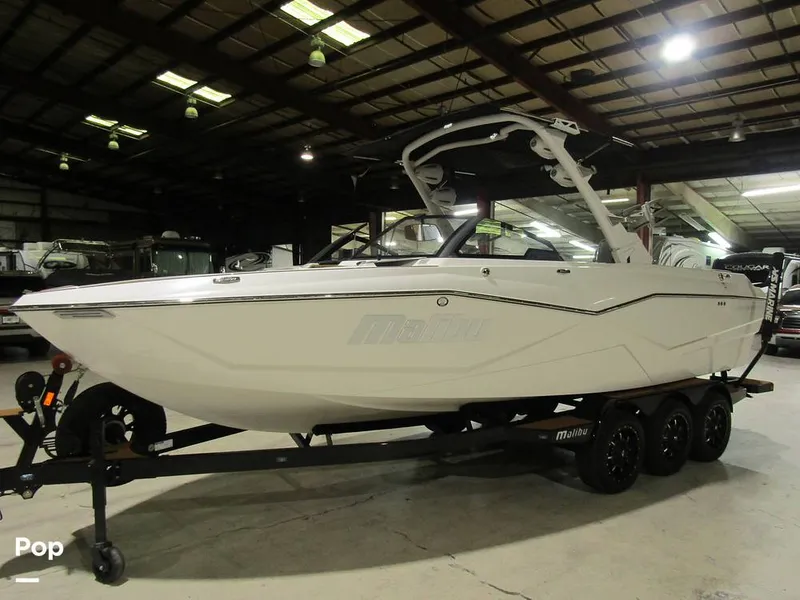
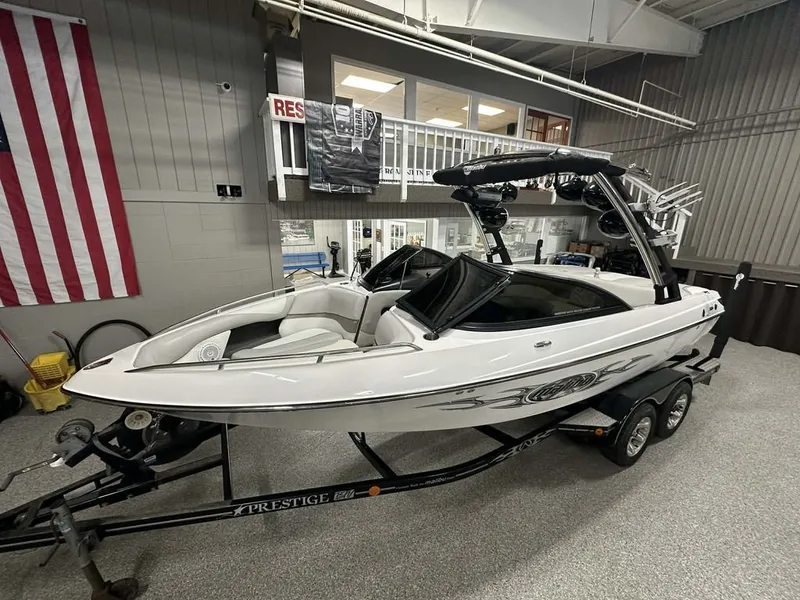
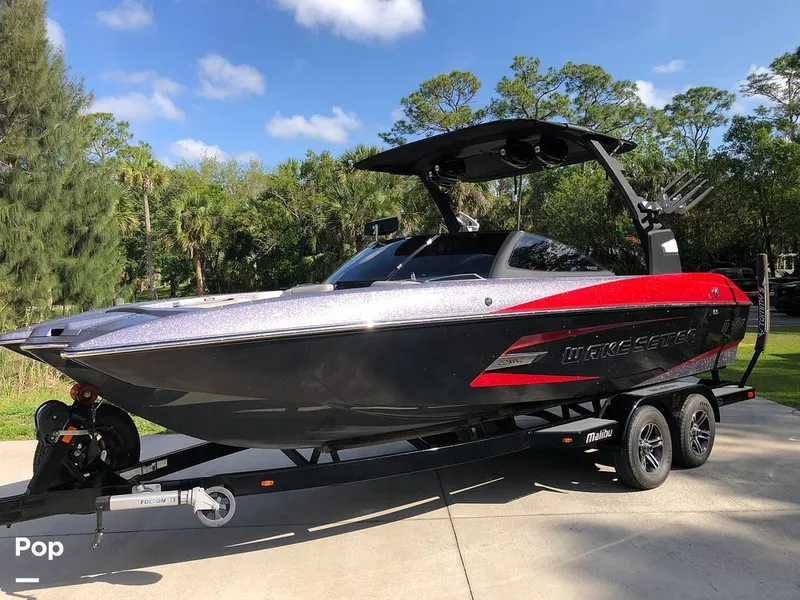
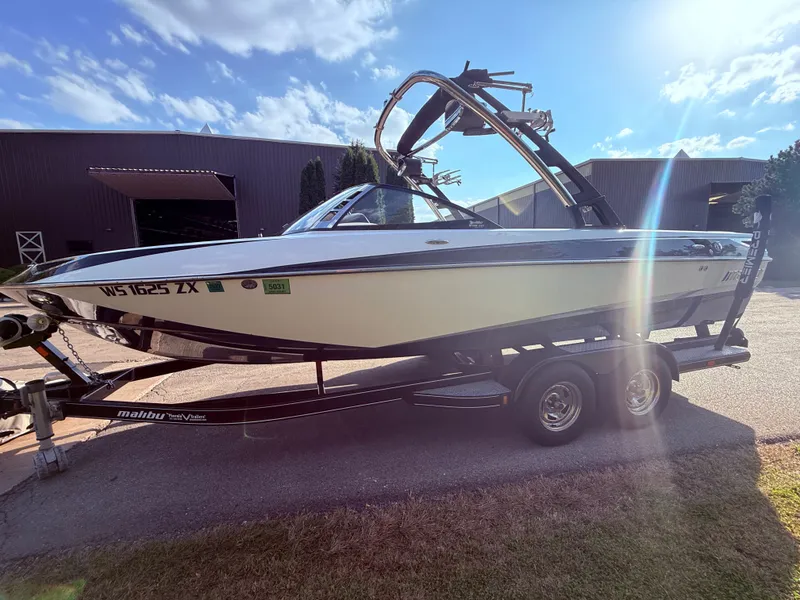
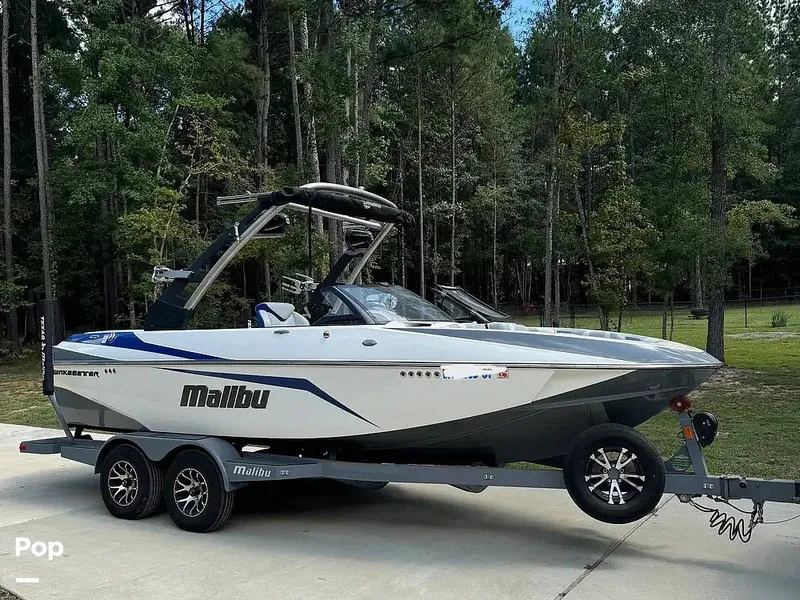
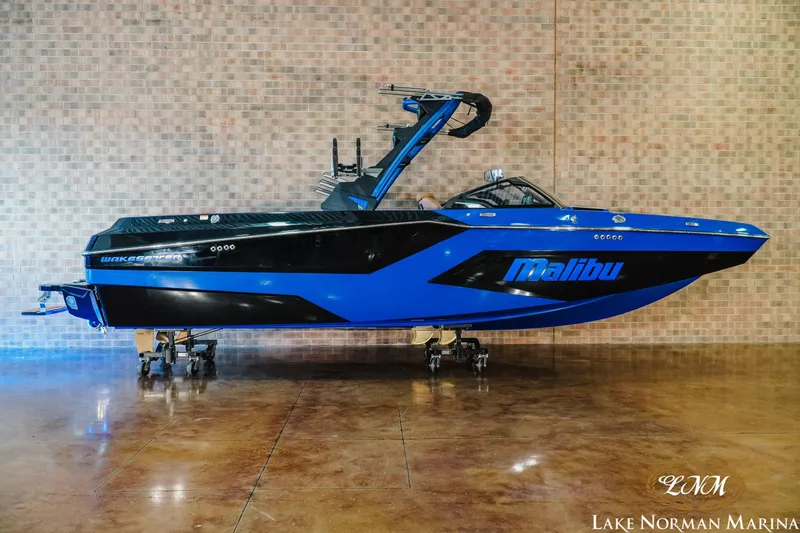
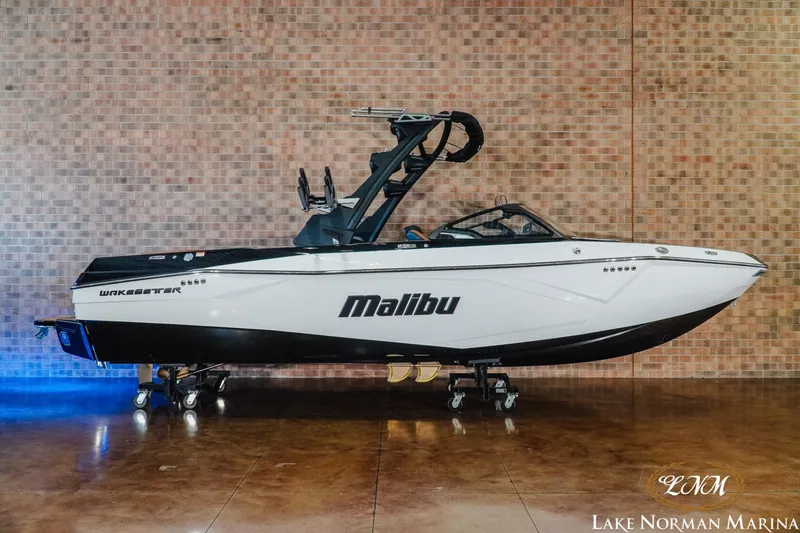
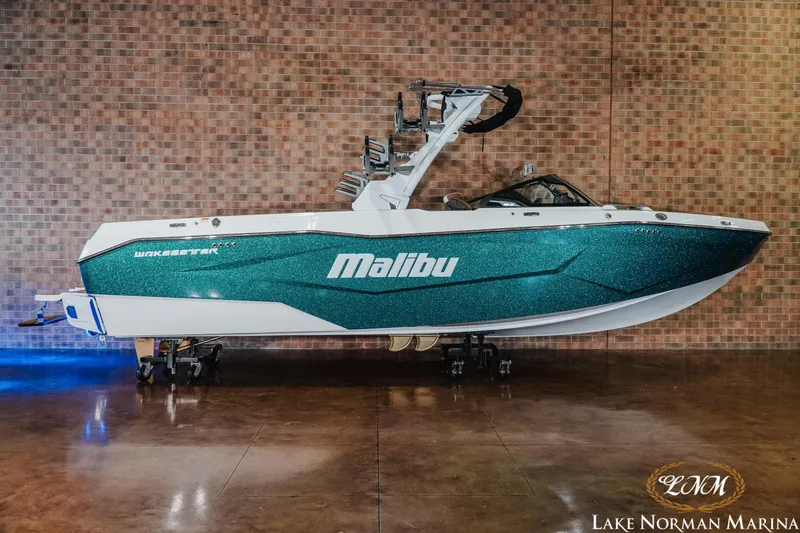
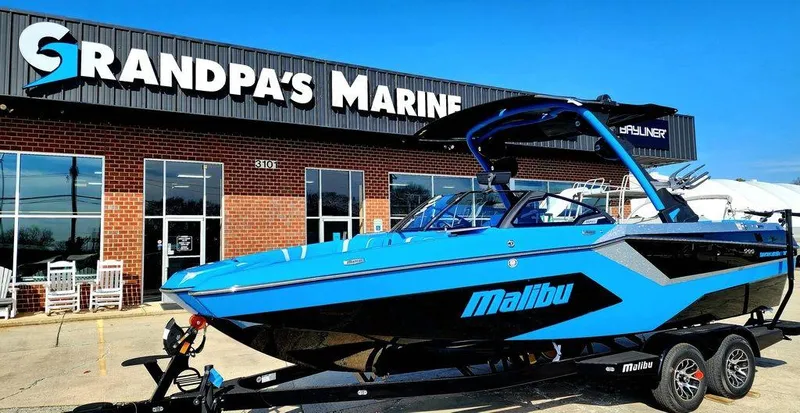
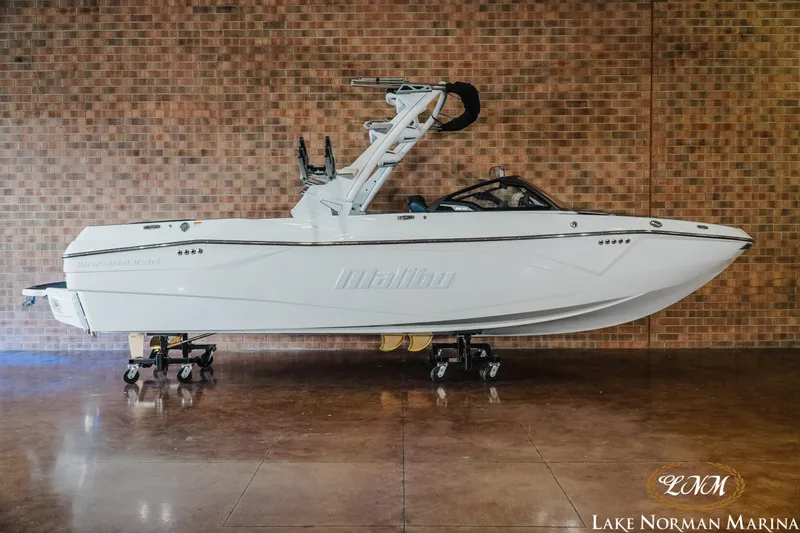
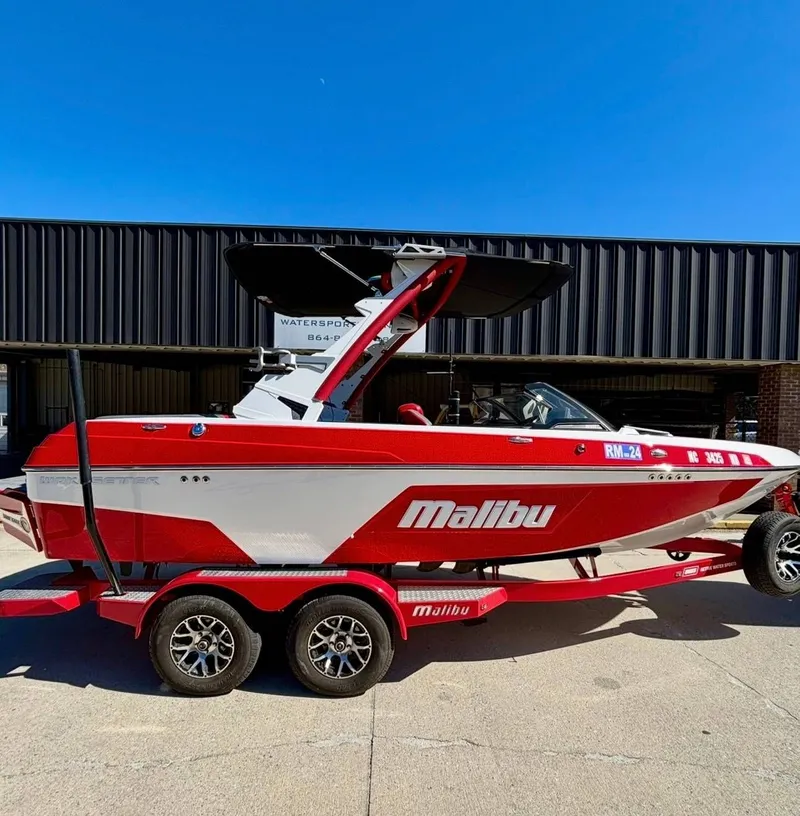
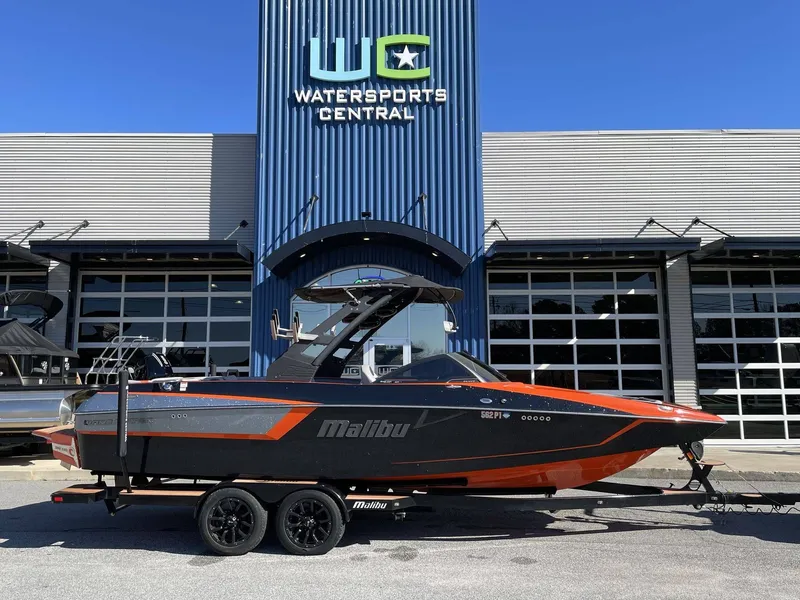
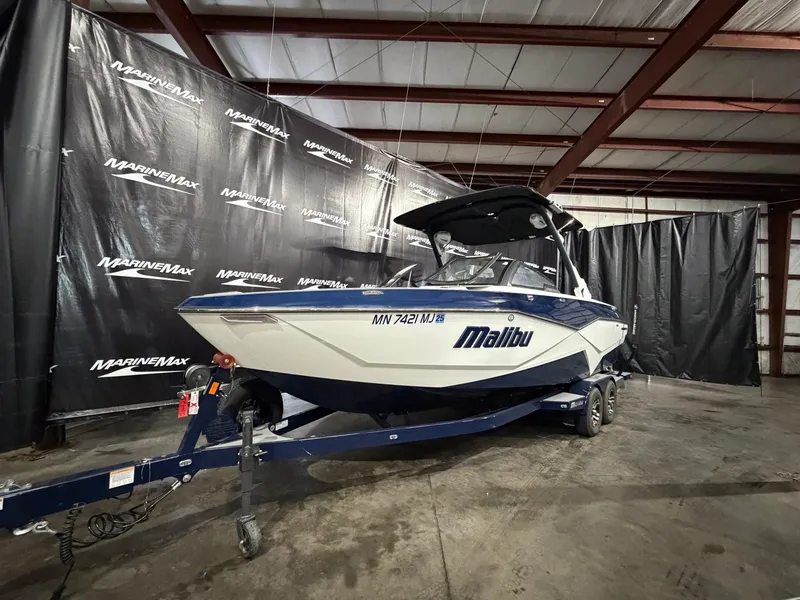
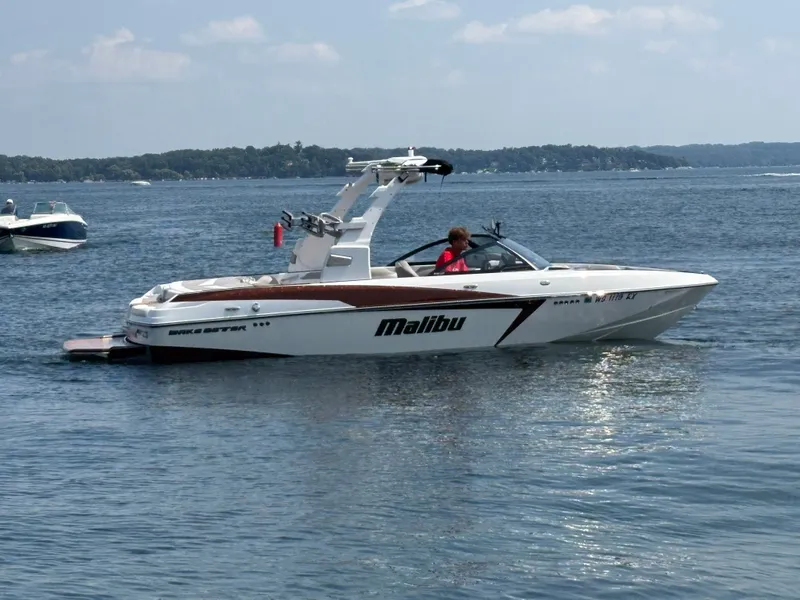
Malibu

Filters

Filters

Location

from

Boat Type

Condition

Searching boats for you...

Malibu – Technical and Historical Guide


ABOUT THIS BOAT BRAND

Malibu is an American boat manufacturer renowned for pioneering performance-focused water sports boats since its founding in 1982 in Merced, California. Built around a philosophy of maximizing wake and wave performance for skiing, wakeboarding, and wake surfing, Malibu quickly grew from a regional ski-boat builder into one of the largest producers of inboard towboats in the world. The company is part of Malibu Boats, Inc., a publicly traded marine group that also owns complementary towboat and sterndrive brands, reinforcing Malibu’s scale and engineering depth within the industry. With a long track record of industry innovation, multiple Boat of the Year honors, and dominant share in the premium inboard towboat category, Malibu is widely regarded as a benchmark brand for serious water sports enthusiasts and professional athletes seeking reliable, repeatable performance.

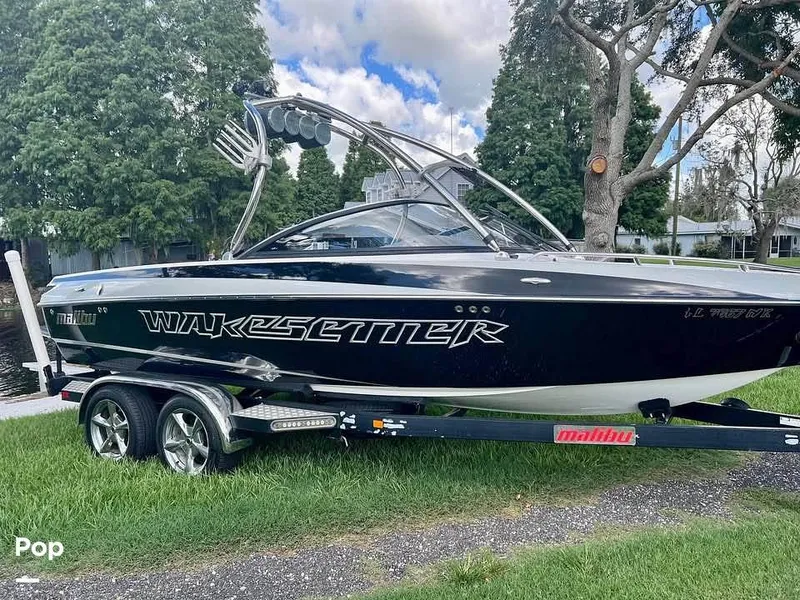
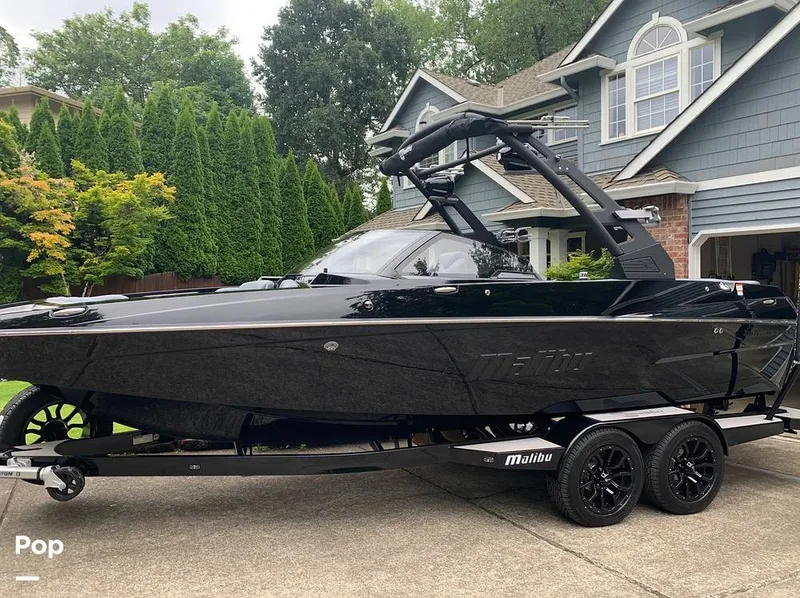
Specializing in inboard-powered freshwater boats for water sports, Malibu targets dedicated wakeboarders, competitive wake surfers, slalom skiers, and active family boaters who prioritize purpose-built towboat design. The lineup centers on flagship Wakesetter wakeboard and wake surf boats, Response ski boats, and M-Series models, each refined for specific tow-sport disciplines. Drawing on decades of hull development and rider feedback, Malibu integrates innovations such as its surf-enhancing Surf Gate system, Power Wedge hydrofoil technology, precision speed control, integrated ballast systems, and deep freeboard designs that improve wake shape and onboard safety. Advanced digital helm interfaces, customizable rider presets, and quiet, fuel-efficient inboard powertrains are tuned for consistent pull characteristics in center-console style cockpit layouts optimized for towing. This tight focus on tow-specific geometry, ballast tuning, and proprietary wake-shaping technology makes Malibu a preferred choice for serious riders and families seeking tournament-capable wake and ski performance in a dedicated water sports platform.

WHAT MAKES THIS BOAT BRAND SPECIAL?

Malibu stands out for its relentless focus on watersports innovation, purpose-built hulls, and integrated surf technology that reshaped the modern towboat category. Across the Wake setter and Response series, Malibu engineers tune each running surface for crisp wakes, long surf waves, and precise tracking, pairing deep freeboard and ballast systems with Surf Gate® and Power Wedge® innovations that shape clean, customizable wake and surf faces at a touch. The brand’s hand‑laid fiberglass construction, advanced stringer systems, and engineered weight distribution give Malibu boats a planted, predictable feel, even when fully loaded with crew and gear, while intuitive helm layouts, digital command centers, and smart storage show the same attention to real-world use. From early‑morning slalom sets to all‑day wake and surf sessions, Malibu delivers performance you can dial in for every rider, every time.

Built in world‑class manufacturing facilities in the United States and supported by satellite operations around the globe, Malibu combines advanced production technology with a workforce steeped in watersports heritage. Skilled laminators, riggers, and craftsmen work with premium gelcoats, marine‑grade vinyls, precision‑cut composites, and corrosion‑resistant hardware, following rigorous quality checks that align with major safety and construction standards. Malibu boats are engineered for structural integrity and long-term durability, backed by strong limited warranties that reinforce buyer confidence and long-haul resale value. Tight tolerances, clean rigging, and careful finishing inside every storage compartment speak to Malibu’s obsession with detail, and owners consistently highlight the brand’s surf performance, reliability, and on‑water lifestyle as reasons Malibu remains a benchmark name in premium watersports boats.

WHAT DIFFERENT TYPES OF BOATS DOES THIS BOAT BRAND BUILD?

Malibu is a leading builder of premium inboard towboats engineered for watersports enthusiasts who demand precise wakes, waves, and handling. Focused on dedicated wakeboard, wakesurf, and waterski performance, Malibu’s inboard-powered models are purpose-built with hull designs and integrated ballast systems that optimize on-water ride quality and control. While the specific size range is not detailed in the provided data, Malibu is widely recognized for offering a comprehensive lineup that spans from agile, crew-friendly entry boats to larger, feature-rich flagship models tailored for serious riders and larger crews. Across the range, Malibu emphasizes comfort, technology, and customization to support both recreational families and competitive riders. Below are the types of boats and models Malibu builds, along with their key characteristics and uses:

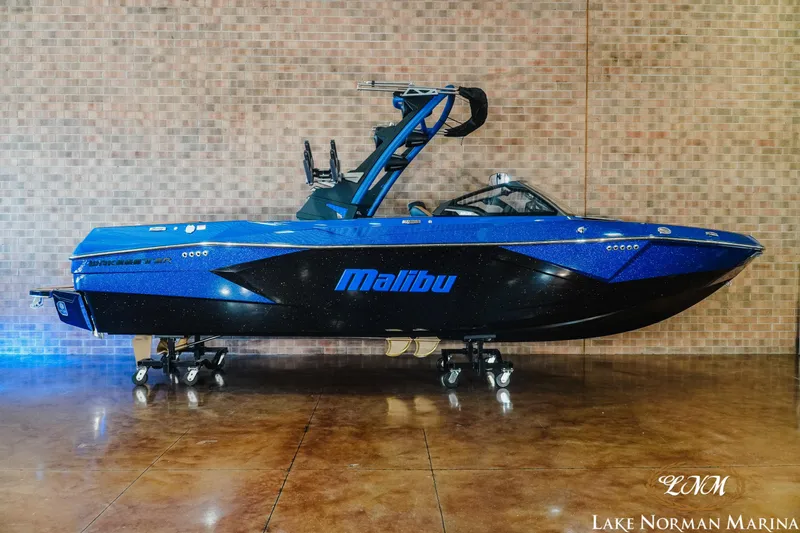
(M‑Series Luxury Wakesurf & Wakeboard Boats) Malibu’s M‑Series represents the brand’s ultra‑premium, flagship towboats designed specifically for high‑end wakesurfing and wakeboarding on larger bodies of water. These pickle‑fork and traditional‑bow inboard V‑drive boats range roughly from 22 to 26 feet in length, with models like the 23‑foot M230 and 24‑foot M240 sitting in the middle of the lineup and the massive 26‑foot model at the top end. All M‑Series boats use Malibu’s Wake Plus or surf‑oriented hulls, deep freeboard, and large, sub‑floor ballast systems to create pro‑caliber wakes and waves. Standard equipment typically includes Surf Gate or Surf Gate Fusion for instant side‑to‑side wave transfers, the Power Wedge III hydrofoil to tune wake size and shape, and the Malibu Command Center (mOS) with large touchscreens and rider presets. Powered exclusively by Malibu/Monsoon inboard engines in roughly the 400–600+ HP range, the M‑Series blends big‑crew capacity, refined interiors, advanced tower and audio options, and segment‑leading wake performance for demanding riders who want the most luxurious, no‑compromise surf platforms Malibu builds.

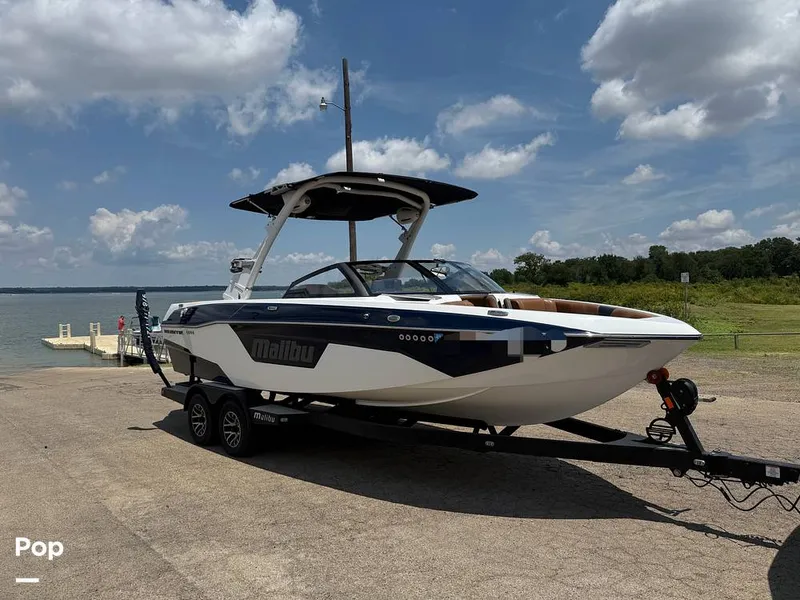
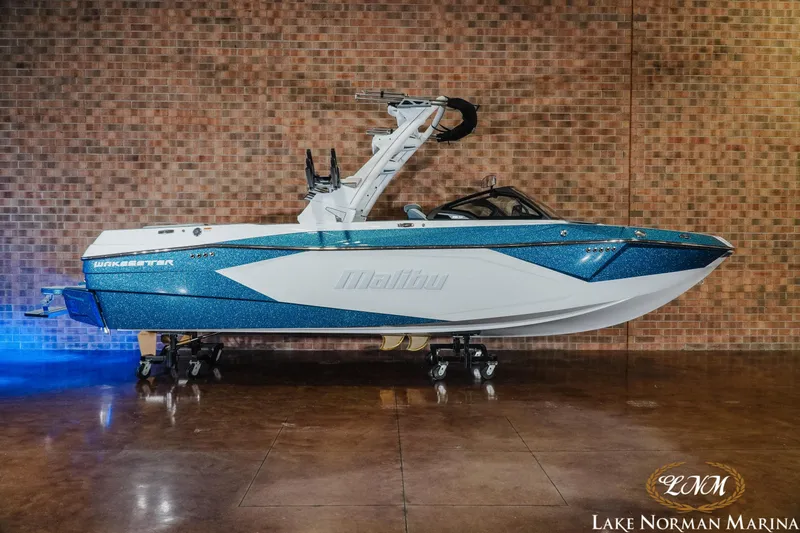
(Wakesetter LSV Series (Core Family Wake Boats)) The Wakesetter LSV series is Malibu’s core family of traditional‑bow wakeboats and forms the backbone of the brand’s lineup. Spanning approximately 21 to 25 feet in length, these V‑drive inboard models offer a clear progression from garage‑friendly, trailerable boats to big‑crew surf machines. Iconic models like the 23 LSV and redesigned 25 LSV deliver Malibu’s signature Wake Plus Hull, integrated hard‑tank ballast, Surf Gate, and Power Wedge III to produce scalable wakes and waves that can be tuned for beginners through pro riders. With beams around 102 inches and seating capacities often in the mid‑teens (up to roughly 18 people on the 25 LSV), LSV boats emphasize versatile lounges, deep storage, flip‑down swim steps, MaxPivot or similar convertible seating, and premium Wet Sounds audio. All are powered by Malibu Monsoon inboard engines and are aimed at families and crews who split their days between wakesurfing, wakeboarding, tubing, and relaxed cruising while still wanting award‑winning tow‑sports performance.

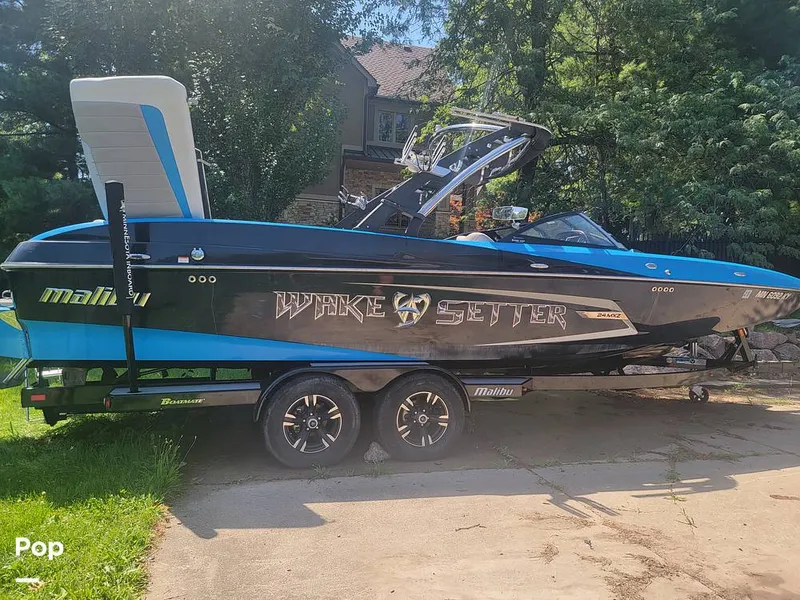
(Wakesetter Ultra‑Series & MXZ / Crossover Wake Boats) Malibu’s Wakesetter Ultra‑Series, including models like the 20 VTX crossover and 22 and 24 MXZ, targets riders who want big‑water capability and aggressive wakes in slightly more compact, highly maneuverable packages. These boats generally run from about 20 to 24 feet in length with full‑beam pickle‑fork bows on MXZ models and multi‑sport hulls on crossover boats such as the 20 VTX. All are inboard V‑drives using Malibu’s wake‑oriented hull technology, Surf Gate, Power Wedge III, and substantial sub‑floor ballast to generate strong surf waves and wakeboard wakes while remaining easier to trailer and store than the largest M‑Series or LSV flagships. Interiors focus on maximizing functional space within the smaller footprints, with flexible seating, deep gear storage, and the same Malibu Command Center helm and G‑series or Ascend towers seen on larger models. These Ultra‑Series and MXZ boats appeal to buyers who want near‑flagship wake performance, bold styling, and premium fit and finish without stepping up to Malibu’s biggest towboats.

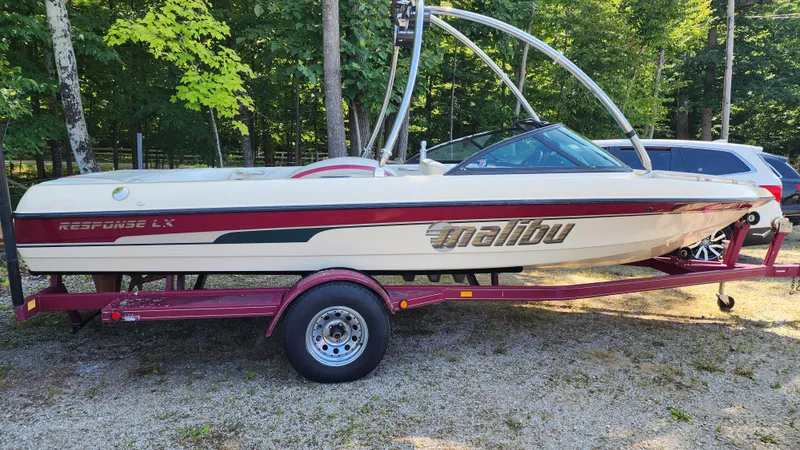
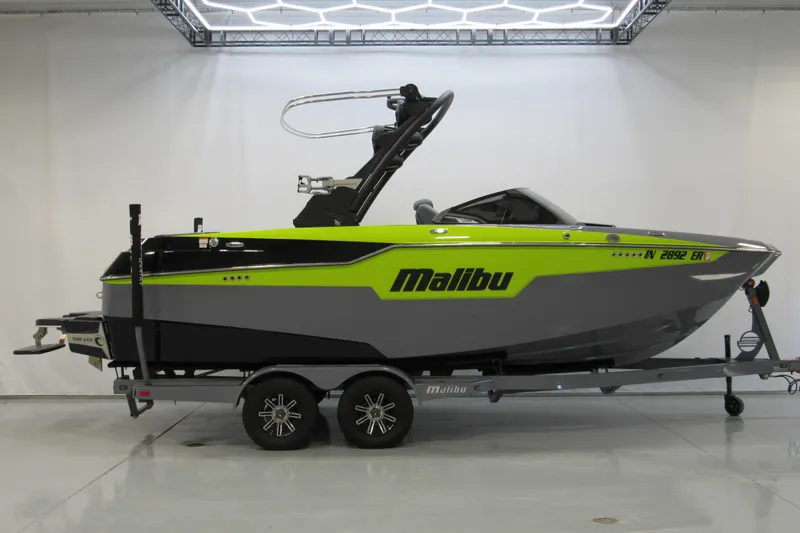
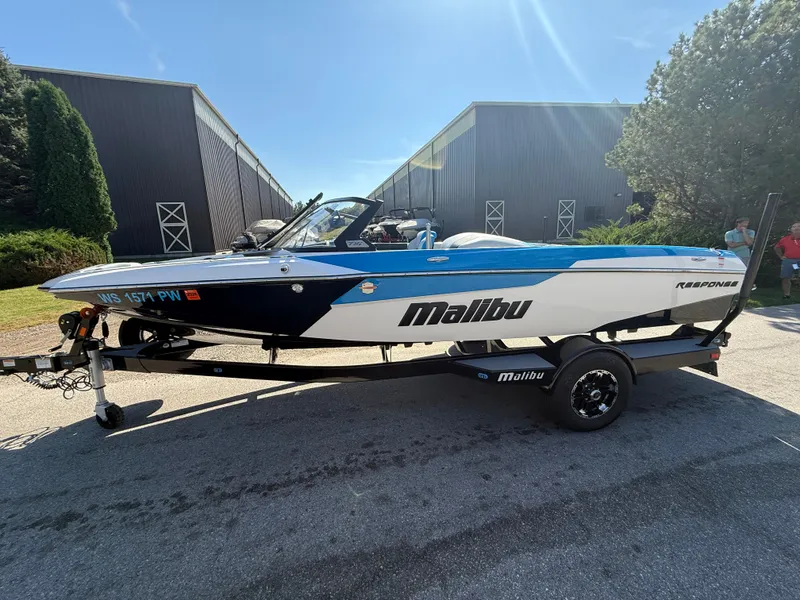
(Response & Ski‑Focused Direct‑Drive / Crossover Inboards) At the ski‑oriented end of the Malibu range are the Response series and closely related crossover inboards that prioritize tournament‑caliber slalom, trick, and jump performance while still offering recreational wakeboard and surf capability in some configurations. Core models like the Response TXi are direct‑drive inboards around 20 to 21 feet in length with relatively narrow beams and flatter, diamond‑style running surfaces that create soft, low‑spray slalom wakes at ski speeds. With lighter weight, smaller footprints, and shallower draft than Malibu’s big wakeboats, these models are ideal for private ski lakes and crews who value precise speed control and clean wakes over maximum surf wave size. Power comes from Malibu/Monsoon inboard engines tuned for strong holeshot and consistent pull. Some crossover variants, such as 20‑foot VTX‑type V‑drives, add Surf Gate, Power Wedge, and additional ballast to balance decent ski wakes with family‑friendly wakeboard and surf sessions, making them appealing one‑boat solutions for diverse watersports families.

HOW ARE THESE BOATS BUILT?

Malibu boat construction starts with precision female molds for the running surface and deck, engineered in CAD to maintain the brand’s trademark wake and surf characteristics. Hulls are built using a hand‑laid fiberglass laminate schedule that combines stitched biaxial and triaxial E‑glass with strategically placed reinforcements in high‑load areas such as the keel, chines, stringer landings, and tower bases. A high‑solids ISO NPG gelcoat is applied for UV and blister resistance, followed by a vinyl ester barrier coat to combat osmotic blistering and then polyester structural resins for the main laminate. Malibu employs a full fiberglass stringer grid system with composite or high‑density foam cores in place of structural wood, then glasses this unit to the hull to create a monocoque structure that distributes impact loads and minimizes flex. Closed‑cell foam flotation is injected into cavities throughout the stringer system and under seating to meet or exceed applicable U.S. Coast Guard buoyancy requirements, while hull and systems designs are aligned with current ABYC recommendations and NMMA certification guidelines. Critical structural interfaces are further reinforced with additional glass tabbing and localized core, and the hull‑to‑deck joint is chemically bonded with marine‑grade methyl methacrylate adhesive, mechanically fastened on a tight spacing schedule, and then glassed over in key zones to create a rigid, leak‑resistant perimeter ideal for the high loads of watersports use.

Above the laminate, Malibu specifies robust, saltwater‑appropriate hardware, with through‑bolted 316L stainless steel cleats, grab rails, hinges, and tow points backed with aluminum or composite plates, as well as anodized and powder‑coated towers engineered in house to control flex and vibration. Electrical and plumbing systems are routed in looms and conduits, using tinned marine‑grade wiring, heat‑shrink terminals, ignition‑protected components, ABYC‑conforming overcurrent protection, and color‑coded freshwater and ballast plumbing with secure double‑clamped connections for reliability. Interior structures, upholstery, and soft panels utilize composite seat bases, marine vinyl with UV and mildew inhibitors, multiple foam densities, and precision‑cut EVA or similar non‑skid decking for comfort and durability. Throughout the plant, Malibu integrates advanced manufacturing technology including 3D CAD modeling, CNC‑cut patterns, jigs, and fixtures to ensure repeatable geometry, while combining traditional hand‑laid fiberglass techniques with controlled spray and infusion or vacuum‑assist processes for selected parts to optimize fiber‑to‑resin ratios. Quality control includes in‑mold inspections, laminate thickness checks, hardware pull tests, electrical and plumbing function tests, and on‑water validation of each hull’s handling, ballast, and surf systems, yielding a build standard that typically meets or exceeds broader industry norms for performance towboats. Malibu backs this construction approach with competitive limited warranties on the hull structure and components, underscoring a build philosophy centered on structural integrity, occupant safety, low maintenance composite materials, and long‑term durability so that customers searching for “Malibu boat construction” or “how Malibu boats are built” can trust that every model is engineered from the laminate up for hard daily use in demanding watersports environments.

WHERE ARE THESE BOATS BUILT?

Malibu boats are built in a network of dedicated manufacturing facilities located in Loudon, Tennessee, and Merced, California in the United States, as well as in North Albury, New South Wales, Australia, all operated by parent company Malibu Boats, Inc. From its headquarters facility on the Tennessee River in Loudon, Malibu oversees production of the premium Malibu line and Axis Wake Research boats for the North American and European markets, while its Merced, California plant focuses on key components such as inboard towers and supports finished boat production. In Australia, Malibu’s Albury facility builds Malibu and Axis towboats specifically for Australia, New Zealand and nearby export markets using the same core hull designs, surf systems and proprietary Malibu Monsoon powertrains specified by the U.S. engineering team. Across these three core Malibu-branded boat plants, the company employs more than 700 specialists dedicated directly to Malibu and Axis manufacturing, with several hundred additional staff supporting shared corporate and engineering functions across the broader Malibu Boats, Inc. portfolio that also includes Cobalt Boats.

Production of Malibu boats began in Merced, California in 1982, with early manufacturing ramping from just a few boats per week to full-scale output as demand for dedicated ski and wake boats grew through the late 1980s, and by 1992 Malibu added the Loudon, Tennessee facility to better serve customers east of the Mississippi River. Through the 1990s the company progressively moved away from wood construction into composite stringer systems and introduced its fiberglass engine chassis, while organizing the factories into model-specific assembly lines for Response ski boats, Wakesetter series wake and surf boats, and later the flagship M-Series, with parallel lines dedicated to structural lamination, gelcoat, small parts and final rigging. Malibu’s Australian manufacturing footprint dates to the mid 1990s when a local licensee began building the boats in Albury, and in 2014 Malibu Boats, Inc. acquired this operation outright, integrating it as a full corporate facility with matching tooling and engineering change processes; since then, the Albury plant has been expanded and reconfigured to handle a few hundred units per year across Malibu and Axis models. Over time, the U.S. footprint has also grown as Malibu vertically integrated components such as towers, trailers, wiring harnesses, flooring and engines into its own production flow, adding dedicated fabrication, machining and subassembly areas within the overall square footage of the Merced and Loudon plants. All three factories benefit from their locations near major transport corridors and popular towboat lakes and rivers, which support efficient logistics, dealer access and on-water validation of new models in real-world conditions close to the manufacturing facility.

Quality control for Malibu boat manufacturing is built into every stage of production, beginning with controlled lamination schedules, resin ratios and core placement checks in the fiberglass shop and continuing through hull and deck bonding inspections, torque sequence verification in the engine and drivetrain area, and detailed cosmetic reviews in final finish. Each boat undergoes multiple in-process inspections documented against model-specific build sheets, followed by functional testing of electrical systems, ballast pumps, Surf Gate and Power Wedge actuators, steering and throttle controls, and finally a water test where conditions allow to confirm handling, surf wave formation and noise and vibration standards. Malibu Boats, Inc. supports these plants with centralized engineering and manufacturing process development, using shared fixtures, jigs and testing protocols so that a Malibu built in Loudon, Merced or Albury is produced to the same internal specifications and industry standards, and leverages the company’s broader quality and safety systems that have supported multi-million safe man hour milestones at the Loudon facility. Vertical integration also strengthens quality control, since critical systems such as Malibu Monsoon engines, towers, trailers and electronics are produced within the Malibu organization and validated to consistent criteria before reaching the assembly lines, reducing variation across boats and markets. Because all Malibu-branded boats come from this coordinated family of plants rather than from numerous contract builders, the company can tightly manage process improvement, incorporate new innovations simultaneously across sites and maintain highly consistent hull, surf and wake performance from one production year to the next.

In summary, every Malibu boat is built within Malibu Boats, Inc.’s own manufacturing footprint in Loudon, Tennessee, Merced, California and Albury, New South Wales, rather than by outside contract builders, giving the brand a tightly controlled global production base. For U.S. buyers in particular, most Malibu and Axis models are domestically manufactured along the Tennessee River or in California by an experienced workforce supported by modern, vertically integrated facilities and standardized processes that mirror those used in Australia. This unified manufacturing network and the craftsmen and craftswomen who staff it are central to Malibu’s commitment to quality, performance and the long term decision to keep Malibu boat production concentrated in its own purpose built factories.

WHAT IS THE BIGGEST BOAT OF THIS BRAND BUILT TODAY?

The largest model currently built by Malibu is the Wakesetter 26 LSV, a massive twenty-six-and-a-half-foot luxury watersports yacht that sits at the pinnacle of the best-selling LSV family. Measuring an impressive 26 feet 6 inches in length with a standard beam of 102 inches, the 26 LSV is engineered to dominate big water with a dry weight of approximately 7,000 pounds and a massive ballast capacity that allows it to displace enough water to create pro-level swells. Because of its sheer scale and displacement potential, this flagship is typically equipped with the high-torque Malibu Monsoon LT4 supercharged engine, ensuring it has the power to plane quickly even when fully loaded with up to 18 passengers and gear. The hull utilizes Malibu’s signature Wake Plus design, optimized to carve out the brand's biggest wakes and waves while maintaining a stable, comfortable ride in the chop often found on large lakes.

Designed as the ultimate lounge on the water, the Wakesetter 26 LSV prioritizes interior volume and configurable luxury to accommodate large crews for all-day excursions. The cockpit features the MaxPivot Seat at the rear, which transforms from a standard bench into a table or a rear-facing sun bed, seamlessly integrating with the expansive bow and stadium-style seating to create a massive social zone. Despite its size, the 26 LSV retains agile handling characteristics thanks to the available Stern Turn thruster system, which allows the captain to dock and maneuver the 26-foot vessel with the precision of a much smaller boat. With deep freeboard, vast storage under every seat, and the full suite of Malibu’s wake-shaping technology including Power Wedge III and Surf Gate, the 26 LSV stands as the brand’s definitive answer for buyers demanding maximum space and wake performance.

WHAT IS THE SMALLEST BOAT OF THIS BRAND BUILT TODAY?

The smallest model in Malibu's current lineup is the Malibu Response TXi, a compact tournament‑inspired ski and crossover towboat that measures roughly 20 feet 6 inches to about 21 feet in overall length with a narrower beam in the 95 to 100 inch range, a lighter, shallower‑draft hull than Malibu’s big wake boats, and a fuel capacity generally in the 40 to 50 gallon range that supports plenty of waterski and wake sessions without constant refueling, all while remaining manageable on the trailer for most full‑size SUVs and half‑ton trucks; this makes the Malibu Response TXi an appealing entry point for dedicated waterskiers and families who want a true inboard towboat that is easier to store in a standard garage, simpler to maneuver at the ramp, and more economical to tow to different lakes and waterways for weekend boating adventures.

The Malibu Response TXi is a direct‑drive, ski‑oriented inboard with a classic low‑profile waterski boat layout that keeps the cockpit open and functional, typically offering a bow area or open forward space depending on year and configuration, along with a main cockpit bench and observer seating that comfortably carries a small crew of friends or family while the U.S. Coast Guard rating usually allows a few more passengers within its compact 20 to 21 foot footprint; construction focuses on a precision‑molded fiberglass hull with a relatively narrow beam and flatter running surface designed to deliver soft, clean slalom wakes, complemented by Malibu’s proven inboard driveline and proprietary wake and speed control technologies that support consistent pulls for slalom, trick, and jump skiing, as well as light wakeboarding. With fuel capacity in the 40 to 50 gallon range and typical Malibu Monsoon inboard power around 400 horsepower, the Malibu Response TXi offers strong holeshot, precise speed holding, and efficient all‑day operation on inland lakes, and while it is not a ballast‑heavy surf barge, available crossover packages and wake‑enhancing features let owners enjoy versatile family watersports from skiing to recreational wakeboarding and tubing. Storage compartments are intelligently integrated around the cockpit for ropes, vests, and gear, and the overall design of the Malibu Response TXi keeps the boat light and responsive for serious skiers while still providing enough comfort and seating flexibility to serve as a multipurpose family ski boat, making it a high‑value choice for boaters who prioritize performance slalom wakes, easy trailering and storage, and a focused tow‑sports experience over sheer size or maximum passenger capacity.

HOW MUCH DO THESE BOATS COST?

Malibu positions itself as a premium performance towboat builder, and its current lineup on malibuboats.com centers on compact wakeboats like the Malibu Wakesetter 21 LX, which measures about 21 feet in length with a beam just under 100 inches and seating for up to 12 people, making it effectively the smallest core Wakesetter in the range and a practical entry point into the brand for buyers who want Malibu surf technology in a more compact package than the larger LSV and M Series boats while still benefiting from features like the Hybrid Bow, Malibu Monsoon inboard power, integrated ballast and Surf Gate surf systems for wakesurfing and wakeboarding as detailed in the official spec pages for the 21 LX and related marketing content that emphasize versatility and value rather than publishing fixed base prices, since Malibu generally routes shoppers through a dealer quote or build and price process rather than listing MSRP on the website, which means firm manufacturer MSRPs for current years are usually only visible in independent valuation guides and dealer paperwork, but using recent Malibu Wakesetter 23 LSV examples as a benchmark those guides indicate that even smaller Malibu towboats like the 21 LX and similar 20 to 21 foot models tend to carry realistic base MSRPs that land in the low one hundred thousand dollar range before options, while actual current market listings for smaller and entry oriented Malibu wakeboats in the 20 to 21 foot bracket are typically advertised from roughly $110,000 to about $150,000 for new or nearly new dealer equipped boats in the United States, with pre owned examples of older 21 foot Malibu models often dropping well under $100,000 depending on age, hours and equipment, illustrating how Malibu’s official price position as a premium wake brand translates into six figure real world market pricing even at the entry level.

Moving into the mid range where Malibu is best known, models such as the Malibu Wakesetter 23 LSV represent the core of the lineup, and independent price guides show that a 2020 Wakesetter 23 LSV carried a suggested list price or MSRP of about $165,000 with base guide values in roughly the upper $80,000s to around $100,000 for a minimally optioned boat, while the 2021 Wakesetter 23 LSV stepped up to an approximate MSRP around $178,000 with base guide figures moving into the mid $90,000s to just over $100,000, which confirms that Malibu mid size towboats in the 23 foot class are positioned by the manufacturer at MSRPs in the mid one hundred thousand dollar band before high end towers, audio, ballast upgrades, trailers and cosmetic packages; when you compare those guide MSRPs to actual current market pricing, new and late model Malibu Wakesetter 23 LSV boats in the United States are generally advertised with typical asking prices from about $200,000 up through roughly $260,000 for heavily optioned 2025 and 2026 dealer inventory, while slightly discounted or demo 2024 units can sometimes be seen in the mid one hundred thousand dollar range, and the pre owned market for 2 to 4 year old 23 LSVs tends to cluster from approximately $110,000 to the mid $120,000s for 2022 boats with moderate hours, with older late 2000s examples occasionally listed in the $40,000 to $60,000 range, so the pattern for these popular Malibu models is that well equipped real world market prices often exceed older guide MSRPs and then drop by roughly 40 to 50 percent over the first three to four years as the boats age and accumulate hours.

At the premium end of the Malibu portfolio, the flagship M Series boats such as the Malibu M230 and M242, as well as large Wakesetters and MXZ models around 24 feet, are positioned on the official Malibu site as top tier luxury surf platforms with hull lengths from about 23 to just over 24 feet, beams around 102 inches, fuel capacities in the 70 to 90 gallon range, ballast approaching or exceeding 4,000 pounds and maximum capacities up to roughly 16 to 17 passengers, all features that reinforce Malibu’s role in the high priced performance towboat segment even though precise factory MSRPs for these models are not published and must instead be inferred from dealer quotes and valuation data that place new large Malibu M Series and big Wakesetter models comfortably in the upper $200,000s and often beyond the $300,000 mark when comprehensively equipped, while current market listings for these premium Malibu boats in today’s U.S. marketplace typically show new or nearly new M230, M242 and comparable top spec Wakesetter or MXZ models generally priced between about $250,000 and well over $300,000, with especially loaded boats, saltwater packages or international deliveries sometimes climbing higher, and late model pre owned examples still often advertised from the low $200,000s upward, reflecting how options such as upgraded Malibu Monsoon engines, advanced surf systems, premium towers, audio, heaters and low engine hours preserve a substantial portion of value relative to any notional base MSRP, whereas higher hours, cosmetic wear, inland specifications or older model years can pull real world market prices down considerably from those flagship peaks.

Taken together, Malibu boat prices span a wide spectrum in both MSRP and market price terms, with compact entry level Wakesetter 21 LX and similar small models realistically sitting around the low six figures in base Malibu MSRP and typically asking between about $110,000 and $150,000 on the market when new or nearly new, core mid range boats such as the Malibu Wakesetter 23 LSV showing guide MSRPs in the mid to upper $160,000s and high $170,000s for recent model years while current dealer equipped market listings frequently run roughly $200,000 to $260,000 depending on options and location, and premium Malibu offerings like the M230, M242 and larger Wakesetter or MXZ variants generally commanding real world asking prices from the mid $200,000s to well above $300,000 in today’s conditions, all before adding delivery, freight, dealer prep, taxes, registration and local fees that Malibu explicitly leaves to its dealer network to quote, so buyers should treat any base MSRP as a starting figure and recognize that actual on the water market prices will reflect equipment, hours, model year, regional demand and negotiation; in practical terms Malibu remains a high value but high ticket brand where current market listings often sit noticeably above older published MSRPs for similarly sized boats because of inflation and richer standard equipment, and where pre owned values, especially for core surf models like the 23 LSV, tend to remain strong relative to many other boat segments, and as with any premium towboat purchase it is important to remember that Market prices vary by location, condition, model year, and dealer.

WHAT OTHER STYLES OF BOATS DO THEY MAKE?

Malibu focuses its current production squarely on watersports towboats, building a diverse range of inboard wake boats that cover everything from hardcore surfing and wakeboarding to crossover ski and family boating. The flagship M-Series, including models like the M242 and M230, represents the most luxurious and technologically advanced wakeboats in the Malibu family, blending premium materials with the M-Line Hull and Surf Gate Fusion for elite surf and wake performance. Alongside these, the Wakesetter MXZ Series, with models such as the 24 MXZ, 23 MXZ, and 22 MXZ, delivers maximized interior space and big pickle fork bows for crews that want a social, stylish wakeboard and wakesurf boat with a massive lounge and world class wakes. Malibu also produces the Wakesetter LSV line, highlighted by best sellers like the 23 LSV and 25 LSV, which pair traditional bows and deep, secure cockpits with Malibu’s Wake Plus Hull, Surf Gate, and Power Wedge technology to create iconic all around family boats that excel at wakeboarding, wakesurfing, and relaxed cruising. For multi sport families, Malibu offers crossover and ski focused models such as the Wakesetter 20 VTX and performance ski boats like the TXi, which use specialized T Cut Diamond and tournament capable hulls to balance slalom skiing with modern surf and wake needs, all powered by Malibu’s GM based Monsoon inboard engines and built around the Malibu Command Center for intuitive, tow sports specific control. 

Over the years Malibu has experimented with a wide variety of wake and ski boat configurations, and many recognizable styles and model names still circulate actively on the used boat market even though they are no longer part of the latest catalog. Past generations of Wakesetter models like the 22 VLX and earlier 20 VTX builds helped establish Malibu’s reputation as a leader in crossover towboats that could legitimately handle three event duty for slalom skiing, wakeboarding, and wakesurfing in one hull, thanks to features such as three event certification, center pull ski pylons, soft grip interiors, and early iterations of Surf Gate, Power Wedge, and integrated ballast. Malibu has also produced multiple prior versions of core series like the LSV and MXZ lines, as well as earlier M Series flagships such as the M240 and M220, which pushed luxury and technology forward with bold styling, tall freeboard, and lavish cabins tailored to all day sessions on the lake. These discontinued and prior generation models often feature layouts that were cutting edge at the time such as wraparound lounges, rear facing stadium seating, heated driver seats, and GPS based speed control, and collectively they form a deep heritage of innovation that shoppers will still see represented across pre owned Malibu wakesurf and wakeboard boats at many dealerships and in private listings. 

While Malibu’s portfolio covers a broad spectrum within the towboat and ski boat world, the brand intentionally does not branch into unrelated categories such as pontoon boats, large offshore fishing boats, bluewater cruisers, or traditional center console and bay boat fishing platforms, instead maintaining a tight focus on inboard powered wake, surf, and ski performance. Within that focused space Malibu concentrates on purpose built wakeboats and ski boats with inboard powertrains and integrated surf systems rather than outboard powered deck boats, luxury motor yachts, or pure runabout bowriders, leaving those broader recreational segments to other brands in the marine industry. This clear emphasis means every Malibu hull from an accessible, sport forward model like the Wakesetter 21 LX up through the flagship M Series is engineered from the keel up for watersports, with hull shapes, ballast systems, towers, and onboard tech like the Malibu Command Center and mOS specifically tuned to make better wakes and waves rather than generalized cruising performance. As a result Malibu’s identity is tightly tied to salt and fresh water tow sports for active families and dedicated riders, and its line of wake boats, crossover boats, and dedicated ski boats reflects a design philosophy that prioritizes surf and wake quality, rider customization, and durable, user friendly layouts over occupying every possible boating niche. 

Taken together, Malibu is best known today for its core families of watersports boats including the ultra premium M Series, the spacious MXZ wakeboats, the versatile and award winning Wakesetter LSV line, and the crossover and ski oriented VTX and TXi models, all of which are designed first and foremost as performance towboats for wakeboarding, wakesurfing, and skiing. Recent model year updates such as the redesigned Wakesetter 25 LSV, the all new Wakesetter 21 LX, and the latest refinements to the M Series and MXZ families show Malibu continuously iterating on hull shapes, surf systems, and onboard technology to create more capable and more comfortable surf and wake experiences, while crossover boats like the 20 VTX hint at ongoing interest in hybrid layouts that give multi sport families a legitimate one boat solution. Looking ahead, Malibu’s history of evolving models like the M240 into the broader M Series, refreshing its LSV and MXZ flagships, and introducing new command center and operating system technology suggests that future innovations will likely stay anchored in the wake and surf world, potentially blending the best traits of luxury wakeboats, crossover ski boats, and compact family boats into new configurations without drifting away from the brand’s tow sports DNA. By keeping its lineup concentrated around wake, surf, and ski segments rather than chasing every boating category, Malibu is able to continually refine the styles of boats that have defined its name for decades and deliver ever more dialed in experiences for riders, crews, and families who live for time behind the boat. 

WHAT KINDS OF ENGINES DO THESE BOATS USE?

Malibu is an inboard towboat specialist, so across the Wakesetter, LX, LSV, MXZ and Response series you will see dedicated inboard engines rather than outboards, sterndrives, jet drives or electric packages, because an inboard layout delivers the consistent wakes, low swim platform and safer propeller location that wakeboarders and surfers expect. Modern Malibu models are powered almost exclusively by the Malibu Monsoon inboard family built in house and paired to V drive or direct drive transmissions, with the compact Response ski boats typically using smaller Monsoon packages and the larger Wakesetter and MXZ surf boats stepping up to higher output Monsoon M6Di or LT4 power for heavy ballast and crew loads. This inboard only strategy gives Malibu precise control over shaft angle, weight distribution and surf system integration, so every hull and engine combination is tuned for clean, customizable wakes rather than top speed or offshore running.

Looking at horsepower ranges, Malibu’s inboard lineup centers on three main four stroke gasoline engines that scale with boat size and ballast demands. The Malibu Monsoon M5Di is a 5.3 liter direct injection V8 producing about 360 to 370 horsepower and 400 ft lbs of torque, and it is common as the standard engine in smaller and mid size boats such as the Wakesetter 21 LX and 22 LSV where it delivers strong hole shot with full ballast and typical surf speeds around 10 to 12 mph plus cruising in the mid 20s for wakeboarding. As you move into heavier midsize and larger models like the 23 LSV, 22 MXZ and 24 MXZ, many owners opt for the 6.2 liter Malibu Monsoon M6Di at roughly 430 horsepower and 460 ft lbs so the boat can plane quickly with big crews and 4,000 pounds or more of ballast while still offering good fuel efficiency for a V8 towboat. At the very top of the range, high end Wakesetter and MXZ builds can be ordered with the supercharged 6.2 liter Malibu Monsoon LT4 that delivers about 607 horsepower and 606 ft lbs of torque, providing huge power reserves for pro level wakes, high elevation operation and heavier premium models without sacrificing the precise low speed control needed for tow sports.

Instead of relying on outside engine brands like Yamaha, Mercury or Volvo Penta, Malibu has committed to its own Malibu Monsoon inboard engine line that is co developed with GM Marine but designed, assembled and water tested in Malibu’s dedicated engine facility and backed by an in house warranty. Current Monsoon engines include the M5Di, M6Di and LT4, all gasoline four stroke V8 inboards using direct injection and advanced exhaust aftertreatment to meet ultra low emissions standards, and they are engineered specifically for towboat duty with an emphasis on torque, quiet operation and fuel efficiency rather than pure top speed. Factory packages are sold as fully integrated systems so when you order a Malibu you receive the engine, drivetrain, digital controls and rigging as a matched setup, with choices largely revolving around which Monsoon horsepower level best fits your boat size, elevation and riding style rather than swapping between third party brands.

On the water, Malibu leverages these Monsoon inboard engines with technology like digital controls, integrated cruise control, preset tow profiles and available stern thrusters and steering aids to make handling a heavily ballasted wake boat feel predictable and precise for the driver. The strong low rpm torque of the M5Di, M6Di and LT4 complements Malibu’s model specific performance hulls, Surf Gate and Power Wedge systems, allowing the boat to lift onto plane quickly, hold exact surf and wakeboard speeds and shape big, clean waves without constantly working the throttle, which directly benefits fuel efficiency and rider consistency. Because the inboard engine is buried deep in the hull with exhaust tuned for low sound, crew conversations are easier and long days on the lake are less fatiguing, while the simple straight shaft running gear and under hull propeller reduce the risk to riders in the water compared to exposed prop solutions. Combined with Malibu’s focus on easy access service points and single point winterization on Monsoon engines, the result is a powertrain strategy that prioritizes torque, reliability, fuel economy and user friendly operation for dedicated watersports families rather than raw speed or multi purpose fishing and cruising use, lining up closely with Malibu’s mission as a premium wake and surf boat builder.

WHY BUY THIS BRAND OVER A COMPETITIVE BRAND?

Why choose Malibu Boats over other wake and surf brands starts with the build quality of Malibu boats and the way the company engineers every hull, stringer system, and drivetrain around real-world watersports use. Malibu describes itself as the world’s best-selling wakeboat brand and backs that up with proprietary running surfaces like the Wake Plus and Diamond Hull designs that are purpose-built to shape cleaner, more customizable wakes and waves while maintaining predictable handling and control in varied water conditions. Across models like the Malibu Wakesetter 23 LSV and 25 LSV, the brand integrates precision-molded fiberglass construction, composite stringer systems, and in-house designed Malibu Monsoon engines based on proven GM blocks that are marinized at the Malibu factory to improve corrosion resistance, service access, fuel efficiency, and reliability in the harsh marine environment. According to Malibu’s own engineering statements, this tight vertical integration between hull, ballast, surf systems, and powertrain is what allows the boats to deliver repeatable performance that is proven in real conditions for wakeboarding and wakesurfing sessions loaded with friends and gear, giving owners long-term durability and confidence on rougher inland lakes and busy waterways without sacrificing the premium ride and quiet operation expected in this segment.

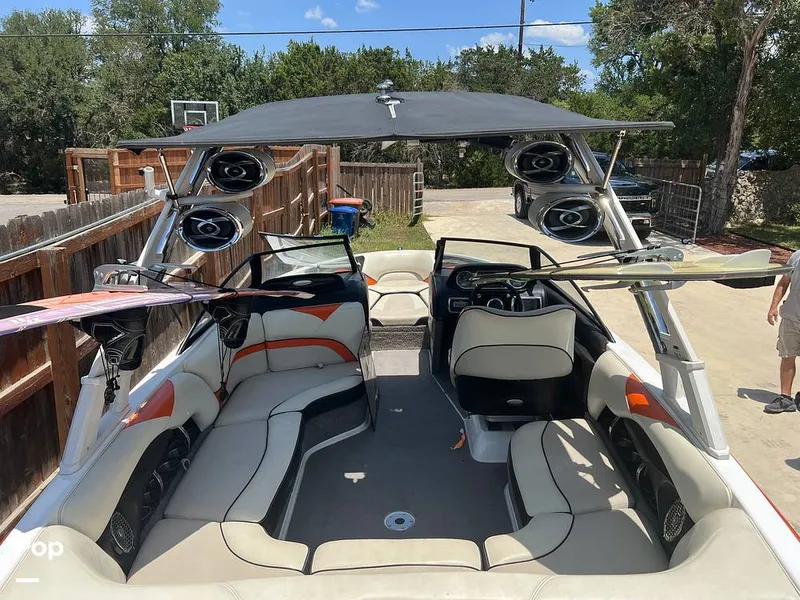
When you look at Malibu boats vs competitors from a value and usability standpoint, Malibu emphasizes that many of the features needed for serious wakesports riding and all-day family boating are integrated as part of a cohesive standard and optional equipment package rather than as bolt-on afterthoughts. Across the Wakesetter and M-Series lines, Malibu’s Surf Gate system and Power Wedge hydrofoil work with dedicated hard-tank and sub-floor ballast to let riders adjust wave size, length, and shape from the helm, while Gx Tower options, integrated board racks, and dedicated in-floor and under-seat storage are laid out so boards, ropes, fenders, and gear each have a specific home. Helm ergonomics center around Malibu Command and touchscreen interfaces that tie together surf profiles, ballast, cruise control, and lighting so the driver can control wake sports and navigation functions from one intuitive location, and the brand’s own literature highlights deep wraparound seating, convertible rear-facing benches, and multifunction transom areas that support both rider observation and social seating. This focus on functional layouts and standard systems that are engineered together helps reduce compromises between tow-sport performance and family cruising, so buyers comparing Malibu vs other fishing boats or crossover inboards can see how a Malibu can realistically handle early-morning surf sets, midday coving, and evening cruises in one platform.

Malibu also makes a point of blending utility with comfort across many models by pairing watersports-focused hulls with upscale interiors and multi-use layouts, particularly in larger Wakesetter and M-Series boats where features like plush, hand-finished upholstery, generous freeboard, and deep seating enhance security for kids and guests while still supporting a high level of athletic riding. Dual walkthroughs to the swim platform, soft-touch flooring, flip-up loungers, and available heating and audio upgrades are designed to keep everyone comfortable during long days on the water, while tower-integrated Bimini shades and board storage free up cockpit space and keep gear organized for both dedicated riders and casual cruisers. Malibu markets this as a “lifestyle” experience where surf-ready hulls, digitally controlled wakes, and watersports hardware are combined with amenities like premium sound systems, USB charging, and flexible seating so that fishability meets luxury is translated in Malibu’s world into surfability meets luxury, allowing owners to tow riders at a high level in the morning and then enjoy relaxed, quiet coving or evening sunset runs without feeling like they chose a purely hard-core tow boat at the expense of family comfort or social space.

Finally, customer satisfaction with Malibu is supported by the company’s stature as a long-standing market leader in inboard towboats, its continued innovation partnerships, and a warranty and support framework that is clearly highlighted in its owner resources. Malibu emphasizes its ongoing collaboration with General Motors and GM Marine to design and build the exclusive Malibu Monsoon line of engines in-house, using proven GM architecture to deliver what the brand describes as class-leading performance, fuel economy, and reliability tailored to towing applications, and it ties that to a formal warranty and dealer support network described in its owner and service literature. Malibu also promotes recognition through the National Marine Manufacturers Association Customer Satisfaction Index Awards, which identify manufacturers that achieve independently measured customer satisfaction scores of 90 percent or higher, reinforcing the brand’s focus on long-term ownership experience rather than just first impressions. For buyers comparing Malibu boats vs competitors on overall value, this combination of integrated engineering, premium construction, surf and wake performance, and documented customer satisfaction support from an established manufacturer provides a compelling reason to choose Malibu over cheaper or even more expensive alternatives, delivering a balance of performance, reliability, and long-term value anchored by a company with a significant legacy in watersports boating.

WHAT IS THE MOST POPULAR MODEL OF THIS BRAND BEING BUILT TODAY?

Within Malibu’s current lineup, the model that most clearly stands out as the brand’s flagship and most heavily promoted wakeboat is the Malibu M242, a 24 foot class M Series luxury towboat that Malibu explicitly describes as the “alpha in watersports luxury” and the ultra premium embodiment of everything the brand offers. On Malibu’s official site the M Series, consisting of the M242 and M230, is positioned as the apex of the lineup and the “undisputed alphas of the Malibu line,” while the dedicated M242 page highlights it as the all new 2024 flagship model built on the overwhelming success of its predecessor and packed with Malibu’s highest level of innovation, luxury and performance, indicating it is a central focus of current production and marketing efforts rather than a niche specialty boat. The M242 is a premium pickle fork bow, inboard wake and surf towboat that sits in the 24 foot category and is promoted as delivering the highest level of performance and customization in its class, with Malibu emphasizing that it represents the ultimate Malibu experience for watersports buyers seeking top tier wakesurfing and wakeboarding capability combined with luxury day boating comfort.

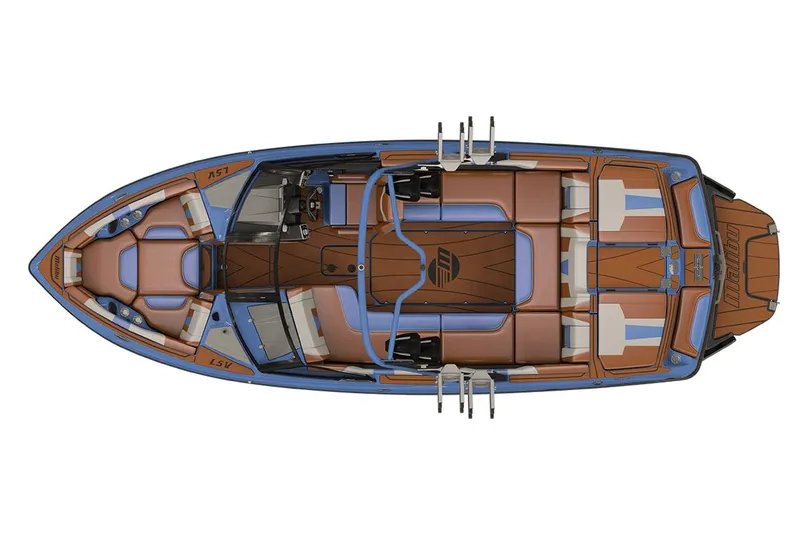
Official specifications for the M242 describe an ultra premium 24 foot class towboat built on the distinctive M Line hull, with a wide, high freeboard profile that yields expansive interior space, deep storage and generous ballast capacity to support class leading wakes and waves, although Malibu’s consumer facing pages focus more on function than a full spec chart by emphasizing the boat’s overall length class, elevated freeboard and premium hull design. The M242 is powered by Malibu’s Monsoon series inboard engines paired with Surf Gate Fusion and Power Wedge III, technologies that integrate directly into the M Line hull to create exceptionally clean, customizable surf swells while still supporting efficient cruising and all day operation. Standard and highlighted features include the Max Relax Sundeck Loungers at the transom, an E Z Stash Board Locker for integrated board storage, Raise and Laze armrests, ultra plush wraparound interior seating, a walkthrough bow with upscale upholstery and soft grip flooring, plus the latest Malibu Command Center helm with the new mOS operating system, large touchscreens, expanded wireless charging and integrated watersports presets. Buyers can configure the M242 with different towers, audio upgrades and interior color and material packages, allowing each boat to be tailored for pure family luxury, serious wakesurf sessions or a blend of both.
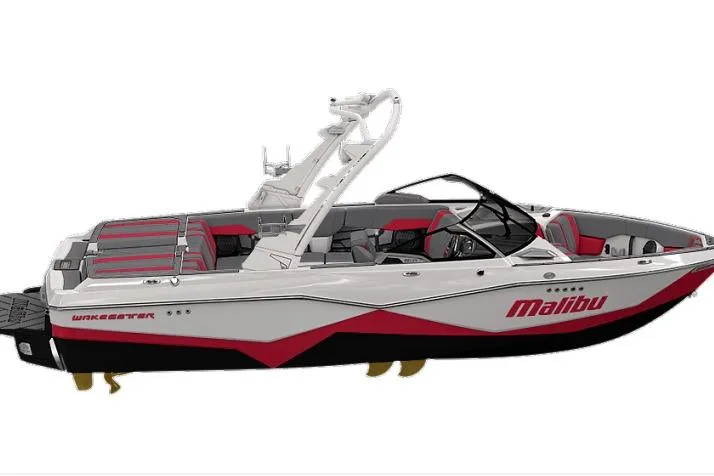
Malibu positions the M242 squarely at discerning watersports enthusiasts and families who want the most luxurious and capable boat in the brand’s portfolio, appealing to owners who prioritize top tier wakesurf and wakeboard performance but also demand refined day boating comfort and prestige. Official descriptions emphasize that it is built for crews who want a sophisticated onboard experience with premium materials, advanced tech and thoughtful touches everywhere you look, which makes it especially attractive to multi generation families, experienced towboat owners moving up from smaller Wakesetter models and buyers who entertain large groups. Features like the spacious shovel nose bow, convertible Max Relax Sundeck Loungers, deep storage, premium audio and the integrated E Z Stash board locker support both serious riding days and relaxed cruising or coving, while Surf Gate Fusion and model specific mOS presets let owners quickly switch between surf, wakeboard and cruise modes to match different riders and activities. Malibu’s flagship language around the M242 and the way it is presented as the most premium boat from the world’s best selling watersports boat brand underline its role as a halo product designed to embody the company’s design philosophy of combining cutting edge tow sports performance with luxurious, user friendly spaces on board.

From an availability and investment standpoint, Malibu’s recent launch of the all new 2024 M242 and its continued promotion on the official site, along with messaging that the model is available now and selling fast through the dealer network, show that the company is actively prioritizing production and retail inventory for this flagship. Malibu has also tied the M242 closely to its latest technology rollouts, including the new generation Malibu Command Center and operating system, a level of ongoing engineering attention that signals long term commitment to the platform rather than a short run specialty model. In addition, the M Series page frames the M242 and M230 together as the apex of the Malibu portfolio, reinforcing how central the M242 is to the brand’s current identity and marketing narrative as the ultimate expression of Malibu performance and luxury. Taken together, its flagship designation, prominent web placement, integration of Malibu’s newest tech and emphasis on strong dealer availability all point to the M242’s 24 foot luxury wake and surf format as the company’s signature offering, hitting a sweet spot in size, capability and premium features that aligns with current market demand at the top of the towboat segment.

WHAT IS THE HISTORY OF THIS BOAT BRAND AND COMPANY?

In 1982, six California friends who were passionate about waterskiing founded Malibu Boats and began designing and building a new wave of dedicated ski boats that would move past the “good enough” standards they saw on the market, choosing the name Malibu to evoke the Southern California coastal paradise where watersports are a way of life and basing their earliest efforts on creating tournament capable ski boats with advanced hulls that delivered precise tracking, soft slalom wakes, and strong pulls for serious skiers. From the outset, the young company focused on state of the art design rather than mass production, drawing on the feedback of competitive skiers and early dealers to refine cockpit layouts, engine placement, and running surfaces, building a loyal following among seasoned enthusiasts, accomplished pros, and families who wanted purpose built waterski boats that felt custom tuned to their style of riding. This commitment to innovation and to listening closely to watersports athletes in the company’s formative years laid the foundation for Malibu’s later reputation as an industry pioneer in towboat hulls, wake shaping hardware, and driver centric ergonomics, and it set the tone for a brand identity rooted in performance, progression, and the social, family focused culture of life on the water that grew steadily as Malibu expanded beyond its original California manufacturing base into a broader national footprint with a growing network of devoted owners and advocates who helped spread the brand across key U.S. lakes and rivers.

As Malibu moved through the following decades, the company broadened its model range from pure slalom ski boats into a full line of watersports towboats, introducing the first wakeboard specific hulls as the sport of wakeboarding surged and adding V drive configurations and larger, more luxurious interiors to meet the needs of crews who wanted bigger, more shaped wakes for new tricks along with more comfort for all day sessions. Malibu’s dedication to engineering innovation produced a succession of industry firsts that defined modern wake and surf boats, including the original Wedge hydrofoil that added adjustable downward force at the transom to enlarge and steepen the wake and its successor, the Power Wedge, which brought automated control to that concept, as well as the Surf Gate system that redirected water flow off the hull sides to create a clean, surfable wave on either side of the boat at the touch of a control, helping Malibu become the undisputed worldwide towboat leader by the 2010s. Over time the company’s corporate structure evolved into Malibu Boats, Inc., headquartered in Loudon, Tennessee, and it added the Axis Wake Research brand to reach value focused wake buyers while continuing to refine Malibu models such as the Response ski line and Wakesetter series so they would anchor major tournaments and grow market share around the world, with the combination of expanded manufacturing capacity in Loudon, vertical integration in key components, and a larger dealer network enabling Malibu to weather industry cycles, respond to shifting consumer preferences, and emerge from challenges in prior decades as a stronger, more diversified performance towboat builder with a clear technological edge.

In the modern era Malibu accelerated its push into new segments and advanced technologies, leveraging its Loudon, Tennessee manufacturing hub to introduce increasingly sophisticated iterations of its core lines like the Wakesetter and Response while also developing the Axis brand as a complementary offering and, at the corporate level, acquiring leading names such as Cobalt in sterndrive day boats and the Maverick family of saltwater fishing brands so that Malibu Boats, Inc. could offer a broader portfolio spanning performance sport boats, sterndrives, and offshore and bay boats to a wide spectrum of recreational boaters. Within the Malibu brand itself, the company focused on integrating digitally controlled systems, refined hulls, and proprietary features, engineering and marinizing its in house Malibu Monsoon engines in partnership with General Motors to deliver quieter operation, improved fuel economy, and industry leading emissions performance that earned recognition from organizations like the Water Sports Industry Association for innovations such as the Monsoon M6Di, while simultaneously enhancing user interfaces through helm technology culminating in the launch of the Malibu Command Center in the mid 2020s for the 2025 model year. Malibu also continued to expand its factory capabilities and vertical integration by adding in house trailer production and emphasizing safety and quality in manufacturing, milestones underscored by achievements like logging millions of safe man hours at the Loudon facility, all of which supported the rollout of redesigned flagships such as the 2025 Wakesetter 25 LSV that paired a deeper, newly sculpted hull optimized for larger ballast and improved rough water comfort with features like an Aquatic Invasive Species ballast flush system and advanced online configuration tools, creating a comprehensive, technology rich lineup that could serve everyone from dedicated tournament skiers to large wake surf crews and crossover families.

Most recently, Malibu has reinforced its position at the top of the watersports towboat market by introducing new halo models, refining best sellers, and strengthening its global partnerships, with the iconic Wakesetter 23 LSV repeatedly recognized as Wakesurf and Wakeboard Boat of the Year in the WakeWorld Riders Choice Awards and widely cited as the best selling watersports boat of all time, while the company launched a redesigned 25 LSV, the new Malibu Command Center, and an industry first AIS ballast flush system to elevate both performance and ownership experience for the 2025 model year. At the same time Malibu Boats, Inc. has invested in long term initiatives such as the vertically integrated Malibu Monsoon engine line produced in cooperation with GM, an expanded role for its Loudon facility, and strategic partnerships like a multiyear agreement to serve as exclusive towboat partner for the International Waterski & Wakeboard Federation, all of which help extend the reach of the Malibu name in global competition and lifestyle watersports. Today the Malibu brand stands for innovation, reliability, and rider focused design anchored in the DNA of its six founder friends from 1982, but expressed in an advanced, diversified product family that includes premier wake, ski, and surf boats supported by a robust dealer network and a manufacturing culture that emphasizes safety, quality, and continuous improvement, positioning Malibu as a trusted leader whose heritage of on water progression continues to attract loyal owners and underpins a confident outlook for future generations of towboats and watersports enthusiasts worldwide.
AWARDS AND RECOGNITIONS

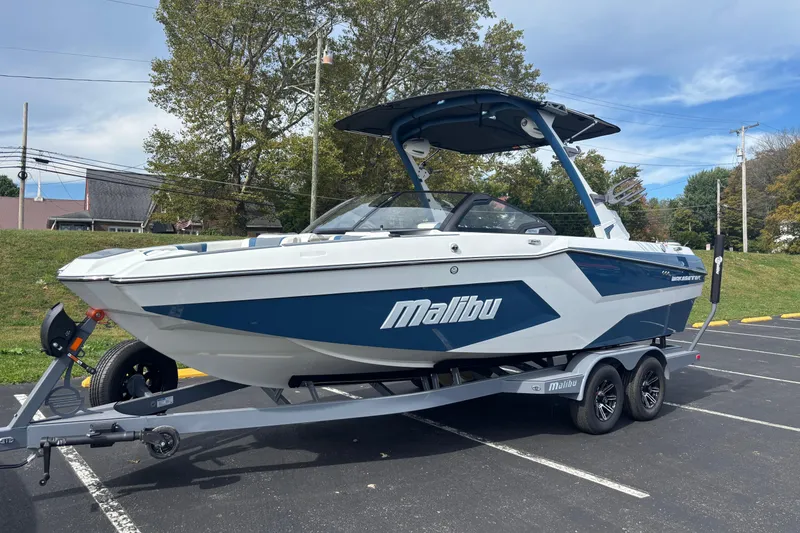
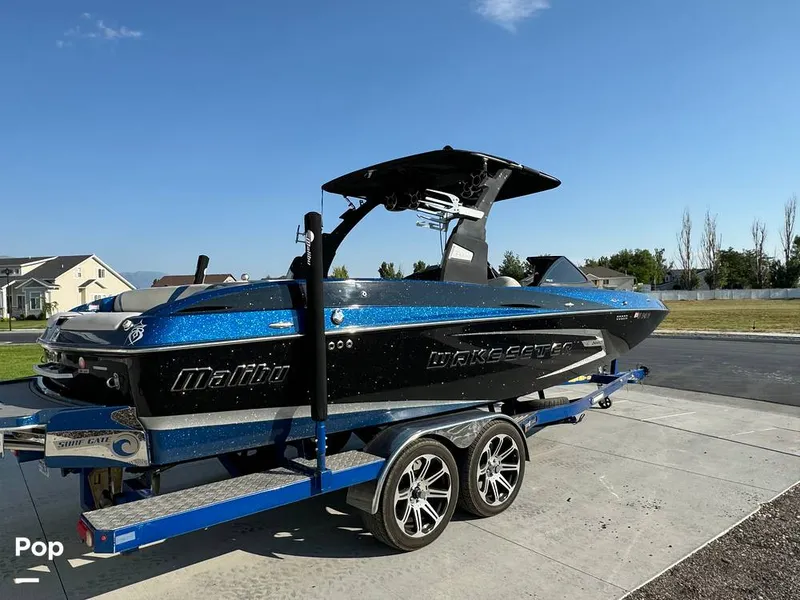
Malibu’s reputation for award winning towboats and engineering leadership has been built over decades, but its recent history of formal recognition accelerated in the late 2010s as major marine organizations began spotlighting specific models and technologies. In 2017 the National Association of Trailer Manufacturers recognized Malibu as the number one trailer manufacturer in market share increase for boat trailers, underscoring the brand’s integrated approach to the entire ownership experience rather than just the hull. That same period saw Malibu’s Surf Band highlighted by Boating Industry magazine as an innovation that put unprecedented wave control literally in the rider’s hand, signaling the brand’s leadership in wake and surf technology. By 2019 Malibu was named one of the Top 5 Most Innovative Marine Companies by Soundings Trade Only Today, validating its broader industry influence beyond watersports. Product specific accolades quickly followed, with Boating Industry selecting the Wakesetter 25 LSV as a 2019 Top Product, then honoring the flagship Malibu M240 as a 2020 Top Product for introducing the M Line hull, Surf Gate Fusion, Launch System 6 ballast, Stern Turn and the mOS operating system, all aimed at refining wakesurf and wakeboard performance. In 2020 and again in 2021 the Wakesetter 23 LSV was voted Wakesurf and Wakeboard Boat of the Year in the WakeWorld Riders Choice Awards, while Boating Industry named the Malibu M220 a 2021 Top Product, confirming the brand’s dominance in premium wake boats across multiple lengths and price points.
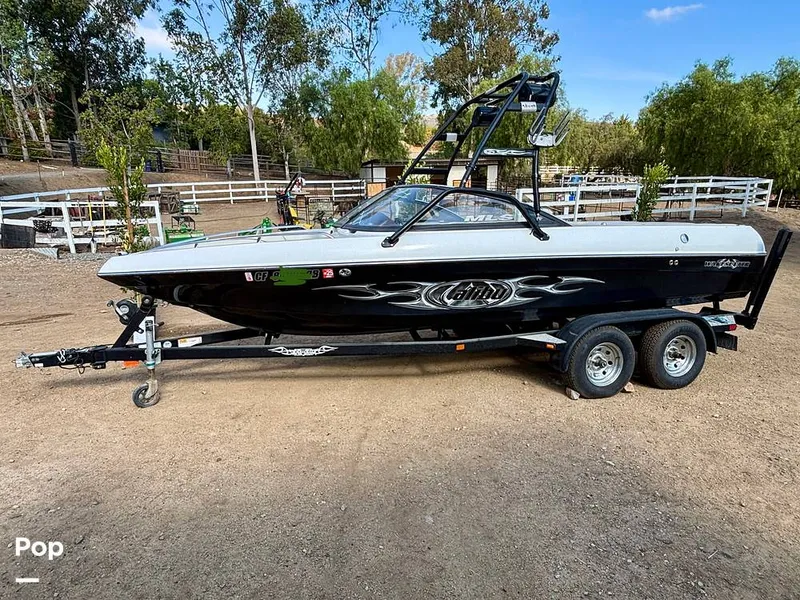
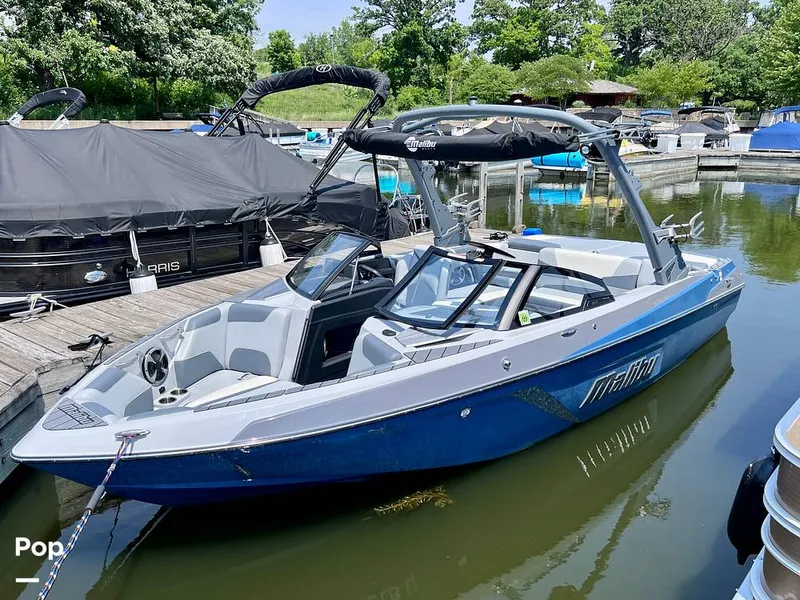
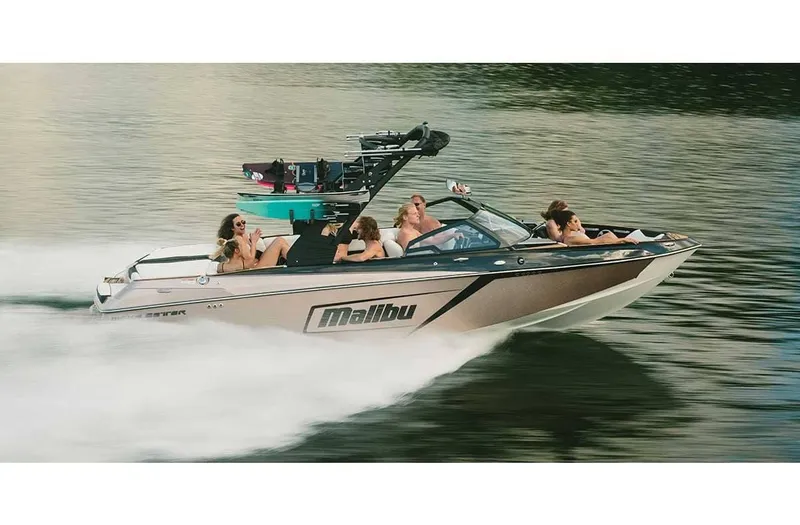
Beyond product headlines, Malibu’s relationship with its owners has been validated through the National Marine Manufacturers Association’s Marine Industry Customer Satisfaction Index awards, which honor builders that achieve independently measured excellence scores of 90 percent or higher based on surveys of new boat buyers. Malibu Boats and sister brand Axis Wake have been recognized with NMMA CSI awards for their inboard towboat segment, an acknowledgment the company highlights as especially meaningful because it is driven entirely by customer feedback and requires manufacturers to survey every new boat buyer within the program year. This CSI recognition confirms that Malibu’s design and engineering innovations are matched by its dealer support, warranty response and day to day ownership experience, from delivery through the first seasons on the water. While the exact tally of consecutive years is not specified in Malibu’s own communications, the repeated appearance of Malibu and its dealer network in NMMA’s CSI announcements illustrates a sustained commitment to listening to owners, refining build quality and service processes, and investing in after sales support that keeps satisfaction consistently above the industry benchmark.
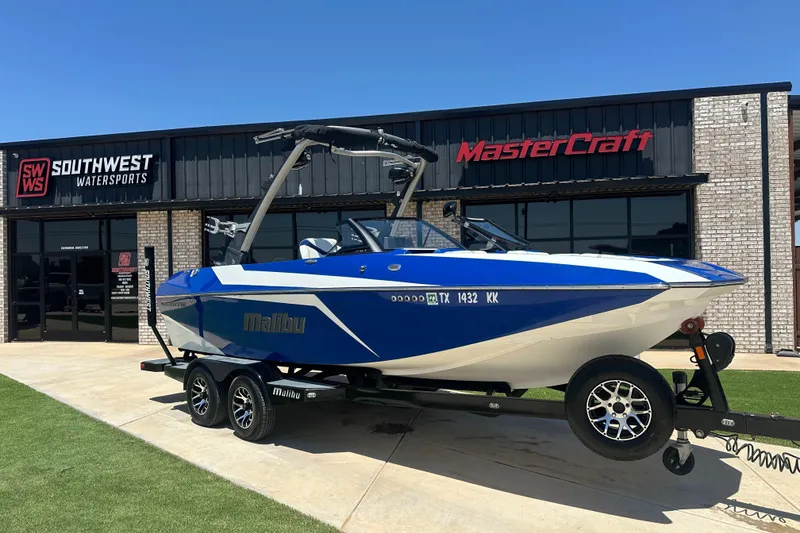
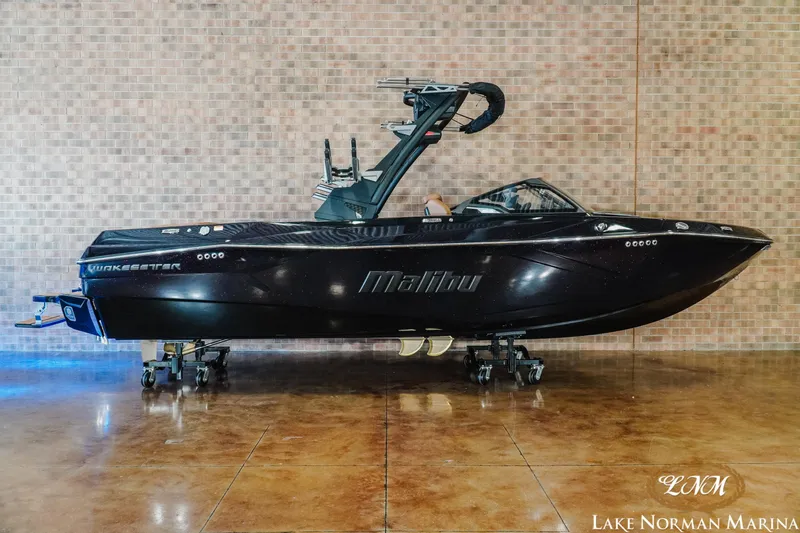
Malibu’s pace of recognition has continued in the last few years, reinforcing its position as a benchmark in the wakeboat category. At the 2021 International BoatBuilders’ Exhibition and Conference the National Marine Manufacturers Association honored Malibu with an IBEX Innovation Award for its fully integrated, customizable interior lighting controller developed with RideController, which tied the system directly into the Malibu Command Center for zoned, color variable lighting control that could even sync to music. That same year the all new M220 was selected as a Boating Industry 2021 Top Product, and the Wakesetter 23 LSV repeated as WakeWorld Riders Choice Wakesurf and Wakeboard Boat of the Year. In 2021 Malibu’s marketing team also earned multiple Neptune Awards from Marine Marketers of America at the Miami Boat Show for diversity initiatives and long form video, highlighting consistent brand storytelling around its products. In 2022 Malibu captured a Miami Innovation Award in the Trailers, Parts and Trailer Accessories category at the Discover Boating Miami International Boat Show for its in house boat trailer line, and the Water Sports Industry Association presented a 2022 Product Innovation Award to the Wakesetter 25 LSV. Most recently, Malibu’s Wakesetter 23 LSV has extended its run by securing WakeWorld Riders Choice Wakesurf and Wakeboard Boat of the Year again in 2023 and 2024, while the MaxPivot Seat lounge design earned WakeWorld’s 2023 Innovation of the Year, keeping Malibu firmly at the center of independent rider driven recognition.

Taken together, these awards and recognitions paint a consistent picture of Malibu as a brand that pairs technical innovation with long term owner satisfaction and a strong dealer network. Independent industry bodies such as the National Marine Manufacturers Association, Water Sports Industry Association, Boating Industry magazine, Soundings Trade Only Today, Marine Marketers of America and rider driven outlets like WakeWorld have all validated different aspects of Malibu’s offering, from hull design and surf systems to trailers, digital controls and marketing communications. The recurring NMMA CSI honors demonstrate that these innovations are backed by real world reliability and service that keep satisfaction scores at or above the 90 percent threshold, while consecutive Boat of the Year titles for models like the Wakesetter 23 LSV show that core towboat products are regarded by both enthusiasts and media as category leaders. For buyers, this multi year record across technical, experiential and customer satisfaction metrics supports confidence that Malibu delivers not just an impressive spec sheet at the boat show, but a refined, high quality ownership experience that retains its value on the water season after season.

Be the First to Know

Get notified when new boats become available.

Logo