Sea Ray
Searching boats for you...
Sea Ray – Technical and Historical Guide
ABOUT THIS BOAT BRAND
Sea Ray is an American boat manufacturer renowned for building premium recreational powerboats with a long-standing emphasis on fit-and-finish, comfort-forward layouts, and predictable handling. Founded in 1959 by Cornelius Ray in Detroit, Michigan, the Sea Ray name grew from Great Lakes runabouts into one of the most recognized brands in the U.S. pleasure-boat market, with a product strategy centered on refined ergonomics and repeatable build processes across high-volume models. Sea Ray is part of Brunswick Corporation’s portfolio, aligning the brand with a major marine parent known for integrated propulsion and parts ecosystems. Across decades of production, the company’s consistent model continuity, broad dealer support, and strong resale demand have made Sea Ray a benchmark brand for mainstream cruisers and sport boats, reinforcing its significance within the North American marine industry.
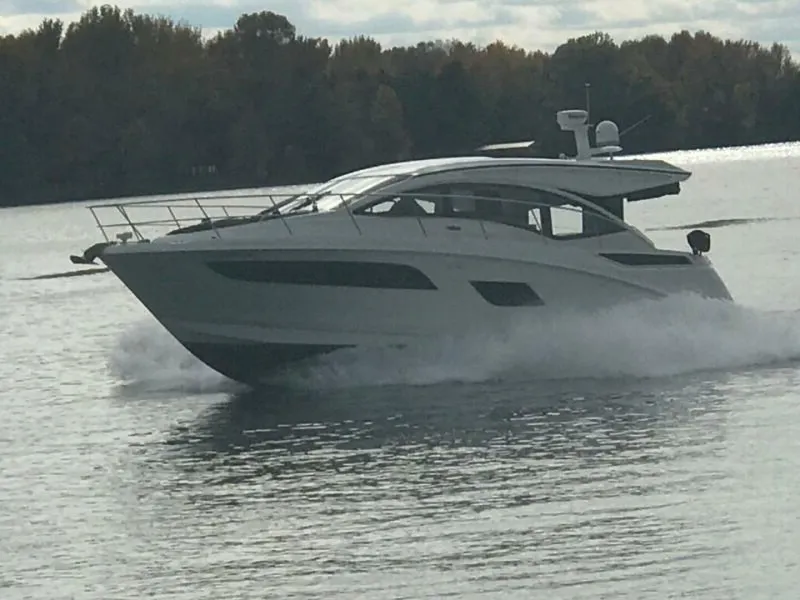
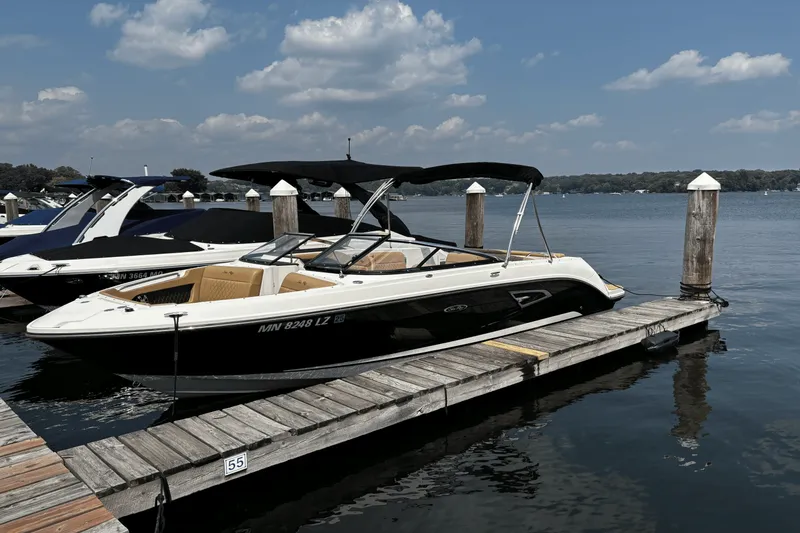
Specializing in gasoline- and diesel-powered saltwater and freshwater boats, Sea Ray designs craft for family boaters, weekend cruisers, and owners stepping up into premium bowriders and cabin cruisers. Core Sea Ray lineups commonly include SLX bowriders, Sundancer express cruisers, and SDX deck boats, with larger cruiser and yacht models historically anchoring the brand’s reputation for onboard livability. Typical Sea Ray technical features include deep-V or modified-V running surfaces for rougher-water confidence, integrated swim platforms with boarding ladders, composite stringer and deck structures for durability, single or twin sterndrive and inboard options depending on size, hardtop or arch-equipped cockpits for weather protection, and cabin plans with enclosed heads, galley modules, and convertible berths on cruiser models. With a broad model range and consistent execution of comfort and handling, Sea Ray remains a preferred choice for buyers seeking versatile recreational powerboats that bridge dayboating and overnight cruising.
WHAT MAKES THIS BOAT BRAND SPECIAL?
Sea Ray stands out for blending sporty performance with luxury comfort in a way that feels intuitive at the helm. On many modern models, Sea Ray’s Quiet Ride™ hull design focuses on reducing vibration and noise so passengers can talk at cruise speed and arrive less fatigued, while the company’s attention to running surface geometry helps the boat track cleanly and land softly in chop. Across its sport boats, cruisers, and select outboard-powered platforms, Sea Ray pairs strong fiberglass construction with carefully engineered stringer and deck structures to keep the ride solid without feeling heavy. The result is confident handling, predictable planing, and a dry, secure feel for families and entertaining, plus practical details like thoughtful storage, easy-to-use swim platforms, and cockpit layouts that make a day on the water simpler.
Sea Ray boats are built in the United States, with major production based in Knoxville, Tennessee, where skilled teams build to repeatable standards while still sweating the fit and finish that buyers notice. Sea Ray emphasizes premium gelcoat and upholstery choices, clean wiring and plumbing practices, and hardware selected for long-term corrosion resistance in a marine environment. Sea Ray also designs to applicable ABYC guidance and U.S. Coast Guard requirements for systems and safety, giving owners extra confidence when comparing “best family boat” or “luxury bowrider” options. Sea Ray backs many models with factory warranty coverage and a strong dealer network for support, which matters for first-time buyers and longtime captains alike. Owners often describe Sea Ray as a benchmark brand that feels upscale without being intimidating, with a reputation for refined layouts, a smooth ride, and the pride of owning a well-known name at the marina.
WHAT DIFFERENT TYPES OF BOATS DOES THIS BOAT BRAND BUILD?
Sea Ray builds a premium lineup of sport-oriented pleasure boats spanning outboard, sterndrive (inboard/outboard), and purpose-built surf configurations. The range runs from the compact SPX 190 at 19'7" up to the flagship SLX 400 Outboard at 42'2", covering everything from easy-to-tow family runabouts to large, feature-rich entertainers. Core categories in the current lineup include Sport Boats & Bowriders, Surf Boats, and Cabin Cruisers, organized across the SPX, SDX, SLX, and Sundancer series. SPX models focus on nimble, accessible fun; SDX adds deck-boat capacity and versatility; SLX elevates luxury and performance; and Sundancer delivers cruiser comfort with overnight capability. Below are the types of boats and models Sea Ray builds, along with their key characteristics and uses:
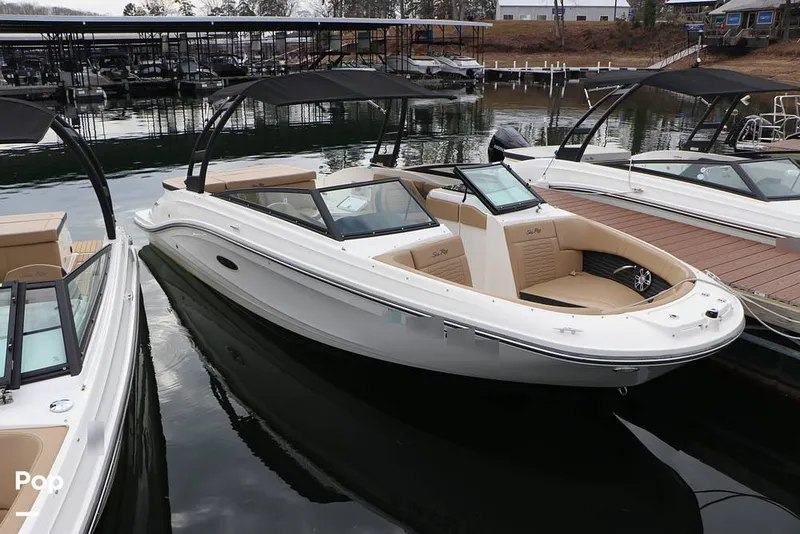
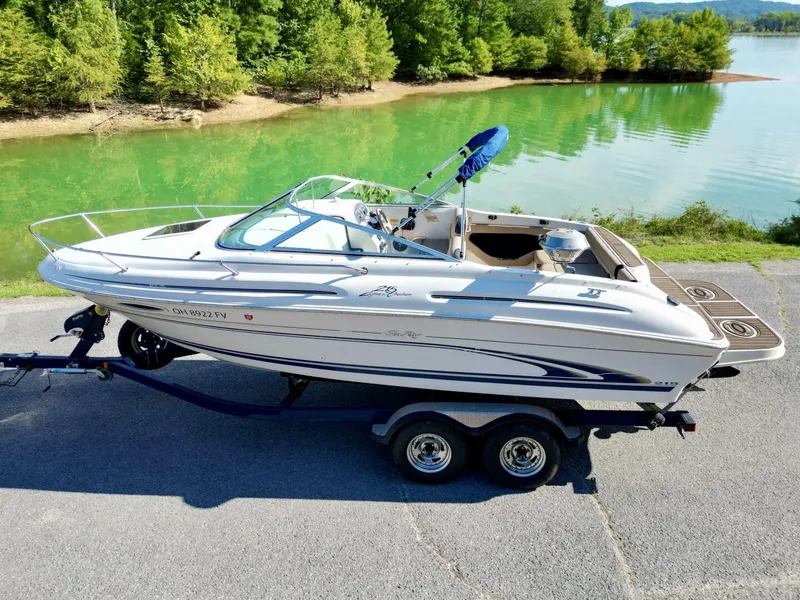
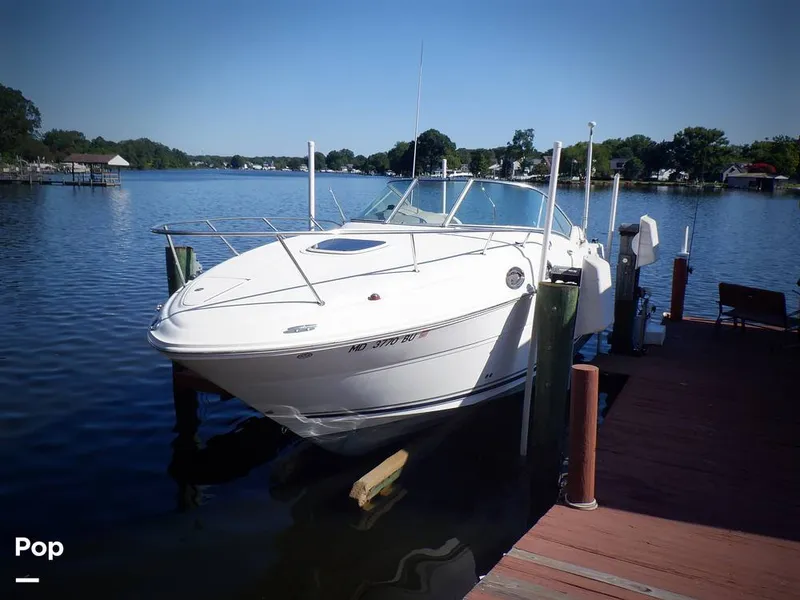
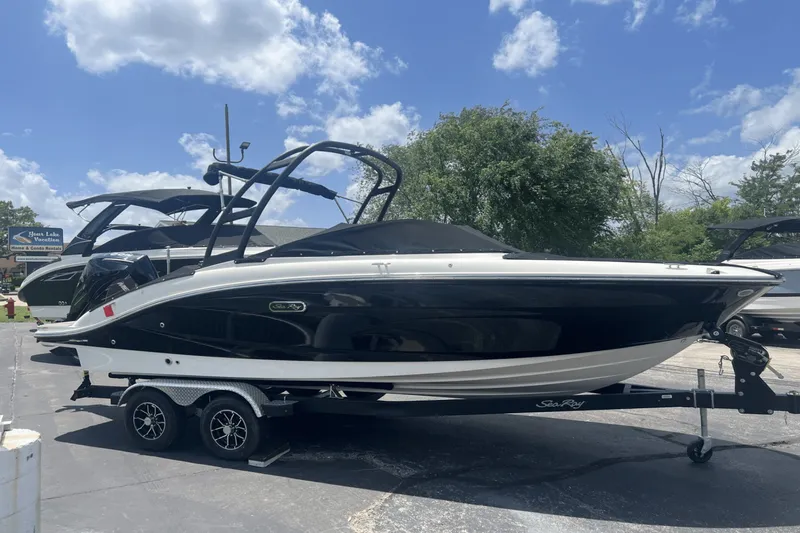
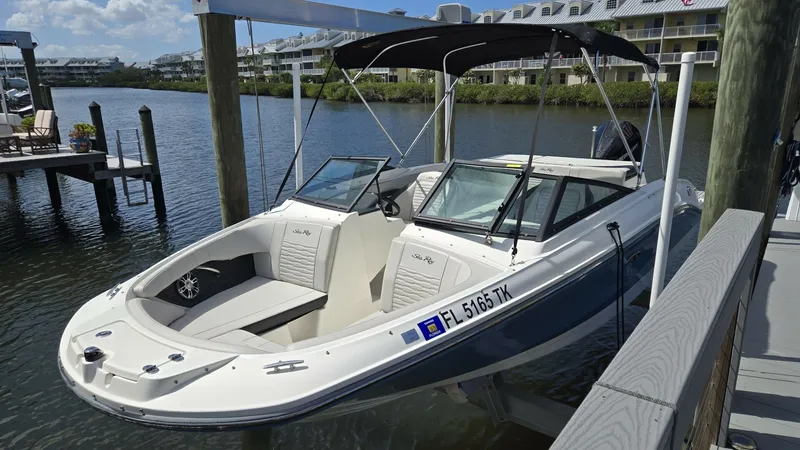
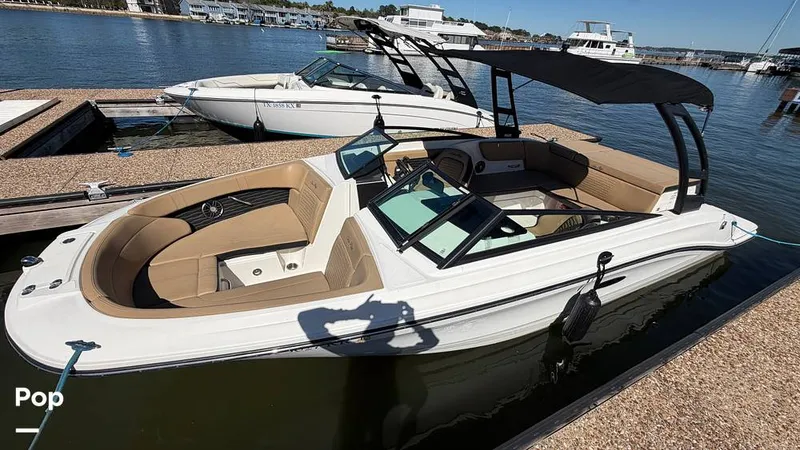
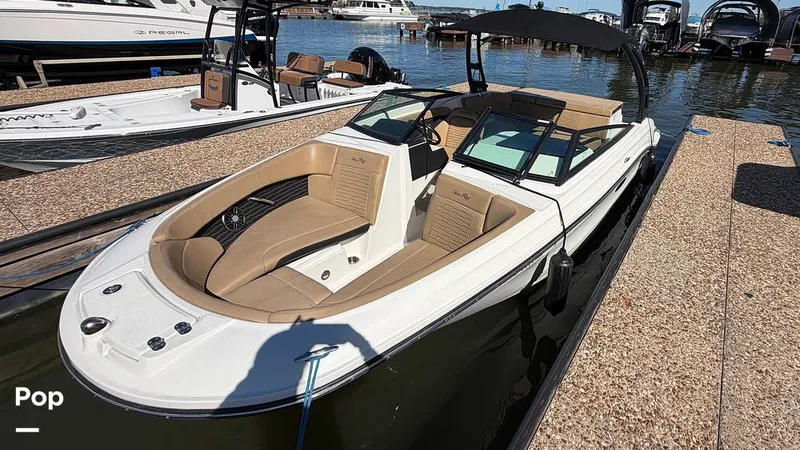
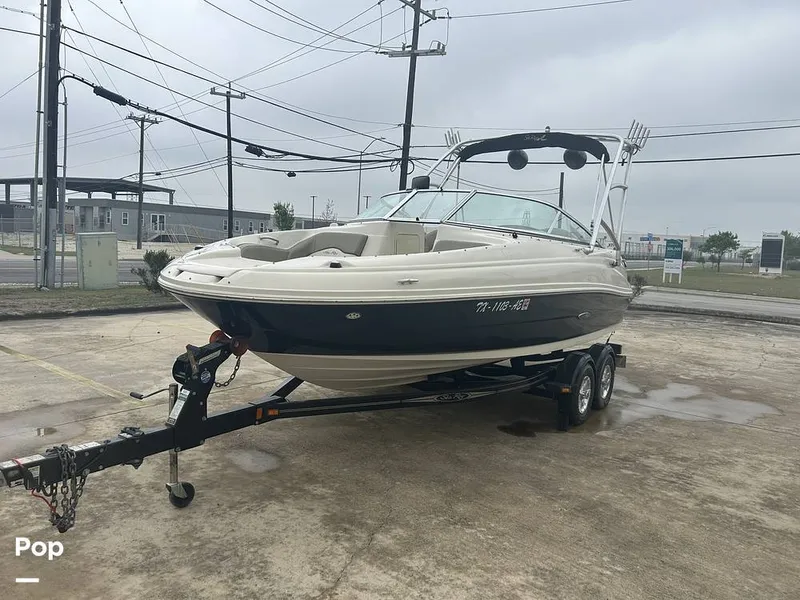
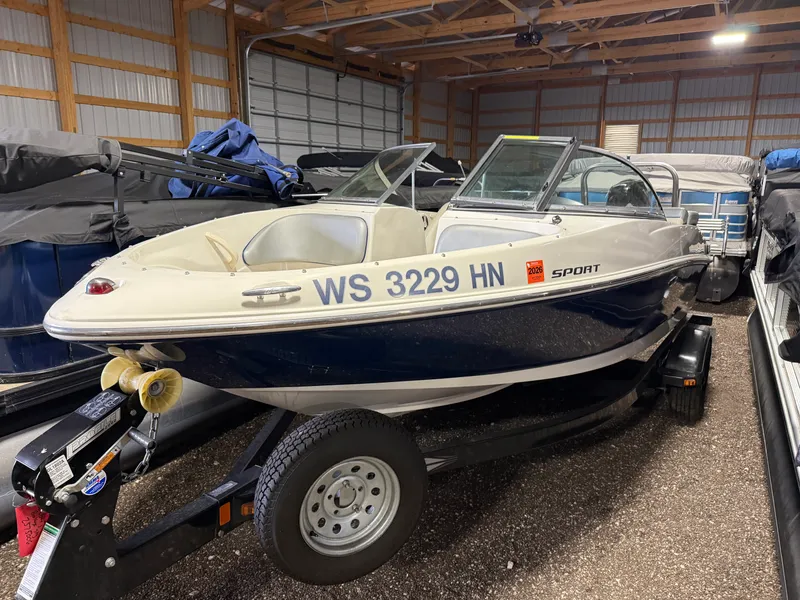
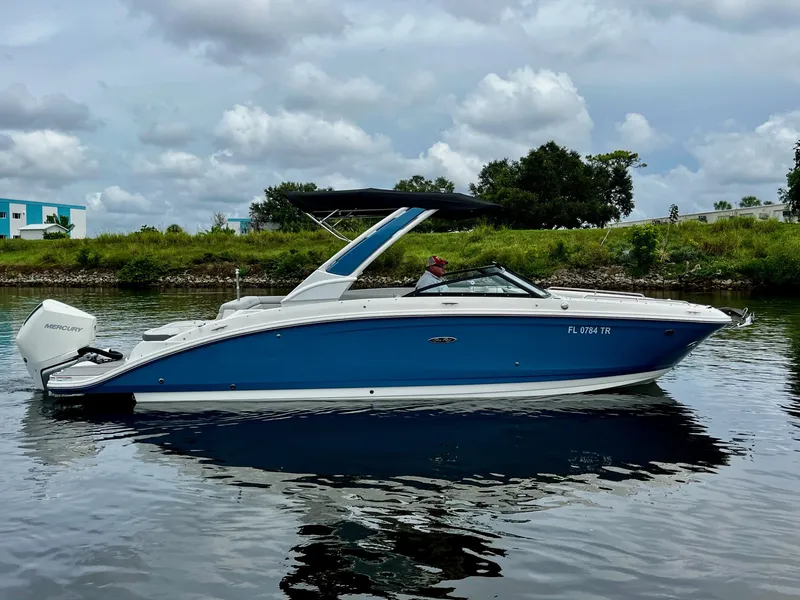
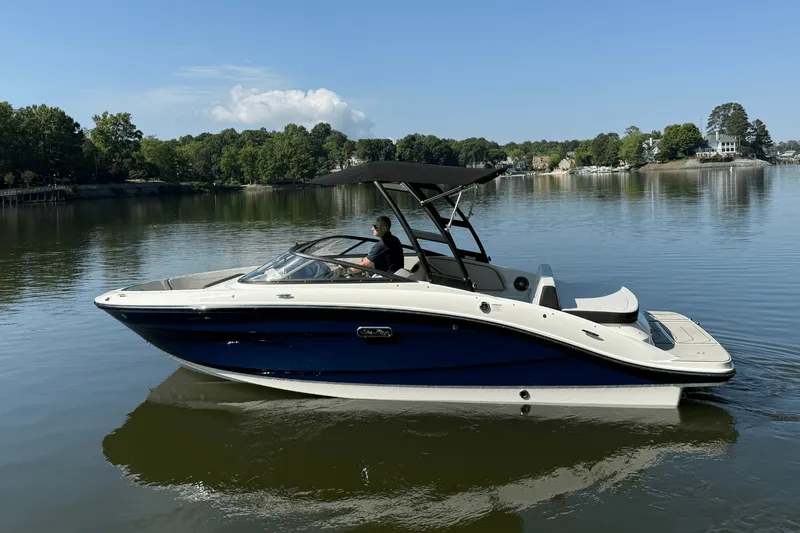
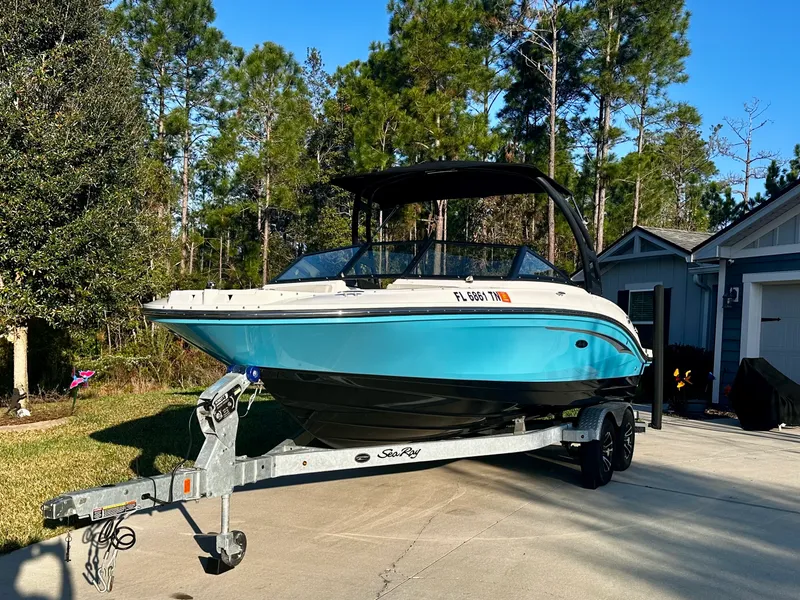
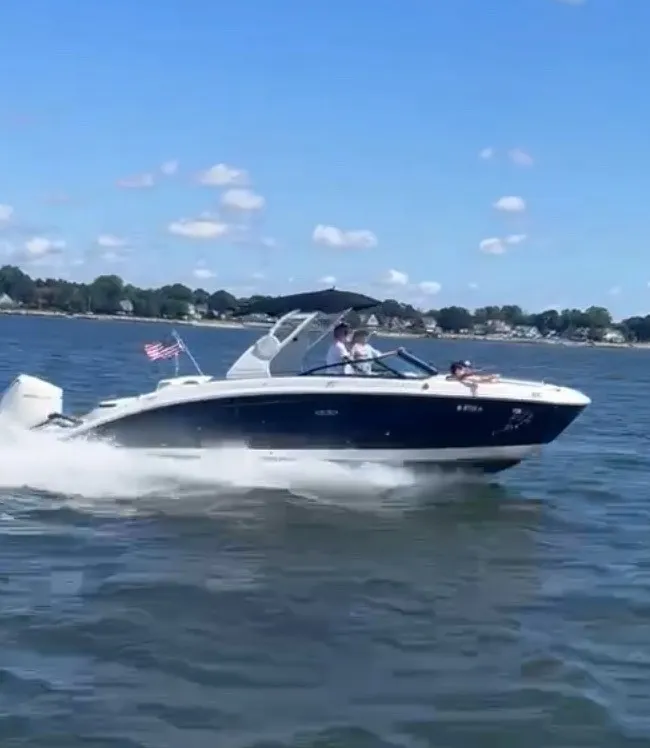
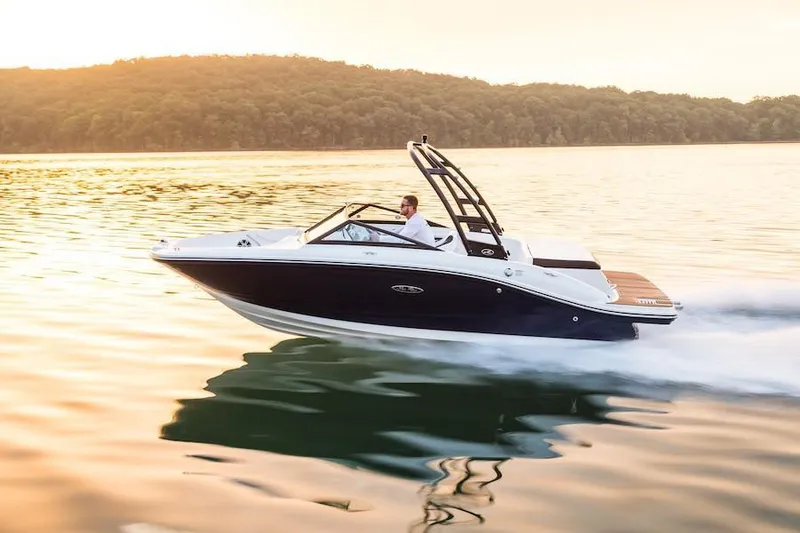
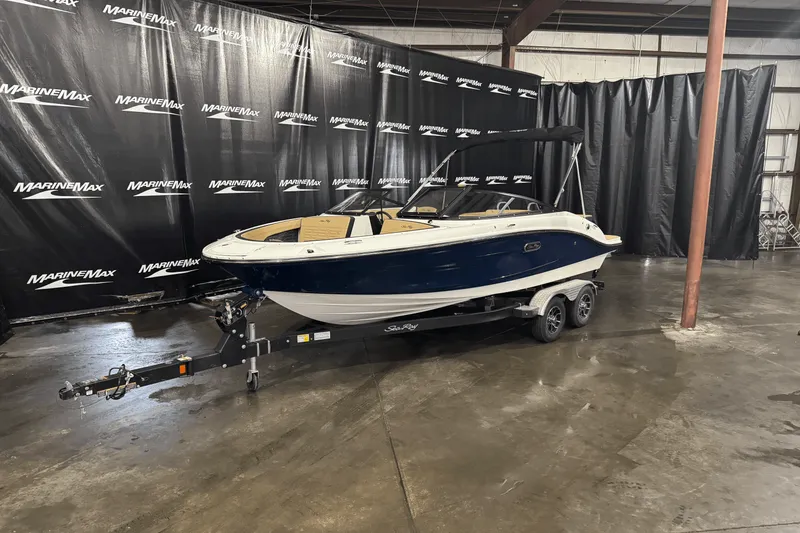
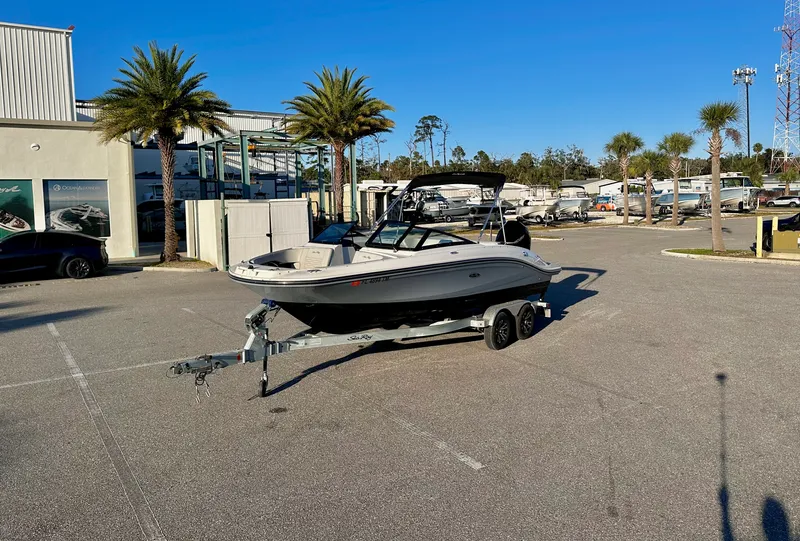
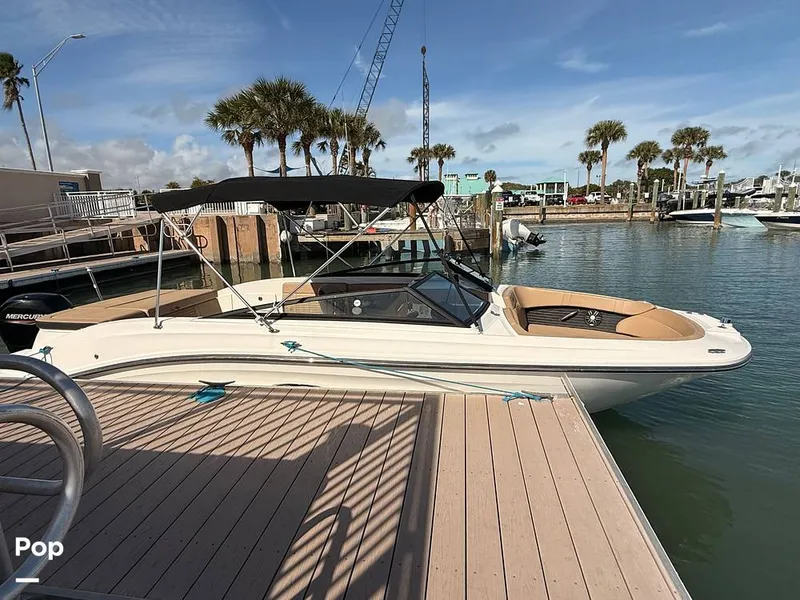
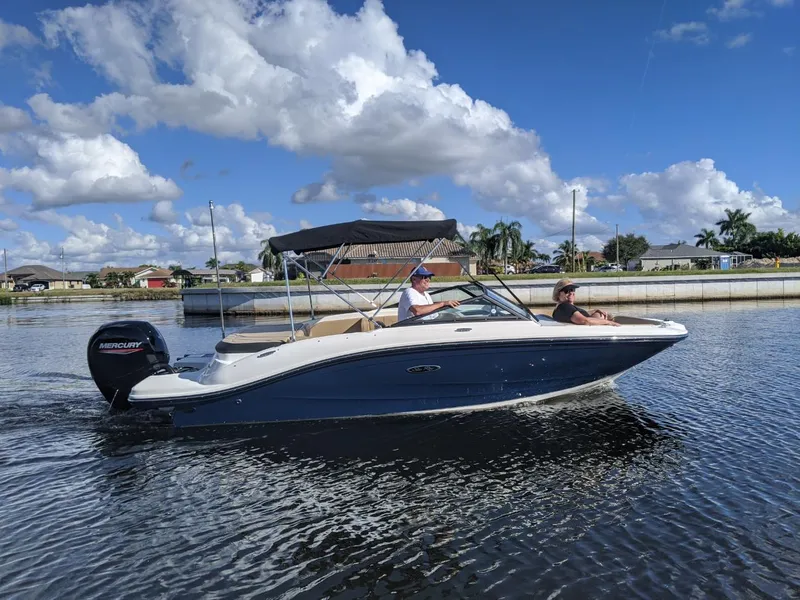
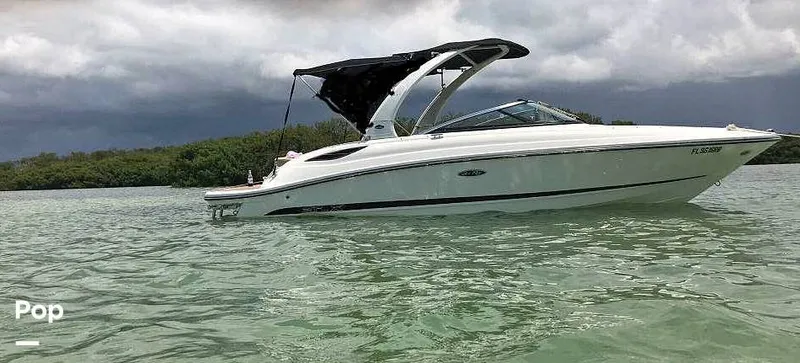
• (Sport boats / bowriders / runabouts (SPX Series)) Sea Ray’s SPX line is its entry-to-mid sport-boat family: trailer-friendly fiberglass bowriders/runabouts designed for lakes, rivers and protected/coastal nearshore water. Layouts emphasize a social cockpit, open bow seating, aft sunpad/ski storage, and easy watersports capability (tubing/wakeboarding). Propulsion is either sterndrive (Mercury MerCruiser) or outboard (Mercury), depending on model, with the outboard versions typically carrying more overall length due to the integrated swim platform/bracket. Current models commonly listed in the U.S. configurator and model pages include SPX 190 (19′7″ LOA), SPX 210 (21′8″ LOA), SPX 230 (23′6″ LOA), plus outboard counterparts such as SPX 190 Outboard (21′10″ LOA), SPX 210 Outboard (23′11″ LOA) and SPX 230 Outboard (26′1″ LOA). Typical hull form is a fiberglass planing hull with moderate-to-deep-V geometry (e.g., 19° deadrise on SPX 190 and SPX 210), prioritizing comfort, predictable handling and all-day usability.
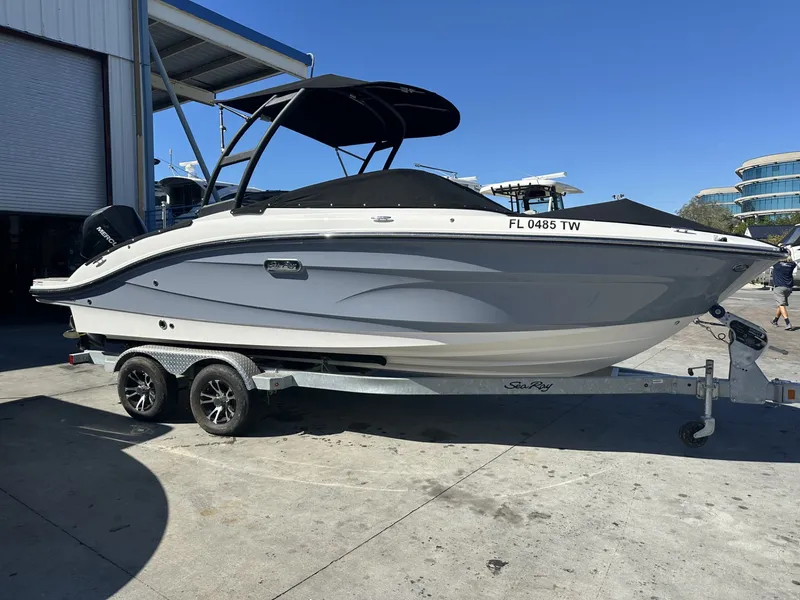
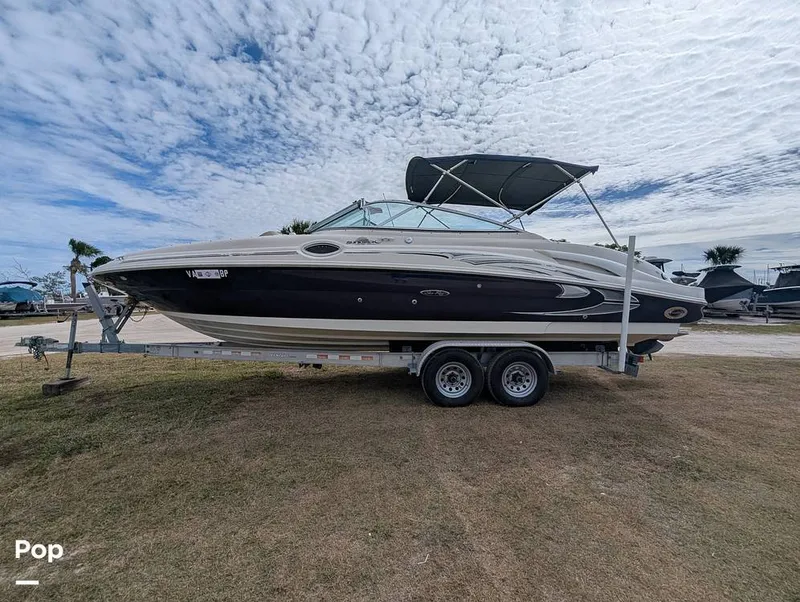
• (Sport deck / deck boats (SDX Series)) Sea Ray’s SDX series are “sport deck”/deck-boat style models that prioritize maximum usable space and passenger capacity while retaining a deep-V running surface for improved ride quality. They’re aimed at big-crew family boating—rafting up, sandbar days, cruising and mixed watersports—often with amenities like wet bars, head compartments, and optional water systems. In the U.S. market, key models include SDX 270 (27′2″ LOA, sterndrive), SDX 290 (29′2″ LOA, sterndrive) and SDX 290 Outboard (31′2″ LOA, twin outboards). Sea Ray also offers Surf-branded SDX models for wake-surf-style days (e.g., SDX 230 Surf at 23′2″ LOA with ballast capacity listed at 1,040 lb). Across these boats, Sea Ray commonly lists a 21° deadrise on many SDX models (e.g., SDX 270, SDX 290, SDX 290 Outboard), reinforcing the “bigger deck space, still capable ride” positioning versus flatter-bottomed traditional deck boats.
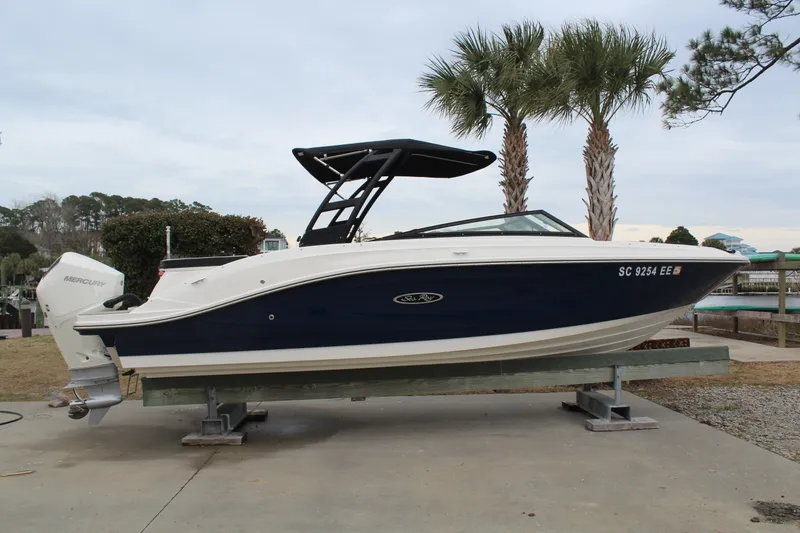
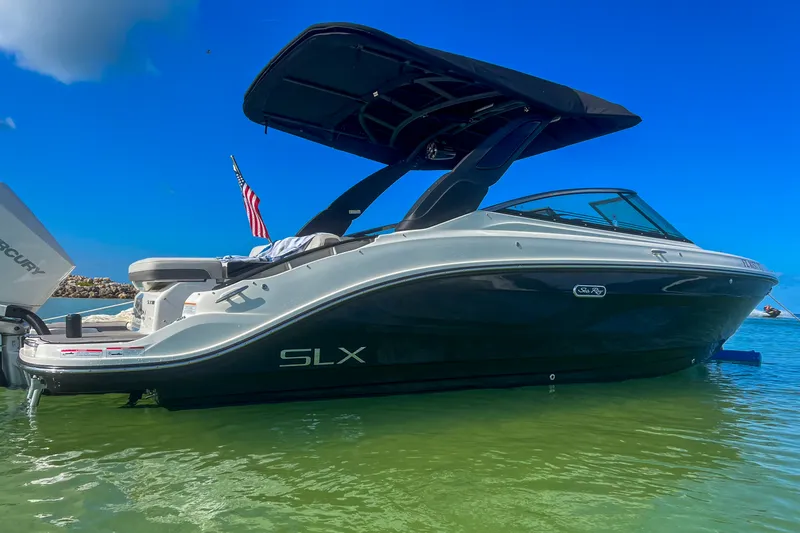
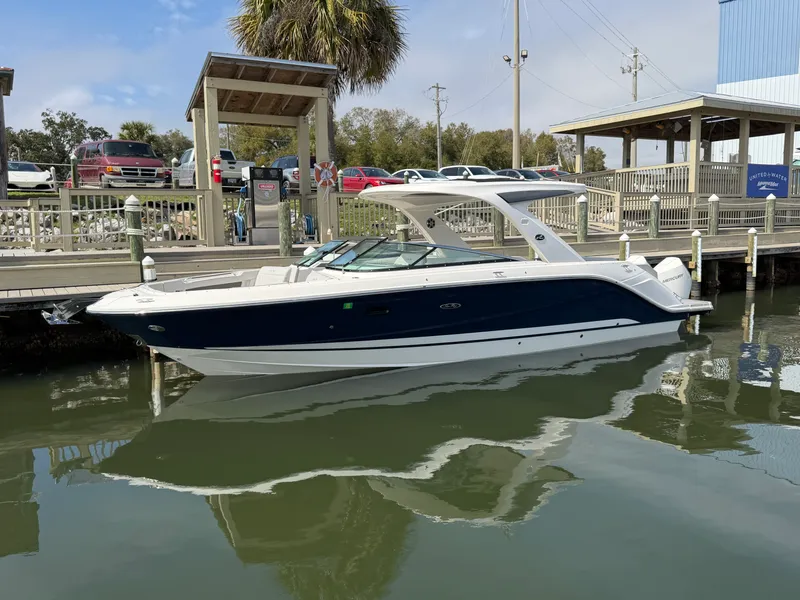
• (Luxury sport / premium dayboats (SLX Series)) Sea Ray’s SLX family sits above SPX/SDX as its premium dayboat lineup, blending high-end finishes, advanced helm tech, and higher-power packages for boaters who want upscale entertaining and strong performance. The range includes sterndrive and outboard offerings, and at the top end adds true “dayboat plus cabin” capability (small cabin/overnight accommodations on the largest models). Notable current flagships include the SLX 400 (39′9″ LOA, sterndrive) and SLX 400 Outboard (42′2″ LOA, triple outboards), both listed with a 12′1″ beam and 21° deadrise in Sea Ray’s published specs. Stepping down, the SLX 350 (36′0″ LOA, sterndrive) pairs twin MerCruiser power with joystick maneuvering, while the SLX 350 Outboard is shown in Sea Ray’s configurator at 38′0″ LOA with twin outboards. Overall, the SLX line targets premium day cruising, hosting, and watersports with features such as integrated swim terraces/large transom social zones on bigger boats, yacht-certified capacities on larger models, and technology-forward helm layouts (digital dash + integrated engine controls).
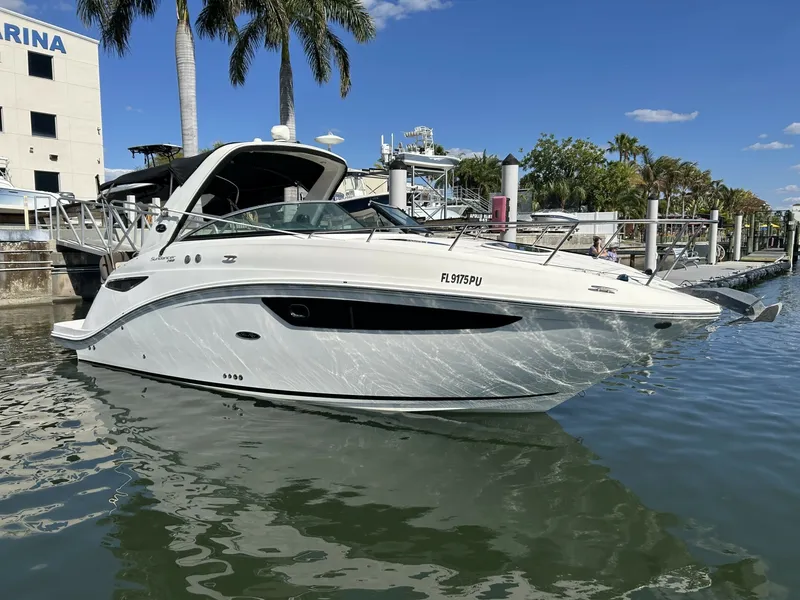
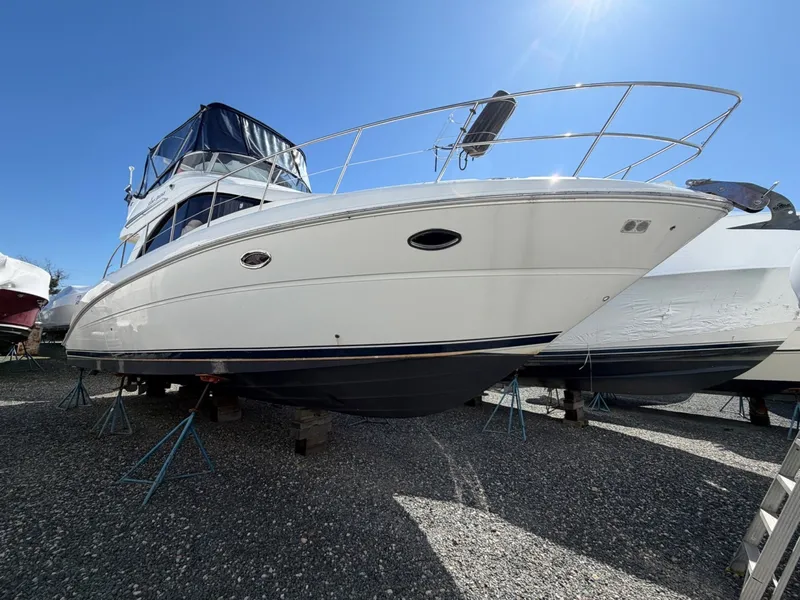
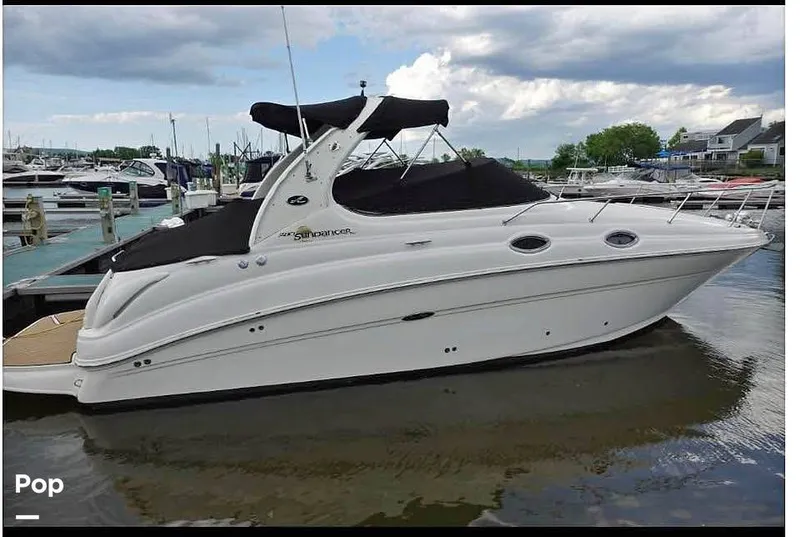
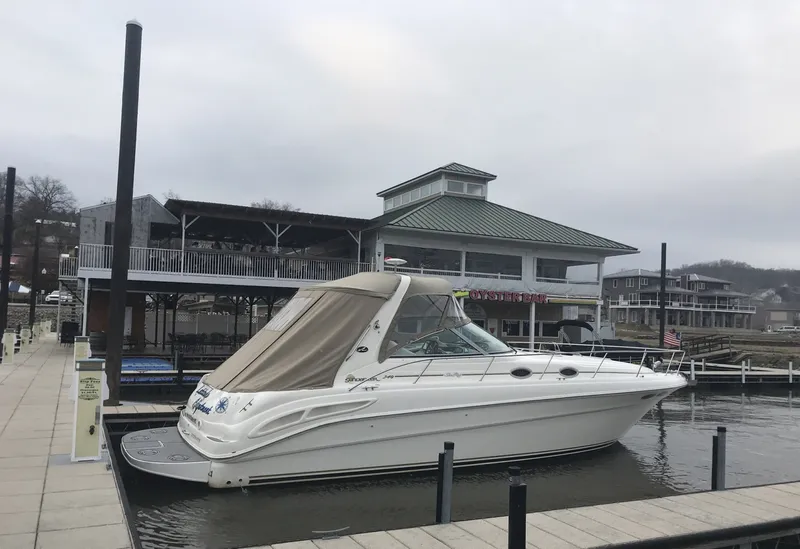
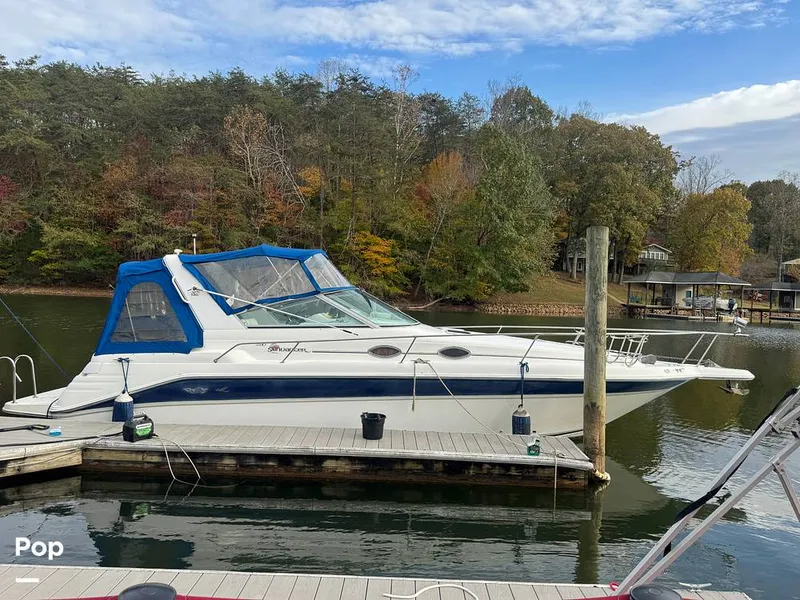
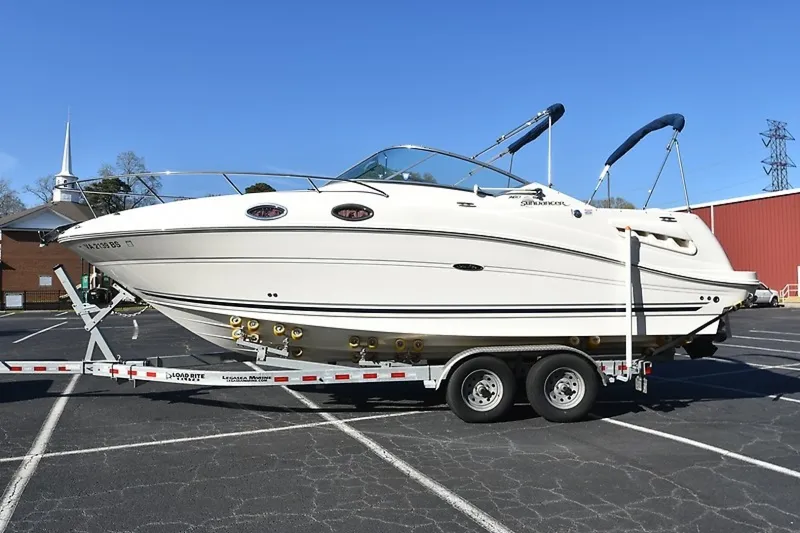
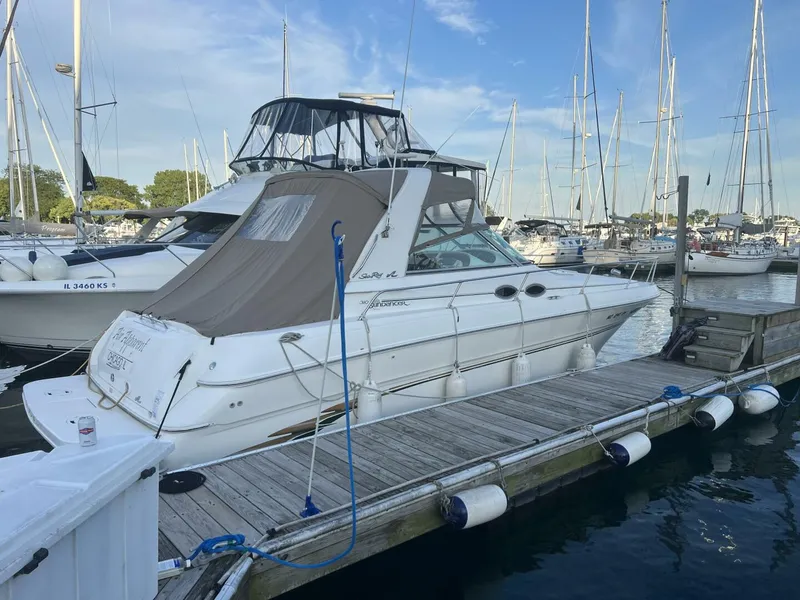
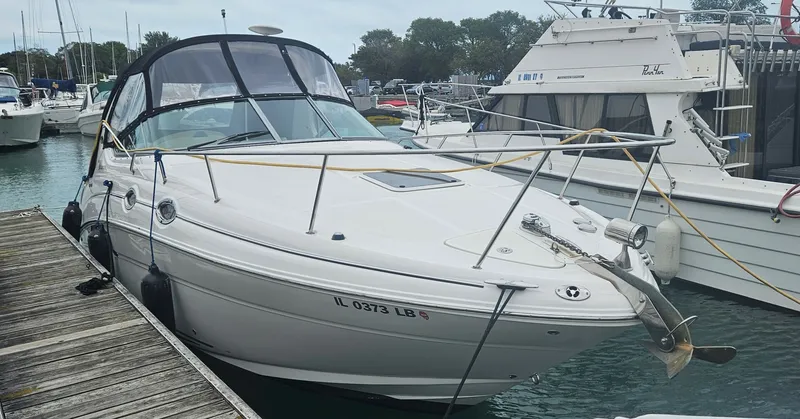
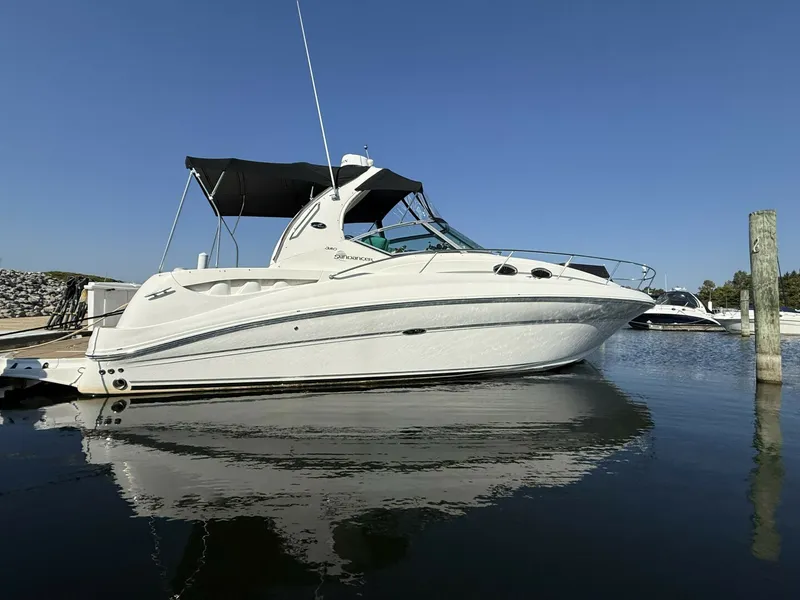
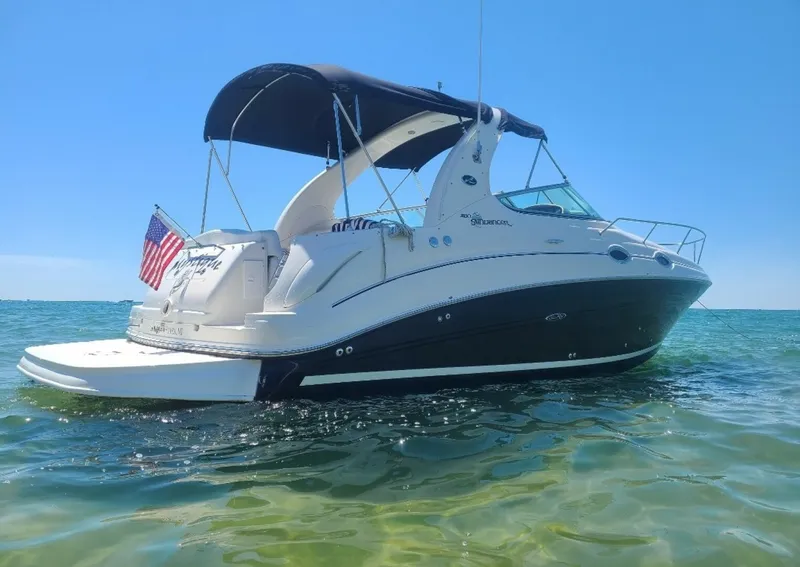
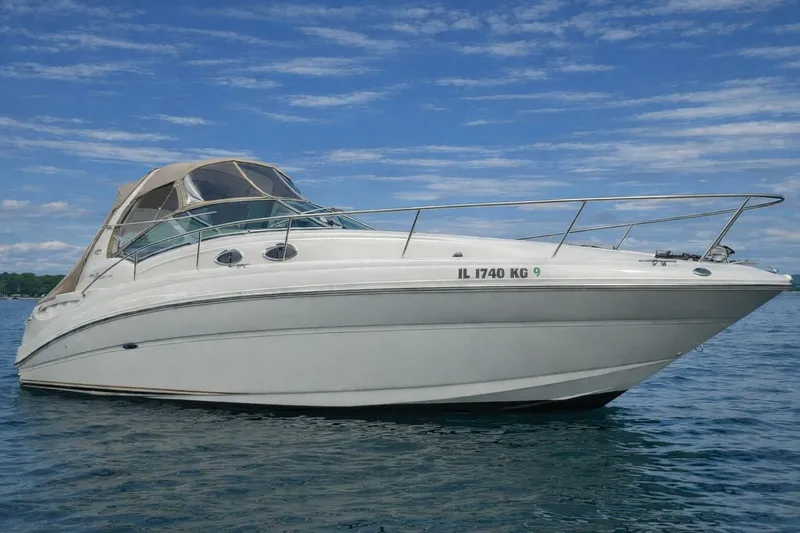
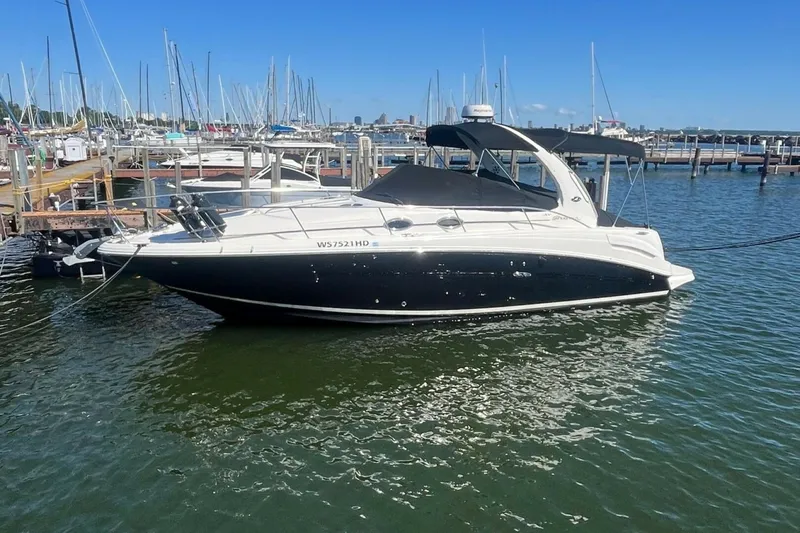
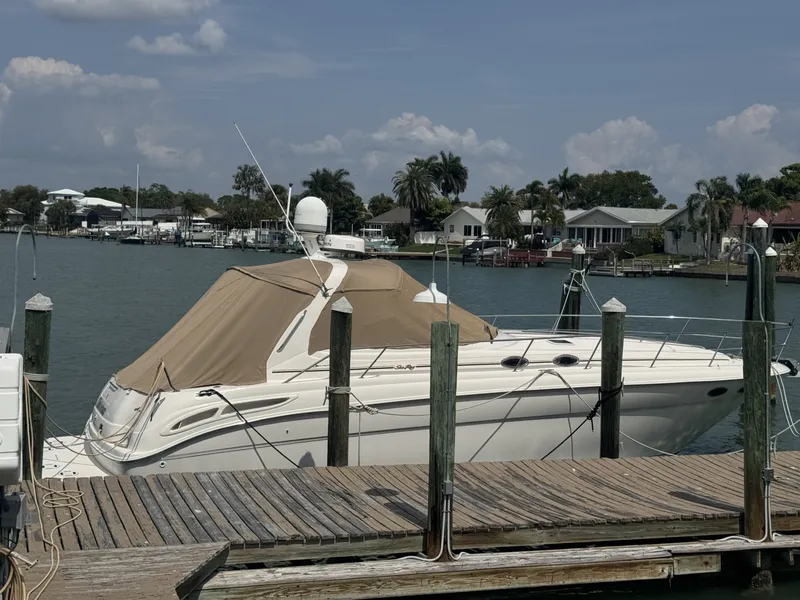
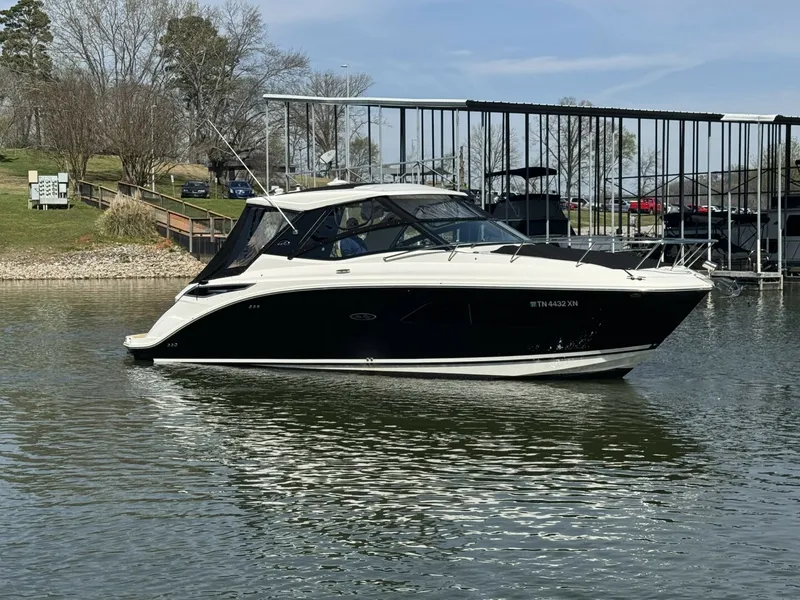
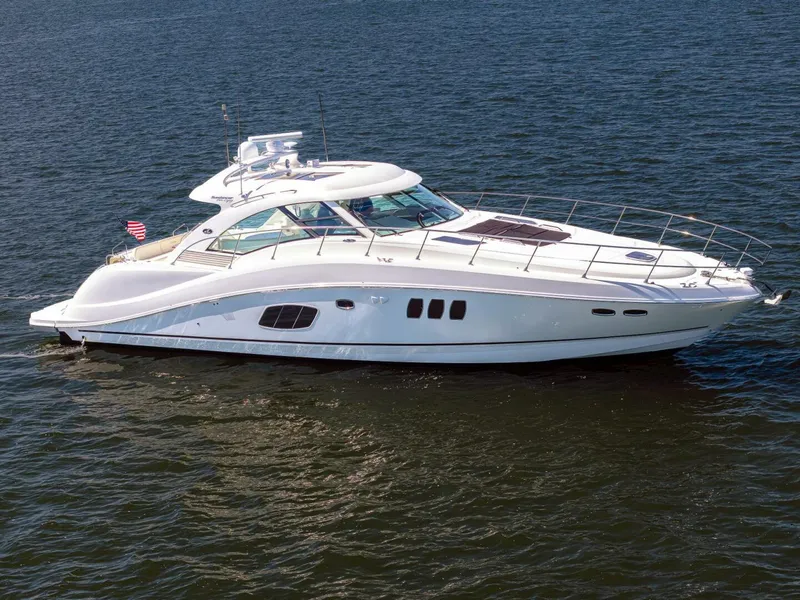
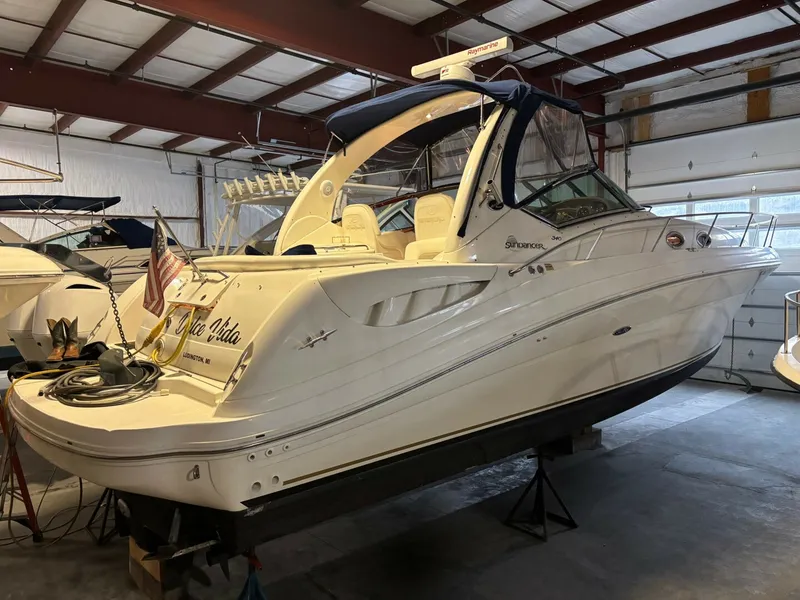
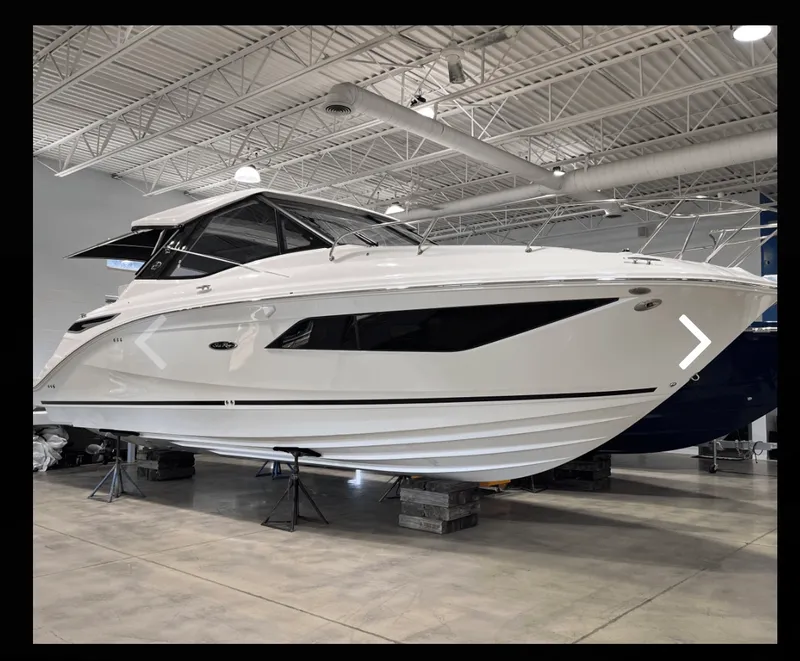
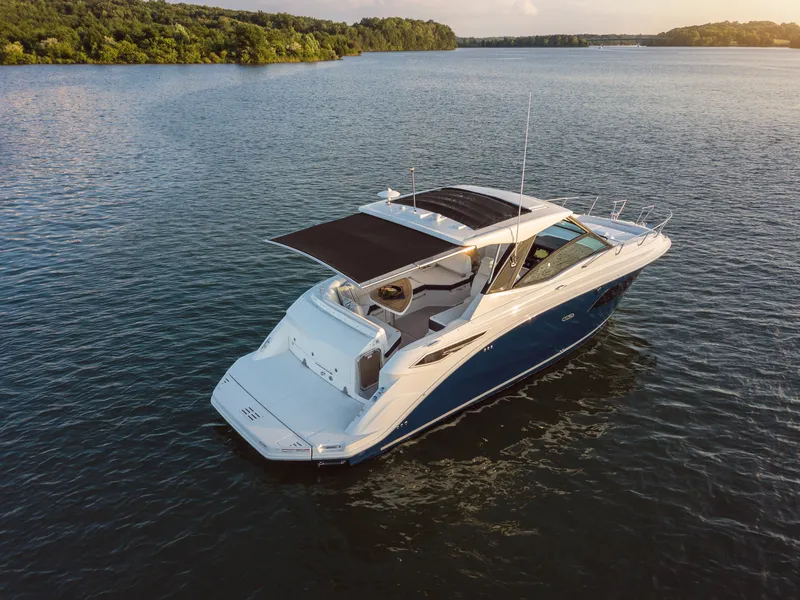
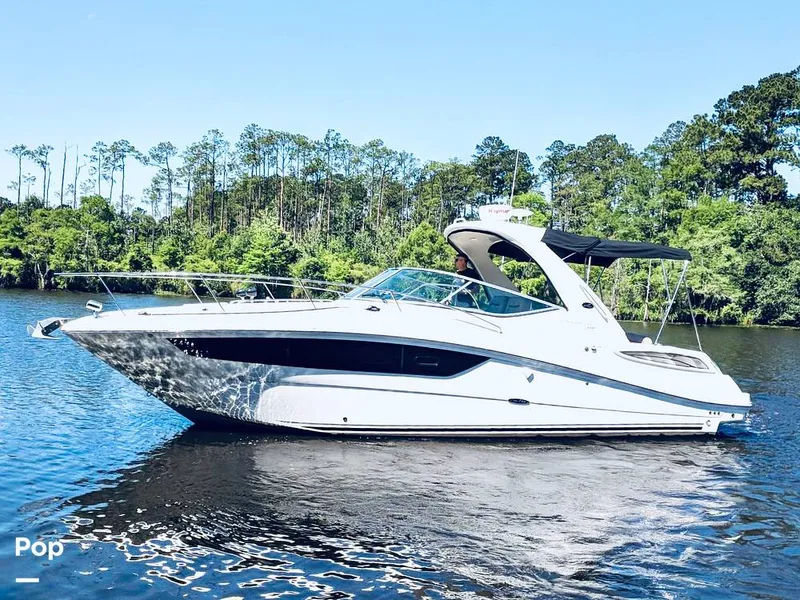
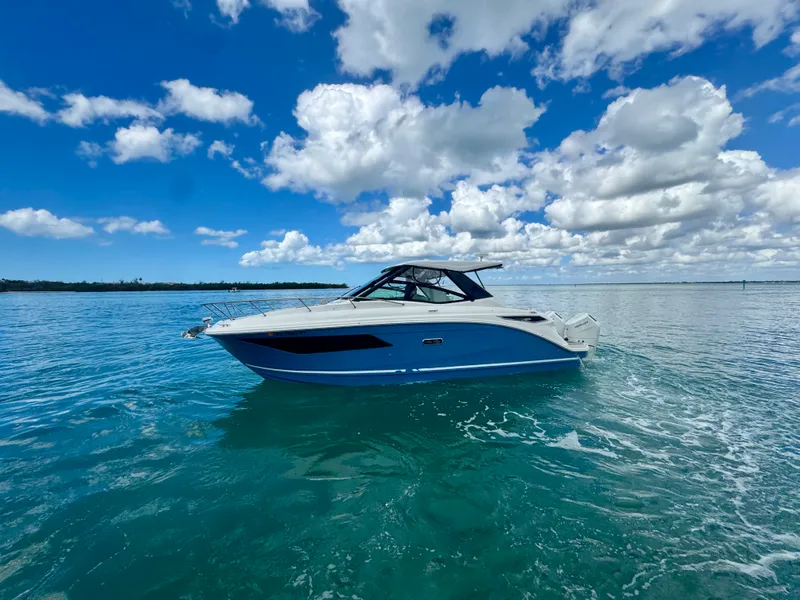
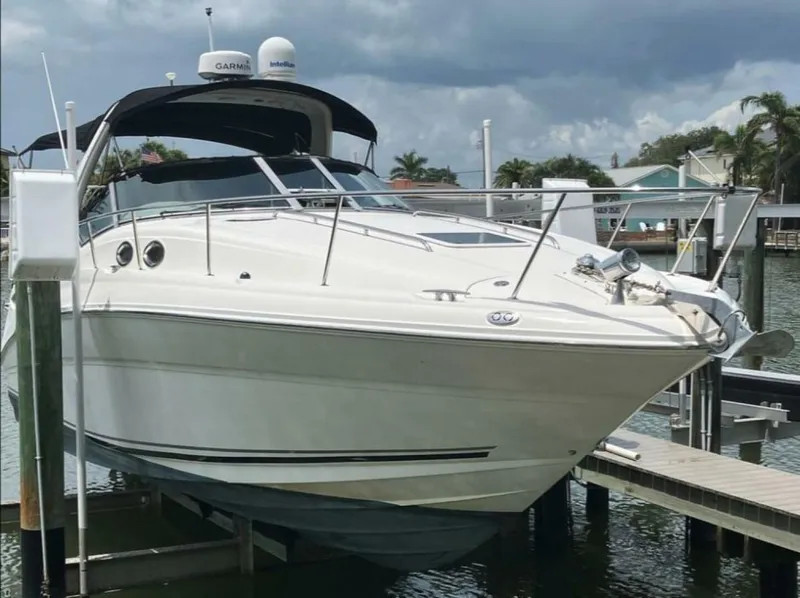
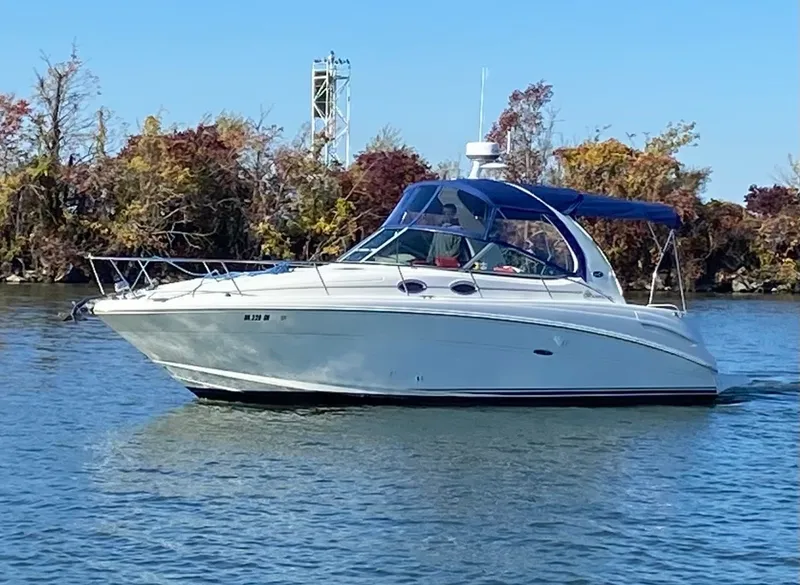
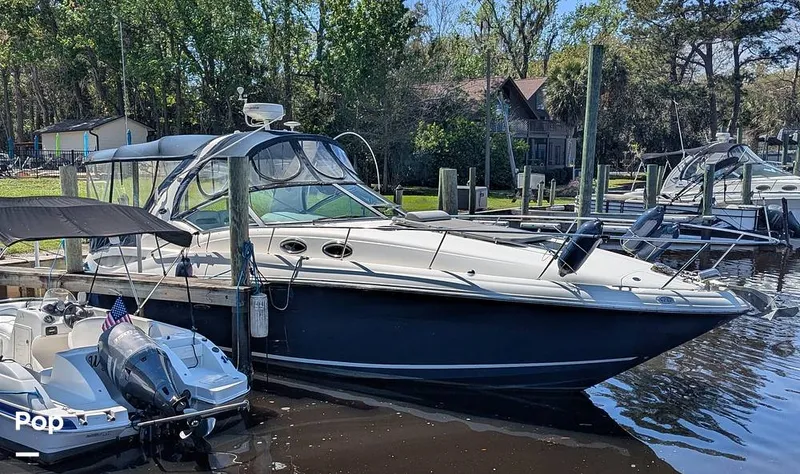
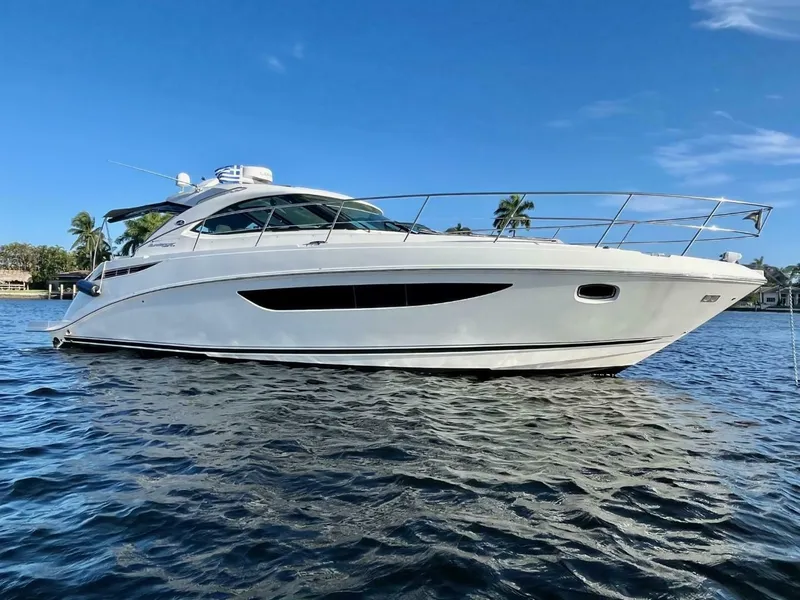
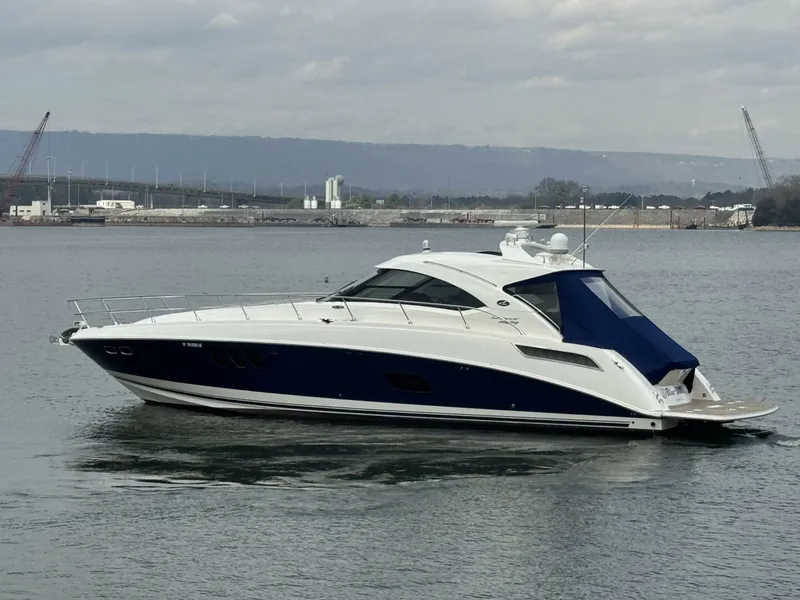
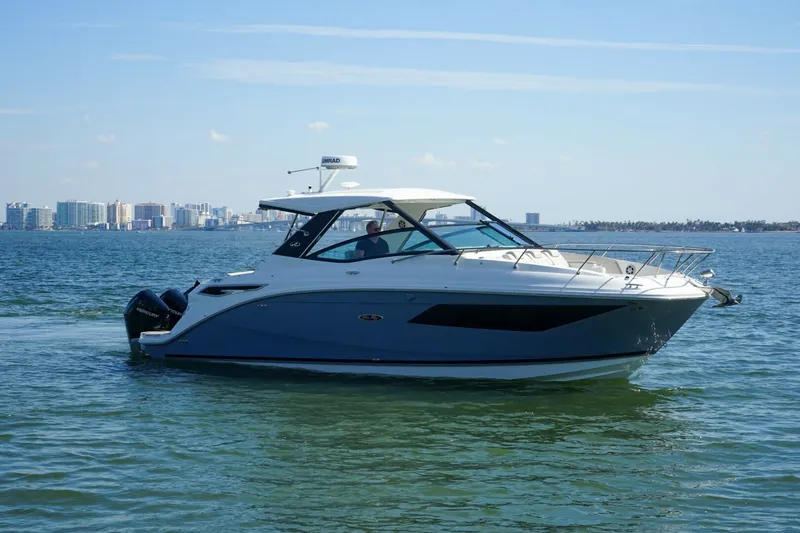
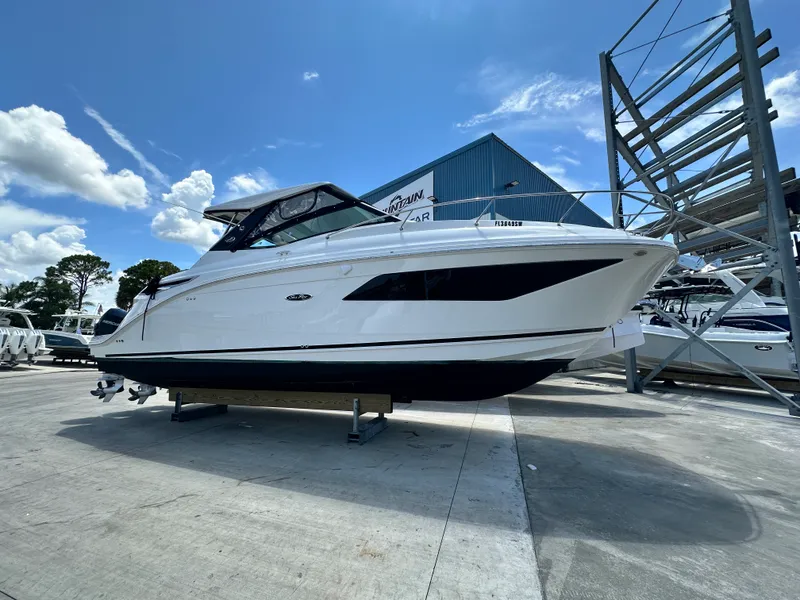
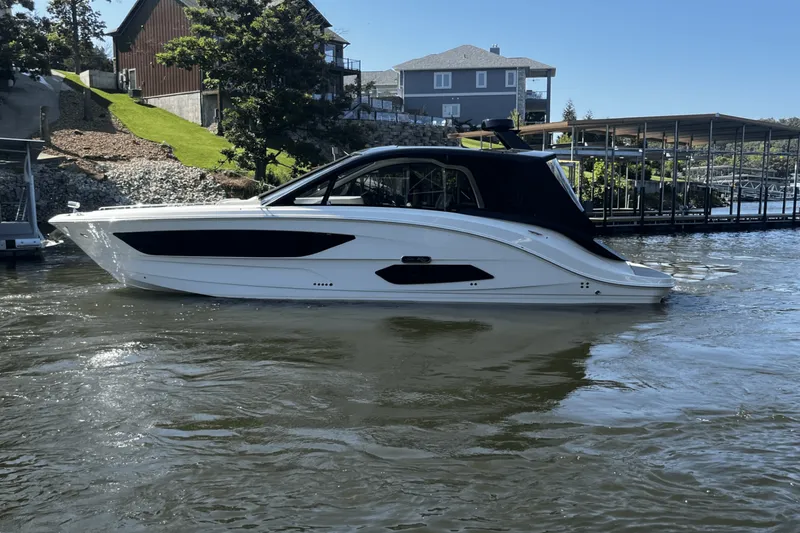
• (Cabin cruisers / sport cruisers (Sundancer Series)) Sea Ray’s modern Sundancer lineup focuses on “weekender” sport cruisers that keep expansive cockpit dayboat space while adding a real cabin for extended days and overnighting. In Sea Ray’s current lineup, the Sundancer 320 is offered in both sterndrive and outboard forms: Sundancer 320 (32′10″ LOA) with twin MerCruiser sterndrives and joystick piloting, and Sundancer 320 Outboard (34′9″ LOA) with twin Mercury Verado outboards and joystick piloting. Moving up, Sea Ray lists the Sundancer 370 at 37′8″ LOA (sterndrive), with published specs including a 12′0″ beam and 250-gallon fuel capacity, indicating a true nearshore cruiser profile. These boats are designed for coastal cruising, entertaining, and weekend trips, typically featuring sleeping berths (often “sleeps four” on the 320 models), enclosed head compartments, and deep-V-style planing hulls intended to provide confident handling in open-water conditions.
HOW ARE THESE BOATS BUILT?
Sea Ray boats are built around a precision molded fiberglass (FRP) hull designed for strength, stiffness, and long term cosmetics in a saltwater environment. The hull skin is laid up with marine grade fiberglass reinforcements and a high quality exterior gelcoat system engineered for UV resistance and gloss retention; the gelcoat is backed by a robust resin rich barrier approach commonly used in premium production boat building to help reduce print through and improve osmosis resistance. Key structural loads are carried by a bonded fiberglass stringer grid system that ties the bottom, transom, engine beds, and bulkhead landings into a unified structure, helping the hull maintain its engineered running surface under impact and torsion. High stress zones receive additional laminate schedules and localized reinforcement, including transom buildup and hardware backing structures, to support modern high torque propulsion and deck loads. For safety, Sea Ray incorporates positive flotation where the design and regulatory category require it, using closed cell foam to improve buoyancy and impact energy management. Throughout the build, systems and construction are engineered to align with recognized marine standards, including ABYC guidance for electrical, fuel, and safety practices, and the NMMA certification framework where applicable, reinforcing consistent compliance expectations. Lamination is executed with controlled resin to glass ratios and carefully sequenced curing to ensure proper crosslinking, laminate consolidation, and repeatable strength, followed by post layup finishing steps that protect the hull surface and optimize hydrodynamics. The hull to deck joint is assembled as a structural flange connection designed to resist racking and water intrusion, typically combining marine grade adhesive bedding with mechanical fasteners and an integrated rub rail system to create a durable, serviceable seal.
Sea Ray specifies marine grade hardware selected for corrosion resistance and long service life, including stainless steel fasteners and fittings, robust cleats, hinges, and latches, and reinforced mounting points so deck hardware loads are transferred into structure rather than just cosmetic skins. Electrical and plumbing systems are installed to recognized marine practices, with tinned copper conductors, protected routing, proper overcurrent protection, and ABYC aligned terminations, plus marine sanitation and fuel system layouts that prioritize ventilation, access, and leak prevention. Interior and exterior finishes emphasize durability and comfort, using marine grade vinyl upholstery with UV and mildew resistance, high density foam, and carefully detailed stitching and fastening to reduce seam stress and water intrusion, along with gelcoated or molded non skid surfaces and corrosion resistant trim. Modern manufacturing technology supports repeatability: computer aided design drives component integration, while CNC cut patterns, jigs, and fixtures help maintain tight tolerances for doors, hatches, and liners, reducing squeaks and long term fit issues. Construction techniques are selected by part and performance requirement, blending hand layup and controlled composite processing methods with disciplined bonding, sealing, and mechanical fastening practices for structural and service joints. Quality control is built into the process, including in process laminate inspections, hardware torque and bedding checks, pressure testing of plumbing where applicable, functional testing of electrical systems, and final water test or commissioning verification to confirm real world operation. Compared to typical production boat standards, this approach focuses on higher consistency in structural bonding, systems installation, and finish quality, with attention to safety features like flotation, CO detection integration where equipped, and robust bilge management. Sea Ray backs that build philosophy with factory warranty programs that include multi year bow to stern coverage on eligible lines and longer structural hull and deck coverage for the original owner, reflecting a commitment to longevity, owner support, and confidence in how Sea Ray boats are built.
WHERE ARE THESE BOATS BUILT?
Sea Ray boats are built in the United States at two primary Brunswick Boat Group manufacturing sites: the Sea Ray Tellico Lake facility in Vonore, Tennessee and the Brunswick Integrated Manufacturing Center in Merritt Island, Florida. The Vonore plant is Sea Ray’s long running fiberglass boat manufacturing hub for core sport boat and cruiser lines, while the Merritt Island campus supports select Sea Ray models and shared Brunswick production services under the BIMC structure. Sea Ray operates within Brunswick Corporation’s marine portfolio, and both facilities also support manufacturing work for other Brunswick brands, creating shared resources and standardized production systems. Sea Ray has reported more than 620 team members at the Vonore Tellico Lake plant and more than 425 team members at the Merritt Island facility, making these two locations the key centers for current Sea Ray production.
Production at Sea Ray’s Tellico Lake plant in Vonore, Tennessee began in 1983 as the brand expanded small runabout output, and Sea Ray’s headquarters later relocated to Knoxville in 1985, keeping engineering, management, and production closely connected in East Tennessee. The Vonore facility originally built the Seville line and other 18 to 25 foot runabouts and today manufactures boats roughly in the 23 to 35 foot range across SPX, SDX, SLX, and Sundancer model families, with the site also having built hundreds of models over decades for Sea Ray and other Brunswick brands as production needs evolved. In Florida, Sea Ray established a design and development presence in 1972 and began production at Merritt Island in early 1973, later becoming known for building larger models including iconic Sundancer heritage. After Sea Ray’s yacht and sport yacht wind down, Brunswick repositioned the Merritt Island facility as the Brunswick Integrated Manufacturing Center in 2019, organizing the site as a multi brand manufacturing and vertical integration campus that supports specific Sea Ray models alongside broader component and service production. Geographically, Vonore benefits from a strong boatbuilding labor base and supplier network in the Knoxville region, while Merritt Island offers direct access to coastal marine testing conditions and a long established boat manufacturing workforce on Florida’s Space Coast.
Sea Ray’s quality approach is built around repeatable fiberglass boat manufacturing processes and layered inspections as hulls, decks, and finished systems move through lamination, assembly, rigging, and final fit and finish, with the goal of delivering consistent build standards across models and production runs. At the Merritt Island BIMC, Brunswick has described the site as a scale facility designed to centralize certain operations and increase vertical integration, including insourced precision parts, assemblies, upholstery, and other components that can tighten tolerances, reduce variability, and accelerate production feedback loops. The BIMC model also emphasizes shared innovation resources such as advanced milling capability intended to support faster product development iterations, which can benefit Sea Ray by shortening change cycles from engineering to production release. With Vonore and Merritt Island both supporting multiple Brunswick brands, cross utilization of tooling practices, supplier qualification methods, and standardized work instructions can improve efficiency while keeping Sea Ray’s build process aligned to a common manufacturing system. The result is a controlled production environment where Sea Ray’s core models are built through established lines in Tennessee and select larger models and integrated manufacturing services are built and supported through the Florida campus for consistent, repeatable outcomes.
In practical terms, Sea Ray is built in two long standing U.S. locations, Vonore, Tennessee and Merritt Island, Florida, under the Brunswick Boat Group manufacturing footprint. With experienced workforces, decades of continuous production, and ongoing modernization through integrated manufacturing and vertical integration, these facilities remain central to how Sea Ray builds and delivers its fiberglass boats. Sea Ray’s commitment to quality is directly tied to these established production sites and the skilled teams that build each boat in the same manufacturing centers year after year.
WHAT IS THE BIGGEST BOAT OF THIS BRAND BUILT TODAY?
The biggest boat built by Sea Ray today is the Sea Ray SLX 400 Outboard, Sea Ray’s flagship center console style luxury dayboat in the current U.S. production lineup. Introduced as part of Sea Ray’s modern SLX series expansion into larger outboard-powered models, the Sea Ray SLX 400 Outboard measures 42′2″ LOA with a 12′1″ beam, giving it the size and stability to run confidently in open-water conditions while still delivering true dayboat versatility. Power is a triple outboard configuration with three Mercury 300 Verado V8 outboards for a maximum rating of 900 total horsepower, backed by a 375-gallon fuel capacity designed for long coastal runs and full-day entertaining. Built on a fiberglass deep-V planing hull typical of the SLX family, the Sea Ray SLX 400 Outboard is engineered to blend soft-riding comfort with responsive handling, and it is commonly run in a wide cruising band around the mid-30 mph range with top-end performance that can reach into the 50 mph class depending on load, sea state, and setup.
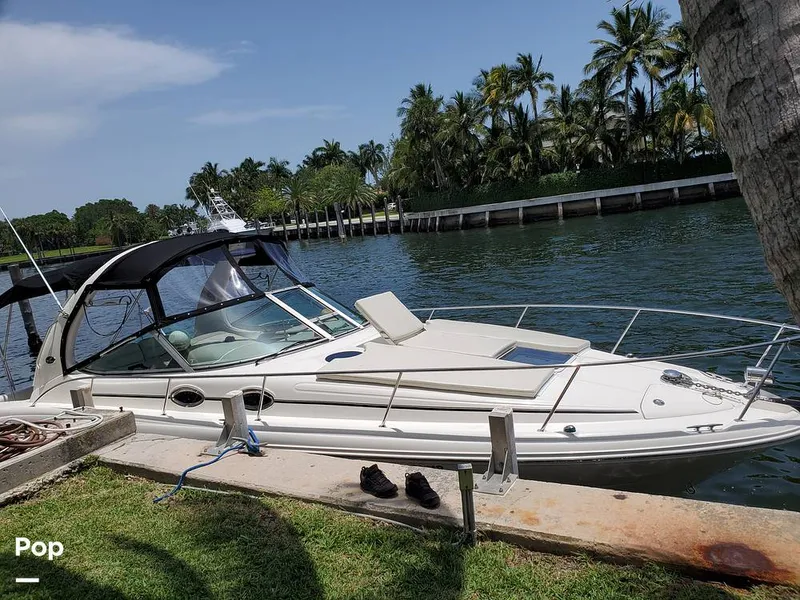
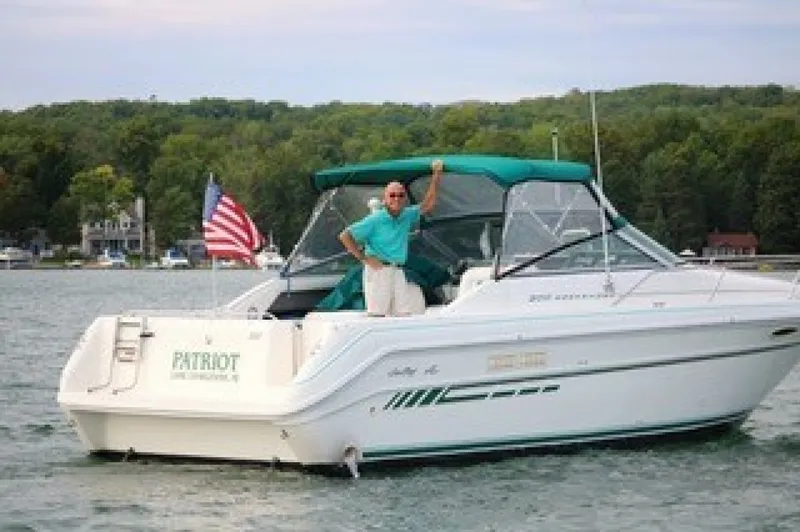
As the largest Sea Ray model in production, the Sea Ray SLX 400 Outboard is primarily a premium offshore-capable dayboat for owners who want big-water confidence, upscale entertaining space, and the speed and simplicity of outboards. While not a dedicated sportfish center console, it can still be outfitted for coastal fishing days with practical deck utility, including rod storage and the ability to carry the gear and bait you need, and its generous cockpit and bow seating zones make it easy to switch from trolling or cruising to swimming and sandbar time. Comfort is a major differentiator: the Sea Ray SLX 400 Outboard emphasizes deep, secure seating, multiple social areas for lounging and dining, and an enclosed head compartment that supports all-day boating with guests. At the helm, Sea Ray’s premium approach focuses on integrated navigation electronics, modern digital switching and engine data, and user-friendly controls that suit both experienced captains and families stepping up to a 42-foot class boat. Storage is built into the layout for water toys, dock lines, and day-trip supplies, and the overall fit and finish positions the Sea Ray SLX 400 Outboard as Sea Ray’s flagship for buyers who want the biggest Sea Ray model with maximum outboard power, luxury dayboating amenities, and a true top-of-the-line presence in the SLX lineup.
WHAT IS THE SMALLEST BOAT OF THIS BRAND BUILT TODAY?
The smallest model in Sea Ray’s current lineup is the Sea Ray SPX 190, a trailer-friendly entry-level sport boat that measures 19′7″ in overall length with an 8′4″ beam and is sized specifically for easy storage, straightforward handling, and family day-boating on lakes and protected coastal waters; while Sea Ray lists the SPX 190’s LOA and beam as above, the reference information provided does not include a published boat weight or an official towing requirement, so those figures cannot be stated here, but in practical terms the SPX 190’s compact footprint and towable runabout profile make it one of the easiest Sea Ray boats to launch, retrieve, and move between ramps for spontaneous weekend boating and watersports days.
The Sea Ray SPX 190 is a fiberglass runabout and bowrider designed for simple, versatile day use, blending a social cockpit with a forward bow seating area that makes the SPX 190 feel like a true family boat even in an entry-size package; seating is arranged around the cockpit and bow to support lounging, conversation, and easy movement fore and aft, but the provided reference does not list a USCG passenger capacity or a specific “comfortable capacity,” so those numbers cannot be confirmed here, and the same applies to construction callouts beyond the general Sea Ray premium fiberglass approach; for on water performance, the SPX 190 is paired in the provided specs with a 200 hp Mercury MerCruiser 4.5L MPI ECT Alpha One sterndrive package, carries 29 gallons of fuel, and is positioned as a sporty, efficient size for cruising, tubing, and quick hops between coves, though Sea Ray’s maximum horsepower rating, verified top speed, and fuel economy figures are not included in the reference and therefore are not stated; as a compact towable bowrider, the SPX 190’s big value is doing a lot with a little by giving new and experienced boaters a manageable helming experience, quick ramp routine, and enough deck space and storage for the essentials, making the Sea Ray SPX 190 an ideal choice for first-time buyers, weekend family outings, and anyone who wants the Sea Ray name and build style in the smallest, simplest package in the lineup.

HOW MUCH DO THESE BOATS COST?
Sea Ray is positioned as a premium, high-volume American builder of sport boats, deck boats, and cruisers, and the most affordable way into the Sea Ray lineup on the official Sea Ray website is the Model Year 2026 SPX 190, which Sea Ray lists in its online builder with a Price as configured of $56,115 Total MSRP. Sea Ray’s SPX 190 specs shown by the manufacturer include 19 ft 7 in length overall, 8 ft 4 in beam, 29 gal fuel capacity, and a 10-person capacity. Sea Ray notes that Total MSRP in the configurator includes the base model and selected options plus freight and fees, but excludes tax, title, dealer prep, and doc fees. In today’s market price reality, current market listings for Sea Ray’s smallest runabouts are typically in the mid five figures to the upper five figures for new and near-new examples depending on engine choice, trailer inclusion, and option bundles, with asking prices commonly clustering around the configurator number for lightly optioned builds and rising meaningfully with towers, upgraded audio, and electronics.
In the middle of the Sea Ray range, the SPX and SDX lines show how quickly MSRP and market price can diverge once common options and dealer packages are added. For Model Year 2026, Sea Ray’s online configurator shows the SPX 210 at $68,900 Total MSRP, and the SDX 270 at $158,800 Total MSRP, with SDX 270 manufacturer specs including 27 ft 2 in length overall, 8 ft 6 in beam, and 75 gal fuel capacity. In marketplace research, new Sea Ray SPX 210 listings are commonly advertised well above the configurator’s as-configured number, and one recent new-boat example was listed at $89,995, illustrating how popular upgrades such as watersports towers, premium flooring, and bundled packages can push asking prices upward. For larger family models like the SDX 270, market prices tend to spread wider by model year and power, with late-model, well-equipped boats typically commanding higher asking prices than base-style MSRP builds, while older pre-owned units generally price lower depending on hours, maintenance history, and upholstery condition.
At the premium end, Sea Ray’s SLX and Sundancer lines move into luxury bowriders and cabin cruisers where option content and propulsion can swing pricing dramatically. For Model Year 2026, Sea Ray lists the SLX 260 at $174,300 Total MSRP in the configurator, and the Sundancer 320 at $438,200 Total MSRP, with official Sundancer 320 specs including 32 ft 10 in length overall, 10 ft 7 in beam, and 158 gal fuel capacity, plus standard twin MerCruiser 6.2L propulsion with joystick piloting. Sea Ray also lists the Sundancer 320 Outboard at $496,500 Price as configured, and the manufacturer notes again that these Total MSRP figures include freight and fees but exclude tax, title, and common dealer charges. In current market listings, premium Sea Ray models in this range often show asking prices that can land above or below configurator MSRP depending on incentive timing and how heavily the boat is optioned, and one recent example of a late-model Sundancer 320 was shown around the high $400,000s to low $600,000s in advertised asking prices, with higher numbers commonly associated with newer model years, upgraded engines, and extensive electronics and comfort packages.
Across the Sea Ray lineup, official MSRP signals a broad starting point, with Sea Ray entry pricing shown around $56,115 Total MSRP for a 2026 SPX 190 and stretching to $438,200 for a 2026 Sundancer 320 and $496,500 for a 2026 Sundancer 320 Outboard, while real-world market price ranges commonly run from the mid five figures for entry-level Sea Ray sport boats into the several-hundred-thousand-dollar range for premium Sea Ray cruisers. Because Sea Ray’s configurator pricing explicitly includes freight and fees yet excludes tax, title, dealer prep, and doc fees, buyers should budget beyond MSRP for out-the-door totals and should also expect market price variation based on options, trailer inclusion, incentives, and regional availability. Market prices vary by location, condition, model year, and dealer.
WHAT OTHER STYLES OF BOATS DO THEY MAKE?
Sea Ray’s current production lineup is built around four core “day boat to weekender” styles: SPX runabouts (sporty bowriders that are popular as family boats for cruising, tubing and general watersports), SDX sport deck models (a roomier, more open “deck boat style” layout aimed at hosting bigger crews with easy water access and lots of seating), SLX luxury bowriders (their most premium day-boat take on the classic bowrider formula with upscale finishes and performance-focused hulls), and the iconic Sundancer sport cruisers (cabin cruisers designed to blend day boating with real overnight capability, with proper cabin accommodations, a galley and an enclosed head on key models). citeturn0search6turn0search2turn0search4 Across these families, Sea Ray commonly offers both sterndrive and outboard propulsion on many models, and the lineup is intentionally sized and spec’d around trailer-friendly to mid-size boats that support everything from sandbar days to long weekend cruising. citeturn0search4turn0search2
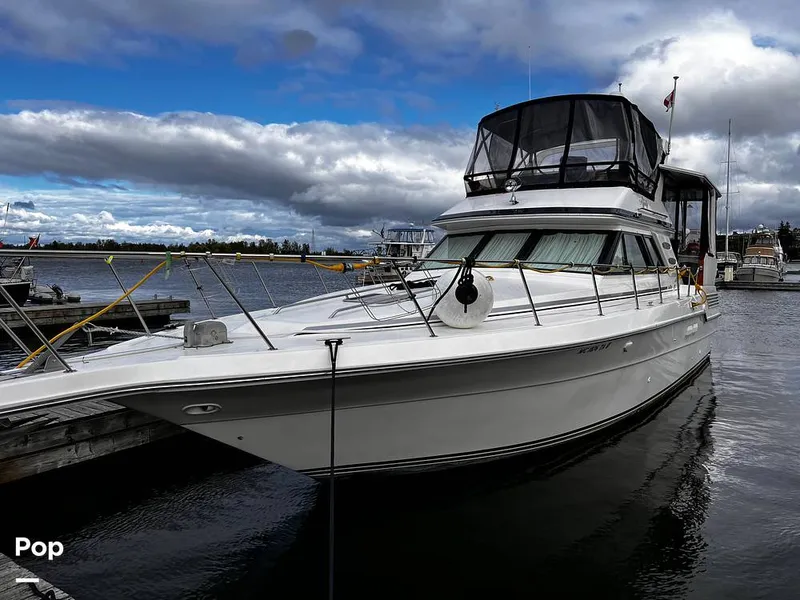
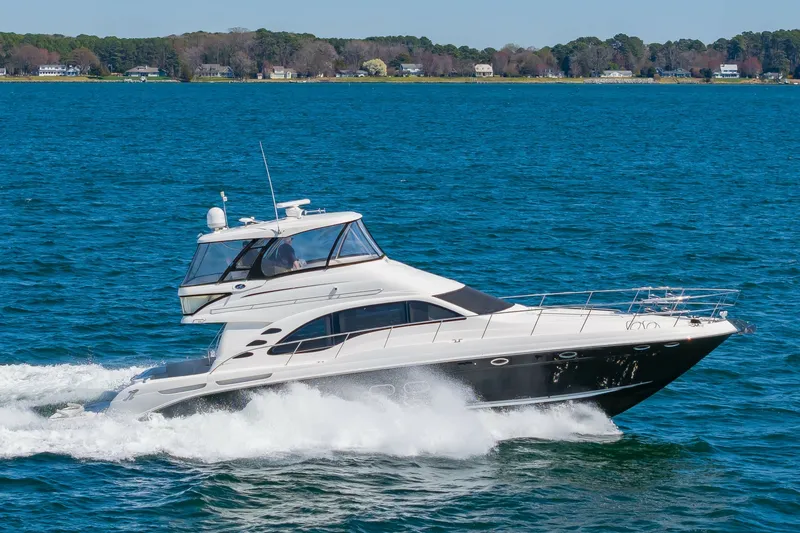
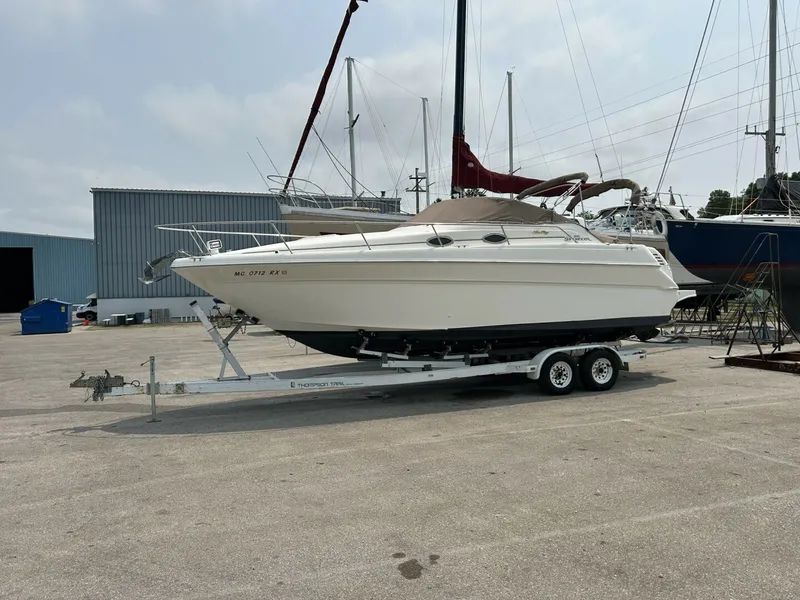
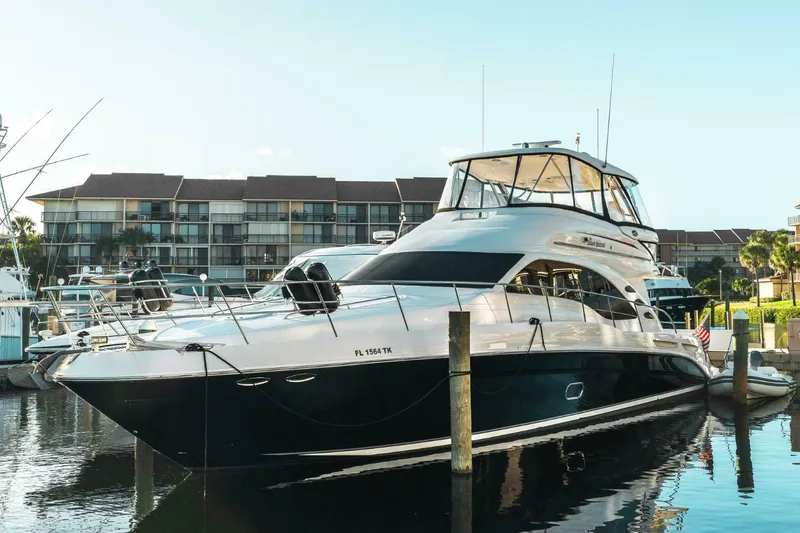
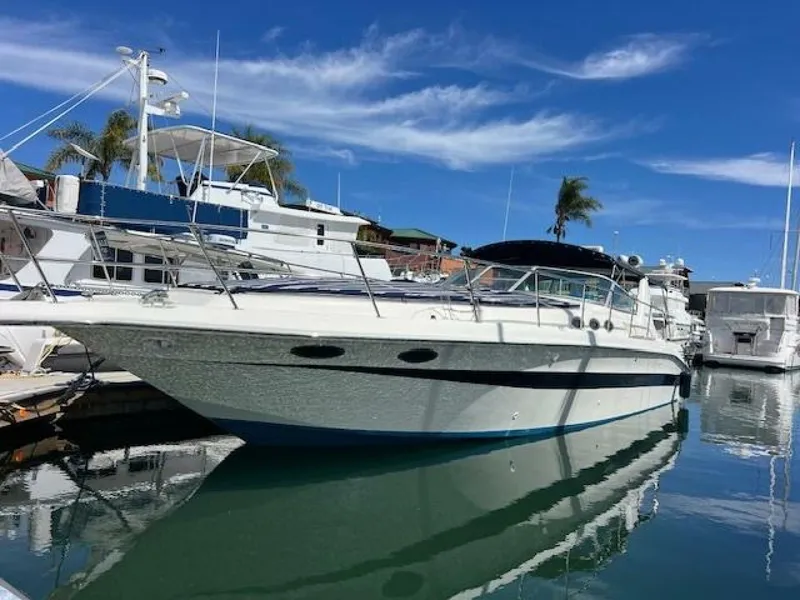
Historically, Sea Ray has produced a much broader range of boat styles than what you see on searay.com today, including larger express cruisers and sedan-bridge style cruisers, along with multiple named sub-lines that became part of the brand’s identity over the decades; Sea Ray itself points to past portfolios that stretched from bowriders all the way up to large sedan-bridge models, and also references heritage lines like Weekender, Amberjack, Sundancer and Sport models as part of its evolution. citeturn0search4 In practical terms, that means if you are browsing the used market you will still run into older Sea Ray “express” and “bridge” configurations built for longer trips and heavier cruising amenities, plus earlier runabout families such as the Seville line that helped define Sea Ray’s smaller-boat production in the 1980s. citeturn0search0turn0search4
What Sea Ray largely does not compete in today are the boat segments outside its sport boat and sport cruiser mission, especially big luxury yachts and sport yachts, and the brand has been explicit that it refocused on building sport boats and cruisers up to about 40 feet while discontinuing production of sport yacht and yacht models. citeturn0search12turn0search4 Sea Ray also is not positioned as a pontoon specialist or a dedicated towboat brand in its current lineup, because its modern catalog is tightly centered on bowrider and sport deck day boats plus Sundancer-style cabin cruisers rather than pontoons, dedicated ski and wake boats, or yacht-class motoryachts; those other categories are generally handled elsewhere in the broader Brunswick family of brands, while Sea Ray’s own identity stays rooted in refined day-boating comfort, sporty performance and cruising-friendly layouts that bridge the gap between a pure runabout and a true cruiser. citeturn0search4turn0search6
In summary, if you are asking what other styles of boats Sea Ray makes beyond any one model you are shopping, the clearest answer is that Sea Ray is fundamentally a bowrider and sport-cruiser builder, with SPX runabouts and SDX sport decks on the family fun end, SLX luxury bowriders as the premium day-boat flagship, and Sundancer cabin cruisers for owners who want to cruise farther and occasionally overnight. citeturn0search6turn0search2 The brand’s recent product story also hints at continued evolution inside these categories, especially through expanded outboard options and refreshed design language introduced on newer Sundancer and SLX updates, which is a common path toward crossover-style versatility without abandoning Sea Ray’s core focus. citeturn0search4turn0search5 Ultimately, Sea Ray’s strategy is more focused than it was decades ago, and that focus is what lets them keep refining the specific fishing-adjacent cruising, entertaining and watersports day-boat and express-cabin experiences their core owners buy Sea Ray for. citeturn0search4turn0search12
WHAT KINDS OF ENGINES DO THESE BOATS USE?
Sea Ray boats use a mix of four-stroke outboard power and gasoline inboard sterndrive packages, with the balance depending on the series and mission. Many newer sport and deck-boat models lean hard into outboards for saltwater-friendly reliability, easy maintenance access, strong resale, and the ability to tilt the gear completely clear of the water, which is helpful for shallow draft and trailerability. Across the lineup the configuration scales naturally, with smaller SPX models typically running a single outboard or a single sterndrive, mid-size SDX and SLX models often moving to higher-output singles or twin outboards for faster planing and heavier loads, and the largest outboard-forward models stepping up to triple outboards for offshore-capable thrust and redundancy, as seen on the Sundancer 370 Outboard and SLX 400 Outboard.
Horsepower ranges on Sea Ray vary widely by size and propulsion, but the pattern is consistent: entry sport boats can start around the 115 hp class on an SPX 190 Outboard with a Mercury 115 Pro XS outboard, while popular mid-size outboard runabouts like the SPX 230 Outboard list a Mercury 150 hp FourStroke as standard power. As you move into larger deck and luxury bowriders, output climbs quickly, with models like the SDX 290 Outboard using twin Mercury 200 FourStroke outboards as standard propulsion and the SLX 310 Outboard running twin Mercury 300 Verado outboards with joystick piloting. At the top end, Sea Ray’s larger outboard cruisers and flagships can reach roughly 900 total horsepower via factory triple-outboard setups, including the Sundancer 370 Outboard and SLX 400 Outboard, both listing triple Mercury 300 Verado outboards as standard power, which is designed to support higher cruising speeds and confident load-carrying on bigger hulls.
Sea Ray’s primary engine partner is Mercury Marine, and the brand’s factory-supported packages prominently feature Mercury four-stroke outboards and Mercury MerCruiser sterndrive power. On the outboard side, Sea Ray commonly rigs Mercury FourStroke models and performance-focused Pro XS options on smaller boats, and Mercury Verado V8 and V10 outboards on larger, heavier models where higher horsepower and advanced digital controls are a priority. On the sterndrive side, Sea Ray listings show Mercury MerCruiser packages such as the MerCruiser 4.5L MPI ECT Alpha One rated at 200 hp on the SPX 210 and 250 hp on the SPX 230 sterndrive, plus a MerCruiser 6.2L MPI ECT Bravo Three rated at 350 hp with DTS on the SLX 260. In many cases the factory setup is presented as an integrated propulsion and rigging solution, bundling the engine with SmartCraft digital integration and compatible helm displays for a clean, turnkey install.
On-water, Sea Ray’s engine strategy emphasizes easy control and family-friendly performance, blending strong hole-shot acceleration with refined handling and modern digital controls. Several outboard models call out SmartCraft Digital Throttle and Shift and joystick steering systems, including the Sundancer 320 Outboard which lists twin Mercury 350 Verado V10 outboards with Joystick Piloting, SmartCraft DTS and e-Steering, and the larger Sundancer 370 Outboard which pairs triple Mercury 300 Verado outboards with Joystick Piloting and e-Steering for low-speed precision around docks. Sea Ray also offers performance-enhancing hull and running-surface technology on select models, such as optional Dynamic Running Surface on the SLX 310 Outboard and Sundancer 370 Outboard, aimed at optimizing trim for comfort and fuel efficiency across changing conditions. Put together, the mix of four-stroke outboard and sterndrive choices lets Sea Ray serve a broad audience, from first-time owners who want simple maintenance and shallow-water flexibility to experienced boaters who want twin outboards, joystick steering, and confident cruising capability on larger, yacht-certified platforms.
WHY BUY THIS BRAND OVER A COMPETITIVE BRAND?
When boaters ask “Why choose Sea Ray,” the most defensible answer starts with how the brand engineers the on water experience and then backs it with repeatable manufacturing standards. Sea Ray positions its boats as premium fiberglass models built around meticulous craftsmanship, with the company stating its standards mandate high quality materials, strict testing protocols, and obsessive attention to fit and finish, which is the kind of factory discipline buyers typically look for when comparing build consistency across brands in the same segment. On many SLX models, Sea Ray also promotes Quiet Ride Technology, an innovative hull design intended to significantly reduce noise and vibration for a smoother, quieter ride, with benefits Sea Ray links to long trip comfort and even improved fuel efficiency. In practical terms, that construction and hull focus is aimed at delivering confident handling and a more refined ride quality that holds up day after day, so when you weigh Sea Ray boats vs competitors, the build quality of Sea Ray boats is framed by the brand as craftsmanship plus engineered comfort rather than just headline horsepower.
Value in Sea Ray’s line is often expressed as technology and usability that comes integrated into the boat’s daily workflow, especially at the helm and at the waterline. For example, Sea Ray describes SLX helm systems that include dual Simrad touchscreen displays with Mercury VesselView Link data and integrated navigation and system monitoring, and on models like the SLX 260 Surf the brand highlights a Dual Digital Dash paired with Mercury SmartCraft Connect, Active Trim control and monitoring, and CZone digital switching for streamlined command of onboard systems. Sea Ray also emphasizes easy water access details that influence real ownership satisfaction, such as a broad swim platform with a concealable ladder and a manual submersible step on the SLX 260 Surf, plus a standard electrically actuated watersports tower with an integrated Bimini top and surf tow points to support a full day of towing and shade. If your shopping question is Sea Ray vs other fishing boats, the more accurate framing from Sea Ray’s own catalog is often “family and watersports plus cruising capability,” because the brand’s standard equipment strategy is designed to reduce compromises in everyday use rather than to build a single purpose platform.
Sea Ray’s utility plus comfort pitch is clearest in its crossover approach, where the same boat can serve as a social day boat, a watersports platform, and on Sundancer models a capable overnighter. Sea Ray’s own positioning for its cabin and cruiser lineup focuses on luxurious cabins and maximized spaces that elevate both day boating and overnighting, while still emphasizing intuitive technology at the helm, which can matter just as much as seating comfort when you are using the boat frequently. In the surf category, Sea Ray has advanced this multi use idea by launching models with integrated wakesurfing systems engineered for consistent, rideable wakes, including its NextWave surf technology on the SDX 230 Surf, which Sea Ray says is fully integrated and includes more than 1,000 pounds of ballast, electric surf tabs, and Active Trim, plus a Sea Ray exclusive surf interface and activity specific presets to make dialing in watersports simpler for different riders. Put simply, Sea Ray is trying to make one platform cover more of the calendar, from relaxed cruising to serious tow sports, without requiring buyers to step down in comfort to get the capability.
Long term ownership confidence is where Sea Ray’s manufacturer backed support story becomes a deciding factor, and it is central to any honest answer to “Sea Ray boats vs competitors.” Sea Ray states it supports owners with world class dealers in more than 80 countries, an industry leading warranty, and 24/7 call support, which directly addresses the practical reality that even well built boats need parts, guidance, and service coordination over time. On warranty specifics, Sea Ray documents two factory programs: a five year bow to stern factory warranty on eligible Sport Boats plus a limited lifetime structural hull and deck warranty to the original owner, and a three year bow to stern program for certain premium models with a 10 year limited structural hull and deck warranty to the original owner; Sea Ray also states its factory warranties are transferable to subsequent owners free of charge, which can help preserve long term value. Add to that a steady cadence of brand recognized product achievements in Sea Ray’s own news releases, including a 2024 Boating Industry Top Product recognition for the SDX 270 Surf and an NMMA Innovation Award for the SLX 260 with outboard power, and the case for customer satisfaction with Sea Ray becomes less about hype and more about documented support, repeatable engineering, and a purchase that is built to remain enjoyable and serviceable for the long haul.
WHAT IS THE MOST POPULAR MODEL OF THIS BRAND BEING BUILT TODAY?
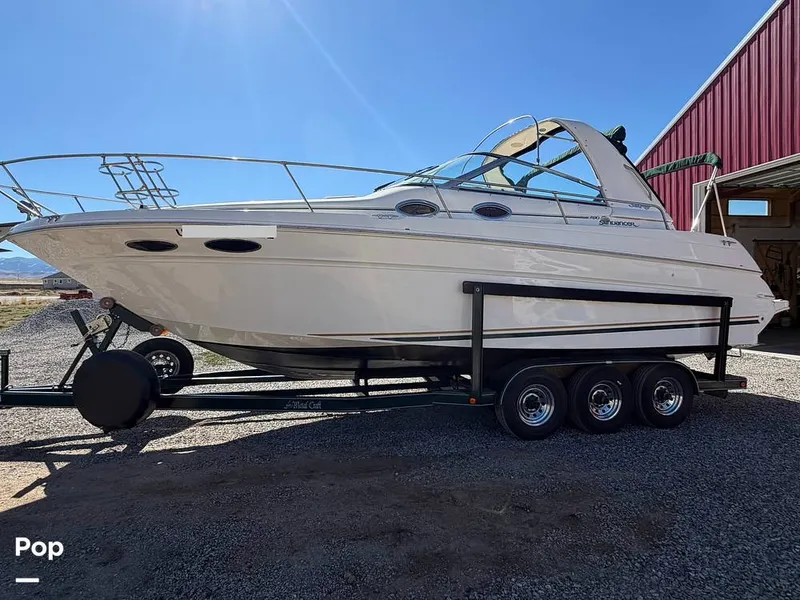
The current Sea Ray model that most clearly reads as the brand’s mainstream, high volume sweet spot is the Sea Ray SPX 210, a 21 foot 8 inch sport bowrider, because it sits at the center of Sea Ray’s actively promoted SPX lineup and is supported by a dedicated Build a Boat configurator experience for the 2026 model year, signaling a core, high demand package that Sea Ray expects shoppers to spec and buy in volume. On Sea Ray’s SPX series page, the SPX 210 is positioned as one of the core inboard sterndrive runabout offerings in the family focused SPX range, and Sea Ray describes the SPX concept as stylish, capable, and easy to tow and store, which aligns with the broadest segment of entry to mid level sport boat buyers. In the official configurator description, Sea Ray further frames the SPX 210 as a sporty, well equipped platform with a reimagined cockpit, roomier spaces, and an intuitive helm, reinforcing that this specific size and model is intended to be a widely shopped, widely configured, everyday go boating choice rather than a niche specialty build.
Official Sea Ray specifications for the SPX 210 list a 21 foot 8 inch length overall, 8 foot 6 inch beam, 35 inch draft trim down and 17 inch draft trim up, 37 gallon fuel capacity, and a 12 person capacity rating with a 1,660 pound maximum person weight and 1,830 pound maximum total capacity. Standard propulsion is a Mercury MerCruiser 4.5L MPI ECT Alpha One rated at 200 horsepower, matching the model’s positioning as an effortless, approachable performer for cruising and watersports rather than an extreme power package. Sea Ray highlights practical family and tow sports features such as a ski tow attachment and a dedicated ski locker compartment, along with its redesigned cockpit layout intended to open up usable space for guests and day long comfort. The fact that Sea Ray offers the SPX 210 through its online boat builder for model year 2026 also indicates multiple factory selectable bundles and upgrade paths, which is often the hallmark of a volume leader model that can be tailored for simple day boating, entertaining, or more watersports focused use cases.
The SPX 210 typically appeals to first time buyers moving up from smaller runabouts, families seeking an easy to own lake or coastal day boat, and value minded shoppers who still want a premium brand experience, because its size, capacity, and feature mix are optimized for the most common day on the water activities. Sea Ray’s own positioning underscores this versatility by describing the boat as ready for entertaining with friends, casual cruising, and wakeboarding, which are the highest frequency uses for a 21 foot class bowrider. Features called out by Sea Ray such as the roomier reimagined cockpit and the easy watersports setup enabled by the ski tow and ski locker help the same platform serve both social boating and active tow sports without requiring a dedicated surf or fishing layout. That broad usefulness is why the SPX 210 size category is often the purchase decision sweet spot, giving owners enough interior volume for a full crew while staying manageable for trailering, storage, and quick spontaneous outings.
In terms of real world availability, Sea Ray’s current emphasis on the SPX 210 as a configurable 2026 model, complete with a factory builder workflow designed to be saved and sent to a dealer, strongly suggests it is a priority production model that Sea Ray and its dealer network are actively merchandising right now. Sea Ray also signals continued investment in this boat through language in the official description that points to a reimagined cockpit and updated onboard technologies and amenities, implying ongoing refinement rather than a static legacy platform. While Sea Ray does not publish a single definitive most popular sales ranking on its official pages, the combination of prominent placement within the SPX series lineup and the depth of official shopping tools around the SPX 210 make it the clearest indicator of a signature, high velocity model being built today. Ultimately, the SPX 210’s 21 foot class bowrider formula remains Sea Ray’s most broadly marketable offering because it concentrates capacity, tow sports readiness, and premium fit and finish into a size that stays approachable for ownership, operation, and total cost.
WHAT IS THE HISTORY OF THIS BOAT BRAND AND COMPANY?
Sea Ray’s story begins in 1959, when C.N. Ray founded the company after purchasing assets from Carr Craft, described by Sea Ray as a small fiberglass manufacturer in Detroit, and launching operations with a three person team that included Ray, Carr Craft fiberglass specialist and designer Jerry Michalak, and Ray’s business partner Arch Mehaffey, a lean start that set the tone for a brand built around hands on design, manufacturing discipline, and performance in the then emerging fiberglass boat market. From there Sea Ray ramped up production in Oxford, Michigan during the 1960s as it unveiled its first lineup and established a dealer network focused on customer support, and as its presence grew the company built early credibility around “expertly designed and top performing” fiberglass boats, which helped define its identity in runabouts and family pleasure craft during a decade when fiberglass construction was rapidly reshaping recreational boating.
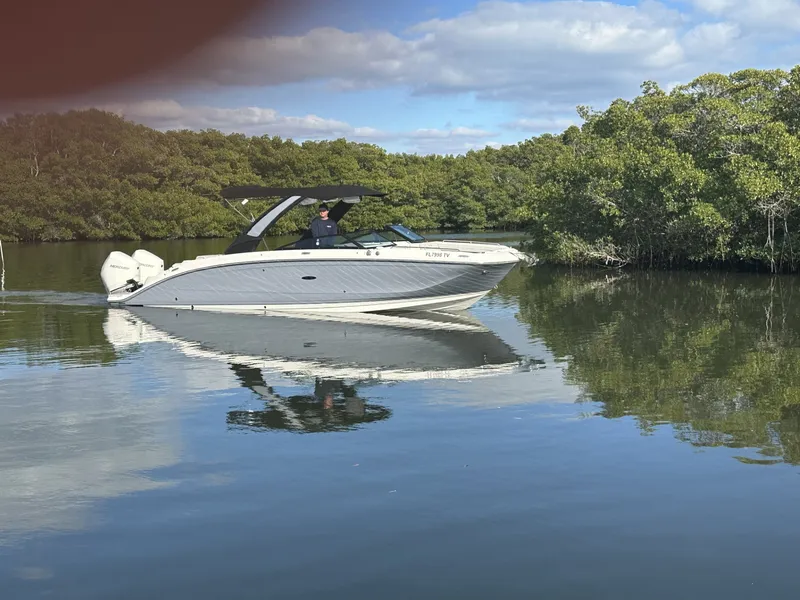
In the 1970s Sea Ray broadened its footprint and development capabilities by opening a new corporate headquarters with production and product development facilities in Phoenix, Arizona, while also establishing manufacturing on Merritt Island, Florida after setting up a design and development department there in 1972 and beginning production early in 1973, initially building the SRV 220 and SRV 240 which Sea Ray notes were the largest boats in its fleet at the time and later producing the iconic Sundancer line along with the company’s first boats 30 feet and longer. In the 1980s Sea Ray expanded again by opening the Vonore, Tennessee plant at Tellico Lake in 1983 to support production growth, starting with small runabouts including the Seville line and other 18 to 25 foot models, and the headquarters soon followed to Knoxville in 1985, positioning Tennessee as the brand’s long term operational center; in 1986 Sea Ray joined the Brunswick family of brands, and by the late 1980s Sea Ray reports it offered more than 50 models serving boaters around the world, marking a major corporate transition that helped scale distribution and global reach.
Through the 1990s Sea Ray continued diversifying its range, with the company describing a lineup spanning from the 16 foot Ski Ray to the 65 foot 650 Cockpit Motor Yacht, while also emphasizing programs and process innovations intended to professionalize ownership and quality systems at scale. Sea Ray states it was the first marine manufacturer to offer a comprehensive owner based benefits and privileges package through the launch of the Sea Ray Owners Club in 1996, and it also states it became the first recreational fiberglass boat manufacturer with all production facilities operating under the ISO 9002 quality system, milestones that reflected a strategy of pairing broad product coverage with formalized customer support and manufacturing consistency. In the 2000s Sea Ray describes a broad portfolio that included bowriders and large cruisers such as Weekender, Amberjack, Sundancer and Sport models, and it notes it reintroduced outboard models while embracing emerging technologies including touchscreen helm electronics and robotic manufacturing processes, with the company also stating it officially moved its headquarters to Knoxville, Tennessee, reinforcing a modernized operating base aligned with higher volume production and technology integration.
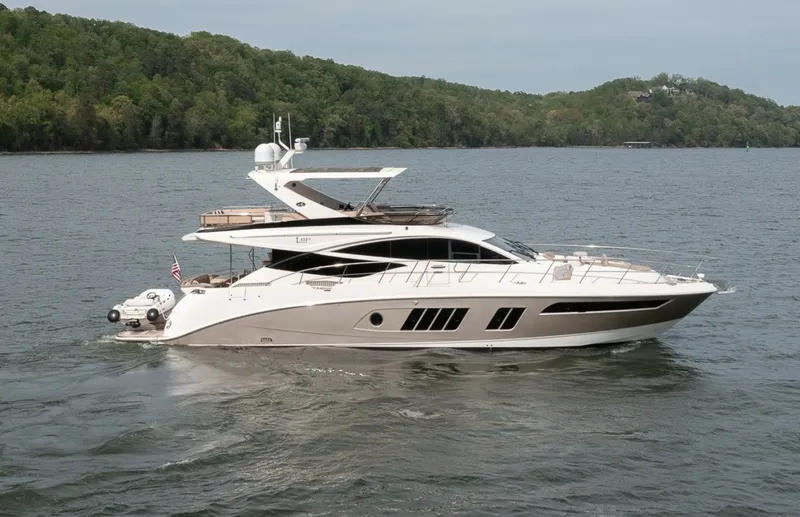
During the 2010s Sea Ray characterizes the decade as a period of transition that included products ranging from small sport boats to large sedan bridge models and the introduction of the L Class yacht series, followed by a refocus as the decade closed on its core sport boat and sport cruiser business under 40 feet alongside expanded outboard powered offerings. In more recent product evolution Sea Ray says its new design language was established with the launch of the Sundancer 370 and that, as outboards became compatible with larger boats, each model in the lineup is now available in sterndrive and outboard, while manufacturing investment has remained visible in its long running facilities including Merritt Island, which Sea Ray notes began production in 1973 and today operates as the Brunswick Integrated Manufacturing Center producing models such as the Sundancer 370, Sundancer 370 Outboard, SLX 400 and SLX 400 Outboard, and Vonore, where Sea Ray celebrated 40 years in 2023 and reported the plant currently produces boats from 23 to 35 feet across the SPX, SDX, SLX and Sundancer lines. Taken together, Sea Ray’s history shows a brand that grew from a small Michigan fiberglass startup into a globally recognized Brunswick backed builder anchored by durable U.S. manufacturing sites, an enduring Sundancer heritage, and a modern lineup shaped by technology adoption and the flexibility to offer both sterndrive and outboard power to match how today’s owners want to boat.
AWARDS AND RECOGNITIONS
Sea Ray’s award history includes a mix of product innovation honors and editorial recognition tied to specific models. In 2020, the Sea Ray SLX R 400e Outboard earned an NMMA Innovation Award at the Miami International Boat Show, recognized for advancing onboard electrification through the Fathom e Power system and integrated digital dash controls. In 2023, Sea Ray again won an NMMA Innovation Award at the Miami International Boat Show for the SLX 260 Outboard, a bowrider designed to elevate comfort and usability in the 26 foot class while pairing premium amenities with outboard power. That same SLX 260 Series was named a 2023 Top Product by Boating Industry magazine, and Sea Ray also received a Neptune Award from Marine Marketers of America for Best Integrated Marketing New Product Launch tied to the SLX 260 introduction. In 2024, Sea Ray’s SLX 260 added a major European title when it was named European Powerboat of the Year at boot Düsseldorf in the Motorboats up to 10 metres category, and Sea Ray followed that with another Boating Industry Top Product recognition in 2024 for the SDX 270 Surf, cited for its NextWave surf system and family focused deck boat versatility.
Alongside model specific awards, Sea Ray has a long standing track record in NMMA’s Customer Satisfaction Index program, one of the industry’s most recognized measures of owner experience. In 2014, Sea Ray was honored with four NMMA CSI Awards across Deck Boats, Inboard Express Cruisers, Sterndrive Bowrider Boats, and Sterndrive Cuddy and Express, marking its tenth year in a row receiving CSI recognition and bringing the company’s cumulative total to 59 CSI Awards at that time. The NMMA Marine Industry CSI Awards are based on independently measured customer survey results, and current program criteria specify that award recipients must achieve 90 percent or higher in initial customer satisfaction, with participating manufacturers required to survey a large majority of new buyers. Taken together, Sea Ray’s Innovation Awards, editorial Top Product selections, and repeated CSI wins point to a brand reputation built on continuous product development, thoughtful design execution, and a consistent focus on owner satisfaction that can reinforce buyer confidence over the long term.