Tracker Boats – Technical and Historical Guide
ABOUT THIS BOAT BRAND
Tracker Boats is an American boat manufacturer renowned for building value-focused, all-welded aluminum fishing and family boats designed around practical, “fish-ready” layouts and easy towability. The brand traces its roots to the late 1970s, growing from regional aluminum-boat production into one of the best-known names in freshwater fishing through standardized, high-volume manufacturing and nationwide distribution. Tracker Boats operates within White River Marine Group, the marine-manufacturing arm associated with Bass Pro Shops, a relationship that helped broaden its reach into a full line of fishing platforms and recreational runabouts. Known for straightforward rigging packages and a philosophy of delivering complete, on-the-water capability at accessible price points, Tracker Boats has remained a high-visibility, high-volume builder, reinforced by broad dealer support and long-running recognition among anglers and family boaters in the U.S. marine industry.
Specializing in outboard-powered freshwater boats, Tracker Boats serves serious bass anglers, crappie and multi-species fishermen, and family boaters who want uncomplicated ownership and low-maintenance aluminum construction. Core offerings commonly center on bass boats in the Pro Team series, multi-species deep-V platforms in the Targa line, and family-focused fish-and-play configurations such as Tahoe and Mod V packages, depending on model year and lineup. Many Tracker Boats models emphasize welded aluminum hulls, optimized pad or modified-V running surfaces, wide beam stability, and integrated livewells sized for day-long fishing. Typical technical features include aerated livewell systems, lockable rod storage, console electronics mounting areas, reinforced transoms for modern outboards, non-skid aluminum decks, and trailer packages designed for routine freshwater ramps. For buyers prioritizing center console fishing boat-style utility in compact footprints, plus predictable rigging and easy trailering, this specialization is a key reason Tracker Boats remains a preferred choice for tournament-minded anglers and weekend lake users alike.
WHAT MAKES THIS BOAT BRAND SPECIAL?
Tracker Boats stands out for building purpose-driven fishing and family boats that feel honest, tough, and easy to own. Many Tracker Boats models use all-welded aluminum construction, which replaces rivets with continuous welds for a tighter, more rigid hull that stays quiet and solid when you cross chop or slide onto a shallow flat. Their hull shapes are tuned for stability at rest, so anglers can move around the deck without the boat feeling tippy, and the light weight of aluminum helps deliver quick hole shot, efficient cruising, and trailer-friendly handling. On the water, Tracker Boats is known for predictable tracking and forgiving turns, plus smart layouts that keep rods, tackle, and safety gear organized. Practical touches like wide casting platforms, integrated storage, livewell-ready fishing setups on many models, and family-friendly seating make Tracker Boats a go-to choice for buyers searching for a reliable aluminum fishing boat package.
Tracker Boats are built in the United States, with large-scale manufacturing that supports consistent fit and finish while still relying on skilled welders, riggers, and finish technicians who know what a hard-used boat looks like after years on the water. Tracker Boats emphasizes durable marine-grade aluminum, corrosion-resistant hardware, and factory-rigged systems designed to simplify ownership, from clean wiring runs to easy-to-service components. The brand also aligns with industry safety and compliance requirements for recreational boats, and many buyers are drawn to the peace of mind that comes with clear warranty support and readily available parts through a broad dealer network. It shows in the details: tidy welds, sturdy deck structures, well-latched hatches, and interior materials chosen to handle wet gear and muddy boots. Ask owners why they chose Tracker Boats and you will hear the same themes again and again: strong value, dependable performance, and a no-nonsense brand that keeps you on the water instead of in the shop.
WHAT DIFFERENT TYPES OF BOATS DOES THIS BOAT BRAND BUILD?
Tracker Boats specializes in all-welded aluminum, outboard-powered rigs that span compact, easy-to-handle jon boats through big-water Deep V multi-species packages. On the small end, the GRIZZLY 1036 Jon measures 9' 10", making it a simple, lightweight option for two anglers and tight-access waters. At the top of the size range, the GRIZZLY 2072 models stretch to 21' 5", delivering a wide, stable platform for hunting, hauling, and multi-use work. In between, Tracker’s lineup covers Mod V fishing boats for panfish and inland lakes, as well as Deep V boats designed to run comfortably in larger chop, including fish-and-ski combo layouts for families. Below are the types of boats and models Tracker Boats builds, along with their key characteristics and uses:
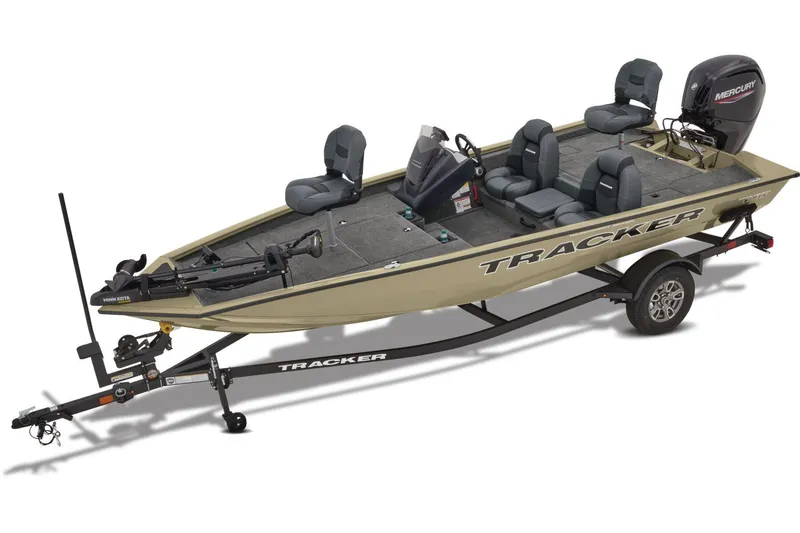
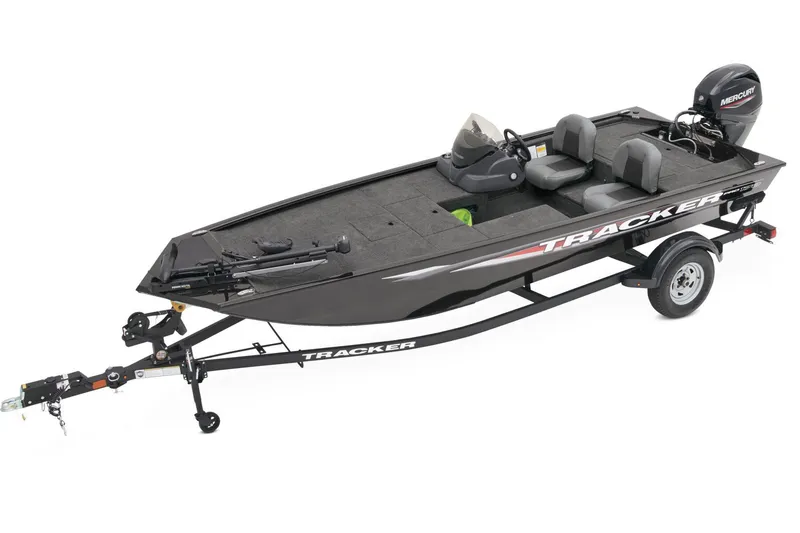
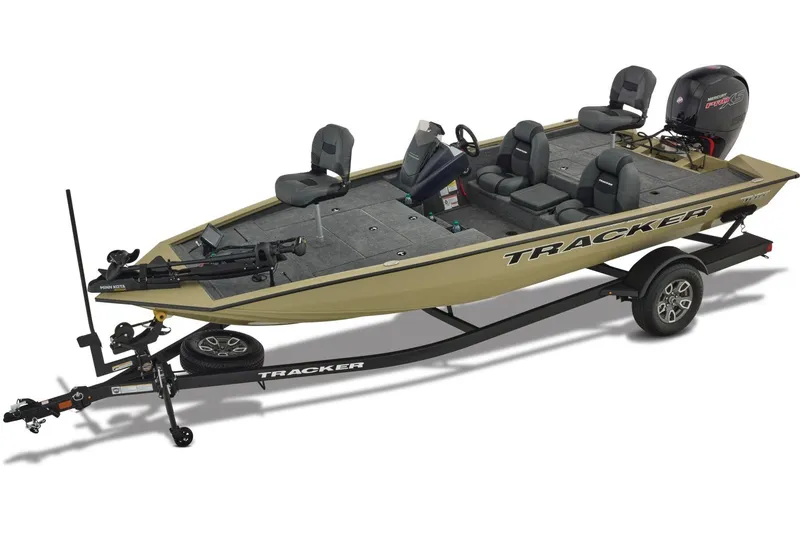
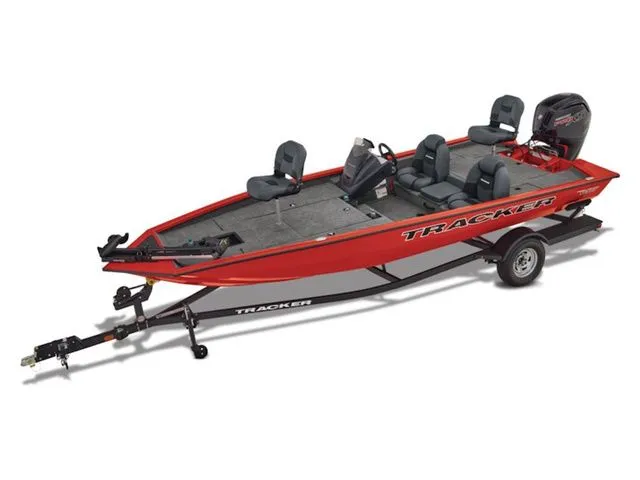
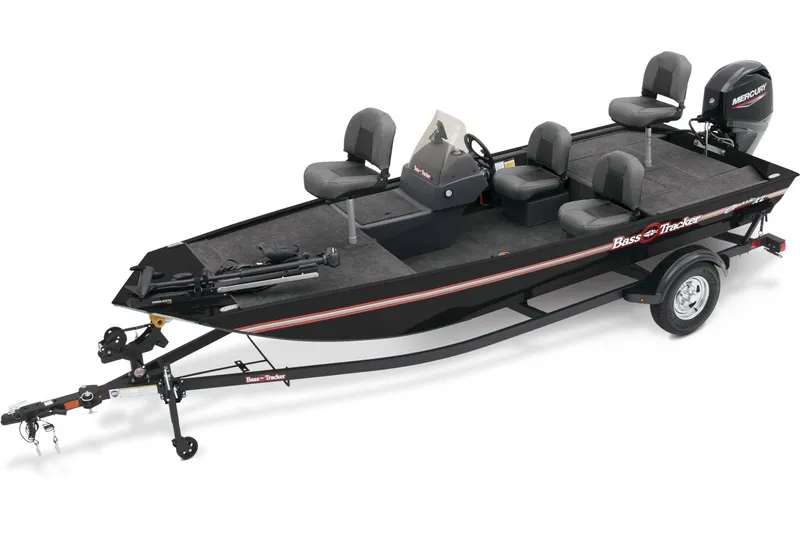
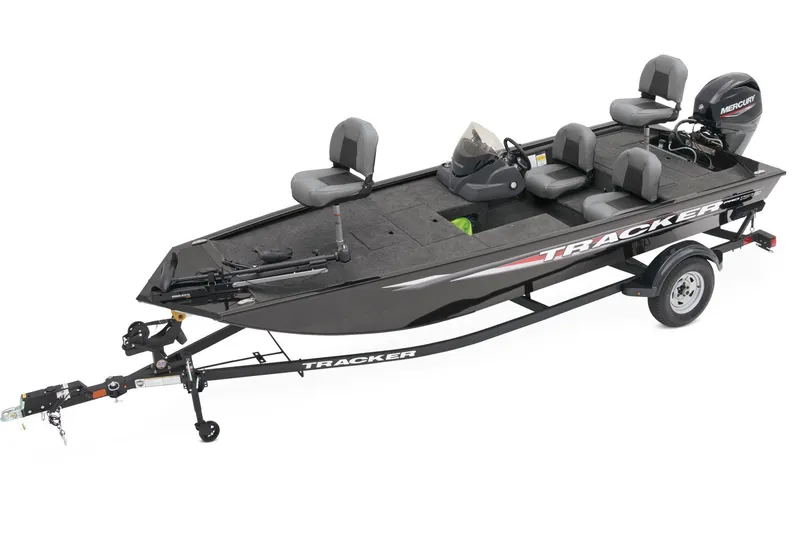
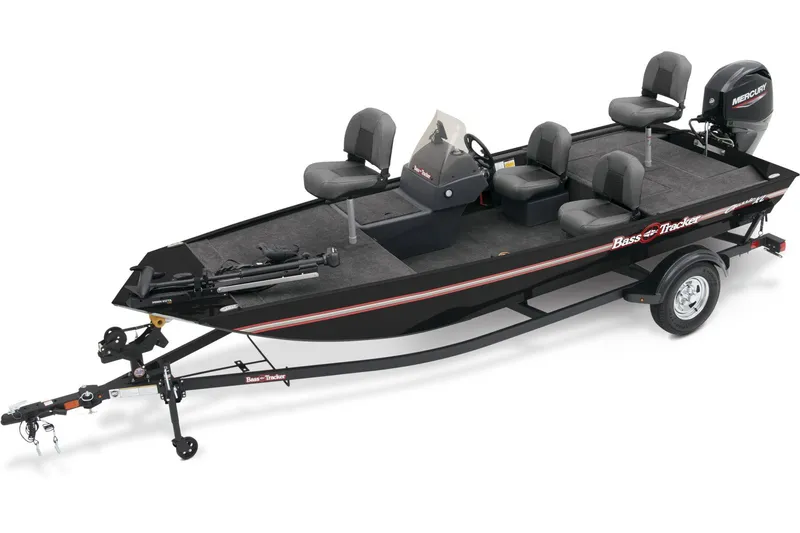
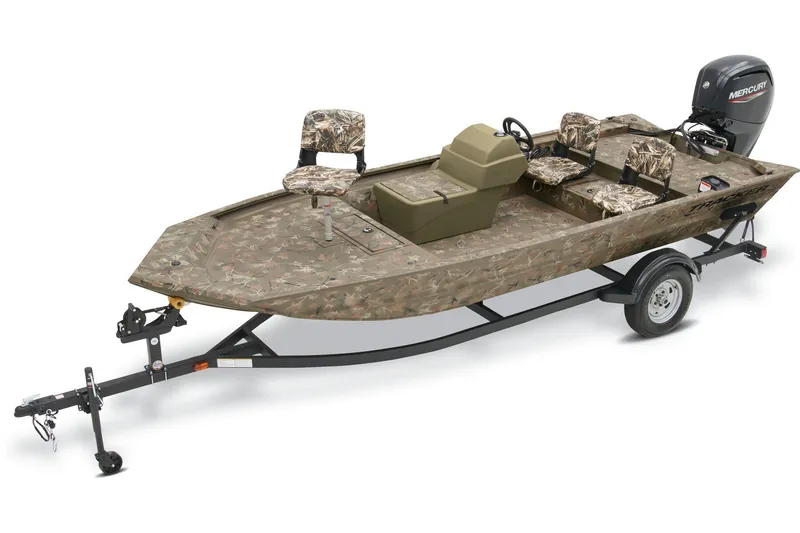
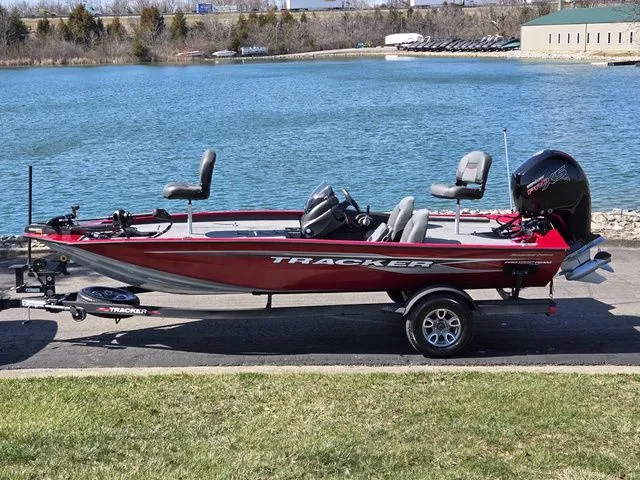
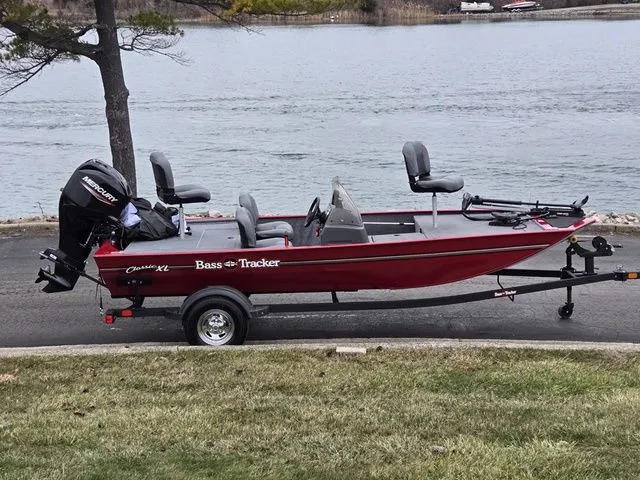
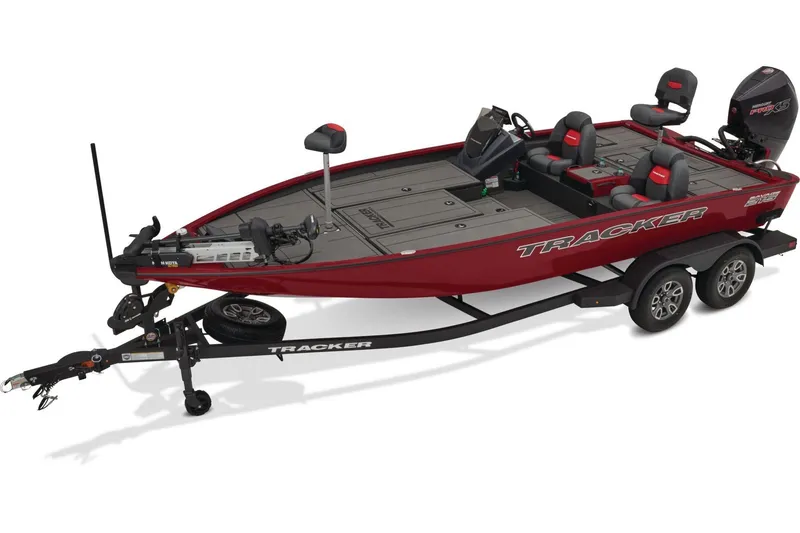
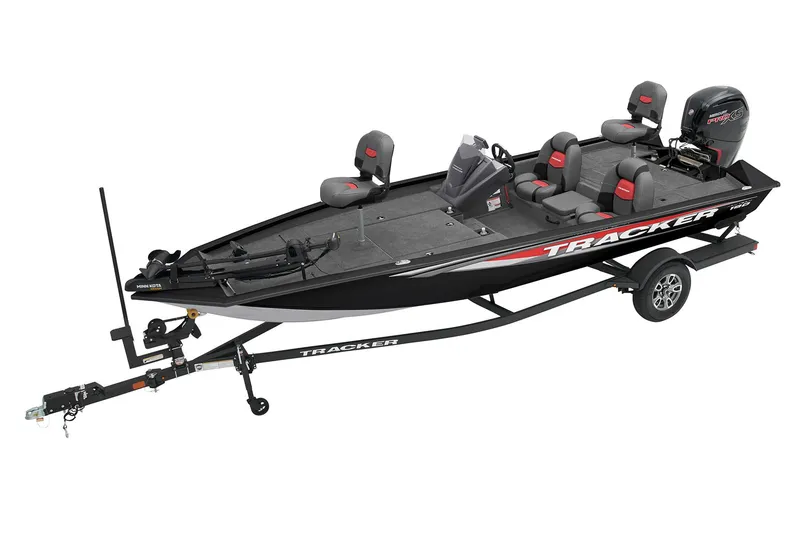
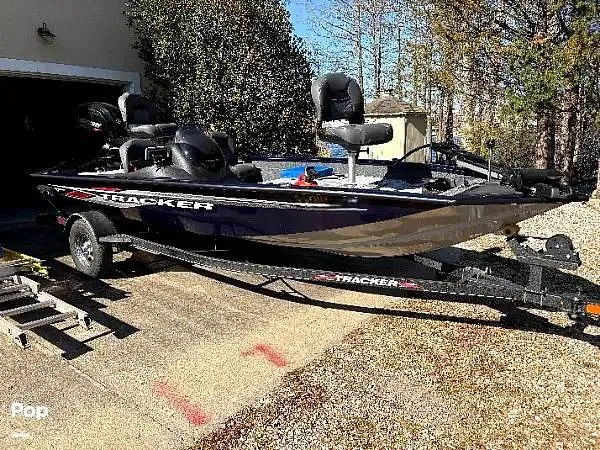
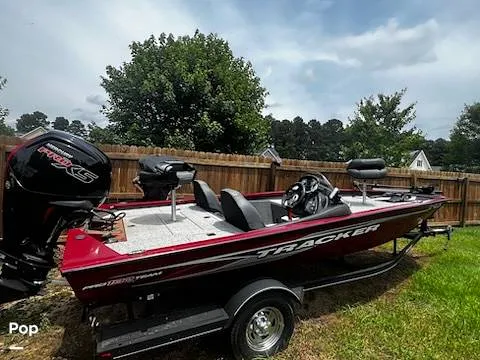
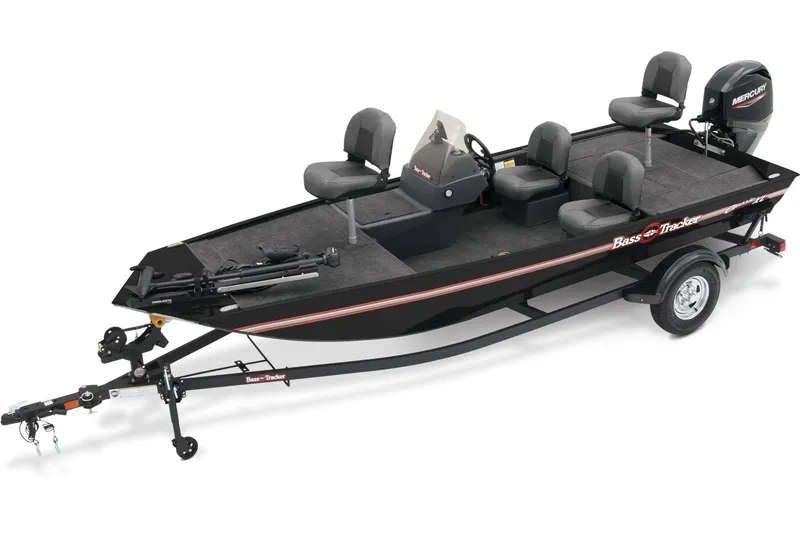
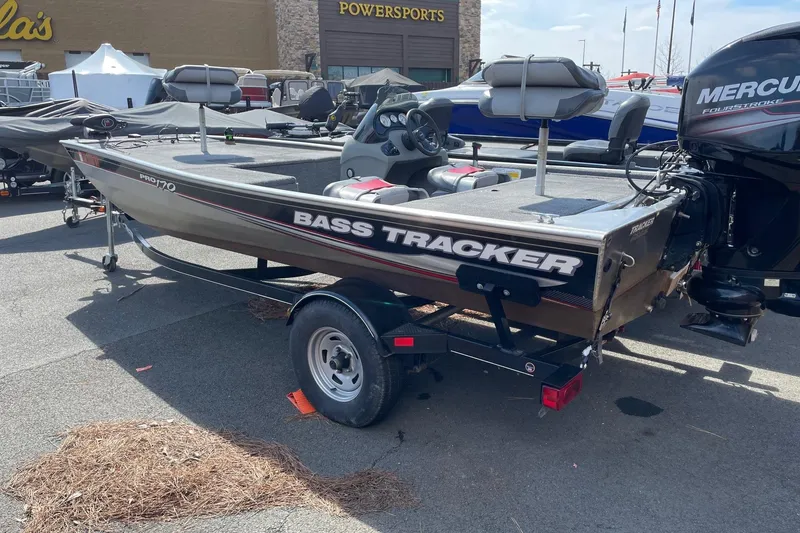
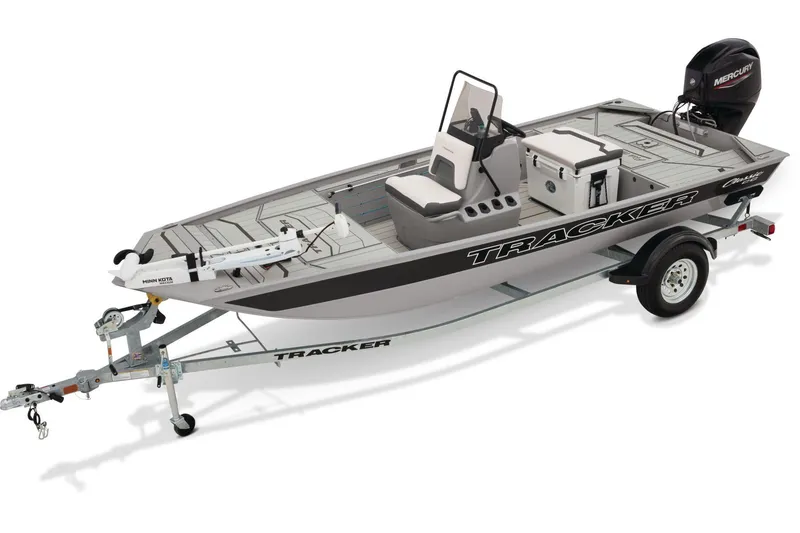
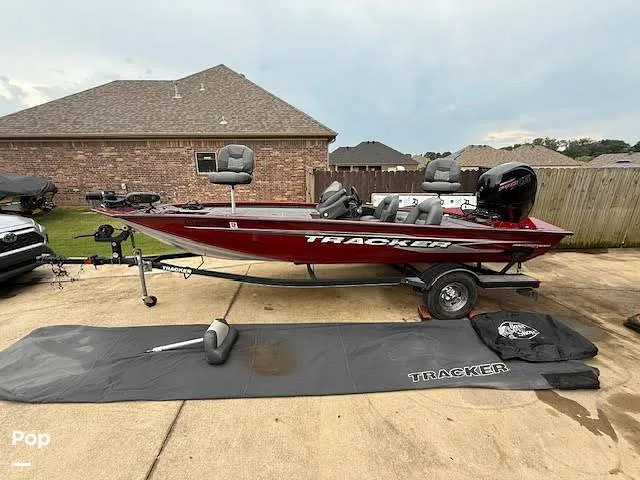
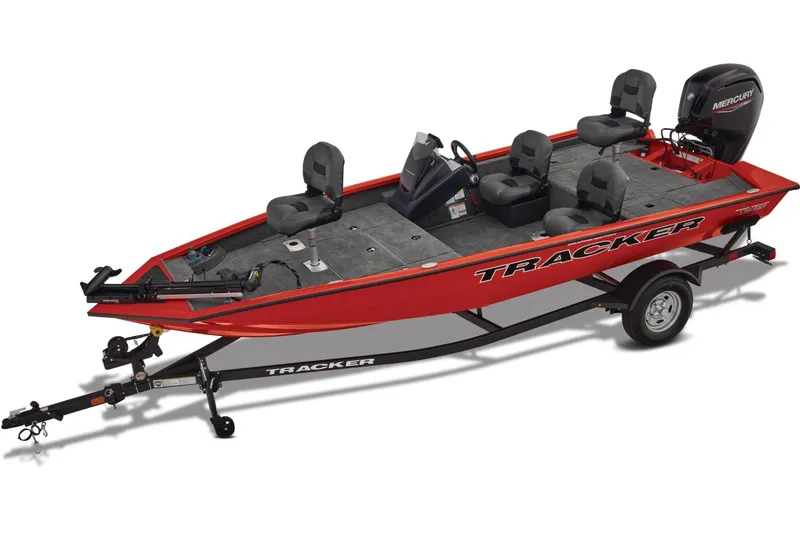
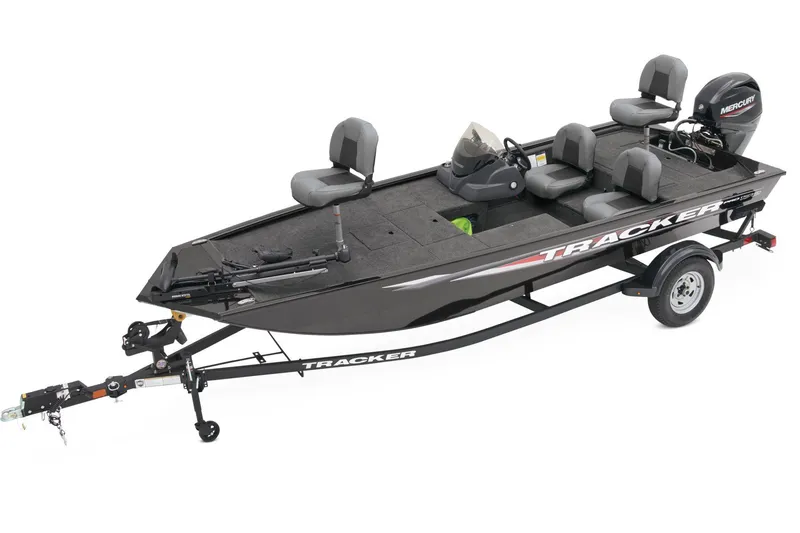
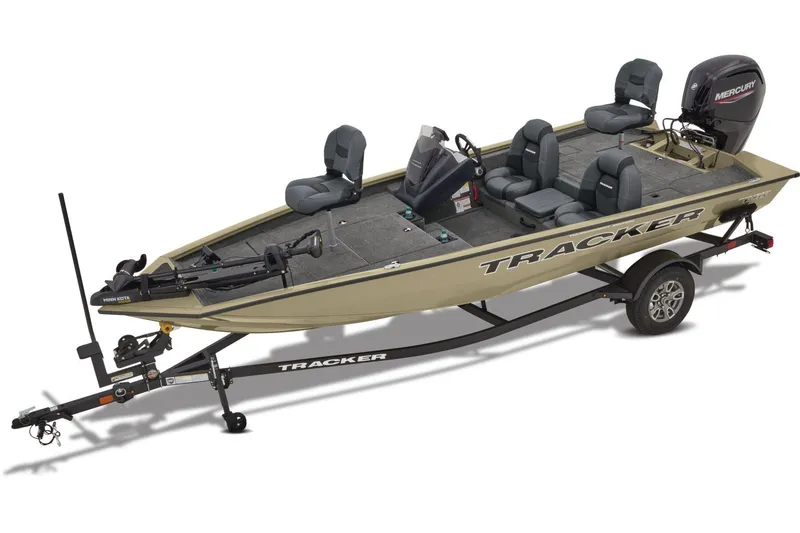
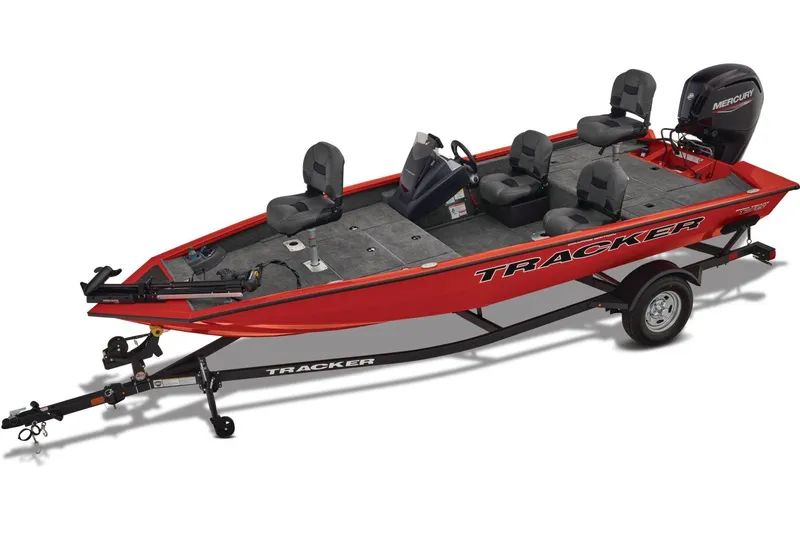
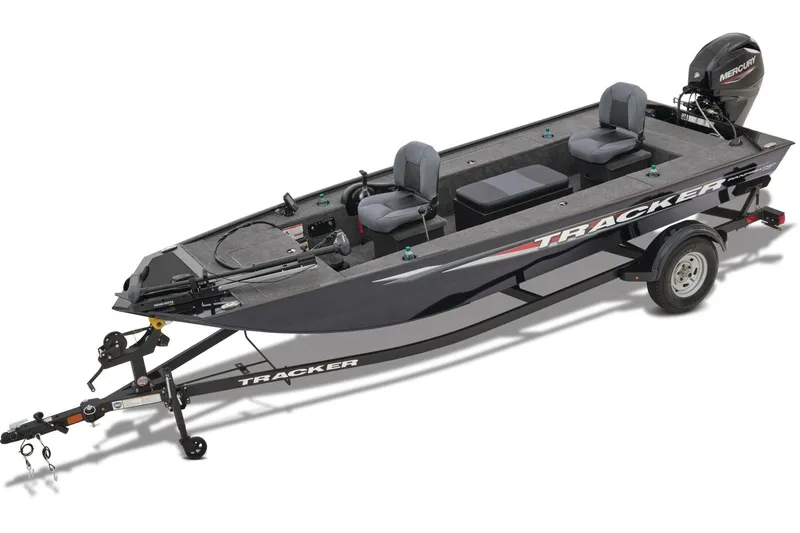
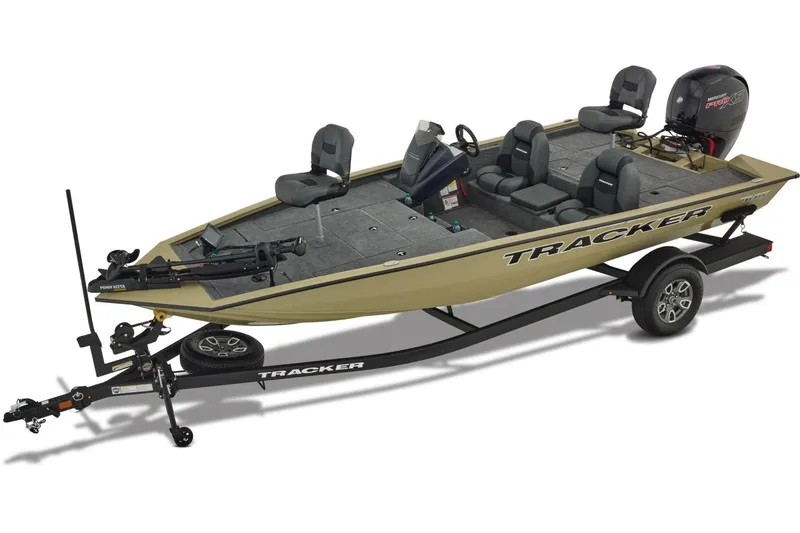
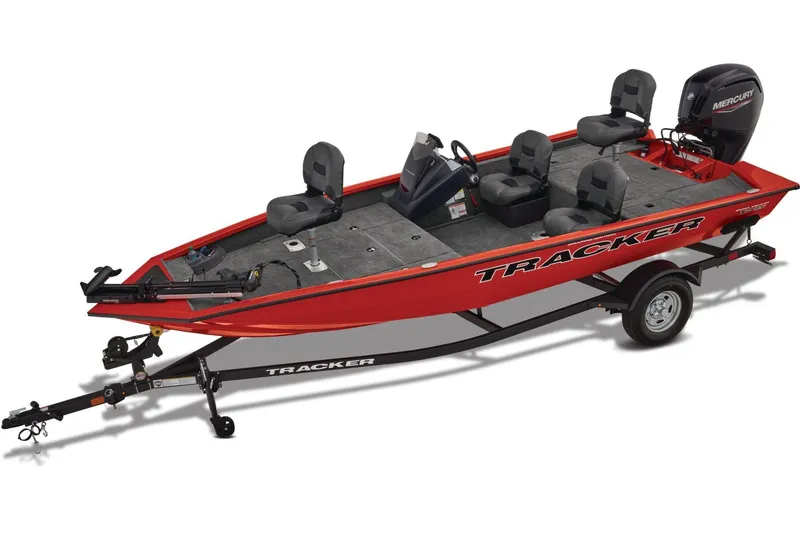
• (Mod V aluminum fishing boats (Bass / Panfish / Multi-species)) TRACKER’s Mod V aluminum fishing lineup is built around stable, shallow‑draft hulls and large casting decks for freshwater bass and panfish anglers, with most boats sold as factory‑rigged packages (boat/motor/trailer), typically with Mercury outboards. The entry/value end includes the BASS TRACKER® Classic Series (Classic XL, Classic Limited, Classic CC) and the PRO 170, generally in the 16'8" class with portable or smaller built‑in fuel capacities and max ratings around 40–50 HP depending on model. The core bass family is the PRO TEAM™ Series—commonly including PRO TEAM 175 variants (TXW/TF family), PRO TEAM 190, and PRO TEAM 195 variants—stepping up in beam, storage, livewell capacity, and horsepower (often up into the 75–150 HP range by model). At the top end, TRACKER also offers a bigger, higher‑output aluminum bass boat option in the Savage 215 (21'3" LOA), aimed at anglers wanting more speed and rough‑water capability while staying in an aluminum platform. Typical fishing-focused traits across this group include center-console or side-console layouts depending on model, pedestal seating, aerated livewells, rod storage, trolling‑motor/electronics readiness, and shallow-water practicality for lakes and reservoirs.
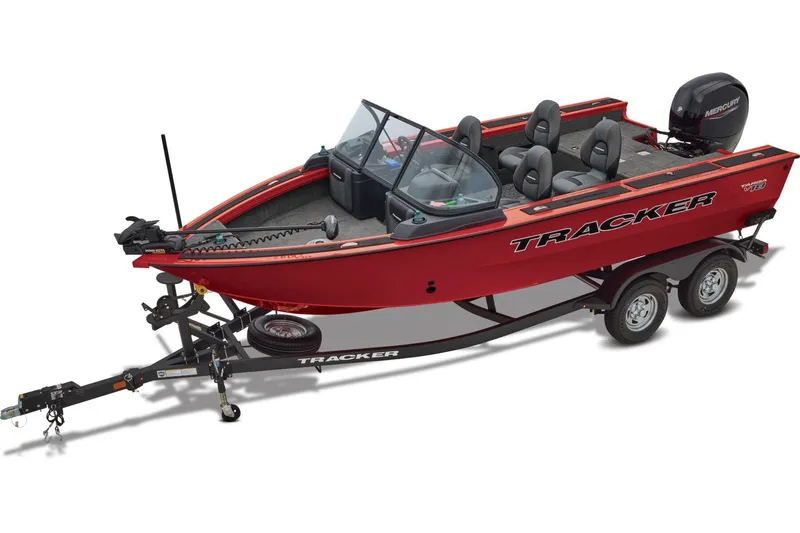
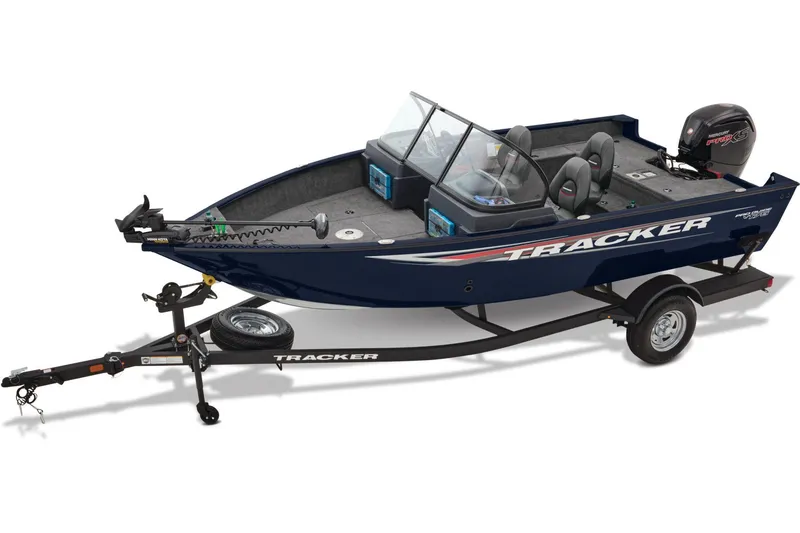
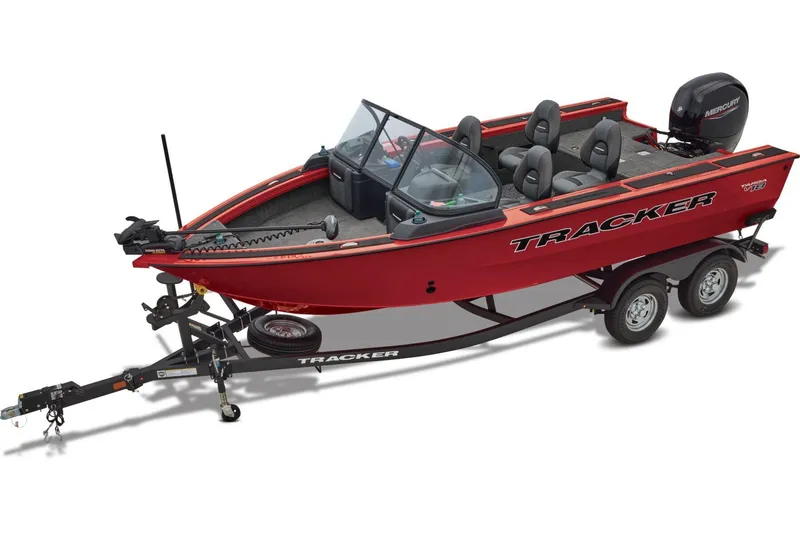
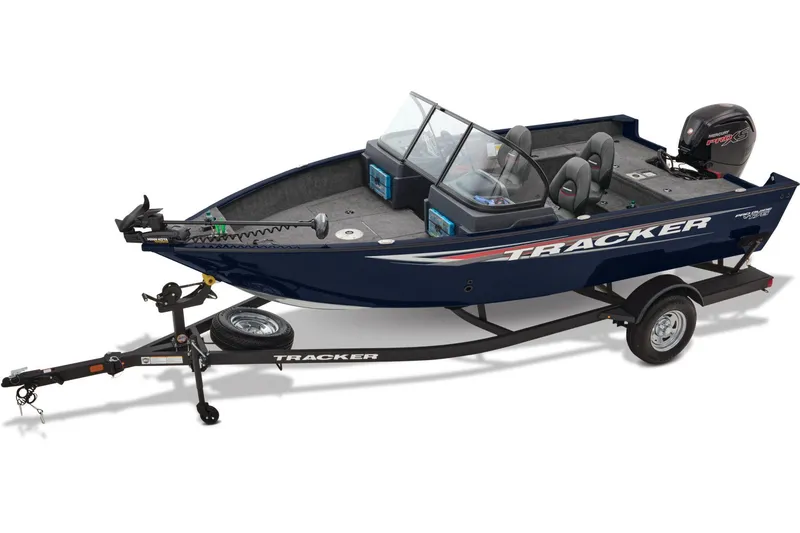
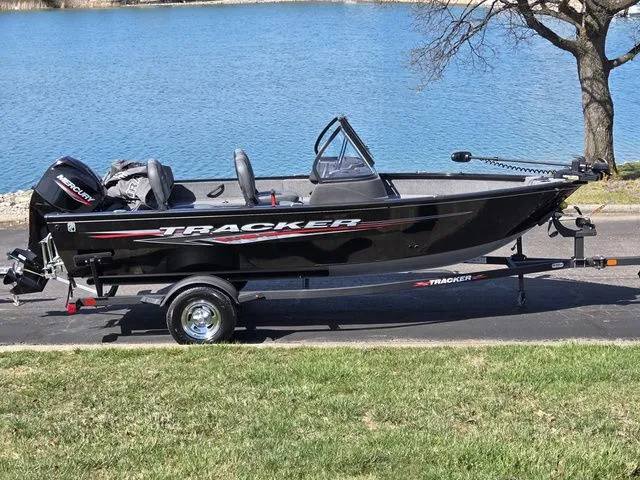
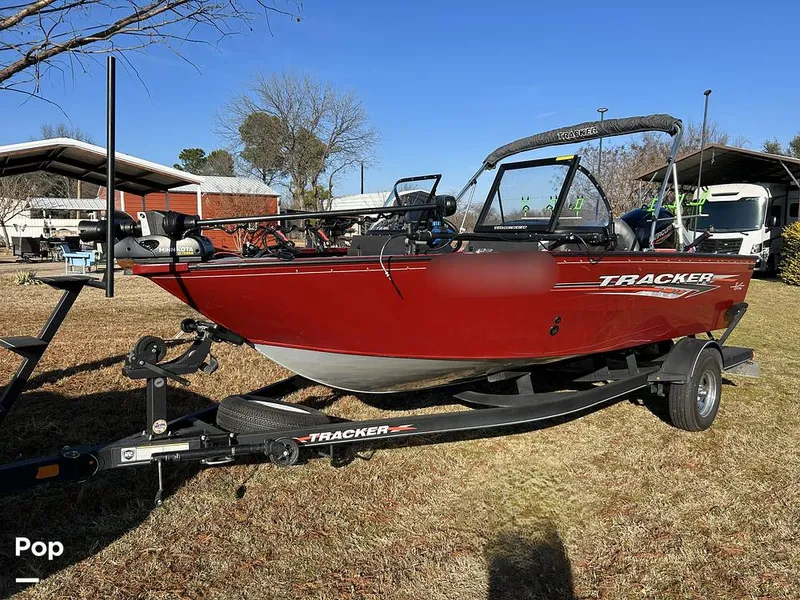
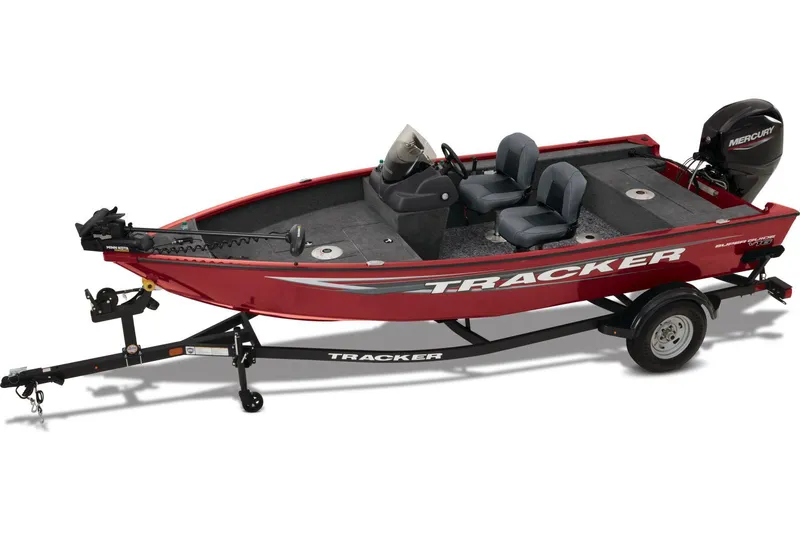
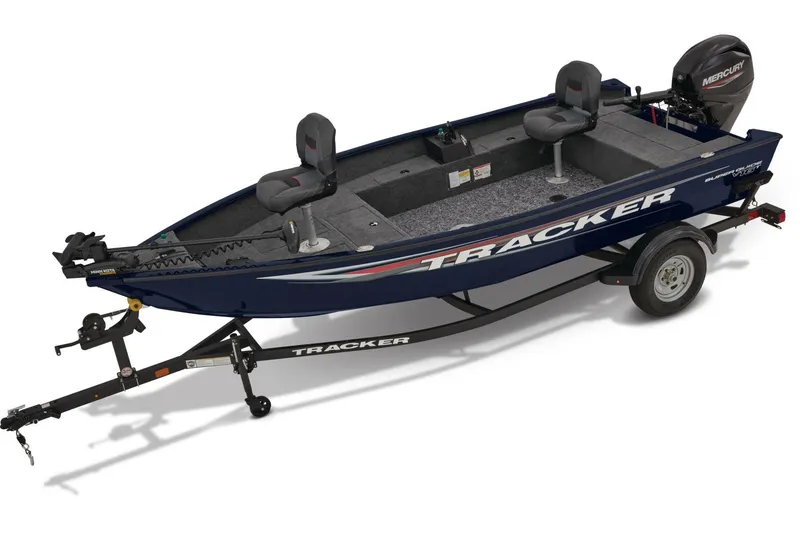
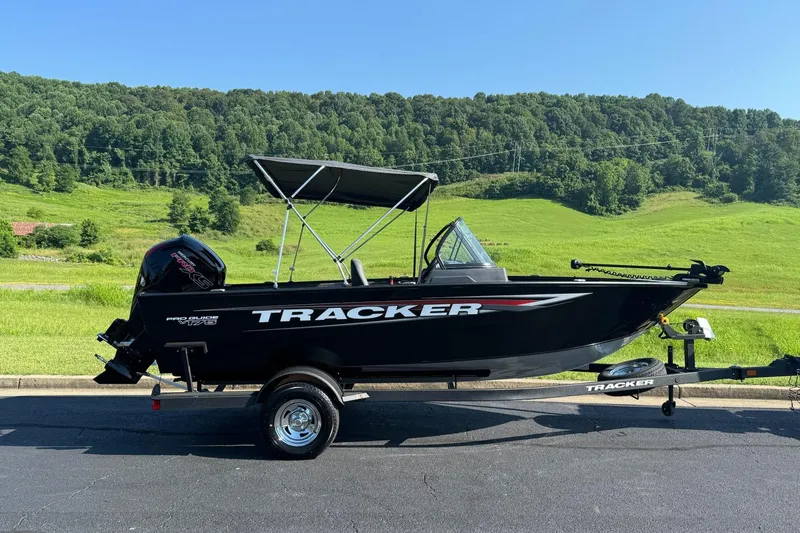
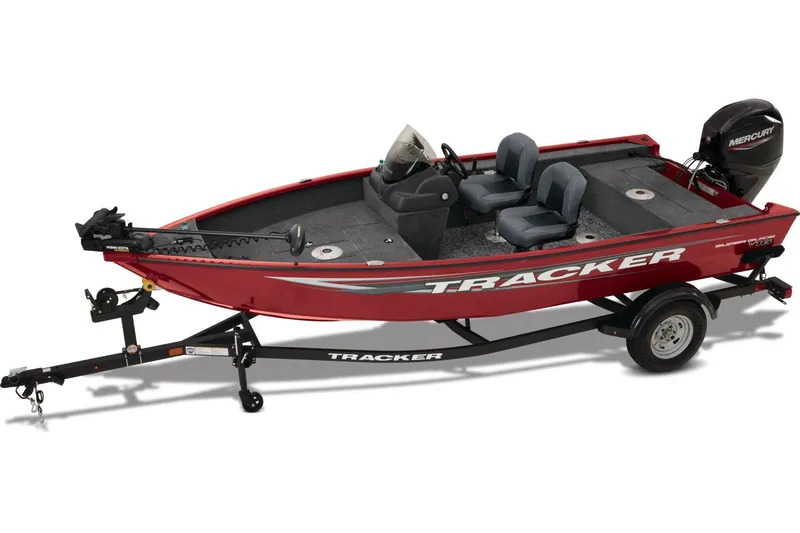
• (Deep V multi-species & Fish-and-Ski (walk-thru windshield models)) TRACKER’s Deep V family is aimed at multi‑species anglers (walleye, pike, salmon/trout where applicable) who need more freeboard and a rough‑water ride for larger, windier lakes, and who may also want family versatility. The lineup typically spans from the SUPER GUIDE™ V‑16 variants (including V‑16 T and V‑16 SC) into the PRO GUIDE™ series (e.g., PRO GUIDE V‑16 SC/WT and V‑175 WT/Combo) and up to the TARGA™ V series (TARGA V‑18 WT/Combo and TARGA V‑19 WT/Combo). These models commonly use outboard power and offer side-console (SC) and walk‑thru windshield (WT) configurations; “Combo” versions generally add more lounge seating and watersports capability (often including ski/tow features) while retaining fishing layouts. In size terms, the Deep V range generally starts around 16 feet (e.g., 16'1" LOA on SUPER GUIDE V‑16 SC) and runs up to about 19 feet in the TARGA line (e.g., TARGA V‑19 at 19' LOA). Hallmark characteristics include deeper‑V hull geometry for chop, higher cockpit depth, more interior passenger protection on WT models, and multi‑species fishing features such as large storage, livewells, and open aft cockpits that can be configured for trolling, casting, or cruising.
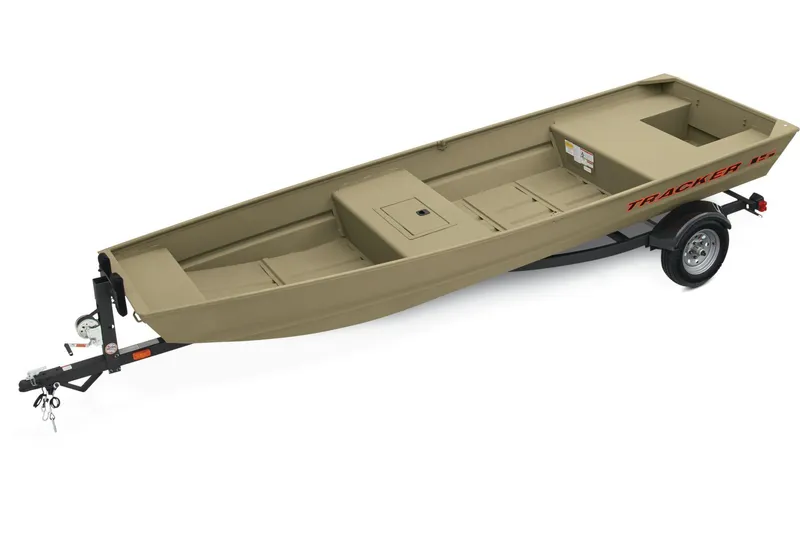
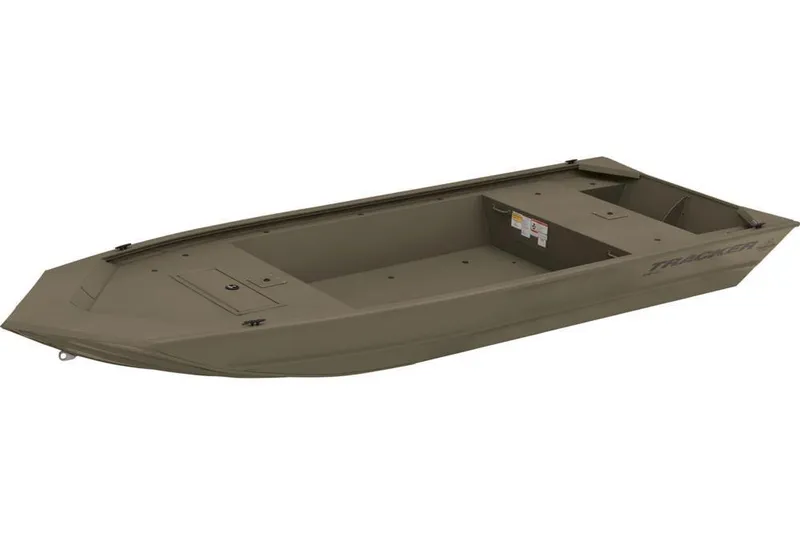
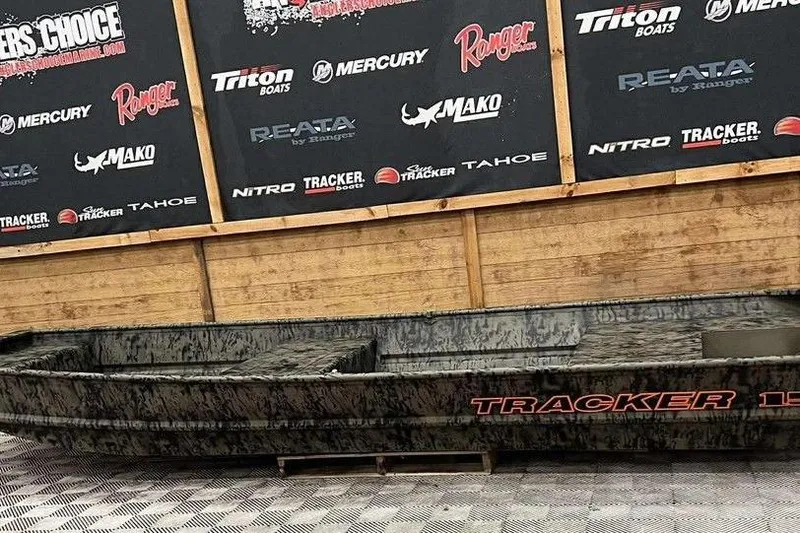
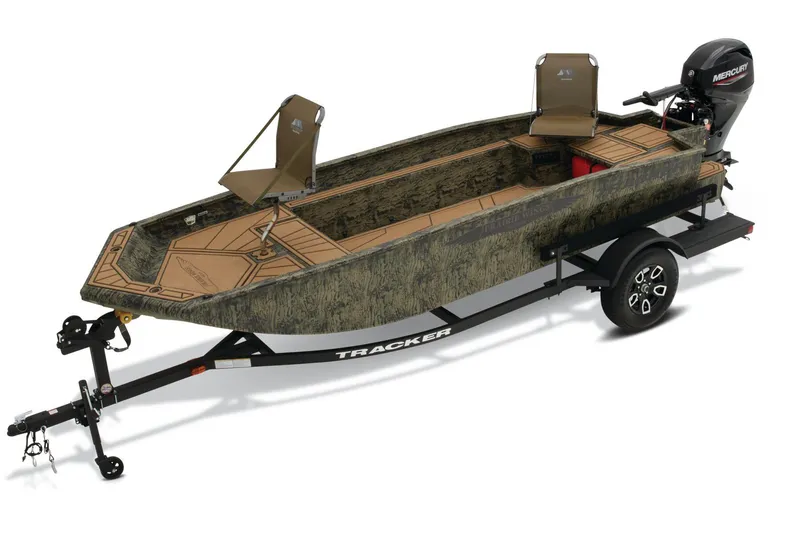
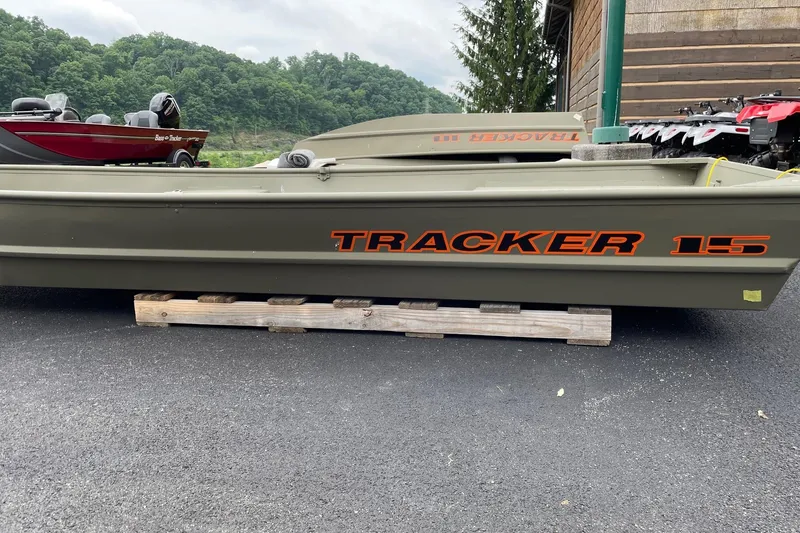
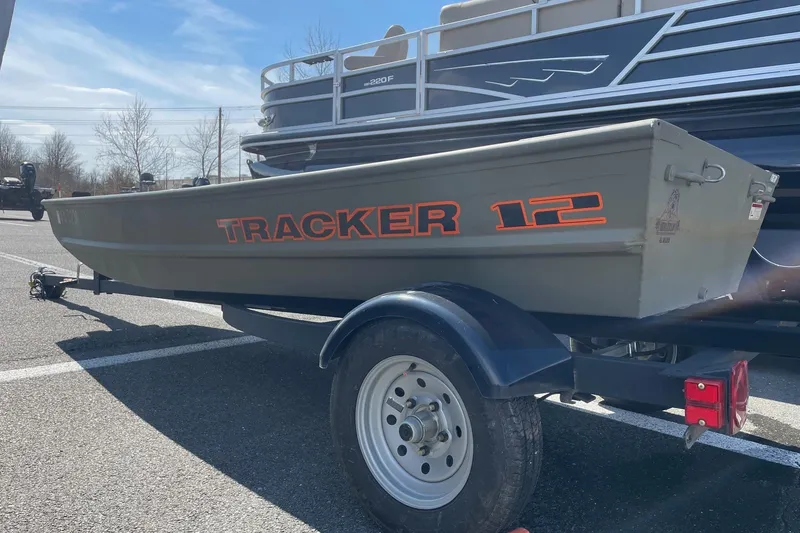
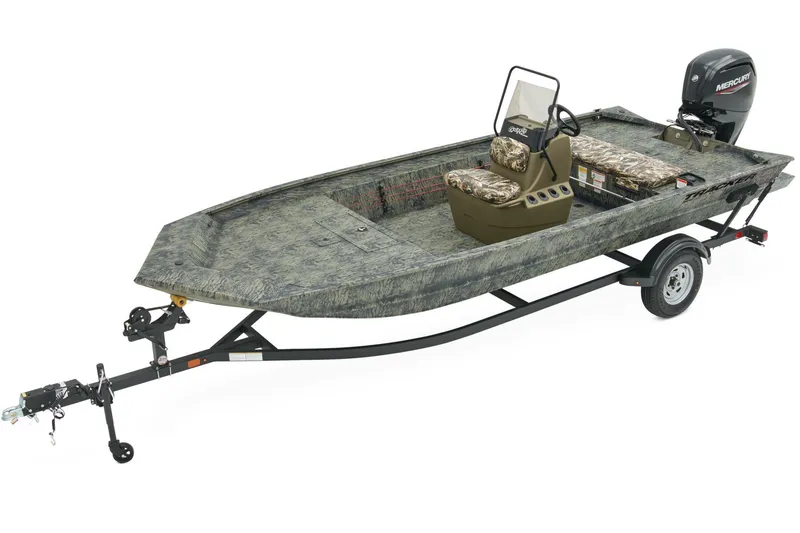
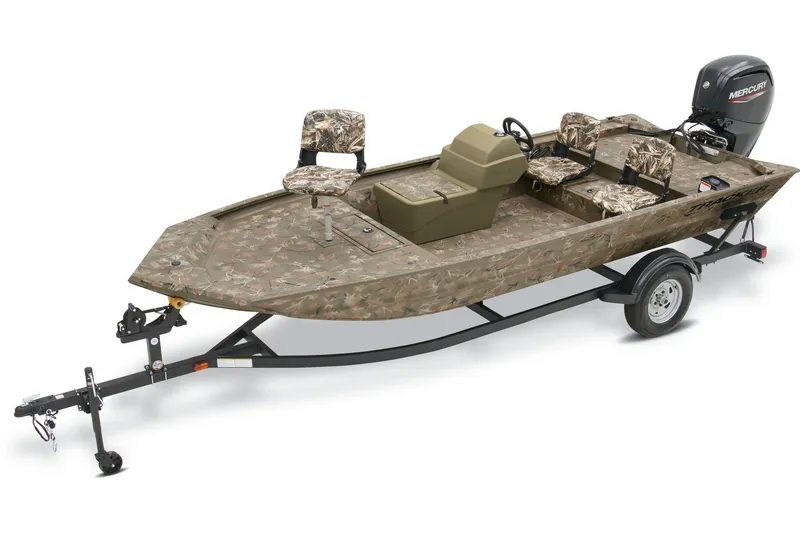
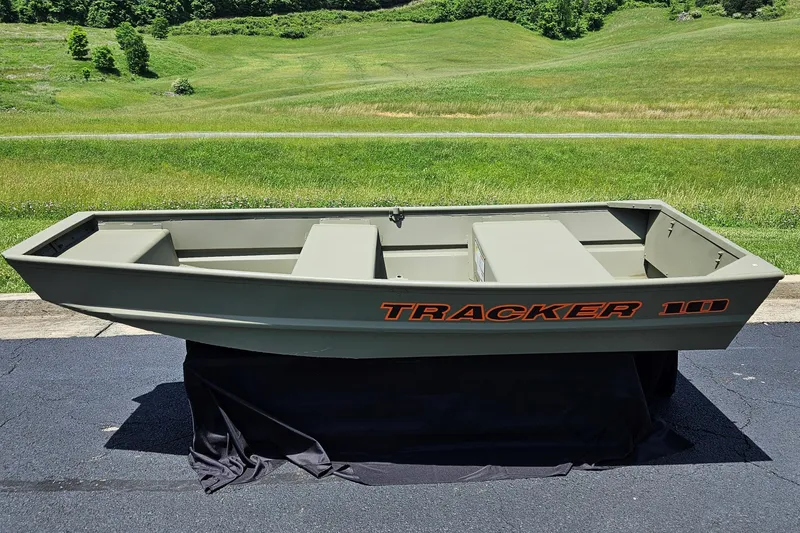
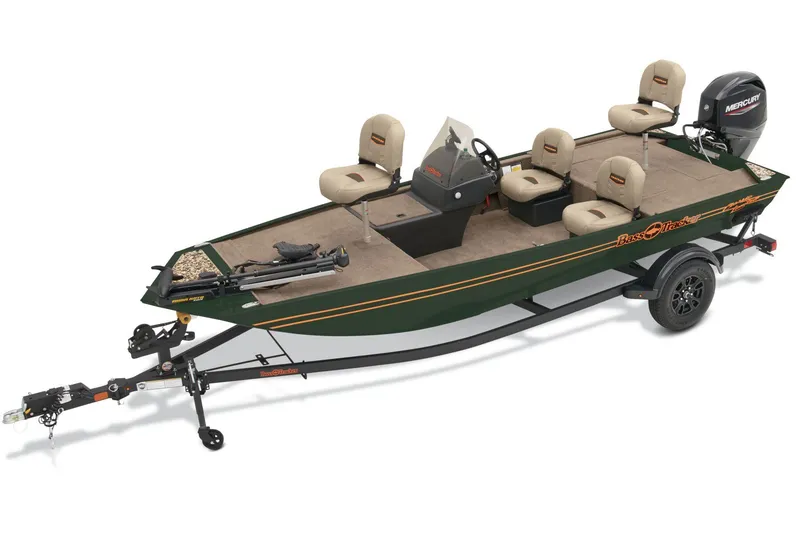
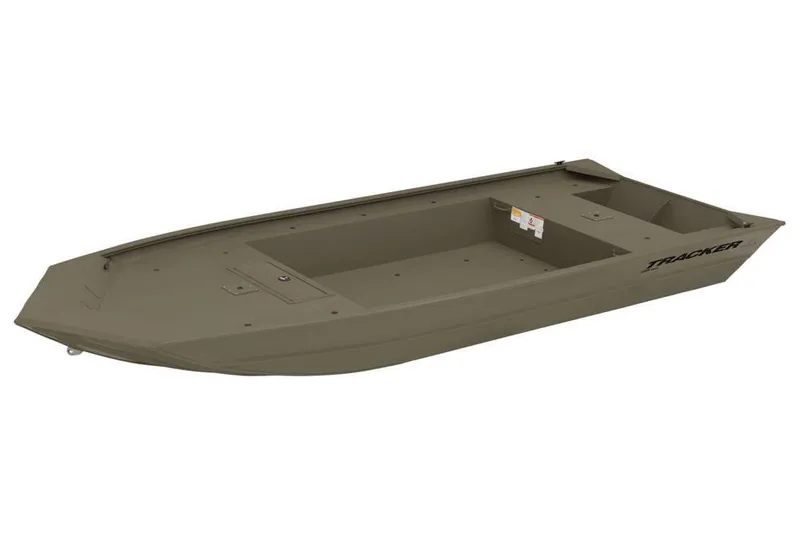
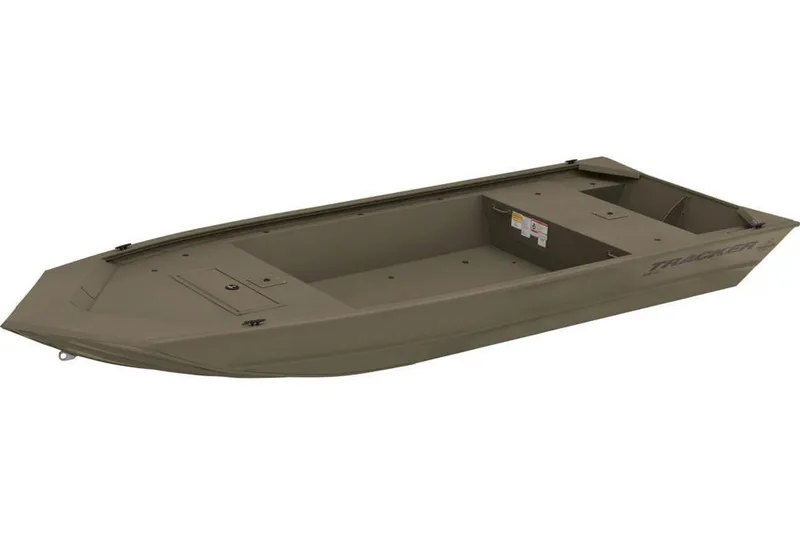
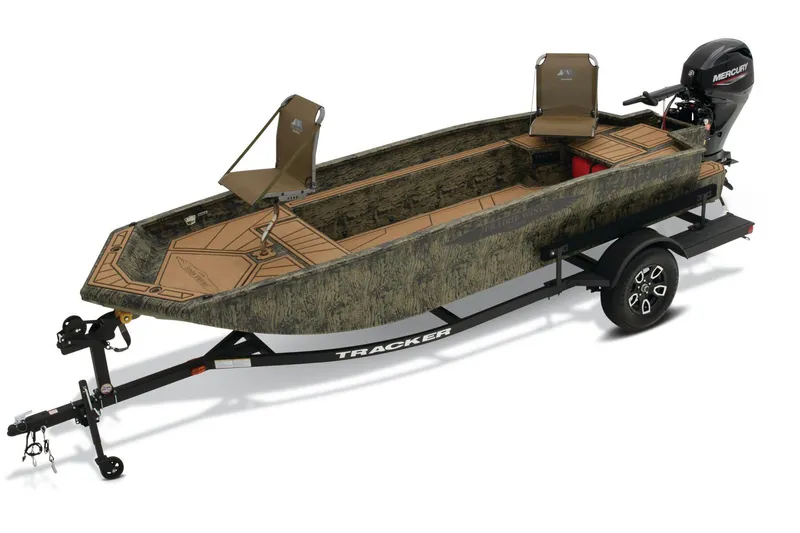
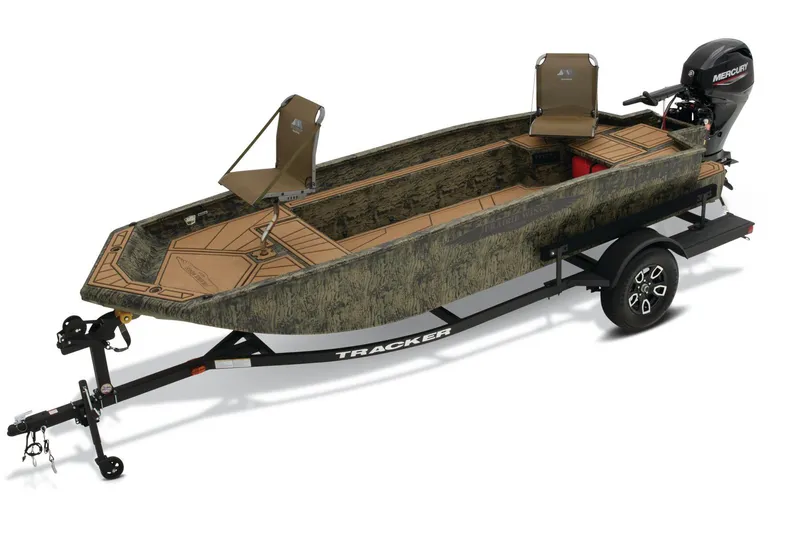
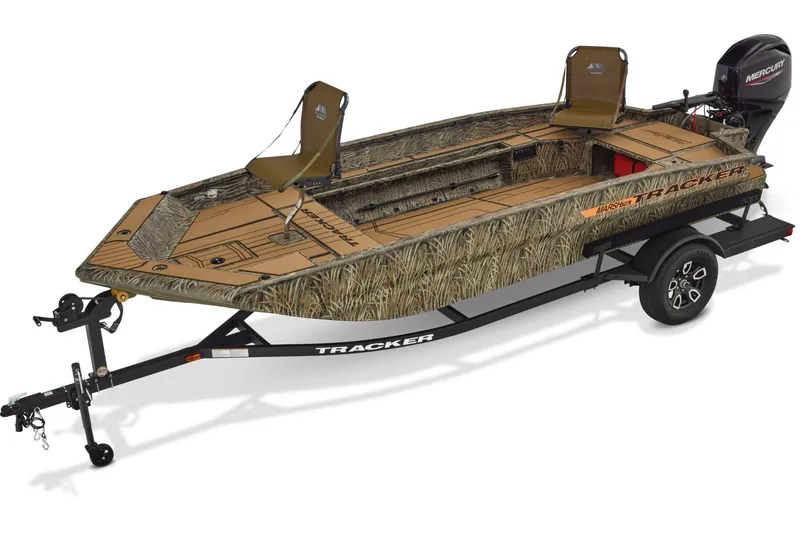
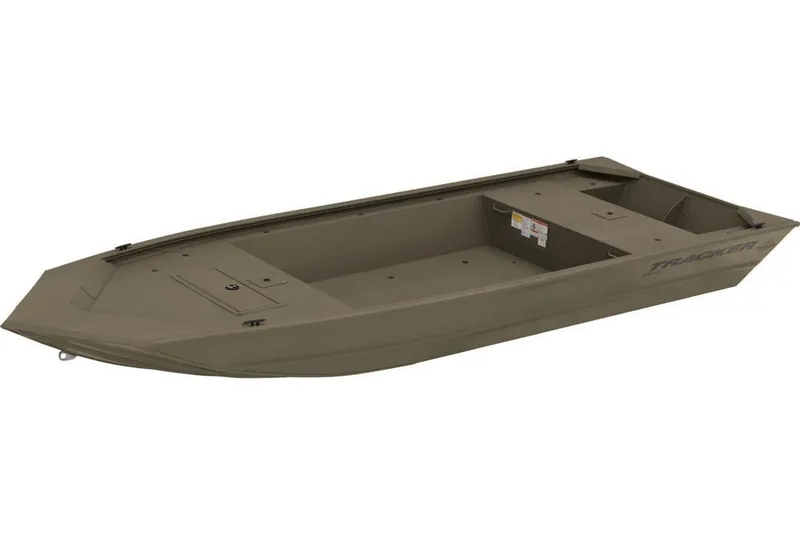
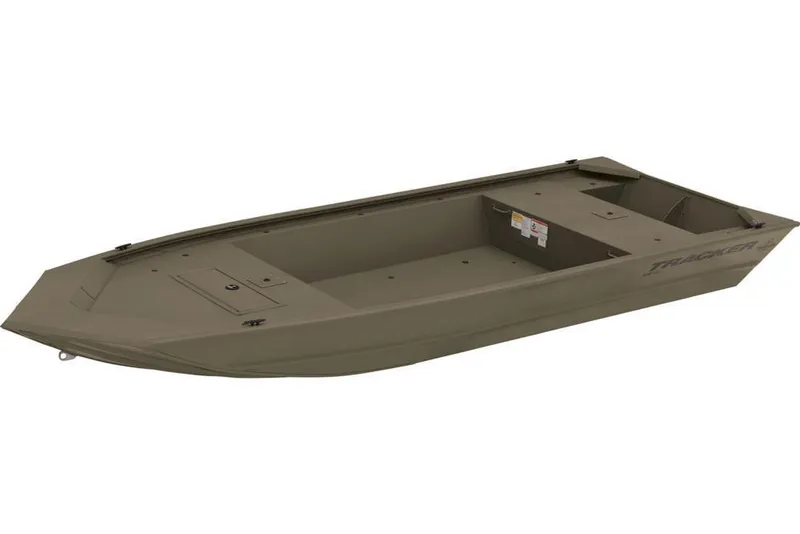
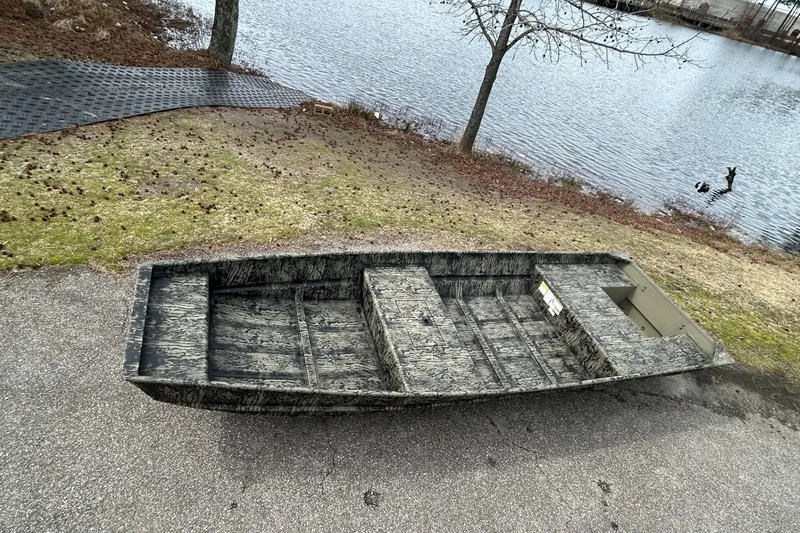
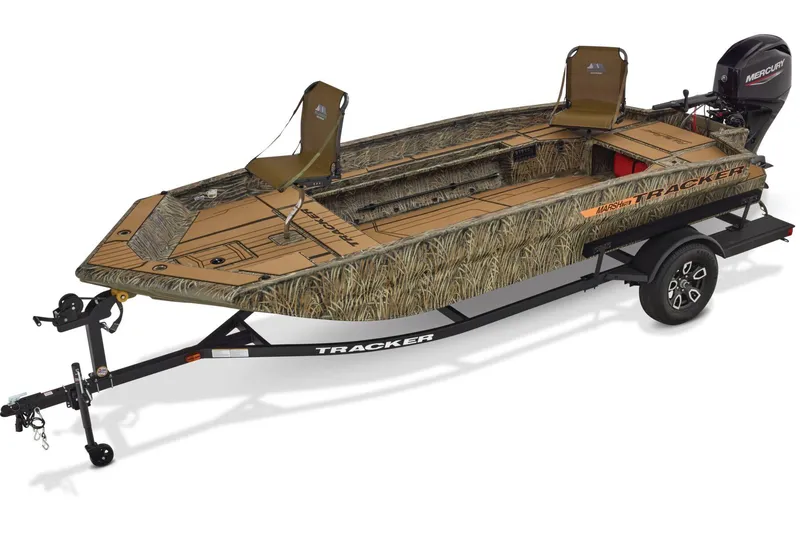
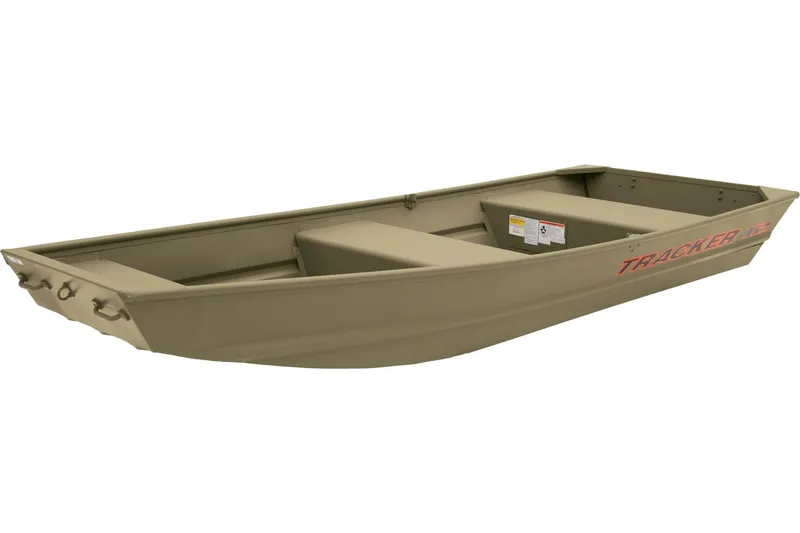
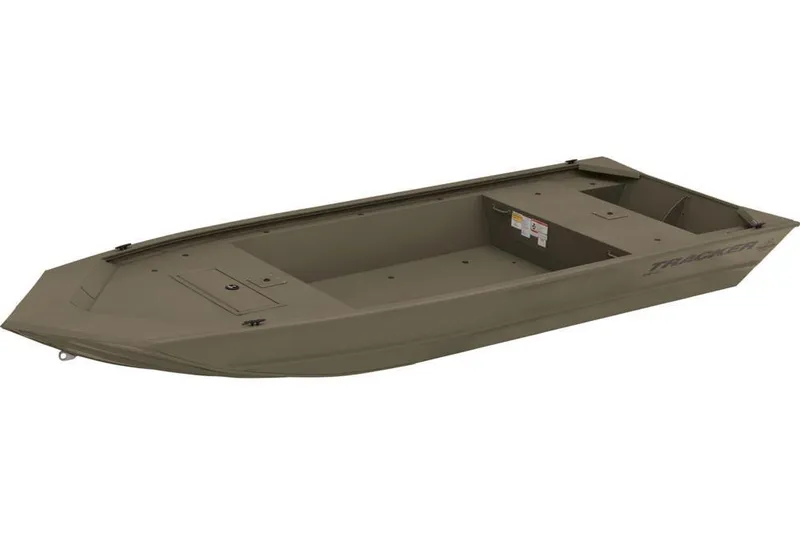
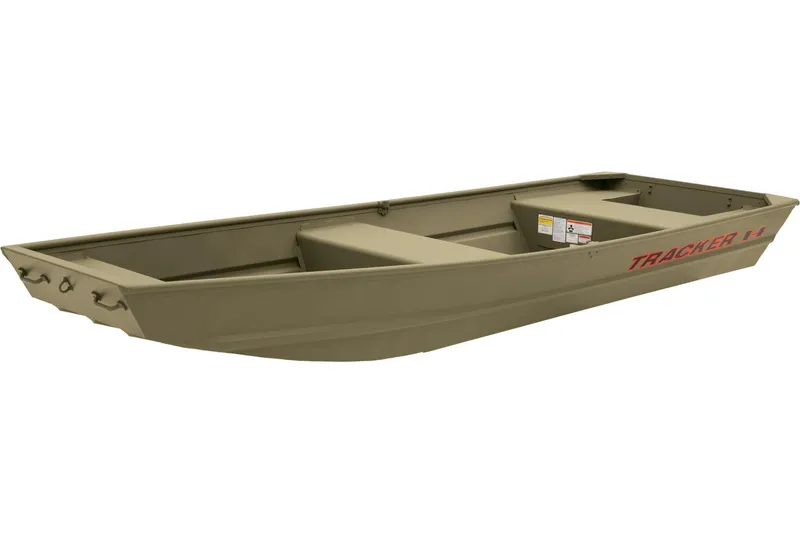
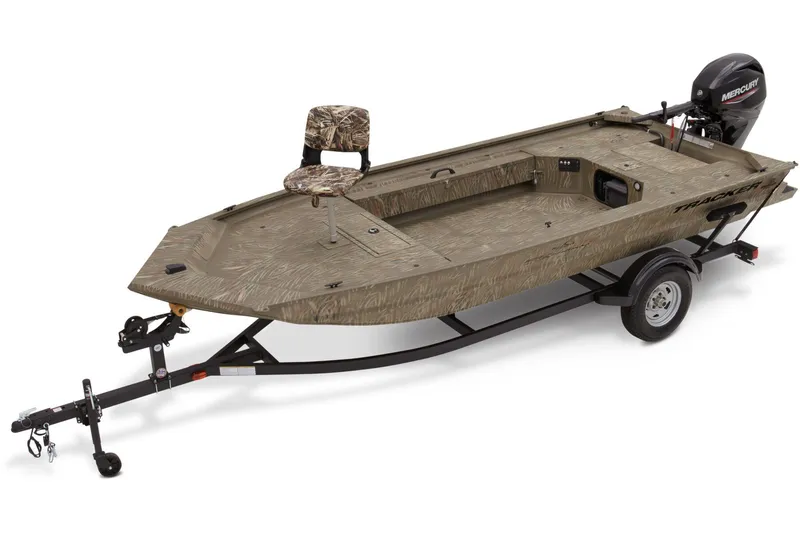
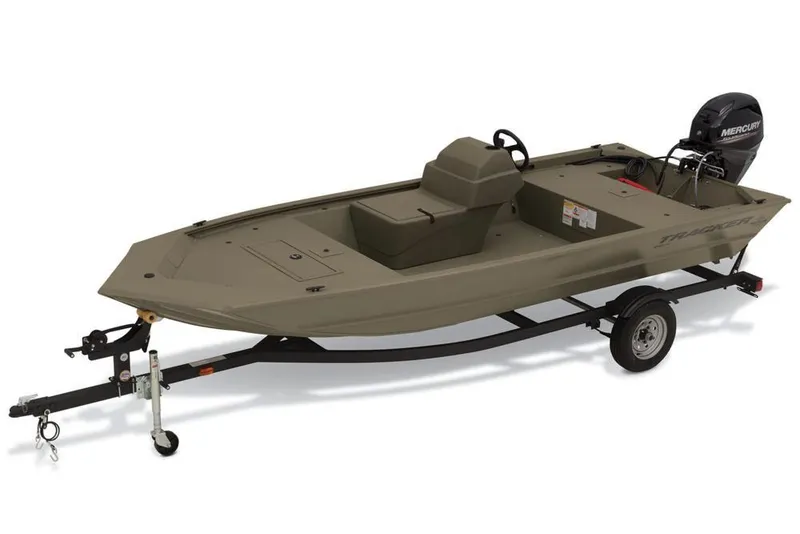
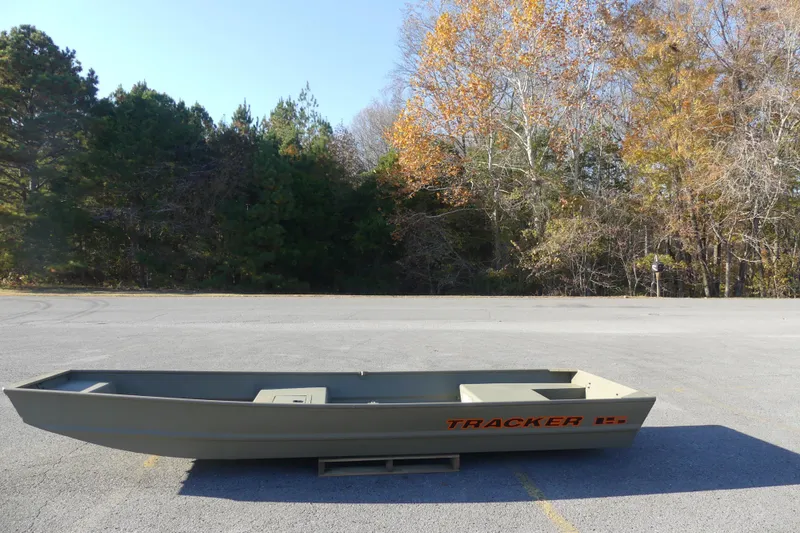
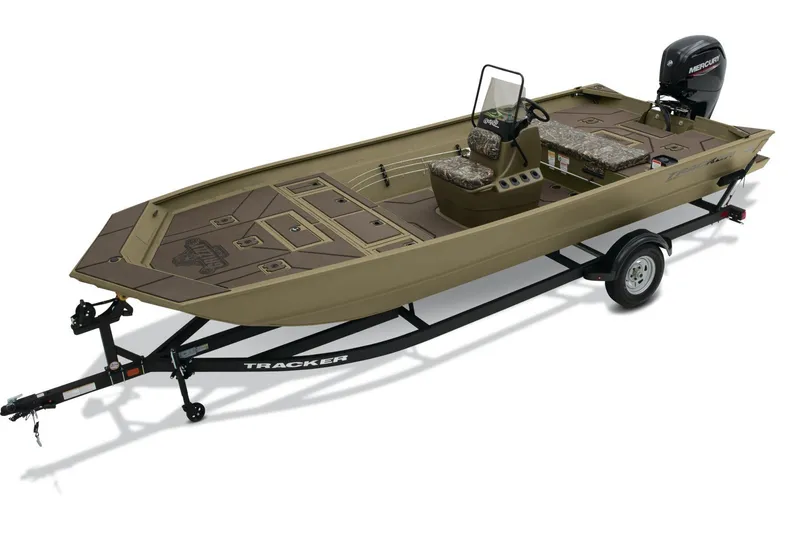
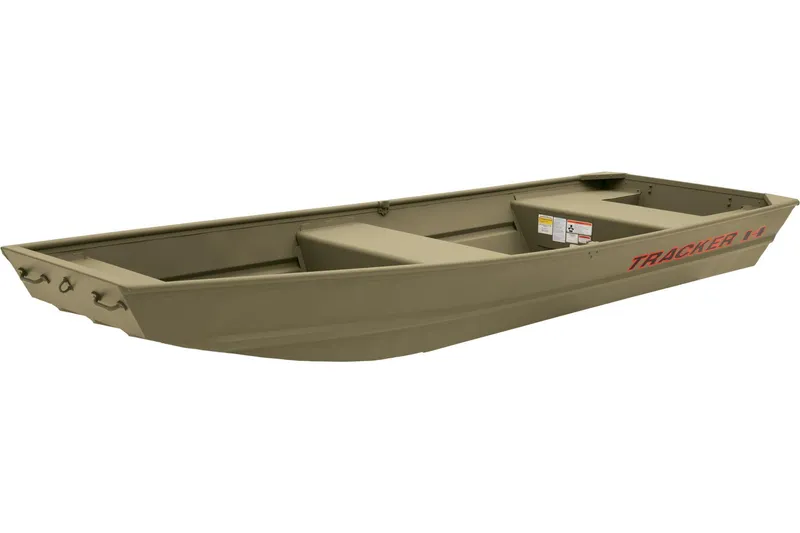
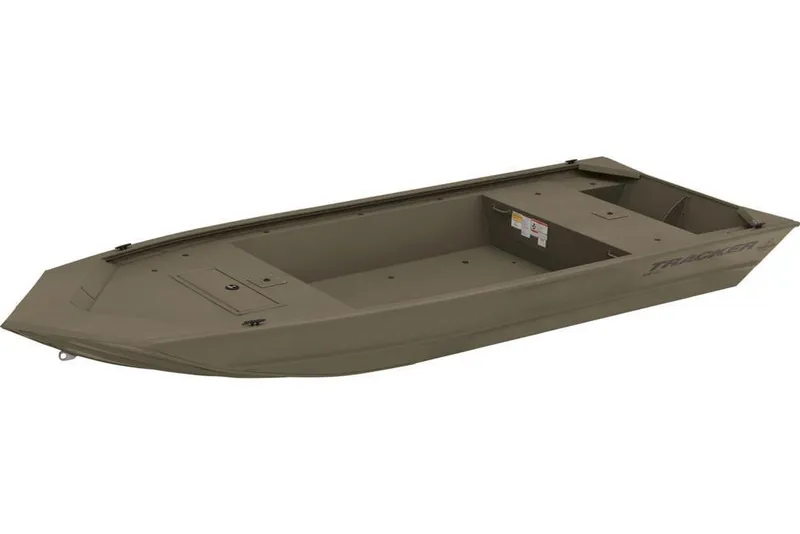
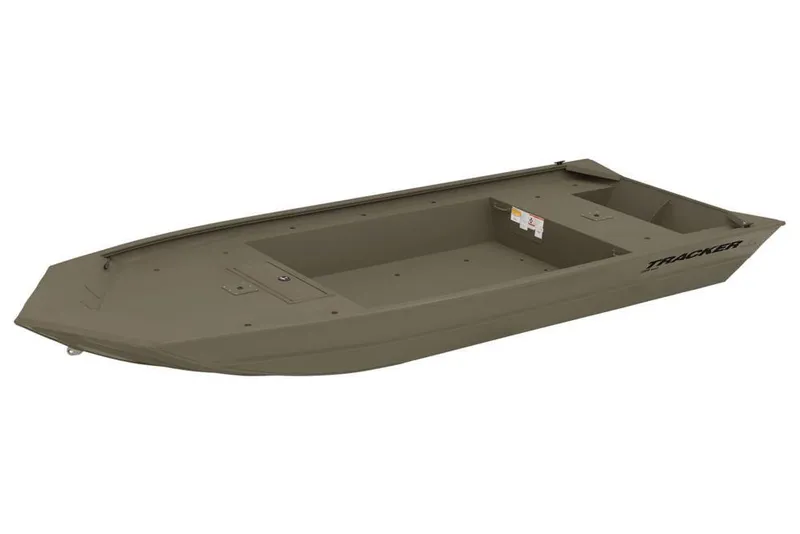
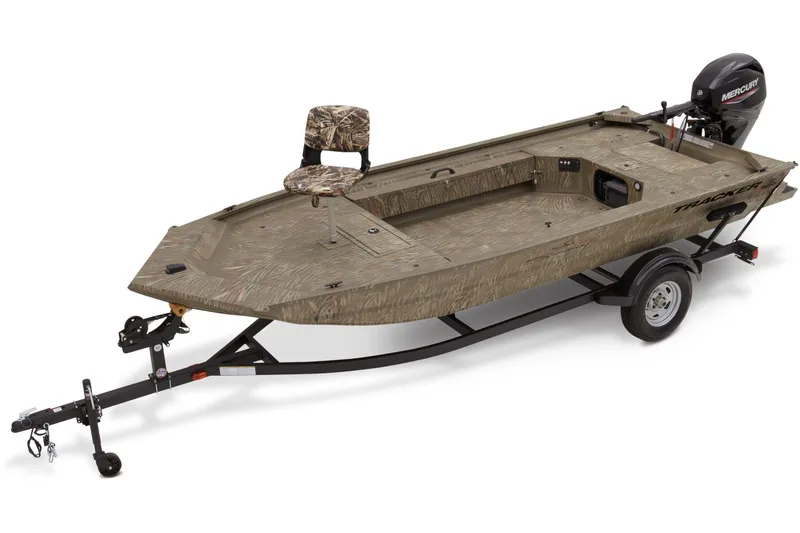
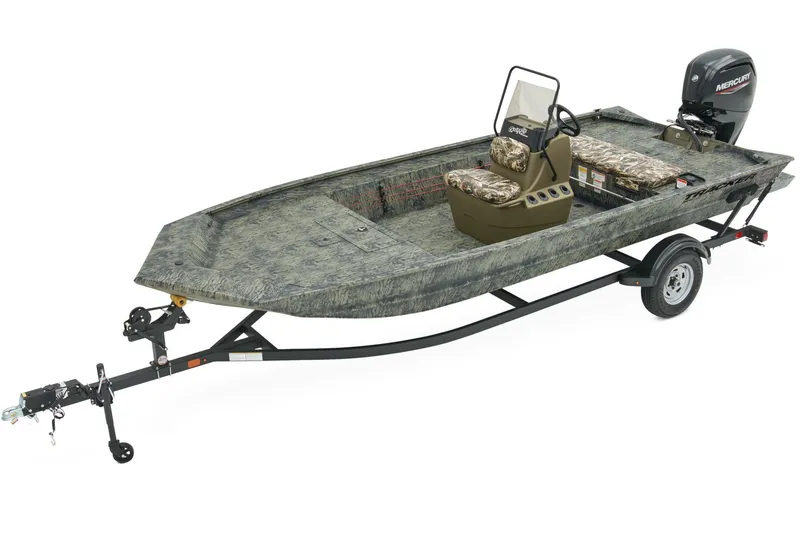
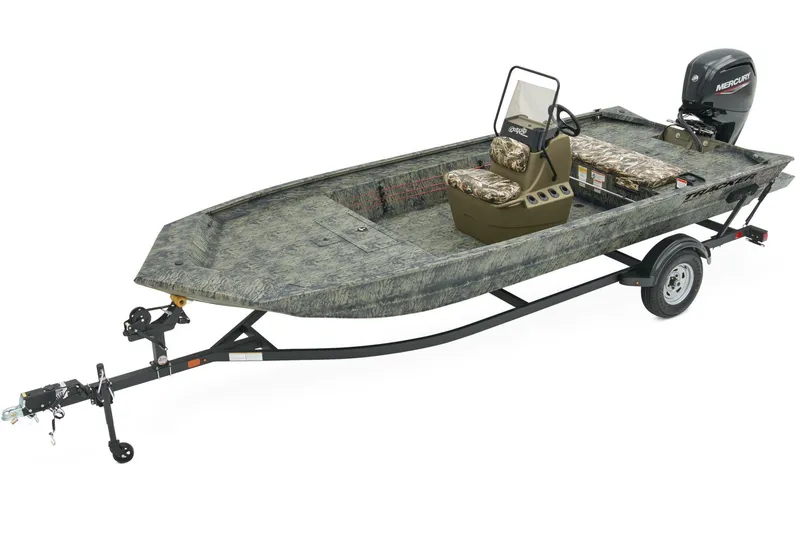
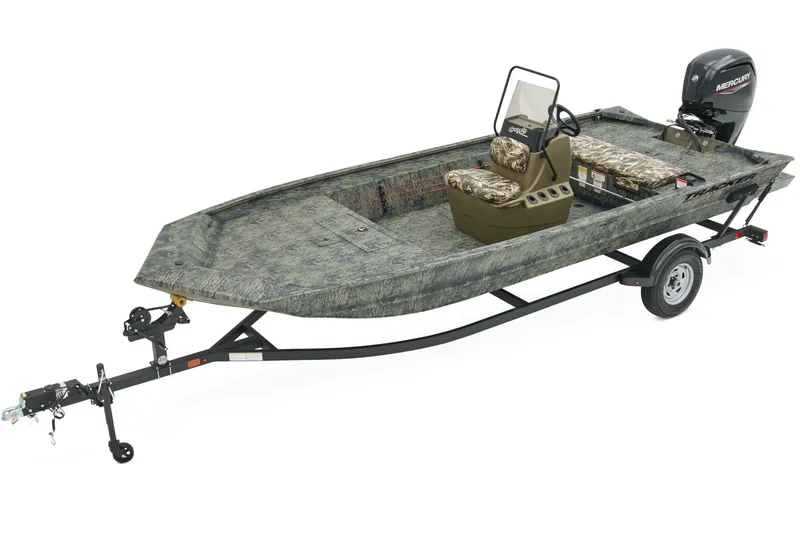
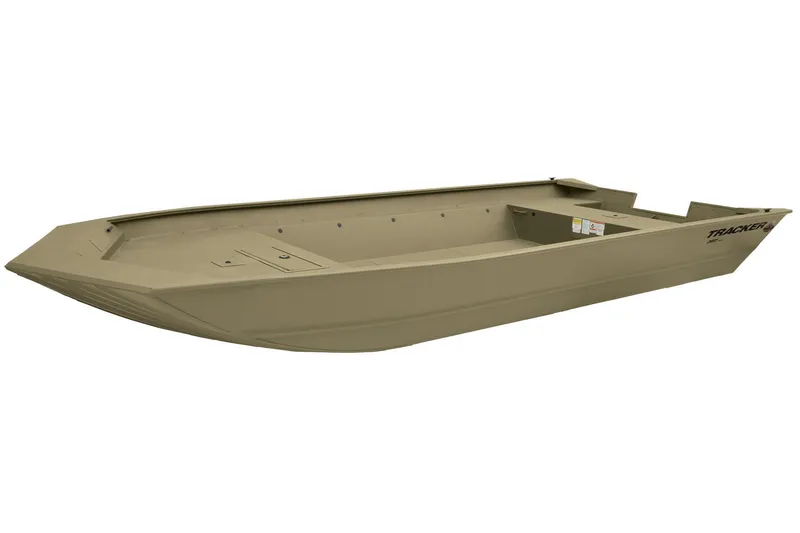
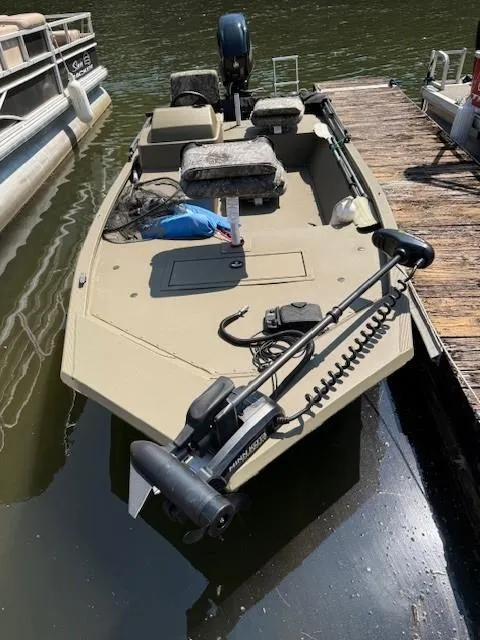
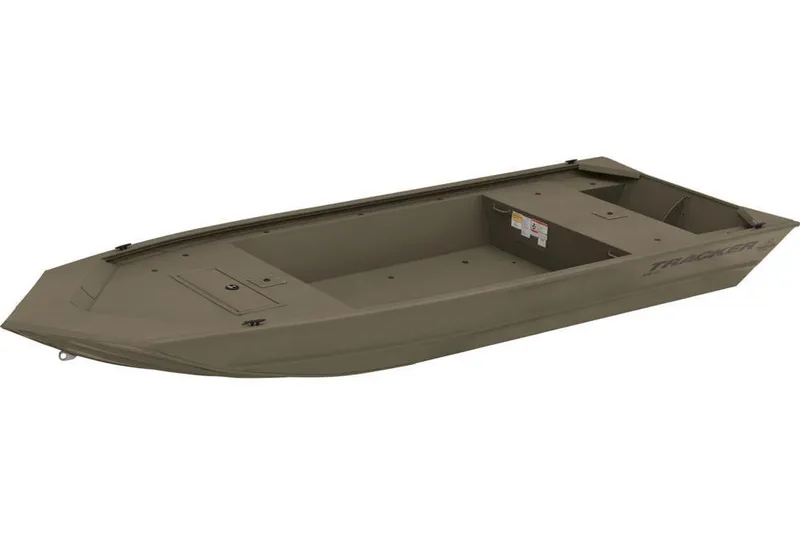
• (Jon boats (GRIZZLY welded flat-bottom & Mod V; utility, hunting, side-console & center-console)) TRACKER’s GRIZZLY line covers rugged, all‑welded aluminum jon boats and utility platforms designed for shallow-water access, durability, and simple interiors that suit work, hunting, bowfishing, and basic fishing. The smallest flat‑bottom jon offerings include compact boats such as the GRIZZLY 10 JON (9'10" LOA) and larger flat‑bottom sizes like the GRIZZLY 12/14/15 JON series, typically intended for ponds, backwaters, and tender/utility use with small portable fuel setups and low horsepower limits. Stepping up, the GRIZZLY Mod V Utility models (such as 1648 UTILITY, 1754 UTILITY, 1860 UTILITY, 2072 UTILITY) add more length/beam, higher capacity, and improved handling for rivers and larger lakes while maintaining open floorplans for gear. For operators who want steering and console layouts, GRIZZLY also offers side-console (SC) and center-console (CC) versions (e.g., 1648 SC, 1754 SC, 1860 CC, 2072 CC), with larger CC models reaching into the 21'5" range (GRIZZLY 2072 CC/UTILITY). Specialty “T” (tiller) and sportsman/marsh-style variants (e.g., GRIZZLY 1654 T SPORTSMAN, GRIZZLY 1756 T MARSH) are oriented toward shallow-water hunting and bowfishing, often emphasizing open layouts, rugged floors, and practical rigging space. Across the GRIZZLY family, power is primarily outboard, with offerings spanning from very small horsepower to substantially higher ratings on the larger CC boats.
HOW ARE THESE BOATS BUILT?
Tracker Boats are built around welded aluminum hull engineering designed for durability, corrosion resistance, and consistent on the water performance. Most TRACKER Mod V and Deep V models use marine grade 5052 H34 aluminum alloy, a magnesium bearing, heat tempered sheet known for strength and long term corrosion resistance in freshwater and brackish environments. Hull panels are formed with pressed strakes and reverse chine geometry where applicable, then assembled as an all welded structure with no rivets, creating a unitized hull. The stringer system is a welded in longitudinal stringer grid that runs full length along the running surface for continuous support, and it is tied into bulkheads, gunnels, and an all aluminum box beam transom. On many models the transom is robotically welded and reinforced with welded corner braces to better distribute engine loads, reduce flex, and improve fatigue life. For safety and stiffness, a two part expanding foam flotation system is injected into hull cavities; this foam increases hull rigidity, helps dampen noise and vibration, and contributes to flotation that meets or exceeds NMMA and U.S. Coast Guard requirements on applicable boats. TRACKER boats carry NMMA Certification, meaning they are built to applicable U.S. Coast Guard regulations and relevant ABYC standards, with annual third party inspections covering systems such as flotation, fuel, electrical, and navigation lights. Because TRACKER is primarily an aluminum builder, resin and gelcoat laminations are not the core structural method as they are with fiberglass boats; instead, the exterior finish is typically a baked on powder coat system on the aluminum hull, and where fiberglass or molded components are used they are produced with standard marine composite practices for durability and UV stability. The hull to deck interface is engineered as a structural joint that integrates the deck structure into the welded hull system, with the deck assembly mechanically fastened and sealed to control water intrusion and squeaks while maintaining serviceability over the life of the boat.
Fit and finish on a TRACKER is designed to hold up to real fishing use, trailering, and long service intervals. Hardware is selected for marine duty, with corrosion resistant fasteners and deck hardware commonly specified in stainless steel, and high load attachment points such as bow and stern eyes, cleats, and seat bases secured with backing support to spread loads into the deck structure. Electrical systems are installed to NMMA requirements aligned with ABYC practices, including properly sized conductors, overcurrent protection, and abrasion resistant protective conduit on wiring runs in high wear areas. Plumbing for livewells and bilge is built around marine grade pumps, smooth hose routing, and secure clamps, with components laid out for access and reliability. Interior and deck surfaces prioritize traction and longevity, using durable non skid textures where needed and pressure treated marine grade plywood decks on many Mod V and Deep V models to retain fasteners, control vibration, and provide a firm platform underfoot, while wood free aluminum construction is used on select jon boat platforms. Tracker’s manufacturing approach blends skilled assembly with advanced production technology, including robotic welding for repeatable, high quality welds on critical structures like stringers and transoms, and precision laser cutting for tight fit aluminum parts that improve consistency before welding. Quality control is supported by standardized work, lean manufacturing methods, and in process inspections that verify fit up, weld integrity, system function, and cosmetic finish, and the NMMA certification process adds an additional layer of compliance verification. Compared to many value oriented aluminum boats, the combination of all welded construction, unitized transom and stringer structure, injected foam flotation, and certified systems design targets higher safety margins, reduced hull flex, and better long term durability. Ownership confidence is backed by the TRACKER Promise 5 plus Life coverage on many models, including a 5 year bow to stern warranty, limited lifetime structural and deck warranty for original owners, and additional coverage such as a 3 year powder coat adhesion warranty. Overall, Tracker boat construction is driven by a build philosophy of rugged, repeatable manufacturing, certified safety, and maximum value, all focused on how Tracker boats are built for years of hard use on the water.
WHERE ARE THESE BOATS BUILT?
Tracker Boats are built in the United States at White River Marine Group’s manufacturing operations in the Ozarks, centered in and around Flippin, Arkansas, with additional Tracker brand production historically tied to the company’s large boat building footprint in nearby Missouri. As part of Bass Pro Shops’ White River Marine Group, Tracker’s manufacturing and production resources are integrated with sister brands built within the same parent company network, allowing shared engineering, purchasing, and process controls while keeping brand specific build standards. While Tracker’s corporate manufacturing presence is strongly associated with Flippin and the surrounding Ozarks region, exact facility square footage and workforce headcount are not publicly detailed in a single authoritative figure on trackerboats.com. In practice, the brand’s boats are built through domestic manufacturing at these Ozarks area facilities rather than being imported, aligning production with a U.S. based supply chain and marine labor pool.
Tracker’s production roots trace to the Ozarks region where modern White River Marine Group boat building scaled up over decades alongside Bass Pro Shops’ growth, consolidating marine manufacturing capabilities close to major freshwater markets and extensive dealer coverage. Over time, the parent company expanded its operational footprint by adding brands and capacity, which strengthened the organization of production into model focused build flows, with dedicated areas for aluminum hull fabrication, outfitting, rigging, and final finish depending on the series being built. Within this manufacturing approach, welded and formed aluminum components, deck and interior assembly, electrical and plumbing installation, fuel system integration, console and seating fit, and engine rigging are handled in coordinated steps designed to keep takt time consistent and reduce rework. Keeping production in the Ozarks also offers practical geographic advantages, including proximity to inland lakes for validation, access to skilled fabrication labor, and efficient logistics lanes for shipping completed boats across the central U.S. Because trackerboats.com does not publish a definitive timeline of facility moves, expansions by year, or square footage additions, those specific expansion metrics should be confirmed directly with White River Marine Group for exact dates and numbers.
Quality control in Tracker boat manufacturing is typically structured around in process checks at each station and a final inspection that verifies hull integrity, fit and finish, electrical function, fuel system sealing, steering and control operation, and hardware torque verification before a boat is cleared for shipment. In aluminum production, consistent weld quality, dimensional checks, and leak prevention practices are essential, and they are reinforced by standardized work instructions, calibrated tooling, and documented inspection points that follow the boat through assembly and rigging. While trackerboats.com does not list specific certifications such as ISO by number, the parent company’s multi brand production environment supports continuous improvement by sharing test procedures, supplier qualification standards, and common component validation across sister brands. That cross utilization can mean faster implementation of improved harness routing, corrosion protection practices, and rigging layouts proven on related models, while still maintaining brand specific build specs. Concentrating production within the same domestic facility network helps keep manufacturing consistency high from hull fabrication through water ready systems testing and final sign off.
In summary, Tracker Boats are built domestically in the United States within White River Marine Group’s Ozarks centered manufacturing footprint, closely associated with Flippin, Arkansas and the surrounding region. That single parent company production network, supported by experienced boat builders and modernized marine manufacturing processes, is designed to deliver repeatable quality across models. Tracker’s commitment to U.S. based production, controlled facility processes, and rigorous inspection is central to how the brand maintains reliability and value in every boat it builds.
WHAT IS THE BIGGEST BOAT OF THIS BRAND BUILT TODAY?
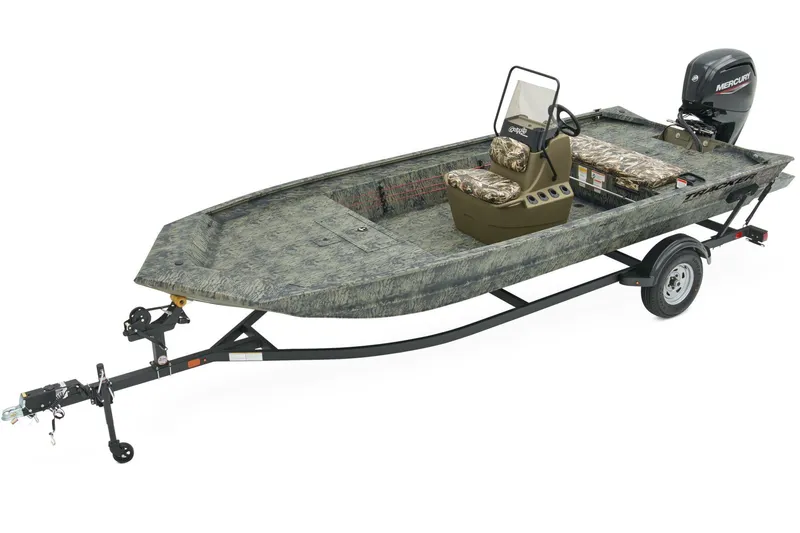
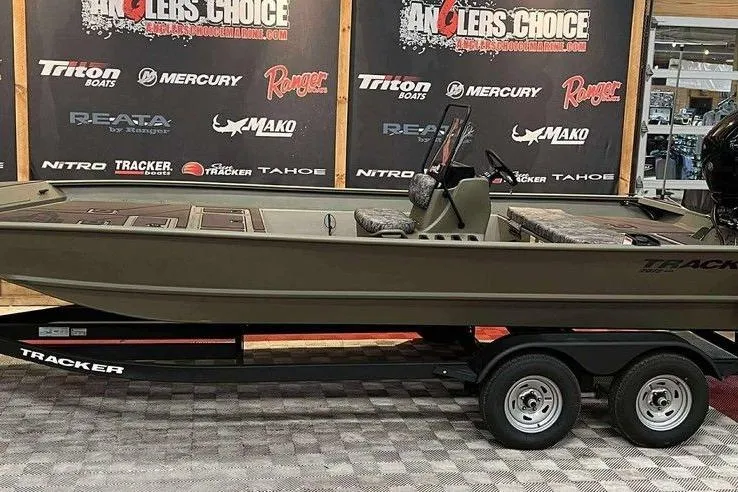
The biggest boat built by TRACKER Boats today is the TRACKER GRIZZLY 2072 CC, which is also TRACKER’s flagship in terms of overall length and interior capacity within the current production lineup. Introduced as part of the modern, all-welded GRIZZLY Mod V center console family, the TRACKER GRIZZLY 2072 CC measures 21' 5" LOA with an 8' 3" beam, giving it a broad, stable footprint for shallow-water work and big-lake utility. Power is a single outboard configuration, rated up to 150 HP maximum, and the factory-rigged package approach typically pairs the platform with an appropriately matched outboard and trailer for a turnkey, value-focused build. Fuel capacity is 19.2 gallons on the TRACKER GRIZZLY 2072 CC, supporting practical run time for day missions that involve long shoreline runs, multiple spots, or covering marsh and river systems. As a Mod V aluminum hull, the TRACKER GRIZZLY 2072 CC is designed to blend shallow draft capability with improved ride and tracking versus a flat-bottom jon boat, and its open center console layout keeps the deck plan flexible for fishing, bowfishing, and workboat duties.
Built for shallow-water versatility more than luxury cruising, the TRACKER GRIZZLY 2072 CC is best described as a tough, do-it-all center console for hunting, utility, and nearshore style fishing where durability and open space matter most. The center console helm layout gives you 360-degree fishability for casting and moving around the boat, and the wide beam helps the boat feel planted when multiple people shift positions or when you are working along banks and structure. For anglers and outdoorsmen, the TRACKER GRIZZLY 2072 CC’s strengths are its open interior and easy-to-rig attitude: it supports adding rod storage solutions, livewell systems where fitted or aftermarket, and deck space for coolers, decoys, or bowfishing gear, while the aluminum build is well-suited to beaching, trailering, and bumping around in stumpy water. At the helm, the practical console arrangement is aimed at clear sightlines and straightforward electronics mounting, and the overall layout prioritizes storage for gear rather than a cabin or enclosed head, keeping maintenance simple and maximizing usable deck area. If you are comparing the largest TRACKER model for big water coverage and big payload without stepping into fiberglass, the TRACKER GRIZZLY 2072 CC stands at the top of the brand’s current lineup as the largest TRACKER model and a true workhorse flagship.
WHAT IS THE SMALLEST BOAT OF THIS BRAND BUILT TODAY?
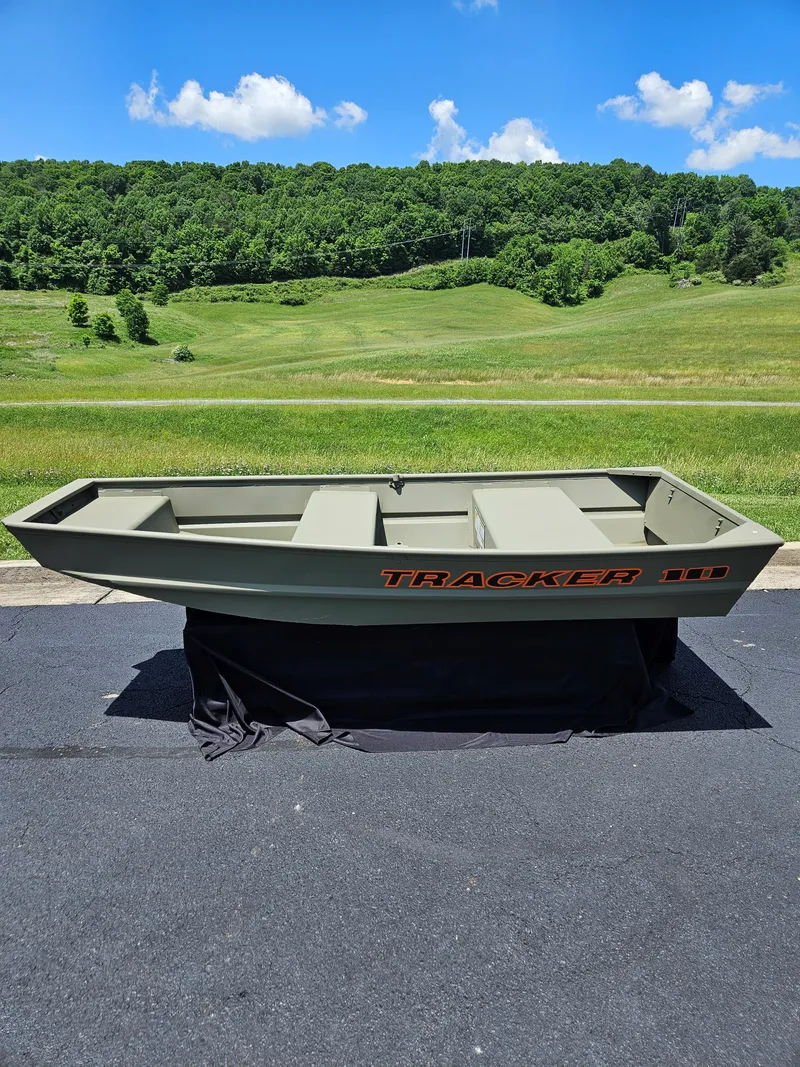
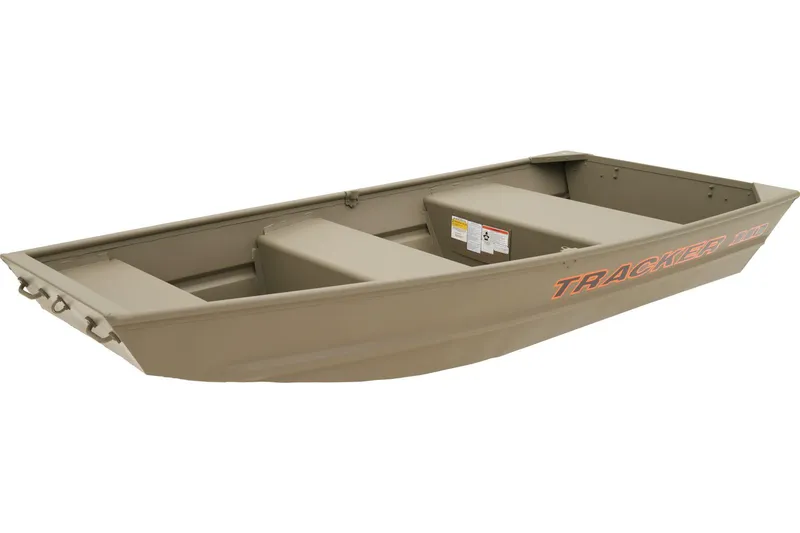
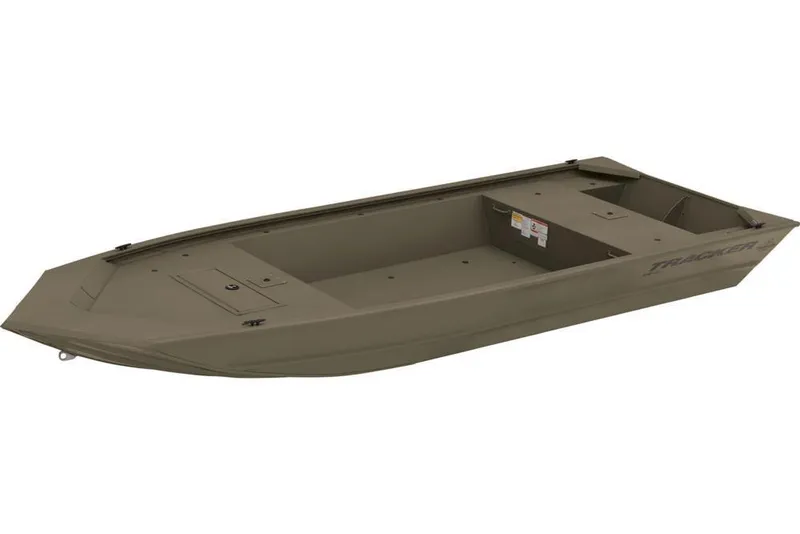
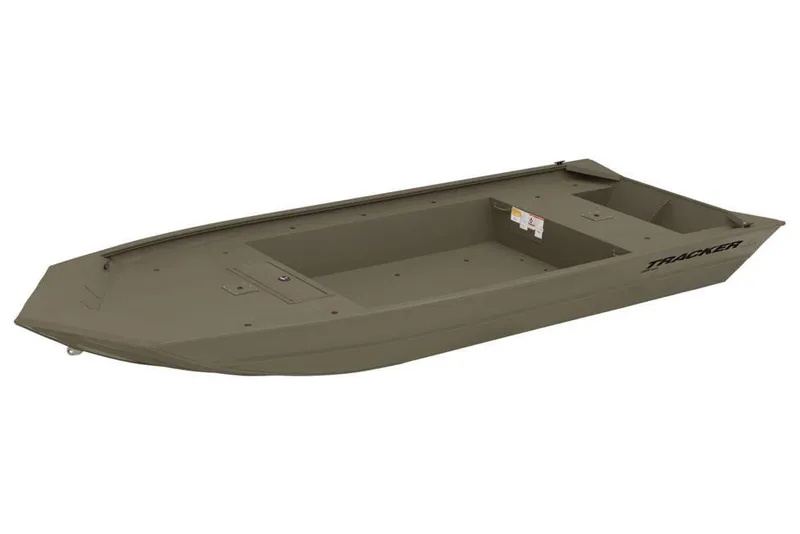
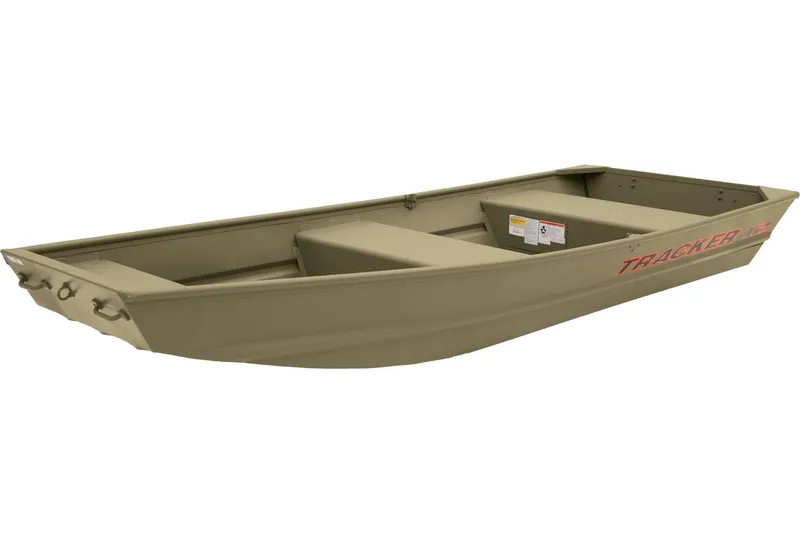
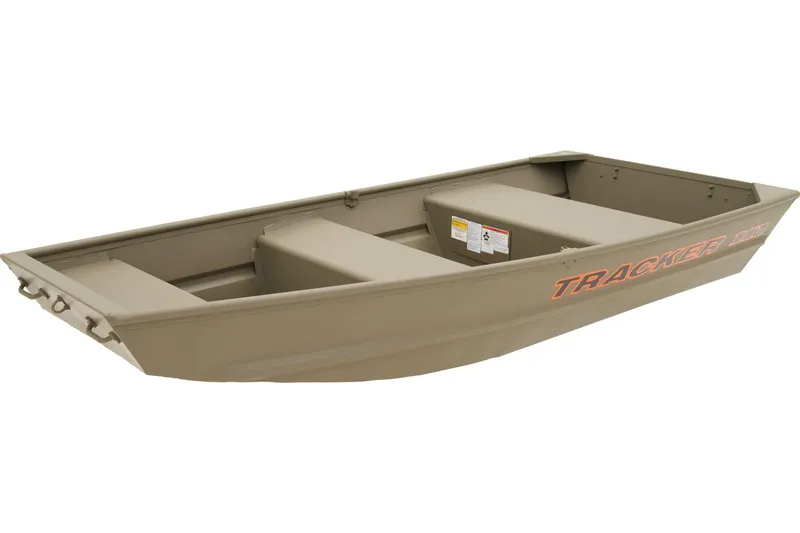
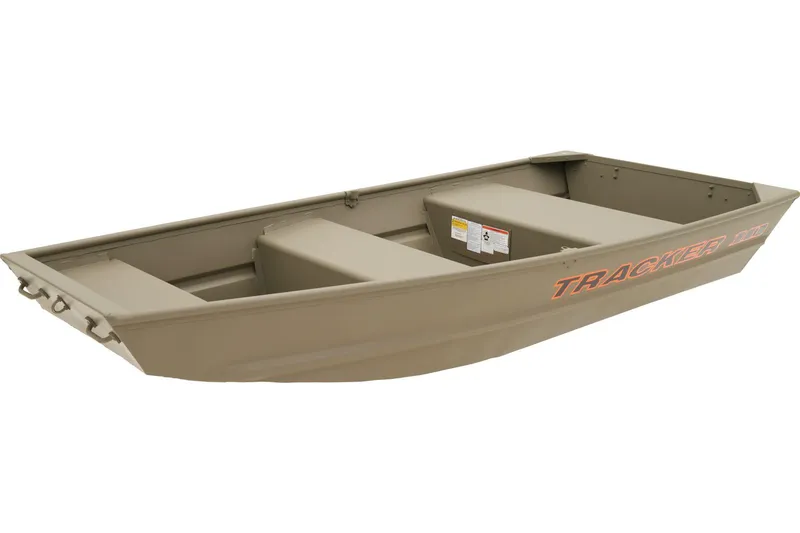
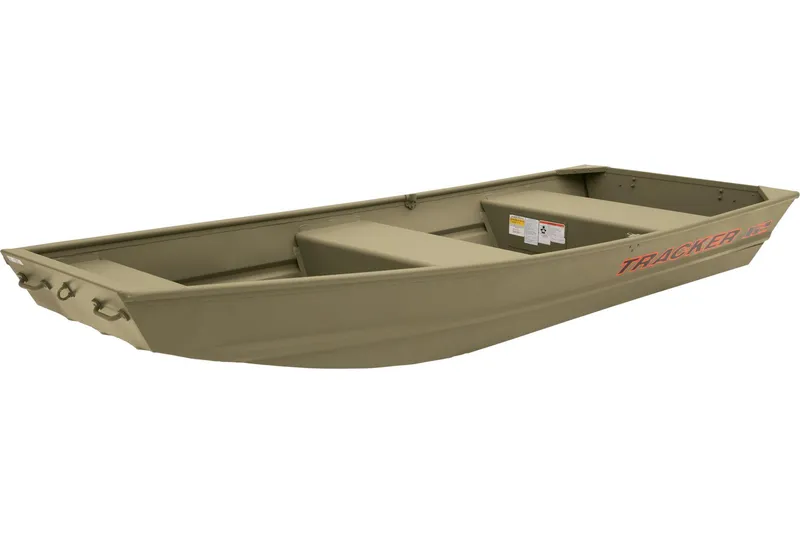
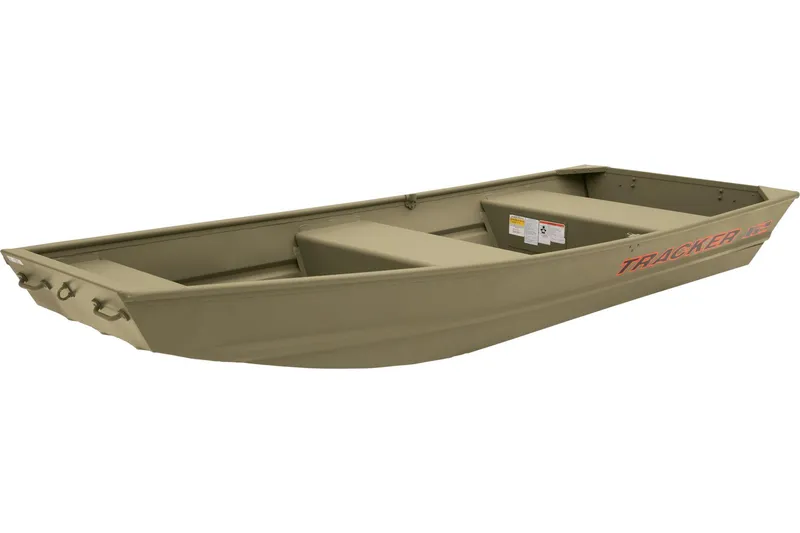
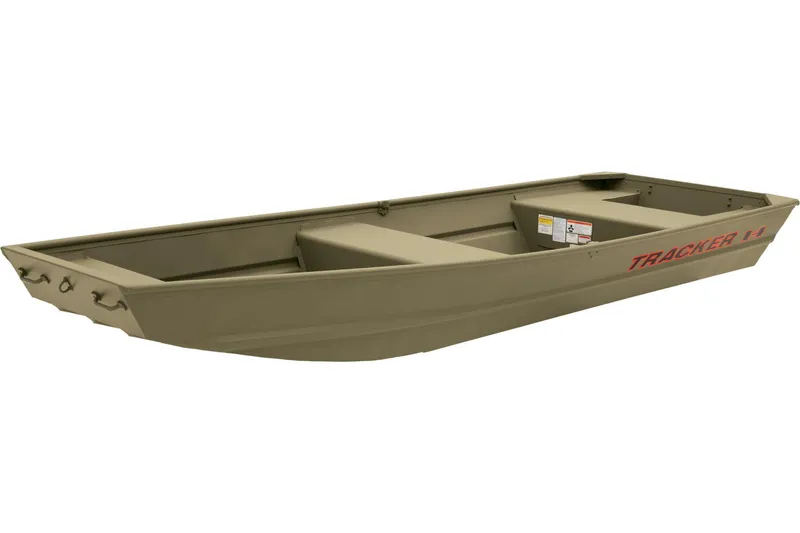
The smallest model in TRACKER Boats's current lineup is the GRIZZLY 10 JON, a compact 9 foot 10 inch welded aluminum jon boat with a 4 foot 4 inch beam and a published draft of 5.75 inches that is built for ultra simple pond, backwater, and small lake access where an easy to handle, easy to store rig matters most; while TRACKER Boats does not list the GRIZZLY 10 JON weight or specific towing capacity in the provided reference, its short overall length and narrow beam make it a natural entry level, minimal fuss choice for trailering behind a wide range of vehicles and even maneuvering by hand at the ramp or around the yard, and with a max 3.5 HP rating and portable fuel setup it is designed to keep ownership straightforward for new boaters and utility minded anglers alike.
As a flat bottom jon boat, the GRIZZLY 10 JON keeps the layout open and utilitarian for maximum usable space in a small footprint, favoring practical carry capacity for gear, decoys, or a light tackle setup over fixed seating and big fiberglass style amenities, and the core value here is TRACKER Boats all welded aluminum durability paired with shallow water capability thanks to its 5.75 inch draft; in the reference data for the GRIZZLY 10 JON, TRACKER Boats does not provide specific seating configuration, passenger capacity figures whether comfortable or USCG rated, construction details beyond the jon boat family positioning, hull technology callouts, fuel tank capacity beyond the portable fuel note, typical engine pairing, or speed and fuel efficiency performance numbers, but what is clear is that the GRIZZLY 10 JON is engineered around simple outboard power up to 3.5 HP for low maintenance, low complexity boating, making the GRIZZLY 10 JON a smart pick for tight storage, quick launch routines, and near shore use cases like checking traps, short runs to a blind, or quietly working calm water edges where a small aluminum fishing boat is an advantage.
HOW MUCH DO THESE BOATS COST?
TRACKER Boats sits in the value focused aluminum segment and, unlike many brands, publishes a nationwide “NO HAGGLE NO HASSLE” MSRP style base price on trackerboats.com for many packaged models. The smallest current model shown in TRACKER’s lineup is the 2026 GRIZZLY 1648 UTILITY, which is listed at 16 feet 1 inch long with a 6 foot beam and a 40 HP max rating, and it carries a published base price of $5,395. In real shopping terms, that GRIZZLY 1648 UTILITY base figure is the hull starting point rather than an out the door total, and current market listings for entry level TRACKER Boats packages (including small Mod V and jon configurations once a trailer, outboard, and dealer setup are involved) typically range from about $6,000 to $12,000 depending on engine choice, trailer inclusion, and dealer added prep and freight.
For mid range, highly shoppable fishing packages, TRACKER Boats pricing becomes easier to compare because many models are sold as boat motor trailer bundles with published MSRP base pricing. On the bass side, the 2026 BASS TRACKER CLASSIC XL is listed at 16 feet 8 inches long with a 6 foot 5 inch beam and a $15,995 base price, while the 2026 PRO TEAM 175 Crappie Edition shows a $24,595 base price and the 2026 PRO TEAM 190 shows a $27,995 base price. When you compare that MSRP style base pricing to market price reality, new units in these families are commonly advertised higher once dealer charges and options are added, with current market listings typically showing the BASS TRACKER CLASSIC XL around $18,000 to $18,500 as equipped and the PRO TEAM 175 Crappie Edition around $25,900 to $28,600 depending on motor choice and electronics packages, while PRO TEAM 190 listings often cluster roughly from $30,000 to $34,000 with variation tied to horsepower, included options, and sometimes unusually low or region specific freight.
At the premium end of the aluminum fishing lineup, TRACKER Boats’ flagship bass and big water Deep V models show the biggest spread between MSRP base price and real market price because they are more frequently optioned with upgraded engines and electronics. TRACKER’s 2026 PRO TEAM 195 carries a published base price of $31,995, and in the Deep V category the TARGA V-19 WT is commonly referenced as a flagship style model, with recent official published base prices in prior model year pages ranging from the mid $40,000s and third party new listing breakdowns showing a $45,995 base on a 2026 TARGA V-19 WT configuration. In today’s market, premium TRACKER Boats in this range generally command about $35,000 to $39,000 for a new PRO TEAM 195 once options, prep, and freight are added, and current listings for the TARGA V-19 WT are often in the high $40,000s to low $50,000s for more typical builds but can reach the mid $60,000s when heavily optioned with larger engine packages and higher end electronics, with hours, motor selection, and model year being major drivers of market price versus the published base MSRP.
Overall, TRACKER Boats cost spans a wide spectrum, from a $5,395 MSRP base price for the 2026 GRIZZLY 1648 UTILITY up through published MSRP base prices around $15,995 for the 2026 BASS TRACKER CLASSIC XL, $24,595 for the 2026 PRO TEAM 175 Crappie Edition, $27,995 for the 2026 PRO TEAM 190, and $31,995 for the 2026 PRO TEAM 195, with new Deep V configurations like the TARGA V-19 WT commonly starting from a mid $40,000 base in advertised package breakdowns. Across multiple current listing sources, the practical market price range for new TRACKER Boats commonly runs from roughly the high teens for entry packaged bass models through the $30,000s for popular PRO TEAM builds and into the $50,000s to $60,000s for larger Deep V and heavily optioned rigs. TRACKER also notes that the main variable beyond the published national price is freight by region, and real listings frequently itemize dealer prep and freight on top of base pricing, so budgeting should allow for these add ons plus taxes and registration. Market prices vary by location, condition, model year, and dealer.
WHAT OTHER STYLES OF BOATS DO THEY MAKE?
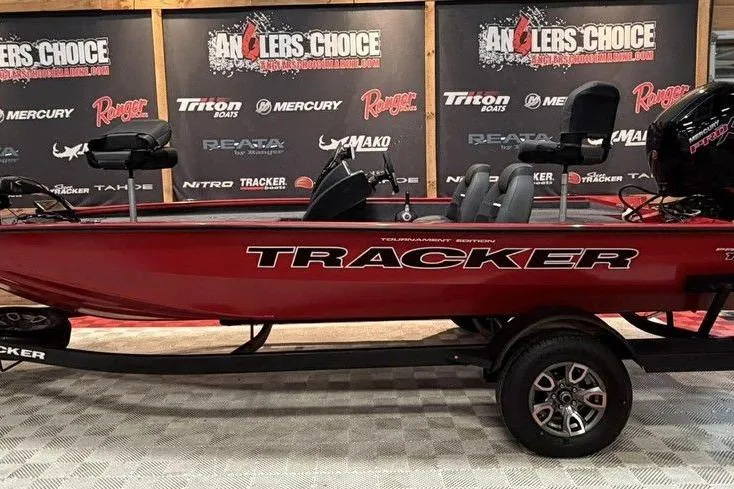
Tracker Boats mainly builds aluminum fishing boat styles, and today that shows up in three big families: Mod V bass boats, Deep V multi-species boats, and welded jon boats. In the Mod V lineup you will see classic bass-boat layouts like the BASS TRACKER Classic XL and PRO 170, plus more tournament-minded rigs like the PRO TEAM 175, PRO TEAM 175 TXW, PRO TEAM 175 TF, and PRO TEAM 195 TXW Tournament Edition, all aimed at bass anglers who want big casting decks, dedicated rod and tackle storage, and easy towing and storage in a package that is typically sold as a complete boat, motor, and trailer setup. For bigger, rougher water and a wider range of species, Tracker’s Deep V lineup centers on models like the PRO GUIDE V-16 SC and the TARGA series, including the TARGA V-18 WT and TARGA V-19 WT for big-water fishing with walk-thru windshield protection, as well as the fish and ski style “Combo” versions such as the TARGA V-18 COMBO and TARGA V-19 Combo that blend fishing functionality with family-friendly seating and watersports hardware like a ski tow pylon. Rounding things out, Tracker’s GRIZZLY jon boats cover everything from small flat bottom jons up through larger Mod V utility and purpose-built center console and side console jons like the GRIZZLY 2072 CC and GRIZZLY 1648 SC, which are popular for shallow-water fishing, hunting, bowfishing, and general utility use in rivers, backwaters, and marshy areas.
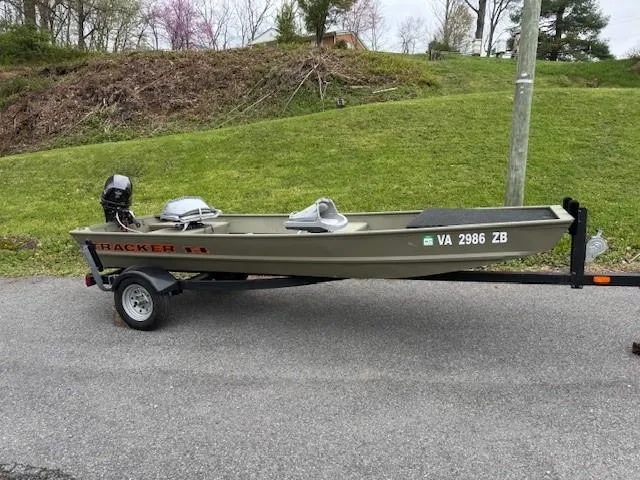
Looking back, Tracker’s “other styles” have largely been variations on those same fishing-first themes rather than a jump into cabins or cruiser designs, with a number of notable models and configurations that have come and gone over the years. On the Mod V side, older Panfish-focused stick-steer boats like the PANFISH 16 (seen in prior model years) helped define the brand’s simple, easy-to-operate approach for crappie and bream anglers, and that concept has since evolved into newer offerings like the PANFISH 17. In the Deep V family, earlier model years included Combo and WT versions across the TARGA line such as the TARGA V-19 Combo, which delivered a multi-species platform that could still pivot to cruising and watersports, and Tracker has also offered special-package variants like the TARGA V-19 Combo Tournament Edition in prior years that added upgraded fishing electronics and tournament-oriented equipment. In the jon boat world, Tracker has a long heritage in lightweight, transportable aluminum jons sold under the TOPPER name, for example the TOPPER 1436 in prior years, and you will still find many of these discontinued Tracker and Topper-branded models on the used market because the straightforward aluminum construction and shallow-water utility keep them relevant for hunters and anglers long after a given model year ends.
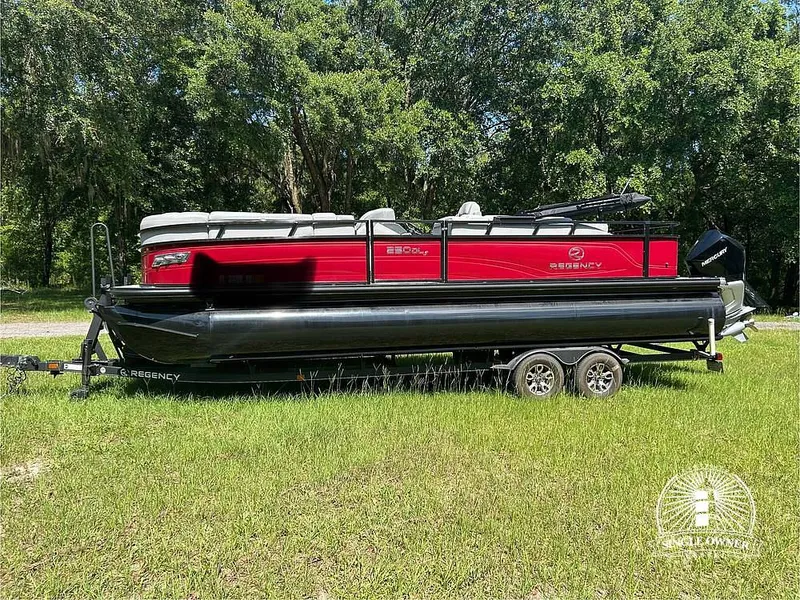
What Tracker Boats does not typically compete in is the broader runabout and luxury recreation space: you should not expect pontoon boats, fiberglass bowriders, dedicated ski and wake boats, or larger cabin cruisers and yachts under the Tracker Boats badge on trackerboats.com, and the brand’s lineup is clearly not built around overnight accommodations like cuddy cabins or express-style cabins. Instead, Tracker stays focused on practical, trailer-friendly aluminum fishing boat designs, ranging from Mod V bass boats to Deep V multi-species rigs to welded jon boats, with layouts that prioritize casting space, storage, durability, and shallow-water capability, and even their more family-oriented “fish and ski” choices like the TARGA Combo models keep the fishing DNA front and center with rod storage, livewells, and multi-species functionality built in.
In short, the “other styles” Tracker Boats makes are best understood as a focused spread across aluminum bass boats, Deep V multi-species fishing boats, fish and ski combo boats, and rugged welded jon boats, with well-known nameplates like BASS TRACKER Classic XL, PRO 170, PRO TEAM, TARGA, PRO GUIDE, and GRIZZLY defining the modern lineup. That mix is a big reason the brand remains so recognizable: each style is tuned to a clear mission, whether that is tournament-ready bass fishing, big-water walleye and multi-species work, family-friendly fishing with watersports capability, or shallow-water hunting and utility. While product details and packages evolve by model year, Tracker’s innovation tends to show up as refinements and smart crossovers inside its core categories, like expanding the Combo concept for more family versatility or updating stick-steer panfish platforms, and that steady, fishing-first strategy helps them keep improving the boat styles that their customers buy Tracker for in the first place.
WHAT KINDS OF ENGINES DO THESE BOATS USE?
Tracker Boats are built around four stroke outboard power, with package boats that are factory paired to Mercury outboards for simple ownership, easy maintenance, and the shallow draft and trim up capability anglers want for ramps, stumpy flats, and skinny river systems. Across the lineup the setup is overwhelmingly single outboard, not inboards, sterndrives, jets, or electric, which matches Tracker’s aluminum fishing focus and keeps weight and rigging straightforward. Smaller Mod V bass boats and utility jon boats run a single portable friendly outboard, while larger Deep V and center console jon models still stay with a single higher horsepower outboard, occasionally complemented by a small kicker on certain fishing packages for low speed control and backup propulsion.
Horsepower scales with hull size and mission, and Tracker publishes max recommended ratings and common factory packages on many models. Entry level rigs like the BASS TRACKER Classic XL are rated up to 50 horsepower, a typical fit for a compact 16 foot package built for economical lake running. Popular mid size Mod V bass packages like the PRO TEAM 175 TXW are commonly sold with a 60 ELPT Mercury FourStroke and carry a 75 horsepower max rating, while stepping up to the PRO TEAM 195 brings true big water bass performance with 150 horsepower options, including a listed 52 to 60 mph estimate with a 150 L FourStroke. For bigger, heavier Deep V fishing hulls such as the TARGA V 19 WT, Tracker rates the transom up to 225 horsepower and commonly packages the boat with a 150 XL FourStroke, giving the torque and fuel range needed for long runs with its larger fuel capacity.
Tracker’s primary engine partner is Mercury, and the brand repeatedly positions its boats as complete boat, motor, and trailer packages that come factory rigged with a Mercury outboard. In current and recent model listings you will see Mercury FourStroke options across multiple families, and in performance oriented bass packages you will also find Mercury Pro XS choices alongside FourStroke offerings. These are modern outboards that emphasize reliability and efficiency, and the package approach is designed to deliver a ready to fish setup with consistent controls and rigging from the factory rather than leaving propulsion decisions entirely to the buyer or dealer. On certain specialty rigs, Tracker has also offered a separate small Mercury kicker motor package in addition to the main outboard for trolling and precise low speed maneuvering.
On the water, the biggest advantage of Tracker’s outboard strategy is practicality: outboards tilt clear of the water for storage, handle shallow water access better than inboards, and simplify service compared with more complex drivetrain systems. The published performance notes on models like the PRO TEAM 195, including its 150 hp Mercury FourStroke capability and estimated speeds when equipped with the larger option, highlight the quick hole shot and solid top end many freshwater anglers want for tournament style runs while still aiming for fuel efficiency at cruise. Keeping propulsion to a single outboard also frees up interior space and keeps overall package weight trailer friendly, which fits Tracker’s value driven, family and fishing first mission. In short, Tracker leans on Mercury four stroke outboard packages, scaling from small 50 hp class rigs to 150 hp bass boats and up to 225 hp rated Deep V hulls, because that formula delivers dependable performance, easy docking and loading, and low hassle ownership for the brand’s core audience.
WHY BUY THIS BRAND OVER A COMPETITIVE BRAND?
When you look at the build quality of TRACKER boats vs competitors in the aluminum segment, the most defensible reason to choose TRACKER is that the brand documents a repeatable, welded, unitized-structure approach backed by a defined factory warranty, rather than relying on vague “tough boat” claims. TRACKER’s own quality and model pages describe Mod V, Deep V and GRIZZLY hulls as “no rivets” and “all welded,” with hull seams, bulkheads, stringers, transom and gunnels joined into one unitized system, and multiple models list a rugged all welded, two piece .100 gauge aluminum hull with pressed in strakes and chines, a welded in longitudinal stringer system for full length running surface support, and a robotically welded all aluminum box beam transom with welded in corner braces to strengthen the structure. On specific GRIZZLY configurations, TRACKER also publishes material thickness and alloy details such as 0.100 5052 marine alloy hulls and thicker floors on certain models, along with claims that the welded hull, stringer, transom and decks form a rock solid, unitized structure built to withstand rough conditions. In practical use, TRACKER further ties construction to comfort and confidence by advertising expanding foam injected into hull cavities for added hull stiffening, flotation and a quieter ride, and by noting heavy duty, one piece extruded gunnels designed for structural strength and rigidity, which together support long term durability and a more solid feel in real conditions rather than flex or rattles over time.
Beyond structure, Why choose TRACKER Boats often comes down to documented value in standard equipment and fish ready practicality, because TRACKER’s own spec lists show many functional systems included from the factory rather than assumed add ons. For example, on Bass and Panfish models the brand advertises a complete electrical baseline that can include bilge pumps, stowable navigation lights, multiple battery trays, Interstate batteries, and a 12V trolling motor harness and receptacle, with wiring protected in abrasion resistant conduit, and the brand also highlights storage and durability details such as all aluminum, flush mount compartment lids designed for a tight fit and long term durability. Many packages also include a custom fit trailer with GALVASHIELD Impact corrosion and chip protection and supporting towing hardware intended to reduce stress and simplify loading, which matters if your fishing boat is trailered weekly. Taken together, these published inclusions support the idea behind [BRAND] boats vs competitors and [BRAND] vs other fishing boats being less about headline pricing and more about the total, ready to use package that supports fishing, day cruising, and frequent trailering without immediately rebuilding the boat with aftermarket basics.
TRACKER also positions itself as a brand that blends utility with comfort by engineering details aimed at multi use days where you may be running spot to spot, sitting at the helm for hours, and then transitioning to relaxed family time on the water. The same injected foam that TRACKER says adds flotation and quiets the ride supports a more comfortable onboard experience, and the brand’s emphasis on structural rigidity from welded stringers, box beam transoms, and heavy duty gunnels helps the boat feel solid when passengers move around. On the fishing side, TRACKER highlights practical “use it hard” features such as durable deck and flooring construction, and on certain salt capable or harsh environment oriented models it promotes protective measures like a TRACKER exclusive protective aluminum anode designed to help preserve the boat in harsh marine conditions. The net effect is a boat that, by the brand’s own documentation, is intended to reduce the compromises between fishability and everyday usability: stable structure underfoot, quieter running, and protective details aimed at longer service life, so owners can realistically use one platform for serious fishing and casual cruising rather than needing separate purpose built rigs.
Finally, customer satisfaction with TRACKER and long term ownership confidence are not left to inference because TRACKER publishes both third party program participation and specific warranty terms. TRACKER states it has earned the NMMA Customer Satisfaction Index CSI Award for Excellence in Customer Satisfaction in Aluminum Outboard Boats for 12 consecutive years, based on owner survey results reporting satisfaction ratings of 90 or higher on a 100 point scale, and it also states that every TRACKER boat carries the NMMA Certified label, indicating the boat was built to meet and often exceed U.S. Coast Guard and ABYC standards across multiple safety and systems categories and is subject to annual independent inspections, with U.S. Coast Guard statistics cited by NMMA indicating certified boats are safer than non certified boats. On the support side, the TRACKER Promise 5 plus Life warranty is detailed as a five year bow to stern parts and labor warranty for defects in materials and workmanship on many components, plus a limited lifetime structural and deck warranty for the original owner covering key structure including the hull, ribs, transom, exterior welds and decking, with provisions for transfer to a second owner within five years to support resale value and a one stop dealer handled warranty process with no prorating described. If you want a clear, fact based reason to buy TRACKER over a competing brand, the strongest case is that TRACKER pairs specific, published welded construction methods with documented NMMA certification, a long running CSI record, and a defined warranty and transfer framework, creating a balanced ownership proposition of performance, reliability, and long term value rather than only focusing on the initial purchase price.
WHAT IS THE MOST POPULAR MODEL OF THIS BRAND BEING BUILT TODAY?
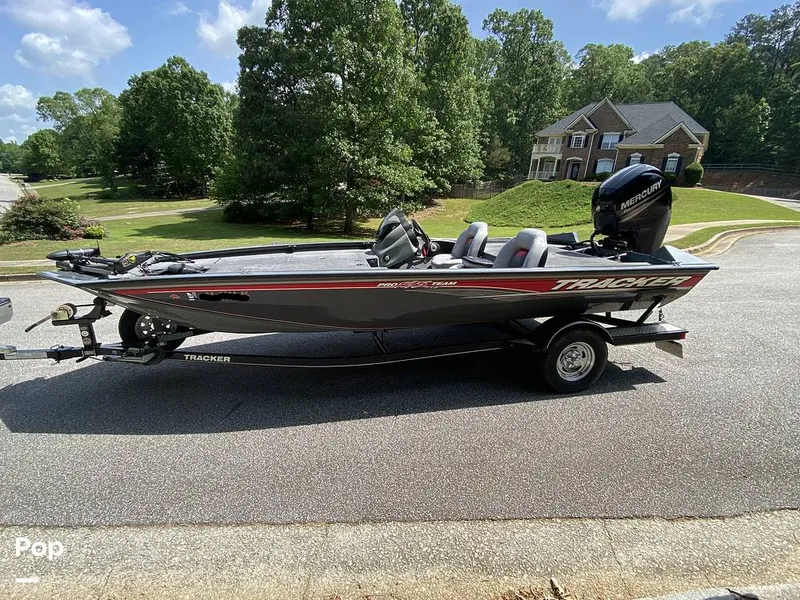
Based on what TRACKER Boats states and emphasizes on trackerboats.com, the model that can be most defensibly described as the brand’s current popularity leader is the PRO TEAM 175, a 17' 7" Mod V aluminum bass boat. TRACKER explicitly calls the PRO TEAM 175 “one of our most popular models,” which is the closest the manufacturer comes to an on the record popularity claim for a specific boat in today’s lineup. It also sits in the heart of TRACKER’s bass lineup as a value oriented, feature rich package that is marketed as tournament ready while still accessible for first time buyers, making it a classic sweet spot model by size, capability, and price positioning in the brand’s Mod V category.
In current published specifications, the PRO TEAM 175 measures 17' 7" in length with a 7' 5" beam and a 12" draft, carries 21.5 gallons of fuel, and is rated for 4 persons, with a maximum recommended 75 HP. TRACKER’s standard equipment highlights why this model is broadly appealing: huge casting decks, abundant storage, and a 21 gallon aerated, divided, timed livewell, plus a packaged Mercury FourStroke outboard and Minn Kota trolling motor, with factory installed electronics listed as a Lowrance HOOK Reveal 5 color fishfinder plus GPS. For propulsion and performance expectations, TRACKER lists multiple Mercury FourStroke options with estimated speeds of about 35 to 37 mph with the 60 and about 40 to 41 mph with the 75, giving buyers a clear up power path without leaving the platform.
The buyers who most often gravitate to the PRO TEAM 175 are anglers who want a true bass boat layout without the cost, towing demands, or storage footprint of a larger rig, along with families who still want an easy to own package that can fish a variety of waters. TRACKER positions the boat around tournament style fishability and overall value, and its deck and storage emphasis supports that dual need: forward and aft elevated casting decks for serious time on the trolling motor, rod and tackle storage to stay organized, and a divided livewell system to keep fish healthy. At the same time, a four person capacity and the all welded aluminum approach make it a practical, durable choice for the broad middle of the market that wants one boat to cover weekend fishing, casual cruising between spots, and multi species trips.
From an availability and investment standpoint, the PRO TEAM 175 is presented on trackerboats.com with a build and pricing path through dealer selection and package motor choices, which is a strong indicator that it is a core, actively produced model in the lineup rather than a niche configuration. TRACKER’s own description also points to ongoing product support by highlighting a proven legacy and a bundled, turnkey rig that includes boat, motor, and trailer, reinforced by the TRACKER PROMISE warranty messaging that is featured prominently in the model’s materials. While the company does not publish unit volumes publicly, the combination of an explicit “most popular” statement, a mainstream 17 foot class size, and a value focused package strategy explains why the PRO TEAM 175 functions as a signature TRACKER offering for buyers who want maximum fishability per dollar in a manageable aluminum platform.
WHAT IS THE HISTORY OF THIS BOAT BRAND AND COMPANY?
TRACKER Boats traces its beginnings to 1978 in Springfield, Missouri, when Johnny Morris and his father, John A. Morris, set out to build what they described as the world’s first completely outfitted fishing boat package, conceived as a ready to fish combination of boat, trailer, and outboard with essential electronics and trolling motor selected and rigged as an integrated system rather than left to buyers to piece together after the sale. According to the brand’s own history, Bass Pro Shops invested more than two years visiting boat shows and boatbuilders across the United States to develop the first BASS TRACKER aluminum fishing boat, and at the same time pioneered a matched trailer built for a specific boat so the complete package could be delivered with consistent fit and performance while still driving affordability through volume. From the start, the brand positioned its early models as dependable fishing machines aimed at maximizing function for anglers, and this founding emphasis on a purpose built layout, standardized rigging, and value oriented national marketing became the core identity that would define the TRACKER name for decades.
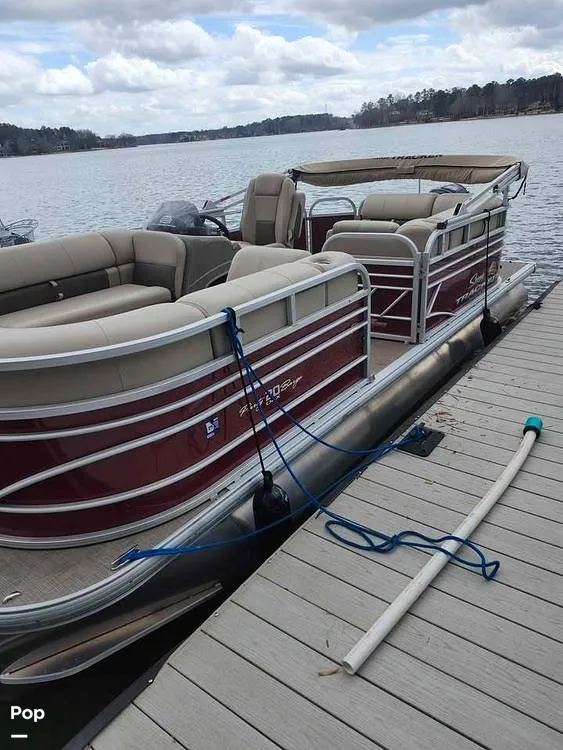
Over the ensuing decades, TRACKER grew from that original packaged aluminum bass boat concept into a broader family of fishing and recreational products under the Bass Pro Shops marine manufacturing organization now known as White River Marine Group, which is based in Springfield and states that it designs and manufactures boats in the United States while maintaining TRACKER as America’s number one selling fishing boat brand for more than 40 years. Alongside the expansion of its model range, the company formalized ownership and manufacturing scale within White River Marine Group and emphasized a factory direct approach that it says reduces middleman costs by combining manufacturing and retail distribution, supported by high volume purchasing and in plant rigging by trained personnel. The Ozarks became a key manufacturing hub for this growth, and by 1988 the company had a Bolivar, Missouri plant associated with SUN TRACKER pontoon production, with SUN TRACKER described by the company as first introduced in 1983 and ultimately becoming the most owned pontoon brand by families, establishing a parallel track of growth in pontoons while TRACKER continued to build out its aluminum fishing lineup.
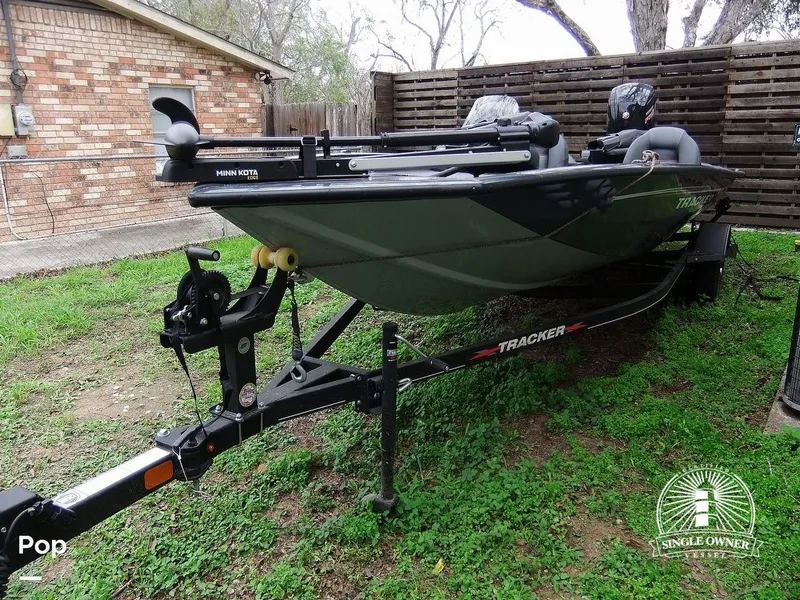
In the modern era, TRACKER’s product development has been closely tied to manufacturing methods, construction details, and standardized warranties that reinforce its original total package promise, including factory backed coverage marketed as the TRACKER Promise 5 plus Life warranty on eligible models with five years of bow to stern coverage and a limited lifetime structural and deck warranty for the original owner, plus additional provisions such as coverage for DIAMOND COAT powder coat adhesion and transfer terms that support resale value. The company also highlights construction features and layouts that align with tournament and family use cases, such as Mod V models promoted with tournament style deck arrangements conceived with input from tournament professionals, and manufacturing descriptions that include a fully welded one piece hull protected with a DIAMOND COAT finish and a robotically welded longitudinal stringer system intended to unitize and support the hull and transom. Alongside boats, White River Marine Group extended the TRACKER name into adjacent outdoor segments in 2019 by partnering with Textron to create the TRACKER OFF ROAD lineup, reflecting a broader corporate strategy to leverage the brand’s manufacturing and retail ecosystem to serve customers pursuing fishing, boating, and outdoor recreation through integrated equipment offerings.
Recent developments have focused on scaling capacity and reinforcing long term demand for value oriented pontoons and entry friendly fishing platforms, highlighted by White River Marine Group announcements that TRACKER would significantly expand in Bolivar, Missouri by acquiring and converting a warehouse into a manufacturing plant and constructing a new adjacent building as part of a plan to roughly double the brand’s local manufacturing footprint, followed by the opening of a newly expanded facility in Bolivar on March 22, 2021 that began producing SUN TRACKER pontoon models including the Bass Buggy 16, Bass Buggy 18, and Party Barge 18 while creating hundreds of jobs as production ramped. At the same time, the company has continued to use heritage and anniversary storytelling to connect current products to the original late 1970s breakthrough, as seen in a December 15, 2017 announcement celebrating 40 years with a limited edition Bass TRACKER Heritage Edition designed to salute the founding spirit of affordability and national package marketing. Taken together, these official milestones show a brand that still defines itself around a factory rigged, nationally marketed boat motor trailer package philosophy, expanded into multiple boat categories under White River Marine Group’s scale in the Ozarks, and continues to invest in facilities and standardized ownership confidence programs that support its position as a high volume American builder with a legacy rooted in accessible fishing focused design.
AWARDS AND RECOGNITIONS
Among the most consistently documented recognitions for TRACKER Boats are those tied to verified, third party marine-industry programs rather than one-off promotional accolades. While TRACKER’s current manufacturer site emphasizes ongoing quality programs and owner satisfaction, the clearest, independently verifiable honors trace through the National Marine Manufacturers Association (NMMA) Customer Satisfaction Index program, which has long been one of the industry’s most visible benchmarks. NMMA press releases for earlier program years list TRACKER among the CSI Award recipients in the Aluminum Outboard Boats category, including the 2017 CSI Awards (announced in February 2018), the 2018 CSI Awards, the 2019 CSI Awards, the 2020 CSI Awards, and the 2021 CSI Awards, each time recognized within the same aluminum outboard category. In addition to these formal awards, TRACKER also highlights that its boats carry the NMMA Certified label, a standards based certification tied to U.S. Coast Guard and ABYC criteria and verified via independent inspections, which supports brand recognition around safety and build processes, even though certification itself is distinct from an editorial or judged product award.
TRACKER’s strongest repeat recognition is its NMMA CSI Award performance. On its official CSI Awards page, TRACKER states it has earned the NMMA Customer Satisfaction Index Award for Excellence in Customer Satisfaction in Aluminum Outboard Boats for the 12th consecutive year. This matters because the NMMA CSI program is built around post purchase customer surveys of new boat owners, and the manufacturer page specifies that the recognition reflects thousands of owners reporting satisfaction ratings of 90 or higher on a 100 point scale. NMMA’s own CSI program communications reinforce that the award is based on independently measured customer satisfaction results collected through broad buyer surveying, making it a credibility driven indicator rather than a marketing slogan. Taken together, this record positions TRACKER’s brand reputation around two pillars buyers often prioritize: consistent owner satisfaction over time and disciplined adherence to widely recognized marine safety and construction standards, which helps reinforce long term trust in product quality and the overall ownership experience.