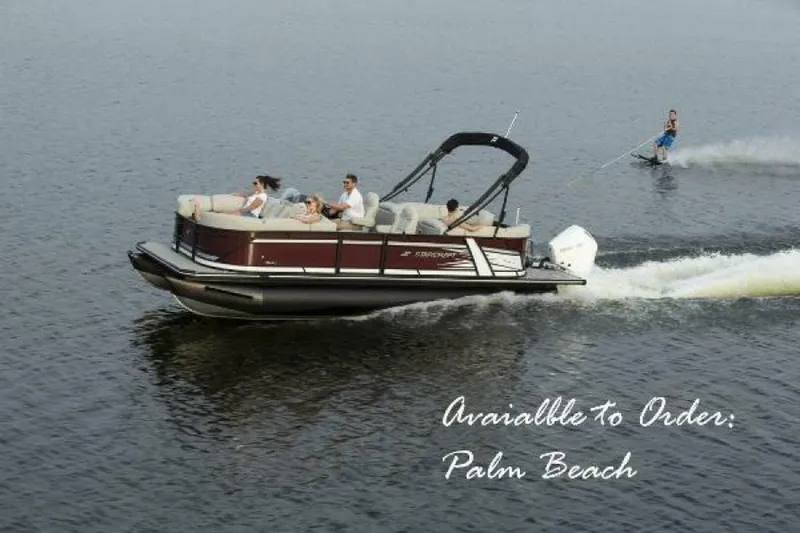
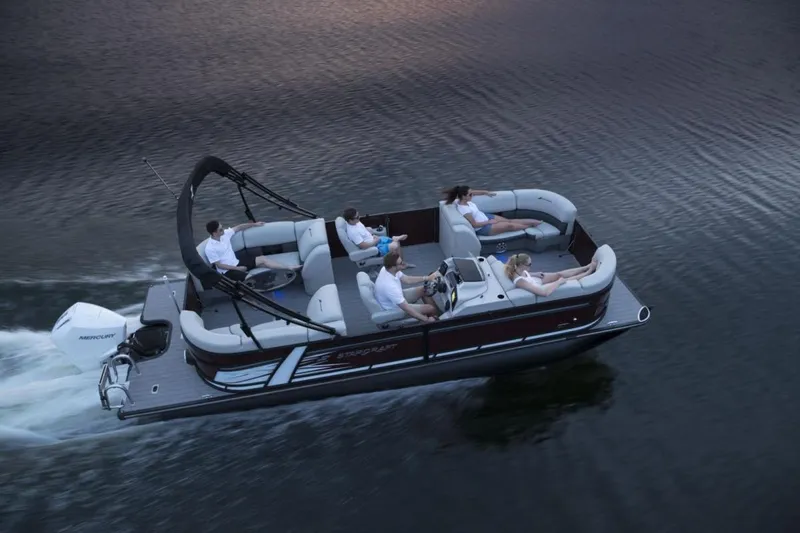
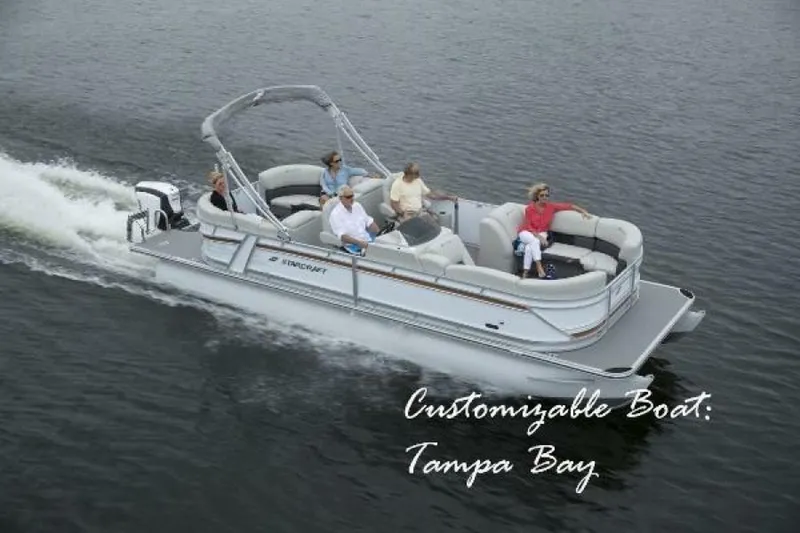
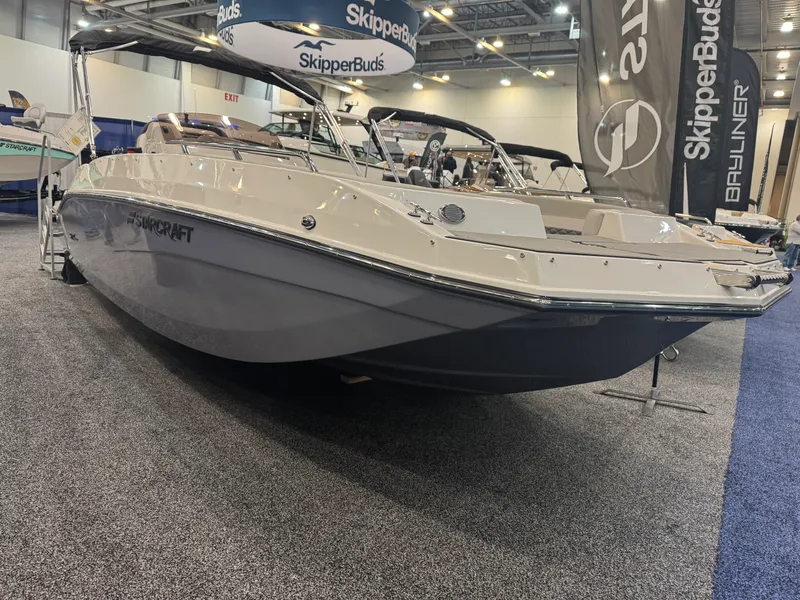
Starcraft
Searching boats for you...
Starcraft – Technical and Historical Guide
ABOUT THIS BOAT BRAND
Starcraft is an American boat manufacturer renowned for building durable, value-focused aluminum fishing boats and family pontoons backed by a long Midwestern boatbuilding heritage dating to 1903. The Starcraft philosophy centers on practical layouts, lightweight yet rugged aluminum construction, and owner-friendly design choices that emphasize easy towing, straightforward maintenance, and fishability without unnecessary complexity. Over more than a century in production, Starcraft has become one of the best-known legacy names in U.S. aluminum boats, with a broad national dealer network and consistent demand in freshwater markets. As part of Smoker Craft, Inc., Starcraft benefits from stable, family-owned manufacturing continuity and shared expertise in welded aluminum hulls and pontoon production. That combination of longevity, parent-company backing, and a large installed base makes Starcraft a trusted, established player in the North American marine industry.
Specializing in outboard-powered freshwater boats, Starcraft serves serious anglers, weekend lake families, and first-time buyers who want straightforward performance in center console fishing boats, tiller and side-console multi-species rigs, and pontoon boats for cruising and watersports. Core lineups commonly include aluminum fishing models such as the Renegade, Stealth, and Delta series, alongside wide-deck pontoons designed for social space and stability. Across these platforms, Starcraft typically focuses on welded or riveted aluminum hull construction, variable-deadrise running surfaces for efficient planing, wide-beam stability, and thoughtful interior storage like rod lockers, under-seat compartments, and dedicated tackle organization. Practical rigging details often include integrated transom systems for modern outboards, cockpit-ready electronics mounting areas, livewell-capable fishing layouts, and robust trailer packages configured for highway towing. This specialization keeps Starcraft competitive for multi-species anglers and family boaters who prioritize dependable aluminum platforms and predictable ownership over flash, making Starcraft a preferred choice on inland lakes and rivers.
WHAT MAKES THIS BOAT BRAND SPECIAL?
Starcraft stands out by pairing proven hull engineering with smart, family-first layouts across its deck boats, fishing boats, and pontoon lineups. Many Starcraft models leverage an all-welded aluminum construction approach, which keeps weight manageable while resisting corrosion and fatigue for owners who trailer often or boat in brackish water. On the water, Starcraft hulls are tuned for predictable handling and efficient planing, with strakes and chines (those running surfaces along the bottom and edges of the hull) designed to add lift, track straight, and soften the ride when the lake chops up. The result is the kind of confidence buyers look for when searching “easy-to-handle family boat” or “aluminum fishing boat that rides smooth,” plus practical touches like wide casting areas, rod and tackle storage, deep cockpit freeboard for security, and thoughtful seating and swim platforms for all-day use.
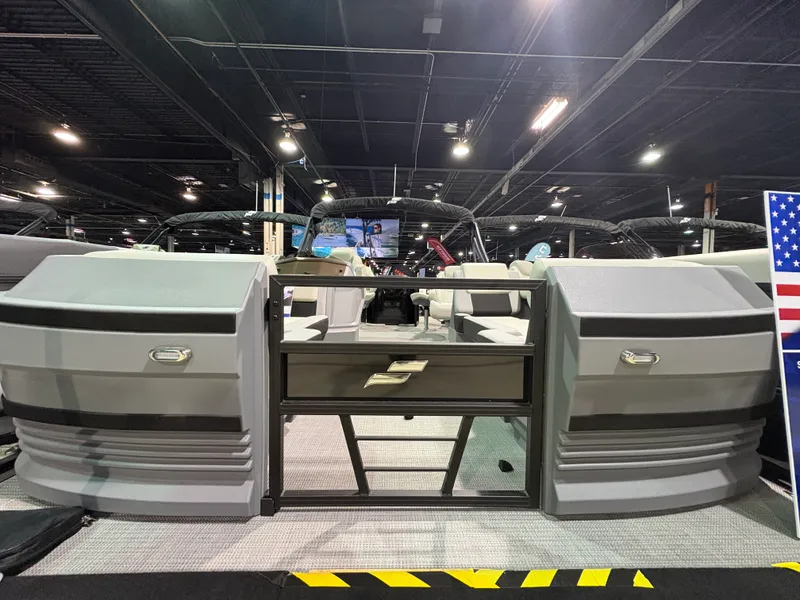
Starcraft boats are built in the American Midwest, where a long, hands-on production culture shapes the fit and finish buyers notice at the ramp. The Starcraft team combines experienced welders, rigging technicians, and quality inspectors who understand what matters after a few seasons: clean weld beads, consistent panel alignment, protected wiring runs, and hardware that stays tight. Throughout the range, Starcraft emphasizes premium marine-grade aluminum, durable interior vinyls, and carefully selected fasteners and sealants, then pairs that material standard with documented quality processes and compliance with common U.S. marine safety expectations. Starcraft backs the ownership experience with brand-supported warranty coverage that reinforces long-term value, and owners often describe Starcraft as a practical, trustworthy choice that feels a step above entry-level while staying attainable for families and serious anglers alike.
WHAT DIFFERENT TYPES OF BOATS DOES THIS BOAT BRAND BUILD?
Starcraft builds a broad lineup that spans pontoon boats, deckboats, fishing boats, and utility boats, giving buyers options for everything from laid-back cruising to serious time on the water. Across the range you’ll find outboard-powered designs throughout the pontoon, fishing, and utility segments, plus deckboat choices that include both outboard and inboard/outboard configurations. Size-wise, the smallest models referenced are 16-foot offerings, while the largest mentioned reach 25 feet, covering compact, easy-to-own rigs through full-size family platforms. From value-focused pontoons and watersports-ready layouts to aluminum fishing and workboat-style utility hulls, Starcraft positions its lineup around practical performance, comfort, and versatility. Below are the types of boats and models Starcraft builds, along with their key characteristics and uses:
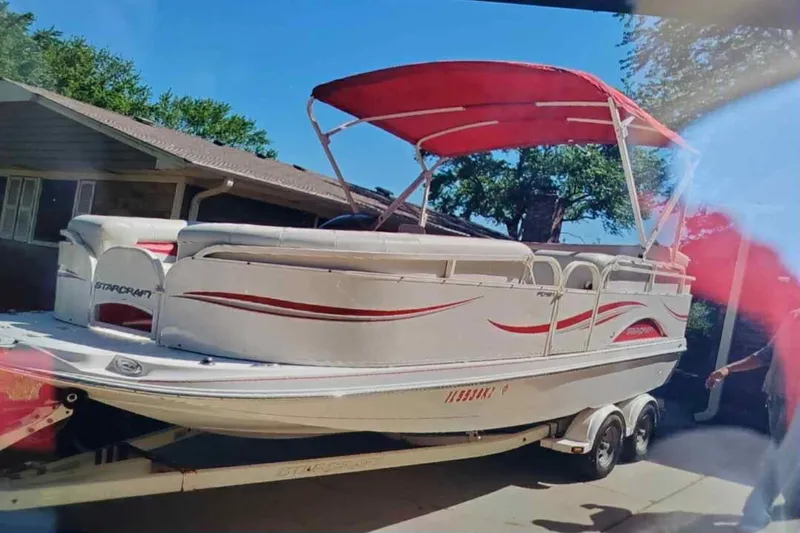
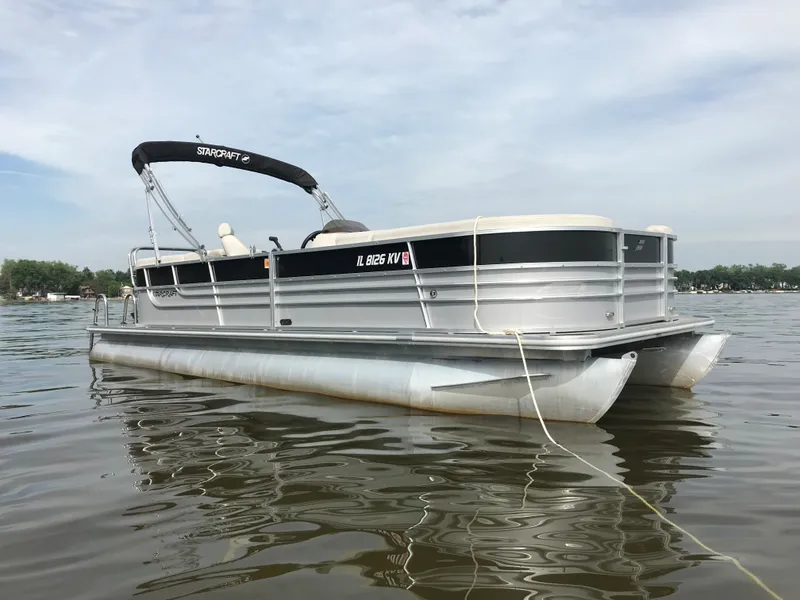
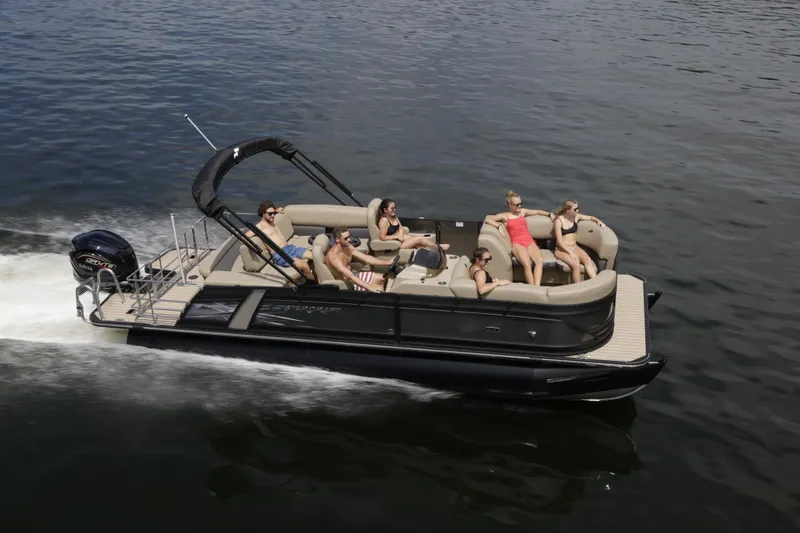
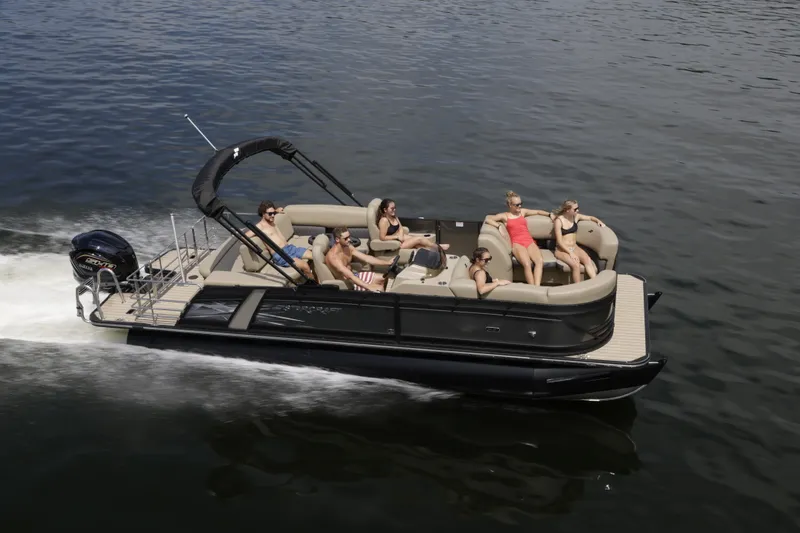
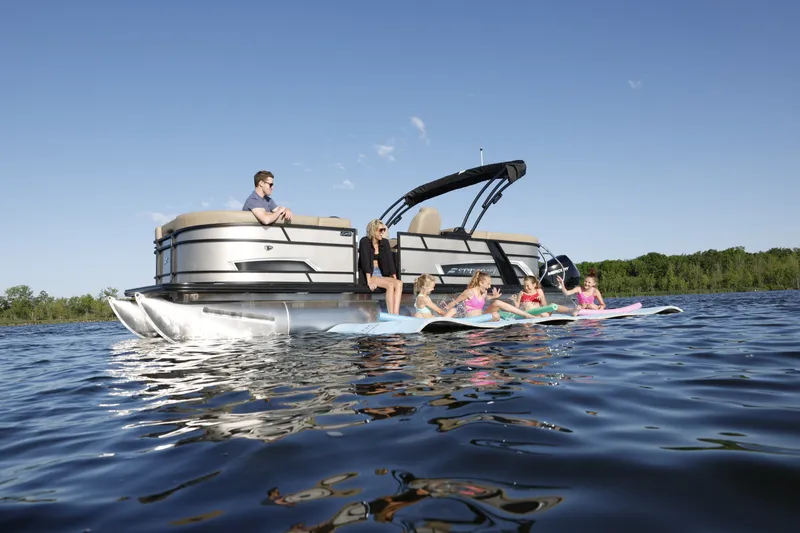
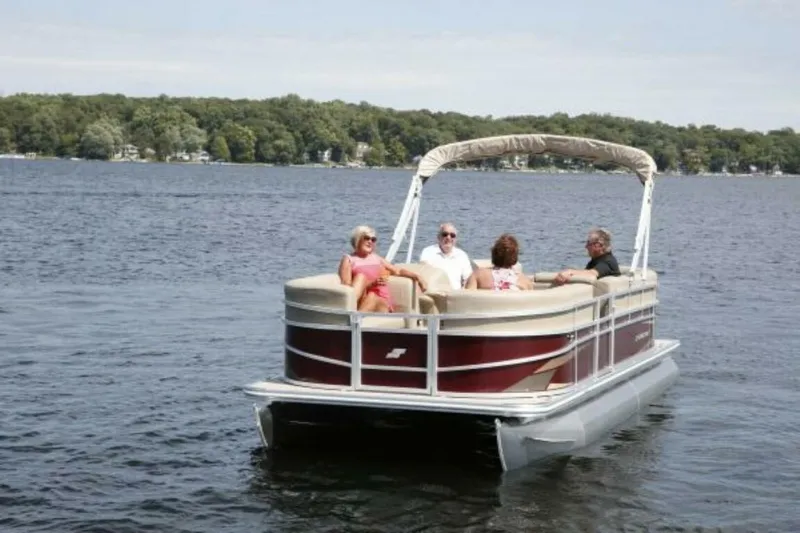
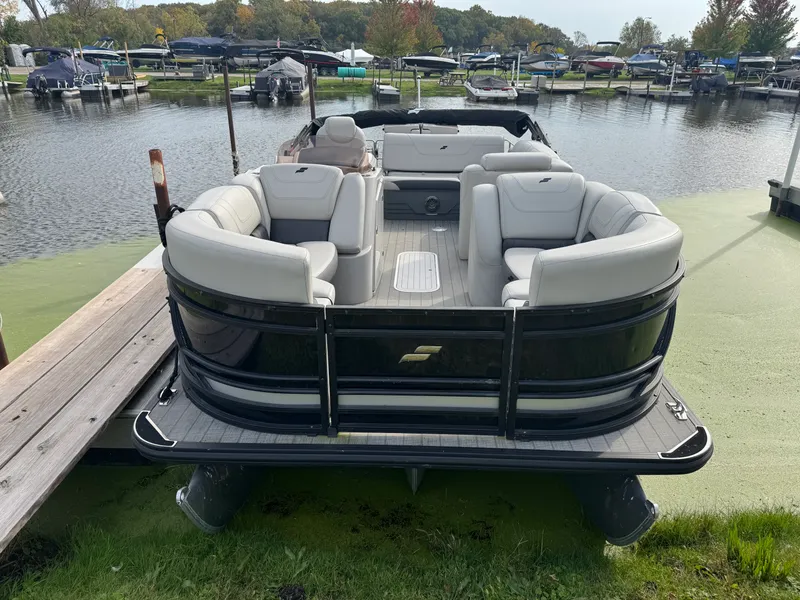
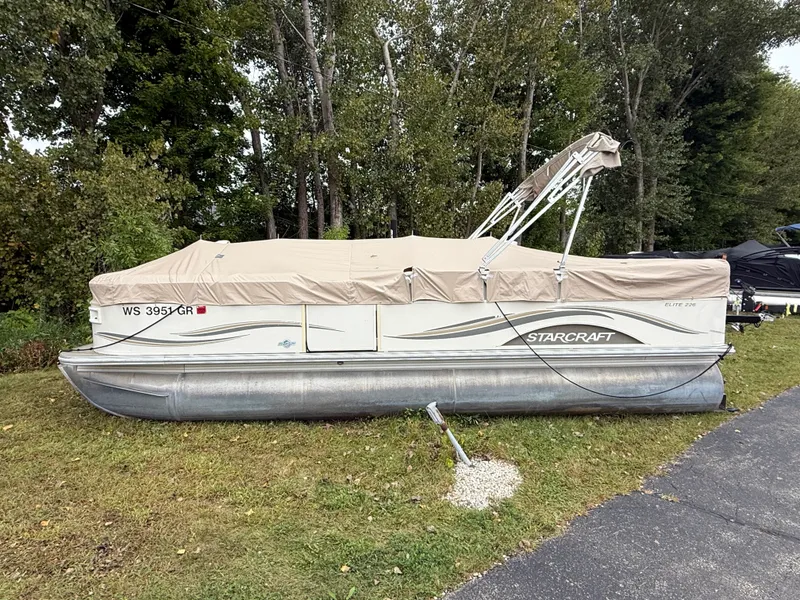
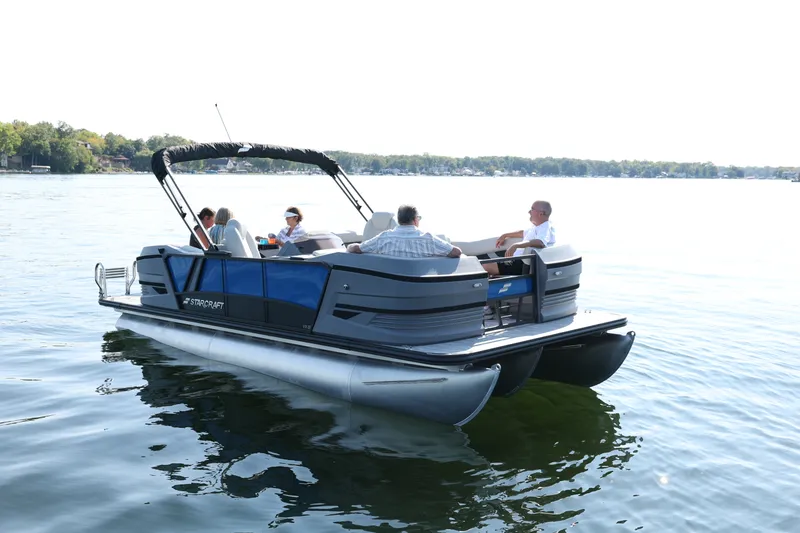
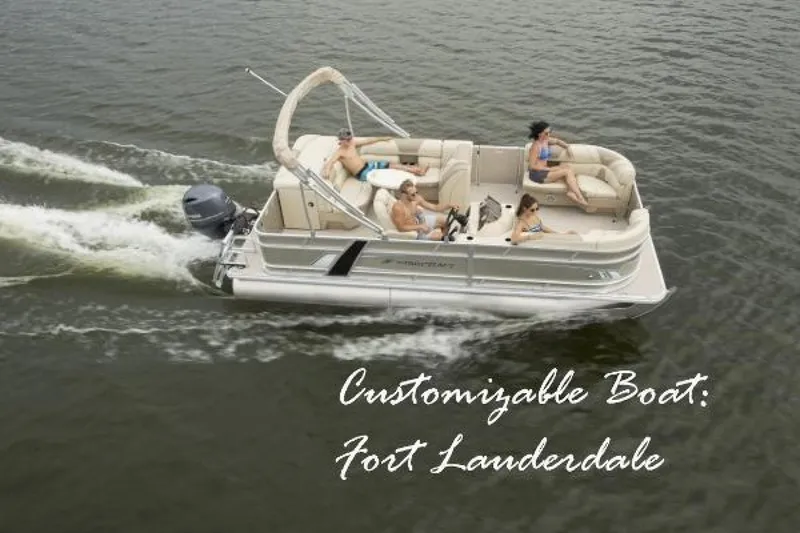
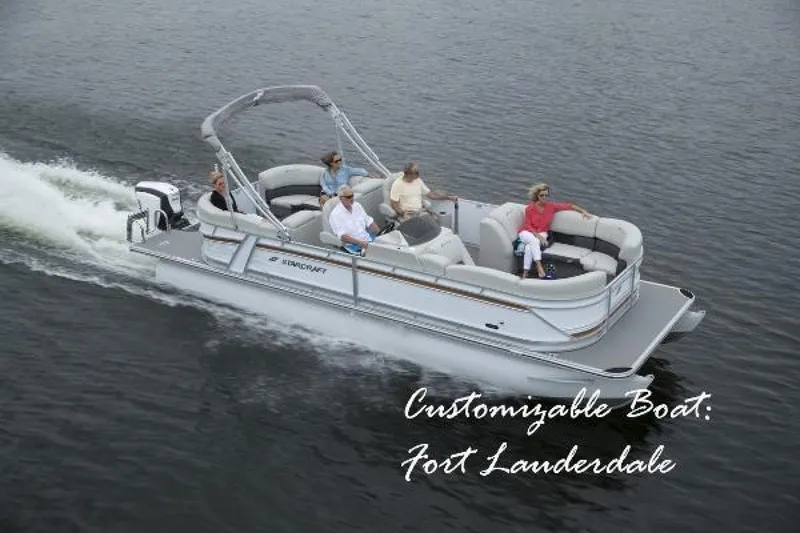
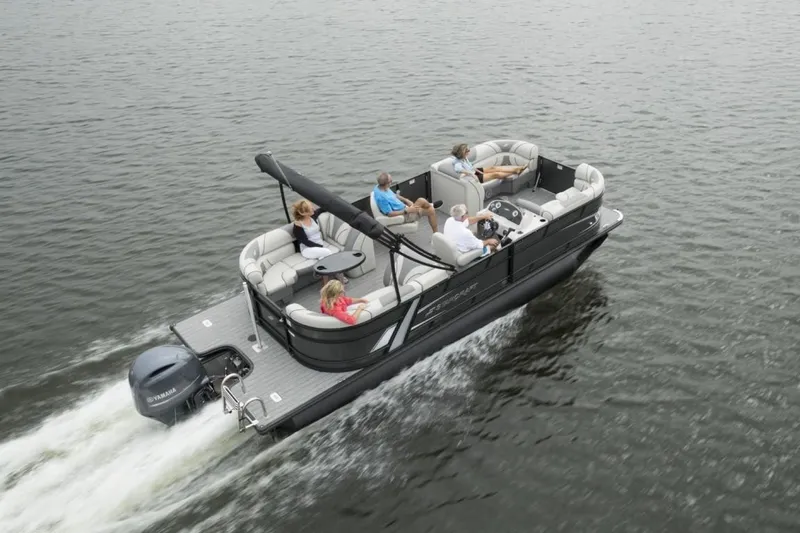
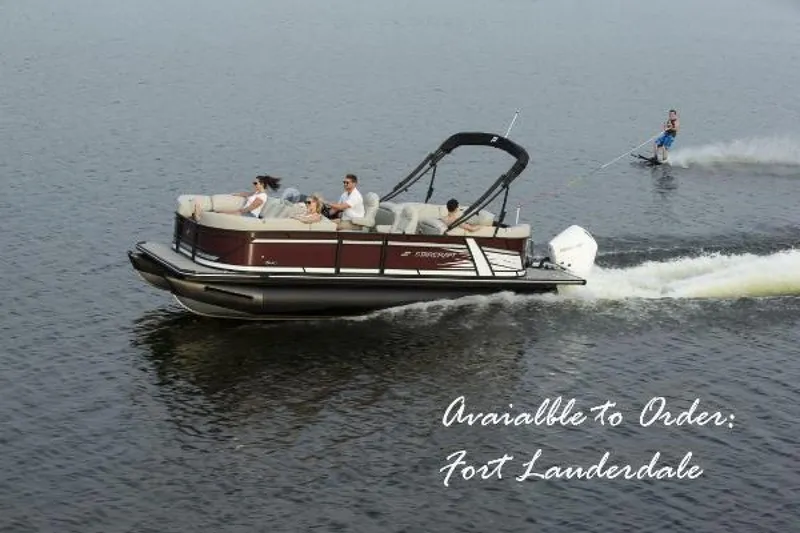
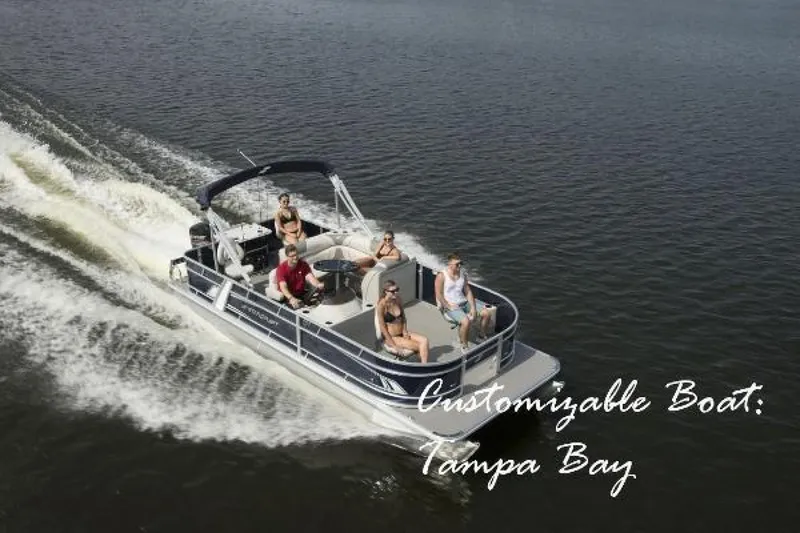
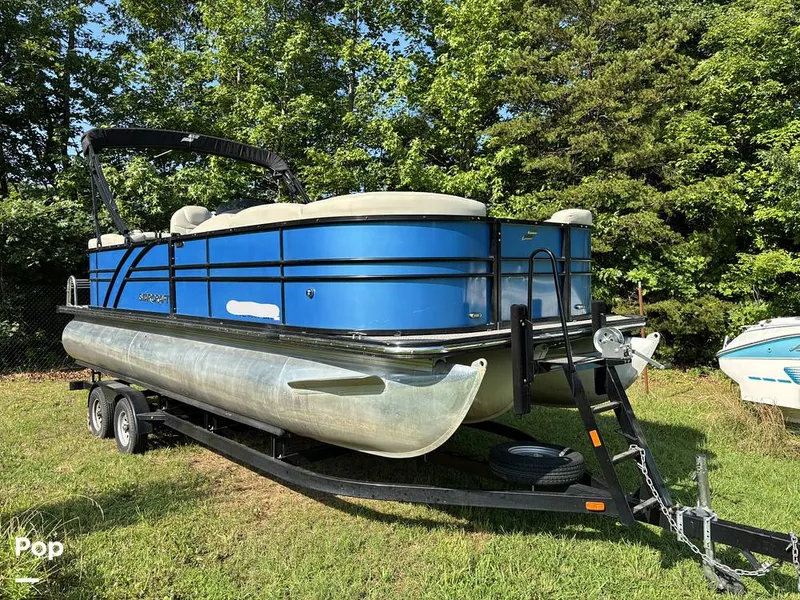
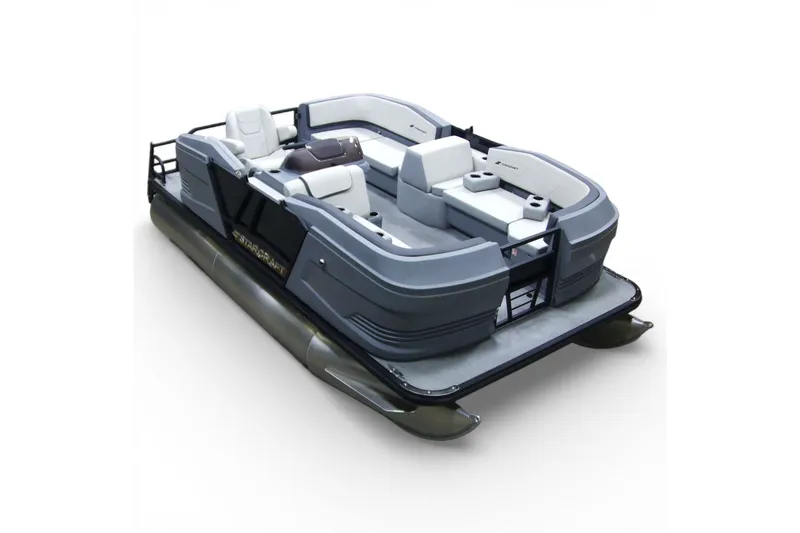
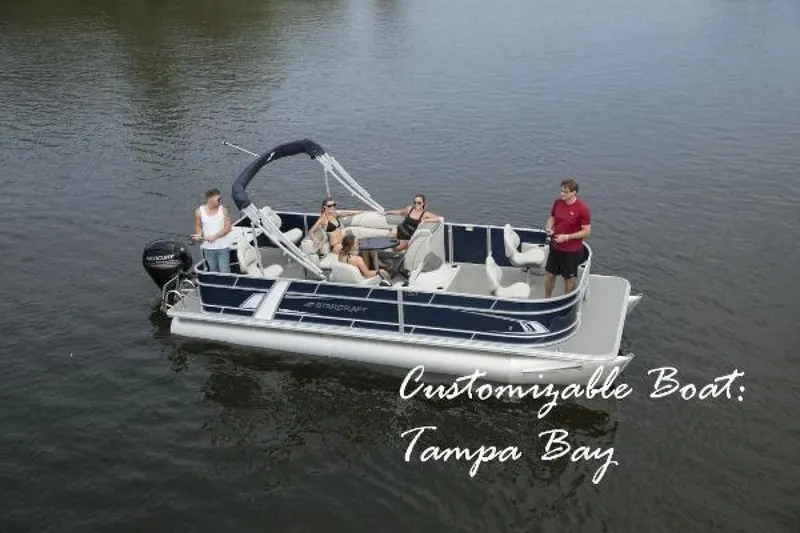
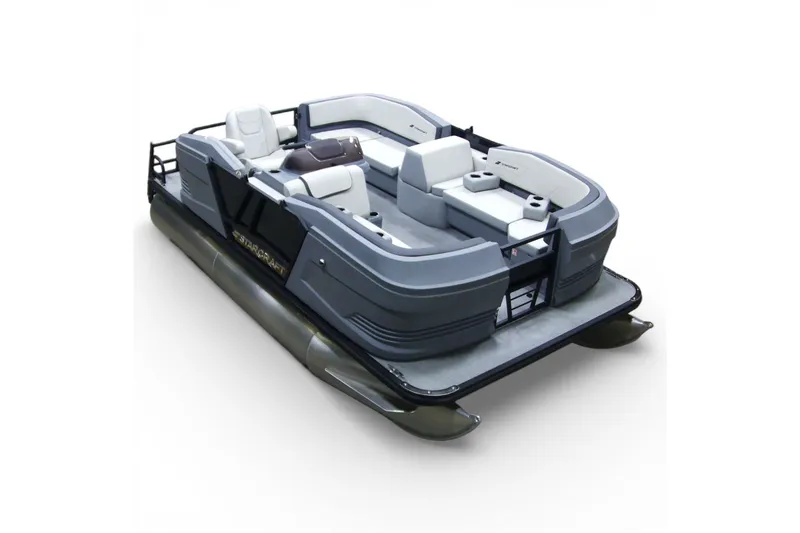
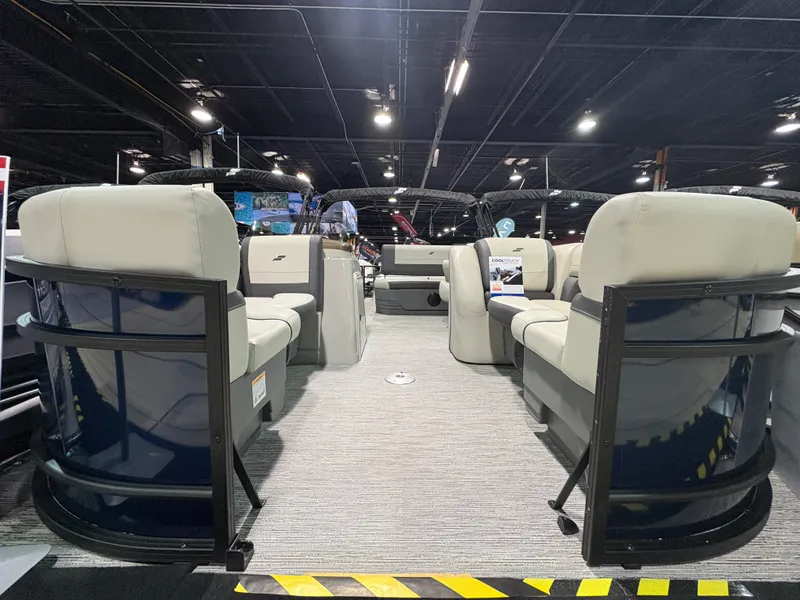
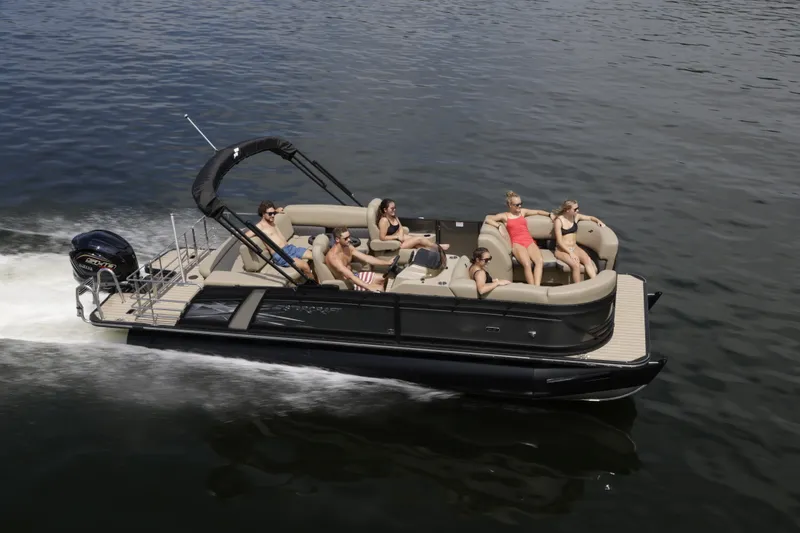
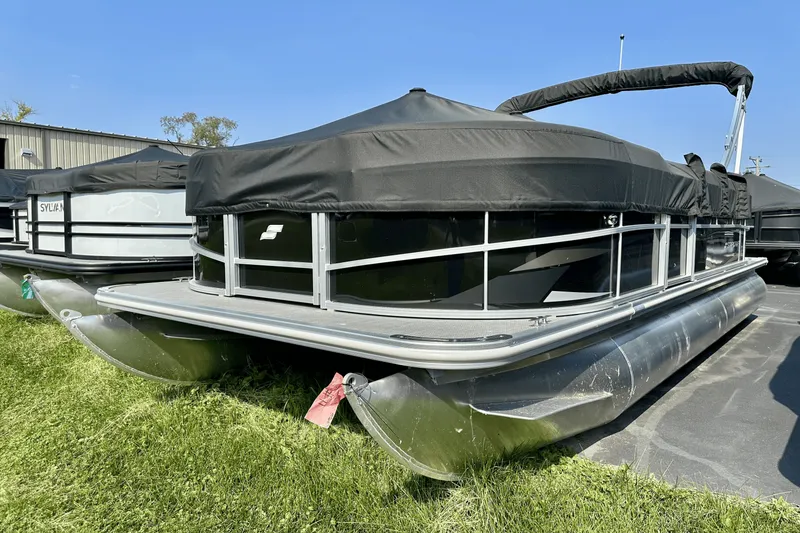
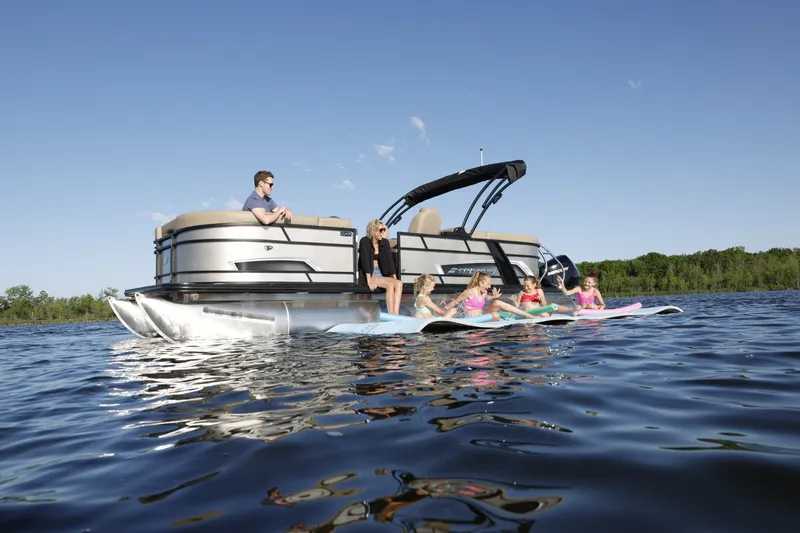
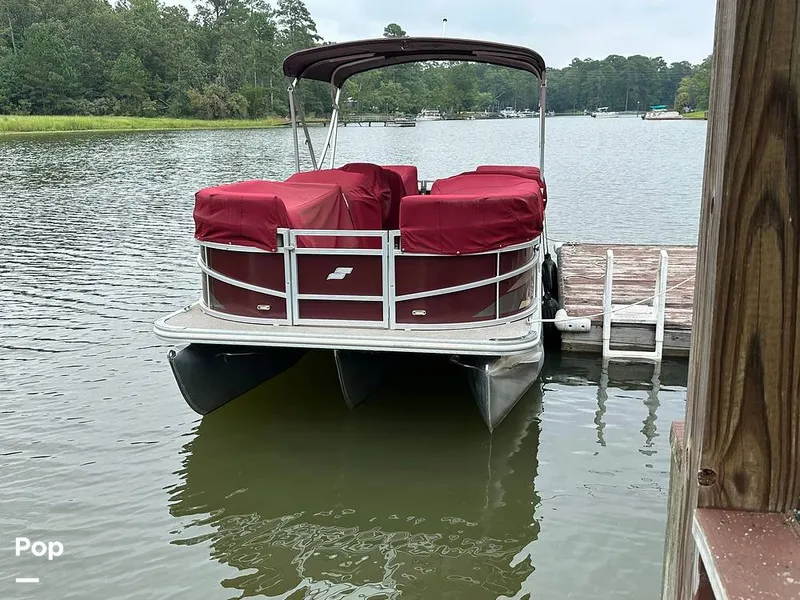
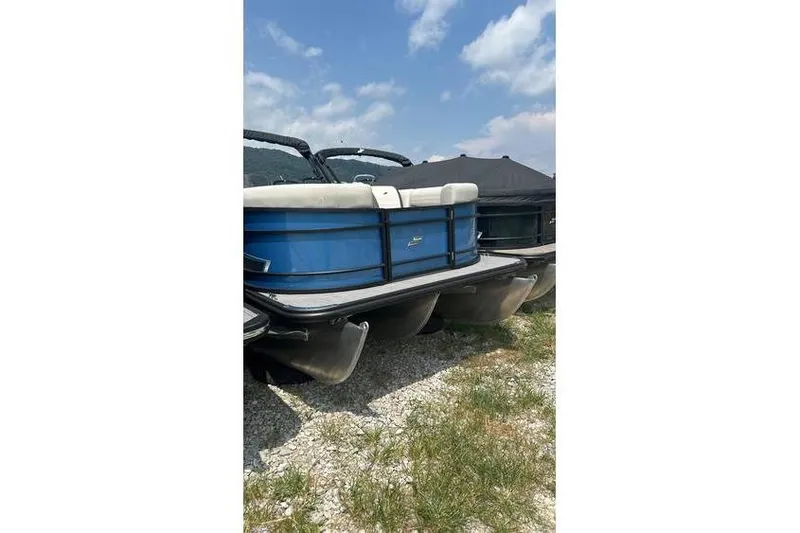
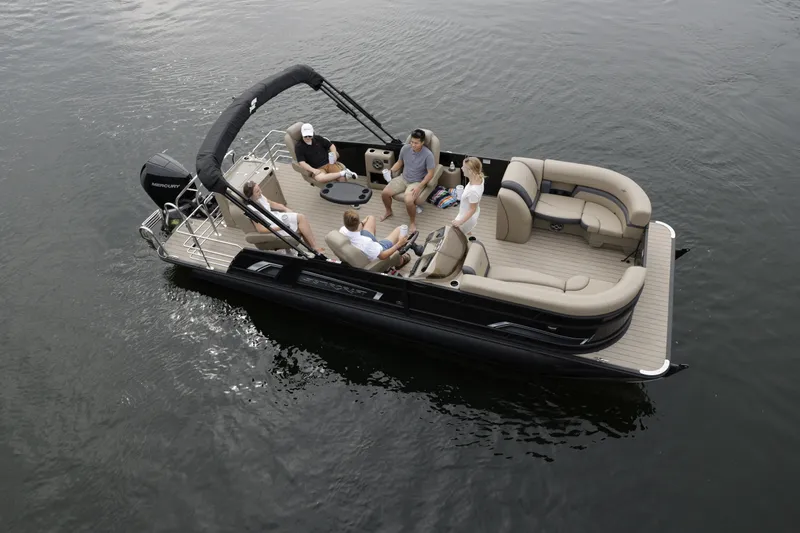
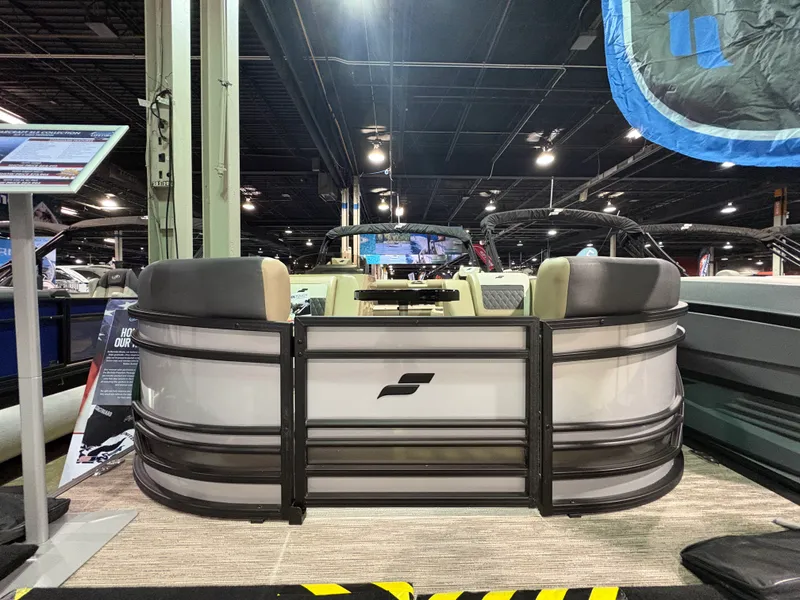
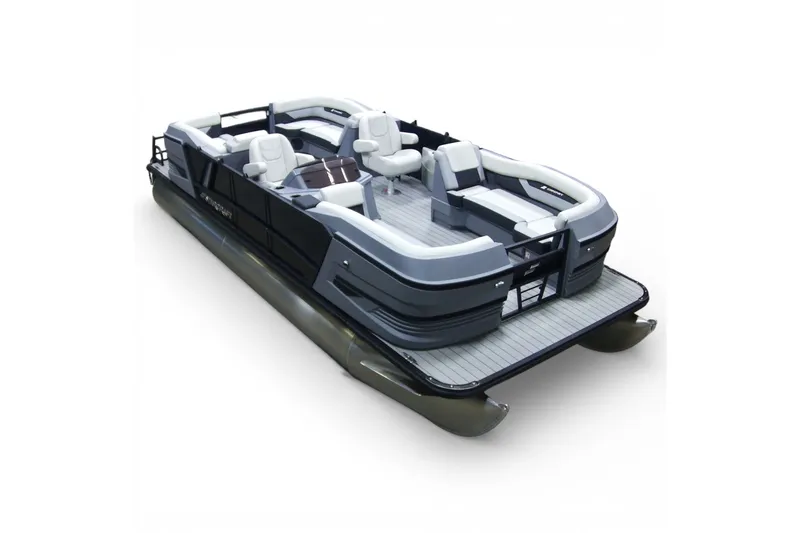
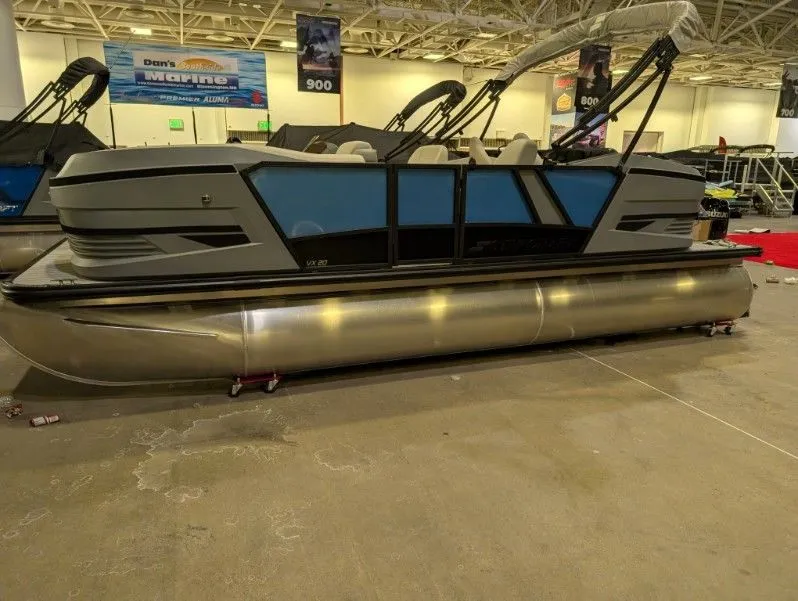
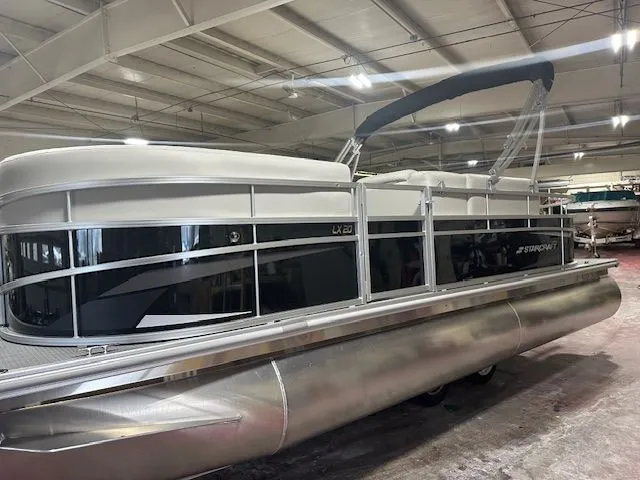
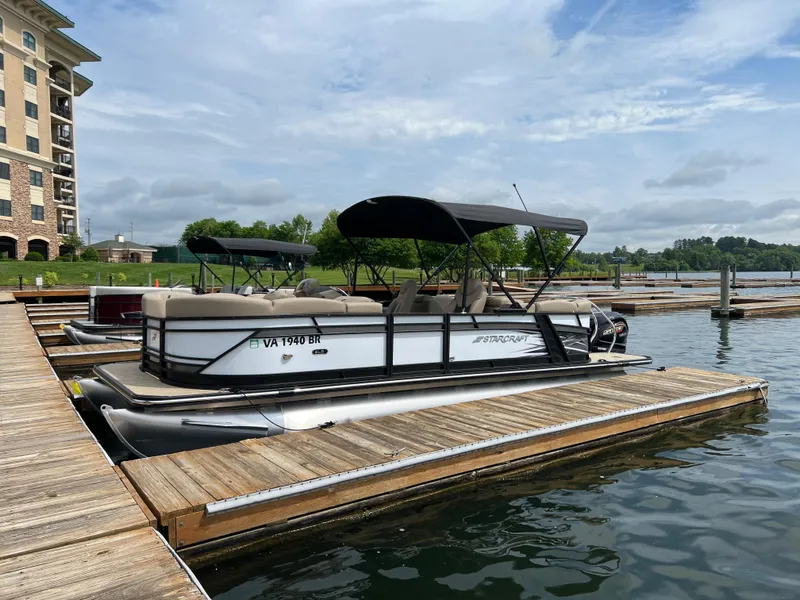
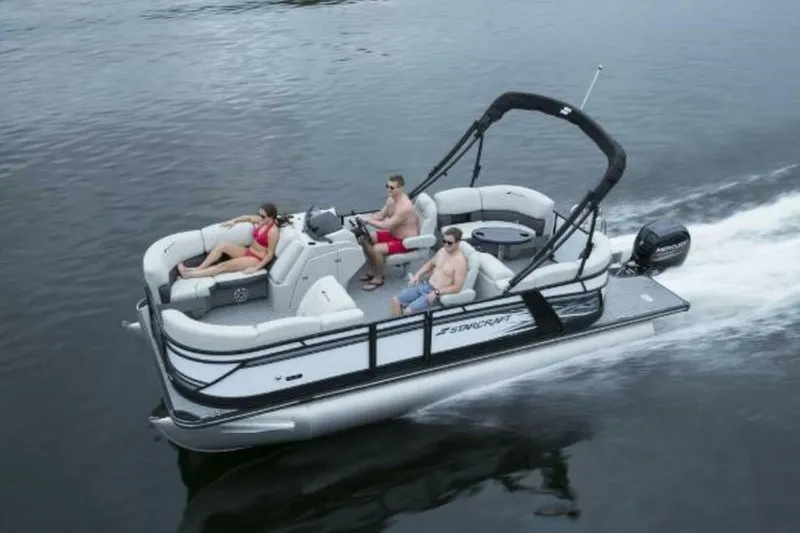
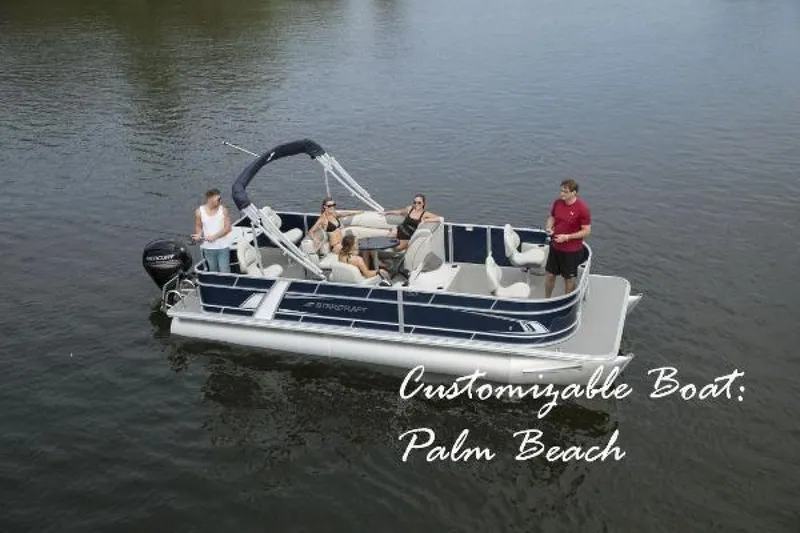
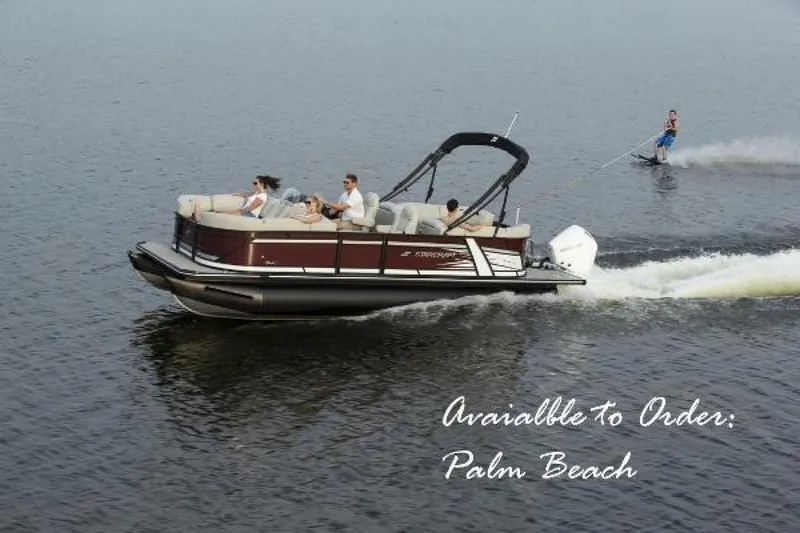
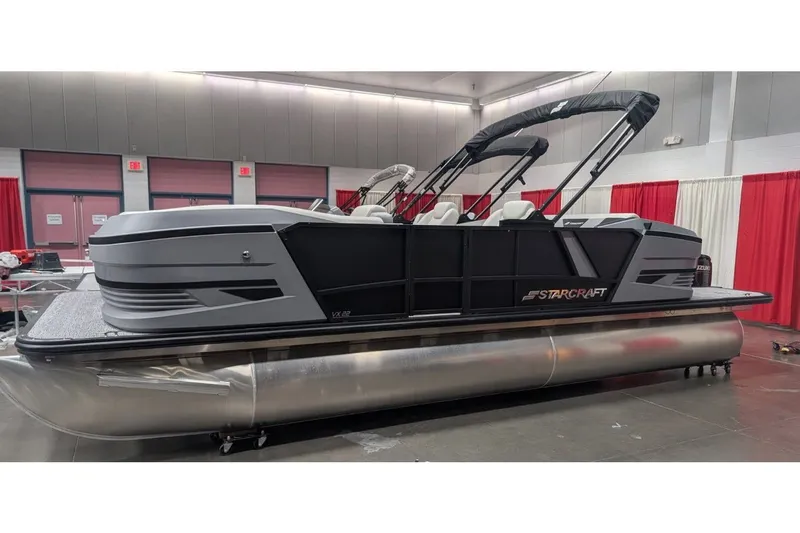
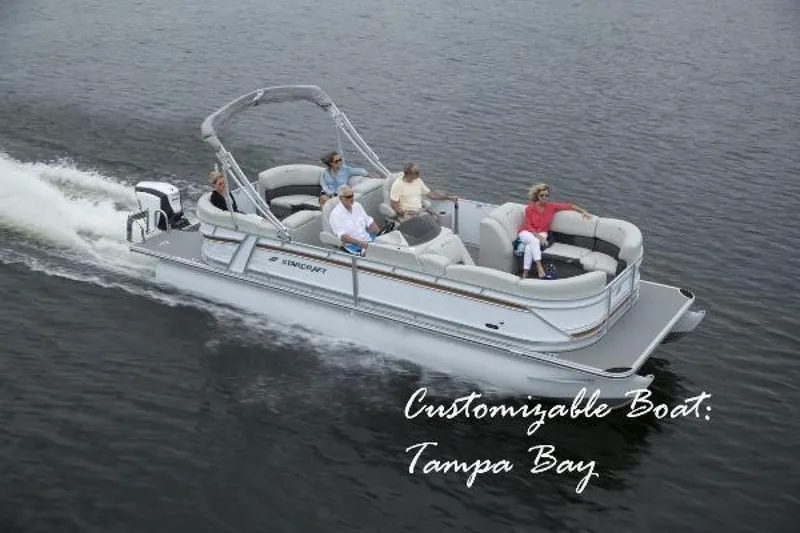
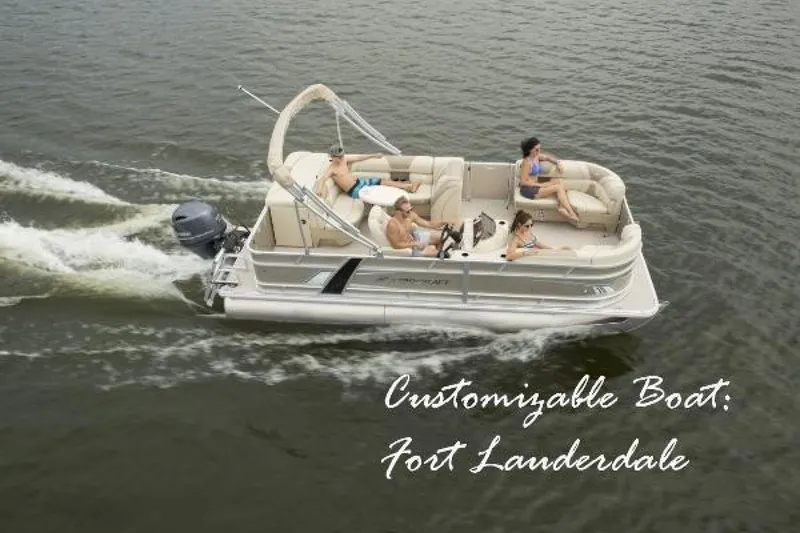
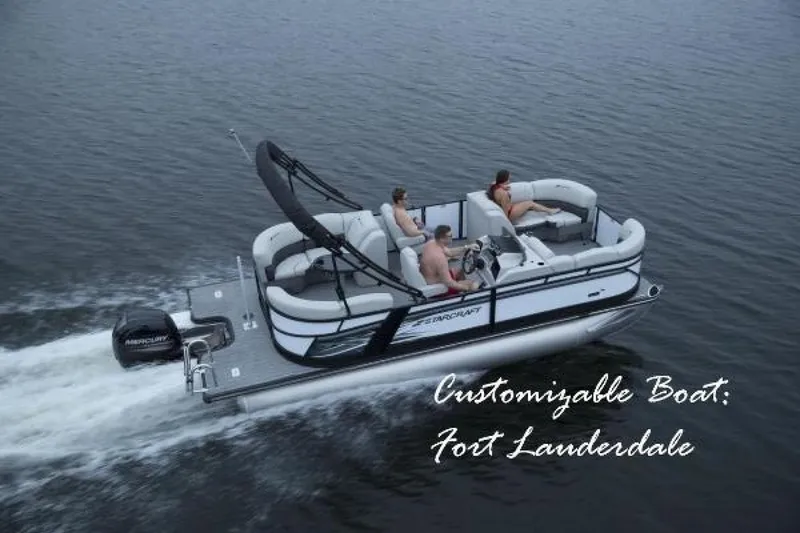
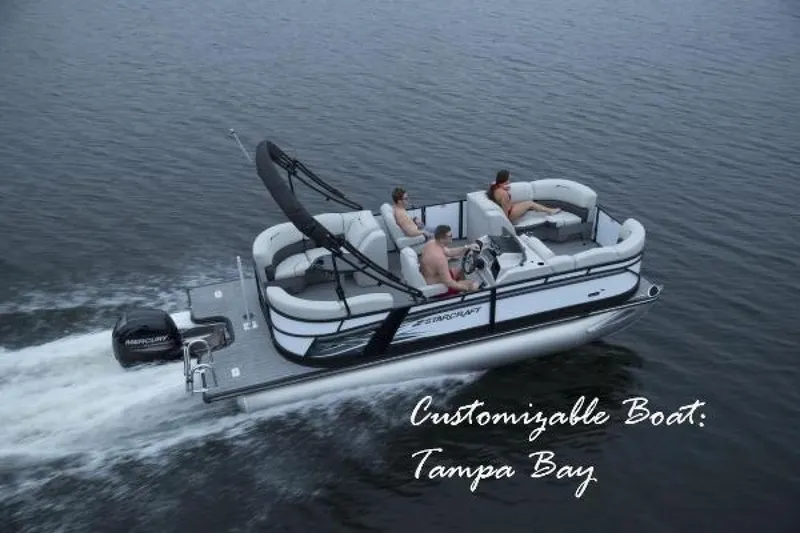
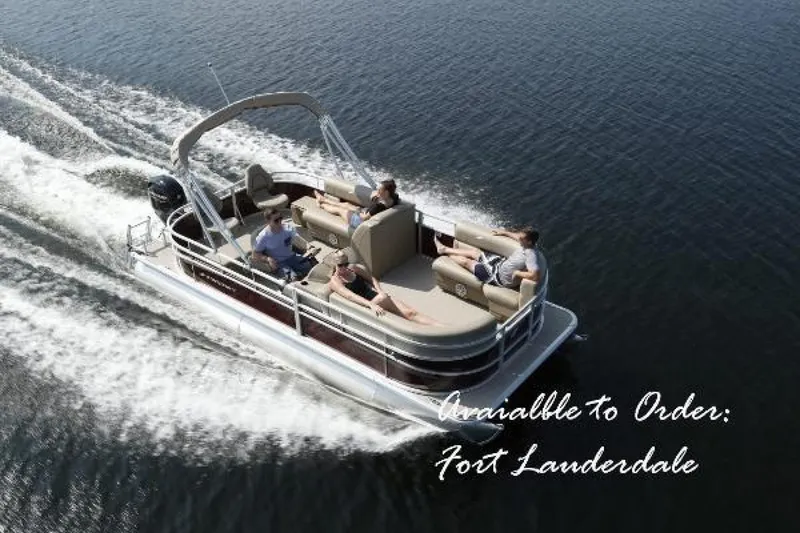
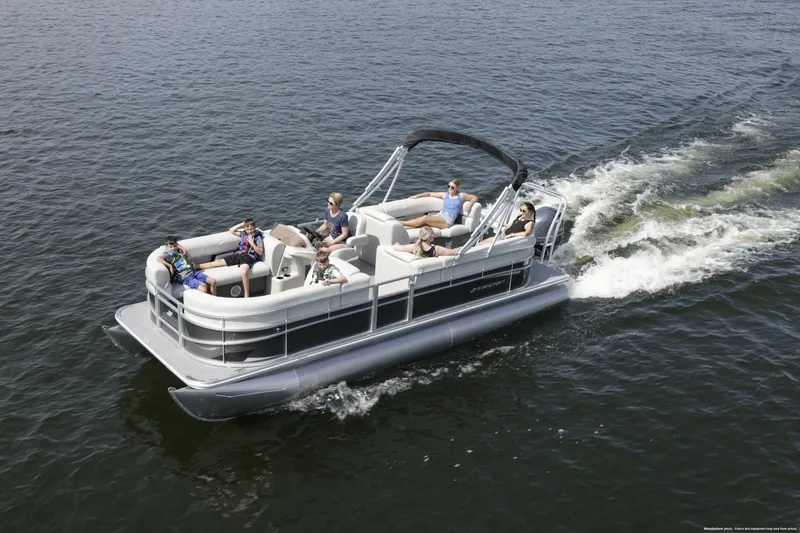
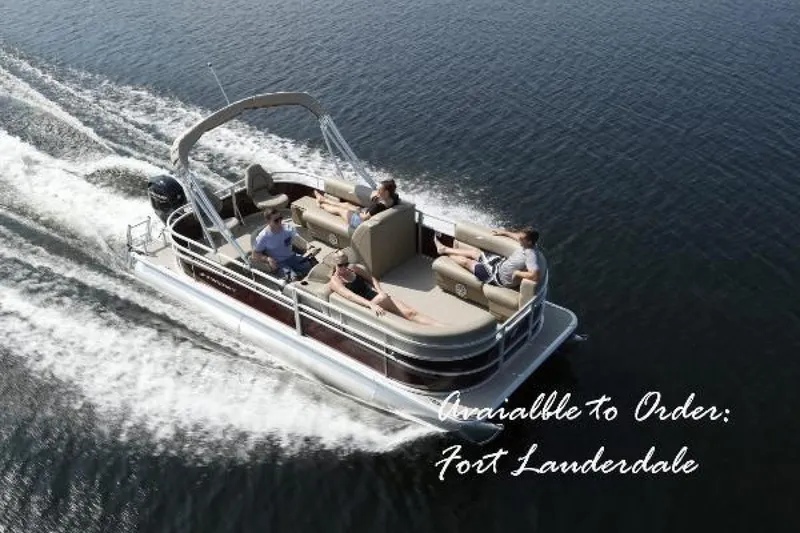
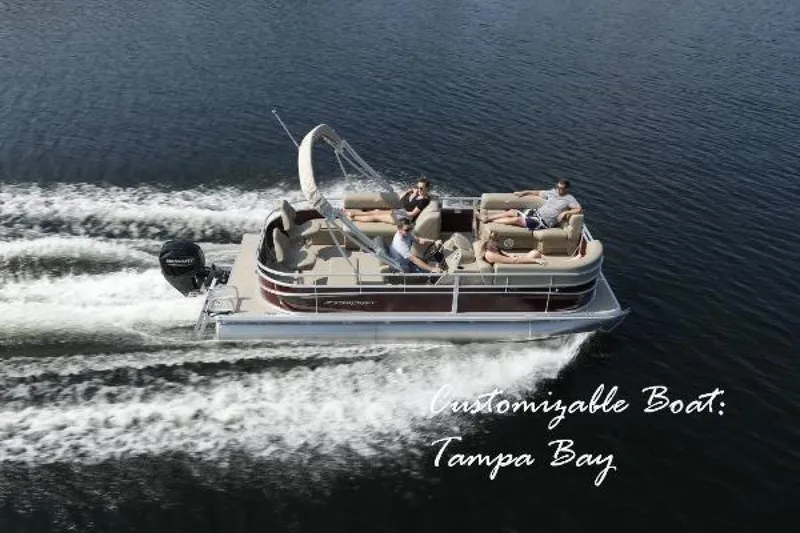
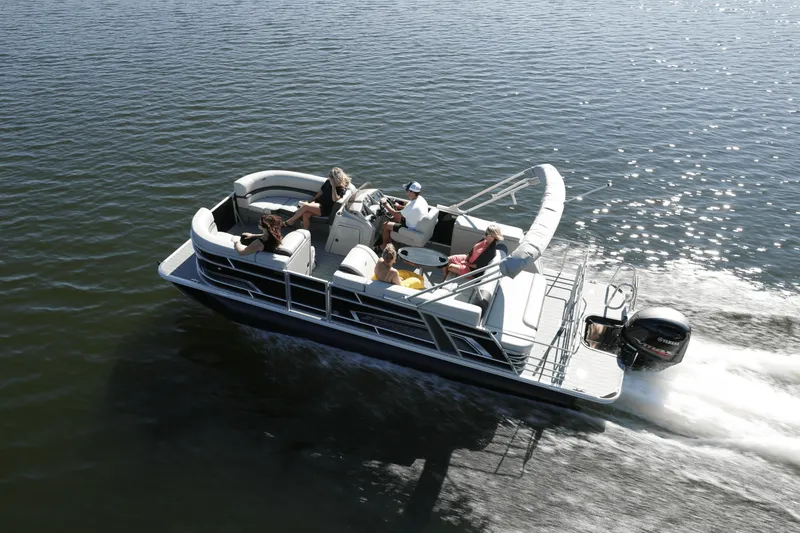
• (Pontoon / Tri-toon boats (cruising, family, watersports, and fishing layouts)) Starcraft Marine’s pontoon line is its largest product family, spanning compact entry pontoons through luxury/performance tri-toons. The core offering is aluminum pontoons and tri-toons generally rigged for outboards, with multiple deck lengths and “R/Q/FD/DH/DC/Bar” style floorplans (rear-lounge, quad-lounge, fish/deck, dual-helm, dual-console, bar, etc.) aimed at lake cruising, entertaining, and tow sports. Value/entry series include GX (e.g., 16–22 ft class) and LX (fish or rear-lounge layouts), stepping up to VX and EX for broader family layouts and fishing options like EX Fish. Sport/performance and premium families include EXS and SLS (often paired with performance packages/third-tube options), plus CX and MX as higher-trim luxury lines. The flagship end is RX and SX, positioned as luxury-performance tri-toons with large 25-ft class models and high horsepower capability. Across the range, buyers typically choose between traditional 2-tube pontoons or 3-tube (tri-toon) performance packages intended to improve speed/handling/planing for watersports and rougher water.
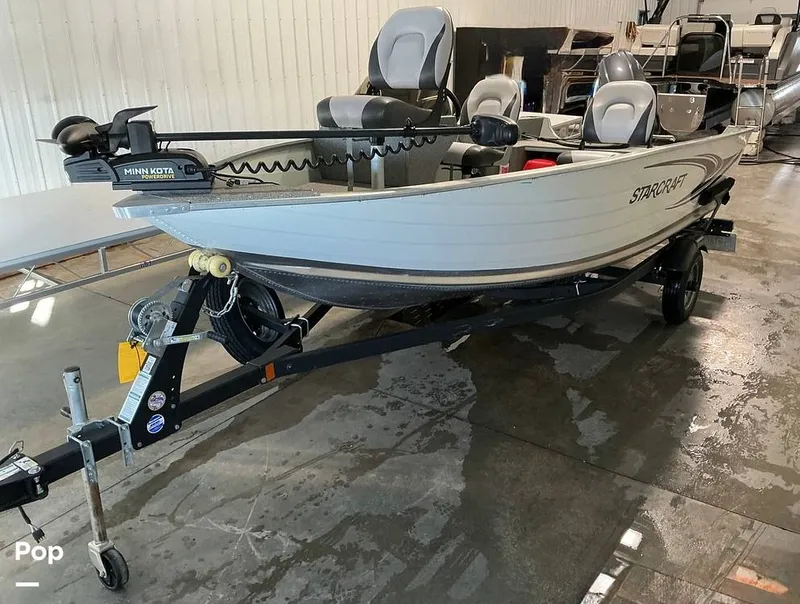
• (Aluminum fishing boats (deep-V and multi-species, tournament-style, compact value)) Starcraft’s aluminum fishing boats cover compact entry rigs through big-water deep-V platforms, primarily designed for outboard power. At the entry and compact end, Stealth and Starfire are simple, easy-to-trailer aluminum fishing boats offered in small-console or tiller-style configurations depending on model, aimed at lakes and smaller bodies of water. Storm expands the concept into more fully featured small deep-V fishing boats with side-console, dual-console, and tiller options. Delta targets anglers wanting a wider-beam, more performance-oriented multi-species/bass-capable layout, with casting decks, storage, and console options (including Pro trims). For larger waters, Superfisherman provides a family-fishing deep-V approach, while Fishmaster and Mariner move into larger deep-V hulls intended for big-lake trolling/casting use, with higher horsepower ratings, larger fuel tanks, and more wind protection. At the tournament/pro end, the STX (e.g., 20-ft class) is positioned as a performance-focused fishing platform with higher power ratings and a tournament-ready deck/storage approach.
• (Utility / hunting / simple fishing aluminum boats) Starcraft’s utility aluminum boats focus on rugged, straightforward hulls for hunting, light fishing, workboat tasks, and shallow-water use, with many models suited to portable fuel tanks and modest outboard horsepower. The Freedom series offers larger utility hulls with multiple steering options (center console, side console, and tiller) and includes waterfowl-oriented packages (e.g., dedicated Waterfowl variants) for hunters who want open layouts and practical rigging. Patriot and SF/SF DLX provide smaller utility configurations that emphasize simplicity and affordability, while SL and Alaskan cover compact, light, easy-to-launch boats for protected waters. The Jon Boats line includes multiple “length x bottom width” style models (e.g., 10–16 ft class) aimed at shallow-water utility and hunting needs. Across these lines, the distinguishing theme is aluminum durability, low complexity, and multiple control/layout choices to match tasks like marsh hunting, pond fishing, or general shoreline utility.
HOW ARE THESE BOATS BUILT?
Starcraft builds a broad lineup of aluminum fishing boats and pontoon boats, and the structure starts with application specific hull engineering. On aluminum fishing models, the hull is formed from marine grade aluminum sheet and extrusions, with heavy duty bottom and side gauges specified per model, then mechanically fastened using a multi row riveting strategy at high load seams. This approach includes double riveted chine and transom seams for long term leak resistance, paired with performance forming such as the Vertex Performance Strake (VPS) hull geometry used on multiple series for lift and tracking. Structural rigidity is further increased with full length splash pans and integrated gunnel systems on select models, and with reinforced transom assemblies designed to handle modern outboard torque. On Starcraft pontoons, structure centers on large diameter aluminum tubes and a full underdeck framework, including the brand’s “Heavy Hat” understructure on higher trim lines, supporting a 3/4 inch marine grade plywood deck and an all aluminum transom, both backed by lifetime limited coverage in the Starcraft warranty program. Corrosion protection and cosmetics are addressed with a durable, heat cured finish, and current aluminum fishing models specify a twice baked urethane paint system for abrasion resistance and color retention. As with any modern production builder selling in the U.S., Starcraft designs are built to meet applicable U.S. Coast Guard regulations, and the brand has historically promoted NMMA certification compliance, which aligns to ABYC based construction and systems standards used in the NMMA Boat and Yacht Certification program. Flotation and buoyancy are addressed by design category: aluminum fishing boats typically incorporate level flotation strategies where required by regulation, while pontoon buoyancy is inherent to multi chamber tube construction and underdeck structure that supports deck loading and stability. Where a hull to deck joint applies, Starcraft uses mechanically fastened, sealed joints and extruded rub rail interfaces typical of aluminum construction, designed to maintain watertight integrity under vibration and trailering loads.
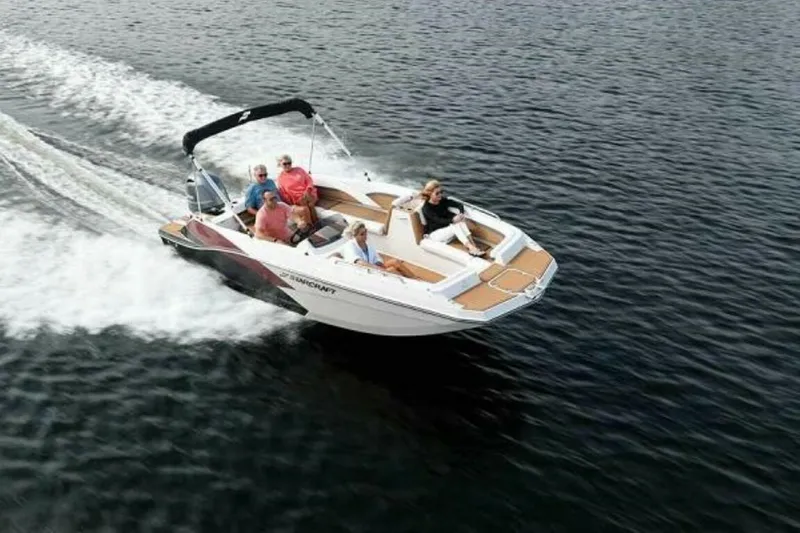
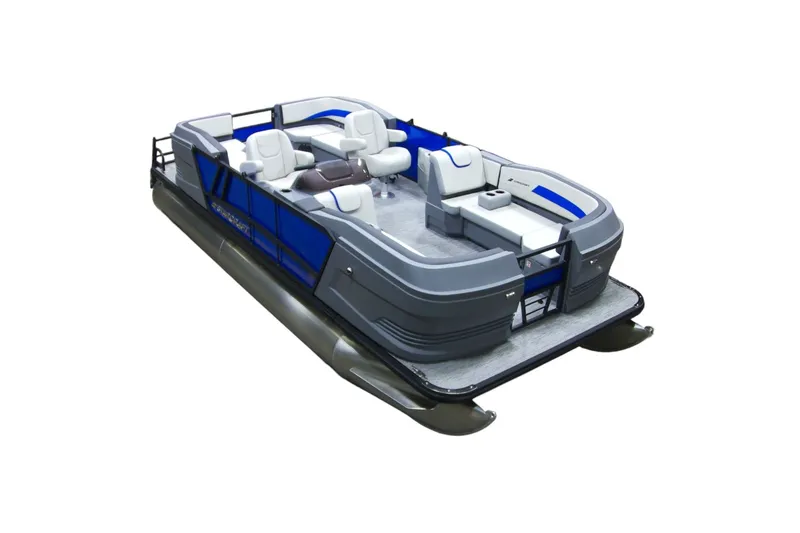
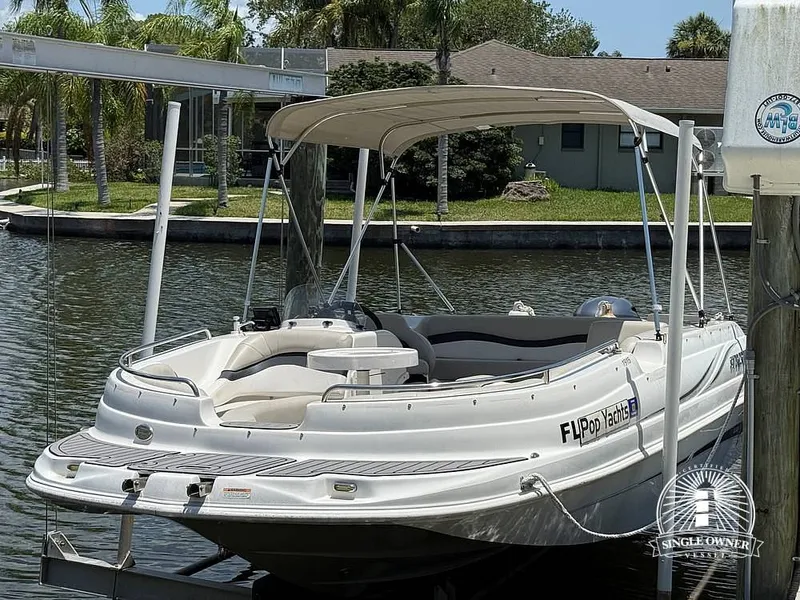
Beyond the primary structure, Starcraft specifies marine grade hardware and systems intended for real world use. Cleats, boarding ladders, rails, and fasteners are selected for corrosion resistance in freshwater environments, with stainless steel components used where wear and exposure are highest, and robust aluminum rail systems used throughout pontoon fencing and decks. Electrical design emphasizes protected distribution and serviceability, using circuit breakers as standard on many fishing models and offering advanced digital switching such as C-Zone on select series, which improves diagnostic capability and reduces wiring complexity. Lighting and accessory circuits are integrated as complete systems, and pontoon helm electronics are increasingly delivered as factory integrated packages on premium trims. Plumbing for livewells and washdown systems is engineered around aerated and recirculating livewell designs with durable pumps, hoses, and fittings routed to minimize kinks and service issues. Interior durability is addressed with marine vinyl upholstery and vinyl cockpit or casting platform surfaces on many fishing boats, while pontoons add premium flooring options and rotocast or polyethylene furniture base components with integrated drainage on certain series for long term moisture management. Manufacturing combines repeatable design and fabrication methods with traditional boatbuilding workmanship: digital design tools support layout, tolerances, and rigging consistency, while hull assembly relies on skilled fitting, riveting, sealing, and controlled finishing processes rather than cosmetic shortcuts. Quality control is multi stage, including in process checks on hull seams and transom build, verification of rigging, electrical function tests, and final water readiness inspections, consistent with the expectations of NMMA and ABYC oriented production practices. Compared to typical value class construction, the differentiators are the emphasis on reinforced seams, proven performance hull shapes, integrated gunnel and understructure features, and a warranty posture that matches the build intent. Starcraft supports its build philosophy with a Lifetime plus 6 warranty program that includes a limited lifetime warranty on hull and structure, plus six year coverage on components, flooring, and upholstery on most models, with parts and labor included and transferability to a second owner, reinforcing the brand’s focus on durability, safety, and long term ownership value.
WHERE ARE THESE BOATS BUILT?
All Starcraft boats are built in the United States at Starcraft Marine’s manufacturing and production campus in New Paris, Indiana, where the brand operates as part of the Smoker Craft Incorporated family of boat brands. Starcraft’s boat building is centered on Smoker Craft’s New Paris facility at 68143 Clunette Street, a multi-brand production site that also supports sister lines such as Smoker Craft, Sylvan, SunChaser, and Starweld. Starcraft describes the organization as having more than 800 employees, reflecting the scale of labor required to support aluminum fishing boats, pontoon boats, and fiberglass deckboat manufacturing under one roof. The campus has been publicly described as a 600,000 square foot production facility, giving Starcraft a large, dedicated domestic facility for consistent built quality and controlled manufacturing workflows.
Boat production at the New Paris, Indiana location reflects Starcraft’s long-running heritage dating back to 1903, while the modern operating structure is tied to the company’s fifth generation family ownership and its integration within Smoker Craft Incorporated. Smoker Craft publicly outlined a major operational expansion plan announced on October 1, 2014, centered on renovating and equipping a 500,000 square foot production facility in New Paris and adding 90,000 additional square feet of capacity that was scheduled to be operational by March, supporting manufacturing efficiencies and increased production output. A second large expansion was announced on September 28, 2021, calling for a $12 million investment to construct and equip roughly 200,000 square feet of additional space on the company’s production campus at 68143 Clunette Street, with the building projected to be fully operational by April 2022 to enhance boat manufacturing and shipping. Operationally, this type of campus layout is well suited to organizing production by product category, separating aluminum hull fabrication, pontoon tube work, and fiberglass deckboat build areas while keeping rigging, finishing, and outbound logistics close to final assembly. The New Paris location also benefits from being in northern Indiana’s established manufacturing corridor, supporting supplier access, workforce continuity, and efficient dealer distribution routes across North America.
Quality control at the New Paris facility is driven by repeatable, line based production and the ability to keep key boat building processes close together, reducing handoff errors as hulls move through fabrication, assembly, and final rigging. With more than 800 employees referenced by the company, Starcraft can maintain specialized teams for critical manufacturing steps such as aluminum forming and welding, pontoon tube integration, electrical and fuel system installation, upholstery and interior fitment, and final water ready rigging. The campus expansions were specifically positioned to increase efficiencies and improve shipped product quality by freeing floor space and improving the loading and outbound process, which helps protect fit and finish during delivery. Because Starcraft is built alongside other Smoker Craft brands on a shared production site, the organization can cross utilize manufacturing resources such as standardized work instructions, shared engineering knowledge, and common tooling strategies that improve consistency across model families. Keeping Starcraft production concentrated at one Indiana facility also supports process discipline, stable training, and uniform inspection checkpoints from hull build to final pre shipment verification.
Starcraft boats are built in one primary place, New Paris, Indiana, and that single domestic manufacturing footprint is a key reason the brand can focus on repeatable production standards. Backed by a large, modernized facility and a deep pool of experienced boat builders, Starcraft continues to invest in manufacturing capacity while maintaining the hands-on craftsmanship that defines the brand’s heritage. The result is a Starcraft commitment to building boats in Indiana with tight control over production, facility processes, and long-term quality expectations.
WHAT IS THE BIGGEST BOAT OF THIS BRAND BUILT TODAY?
The biggest boat built by Starcraft (Starcraft Marine) today is the Starcraft MX 25 R, Starcraft’s flagship pontoon and the largest Starcraft model currently in production by overall length. Introduced as part of the modern MX luxury pontoon lineup, the Starcraft MX 25 R measures 27 feet 8 inches LOA and carries a 102-inch beam, giving it big-deck space while staying within a trailer-friendly legal beam in many states. Power is outboard and configured as a single-engine setup, with a maximum rating of 450 horsepower, positioning the Starcraft MX 25 R at the top of the brand’s performance-capable cruising pontoons. Fuel capacity is 60 gallons, supporting longer day trips and higher-speed running when equipped appropriately. As with many premium Starcraft tri-toon style offerings, the hull platform focuses on efficiency and control for a large aluminum pontoon, balancing lift and stability for watersports and loaded-up family cruising. Top speed and cruising speed vary widely by engine selection and load, but with up to 450 hp on tap, the Starcraft MX 25 R is built to deliver fast planing performance for a full-length luxury pontoon.
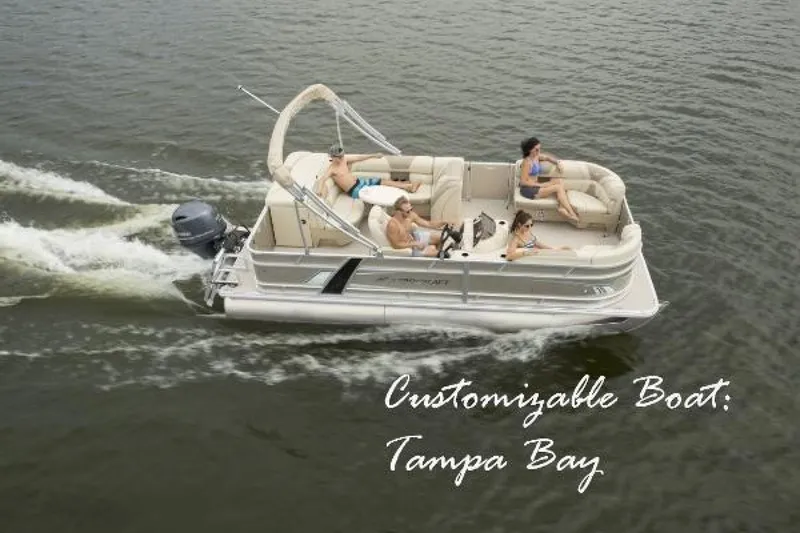
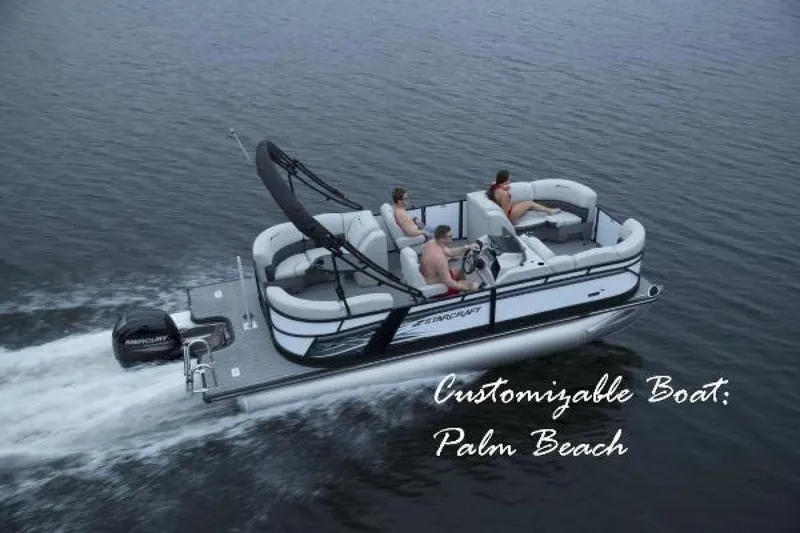
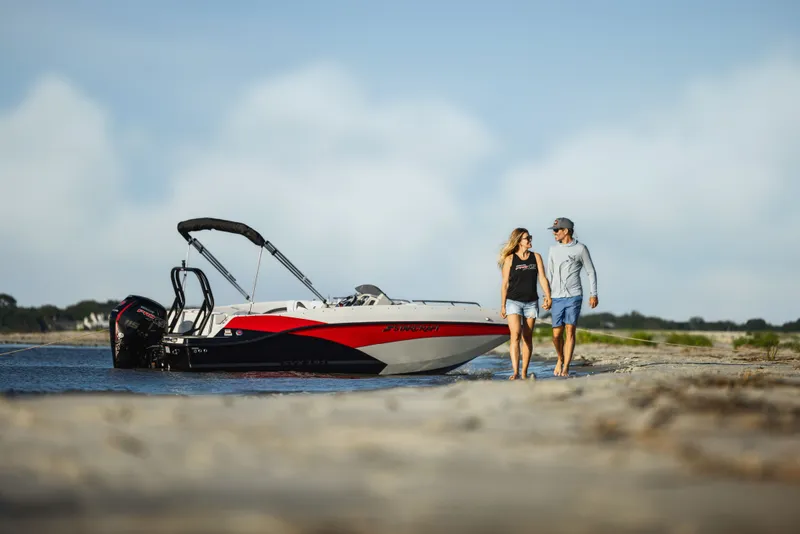
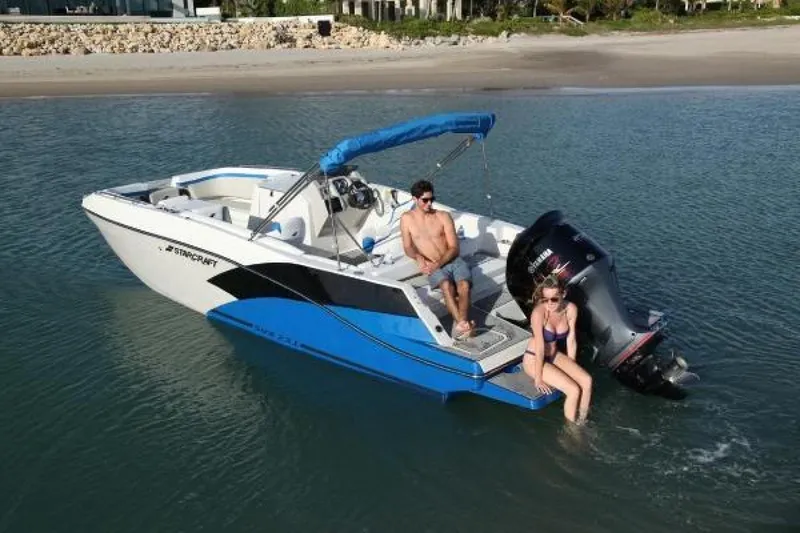
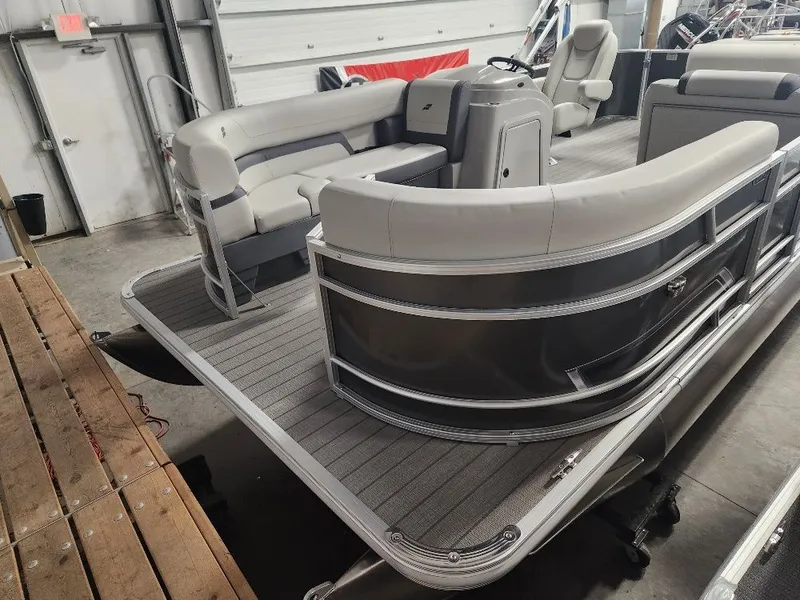
In real-world use, the Starcraft MX 25 R is primarily a luxury cruising and watersports platform, ideal for big-lake entertaining, tubing, and relaxed day boating with room to spread out. As a center-of-attention deck boat in pontoon form, the Starcraft MX 25 R emphasizes comfort features such as expansive lounge seating, premium upholstery, and abundant under-seat storage for lines, fenders, and watersports gear, and it is often equipped with an enclosed changing area or head option depending on build and market configuration. At the helm, buyers can expect a modern console designed to support large-format marine electronics and clean switch layout, making this large pontoon easy to operate in busy harbors and tight docks. While Starcraft’s aluminum fishing boats target rod lockers, livewells, and big casting decks, the largest Starcraft model is about upscale space, smooth ride, and high-horsepower capability on a stable platform. For shoppers comparing Starcraft’s lineup from value GX and family EX up through premium series, the Starcraft MX 25 R stands as Starcraft Marine’s biggest statement of size, power, and luxury in a current-production pontoon.
WHAT IS THE SMALLEST BOAT OF THIS BRAND BUILT TODAY?
The smallest model in Starcraft's current lineup is the Starcraft Jon Boats 1032, a compact 10 foot 0 inch aluminum jon boat designed for simple, get it done utility and shallow water fishing duties where lightweight handling matters most; because Starcraft does not publish beam, weight, or towing capacity figures for the 1032 in the provided specifications, those exact numbers cannot be stated here, but the 1032’s short 10 foot footprint still makes it an easy fit for tight storage spaces and a practical choice for boaters who want a minimal, easy to move platform that can be launched quickly and trailered with ease when paired with an appropriately sized small trailer.
As a no frills aluminum jon boat, the Starcraft Jon Boats 1032 keeps the layout straightforward and open for hauling decoys, gear, a small cooler, or basic tackle, making the 1032 a classic backwaters and small pond style boat rather than a seating heavy family runabout; Starcraft’s aluminum construction is the key value driver here, delivering a rugged, corrosion resistant hull that suits ramps, shore launches, and the kind of day to day knocks that come with utility boating, but because passenger capacity, USCG rating, fuel capacity, hull technology details, typical engine pairing, maximum horsepower rating, and speed or fuel efficiency numbers are not included in the provided model data for the Starcraft Jon Boats 1032, those performance and rating specifics cannot be confirmed in this answer, so the best way to think about the 1032 is as a lightweight, space efficient Starcraft boat built for simple transport, easy storage, and versatile freshwater use cases where you prioritize practicality over amenities, with the open interior and straightforward form factor helping you adapt the 1032 for quick fishing missions, hunting support, or general lake and river utility tasks.
HOW MUCH DO THESE BOATS COST?
Starcraft boats span budget-friendly pontoons through upscale performance models, and Starcraft publishes official “Starting At” pricing on its 2025 showroom pages that functions as an MSRP style baseline for specific engine setups. The smallest and least-expensive current Starcraft model shown with a published starting price is the Starcraft Starfire, listed as “Starting at $22,495.” citeturn1view1 Within the higher-volume pontoon category, Starcraft also lists entry pontoons like the Starcraft GX (Starting at $29,160 with a 40 hp motor, excluding optional trailer, freight and dealer prep) and the Starcraft LX (Starting at $23,995 with a 25 hp motor, excluding optional trailer, freight and dealer prep, as referenced in your provided Starcraft link set). citeturn3view0 In current market price terms for entry Starcraft pontoons, new listings for models like the Starcraft LX 16 R are commonly advertised in the high $20,000s to about $30,000 depending on engine and included gear, with one new 2026 LX 16 R example advertised at $29,950. citeturn0search2
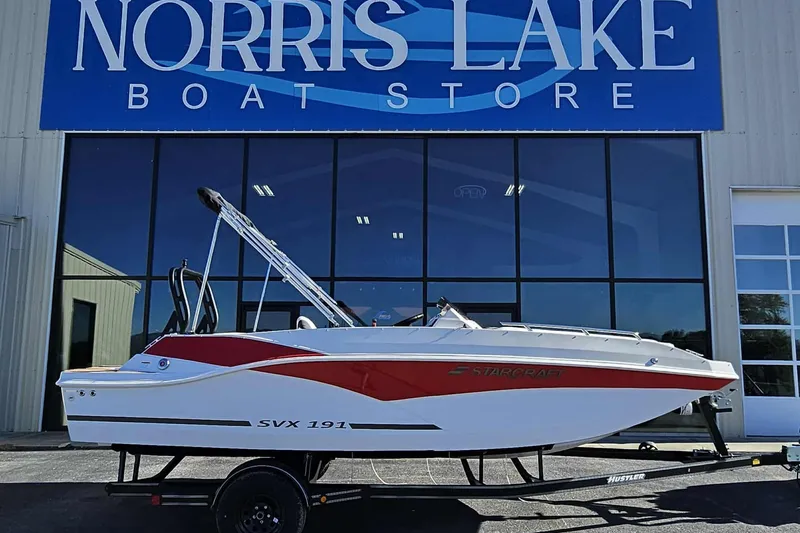
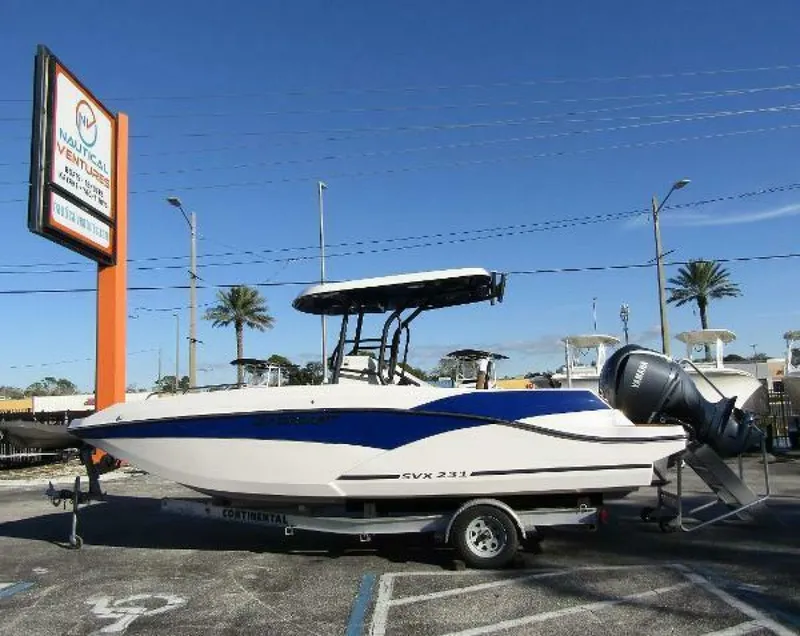
In the mid-range, Starcraft’s published “Starting At” prices for popular family models put the Starcraft SVX OB deckboat series at $41,300 with a 90 hp motor and trailer, and Starcraft’s pontoon ladder steps up through lines like the Starcraft GX at $29,160 and the Starcraft SX and RX and others shown in the same Starcraft showroom navigation. citeturn1view1turn3view0 Real-world market price behavior in this middle band tends to be driven by horsepower, layout, and packages, which is why boats that share the Starcraft SVX name can be thousands to tens of thousands above the baseline MSRP style “Starting At” figure. For example, current new listings for the Starcraft SVX 191 OB are often advertised from the high $40,000s into the upper $50,000s when paired with larger engines and dealer-selected option packages, with multiple 2026 SVX 191 OB listings advertised between $46,999 and $58,718 and another at $49,900. citeturn0search4turn0search0turn0search3 Similarly, larger mid-range Starcraft deckboats like the Starcraft SVX 231 OB are advertised well above entry SVX pricing; one new 2026 SVX 231 OB is shown at $74,900 with a trailer included, illustrating how configuration moves the market price away from the base figure. citeturn4search2
At the premium end of the Starcraft pontoon lineup, Starcraft positions the Starcraft SX as its luxury flagship series and lists it at “Starting at $155,925” with a 200 hp motor, while stating that the price excludes optional trailer, freight and dealer prep. citeturn2view0 In today’s market price terms, premium Starcraft pontoons and higher-horsepower, longer-length configurations generally command higher asking prices than entry and mid-range boats, but actual ads often cluster by engine size and length more than by brochure hierarchy. For instance, new 2026 Starcraft EXS series pontoons with larger engines show asking prices in the mid $70,000s to mid $80,000s in current listings, with an EXS 3 advertised at $74,936 and an EXS 5 Q DH advertised at $86,620, which helps bracket what many buyers see as a realistic “equipped” market price for an upgraded Starcraft pontoon even when the flagship SX starting MSRP is higher. citeturn4search8turn4search0 Options and real-world variables like engine choice, trailer inclusion, electronics, and (for pre-owned boats) hours and condition are typically the largest drivers of why a Starcraft market price may sit above or below a given published “Starting At” configuration.
Putting it all together, Starcraft MSRP style “Starting At” pricing (as published on Starcraft’s site) runs from $22,495 for the Starcraft Starfire utility line, up through key family models like the Starcraft SVX OB at $41,300 and all the way to premium pontoons like the Starcraft SX at $155,925. citeturn1view1turn2view0 By comparison, current market listings for new Starcraft boats commonly show entry pontoons like the Starcraft LX 16 R around the high $20,000s to about $30,000, mid-size deckboats like the Starcraft SVX 191 OB roughly in the high $40,000s to upper $50,000s depending on engine and packages, and larger deckboats like the Starcraft SVX 231 OB around the mid $70,000s in at least some advertised configurations. citeturn0search2turn0search0turn0search3turn4search2 Starcraft’s own notes also matter for budgeting because multiple lines explicitly state that published starting prices exclude items such as optional trailer (common on pontoons), plus freight and dealer prep, so the out-the-door number can be meaningfully higher than the listed MSRP baseline even before taxes and registration. citeturn2view0turn3view0 Market prices vary by location, condition, model year, and dealer.
WHAT OTHER STYLES OF BOATS DO THEY MAKE?
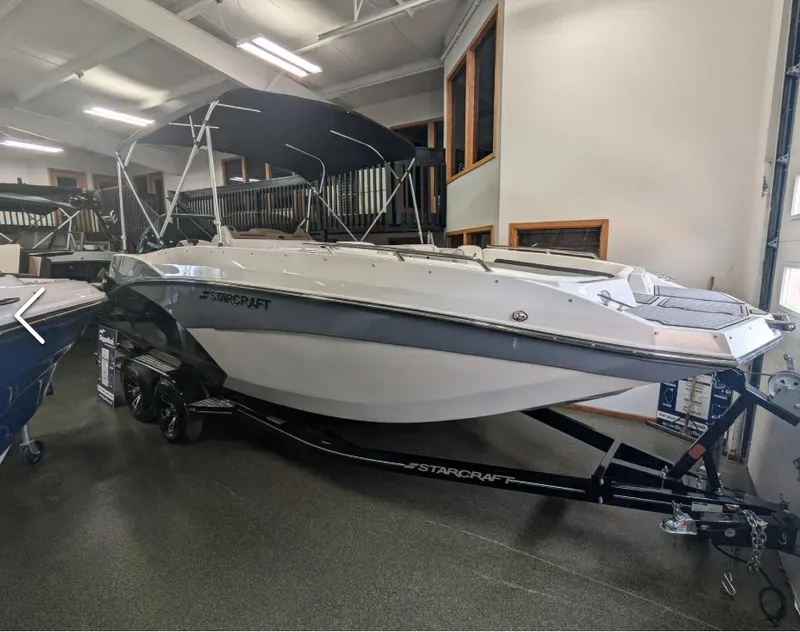
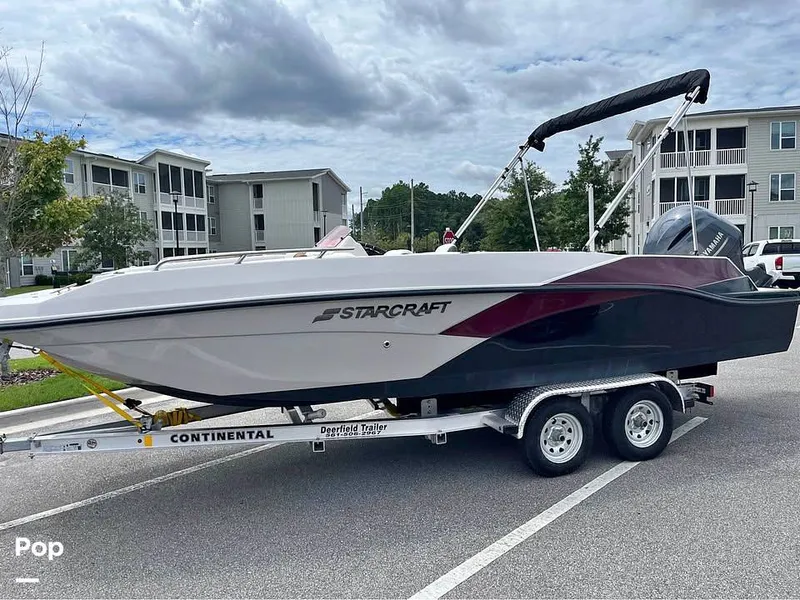
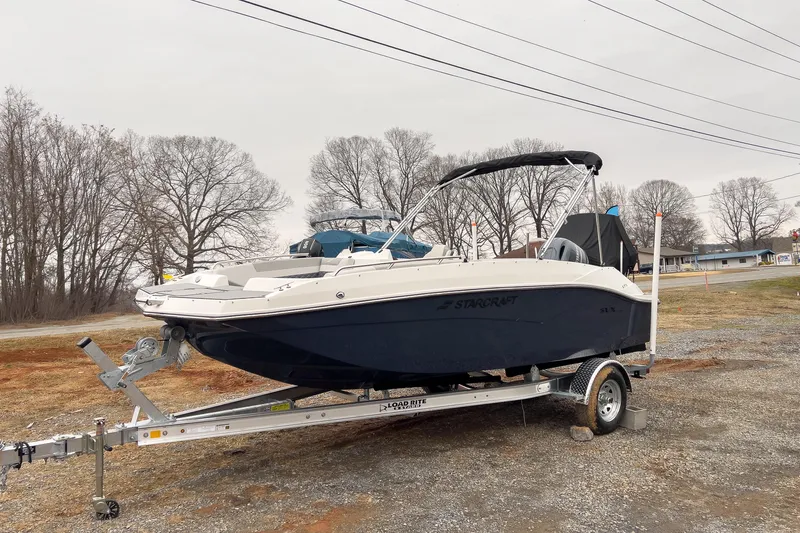
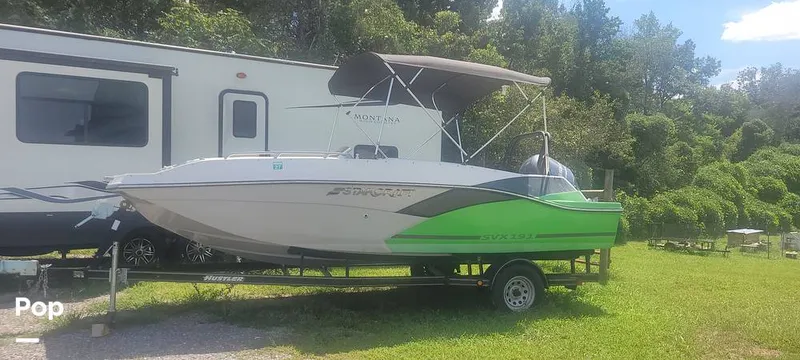
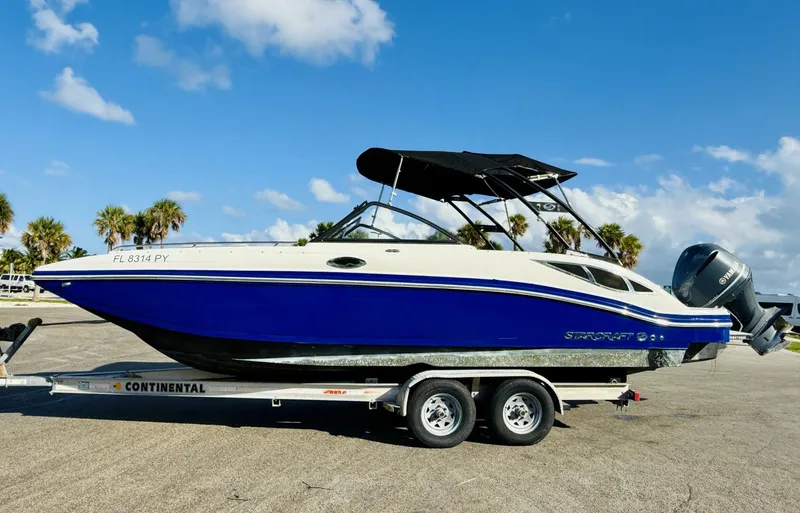
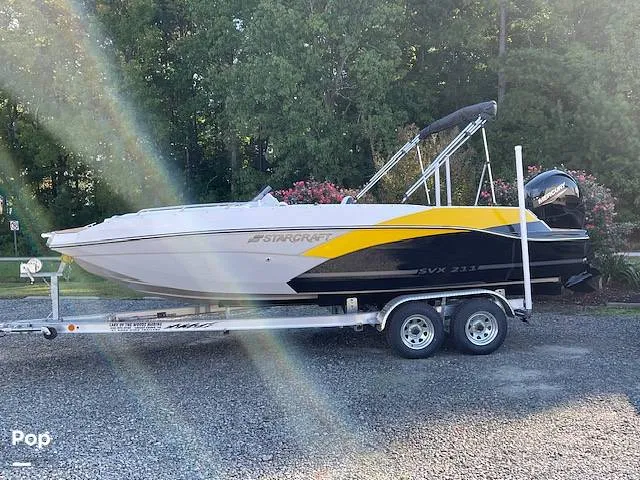
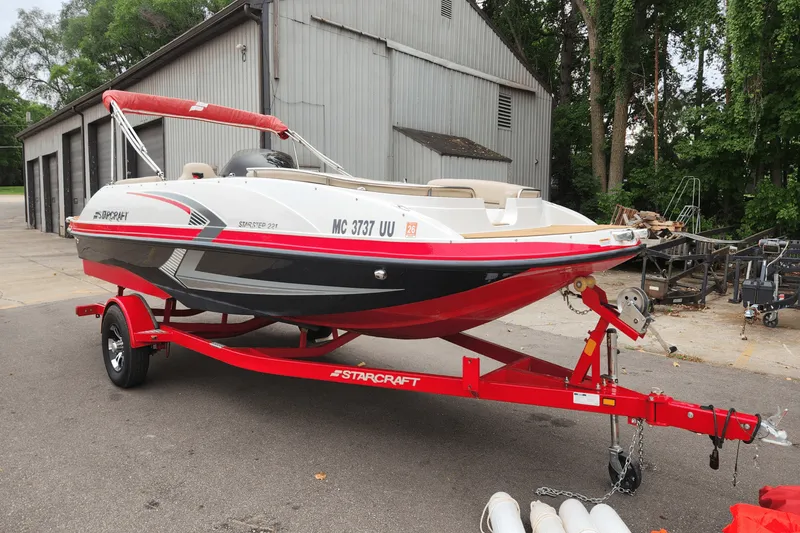
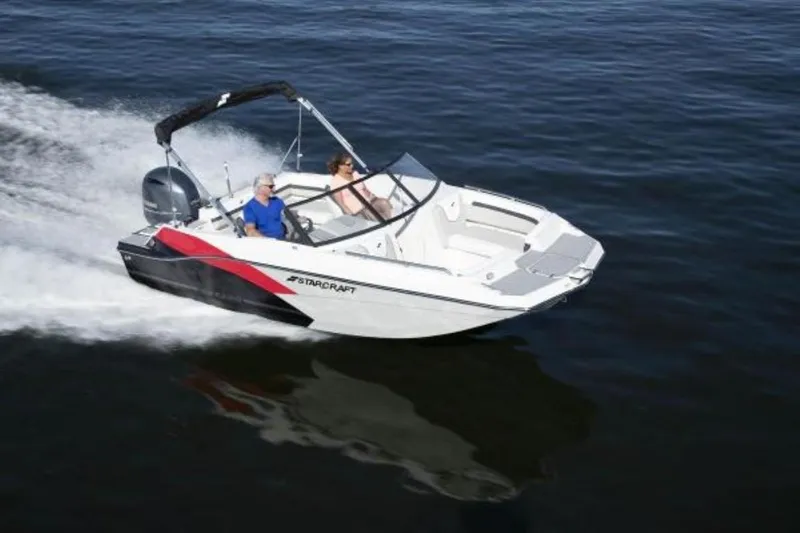
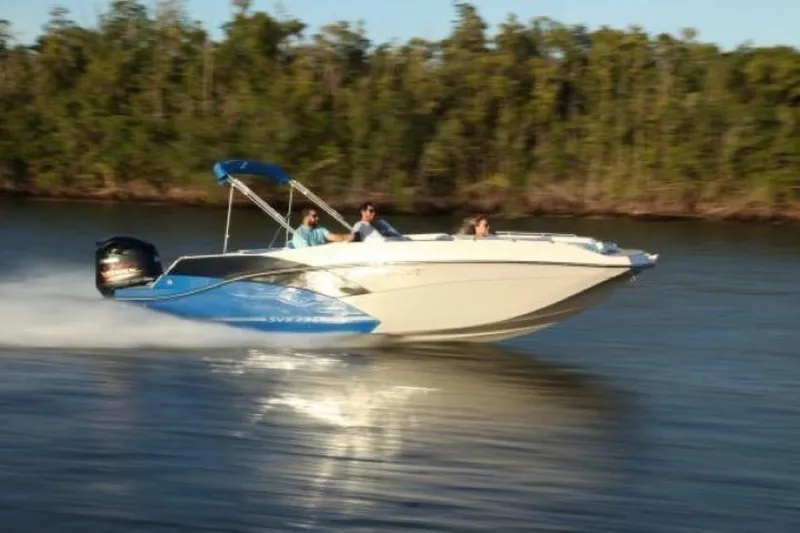
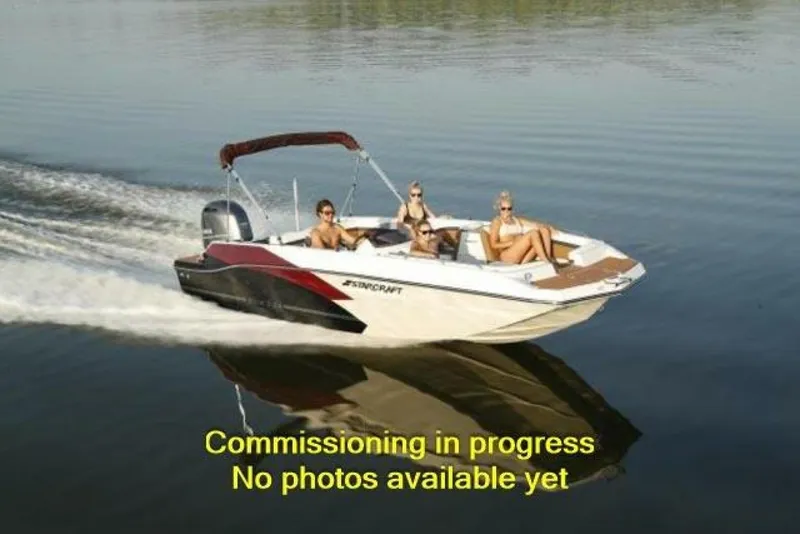
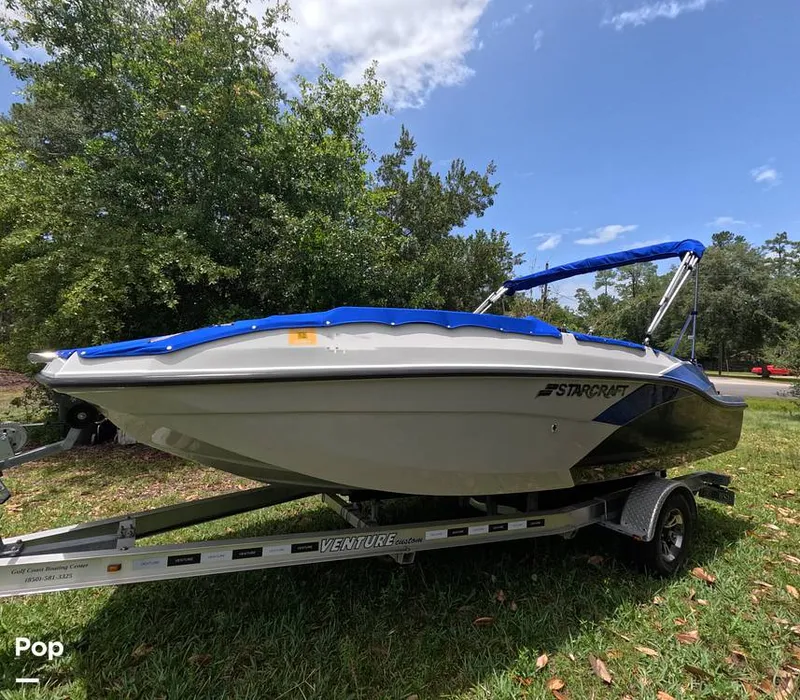
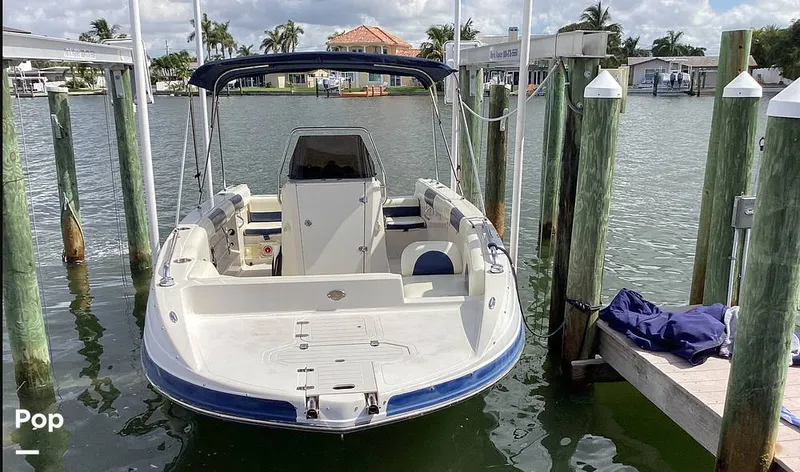
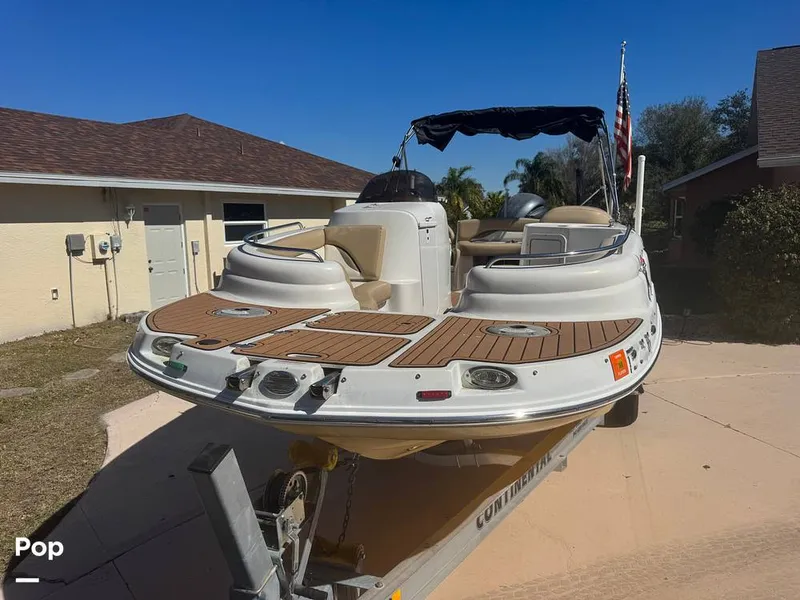
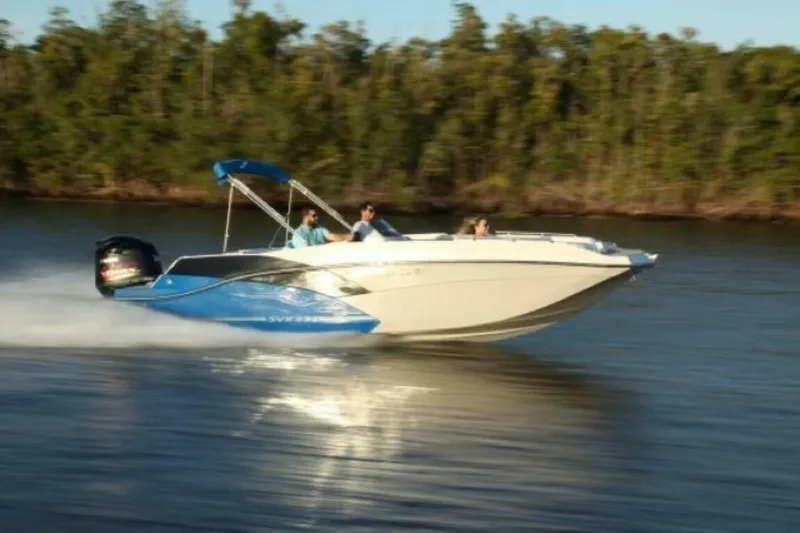
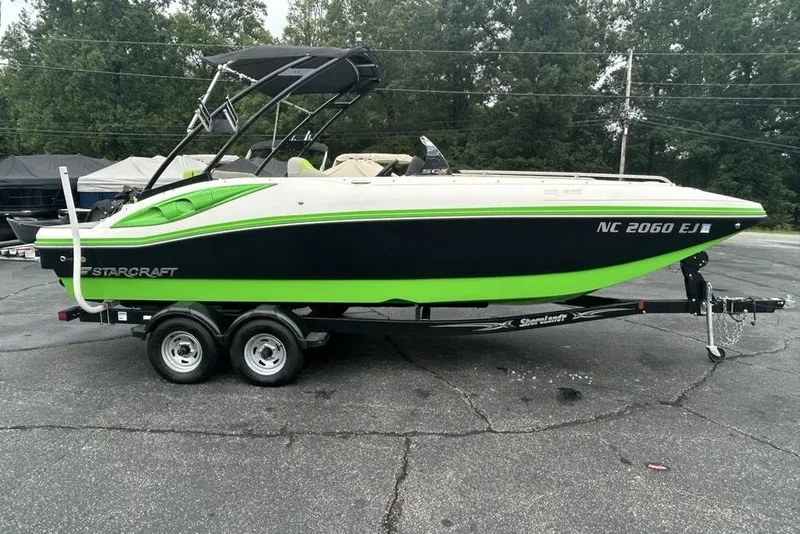
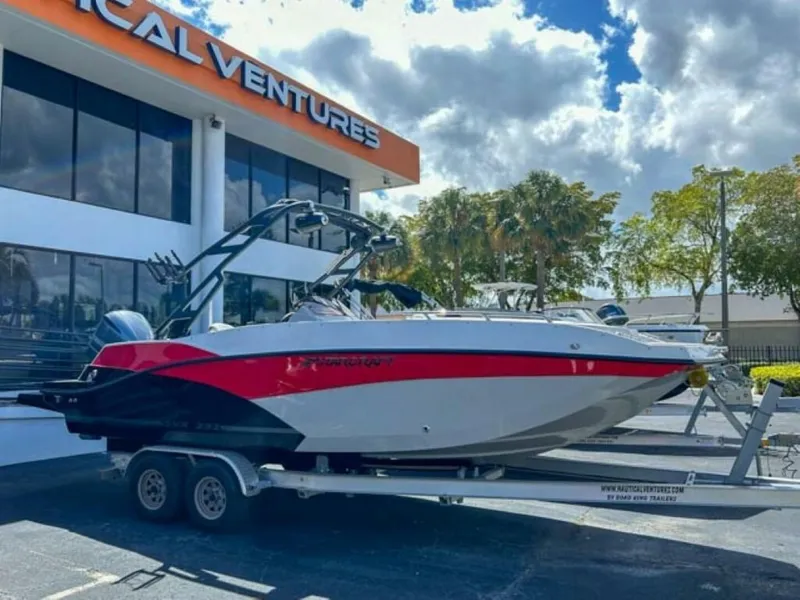
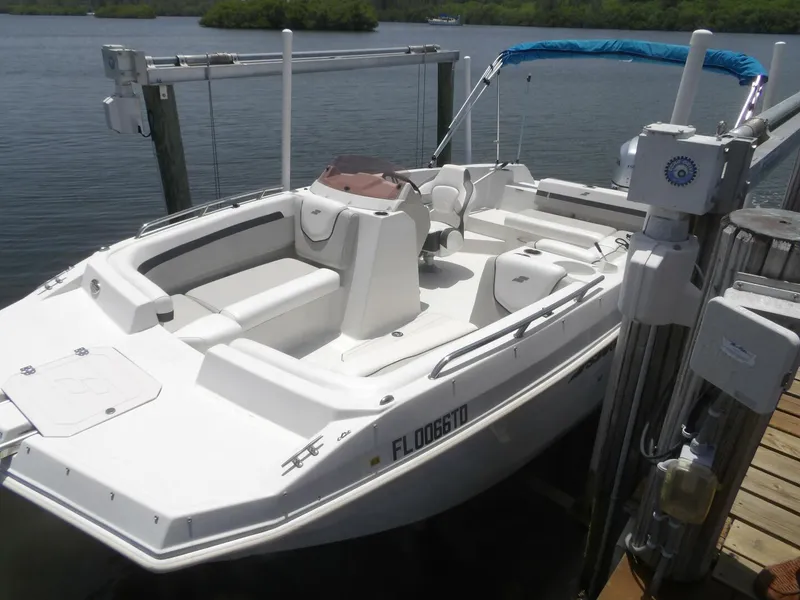
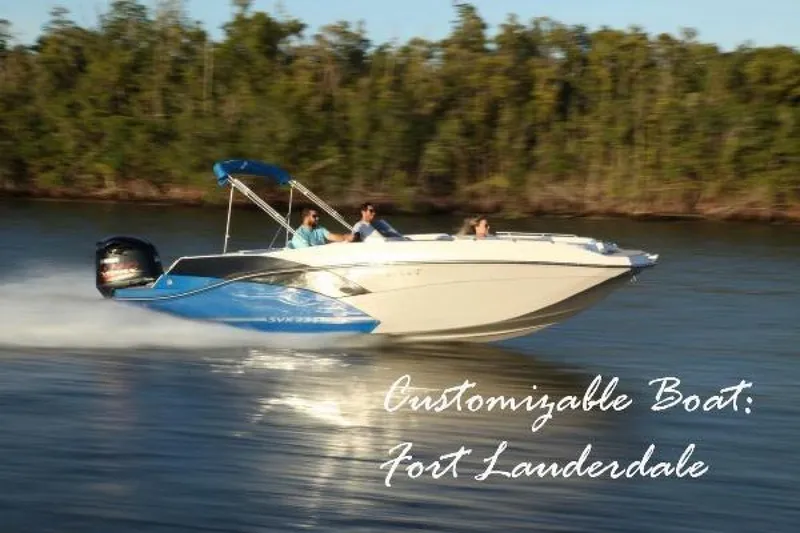
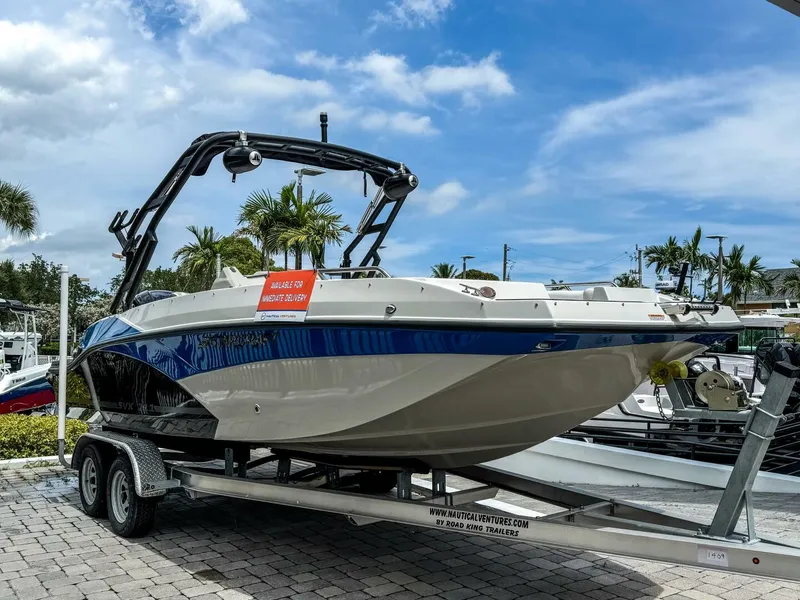
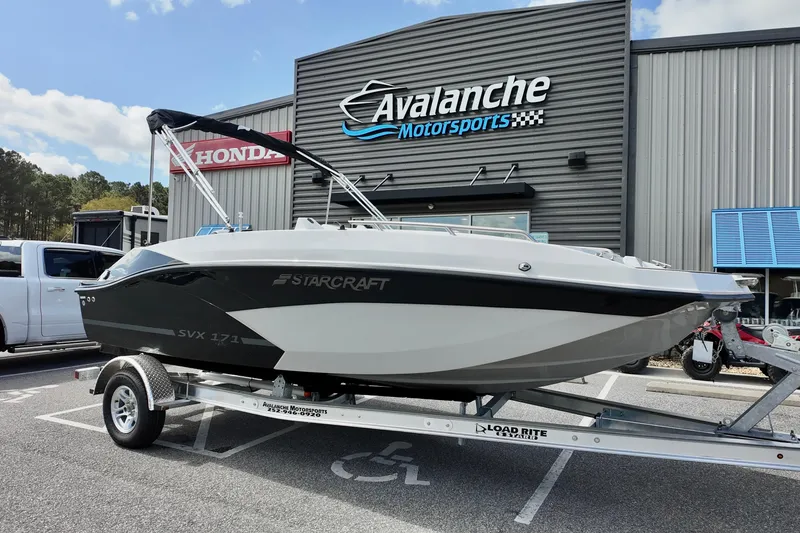
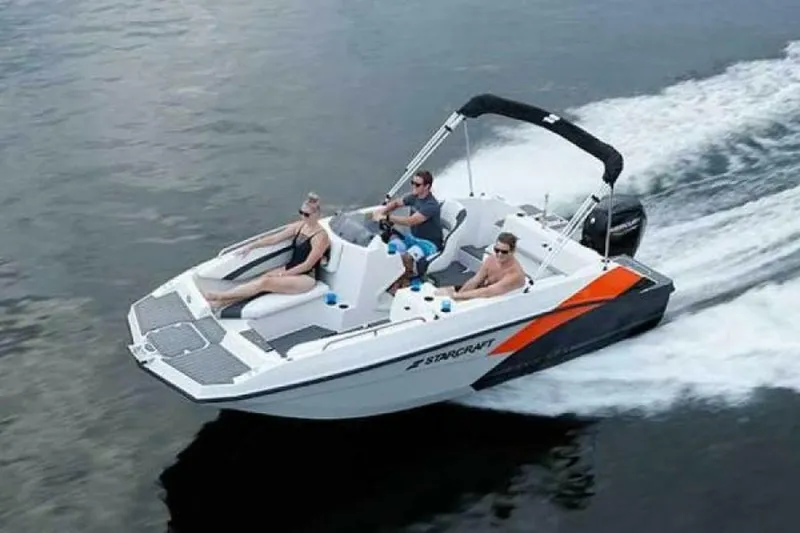
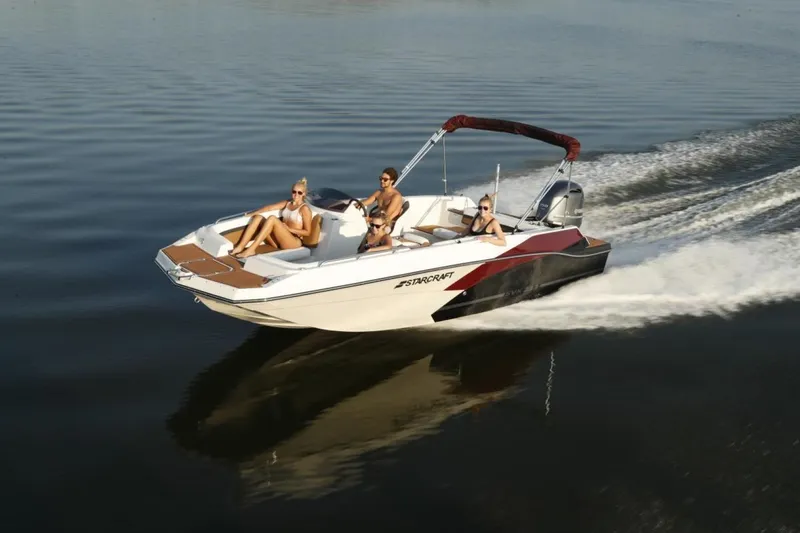
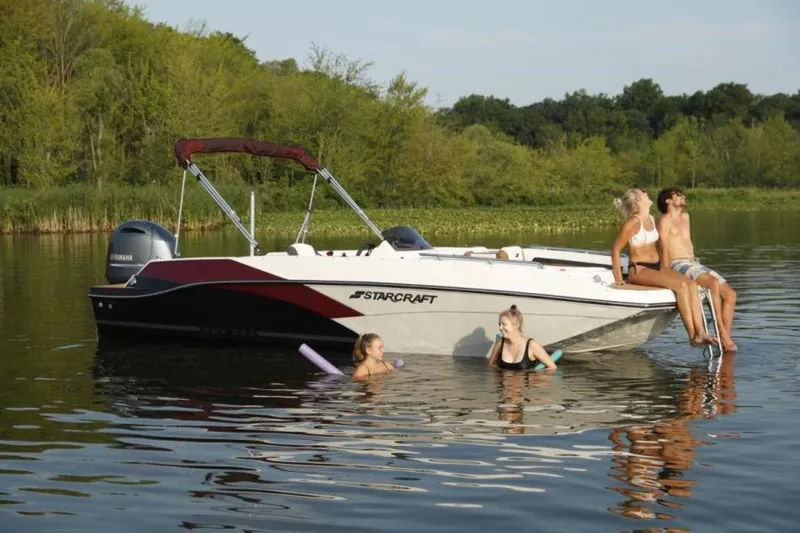
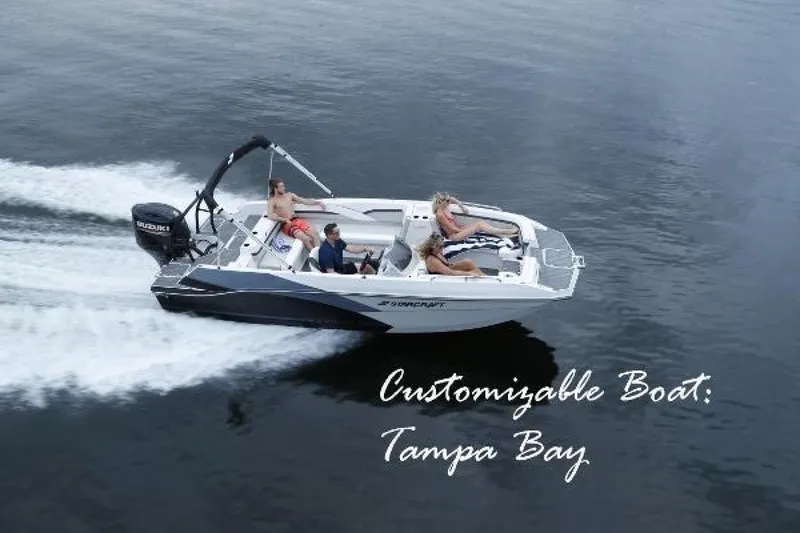
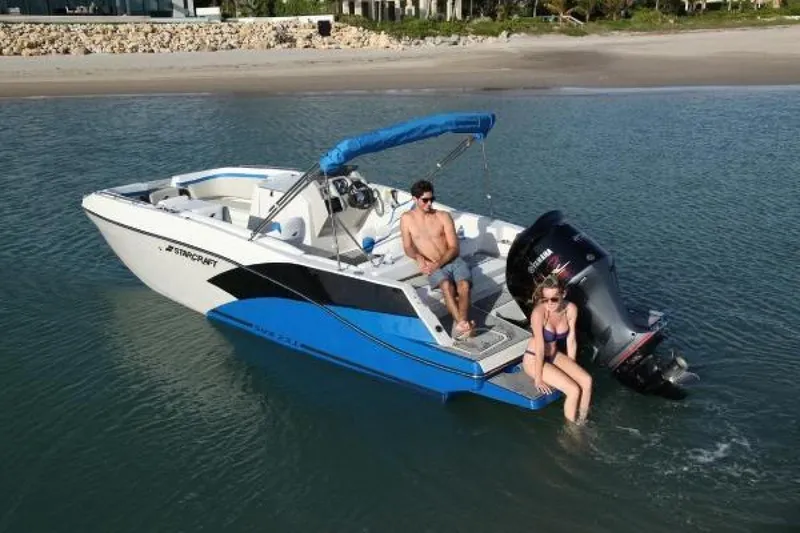
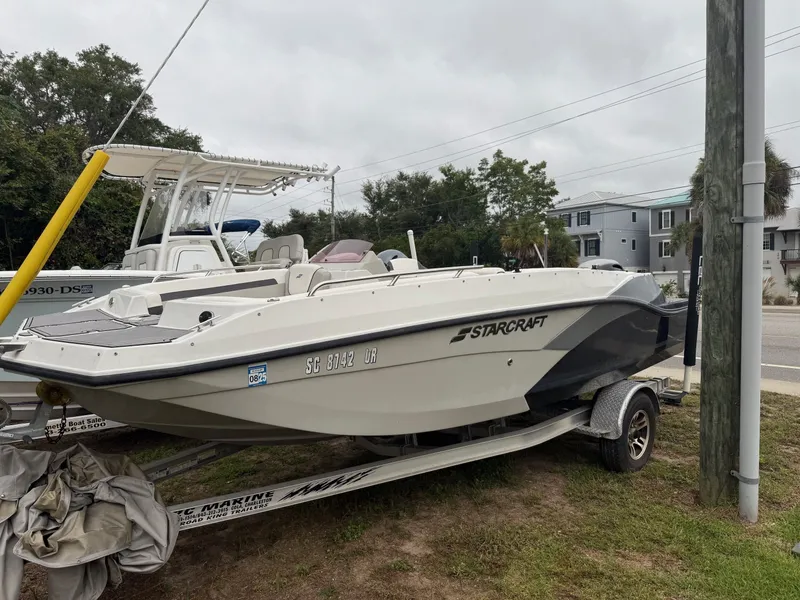
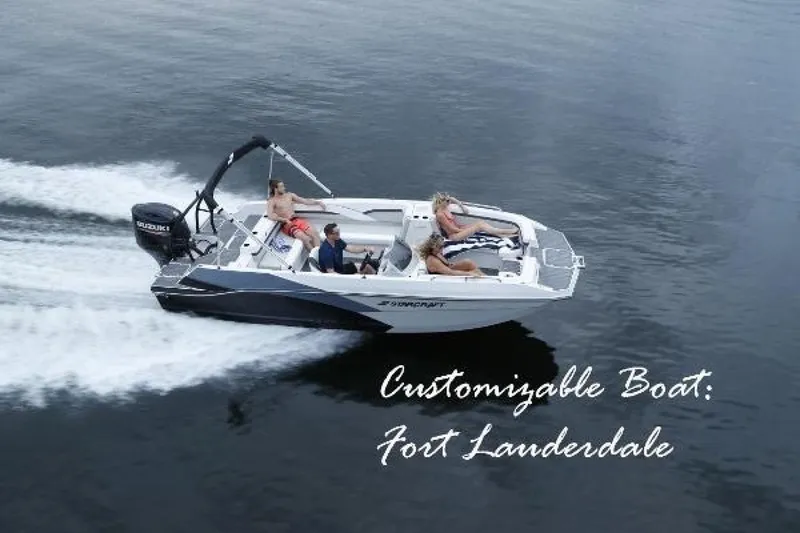
Starcraft makes a wider mix of boat styles than many people realize, and today their core production lineup is built around three big categories: pontoon boats, fiberglass deck boats, and aluminum fishing and utility boats. On the pontoon side, the brand is especially well known for family-friendly cruising and tow-sports pontoons such as the SLS, EXS, EX, LX, and GX series, plus fishing-oriented pontoon layouts like EX Fish and CX Fish, which blend lounge seating with angler essentials like livewells and rod storage depending on the floorplan. For buyers who want a sportier, fiberglass platform, Starcraft’s SVX deck boat family covers everything from value-forward runabout style deck boats (SV OB) to larger, more feature-packed models (SVX OB and SVX IO), and they even offer center console deck boat variants under the SVX OB CC lineup for people who want a more open, fish-and-play layout. Rounding out the current catalog is a deep bench of aluminum fishing boats aimed at everything from compact, trailer-friendly lakes to big-water walleye and multi-species duty, including lines like Storm, Delta, Superfisherman, Fishmaster, STX, Mariner, and Starfire, plus straightforward utility designs such as the Freedom and Alaskan series and simpler small utility offerings like Jon Boats, SL, SF, and SF DLX, with most models designed around practical outboard power, easy trailering, and layouts that prioritize usable space for families, anglers, or workboat chores.
Historically, Starcraft has also built other notable styles that sit outside what you see in their current showroom, and these older models are a big reason the brand has such a long-running presence on the used market. One of the most recognizable past styles is the Starcraft Stardeck line, which many owners remember as a deck-boat like platform in earlier years and which helped cement Starcraft’s reputation for roomy, social layouts that worked well for sandbar days, lake cruising, and watersports even when the industry was less focused on modern hybrid deck boat concepts. Depending on era, you will also run into older Starcraft aluminum fishing families that predate today’s Storm, Delta, and Fishmaster naming, including previous generations of deep-V and multi-species rigs that emphasized big casting decks, windshield or side-console configurations, and rugged riveted construction, and it is common to still see these boats running strong because they were built for simple maintenance and long service life. While these discontinued styles and legacy model families are not part of Starcraft’s current production lineup, they represent the brand’s evolution from practical, no-nonsense aluminum boats into a broader range that now includes modern pontoons and contemporary fiberglass deck boats, and they remain relevant for shoppers who are willing to buy pre-owned to get a specific older layout or feature mix.
What Starcraft does not really chase, at least under the Starcraft Marine badge, are the niches that require highly specialized inboard towboat platforms or large-yacht cruising formats, so you should not expect to see dedicated ski and wake boats built like purpose-designed wakeboard machines, nor should you expect true cabin cruisers or luxury yachts in the current Starcraft range. Even within the family category, Starcraft tends to focus on pontoon boats, deck boats, and fishing boats rather than competing heavily in areas like full-on offshore center console fishing boats or large express-style saltwater boats, because their DNA is primarily about versatile inland-water and nearshore-friendly designs that deliver space, comfort, and fishability without overcomplication. In practice, that means the brand’s product strategy stays centered on aluminum fishing boat toughness, pontoon comfort and layout variety, and deck boat versatility, which is why you will see a consistent emphasis on outboard power across much of the lineup, trailer-friendly sizes, and floorplans that are designed to work for real owners who mix cruising, watersports, and fishing in the same season rather than buying a single-purpose boat.
In summary, if you are asking what other styles of boats Starcraft makes beyond the one series you may already know, the answer is that they are a multi-category builder with strong representation in pontoon boats, deck boats, and aluminum fishing and utility boats, with recognizable current families like SLS, EXS, EX, LX, and GX on the pontoon side, SVX and SV on the deck boat side, and lines like Storm, Delta, Superfisherman, Fishmaster, STX, Mariner, and Starfire for anglers, plus utilitarian options such as Freedom, Alaskan, Jon Boats, SL, SF, and SF DLX. Their reputation is built on delivering a lot of usable boat for the money, whether that is a family pontoon with a ski pylon for tubing, a fiberglass deck boat that blends open space with sporty handling, or a deep-V aluminum fishing boat meant to run confidently when the wind comes up. Looking forward, Starcraft’s recent product direction already shows a steady trend toward crossover layouts, such as center console deck boat variants and fishing focused pontoon floorplans, and that kind of hybrid thinking is the most likely place you will see further evolution, because it lets them keep refining the styles they are known for while giving buyers more ways to rig one boat for cruising, fishing, and watersports.
WHAT KINDS OF ENGINES DO THESE BOATS USE?
Starcraft boats primarily use outboard power across their aluminum fishing boats, utility models, and many deckboats, because a modern four-stroke outboard is easy to service, trims up for shallow water and trailering, and keeps cockpit space open for fishing or family seating. In the current lineup, you will most often see a single outboard on boats from roughly 16 to 21 feet, including entry fishing models like the Starfire 166 and compact deep V rigs like the Stealth 16 series, while larger big water fishing platforms like the Fishmaster series are also designed around a single high horsepower outboard for simplicity and strong midrange punch. Starcraft also offers sterndrive power on select fiberglass deckboat models, specifically the SVX IO series, where an inboard outboard package delivers a familiar runabout feel and clean transom styling for watersports and cruising.
Horsepower across Starcraft tends to scale in a very straightforward way with boat size and mission. Smaller aluminum fishing and utility platforms commonly top out around 60 to 90 horsepower, as seen on the Starfire 166 SC and Stealth 16 models that list 90 hp maximums and a 60 hp maximum on the Stealth 16 Tiller for simple, efficient fishing rigs. Moving up into 17 to 19 foot multi species and bass style packages, maximum ratings commonly land in the 150 to 175 horsepower range, such as the Delta 178 Pro models at 150 hp and the Delta 188 DC Pro at 175 hp, giving more speed for bigger water and heavier loads. At the top end of Starcraft’s outboard fishing range, the Fishmaster 196 is rated up to 200 hp and the Fishmaster 210 up to 250 hp, while the fiberglass SVX IO deckboats are rated up to 250 hp on the 210 and 211 and up to 300 hp on the 230 and 231, supporting strong pull for tubing and skiing.
Starcraft’s website and showroom listings emphasize horsepower ratings and packaged pricing with a motor, but they do not consistently publish a single exclusive engine brand across every model page, so the most accurate expectation is that engines are typically dealer rigged to match regional availability and buyer preference within the major outboard families. In practice, that means you should plan on a modern four-stroke outboard on most Starcraft models, with factory matched controls and rigging commonly included as part of the boat and motor package on models shown with a motor and trailer. For sterndrive buyers, third party testing of the SVX 230 IO notes MerCruiser sterndrives available up to 300 hp, which aligns with Starcraft’s own published 300 hp maximum rating for the SVX 230 IO and 231 IO.
From a boater benefits standpoint, Starcraft’s engine strategy is about easy ownership and usable space: a single four-stroke outboard is simple to winterize, offers excellent low speed control for docking and trolling, and trims up to reduce draft at the ramp or in shallow coves, which is especially practical on their fishing and pontoon oriented designs. On bigger deep V aluminum models like the Fishmaster, pairing the high freeboard hull with a max rated outboard helps deliver the torque and throttle response needed for rougher water while keeping access to the transom and bilge areas straightforward. In the SVX IO sterndrive deckboats, the higher horsepower ceiling supports quick hole shot for watersports, and owners often appreciate the balanced feel and familiar runabout layout for cruising. Overall, Starcraft uses outboards as the core solution and adds sterndrive IO on specific fiberglass deckboats, a mix that fits the brand’s focus on versatile family boating, fishing utility, and practical maintenance.
WHY BUY THIS BRAND OVER A COMPETITIVE BRAND?
When buyers ask about the build quality of Starcraft boats vs competitors, the most defensible starting point is Starcraft’s own published construction methods across its aluminum lineup and performance focused hull engineering in key models. Starcraft emphasizes heavy gauge aluminum fabrication with CNC routed parts for consistent fit, a one piece aluminum bottom that is folded and molded, and a riveted build intended to provide strength while still allowing the controlled flex that supports a smooth, dry ride in real conditions. Starcraft also specifies 5052 H34 marine grade 100 gauge aluminum for resistance to dents, dings, and corrosion, plus through bolted transom braces designed to accommodate higher horsepower. On performance focused aluminum fishing models, Starcraft highlights the Power Trac Hull, which pairs longitudinal machine formed ribs with the brand’s Torsion Beam Construction stringer system, described as flexing with waves instead of against them for greater strength and a smoother ride, and the company further ties that design to soft and smooth re entry in rough water via aggressive deadrise at the transom. For deckboats in the SVX line, Starcraft also describes a modified dihedral Pad V hull as a more efficient running surface that can deliver strong speed and quicker planing with less horsepower, alongside a reverse chine hull on certain SVX models, reinforcing the brand’s claim that these designs are built to feel confident and comfortable in varied water.
Why choose Starcraft often comes down to how much functionality the brand includes as standard equipment and how clearly the layouts support both family time and purpose driven days on the water. Starcraft states that it is the number one selling brand of deckboats in the USA and positions the SVX series around value through standard features that include items such as a bimini top, EVA soft touch traction mat, and Bluetooth stereo, and the company also promotes Beam Forward design with an 8.5 inch beam carried forward to increase usable interior space for seating and storage, plus deep cockpits with full upholstery packs and full height backrests, and a claim of greatest seating capacity in the industry for the SVX series. In showroom listed SVX OB configurations, Starcraft further documents standard items like Wet Sounds Bluetooth audio, bimini top, tilt steering, EVA traction mats in bow and stern, and SeaStar hydraulic steering on many lengths, while also offering an optional fishing package with fish seats and a livewell, which is a practical example of how Starcraft vs other fishing boats can be less about choosing between recreation and angling and more about configuring a single platform to do both. On the pontoon side, Starcraft’s HMX performance messaging explains that tube configurations with HMX Performance Strakes are intended to improve lift, reduce drag, increase speed, plane faster, and tighten the turning radius, and in certain models Starcraft also highlights features like removable ski tow pylons and power bimini tops, supporting a straightforward case that the brand is designed for cruising, watersports, and flexible day boating without forcing major compromises in layout or onboard usability.
Starcraft also leans into the idea that utility and comfort can coexist when the platform is engineered and outfitted to reduce tradeoffs, which is especially clear in its pontoon and deckboat offerings aimed at multi use owners. On pontoons, Starcraft frames HMX as sport boat style speed and handling paired with pontoon flexibility, and it explicitly connects the strakes and tube options to tighter turns and the ability to rejoin a downed skier quickly, while models equipped with PR25 or PR20 center tube options are described as providing an integrated ski pylon and transom height choices for different engine shafts. In model descriptions, Starcraft illustrates comfort oriented versatility with elements like dual console designs for added protection for captain and co captain on certain RX models, convertible rear lounges that shift between sunbathing and socializing, and bar style entertaining layouts that convert to lounging, all while keeping the performance package as standard on those builds. Starcraft further addresses the comfort side of the ownership experience with its vibration dampening process for pontoons, which the brand says reduces rattles by placing synthetic rubber, butyl tape, and high density foam tapes along cross members and between rails and fence panels to eliminate rattle or vibration while cruising. Taken together, those manufacturer stated features reinforce a practical interpretation of customer priorities that often sit behind searches like Starcraft boats vs competitors, namely a desire to fish, cruise, pull riders, and relax in one boat that is configured for real world comfort as well as on water control.
For long term ownership confidence, Starcraft backs its product positioning with both corporate longevity and a clearly defined warranty program, which is often the deciding factor when shoppers are comparing a value priced boat to a higher priced alternative. Starcraft presents itself as still family owned and operated with heritage dating to 1903, and it ties that longevity to ongoing innovation milestones such as early adoption of aluminum construction and later expansion into fiberglass and Deep V aluminum fishing designs, while emphasizing meticulous attention to detail and a large workforce with long tenure. On the support side, Starcraft promotes its Lifetime plus 6 warranty program under Smoker Craft Inc., describing limited lifetime warranty coverage on hull and structure and additional six year coverage on components, flooring, and upholstery in many cases, along with transferability to a second owner and parts and labor included, which directly supports the value argument because it shifts more of the long tail risk away from the buyer. Starcraft also states that its Lifetime plus 6 warranty and award winning customer service are designed to keep owners spending more time on the water, and while the brand does not need to make claims about any specific competitor to justify the choice, the documented combination of aluminum and hull engineering details, multi use layouts and performance packages, and a long standing warranty platform provides a concrete, manufacturer supported reason that many shoppers cite when they are evaluating customer satisfaction with Starcraft and deciding whether Starcraft is the right balance of performance, reliability, and long term value for their budget.
WHAT IS THE MOST POPULAR MODEL OF THIS BRAND BEING BUILT TODAY?
Based on Starcraft Marine’s current showroom presentation, the EX Series pontoon, and specifically the EX 20 Q DH at 20 feet 10 inches, is the closest thing to a “most popular” Starcraft model being built today because it sits at the center of the brand’s family value lineup and is shown with an unusually broad spread of buildable floorplans. In the 2025 Starcraft showroom, the EX is positioned as an affordable, family friendly pontoon designed for fun on the water, with layouts aimed at both cruising and watersports, and the EX line lists multiple individual models across 20 foot, 22 foot, and 24 foot lengths, suggesting high mix and high throughput compared with specialty series. Starcraft also describes the EX 20 Q DH as a blend of relaxation and versatility, using convertible seating concepts to support different on water activities in a single size class, which is typically where pontoon demand concentrates for first time and move up buyers.
For the Starcraft EX 20 Q DH, Starcraft publishes core specs including a length of 20 feet 10 inches, 102 inch beam, 20 gallon fuel capacity, and a 9 person rating at 1,315 pounds, along with a 125 hp maximum rating in twin tube form and a 200 hp maximum rating when equipped with a third tube. Standard and described usability features that support its broad appeal include plush forward lounges for relaxing, a rear transitional seat that converts between a forward facing bench and a rear facing lounge, and supportive low back bucket seating for the driver and companion, all aimed at comfortable cruising and social time aboard. With Starcraft offering performance oriented third tube capability and multiple EX floorplans across adjacent lengths, buyers can tune the same core platform toward relaxed cruising, light watersports, or entertaining, which is a strong indicator of why this particular series and size bracket is widely featured and positioned as a mainstream, high demand choice in Starcraft’s current production lineup.
The typical buyer for the EX 20 Q DH is a family or couple looking for an easygoing pontoon that can handle the most common weekend use cases without stepping into luxury flagship pricing, and Starcraft’s own positioning reinforces that it is built as a family friendly, affordable platform with layouts for both cruising and watersports. What makes this model especially versatile is that the interior is designed around social seating first, including forward lounges for relaxing and a rear seat that reconfigures from conversation friendly forward facing seating to a rear facing lounge for sightseeing or anchoring out, which helps the same boat feel appropriate for slow cruising, sandbar time, or towing in calmer conditions. Starcraft also emphasizes customization at the EX series level, including multiple floorplans and cosmetic choices, which aligns with how mainstream pontoon buyers shop, selecting a proven length class and then tailoring seating and comfort to their home lake and crew size.
From an availability and brand investment standpoint, Starcraft keeps the EX Series prominently integrated into its live online showroom with direct paths to Build My Boat, Find a Dealer, and Request a Brochure, indicating it is a core, actively marketed production line rather than a limited run niche model. The fact that Starcraft supports the EX with a wide range of individual floorplans across three length classes, publishes detailed specs at the model level, and highlights both comfort and watersports use cases suggests the company expects this series to represent a meaningful share of day to day dealer demand. While Starcraft does not publish a single official unit volume leader statement for the entire brand lineup, the EX 20 Q DH sits in the high volume heart of the market, combining a manageable 20 foot class footprint, strong passenger capacity for its size, and scalable power ratings, which together explain why the EX line is positioned as a signature, broad appeal offering in Starcraft’s current build mix.
WHAT IS THE HISTORY OF THIS BOAT BRAND AND COMPANY?
Starcraft’s boatbuilding story is traced by the company itself to 1903, when the brand’s roots in northern Indiana began taking shape under the Schrock family’s direction, and when Starcraft says it was already differentiating itself by building boats from aluminum at a time when wood was the norm, positioning those early models around lighter weight, durability, and easier ownership for everyday families. According to Smoker Craft Inc., the wider corporate lineage starts with Arthur E. Schrock’s work at Middlebury, Indiana’s Star Tank Company beginning in 1903, as the business expanded from galvanized steel tanks into boats and ultimately became Star Tank and Boat Company, and when the original owner died in 1926, Arthur Schrock purchased the rest of the enterprise, renamed it Starcraft, and focused the company fully on boat manufacturing. As the decades progressed, Starcraft’s early identity became closely associated with practical, trailerable aluminum fishing and pleasure boats built for broad accessibility, and the brand later marked another major materials milestone in 1958 by launching its first fiberglass models, expanding its ability to deliver more family runabout and pleasure oriented designs while continuing its aluminum heritage.
After World War II, Smoker Craft Inc. credits Harold Schrock, Arthur’s son, with pioneering aluminum’s use for boatbuilding as the material became more available for civilian production again, and the company history describes Starcraft’s mid-century expansion into a broader recreational lineup that included aluminum cabin and cruiser style models such as the American, Holiday, Islander cuddy cabins, and Chieftain express cruiser, along with diversification into campers, RVs, and van conversions that leveraged its metalworking and cabinetry capabilities. Starcraft’s corporate structure then shifted during the conglomerate era, with Smoker Craft Inc. stating that Harold Schrock sold Starcraft to Bangor Punta in 1969, after which the brand went through multiple corporate owners and was purchased by Brunswick Corporation in the late 1980s, before Brunswick decided to sell the brand again in the mid-1990s, when Doug Schrock and his sisters Cinda, Susie, and Sara, the children of Harold Schrock and grandchildren of founder Arthur Schrock, purchased Starcraft from Brunswick and returned the company to family control as an all-boats business. Through this same period of product evolution, Starcraft highlights a defining performance milestone in 1965, when it introduced what it describes as the world’s first high performance aluminum fishing boat with a Deep-V hull, and later, as higher horsepower outboards reshaped the market, Smoker Craft Inc. notes that Starcraft introduced its Power Trac hull design in 1991 to better accommodate those power levels, reflecting the brand’s continued emphasis on aluminum performance and rough-water capability.
In the modern era, Starcraft’s lineup broadened into a multi-segment portfolio that pairs fishing-focused aluminum designs with family entertainment platforms, while the company continued to emphasize innovation in both how boats ride and how they are built and supported. Starcraft points to its role in developing high performance pontoon boats and says it set a performance standard with its HMX tubes, positioning pontoons not only as cruising platforms but also as higher-speed, higher-handling boats that could compete for buyers who wanted more than traditional displacement pontoon behavior. At the same time, the brand’s ongoing fiberglass presence and its deckboat offerings supported a wider range of family layouts, and Starcraft’s own legacy catalog archive, which includes model-year catalogs such as 1970s runabouts and later fiberglass brochures, reflects how the company has repeatedly refreshed floorplans, sizes, and features across decades to keep pace with changing recreation trends while maintaining a consistent through-line of value-forward design and broad accessibility for families.
Today, Starcraft continues to present itself as a long-running, family-led American builder grounded in a heritage dating to 1903, and it frames its current identity around building innovative, high quality boats that families can afford and backing them with strong service and warranty support, while remaining part of the broader Smoker Craft Inc. family of brands based in New Paris, Indiana. On its own brand site, Starcraft also underscores that it is still owned and operated by the same family that started it more than a century ago, and it connects that continuity to a culture of craftsmanship, noting a large, experienced workforce and a long history of product firsts ranging from early aluminum construction to fiberglass expansion and the Deep-V performance breakthrough, with subsequent pontoon performance development. In practical market terms, that heritage now expresses itself in a comprehensive lineup that spans pontoons, deckboats, aluminum fishing boats, and utility models, aiming to serve both first-time boaters and repeat owners, and the company’s long-running emphasis on material-driven durability, performance-minded hull development, and family affordability remains the enduring thread that ties early Starcraft boats to the brand’s current position in the recreational marine market.
AWARDS AND RECOGNITIONS
Starcraft’s documented award history includes a notable early breakthrough in alternative propulsion: at the 2008 Miami boat show, the National Marine Manufacturers Association (NMMA) Innovation Awards recognized Starcraft Marine with the Environmental Award for the Eco-Star 200 electric boat. The Eco-Star 200 was highlighted for pairing straightforward access to electric motors with the maneuverability of twin propellers on a deck boat platform, signaling early brand visibility in electrified recreational boating. More recently, Starcraft Marine, identified as a Smoker Craft brand, was recognized at the 2025 Boat Builder Awards organized by International Boat Industry in association with Metstrade, winning in the Collaborative Solution between a Builder and its Supply Chain Partner category for the revived ’57 Ski Champ, a project praised for coordinated production of custom components to recreate a 1950s model at an accessible price point and to bring a heritage design back to market through modern supply chain collaboration.
In customer experience, Starcraft has also appeared in NMMA’s Customer Satisfaction Index program, a benchmark award built from independently measured owner-survey results. In the NMMA announcement covering the 2021 Marine Industry CSI Awards, Starcraft Marine was listed as an award recipient in two categories, Aluminum Outboard Boats and Deck Boats, reflecting verified, category-specific recognition for owner satisfaction in that program year. In the subsequent NMMA announcement for the 2024 Marine Industry CSI Awards, Starcraft itself is not listed among the honored manufacturers; instead, Smoker Craft is shown among the Aluminum Outboard Boats recipients, while the Deck Boats category lists Hurricane Deck Boats, and the Pontoon Boats category lists multiple brands that do not include Starcraft. Because NMMA publishes CSI winners by program year and category, the most defensible conclusion is that Starcraft’s verified CSI recognition in the available official NMMA record is confirmed for the 2021 award year, while additional consecutive-year claims cannot be substantiated from the accessible official lists. Even so, pairing an NMMA Innovation Award for the Eco-Star 200 with verified CSI category recognition demonstrates a brand profile built on both engineering direction and measurable owner satisfaction, supporting buyer confidence in product quality and after-sale experience.