2000 Crowther CatamaranSold
$80,900
Boat in Dighton, MA 02715 US
 Built in 2000
Catamaran

1 Engine (Outboard)

42 feet

Gas

Fiberglass/Composite
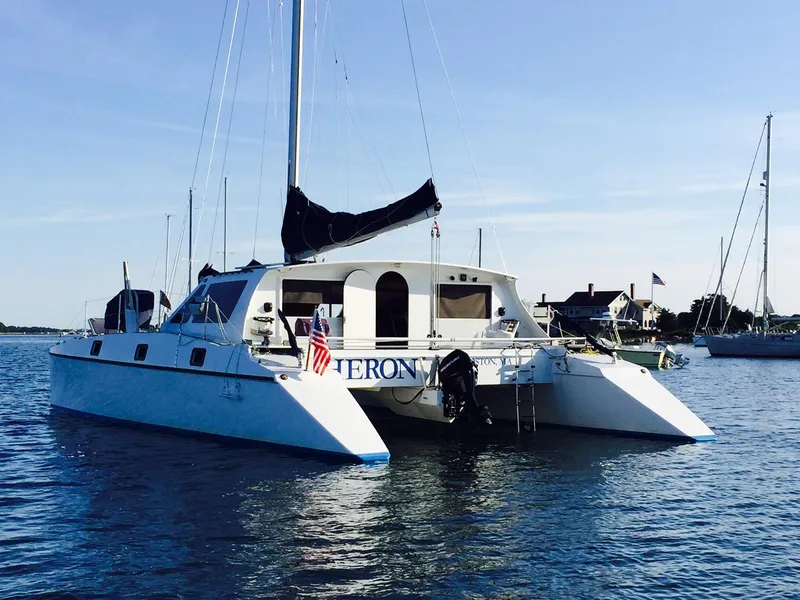
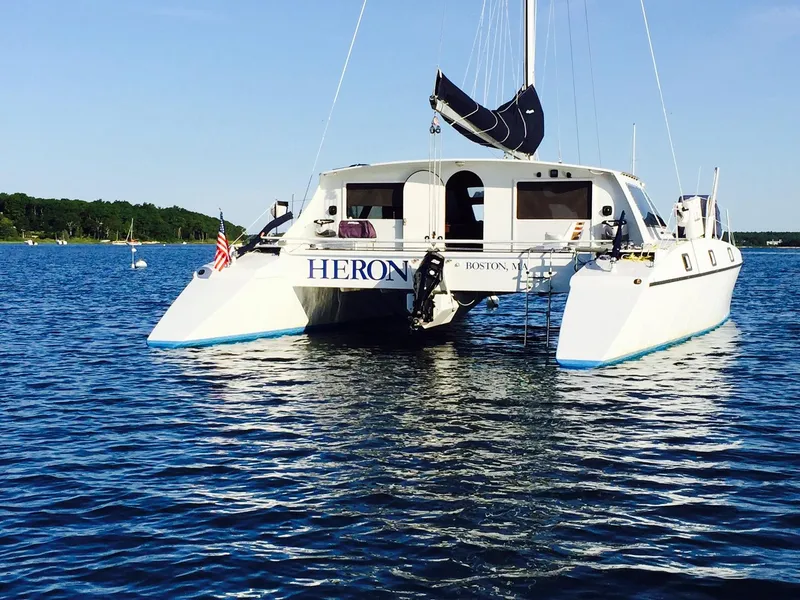
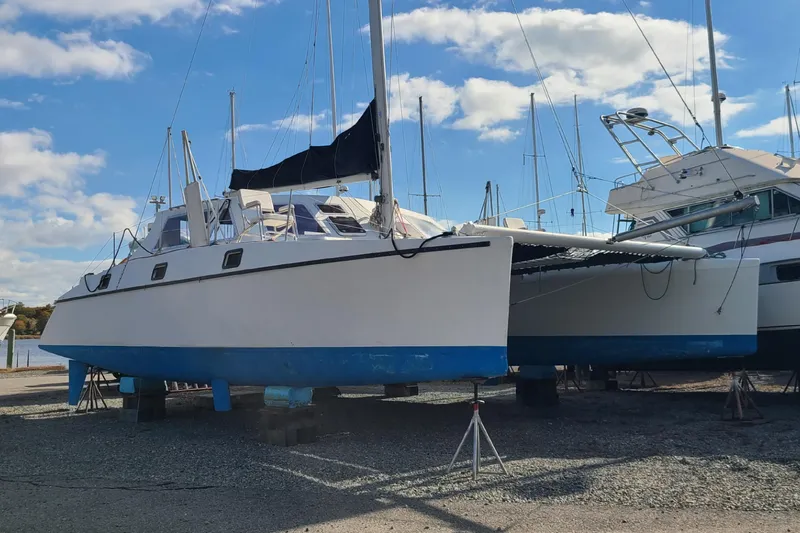
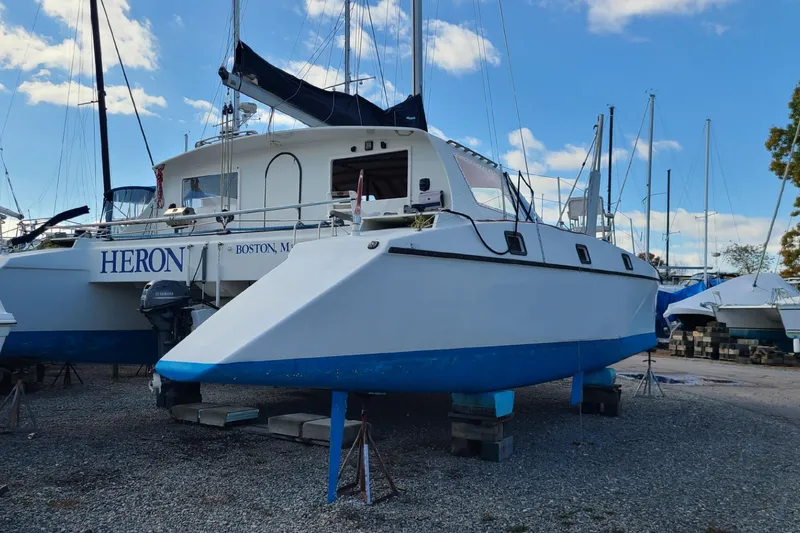
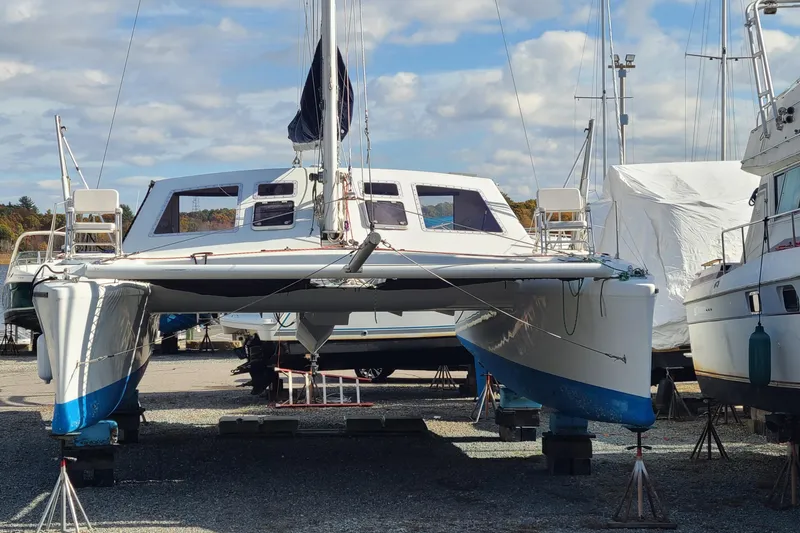
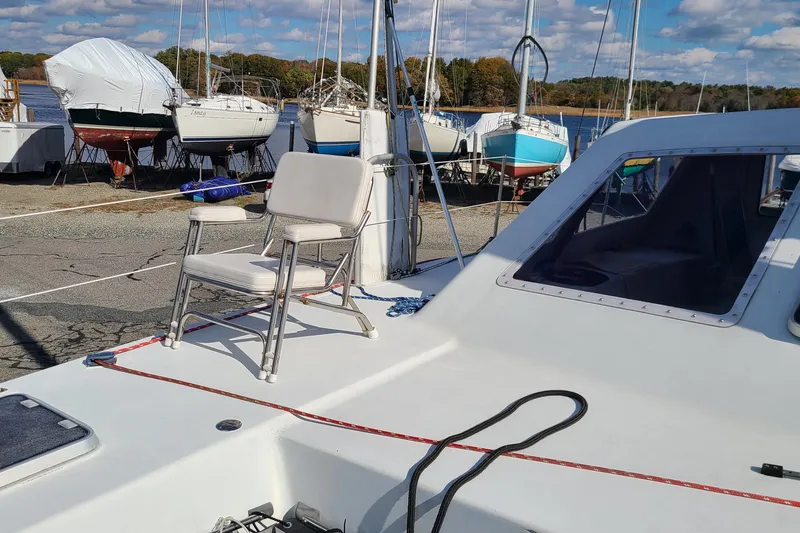
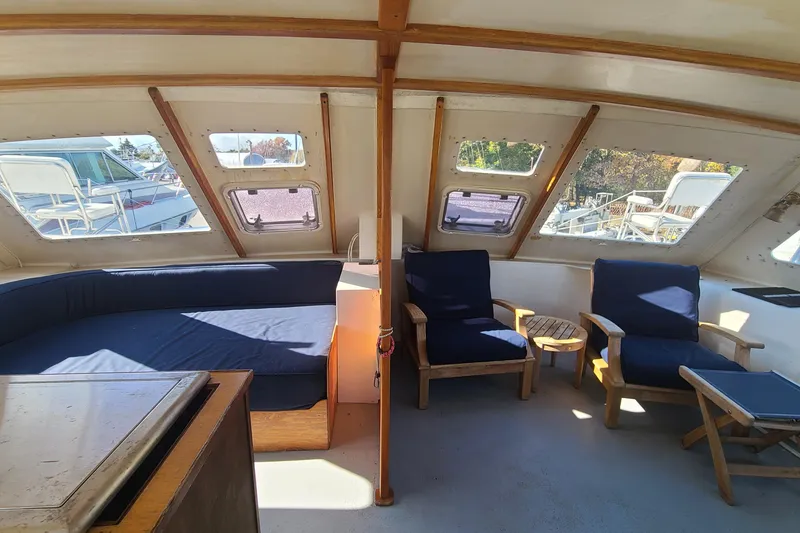
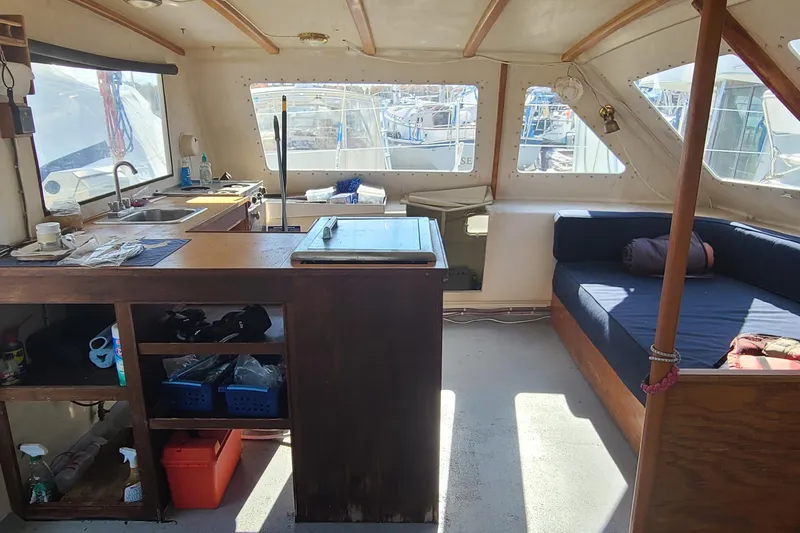
Heron is a cruising catamaran based on the Crowther 38 molds. She is simply yet functionally outfitted and can easily be customized to meet your tastes. Twin daggerboards give her excellent windward performance. She is easily handled by a couple. Her spacious cabin and foredeck offer large areas for inside or outside lounging.
Upgrades in 2024 and 2025 include
1. All new standing rigging
2. All new running rigging
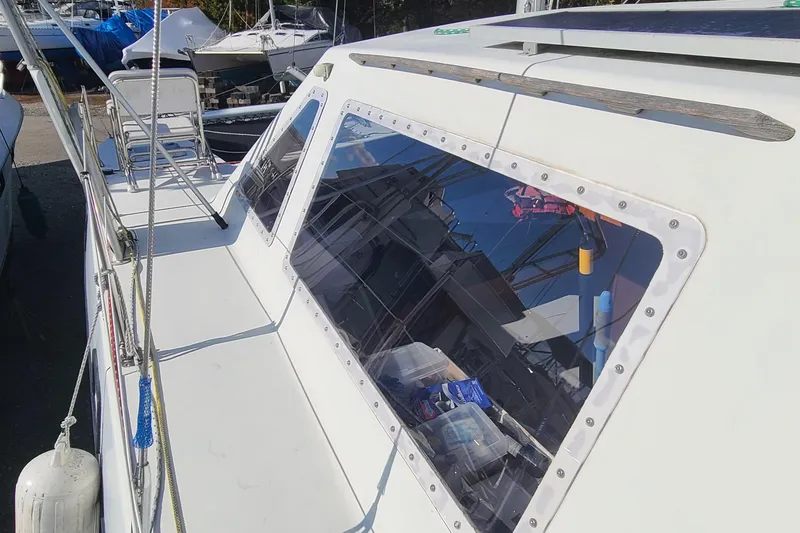
3. All new salon windows
Designer - Lock Crowther
Builder - Paradise Custom Catamarans, Palm City, FL
LOA: 42'
BOA: 23' 6"
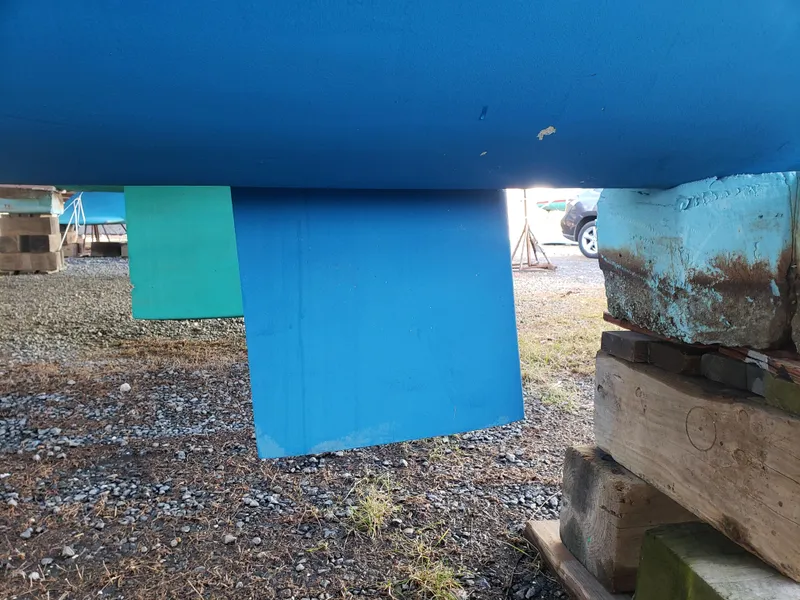
Minimum Draft: 4' (the depth of the fixed rudders)
Maximum Draft: 6' (daggerboards fully deployed)
Mast Length: 50'
Air Clearance: 56'
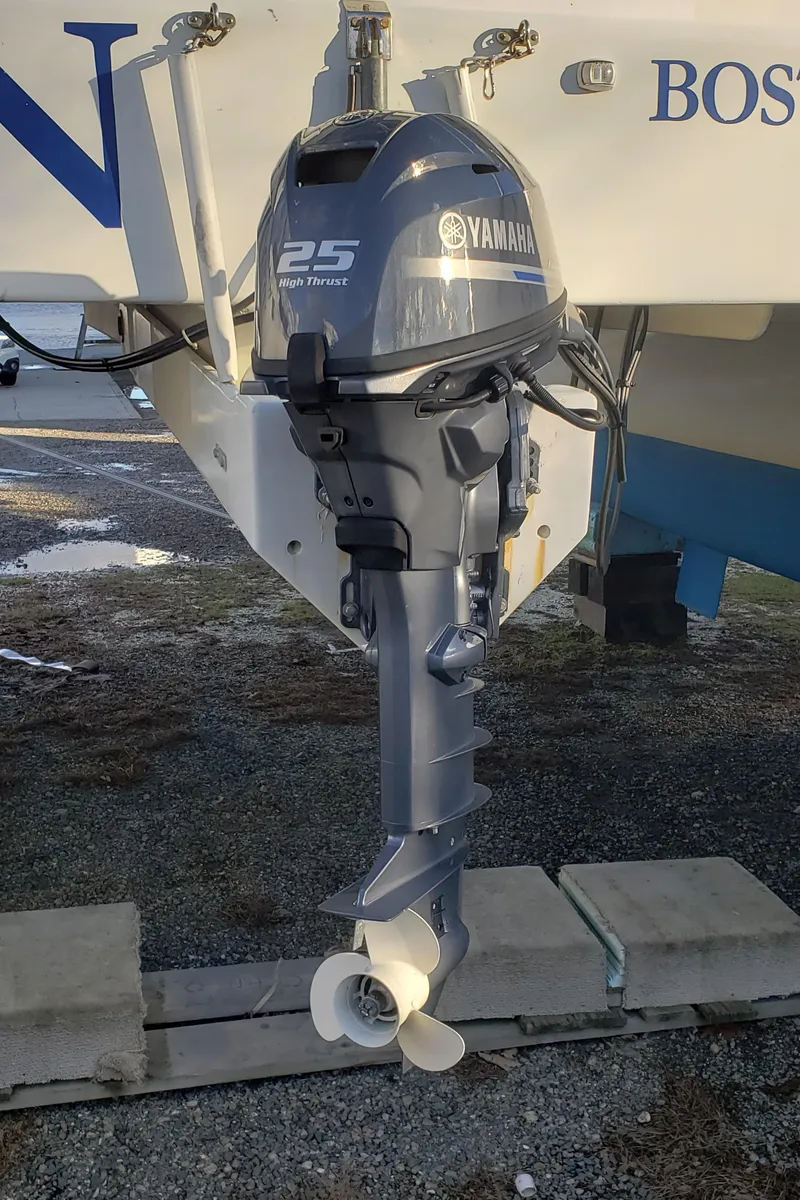
2019 Yamaha 25HP High Thrust outboard.
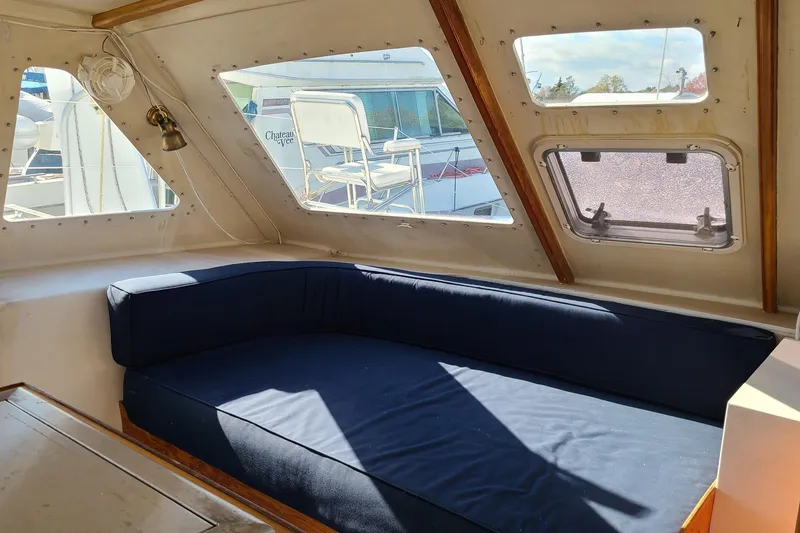
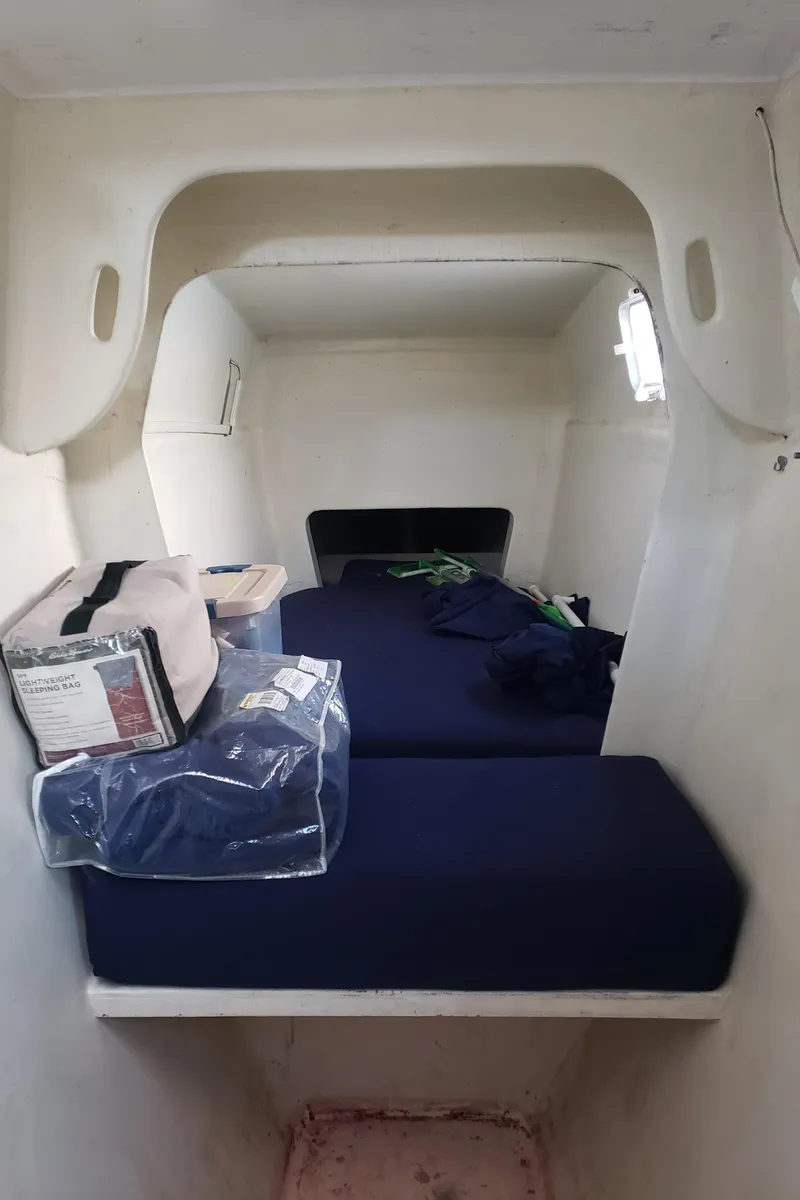
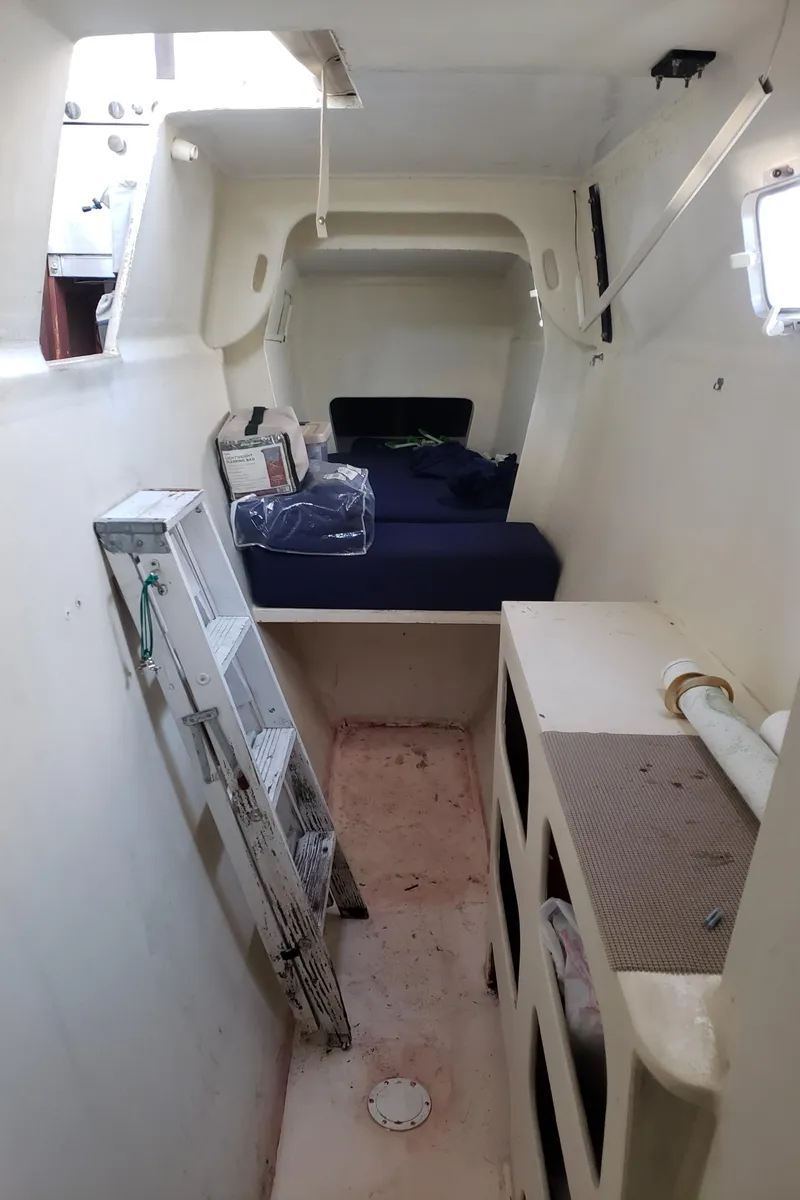
There are sleeping accomodations on board for 8 people. Aft in each hull is a cozy double berth and forward in each hull is a single berth. There are 4" foam cushions for each of these. There is also a very comfy full size double up in the salon.
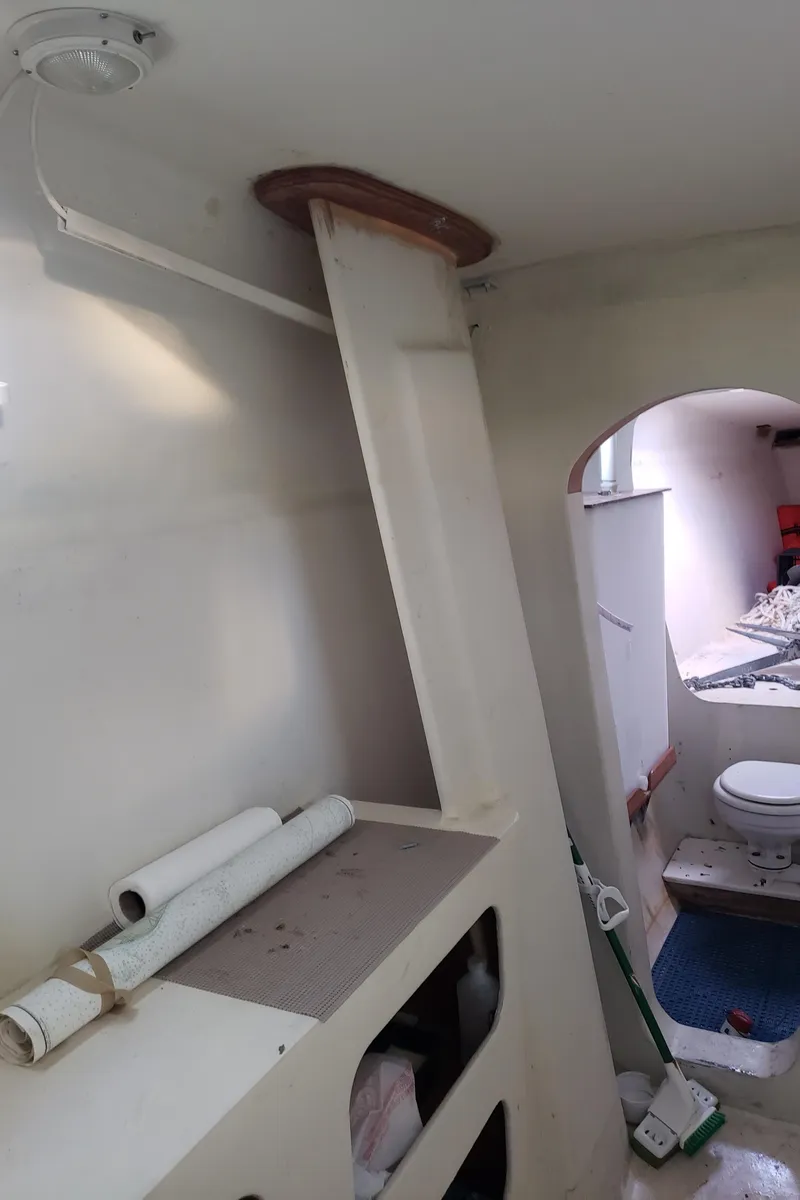
A head is located forward in each hull. The starboard toilet is a recent Jabsco while th(e port toilet fixture is an older Wilcox-Crittenden (Model #1460). The toilet in the starboard hull is plumbed for discharge into either a holding tank or overboard while the port hull unit is only plumbed for direct overboard discharge. The holding tank, of course, has a standard pump-out fitting on deck.
The port area has a small sink and shower, with sump, (and there is also a cockpit shower). The pump for pressure water is mounted in the enclosed space just forward of the main beam, on the port side, but drawing from either water tank. There are two 30 gal water tanks (plywood epoxy) mounted amidship against the outer hull adjacent to the daggerboards.
The galley is up in the salon and is "L" shaped, facing aft. It is constructed of plywood with mahogony trim. There is a propane stove with 3 burners and an oven and a sink with pressure hot/cold water. There is an ice box for food storage.
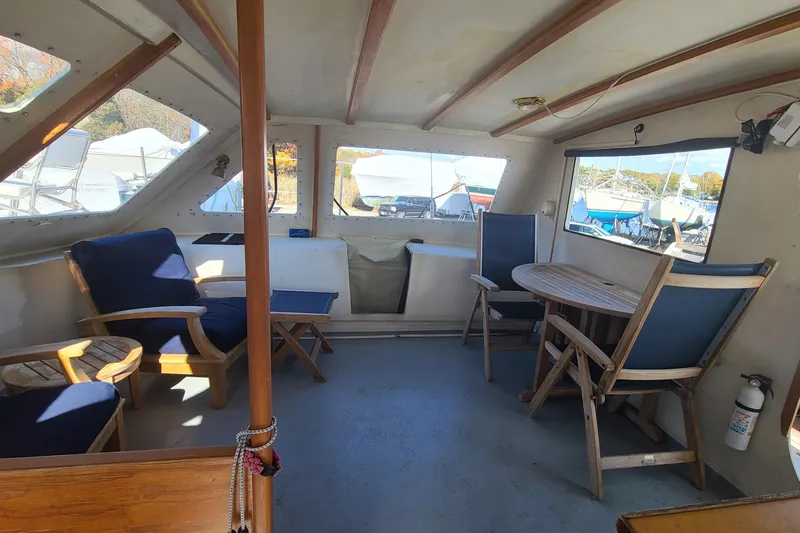
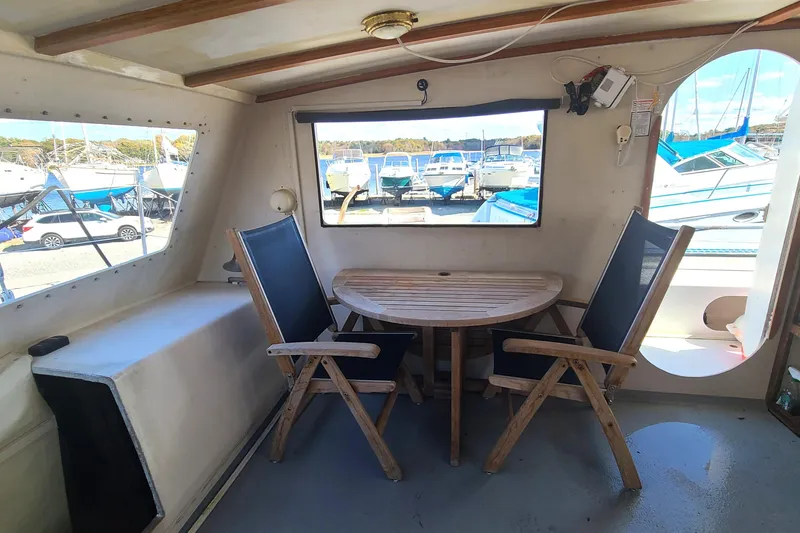
The dining table is teak and is located to starboard.
Raymarine Apelco 5200 VHF w/ masthead antenna
Raymarine ST2000 Tiller Pilot
Standard Horizon DS100 Depth Sounder
2 x 12V deep cycle marine batteries
Circuit breaker panel(s)
25W solar panel (on the coach house roof)
Shore Power w/ 25' connecting cord
Heart Model 10 Inverter/Charger
Full battened mainsail, 2016, Dacron
Full battened hank-on jib, 2016, Dacron
Spinnaker, 2000, 3/4oz Nylon
The mainsail has 2 reef points (slab reefing) and a Mack Pack sail storage system by Mack Sails. The jib has a custom cover to protect it while it is hanked on the forestay.
ATN spinnaker sock
The standing and running rigging were replaced for the 2024 sailing season. The salon windows were replaced in 2025.
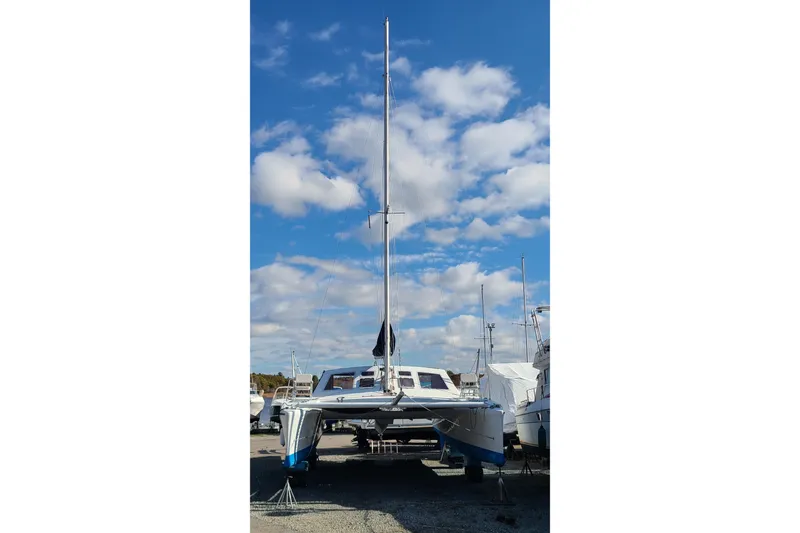
The mast is an aluminum extrusion, 5x8 inches in cross-section and just 50’ long. It has diamond bracing on the sides and a third strut on the forward edge. It is stepped with a nylon socket resting on a 2” stainless-steel ball, so that it can rotate. The masthead is about 56’ above the water, and with a Windex and VHF antenna (and masthead tricolor/anchor light) we require about 58’ of clearance. The mast is supported by a three-wire system, with two shrouds swept aft to chain plates, and a forestay going down to a bridle that connects to the ends of the forward cross-tube, all of 3/8” stainless wire.
The boom is also an aluminum extrusion, with outhaul and two reefing lines led forward internally to cleats on the boom, with access to a small winch (Lewmar 16) mounted on the aft side of the mast, just below the gooseneck. The boom is supported by a topping lift and by lazy jacks, which incorporate a Mack Sails MackPack mainsail cover.
Beside the topping lift, there are halyards for the main, jib, and asymmetrical spinnaker, all of low-stretch braid. All four lines lead through line stoppers to one of two mast-mounted winches (Lewmar 40 and Lewmar 30).
The main and jib sheets are both double ended. The main sheet (6 parts) is led through blocks on a Harken roller car, mounted on a track that extends across the full width of the rear cross beam. Each side of the car is controlled by a four-part tackle leading to a clam cleat. Each end of the sheet leads through a Lewmar line stopper to a Barient 22 winch, which is shared with the other two sheets (via their own line stoppers). The jib sheet (4 parts) is led through blocks, also on a Harken car, and then each end through turning blocks aft to its sheeting winch. The car runs on a curved track on the foredeck, and the jib is self-tacking. Stops on the track control the sheeting position. The spinnaker sheet (single) is led to a turning block aft on one or the other transom, and then to a sheeting winch.
Hulls and deck are foam sandwich construction utilizing Divinycell foam sheathed in fiberglass with epoxy resin. They are extensively reinforced with fiberglassed plywood bulkheads as well as horizontal fixtures (the fore and aft bunks in both hulls).
The main cross beam supporting the mast is a truss structure of 2x4 fir that is 24" deep enclosed in plywood extending into the hulls and fiberglassed overall. The aft beam is similar just not as deep.
The main cabin deck is a sandwich of plywood and a Nidacore plastic honeycomb, reinforced by a central longitudinal box beam and four longitudinal stringers.
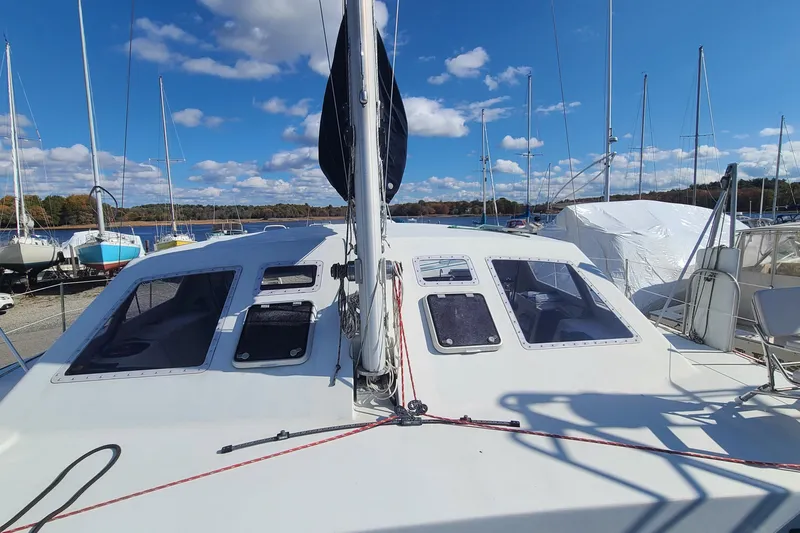
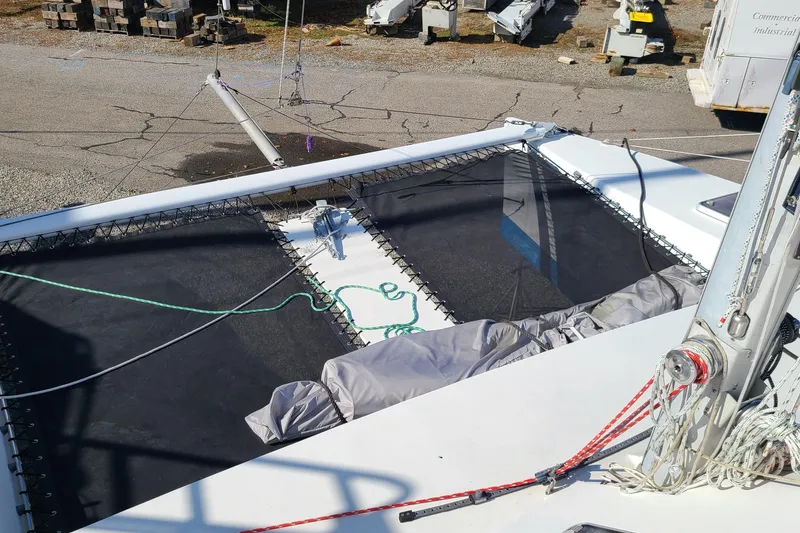
Extending about 4’ forward of the main beam is a third smaller beam that supports a section of deck reaching back to the main beam. Underneath, a curved fairing sweeps down from the forward beam to the bottom of the main beam. The bows are connected by a cross tube (an old mast section) that is anchored to a heavy aluminum plate on each bow, bolted through into wooden reinforcing structure below the deck. The forward area is covered by two sections of trampoline, on either side of a 2-foot-wide plywood strip, all laced to fittings on the cross tube, along the hull-deck joints and on the forward beam. There is a Lewmar deck hatch toward the bow of each hull.
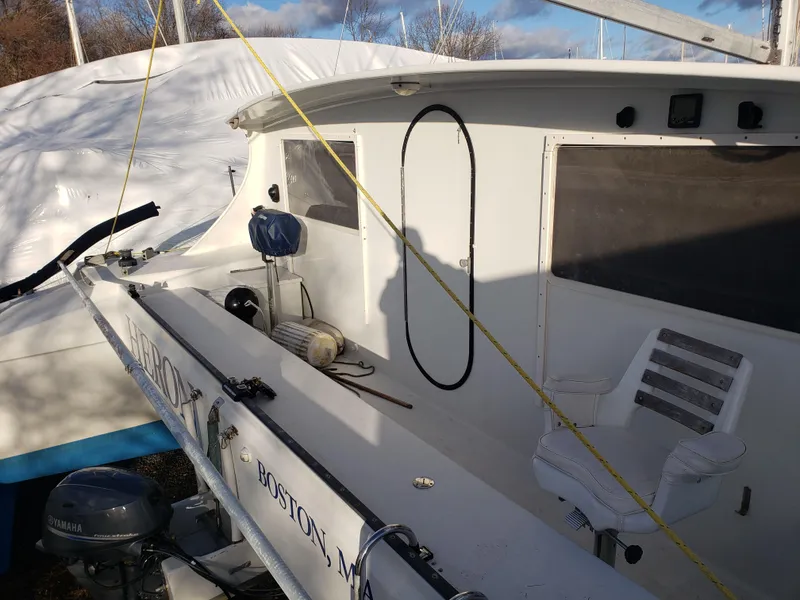
The cabin, which is of our own design, has ½” plywood sides, fiberglassed, that slope back from the forward cross beam and inward from the centers of the hull decks, with a vertical aft wall. There are large fixed glass windows on all sides plus a pair of opening windows on the aft wall. In the forward surface there also two opening hatches. There are screens for the hatches, for the opening windows, and for the cabin door, in the aft wall. The cabin top is a cored structure, supported on slightly arched crossbeams made of laminated fir. The top easily supports the weight of 2-4 people, but is not designed to support crowds.
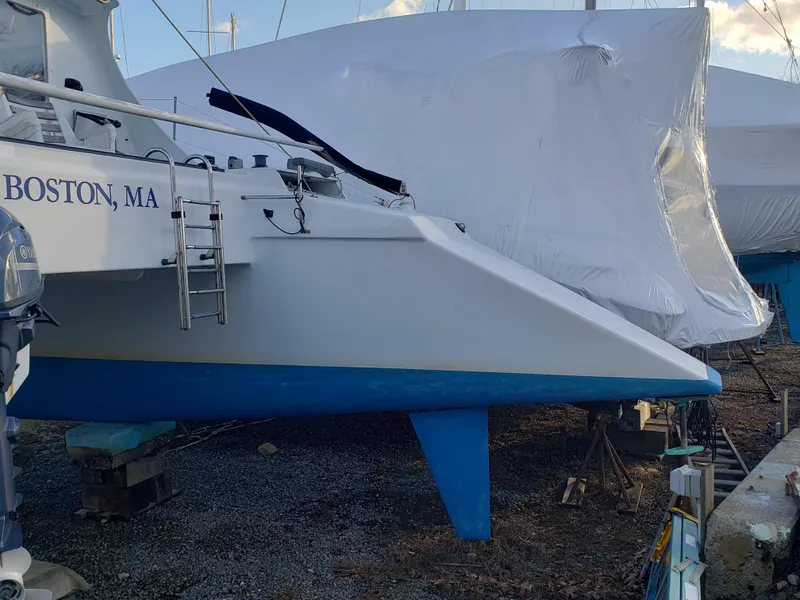
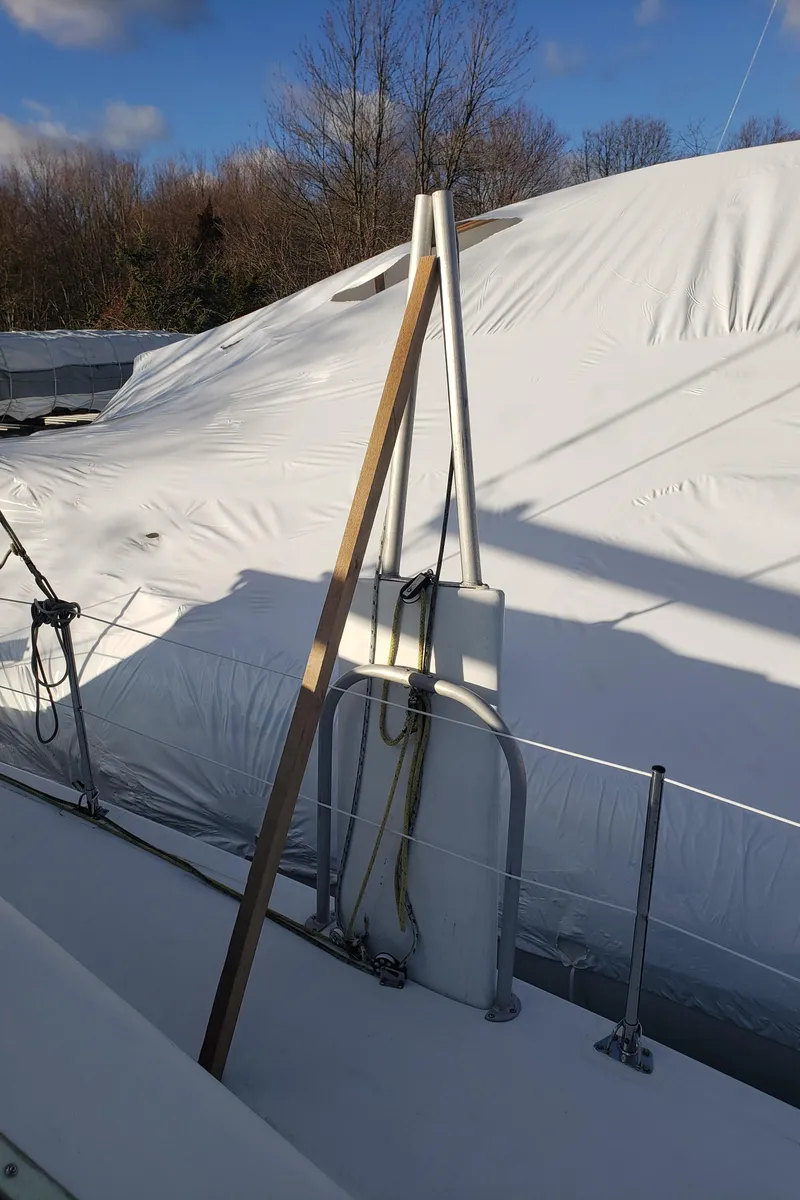
Retractable dagger boards are foam-cored fiberglass with a spine of fir wood. They can be lifted up and down by hand, and have stops for fully up, part down (about 4’ draft) and fully down (about 6’ draft).
The rudders have a 2-inch stainless-steel post with a stainless blade welded on, over which a foam-and-fiberglass, partly-balanced foil is formed. The post runs through a fiberglass tube extending through the deck to the bottom of the hull, where it is strongly reinforced with gusset plates glassed down onto the hull. The post runs in nylon bushings fitted into the tube, and the weight of the rudder assembly is taken by a PVC collar that runs between a stainless washer on the top of the top bushing and another on the under side of the tiller mounting bracket.
The rudders are linked together by a carbon fiber tube (old windsurfing masts). The engine also has a linkage to the rudders which provides excellent manoeuverability.
Hydraulic lifting sled for the outboard engine
Danforth anchor with chain and rode
Bruce anchor with chain and rode Fenders / Docklines
The Multihull Source offers the details of this vessel in good faith but cannot guarantee or warrant the accuracy of this information nor warrant the condition of the vessel. A buyer should instruct his agents, or his surveyors, to investigate such details as the buyer desires validated. This vessel is offered subject to prior sale, price change, or withdrawal without notice.
Price History
| Date | Event | Price |
|---|---|---|
| 1/29/26 | Initial price | $80,900 |
Overview from around the web 2000 Crowther Catamaran
Customers consistently praise the Crowther Catamaran 2000 for its exceptional stability and speed, making it a favorite among sailing enthusiasts seeking both performance and comfort
Many highlight its spacious deck layout, which provides ample room for relaxation and socializing, as well as its sturdy construction that handles various sea conditions with ease. Users also appreciate the catamaran’s efficient design, noting how it combines agility with smooth handling. Overall, the Crowther Catamaran 2000 is celebrated for delivering a reliable and enjoyable sailing experience.
The Biggest Pros and Cons
The Crowther Catamaran 2000 is a well-regarded multihull vessel known for its performance and versatility. Here are some of the key pros and cons to consider:
Pros
Speed and Performance: The Crowther Catamaran 2000 is designed for fast and efficient sailing, benefiting from Crowther’s expertise in multihull design. Its lightweight construction and sleek hulls allow for excellent speed and agility on the water.
Stability: With its wide beam and twin hulls, this catamaran offers superior stability compared to monohulls, providing a smoother and more comfortable ride, especially in rough conditions.
Spaciousness: The design maximizes deck and cabin space, offering ample room for passengers and gear, making it ideal for cruising or day sailing with family and friends.
Shallow Draft: The catamaran’s shallow draft enables access to coastal areas and shallow anchorages that are off-limits to deeper-keeled boats.
Fuel Efficiency: When equipped with auxiliary engines, the boat tends to be fuel-efficient due to its lightweight design and reduced drag.
Cons
Cost: Crowther Catamarans, including the 2000 model, can be more expensive to purchase and maintain compared to traditional monohull sailboats.
Docking and Mooring: The wide beam can make finding suitable docking space more challenging and potentially more costly in marinas.
Handling in Light Winds: While fast in moderate to strong winds, catamarans sometimes struggle to perform as well as monohulls in very light wind conditions.
Motion in Choppy Seas: Although generally stable, catamarans can exhibit a different motion in rough seas that some sailors find less comfortable compared to monohulls.
Made For
The Crowther Catamaran 2000 is designed for sailors who seek a high-performance, lightweight, and versatile multihull. It’s ideal for those who enjoy competitive racing as well as exhilarating day sailing. With its innovative design and exceptional speed capabilities, the 2000 Crowther Catamaran appeals to experienced sailors looking for a thrilling and responsive sailing experience, as well as adventurous cruisers who appreciate stability and efficiency on the water. Whether you’re racing or exploring, this catamaran offers a perfect blend of agility and comfort.
Finance your dream boat!
Finance your dream boat!
Be the first to know when similar boats hit the market
Get notified when new boats become available
Meet the Broker

Address
Boat Location
Contact The Multihull Source about 2000 Crowther Catamaran
3 Narrows Rd, Wareham, MA, 02571
Contact The Multihull Source
3 Narrows Rd, Wareham, MA, 02571
 Login with Google