This boat has been sold but check out these similar boats nearby
Other Antique and Classic boats for sale in Rhode Island, United States
See All
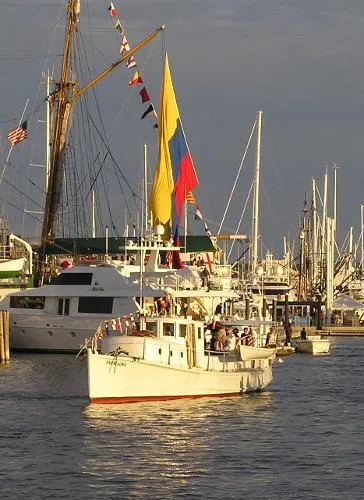
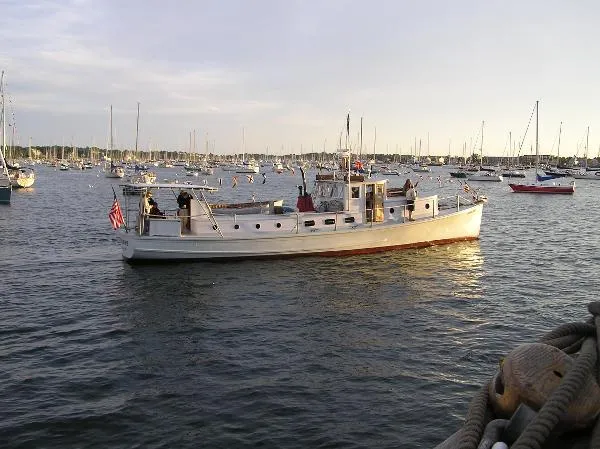
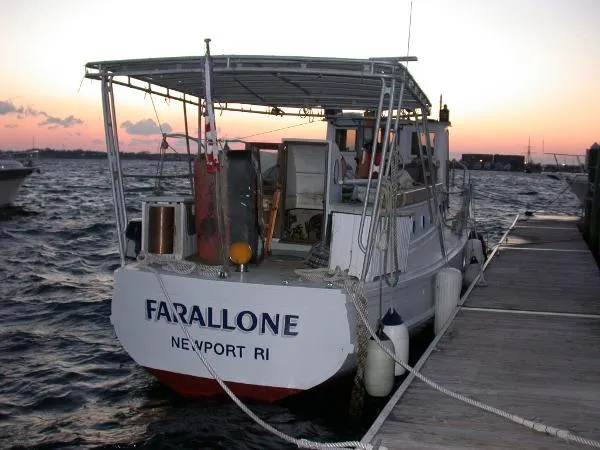
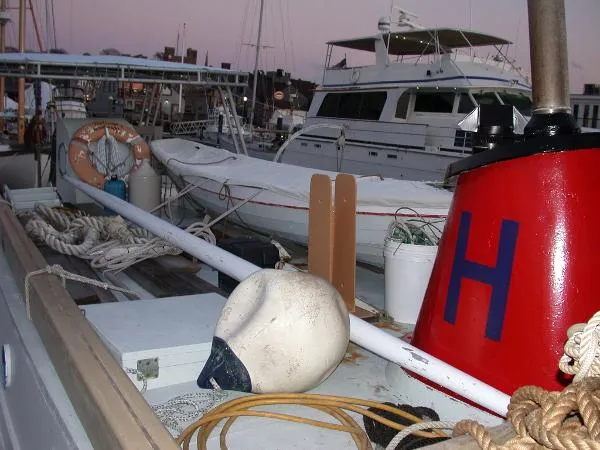
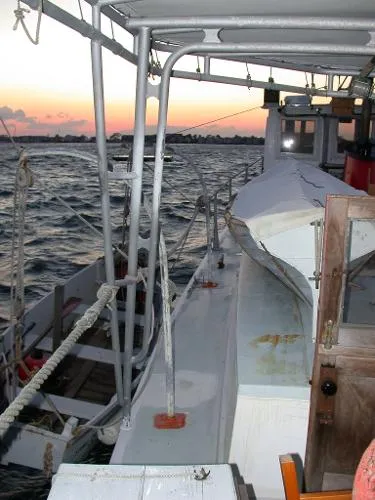
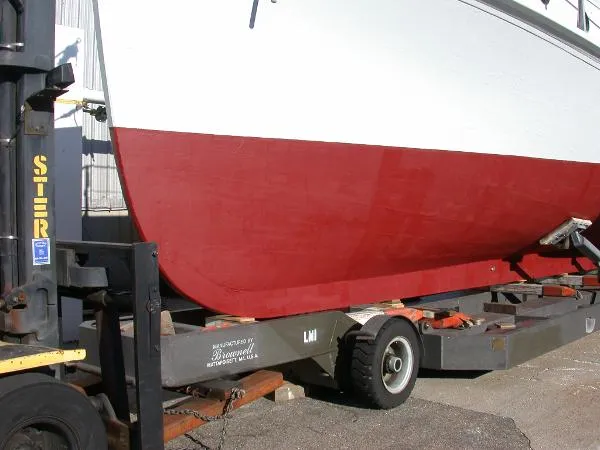
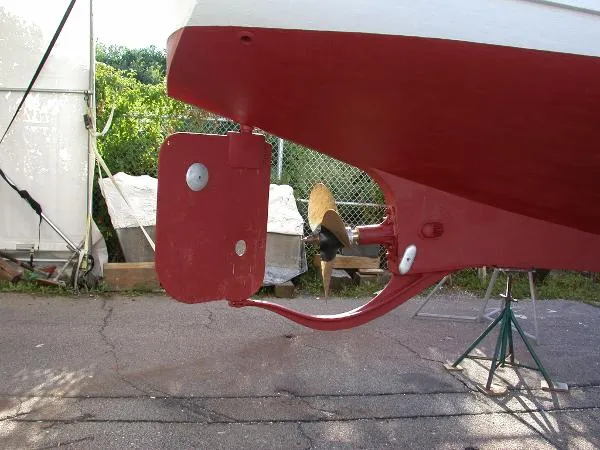
1918 Luders Marine Construction U. S. Army Quartermaster Boat Sold Boat in Newport, RI US
 Built in 1918
U. S. Army Quartermaster Boat

--

61 feet

--

Wooden
Farallone (originally Q-9) is the last surviving example of the first 12 boats specifically built for the U. S. Army's Quartermaster Corps by Luders Marine Construction Company of Stamford, CT in 1918. She is the second oldest Luders-built boat in existence.
Q-9's existence is due to the changing of the U. S. Army Transport Service from a partially civilian organization to a wholly military one needing its own watercraft, and came about at the moment of major military expansion and the emergence of the United States as a world power. These boats were placed under direct military control and were to be used for transporting material and personnel for the country's eastern coastal artillery posts.
Q-9 was stationed at Ft. Washington, Maryland until 1923, when she was transferred to the Army War College in Washington, DC to become the Quartermaster General's personal launch. She was used by two Quartermaster Generals (B. F. Cheatham and Wm. H. Hart) as well as by the Secretary of War, but still carried out her other duties of transporting Infantry and Artillery Corps personnel in the Chesapeake Bay area. On a gentler side, she was loaned yearly to the Women's Auxiliary to the Grand Army of the Republic for Memorial Day services on the Potomac River.
In 1929 she was shipped on the steamer Marian Otis Chandler out of Norfolk, VA to San Francisco, CA to be used as a utility boat for carrying prisoners and employees to and from the military prison at Alcatraz Island, as well as being used for regular military passenger service. In 1935 Q-9 was transferred to Ft. McDowell on Angel Island and served there as "29-T-873" until the end of World War II in 1945.
After being sold as surplus, Q-9, now renamed Farallone, after the islands off the California coast, was operated on various passenger runs, as a boy Scout boat, and enjoyed a brief career as the first salmon sport fishing party boat out of San Francisco. She was bought and used as a shipyard launch by D. J. Arques in Sausalito, CA until being laid up in 1963.
Farallone was purchased in 1975 in Sausalito where she was being used as a houseboat. She was hauled and restored on a part-time basis over the following thirteen years. She was shipped to Texas in 1993 where fitting out was largely completed. Since then she has cruised the waters of the Gulf Coast, the Bahamas and the U. S. East Coast as a yacht. She was purchased by her current owner, an accomplished ships carpenter, in 2002 and berthed in Newport, RI.
Farallone was built in 1918. Her LOA is 61'; LWL is 60'; beam is 13'4"; draft is 5'4"; her hull is wood. She is powered by a single Detroit Diesel 671-N 200 hp 6 cylinder engine. There are currently 1900hours on the engine.
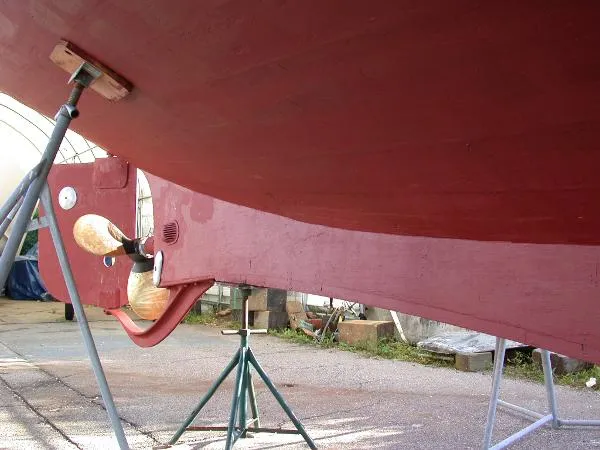
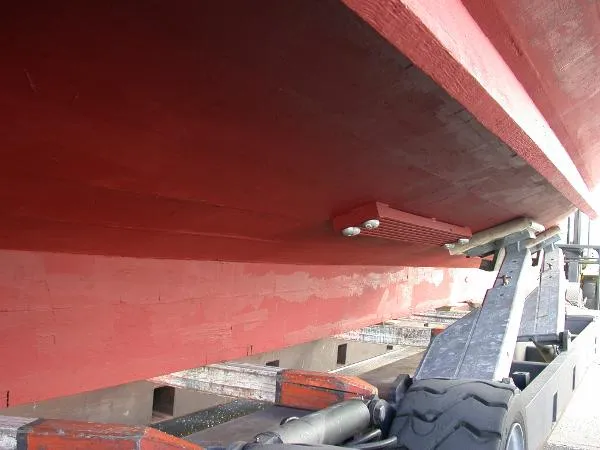
Construction is long-leaf yellow pine and Douglas fir planking on white oak frames; long-leaf yellow pine and white oak structural keel; white oak floor timbers; galvanized screw and boat nail fastened. The deck is epoxy laminated marine plywood, cloth and epoxy sheathed, and painted. The pilothouse and trunk cabin are of two laminated layers of fir marine plywood built to replicate the original Luders design in shape. Interior ballast consists of 3.5 tons of lead ingots and 2 tons of iron bars.
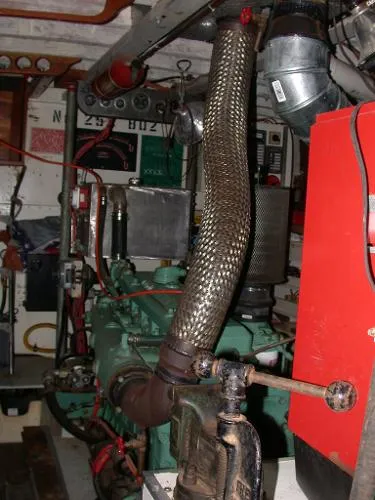
The Detroit Diesel has a keel cooler, 3:1 twin disc reduction gear, MG509 hydraulics and Morse engine controls at a single steering station. Bronze propeller is 38 x 31on a 3" bronze tail shaft. Cruising speed is 9.5 mph with max speed at 12.5 mph. Range is 3600 miles at 3 gph. There is a 1,040 gallon steel fuel tank and a 250 gallon water tank in Monel. The electrical system is 110V AC/12V DC Marinetics main electrical distribution panel. Included is a Northern Lights 12kW marine heat exchanged diesel generator set with fuel/exhaust system with 2400 hours.
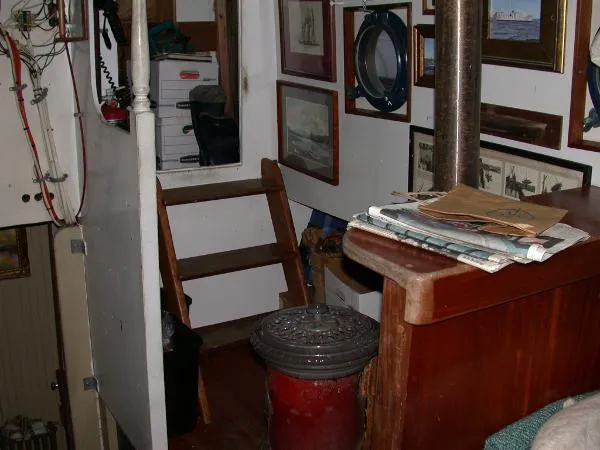
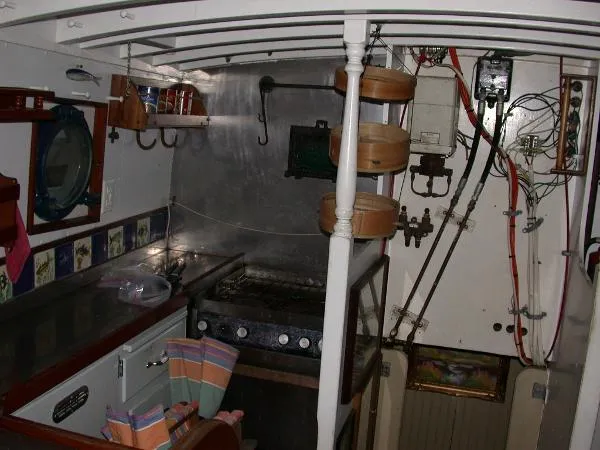
Accommodations include hot water heating through cast iron radiators. A wood stove is also provided. There is one double berth and a single pilot berth. Farallone is equipped with a head; a galley with a double "Polar" stainless steel sink; Par 12V pressure water system; 6 gallon hot water tank; Force 10 three burner stove with oven; icebox with 4" foam insulation; refrigeration system with 12V built-in Marine Air air-conditioning. The interior finish is white enamel and varnish with mahogany and plywood joiner work/trim; varnished tongue-and-groove fir cabin sole.
Ground tackle includes a 125 pound Fisherman anchor as well as a 75 pound Danforth. There are150 feet of ½" anchor chain and many long, heavy braided and nylon rodes and storm lines. Included is an Ideal manual hydraulic windlass (double wildcat, double warping drum).
The communications and navigation systems include a Danforth Constellation compass in a classic binnacle; Standard VHF radiotelephone; Raytheon 21 x 32 mile radar; autopilot (not installed) depth sounder; and North Star GPS.
Farallone is a handsome classic military utility vessel designed and built by the well-known Luders Marine Construction Company. She has been comprehensively rebuilt. She is appealing as a private cruising boat or live-aboard. She is also suitable for a variety of commercial uses.
Farallone (originally Q-9) is the last surviving example of the first 12 boats specifically built for the U. S. Army’s Quartermaster Corps by Luders Marine Construction Company of Stamford, CT in 1918. She is the second oldest Luders-built boat in existence.
Q-9’s existence is due to the changing of the U. S. Army Transport Service from a partially civilian organization to a wholly military one needing its own watercraft, and came about at the moment of major military expansion and the emergence of the United States as a world power. These boats were placed under direct military control and were to be used for transporting material and personnel for the country’s eastern coastal artillery posts.
Q-9 was stationed at Ft. Washington, Maryland until 1923, when she was transferred to the Army War College in Washington, DC to become the Quartermaster General’s personal launch. She was used by two Quartermaster Generals (B. F. Cheatham and Wm. H. Hart) as well as by the Secretary of War, but still carried out her other duties of transporting Infantry and Artillery Corps personnel in the Chesapeake Bay area. On a gentler side, she was loaned yearly to the Women’s Auxiliary to the Grand Army of the Republic for Memorial Day services on the Potomac River.
In 1929 she was shipped on the steamer Marian Otis Chandler out of Norfolk, VA to San Francisco, CA to be used as a utility boat for carrying prisoners and employees to and from the military prison at Alcatraz Island, as well as being used for regular military passenger service. In 1935 Q-9 was transferred to Ft. McDowell on Angel Island and served there as “29-T-873” until the end of World War II in 1945.
After being sold as surplus, Q-9, now renamed Farallone, after the islands off the California coast, was operated on various passenger runs, as a boy Scout boat, and enjoyed a brief career as the first salmon sport fishing party boat out of San Francisco. She was bought and used as a shipyard launch by D. J. Arques in Sausalito, CA until being laid up in 1963.
Farallone was purchased in 1975 in Sausalito where she was being used as a houseboat. She was hauled and restored on a part-time basis over the following thirteen years. She was shipped to Texas in 1993 where fitting out was largely completed. Since then she has cruised the waters of the Gulf Coast, the Bahamas and the U. S. East Coast as a yacht. She was purchased by her current owner, an accomplished ships carpenter, in 2002 and berthed in Newport, RI.
Farallone was built in 1918. Her LOA is 61’; LWL is 60’; beam is 13’4”; draft is 5’4”; her hull is wood. She is powered by a single Detroit Diesel 671-N 200 hp 6 cylinder engine. There are currently 1900hours on the engine.
Construction is long-leaf yellow pine and Douglas fir planking on white oak frames; long-leaf yellow pine and white oak structural keel; white oak floor timbers; galvanized screw and boat nail fastened. The deck is epoxy laminated marine plywood, cloth and epoxy sheathed, and painted. The pilothouse and trunk cabin are of two laminated layers of fir marine plywood built to replicate the original Luders design in shape. Interior ballast consists of 3.5 tons of lead ingots and 2 tons of iron bars.
The Detroit Diesel has a keel cooler, 3:1 twin disc reduction gear, MG509 hydraulics and Morse engine controls at a single steering station. Bronze propeller is 38 x 31on a 3” bronze tail shaft. Cruising speed is 9.5 mph with max speed at 12.5 mph. Range is 3600 miles at 3 gph. There is a 1,040 gallon steel fuel tank and a 250 gallon water tank in Monel. The electrical system is 110V AC/12V DC Marinetics main electrical distribution panel. Included is a Northern Lights 12kW marine heat exchanged diesel generator set with fuel/exhaust system with 2400 hours.
Accommodations include hot water heating through cast iron radiators. A wood stove is also provided. There is one double berth and a single pilot berth. Farallone is equipped with a head; a galley with a double “Polar” stainless steel sink; Par 12V pressure water system; 6 gallon hot water tank; Force 10 three burner stove with oven; icebox with 4” foam insulation; refrigeration system with 12V built-in Marine Air air-conditioning. The interior finish is white enamel and varnish with mahogany and plywood joiner work/trim; varnished tongue-and-groove fir cabin sole.
Ground tackle includes a 125 pound Fisherman anchor as well as a 75 pound Danforth. There are150 feet of ½” anchor chain and many long, heavy braided and nylon rodes and storm lines. Included is an Ideal manual hydraulic windlass (double wildcat, double warping drum).
The communications and navigation systems include a Danforth Constellation compass in a classic binnacle; Standard VHF radiotelephone; Raytheon 21 x 32 mile radar; autopilot (not installed) depth sounder; and North Star GPS.
Farallone is a handsome classic military utility vessel designed and built by the well-known Luders Marine Construction Company. She has been comprehensively rebuilt. She is appealing as a private cruising boat or live-aboard. She is also suitable for a variety of commercial uses.
Overview from around the web 1918 Luders Marine Construction U. S. Army Quartermaster Boat
Customers have praised the 1918 Luders Marine Construction U
S. Army Quartermaster Boat for its impressive craftsmanship and historical significance. Many appreciate the sturdy construction and classic design that reflects its military heritage. Enthusiasts often highlight its versatility on the water, noting that it handles both calm lakes and rougher conditions with ease. Users admire the spacious layout, which allows for comfortable outings, whether for fishing, cruising, or participating in historical reenactments. The boat's vintage style is a major draw, appealing to collectors and history buffs alike who value its story and connection to the early 20th century. Additionally, many report satisfaction with the boat’s performance, noting reliable handling and durability. Overall, feedback emphasizes the combination of nostalgia, functionality, and charm that makes the 1918 Luders Marine Construction U.S. Army Quartermaster Boat a treasured addition to any watercraft collection.
The Biggest Pros and Cons
Pros
Historical Significance: This boat is a piece of maritime history, representing the innovation and engineering of its time during World War I. Collectors and history enthusiasts value this aspect.
Robust Construction: Built for military purposes, the Luders Quartermaster Boat features durable materials and strong construction, designed to withstand harsh conditions and heavy use.
Versatility: The design allows for various applications, making it suitable for both military missions and recreational activities, such as fishing or leisure cruising.
Stable Performance: This boat offers excellent stability on the water, which is crucial for both operational effectiveness and comfort during use.
Design Aesthetics: With its classic lines and traditional craftsmanship, the Luders Boat appeals to those who appreciate vintage nautical designs.
Engine Options: Depending on the model, various engine configurations may be available, allowing for flexibility in performance and efficiency based on user preferences.
Cons
Maintenance Requirements: Older boats, including the Luders Quartermaster, may require more frequent maintenance and care, particularly due to the age of materials and components.
Limited Modern Amenities: The 1918 design lacks many of the modern conveniences and technology found in contemporary boats, which could deter some potential owners.
Fuel Efficiency: Depending on the engine type, fuel efficiency may not match that of newer models, potentially resulting in higher operating costs.
Size Constraints: As a military design, it may have space limitations that could restrict comfort or storage compared to larger, modern vessels.
Resale Value: While historical boats can be valued, finding the right buyer can be challenging, and resale value may not always meet expectations depending on current market demand.
Limited Production: The rarity of the 1918 Luders Quartermaster Boat can make parts harder to find, complicating repairs and restoration efforts. This combination of pros and cons highlights the unique position of the Luders Marine Construction U.S. Army Quartermaster Boat as both a historical artifact and a functional watercraft.
Made For
The 1918 Luders Marine Construction U. S. Army Quartermaster Boat is an excellent choice for enthusiasts of military history, collectors of vintage vessels, and aficionados of classic boat design. Its historical significance as a World War I-era craft makes it particularly appealing to those interested in military memorabilia and naval heritage. Ideal for maritime museums, history buffs, and individuals looking to restore a piece of naval history, this boat offers a unique opportunity to own a tangible piece of the past. Additionally, it suits event coordinators seeking a distinctive backdrop for themed occasions, educational programs, or demonstrations of early 20th-century naval technology. With its combination of robust construction and historical importance, the Luders Marine Construction U. S. Army Quartermaster Boat remains a captivating vessel for anyone passionate about maritime history and craftsmanship.
Finance your dream boat!
Finance your dream boat!
Be the first to know when similar boats hit the market
Get notified when new boats become available
Meet the Broker
Address
Want to update the details or images for this boat? Claim this listing by getting in touch.
Contact the dealer about 1918 Luders Marine Construction U. S. Army Quartermaster Boat
Newport, RI
 Login with Google