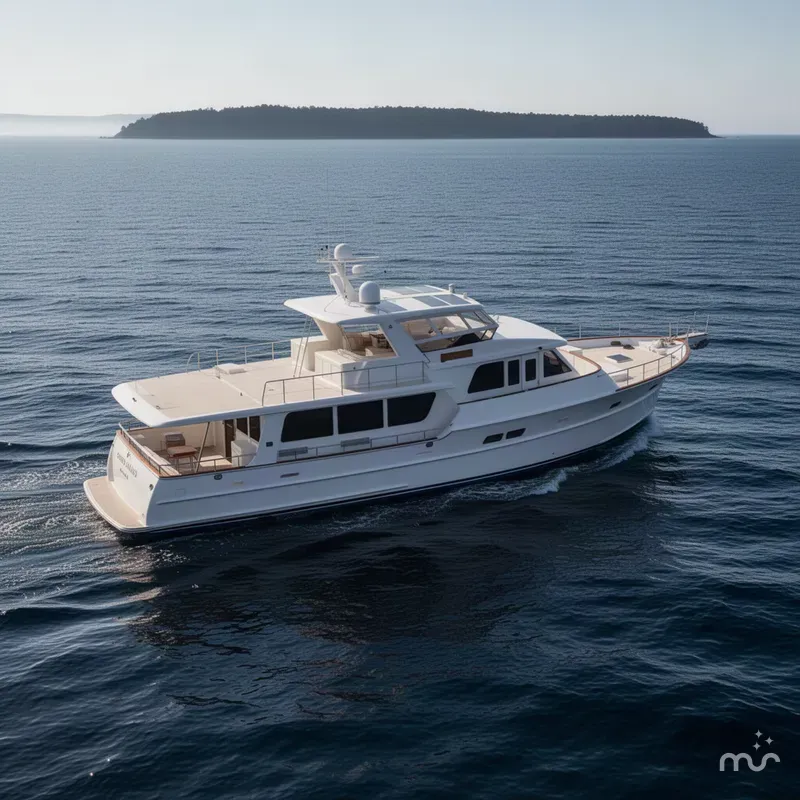
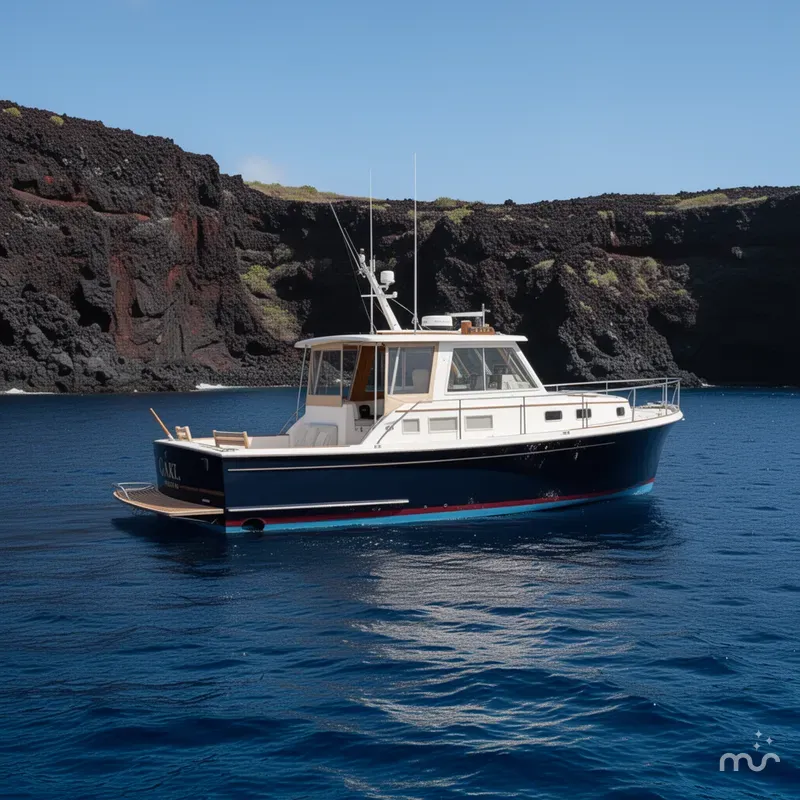
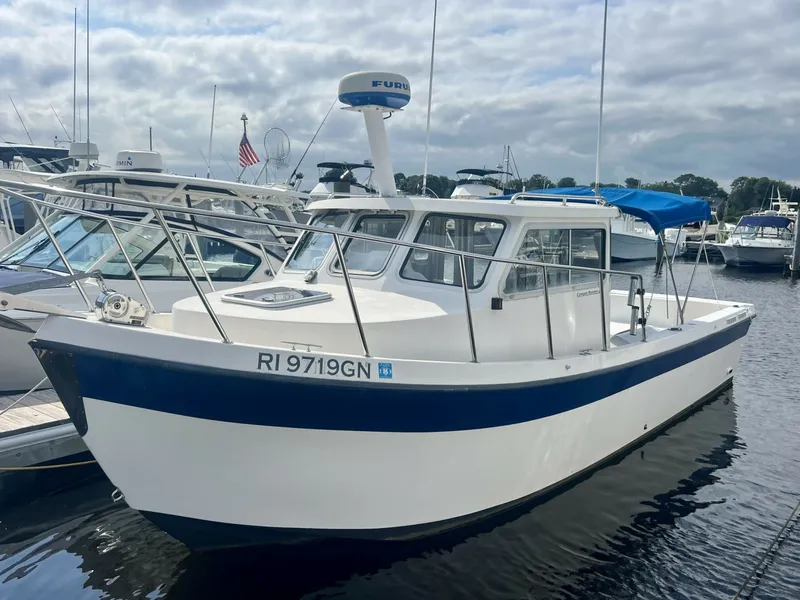
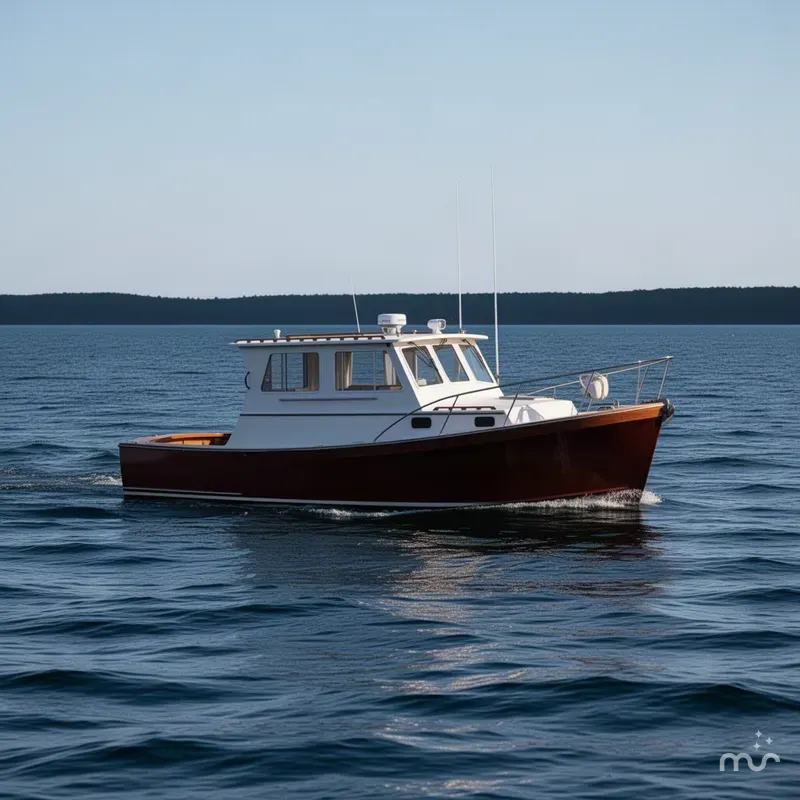
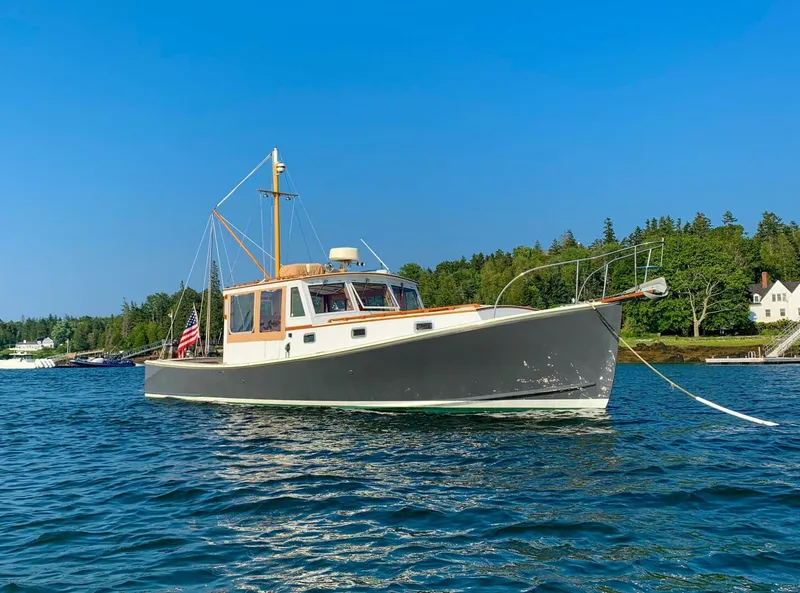
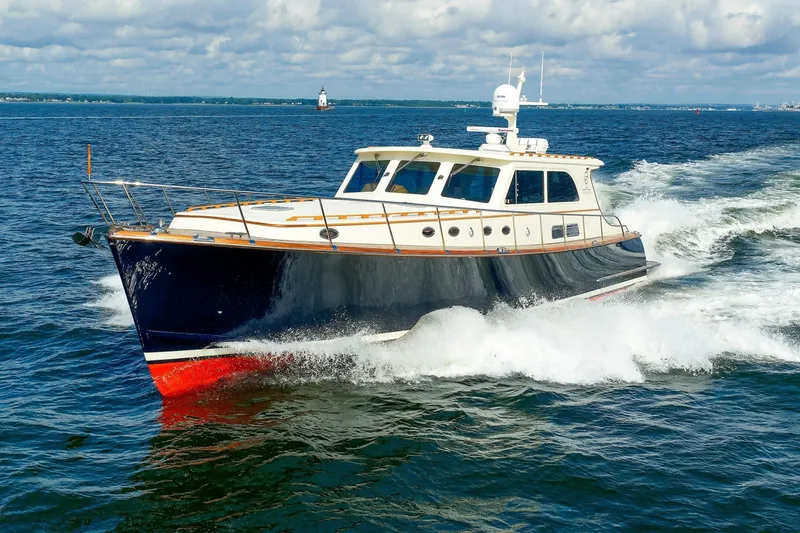
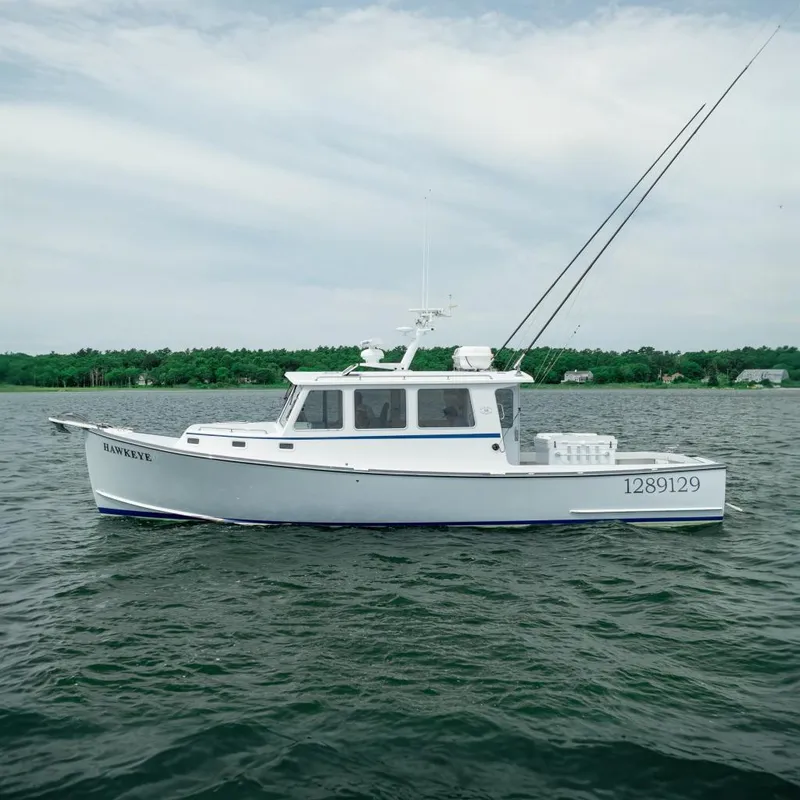
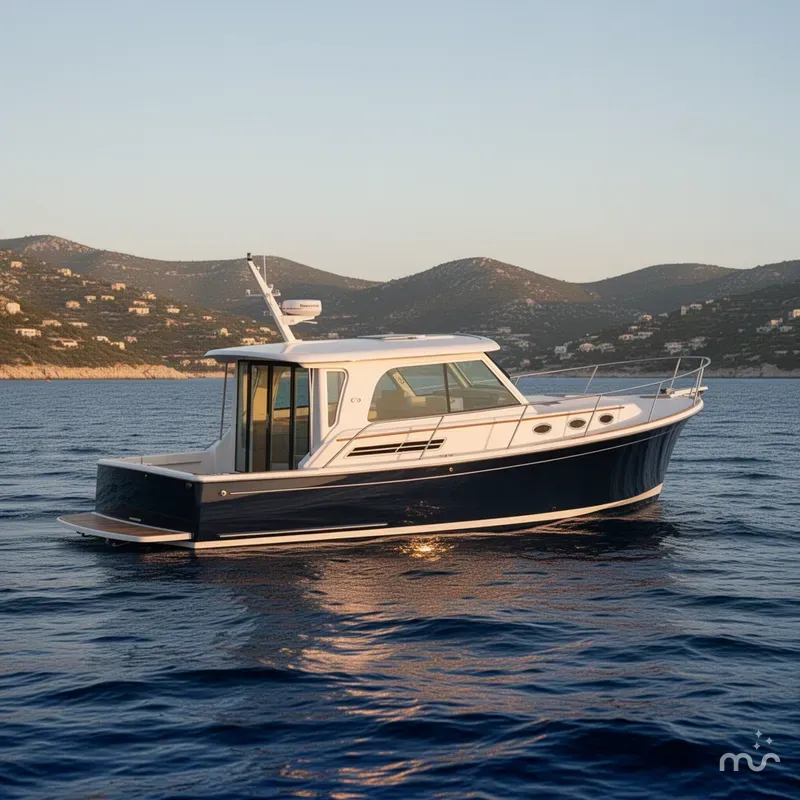
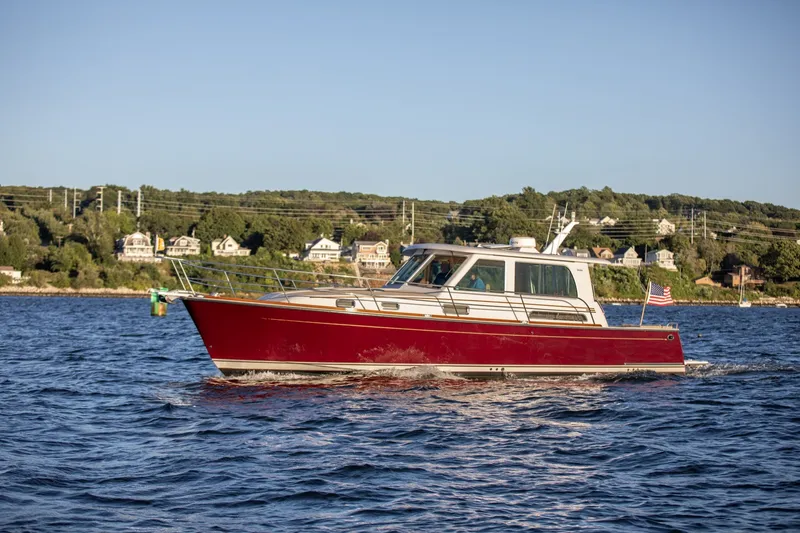
2005 Grand Banks 47 Eastbay FB Sold Boat in Wickford, RI US
 Built in 2005
47 Eastbay FB

--

47 feet

--

Fiberglass/Reinforced
Boats For Sale in Rhode Island, United States Similar to the 2005 Grand Banks 47 Eastbay FB
Compare with similar boats and find the perfect one for you.
No image available 2005 Grand Banks 47 Eastbay FB | ||||
|---|---|---|---|---|
| Price | $630,000 | $600,000 | $595,000 | $550,000 |
| Location | Wickford | Newport | Newport | Portsmouth |
| Nominal Length | 47' | 35' | 38' | 38' |
| Engine Make | - | Mercury | Yanmar | Cummins |
| Total Engine Power | - | 300 hp | 400 hp | 670 hp |
| Days on Market | 3707 | 38 | 525 | 161 |
| Get in touch |
Other Grand Banks boats for sale in Rhode Island, United States
The owner has picked out his next boat and needs to sell
The Eastbay 47 is ready to splash and go
GRAND BANKS 47 EASTBAY FB
The owner just had the bright work varnished
1000 hour engine service completed in Sept
Pre-sale survey available to qualified buyers
New - 3/ Lifeline *D batteries June 2017
New front window actuator June 2017
Timeless style and peppy performance define the latest Grand Banks and Hunt collaboration.
By Chris Caswell October 3, 2007
Grand Banks may not have been the first to build one, but the company certainly put the trawler yacht on the chart. In an era when speed, fiberglass and finned cars were the rage, they created a demand for yachts that were sturdy but leisurely, seaworthy and beautifully built.
So it was a surprise in the mid-1990s when Grand Banks broke the traditional mold and introduced a series of New England-style express cruisers. To the marine world, it couldn't have been more shocking if Rolls Royce had started building pickups or Moet & Chandon offered a diet cola.
Labeling them as Eastbay yachts originally was a good idea, separating the brands, but the company is now bringing them back into the fold as the Eastbay Series by Grand Banks. That's an equally good idea at this point, because it helps underline some of the differences between the two lines while still emphasizing the heritage and quality of Grand Banks.
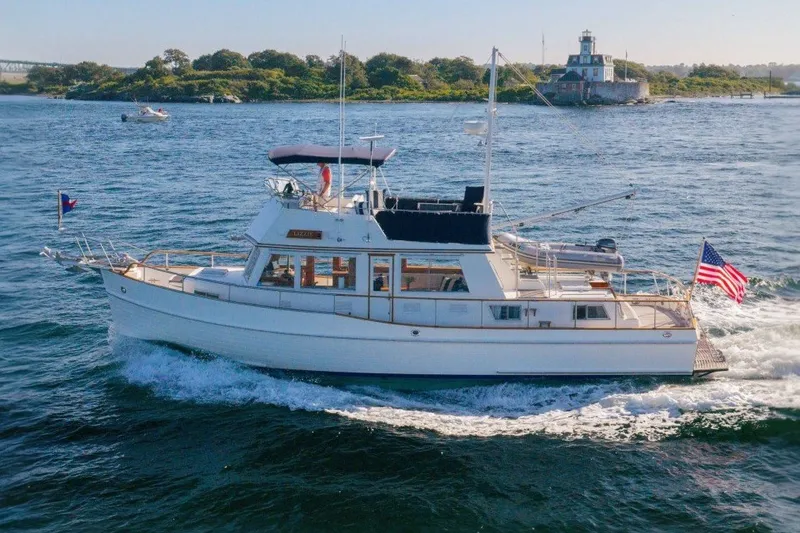
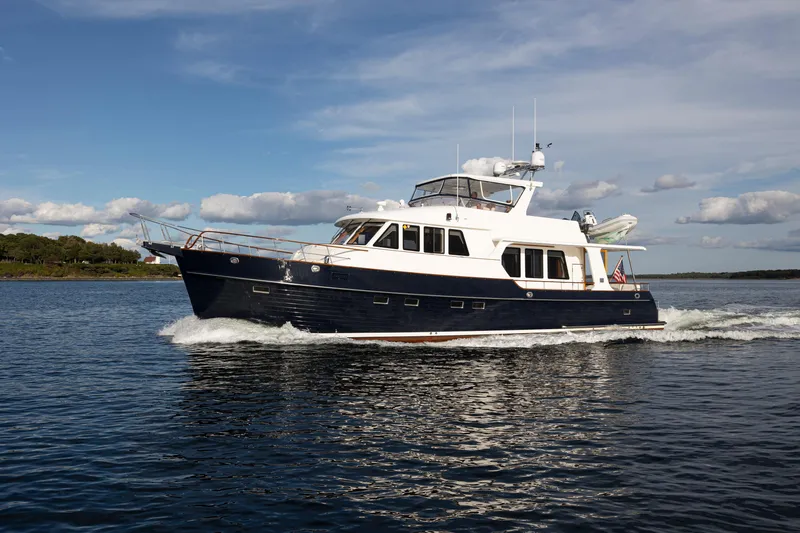
A perfect example of that union is the new Grand Banks 47 Eastbay FB. I've always liked the conservative vertical lines of C. Raymond Hunt Associates-designed yachts, but the Eastbay 47 takes the pretty sheer line of a New England bass boat and turns it into a yacht that turns heads. With a dark blue hull and enough teak to uphold traditions, this is a modern classic with well-proven fiberglass construction and 21st century systems.
Be sure to take off your shoes when you step aboard, so you can appreciate the silky smoothness of the planked teak cockpit. What you really should notice, though, is the cleverly integrated raised deck forward. It leads naturally to the saloon and the stairs to the flying bridge. Eastbay stole an idea from itself-the curved stairs are already on the 58-footer-but anyone weary of struggling up a near-vertical ladder in a seaway will appreciate the easy access.
The saloon is true Grand Banks, from the teak-and-holly sole to the acreage of satin-finished teak that has always distinguished these yachts. Since an uncarpeted sole is an invitation to the transmission of noise and vibration from the engineroom below, I was surprised to find the sound level so low during our performance tests. In spite of the absence of carpeting (all the lockers were empty, too), we barely reached 78 dB(A) at full throttle, which is a testament to the care Grand Banks has taken to insulate the living areas.
Eastbay has found a space-saving solution to the issue of where to put the television: it hinges down from an overhead panel to face the settee, and the entertainment system is tucked into a cabinet between the two barrel chairs.
Forward at the helm, a Stidd chair, big teak wheel, and Twin Disc throttle/shifters are all business. The black mica dash has the Caterpillar monitors but leaves plenty of space for electronics, and there are also overhead panels for other installations. I particularly like the foolproof hinged door to the side deck-a respite from pantograph doors, which can be difficult to open in a hurry.
Opposite, the seatback of the double bench behind the chart table is too low for my taste, but executive vice president Rob Livingston says the customer can have anything he wants, including two Stidd seats.
There are people who dislike the galley-down arrangement found on many yachts, because it can be claustrophobic, but I think they'll like the galley on the 47FB. The reason is simple: it's open and airy. The cook can easily converse with people in the saloon, and there is light from the big windows overhead, as well as fresh air (the forward window opens electrically). This is a big plus.
For anyone accustomed to stand-up refrigerators, the under-counter and top-loading freezer/fridge on the 47FB may be a challenge, but it's beautifully constructed of stainless steel and completely secure in all conditions. I also like the roller drawers, which have dovetailed joints for strength, as well as a stylish touch.
Opposite the galley is an area that owners can tailor to their needs. In the case of our test boat, the area is an office, with a folding desk and a settee that pulls out to become a double berth. The nice thing about this arrangement is the arched doorway with twin pocket doors, which can be left open to the galley. The standard arrangement is a pair of single berths (you lose the arched doorway), but Grand Banks expects buyers to customize this area. Right forward of the galley is the day head/shower.
The master stateroom is forward, with a berth that hinges up for access to the air conditioning unit underneath. The berth tapers at both head and foot, which is unusual, but the innerspring mattress topped by six inches of foam is very inviting. The private head has an oversize shower behind a curved teak and Lucite door.
You probably broke the code. The FB means flying bridge, but the builders have chosen to keep the price of the 47FB the same as that of their 49HX (hardtop). If you're willing to give up the flying bridge, you can get a larger boat for the same price but, frankly, I think the bridge is a desirable feature, not just for running the yacht, but for entertaining under way or at anchor. It's your choice.
In any case, the flying bridge is conventionally arranged with twin Stidd helm chairs and an L-shape settee, although our test boat had teak decking only near the settee. The remainder of the deck was covered with non-skid paint. Was this to keep guests from mingling with the crew? More likely, we decided, it was simply a mystery of the Far East, but one that a buyer can easily change with a pencil check on the option sheet.
The engineroom will delight anyone who has ever struggled to reach a distant oil filter or barked their knuckles trying to reach a seacock. As you'd expect from such an experienced builder, there is easy access (the cockpit steps lift electrically), full headroom, and the kind of seamanlike wiring and plumbing that might even make troubleshooting a pleasure. Our test boat had the 700 hp Caterpillar C12s (Yanmar 720s are an option), and the Onan 13 kW genset is standard.
Under way, I was so delighted with the effortless and responsive power steering that I wanted to carve great swooping turns just for the fun of it, but I restrained myself to just a few donuts to see how the hull handled our wake. If I'd been expecting something to happen, it was disappointingly fuss-free: the Hunt hull simply sliced the wake and proceeded as though we'd crossed a ripple.
One interesting point arose during our performance testing, and that was the surprisingly straight line of fuel consumption. The 47FB consumed just two gallons per mile, whether we were doing 14 knots or 25 knots, which gives a skipper some good choices. This yacht reduces the penalty associated with the usual trade-off between running fast (and eating fuel) or running slowly (and wasting time). Pick a speed you like: it's still efficient.
We topped out at 30.5 knots, which was a disappointment to Livingston who had seen 32 knots during the original sea trials before someone dinged one of the five-blade Teignbridge props.
All in all, the Eastbay 47FB is one of those rare yachts that pass into classic status as soon as they're launched. With a Grand Banks heritage and Eastbay performance, it's an altogether likable combination.
The owner has picked out his next boat and needs to sell
The Eastbay 47 is ready to splash and go
GRAND BANKS 47 EASTBAY FB
The owner just had the bright work varnished
1000 hour engine service completed in Sept
Pre-sale survey available to qualified buyers
New - 3/ Lifeline *D batteries June 2017
New front window actuator June 2017
Timeless style and peppy performance define the latest Grand Banks and Hunt collaboration.
By Chris Caswell October 3, 2007
Grand Banks may not have been the first to build one, but the company certainly put the trawler yacht on the chart. In an era when speed, fiberglass and finned cars were the rage, they created a demand for yachts that were sturdy but leisurely, seaworthy and beautifully built.
So it was a surprise in the mid-1990s when Grand Banks broke the traditional mold and introduced a series of New England-style express cruisers. To the marine world, it couldn't have been more shocking if Rolls Royce had started building pickups or Moet & Chandon offered a diet cola.
Labeling them as Eastbay yachts originally was a good idea, separating the brands, but the company is now bringing them back into the fold as the Eastbay Series by Grand Banks. That's an equally good idea at this point, because it helps underline some of the differences between the two lines while still emphasizing the heritage and quality of Grand Banks.
A perfect example of that union is the new Grand Banks 47 Eastbay FB. I've always liked the conservative vertical lines of C. Raymond Hunt Associates-designed yachts, but the Eastbay 47 takes the pretty sheer line of a New England bass boat and turns it into a yacht that turns heads. With a dark blue hull and enough teak to uphold traditions, this is a modern classic with well-proven fiberglass construction and 21st century systems.
Be sure to take off your shoes when you step aboard, so you can appreciate the silky smoothness of the planked teak cockpit. What you really should notice, though, is the cleverly integrated raised deck forward. It leads naturally to the saloon and the stairs to the flying bridge. Eastbay stole an idea from itself-the curved stairs are already on the 58-footer-but anyone weary of struggling up a near-vertical ladder in a seaway will appreciate the easy access.
The saloon is true Grand Banks, from the teak-and-holly sole to the acreage of satin-finished teak that has always distinguished these yachts. Since an uncarpeted sole is an invitation to the transmission of noise and vibration from the engineroom below, I was surprised to find the sound level so low during our performance tests. In spite of the absence of carpeting (all the lockers were empty, too), we barely reached 78 dB(A) at full throttle, which is a testament to the care Grand Banks has taken to insulate the living areas.
Eastbay has found a space-saving solution to the issue of where to put the television: it hinges down from an overhead panel to face the settee, and the entertainment system is tucked into a cabinet between the two barrel chairs.
Forward at the helm, a Stidd chair, big teak wheel, and Twin Disc throttle/shifters are all business. The black mica dash has the Caterpillar monitors but leaves plenty of space for electronics, and there are also overhead panels for other installations. I particularly like the foolproof hinged door to the side deck-a respite from pantograph doors, which can be difficult to open in a hurry.
Opposite, the seatback of the double bench behind the chart table is too low for my taste, but executive vice president Rob Livingston says the customer can have anything he wants, including two Stidd seats.
There are people who dislike the galley-down arrangement found on many yachts, because it can be claustrophobic, but I think they'll like the galley on the 47FB. The reason is simple: it's open and airy. The cook can easily converse with people in the saloon, and there is light from the big windows overhead, as well as fresh air (the forward window opens electrically). This is a big plus.
For anyone accustomed to stand-up refrigerators, the under-counter and top-loading freezer/fridge on the 47FB may be a challenge, but it's beautifully constructed of stainless steel and completely secure in all conditions. I also like the roller drawers, which have dovetailed joints for strength, as well as a stylish touch.
Opposite the galley is an area that owners can tailor to their needs. In the case of our test boat, the area is an office, with a folding desk and a settee that pulls out to become a double berth. The nice thing about this arrangement is the arched doorway with twin pocket doors, which can be left open to the galley. The standard arrangement is a pair of single berths (you lose the arched doorway), but Grand Banks expects buyers to customize this area. Right forward of the galley is the day head/shower.
The master stateroom is forward, with a berth that hinges up for access to the air conditioning unit underneath. The berth tapers at both head and foot, which is unusual, but the innerspring mattress topped by six inches of foam is very inviting. The private head has an oversize shower behind a curved teak and Lucite door.
You probably broke the code. The FB means flying bridge, but the builders have chosen to keep the price of the 47FB the same as that of their 49HX (hardtop). If you're willing to give up the flying bridge, you can get a larger boat for the same price but, frankly, I think the bridge is a desirable feature, not just for running the yacht, but for entertaining under way or at anchor. It's your choice.
In any case, the flying bridge is conventionally arranged with twin Stidd helm chairs and an L-shape settee, although our test boat had teak decking only near the settee. The remainder of the deck was covered with non-skid paint. Was this to keep guests from mingling with the crew? More likely, we decided, it was simply a mystery of the Far East, but one that a buyer can easily change with a pencil check on the option sheet.
The engineroom will delight anyone who has ever struggled to reach a distant oil filter or barked their knuckles trying to reach a seacock. As you'd expect from such an experienced builder, there is easy access (the cockpit steps lift electrically), full headroom, and the kind of seamanlike wiring and plumbing that might even make troubleshooting a pleasure. Our test boat had the 700 hp Caterpillar C12s (Yanmar 720s are an option), and the Onan 13 kW genset is standard.
Under way, I was so delighted with the effortless and responsive power steering that I wanted to carve great swooping turns just for the fun of it, but I restrained myself to just a few donuts to see how the hull handled our wake. If I'd been expecting something to happen, it was disappointingly fuss-free: the Hunt hull simply sliced the wake and proceeded as though we'd crossed a ripple.
One interesting point arose during our performance testing, and that was the surprisingly straight line of fuel consumption. The 47FB consumed just two gallons per mile, whether we were doing 14 knots or 25 knots, which gives a skipper some good choices. This yacht reduces the penalty associated with the usual trade-off between running fast (and eating fuel) or running slowly (and wasting time). Pick a speed you like: it's still efficient.
We topped out at 30.5 knots, which was a disappointment to Livingston who had seen 32 knots during the original sea trials before someone dinged one of the five-blade Teignbridge props.
All in all, the Eastbay 47FB is one of those rare yachts that pass into classic status as soon as they're launched. With a Grand Banks heritage and Eastbay performance, it's an altogether likable combination.
2005 Grand Banks 47 Eastbay FB Video Tours
Overview from around the web 2005 Grand Banks 47 Eastbay FB
Customers praise the 2005 Grand Banks 47 Eastbay FB for its classic craftsmanship and timeless design, highlighting the spacious and well-appointed interior that offers comfortable accommodations for extended cruising
Many appreciate the boat's solid construction and seaworthy performance, noting its stability and smooth ride in various sea conditions. The flybridge layout is frequently mentioned for providing excellent visibility and a great vantage point for navigation and socializing. Owners also value the vessel's ample storage and practical features that make long voyages enjoyable and efficient. Overall, the 2005 Grand Banks 47 Eastbay FB is admired for combining traditional style with reliable functionality, making it a favored choice among cruising enthusiasts.
The Biggest Pros and Cons
The 2005 Grand Banks 47 Eastbay FB is a classic trawler-style yacht known for its blend of traditional craftsmanship and modern amenities. Here are some pros and cons to consider:
Pros
Timeless Design: The classic teak interior and solid wood finishes provide a warm, elegant ambiance that appeals to traditional yacht enthusiasts.
Spacious Layout: With ample salon space, a well-equipped galley, and comfortable staterooms, it’s ideal for extended cruising and liveaboard comfort.
Flybridge Command: The flybridge helm offers excellent visibility and a social space for guests, enhancing both navigation and entertaining.
Robust Construction: Built with a solid fiberglass hull and quality craftsmanship, the 47 Eastbay FB is known for its durability and seaworthiness.
Good Range: Efficient twin diesel engines deliver reliable performance and good fuel economy for long-distance cruising.
Well-Equipped: Typically outfitted with modern navigation and safety equipment, making it suitable for offshore passages.
Cons
Maintenance Intensive: The extensive use of teak and traditional materials requires regular upkeep to maintain its appearance and prevent wear.
Older Technology: Being a 2005 model, some onboard systems and electronics may be outdated compared to newer yachts, potentially requiring upgrades.
Limited Speed: As a trawler-style vessel, it prioritizes comfort and efficiency over speed, which may not appeal to those seeking faster cruising.
Interior Layout: While spacious, the layout may feel somewhat traditional and compartmentalized compared to more open-plan modern yachts.
Fuel Consumption: Although efficient for its size, long-range cruising still demands considerable fuel capacity and planning.
Made For
The 2005 Grand Banks 47 Eastbay FB is ideal for boating enthusiasts seeking a classic, well-crafted trawler that combines traditional style with modern comfort. It’s perfect for those who enjoy extended cruising, offering spacious accommodations, a reliable engine, and a functional flybridge for excellent visibility and navigation. This yacht suits couples or small families looking for a luxurious and seaworthy vessel for coastal cruising or longer voyages.
Finance your dream boat!
Finance your dream boat!
Be the first to know when similar boats hit the market
Get notified when new boats become available
Meet the Broker
Address
Want to update the details or images for this boat? Claim this listing by getting in touch.
Contact the dealer about 2005 Grand Banks 47 Eastbay FB
Wickford, RI
 Login with Google