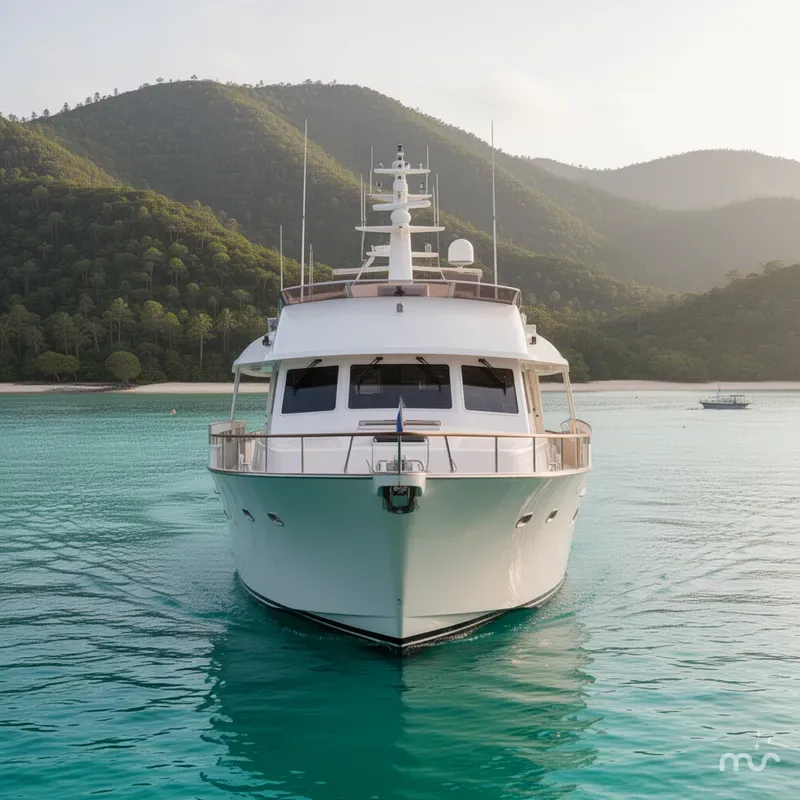
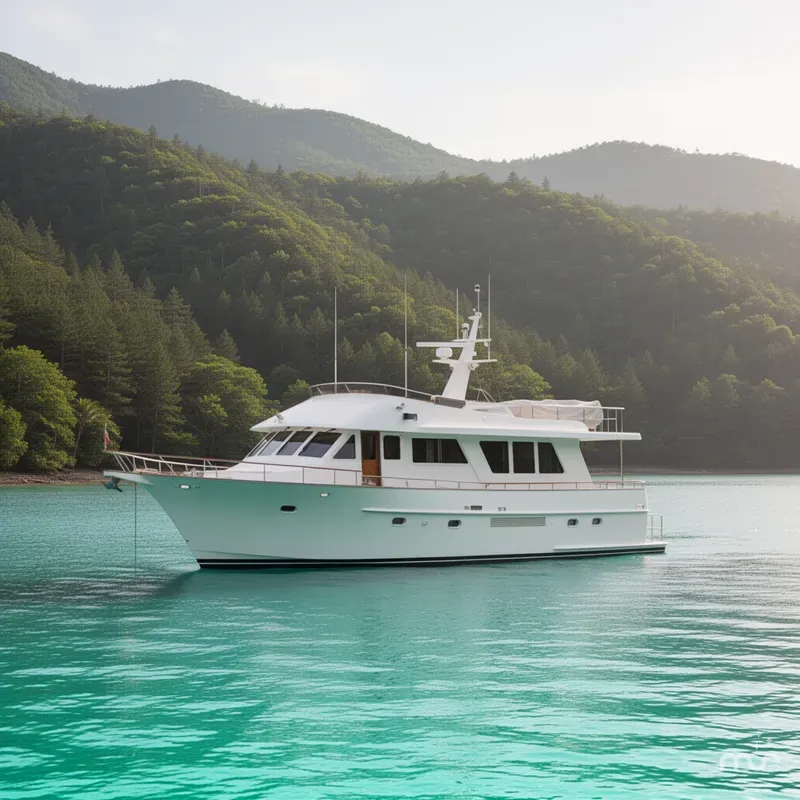
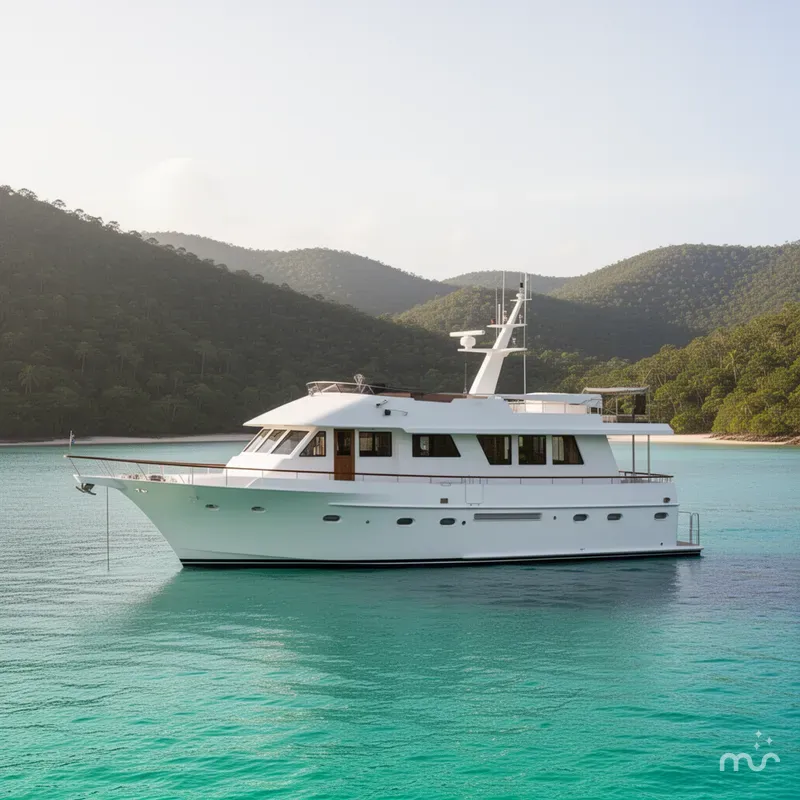
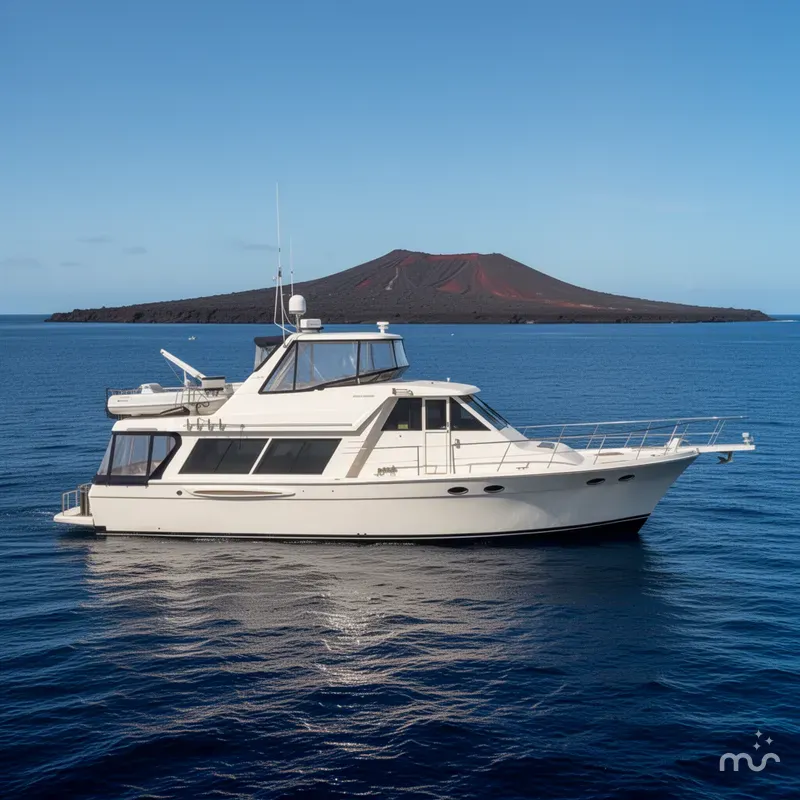
1991 Forbes Cooper Pilothouse Motoryacht Boat in Seattle, WA 98104 US
 Built in 1991
Pilothouse Motoryacht

2 Engines (2x Lugger)

70 feet

Diesel

Fiberglass/Reinforced
Specifications For Cooper/Queenship 70' Flush Deck Motor Yacht
GENERAL
Built under the personal supervision of Forbes Cooper who built over 4,000 yachts of various types and shapes
during his career. At the start of construction, the builder was Cooper Yachts. Later it became known as
Cooper Queenship, and later just Queenship.
Vessel has a detailed 50+ page Operations & Equipment Manual giving operating instructions for all major vessel
functions. In addition, there is an electrical wiring manual showing electrical layouts, plus manuals and/or
parts diagrams for each piece of equipment onboard.
All the lighting on the vessel has been converted to LED lighting.
As of the summer of 2024, the vessel has logged 110,000 miles in over 13,300 hours of operation including 28
trips to and from Southeast Alaska and 24 trips across the Gulf of Alaska to South Central Alaska including
three circumnavigations of Kodiak Island and various explorations of the Alaska Peninsula. Over the years,
the vessel also circumnavigated the Haida Gwai (Queen Charlotte Islands) and Vancouver Island three times
each. With her built-in redundancy, the Inside Passage has never had to layover a single day during
her voyages because of operational problems which might be caused by mechanical, electrical, or
structural breakdowns or failures.
This one owner vessel has been moored in freshwater for at least 10 months of every year since commissioning.
More photos coming soon!
HULL, SUPERSTRUCTURE, AND DECKS
Hull is hand-laid gel coated fiberglass, sandwich cored with a minimum of 1" vacuum bagged Airex core, using an
ISO resin on the outside lay-up to give better protection from water penetration. The hull is stiffened using
Top Hat fiberglass stiffeners and foam cored bulkheading in the main full bulkheads. The hull was coated
outside below the waterline with two coats of an epoxy barrier and then covered with premium bottom paint
The forward part of the hull from the stabilizers forward is double bottomed with double Airex foam core. This
gives additional safety protection and virtually eliminates the possibility of interior condensation.
The decks and entire superstructure is hand-laid gel coated fiberglass sandwich cored with Divinicell foam with
the house sides using 1.5" thick foam. 20 lb foam is used in structural areas such as under the decks.
Structural bulkheads are 1" thick single foam cored Divinicell throughout except for engine rooms which are 2"
double thickness.
ENGINE ROOM
Engine room bulkheads fore and aft are doubled (see above) and the engine room is sheeted, along with the deck
head, with Vibrasonic composite insulation. Engine room ceiling has 6" of fiberglass insulation above ½"
plywood and the Vibrasonic composite insulation. Total floor thickness including flooring covering above is
approximately 8”.
The finish of the non-insulated areas is gelcoated white, and the floor is covered with removable aluminum checker
plate floorboards.
The engine room is vented with manually closable vents.
Engine room has workbench with aluminum top, ½ HP 6" double wheel bench grinder, and vise, wall mounted
tool chest, freshwater outlet, and four 120v receptacles. Extra filters and belts are carried onboard.
Two 9" x 22" Freeman Marine elliptical portlights (which are also alternative escape hatches) with screens
Access to the engine room is through an insulated aluminum watertight door with a viewing window that is located
behind a decorative wood panel door.
The engine room has three sets of 120v LED fluorescent work light fixtures and 8 12v LED light fixtures on two
separate switches.
MAIN ENGINES
Main power is supplied by two (2) 600 HP Alaska Diesel "Lugger" L-6140A diesel engines equipped with Twin
disc MG5111A gears in 1.95:1 ratio.
The propellers are four-bladed workhorse 34" x 29" Ni-Bral by Federal Propellers of Michigan. A spare set of 34"
x 26" Ni-Bral props with appropriate tools and a prop puller for changing props are carried onboard. All that
is needed is a tidal grid or marine way. Hub is 3 ½" diameter with ½" threaded rod (American standard).
The prop puller hole is 3 7/16" apart on center and the rods are 6" long. These props have been spares since
the vessel was built and have never been used.
The water-cooled shafts (3") and the struts are 316 stainless steel. Shaft legs are fitted with water-cooled bearings.
Shafts have covers to divert any salt spray off of anything nearby.
Engines have underwater exhaust while underway with bypass system in sponsons for idling/low RPM conditions.
Spurs (high strength stainless steel line cutters) are fitted on propeller shafts to protect against fouling propeller
from loose lines or nets. They have proven to be very valuable over the years.
Fresh water/antifreeze cooling through heat exchangers, using Groco 2" raw water strainers connected to the hull
with 2" bronze through hull fittings & bronze valves.
12v engine starting (as confirmed at the time by engine manufacturer as being used in 70% of all similar installations)
with starting battery bank of 2 HD 8-D starting batteries charged by its own separate battery charger
plus as well as a separate 72-amp 12v alternator on the port engine. Interconnect between starting batteries
and main battery bank for emergency additional cranking power, if needed, is located in pilothouse, plus interconnect
switch between main engine starting battery bank and genset starting battery for backup, plus interconnect
switch between two main engine starting batteries. The starting batteries are located under the engine
room floorboards between the engines. There are separate battery shutoffs on each main engine.
Pilothouse has standard "Blue Line" instrument panels plus Lugger auxiliary panels.
The flybridge has Lugger flybridge panels. The engine room has Lugger Local Control instrument panels.
Lugger expansion tank sight glasses are remote mounted.
The Lugger alarm system covers engine water temperature, engine oil pressure, gear oil pressure, engine exhaust
temperature, etc.
There is an oil changing system providing the capacity for a single change for both main engines plus both generators
including separate 22-gallon tanks for fresh (port side) & waste oil (starboard side). The operator has the
choice of direct discharge of waste oil from engines into removable containers, or into the waste oil storage
tank for future removal. Hoses on oil change system have quick release connectors.
MECHANICAL
All through-hull fittings are bronze. Check valves are fitted to all bilge overboard pumps.
25 HP Wesmar T25 hydraulic bow thruster (using 90 weight gear oil) with Cessna pump upgrade operated from
pilothouse, fly bridge, and ZF Mathers handheld dual controls.
Engine driven hydraulic system to power the anchor windlass, bow thruster, engine driven bilge pump, and crane.
The system is driven off two fresh water-cooled hydraulic pumps on each engine for redundancy and is designed
to operate these pieces of equipment (excluding the bow thruster) at idle with either single engine.
Naiad model 252 hydraulic stabilizers with 5.5 square foot fins driven off either of dual hydraulic pumps, one on
each main engine.
Bracket/pin at rudder mechanism (port side aft) to hold rudders in center position in case of loss of steering control.
GENERATOR SETS
8 kW Northern Lights fresh water-cooled generator (M753) with sound shield and series 1B panel in engine room.
Series 3 control panel in pilothouse, and Series 1 panel (start/shutoff only) located at cabinet at port side of
master stateroom bed. Generator floats on a separate vibration absorbing platform.
20 kW 1800 RPM Northern Lights fresh water-cooled generator (M854) with sound shield and hydro elastic
mounts and series 1B panel in engine room. Series 3 control panels in pilothouse.
20 kW generator will run all existing equipment onboard simultaneously. Electrical system is set up so both gensets
can be run at the same time and handle separate loads. Thus, capacity is designed into the system for the
future addition of air conditioning, if desired.
12v 4D battery for generator starting. Crossover switch with main engine battery starting bank for emergency additional
cranking power if needed.
Fresh water cooling through heat exchangers using Groco raw water strainers connected with bronze through hull
fittings & bronze valves.
The exhaust to each gensets has a water separator so that water is exited under the waterline to reduce sound level.
The 20 kW genset exhausts to starboard amidships and the 8 kW genset through the rear of the swim platform.
ENGINE FUEL SYSTEM
Three fuel tanks of ¼" aluminum. Tanks have inspection ports. The two saddle tanks are 902.3 gallons each. The
stern tank has 392.6 gallons. In compliance with American Bureau of Shipping standards, tanks have no
drains or sight gauges. All fuel is removed and added through the top of the tank
Separate supply and return fuel manifolds for both main engines & gensets with crossover valves. 12v fuel transfer
pump with timer and resettable counter plus back up manual hand pump allows transfer of fuel between
all three tanks.
Each main engine and the 20-kW generator have double Racor fuel filters. The main engines have double vacuum
gauges. The 8 kW genset has a single Racor fuel filter.
VDO gauges are readable from pilothouse on all tanks including waste tank. An additional VDO gauge to stern
fuel tank is located in the engine room.
Direct drop of fuel from fills to main tanks. Fuel is gravity fed from two main tanks to engines.
FRESH WATER SYSTEM
Fresh water tank of ¼" aluminum - 156 #5052 alloy w/VDO gauge in pilothouse. Capacity is 427.2 US gallons
Paragon 12v Senior pressure water system with two pumps in series distributed throughout using 3/4" tubing.
Pumps are located in the engine room to reduce noise. Five-gallon pressure accumulator tank on water system.
Hot water provided by Torrid 30 US gallons tank with port engine heat exchanger as well as a separate 120v electric
element. The unit has a circulating pump on a variable electric timer operated from galley.
800 GPD (33 GPH) modular Sea Recovery model SRC 800 AM reverse osmosis water maker (serial number
AMO 7855 0890) with full set of spare filters and parts. Remote set of watermaker controls in pilothouse.
Water passes through raw water strainer, plankton filter, commercial sized primary sediment filter, oil/water
separator, high-pressure osmosis membranes, final charcoal filter, and ultraviolet sterilizer. Fresh water
flushing system allows the owner to purge salt water from system when unit is to be unused for extended periods.
Ametek PVHCL double canister (sediment filter and taste/odor filter) water filtration system with several sets of
spare filters
Additional freshwater outlets in the engine room, aft deck, boat deck, and bow wash down compartment.
SEA WATER SYSTEM
Headhunter X-caliber XRS-124 saltwater pressure sea water system single pump with outlets in bow wash down
compartment and aft deck under sink. There is a three-gallon pressure accumulator tank on the sea water
system. This is also an alternate backup source of water for the onboard toilets.
WASTE MANAGEMENT SYSTEM
Holding tank of 100 US gallons connected to Jabsco macerator pump with mechanical timer control located in pilothouse.
Tank is made of polyethylene. The holding tank has a "Y" exit valve for either through hull overboard
discharge or to a sanitary waste station.
Vacuflush toilet flushing system uses individual pump model # S12 for port guest and master stateroom heads.
Day head and starboard guest head share a commercial pump model # B12. Individual shutoff switches in
each head.
All heads have "Y" exit valves and through hull fittings for alternate of holding tank or direct overboard discharge.
The bilges are divided into four sections watertight below the waterline. The bow bilge has a totally sealed collision
bulkhead accessible by watertight hatch with ladder access. This forward watertight storage area has tiedown
rings and shelves for storage of lightweight items.
A master bilge pump system is hydraulically driven off the main engine and connected to each of the watertight
sections. It is operable from either the engine room or pilothouse.
In addition, there are four (4) other bilge pumps, 1500 Rule or larger, for each watertight bilge section. Each has a
resettable counter with display in pilothouse.
High water alarms in each bilge. Alarm panel in pilothouse gives visual and audible indication when bilge pumps
are running, and/or when high water alarms are activated.
Common gray water gravity drain system for sinks & showers. Gray water tanks fore and aft with Rule 2000 GPH
pumps.
ELECTRICAL SYSTEM
Four AC power circuit breaker banks. One runs items that are 120/240v loads, one runs items that are 120v loads,
and the other two are served alternatively by an auto transfer switch by inverters or by 120v power.
Two house domestic and instrument 12v power banks. Each separate bank consists of six 12v 8-D deep cycle
sealed AGM gel cell batteries with 1350 amp/hour reserve. Each bank is charged through the 140-amp alternators
and the two Xantrex Prosine PS3.0 120-amp chargers described below which provide automatic threestage
charging and include battery temperature sensors. The chargers have adjustable maximum AC input
current to protect against nuisance tripping of shore power or generator AC circuit breakers.
The two-house battery banks have a cross over switch in case one of the inverter/battery chargers goes out, plus a
spring loaded cross over switch located in the pilothouse to the starting battery bank if an additional starting
boost should ever be needed. All batteries have covers and all are gel cell batteries.
Two 3000-watt Xantrex Freedom SW 3012 Inverter/Chargers are connected to the electrical distribution system
with automatic transfer switches. Each Inverter/Charger has a surge rating of 6000Watts and a peak output
current of 150 Amps. There are lighted remote panels in the pilothouse that include displays of battery levels
and the rate of charge/discharge of the battery banks.
From the pilothouse, the operator chooses whether each of the two inverter banks is to be served by shore power,
generator power, or from either inverter (redundancy). In addition, each charger can charge both battery
banks through the crossover switch between the two main battery banks (further redundancy). All equipment
onboard will operate off inverters except washer, dryer, water maker, & dishwasher.
Two Leece-Neville 160-amp engine driven 12v alternators for two main battery banks plus one 72-amp 12v alternator
for the starting battery bank. The generators also charge their respective starting batteries.
There are three separate auxiliary battery chargers. Each of the two ProMariner Pro Sport 12 units charges an individual
main engine starting battery and one ProMariner Pro Sport 6 charges the generator starting battery.
Two Ample Power Company Power Management Systems (PMS) give the operator instant readout on all key AC
& DC electrical components including AC voltage, AC current, AC frequency, DC voltage on main & starting
battery banks, DC current, DC charging current, DC battery temperature, alarms for DC battery temperature,
battery charging & discharge alarms (both banks), DC amp hours consumed, DC amp hours remaining,
and time remaining in battery banks at current rate of discharge.
All grounds throughout the boat are connected to 2" copper straps running from the bow aft to both port and starboard.
All through-hull fittings and metal under the waterline are bonded to the grounding system. Two
large zincs on transom. Shafts have stainless steel brushes. Vessel’s primary moorage since commissioning
has been at a private dock in the freshwater of Seattle’s Lake Washington with no other electronic fields
nearby.
Shore power connections provided on both starboard (50-amp 240 volt-aft) and port (50-amp 120 volt-forward)
sides. A Rex Manufacturing isolation transformer converts 120-volt shore connection to 240-volt power and
isolates the electrical system from the shore power system.
Battery isolator(s).
The engine electrical system is coded and/or identified, and an electrical manual including diagrams and drawings
is provided thus making future additions and/or troubleshooting easier.
The 12 8D batteries in two house banks, the 2 8D batteries in the main engine starting bank, and the 4D genset
starting battery are all Lifeline gel cell batteries and were installed new in the summer 2024.
HEATING & COOLING SYSTEM
Webasto DBW 300 diesel fired hot water heating system with separate fuel filter provides heat to all areas including
heads. Manually controlled two speed blowers in each stateroom/head with unit located at base of bed to
serve both stateroom and head excepting bow stateroom and day head which have separate thermostats and
blowers. Fin only type radiator for fifth (crew) stateroom. Manually controlled two speed blowers in salon
(2), master and two guest staterooms. The vessel has eight separate thermostatically controlled heating
zones.
A three-speed blower tied to hot water heating system located to services the windshields in pilothouse, but this
blower has never been needed because the windows all feature insulated glass and do not fog up.
Four 1000-watt fan driven electric space heaters, each with a remote thermostatic control, provide additional/
backup heating and are used during inactive or storage periods. One each located in pilothouse, salon,
master stateroom, and forward lower companionway.
PILOT HOUSE
Helm with full instrumentation - by engine manufacturer (see Engines)
Kobelt hydraulic driven power steering using two engine driven Spencer pumps for redundancy and single engine
operation.
ZF Mathers single-level dual electronic controls including built-in engine synchronizers.
ZF Mathers handheld dual engine controls includes a bow thruster interface. The long extension cord allows operator
to work anywhere all the way from the bow pulpit (for anchoring) to the swim platform (for docking).
Handheld control and cord are stored out of sight in the pilothouse until needed. The owner has often singlehandedly
docked the vessel.
Five articulated pantograph windshield wipers (3 @ 28", 2 @ 24") and freshwater window washers for all five
forward windows with 2 set speeds plus a wide range of timer delays for intermittent wiper use.
Two movable and adjustable leather covered helm seats are positioned so both positions have easy access to autopilot,
shift/power and other essential control systems, and can be moved to position pilothouse table to seat
six for meals.
All pilothouse seating is designed to give crew and guests almost 360 degree visibility from their seated positions.
PILOTHOUSE ELECTRONICS
Electronics panels are designed for high visibility throughout pilothouse. Major components like electronic charts,
radar and depth sounder are visible to people seated at pilothouse table.
Starlink Marine Satellite System with high performance marine antenna. Built-in router provides wi-fi access
throughout the vessel.
Com-Nav AP 1001 autopilot. Com-Nav has additional separate analog rudder angle indicators in pilothouse and
on flybridge. Autopilot has remote stations on the flybridge helm. Each station may be handheld on an extension
cord.
Furuno 1935 4 kW radar (FUR-1935) with 10'' LCD and 3.5' open antenna has capability of north up operation because
of interface with autopilot electronic compass. Actuator driven hinge swings radar screen out for better
operator visibility. With interfaces, the operator has a choice of true motion, relative motion, heads up,
course up, or north up operation. Radar is interfaced with and displays GPS, trip distance, heading, course,
and AIS locations.
Computer onboard contains key operating software including Engine Room Log and Pilothouse Log. Computers
have the current version of Nobeltec’s TimeZero Navigator software. If using two computers, the software
navigation programs are available on both at the same time each using different GPS & depth sounder inputs.
Primary computer display in pilothouse (along with computer LED screen) uses panel mounted Lenovo 24" color
LCD 1920 x 1200 monitor.
The GPS, depth, AIS, weather and other marine data are available via USB cords in two locations in the pilothouse.
A HP 4600 Document Scanner is onboard although cell phones using Turboscan or other phone apps provides
equivalently effective results.
Electronic charts are backed up by a full (but dated) set of U. S. and Canadian government nautical paper charts
covering Puget Sound to Kodiak Alaska.
Nobeltec AIS 200 navigation transponder receiver displays location and movement of vessels on the navigation
software as well as the Furuno radar.
Tide & Current information is provided from the most current update of Nobeltec TimeZero Navigator.
Electronic current updated versions (searchable .pdf files) of U. S. Coast Pilots 7, 8, 9 & 10 covering the West
Coast of North America from California through the Bering Sea are stored on computer along with current
Canadian Sailing Directions and Tide/Current Tables.
Airmar 220WX WeatherCaster displays wind speed (apparent and true), wind direction (apparent and true), barometric
air pressure, compass heading, dew point, pitch & roll, GPS satellites in view, outside temperature,
wind chill, and has its own internal GPS. This unit displays on the various RD-30 (2) and RD 33 (3) repeaters
on the vessel as well as more than one computer. It has a three-axis rate gyro for stabilization and rate of
turn and a three-axis accelerometer for pitch and roll
Furuno RD-33 4.3-inch color LCD, repeater with alarms displays depths with high and low water alarms (using Si-
Tex 170 MHz NMEA transducer), GPS heading/position/speed/direction and weather information including
barometric air pressure, water temperature, and both true and apparent wind speed and direction.
Furuno RD-30 4.5-inch monochrome LCD repeater with alarms displays depths with high and low water alarms
(using Airmar 235DT-MSE Bronze thru hull smart sensor), GPS heading/position/speed/direction and
weather information including barometric air pressure and both true and apparent wind speed and direction.
GPS Systems:
GPS#1: Garmin GPS24x DGPS has its own antenna and displays through the computer system and sends
NMEA 183 signals to both Actisense multiplexers plus VHF radio and radar. Antenna is located out of
the weather in the crawl space above the pilothouse.
GPS#2: Airmar PB100 WeatherStation sends NMEA 183 signals via both Actisense multiplexers.
GPS#3: Garmin GPS48 handheld with hookup available to secondary antenna on mast.
Depth Sounders:
Depth Sounder #1: Sitex 170 MHz NMEA transducer gives depth with high and low water alarms. Depths to
1000’. Sitex 170 displays through Furuno RD-33 Repeaters in pilothouse, flybridge, and master stateroom
and on secondary computer through Actisense multiplexer. RD-33 also displays GPS position/
speed/direction/heading/COG/SOG/ROT/date/time and weather information including air pressure
and both true and apparent wind speed and direction.
Depth Sounder #2: Airmar 235DT-MSE Bronze thru hull “Smart Sensor” transducer provides additional
source of depth information. Airmar depth range is 500’. Airmar 235 displays through Furuno RD-30
Repeaters in pilothouse, flybridge, and on vessel’s primary computer through Actisense multiplexer.
Furuno RD-30 also displays GPS position/speed/direction/heading/date/time and weather information
including air pressure and both true and apparent wind speed and direction.
VHFs:
VHF #1: Icom 406 VHF radio and antenna, and emergency antenna plug-in for handheld VHFs. Auxiliary
earphones can be used to enhance the quality of weak signaled messages.
VHF #2: Icom IC-M24 handheld waterproof VHFs
BBX long range external Wi-Fi antenna enables reception of distant internet Wi-Fi signals.
SureCall Fusion2Go 30 Vehicle Cell Phone Signal Booster and added 2Port RJ45 Gigabit Ethernet RJ45 Network
Switch Splitter Selector Box.
Two separate Actisense multiplexers allow two separate computer systems to have independent navigation information
which includes depth & weather data combined with GPS and AIS signals. Each multiplexer has its
own separate depth sounder. One has the Sitex depth sounder with a 170 MHz transducer and the other has
the Airmar 235DT-MSE Bronze through hull “Smart Sensor” transducer.
Panasonic PABX telephone system for internal communications with nine stations including all five staterooms,
galley (on wall by refrigerator), pilothouse (by console), flybridge (in cabinet), and salon (aft end table).
Standard LH-10 hailer with 2 horns and 4 intercoms. The two external horns are located facing forward under fly
bridge overhang and aft on mast on back deck. The intercoms with call back speakers are located in the forward
companionway, on the aft deck, the engine room, and at the fly bridge helm station.
Aetna Engineering model 8402 four-digit precision solid-state digital LCD tachometers for each main engine.
Lighted Ritchie 5" compass on centerline.
LED high intensity light on dimmer switch located over chart table. Red cover available for night viewing.
Seth Thomas 5" barometer and 5" quartz clock
Vessel is secured by an electronic intrusion alarm with an exterior horn on mast.
COMPANIONWAY TO FLYBRIDGE
Pilothouse vented using solar driven exhaust fan located at top of companionway.
Sliding file drawer under stairs to flybridge holds legal size hanging file folders. Also, storage closet with double
120v outlet under stairs for rechargeable items.
Large storage area (a/k/a “The Costco Closet”) with access door from companionway into area above pilothouse.
This is also the primary storage area for emergency equipment such as USCG approved strobe light, flares,
survival suits, life preservers, etc.
FLYBRIDGE & ELECTRONICS
Instrumentation by engine manufacturer (see Engines)
ZF Mathers single-level dual electronic controls including built-in engine synchronizers.
Hydraulic power steering - second station.
Aetna Engineering model 8402 four-digit precision solid-state digital LCD tachometers for each main engine.
GPS Data as well as depth, weather, and AIS are available from the vessel from one of two Actisense multiplexes
via USB cable at helm.
Furuno RD-33 4.3-inch color LCD, repeater with alarms displays depths with high and low water alarms (using
Sitex 170 MHz NMEA transducer), GPS heading/position/speed/direction and weather information including
barometric air pressure and both true and apparent wind speed and direction.
Furuno RD-30 4.5-inch monochrome LCD repeater with alarms displays depths with high and low water alarms
(using Airmar 235DT-MSE Bronze thru hull smart sensor), GPS heading/position/speed/direction and
weather information including barometric air pressure and both true and apparent wind speed and direction.
Remote to Com-Nav autopilot
Remote to Wesmar Bow Thruster
Lighted Ritchie 4" (SS2000) compass on centerline.
Two adjustable helm seats and two lounge seats (one bench seat to starboard and one "L" shaped bench to port)
with cushion seats and fiberglass table that will seat 8 for meals. All have with weather covers. Storage under
both seats and console.
MAIN DINING AREA
U-shaped settee with 6" custom-made leather seat cushions seats six comfortably for meals. The platform under
seating is 16" high. Excellent visibility from this area as seating is the same height as the helm seats. Good
visibility of radar and instrumentation. Galley intercom is easily accessible from the seating area.
Helm seats have two extra floor plates in front of the dining table that allow movable helm seats to complete the
seating for six at the dining table.
Four chart drawers in the base of the seating platform. Additional drawers in front sides of seats and under removable
cushions
Hanging light box with LED lighting on dimmer switch.
Sony stereo speakers in pilothouse ceiling with separate volume control.
120v electrical outlet for guest computers.
Separate thermostats for circulating both the hot water heating system as well as built-in electric heaters (with separate
heaters and thermostats located in salon, master stateroom, guest hallway, and pilot house).
GALLEY
Large stainless-steel sink with single lever hot and cold-water faucet w/swing spout.
General Electric four burner propane stove and self-cleaning oven with broiler.
General Electric Potscrubber 900 Dishwasher w/temperature sensor, model # GSD900L-20, Serial # SD705450B.
3/4 HP General Electric heavy-duty garbage disposal.
Krushr Model K012 electric trash compactor.
LG 23 cu ft refrigerator refrigerator/freezer with two ice cube makers and exterior ice and water dispenser.
Panasonic 1.1 cubic foot 1100-watt microwave under cabinet.
Remote to Xintex electronic gas snifter.
Pass through to pilothouse dining area (with removable serving tray/shelf). Good visibility aft through rear windows
of vessel from pilothouse and forward from galley. Mini blinds that can be lowered for nighttime running.
Electric coffee maker and grinder.
Gas stove backups are two individual 110v electric hot plate units stored under bed in port guest stateroom.
SALON
Italian Piazzetta Stufa 905 (30,000 BTU) wood burning fireplace located to starboard. Stack on the boat deck is
easily closable during summer months. Fireplace sits on granite floor tiles.
TV/audio system cabinet with adjustable height shelves and two 120v duplex outlets within cabinet. Control system
for 5 sets of remote speakers in pilothouse, salon, aft deck, flybridge, and boat deck.
URC 800 programmable remote control.
VIZIO 37" LCD HD flat screen TV in cabinet.
Sony progressive scan DVD player
Wiring for Roku or equivalent streaming player.Panasonic progressive scan DVD & VCR player
Sony stereo amplifier/receiver with Dolby Prologic surround sound 5.2 speakers & KLH 6 ½” 50 watt powered
subwoofer.
MASTER STATEROOM AFT
Standard size king size walk around bed with 6" mattress and quilted cover.
Removable nightstands allow access to rudders under swim platform.
20" color (not HD) TV/DVD/VCR combination with unified single remote. 75-ohm antenna cable between TV
and central antenna distribution system in salon. 120v power source.
Danforth lighted Tele-tale compass is located above bed with light switch in cabinet on port side of bed.
Furuno RD-33 4.3-inch color LCD, repeater with alarms displays depths with high and low water alarms (using Si-
Tex 170 MHz NMEA transducer), GPS heading/position/speed/direction and weather information including
barometric air pressure and both true and apparent wind speed and direction.
Series 1 panel (start/shutoff only) for 8 kW Northern Lights generator (M753) in cabinet on port side of bed.
12v Clarion AM/FM stereo, clock, and tape deck in cabinet on port side of bed. Stereo speakers are in ceiling.
Two LED reading lights at the head of bed.
MASTER HEAD
Fiberglass shower. Adjustable handheld showerhead. The shower door is bi-fold glass. Built in seat, soap holder,
and removable clothesline.
Vanity with Kohler porcelain sink and storage. The faucet set is Epic brass with ebony handles. Plastic laminate
top with oak trim. Three-way adjustable mirrored storage cabinets
Vacuflush toilet (see Waste Management)
AFT COMPANIONWAY & PASSAGE
General Electric full-size side by side washer and 220-volt dryer in cabinet in aft companionway hidden behind bifold
louvered doors.
Half-height 4.5 cubic foot freezer sits on shelf above dryer.
Storage compartment under stairs contains water separators for both gensets, isolation transformer, 12v electrical
panel, and both main battery banks, plus extra storage for lines, large tools, etc.
GUEST STATEROOMS FORWARD (IDENTICAL PORT AND STARBOARD EACH)
Queen mattress and cover. Entire bed mattress/bedding can be lifted to gain access to interior storage area in center
of bed plus storage drawers at base of bed.
Oak dresser and nightstand with drawers. The top is inlaid with mahogany and bird's-eye maple. 12v Clarion
AM/FM stereo, clock, and tape deck is hooked to central TV/FM antenna and is recessed in cabinet on inside
side of bed. Stereo speakers are in the ceiling above the bed.
One 9" x 22" Freeman Marine elliptical portlight (and alternative escape hatch) with screen and mini blinds.
Two LED reading lights at the head of the bed in each stateroom.
BOW (FORWARD) STATEROOM
Four single bed mattresses in V-berths with bunks. Two portholes and a hatch.
Four LED reading lights.
FIFTH (CREW) STATEROOM
Single bed with a 4" mattress has hanging locker and storage compartments under
Drawers and door into storage area under steps.
Single porthole.
Fold down desk.
LED reading light.
GUEST HEADS (THREE)
Vanity with Kohler porcelain sink and storage. The faucet set is Epic brass with ebony handles. Plastic laminate
top with oak trim. Mirrored storage cabinets.
Vacuflush toilet (see Waste Management).
Fiberglass shower. Adjustable handheld showerhead. The shower door is bi-fold glass. Built in seat, soap holder,
and removable clothesline.
DECKS (GENERAL)
Full walk-around non-skid fiberglass deck.
Eleven (11) 12-volt LED deck lights are flush mounted.
Eleven large hawse pipes (9 with 21" horns)
AFT (LOUNGE) DECK
Expandable dining table and six folding chairs stored in cabinets opposite galley.
Sink with hot & cold fresh water plus sea water and hot & cold freshwater hose bibs located inside of the base of
cabinet to starboard under ladder to fly bridge.
Propane stainless steel gas grill is located in top of cabinet to port under aluminum cover. Five-gallon propane
tank in adjacent cabinet with venting.
1 - 4" X 6" 12v spreader light facing aft.
A removable fish cleaning table is carried onboard (and stored under port guest stateroom bed).
Two Cannon Unitroll removable down riggers are carried onboard (and stored under port guest stateroom bed).
Overhead storage for fifteen fishing rods plus gaff, harpoon, and net.
Weather protected GFI outlet at aft of deck (previously used for portable hot tub).
SWIM/FISHING PLATFORM
The swim platform is 42" extension from transom and integrated as an extension of hull.
Removable stainless staple rails with connecting safety lines.
10" bronze cleat with open base on centerline at aft of swim platform
26.2 gallon (99.1 liters) 5052 aluminum fuel tank (.188 cm) for gasoline located in swim grid allows easy transfer
of fuel to shore boats.
A heavy-duty rubber fender wraps the swim/fishing platform.
ANCHOR
Maxwell 2200 lb. hydraulic horizontal anchor windlass that handles both chain and line with backup using boat
crane. Power up and down using foot switches on bow with remotes in pilothouse and on fly bridge.
Anchor #1: Bruce #110. The anchor chain is 325 ft. of 3/8" high tensile galvanized chain connected to 200' of 3/4"
three strand nylon line that sets on a separate shelf in anchor locker.
Anchor #2: Fortress FX-85 (in onboard storage compartment under base of bed in master stateroom).
Additional rode: 35’ of chain plus 200' of 5/8” line; 18' of chain plus 200' of 5/8” line (in onboard storage compartment).
Storage areas at forward side of bow stateroom in trunk cabin forward of pilothouse to provide storage for fenders
with access hatch from foredeck. In addition, hose storage and hose bibs for fresh & seawater are located in
an adjacent forward starboard compartment.
BOAT DECK
Large storage locker with opening lid behind seating to port of mast. Propane tanks with gauge for stove are located
in storage locker. The system is set up with two five-gallon propane tanks with gauge plus storage of
two additional five-gallon tanks (full). Vent to this storage area is at lowest level of storage area. Xintex
electronic shutoff to gas lines with sniffer.
14' VHF antenna extends from boat deck surface.
12' hydraulic crane by Roskolley-Olson to starboard capable of lifting 1500 pounds. Both pendant and crane are
operated with handheld control. There is also a 12v electric winch which releases and swings the shore boats
to and from the boat deck and which is backed up by a manual block and tackle pully system. The crane unit
has been set up and used as a backup system to the anchor windlass.
The primary shore boat is a Wooldridge 15' Alaskan aluminum jet boat (15' 6" x 6' 8" x 24"; @550 lb.) with glass
windshield, electric windshield wiper, seating for six, and rubber rub rails. It has a 90 HP (65 HP/JET)
Evinrude engine (288 lb.) with tunnel jet drive, stainless steel impeller, and spare lower unit. The vessel has
a twenty-gallon integral aluminum fuel tank and a Hummingbird depth sounder. There is also an automatic
bilge pump, 4 lockable rain proof storage compartments, Ritchie Voyager compass, electrical wiring harness,
handheld VHF with holder, mushroom anchor, buoy buddy shock line, emergency water and food, general
supplies and tools, handheld spotlight, 2 paddles, and 2 gaffs. The shore boat is set as far aft on the boat deck
as possible (to maximize usable deck area) and across ship (to keep vessel trim when shore boat is removed).
The jetboat can operate in 4" of water allowing exploration of shallow rivers and across shallow tide flats.
Safety equipment includes handheld fire extinguisher - ABC 050 NV extinguishers Black Flag, USCG approved
flare kit with extras, USCG approved electronic beacon, 6 USCG approved life preservers, and 2 sets
of hip and full waders. The Woodridge jet boat’s battery was replaced in the spring of 2025.
Six 34 lb. single person 10' Walden Paddler (and/or alternate brands) kayaks with double bladed paddles. Kayaks
are stored in custom-made rack that lowers all the kayaks at one time by crane, or kayaks can be lowered and
retrieved individually over the side.
OMC 8.6' 4-person white inflatable with OMC 2 HP gas engine (normally stored under bed in starboard guest
stateroom). This inflatable was purchased for backup and has been mostly in storage since acquisition.
MAST
Starlink Marine Satellite System high performance marine antenna.
4’ Furuno 1935 Radar antenna
Two sets of stereo speakers on mast (speaker sets face forward and aft). Separate stereo volume controls for each
set of speakers are located out of the weather at top of stairwell.
Four 12v spreader lights facing fore (2) and aft (2)
3' AIS antenna
18” Wi-Fi amplification antenna
Cellular phone amplification antenna
JRC DGPS antenna (no longer is use)
Airmar 220WX Weathercaster antenna
Two courtesy flag holders
Rotating bird reflector attached permanently to the mast
Boat has been designed so that vessel including mast and all antennas fits under the lowest of the Seattle ship canal
bridges (Fremont = 30’).
SAFETY AND MISCELLANEOUS
EPIRB (Emergency Position-Indicating Radio Beacon) in holder on boat deck.
Extensive First Aid Supplies (located in day head cabinets).
Trumpet air horn, driven by its own 12v compressor, is operable from pilothouse and fly bridge.
Three handheld fire extinguishers - ABC 050 NV extinguishers Black Flag.
Two handheld fire extinguishers .
One fire extinguisher - PSH - 10 - 4 H2O.
USCG approved flare kit with extras.
USCG approved battery-operated flare replacement strobe light
8 USCG approved survival suits.
40+ USCG approved life preservers.
The Company offers the details of this vessel in good faith but cannot guarantee or warrant the accuracy of this information nor warrant the condition of the vessel. A buyer should instruct his agents, or his surveyors, to investigate such details as the buyer desires validated. This vessel is offered subject to prior sale, price change, or withdrawal without notice.
Price History
| Date | Event | Price |
|---|---|---|
| 5/14/26 | Initial price | $399,000 |
1991 Forbes Cooper Pilothouse Motoryacht Video Tours
Overview from around the web 1991 Forbes Cooper Pilothouse Motoryacht
Customers have praised the 1991 Forbes Cooper Pilothouse Motoryacht for its exceptional craftsmanship and timeless design
Many appreciate the spacious layout, which provides ample room for entertaining, relaxing, and enjoying time on the water with family and friends. The pilothouse configuration allows for excellent visibility and ease of navigation, making it a preferred choice for both seasoned sailors and newcomers alike. Users often highlight the yacht's sturdy construction and seaworthiness, which instills confidence during extended voyages or while cruising in challenging conditions. Moreover, owners frequently comment on the luxurious amenities onboard, including well-appointed living spaces, a fully equipped galley, and comfortable staterooms. The combination of functionality and elegance makes the Forbes Cooper Pilothouse a standout option in the motoryacht market. Additionally, maintenance ease and the reliability of the yacht are commonly noted, emphasizing its suitability for both leisure cruising and longer expeditions. Overall, the consensus is that the 1991 Forbes Cooper Pilothouse provides a harmonious blend of style, safety, and comfort on the water.
Made For
The 1991 Forbes Cooper Pilothouse Motoryacht is designed for discerning boaters who value both luxury and performance on the water. Ideal for families, couples, or small groups seeking extended cruising experiences, this motoryacht offers spacious accommodations and a well-appointed interior. It serves perfectly those who enjoy entertaining, as it features generous living areas, a modern galley, and expansive deck spaces for gatherings. With a focus on comfort and functionality, it is well-suited for both seasoned yachtsmen and newcomers looking for a reliable and stylish vessel to explore coastal waters or embark on longer voyages. Additionally, this motoryacht appeals to those who appreciate craftsmanship and timeless design, with classic lines and a pilothouse that enhances visibility and control at the helm. Whether you're navigating through serene bays or cruising along open waters, the Forbes Cooper Pilothouse Motoryacht promises an exceptional boating experience.
Finance your dream boat!
Finance your dream boat!
Be the first to know when similar boats hit the market
Get notified when new boats become available
Boats For Sale in Washington, United States Similar to the 1991 Forbes Cooper Pilothouse Motoryacht
Compare with similar boats and find the perfect one for you.
 1991 Forbes Cooper Pilothouse Motoryacht 1991 Forbes Cooper Pilothouse Motoryacht | |||||
|---|---|---|---|---|---|
| $399,000 | $380,000 | $425,000 | $370,000 | $369,900 | $269,000 |
| Seattle | Tacoma | Seattle | Anacortes | Anacortes | Seattle |
| 70' | 57' | 74' | 62' | 61' | 49' |
| 5' | - | - | - | - | - |
| Lugger | Cummins | MAN | Caterpillar | Caterpillar | Cummins |
| 600 hp | 450 hp | 800 hp | 800 hp | 660 hp | 330 hp |
| 27 | 516 | 679 | 292 | 243 | 407 |
Other Forbes Cooper boats for sale in Washington, United States
Meet the Broker

Address
Boat Location
Contact Hampton Yacht Group -SEATTLE about 1991 Forbes Cooper Pilothouse Motoryacht
901 Fairview Avenue North, Suite# A-150, Seattle, WA, 98109
 Login with Google