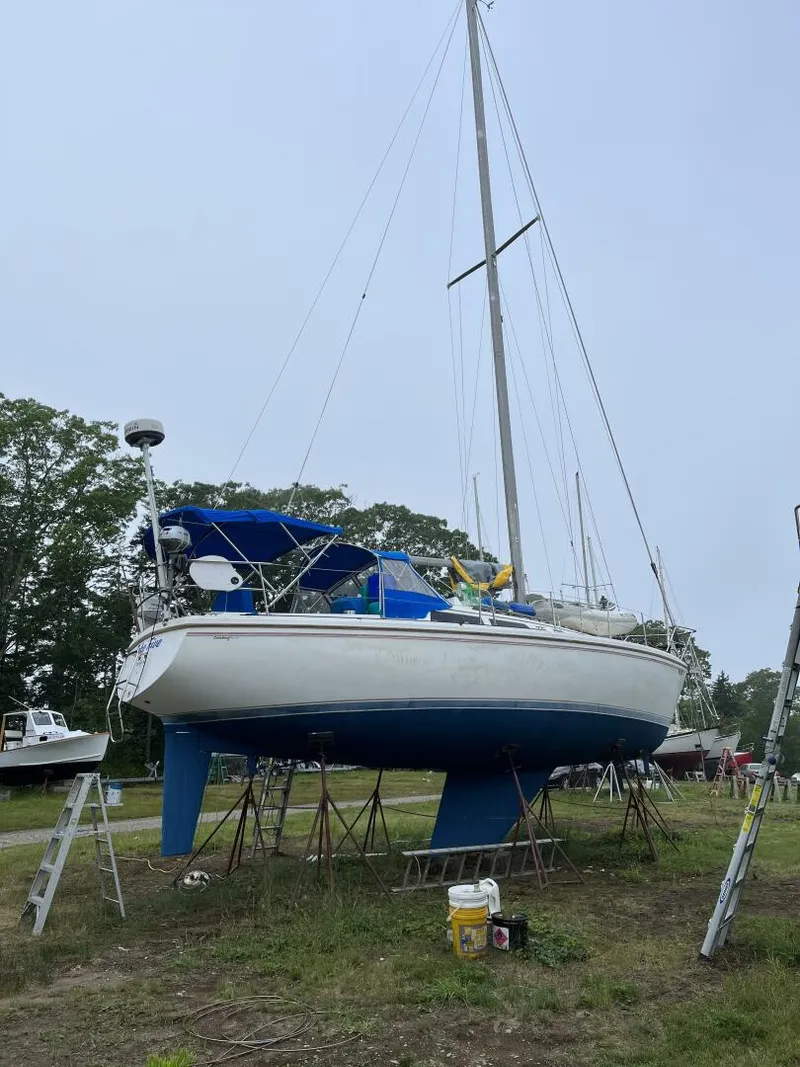
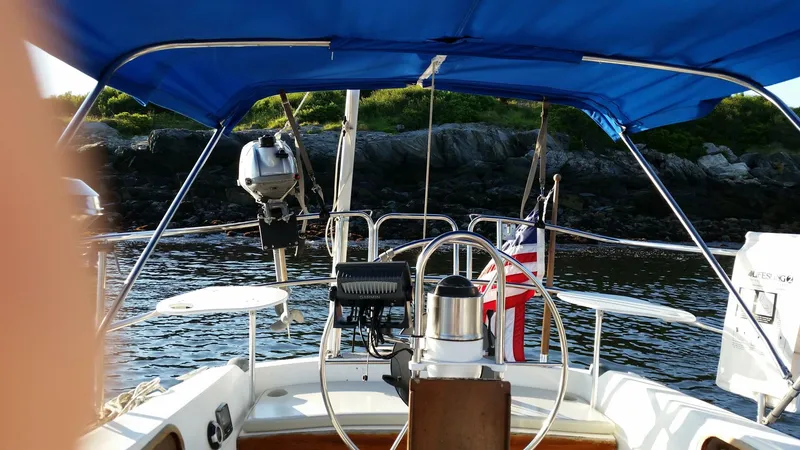
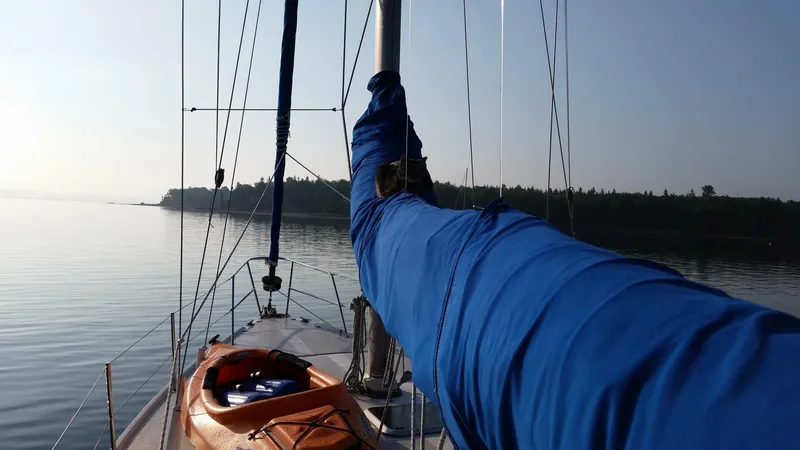
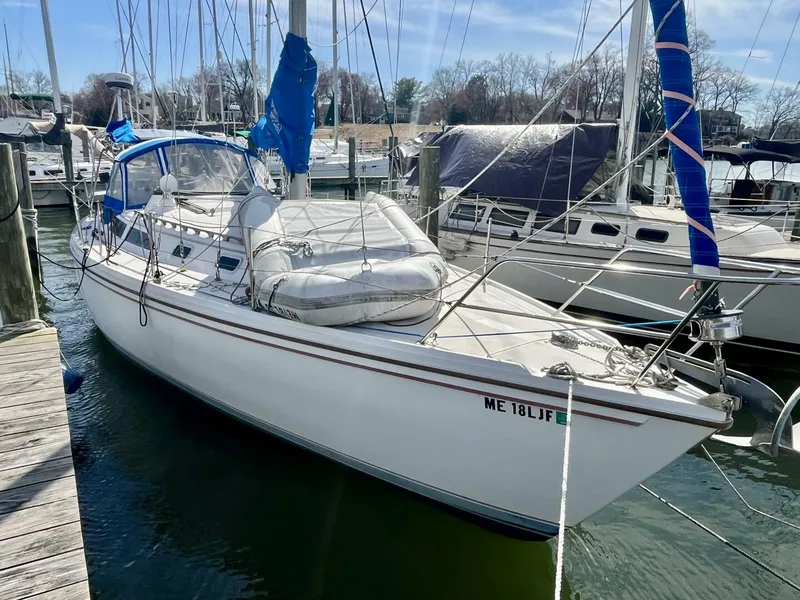
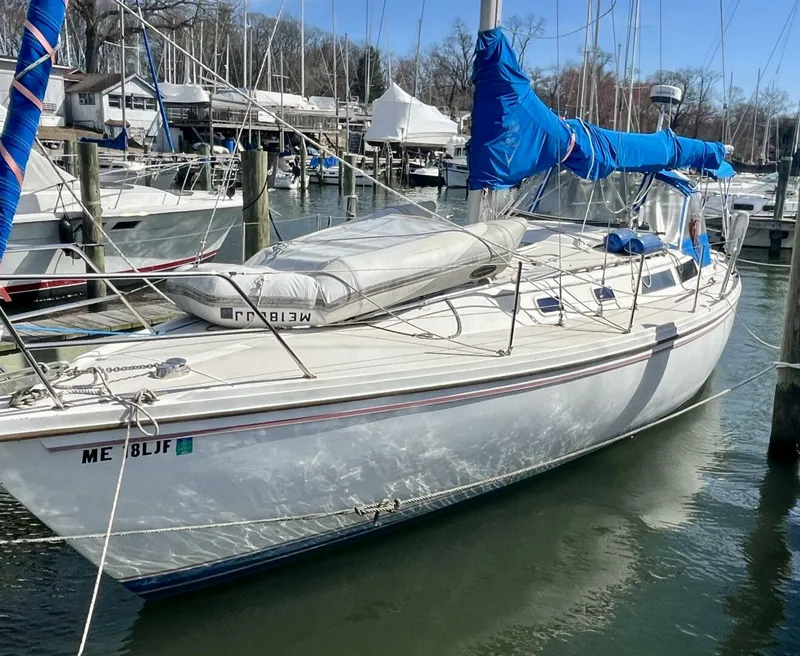
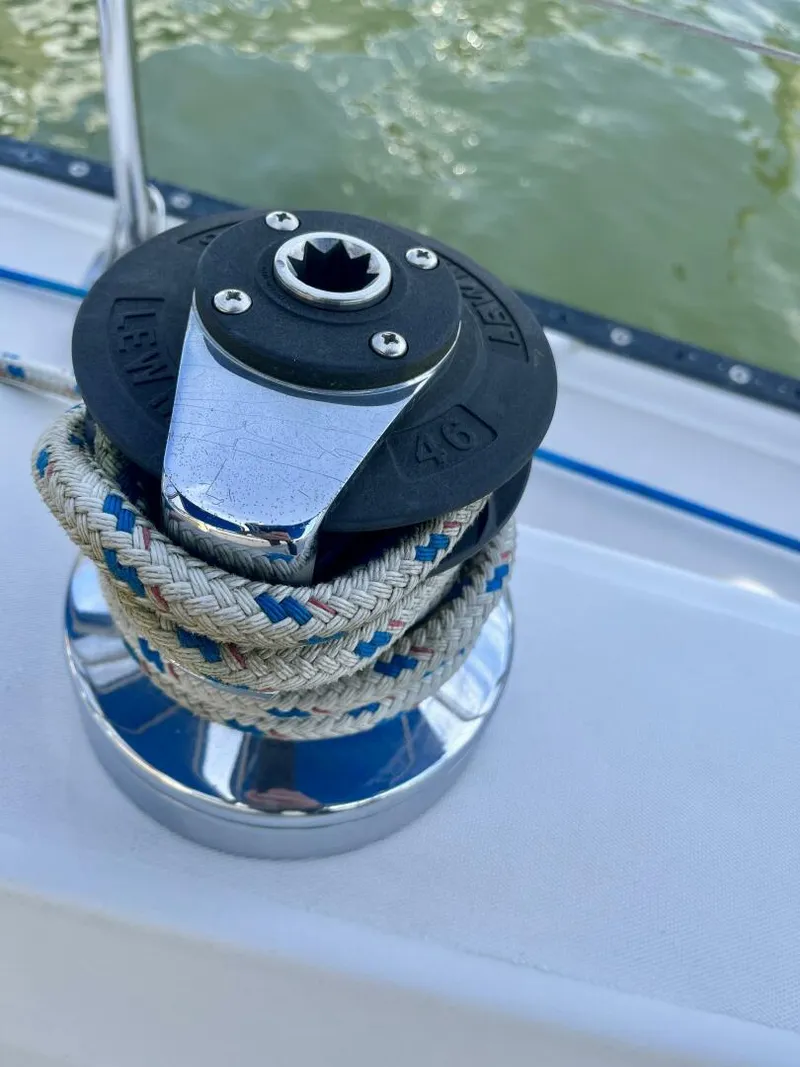
1986 Catalina 36
$19,500
Boat in Pasadena US
 Built in 1986
36

--

36 feet

--

Fiberglass/Reinforced
All About Take Five.
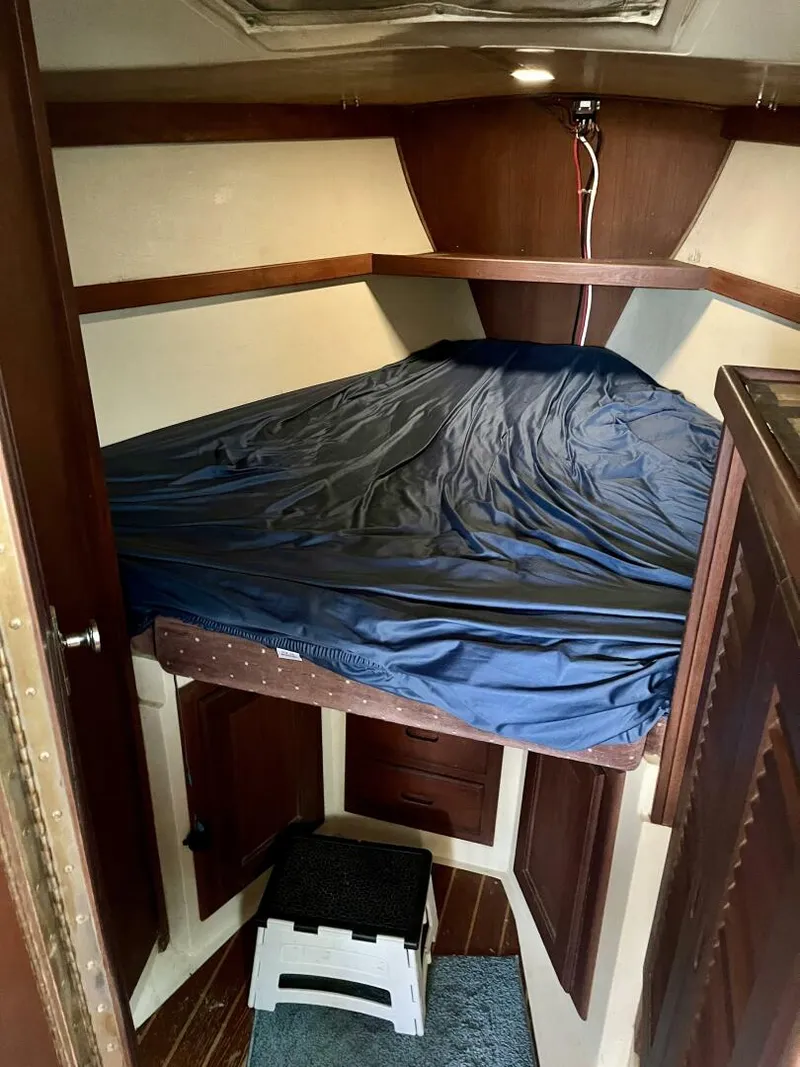
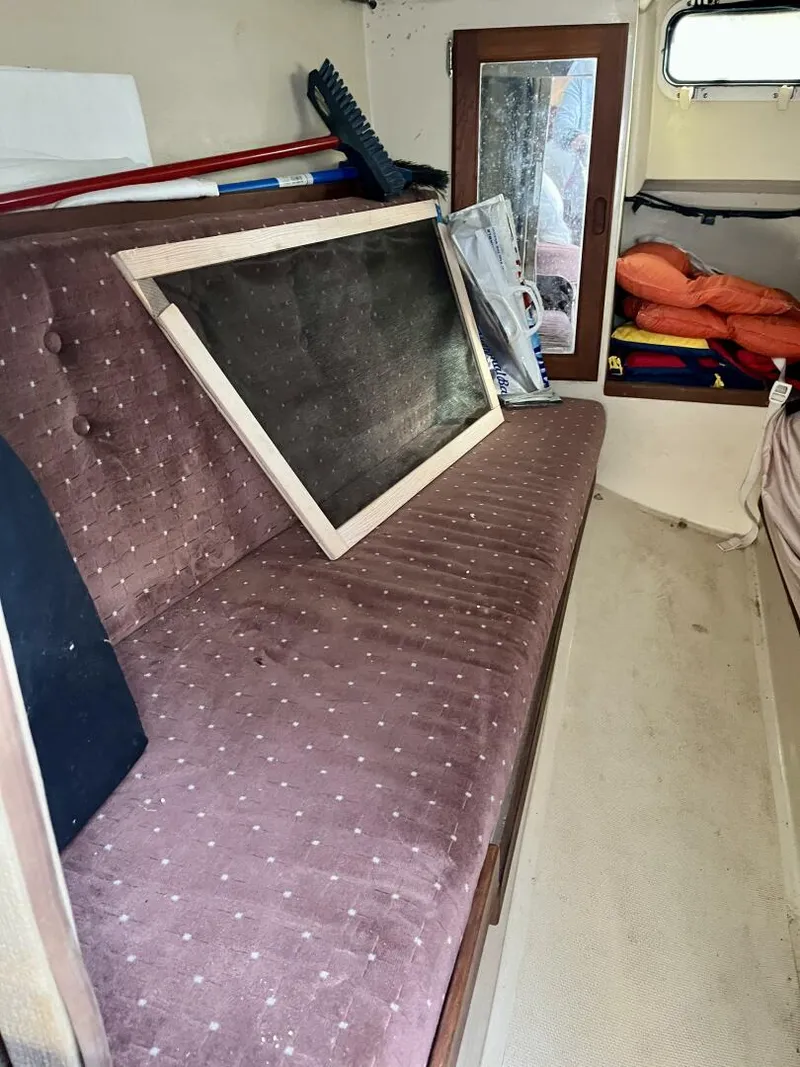
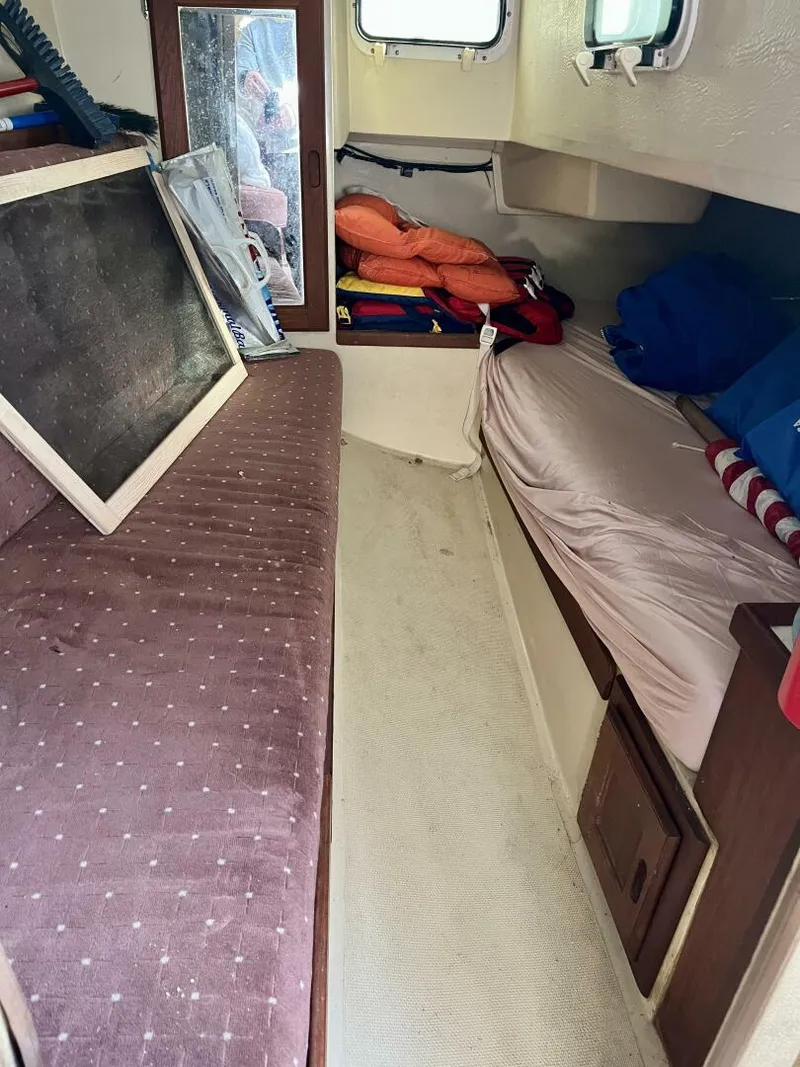
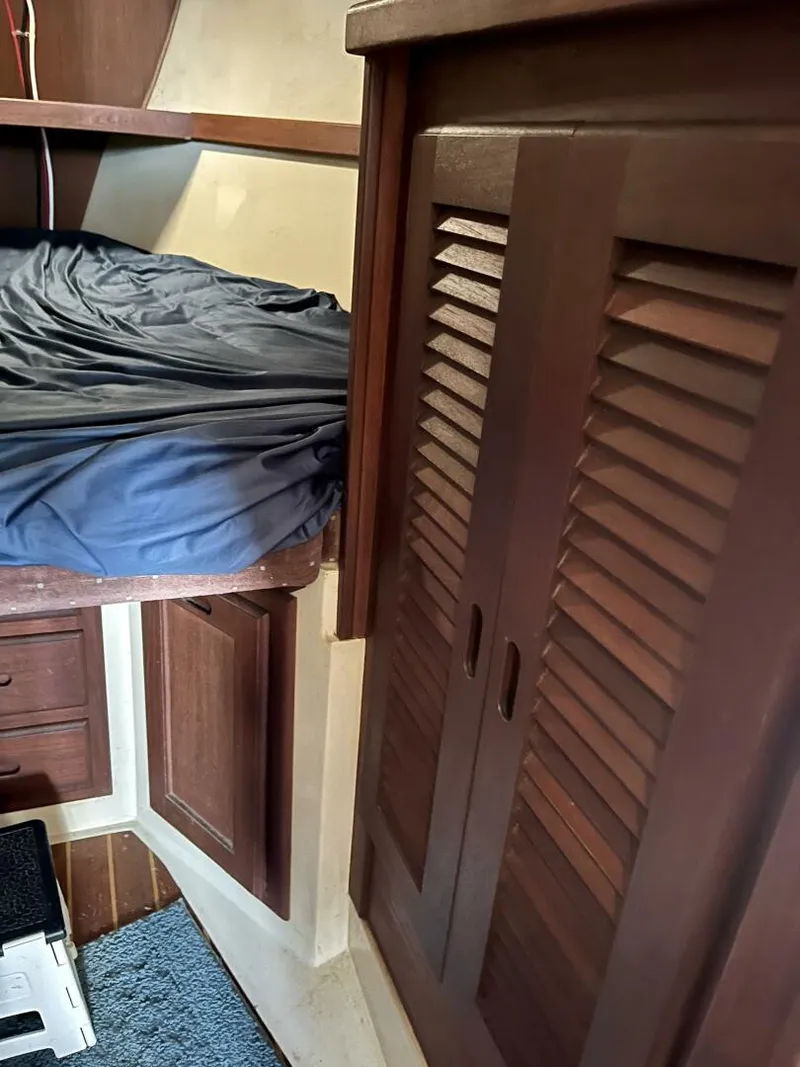
There is lots of storage under the V berth, but currently only the two sail bags and the bag for the dinghy
are store there. There is also a rug under there. Thew are two dirty laundry bins port and starboard. In
between are three drawers. Under the bottom drawer are the two through hull transducers for depth and
speed. The is also a third transducer for depth for the that’s connected to the chart plotter. To starboard is
the only closet on board and that’s where a full set of foul weather gear resides. That’s also where the rest
of the sheets and blankets reside.
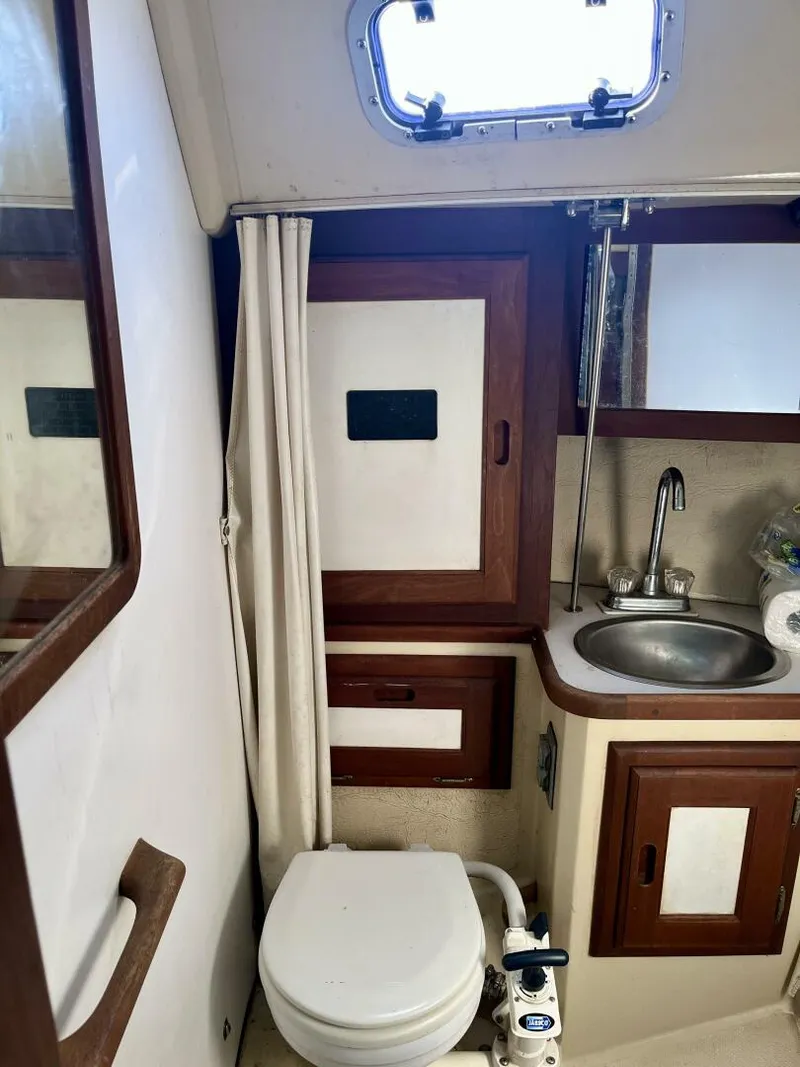
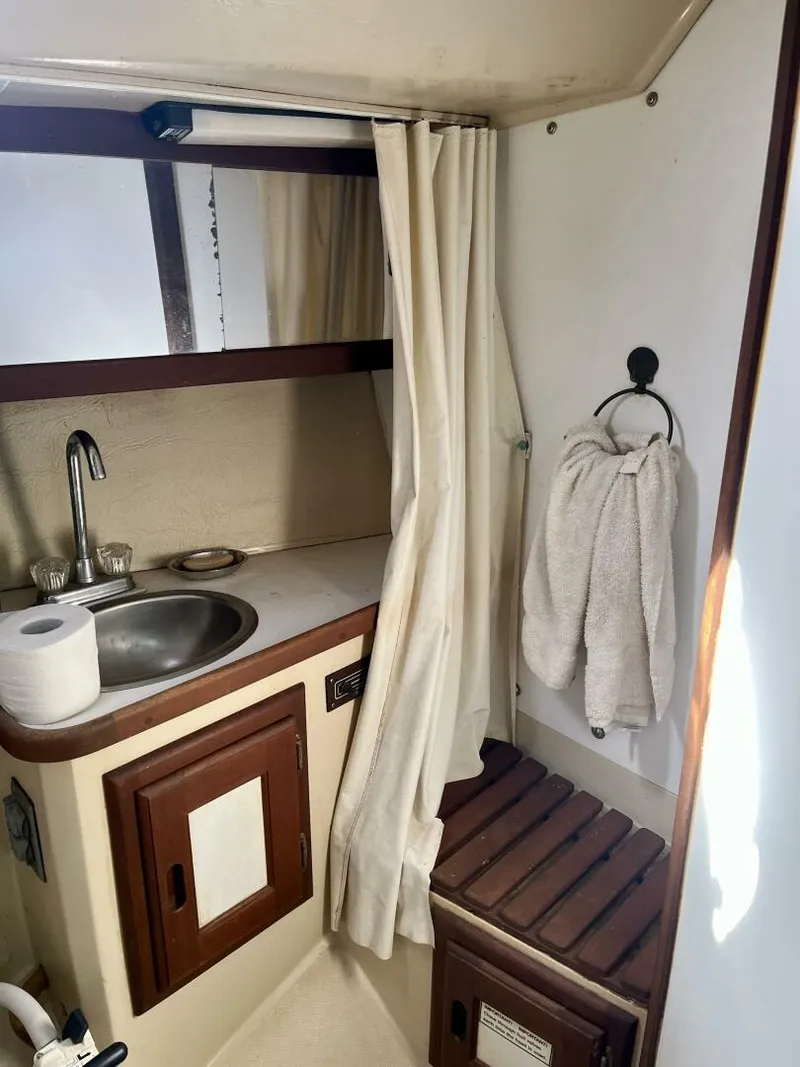
Just outside of the V berth cabin to port is the head. Under the shower seat are two through hulls that drain
the sink and the shower sump water and supplies the cleaning water to the head. These must be closed
when the boat is sailing, especially on starboard tack as the sink can become lower that the sea water
outside the boat and this will cause flooding. Not a good thing! There is also a door under the sink where
the toilet paper roller is mounted. I use RV toilet paper from the RV aisle of Walmart because it’s designed
to dissolve and break down quickly so it won’t clog either the macerator or the marina’s pump out. The
shower head is on a hose stored in the cabinet above and behind the head.
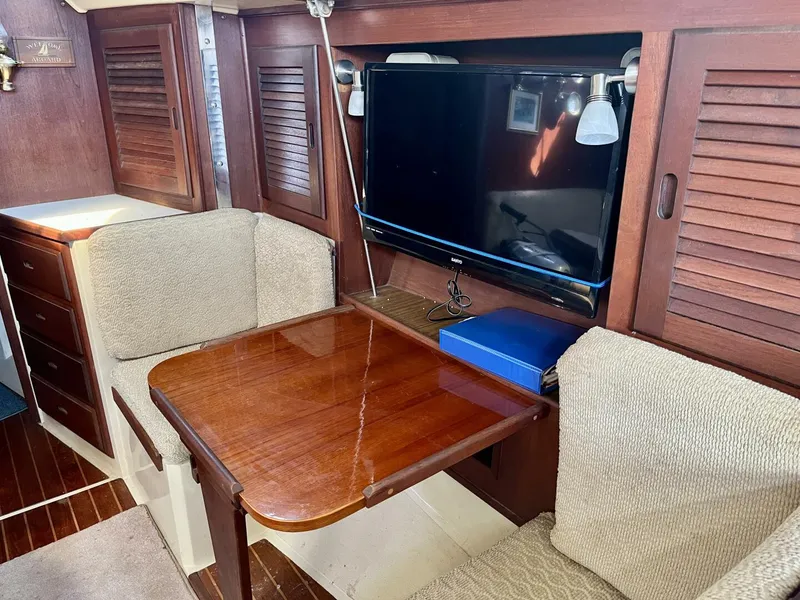
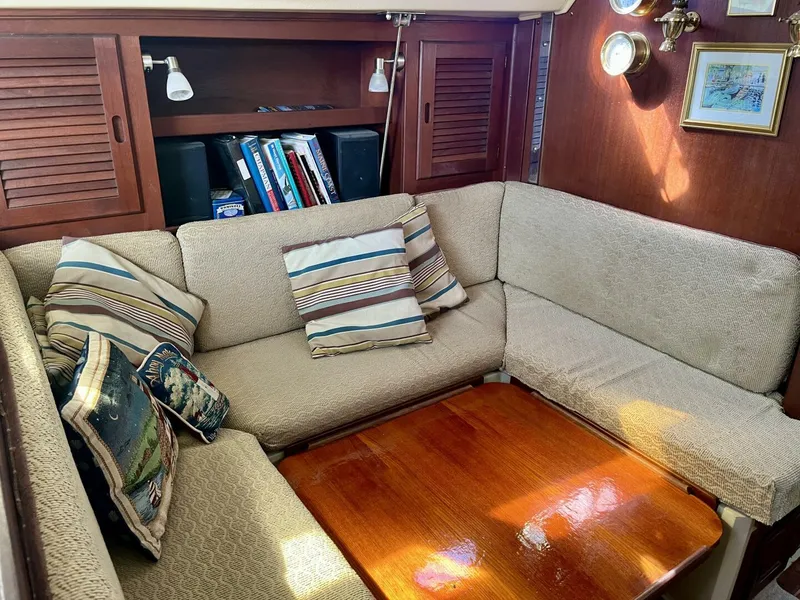
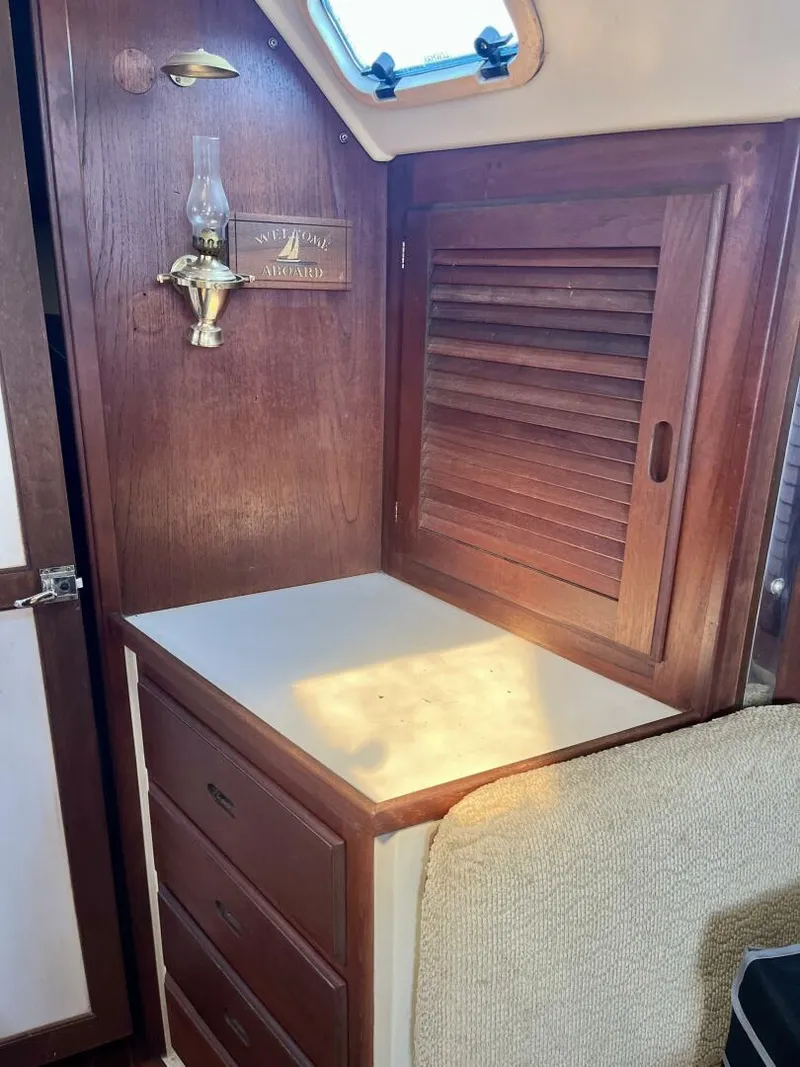
Just outside of the of the V berth cabin to starboard in the salon are four empty drawers and a large
compartment above. This is where the two large pots for the galley are stored. There is also a large orange
dry box in there that contains all of the important papers for the boat.
Engine maintenance: I change the raw water pump impeller every other year. It is due to be changed the
spring of ‘24. I change the engine oil every year at the end of the sailing year so that there is fresh clean
new oil in it over the winter. I would recommend turning over the engine without using the glow plugs for
about fifteen seconds every time you visit the boat over the winter. This will allow engine oil to circulate a
bit to keep in nice and lubricated.
Winterization: The last time you are going to use the boat, get a pump out and make sure the holding
tank is empty and fill the diesel fuel tank with fuel and add some diesel fuel stabilizer to the fuel. The
stabilizer is in the port side lazarette.
Start winterizing by buying nine gallons of winterizing antifreeze; I usually buy it at Walmart in their RV
section for about $2-3 per gallon.
Fresh water system: 2 gallons.
Holding tank and macerator pump: 3 gallons
Bilge pumps: 2 gallons
Fridge pump and depth transducer: .5 gallon
Main engine: 1.5 gallons
Also buy a cheap siphon hose and an oil filter from any auto supply. You will need the filter number from
the current filter. There may by a spare filter in the orange box in the port lazarette. When you get to the
boat, start the main engine to get it warmed up so the oil will flow better. Then use the siphon hose to
remove as much gas as possible from outboard engine’s tank. Then start that engine and let it run out of
gas. It could take a while for it to run out of gas. It’s air cooled so there is no water pump to worry about,
but it will be noisy.
Once you get the engines running, go below and start the fresh water pump and let the old water run in the
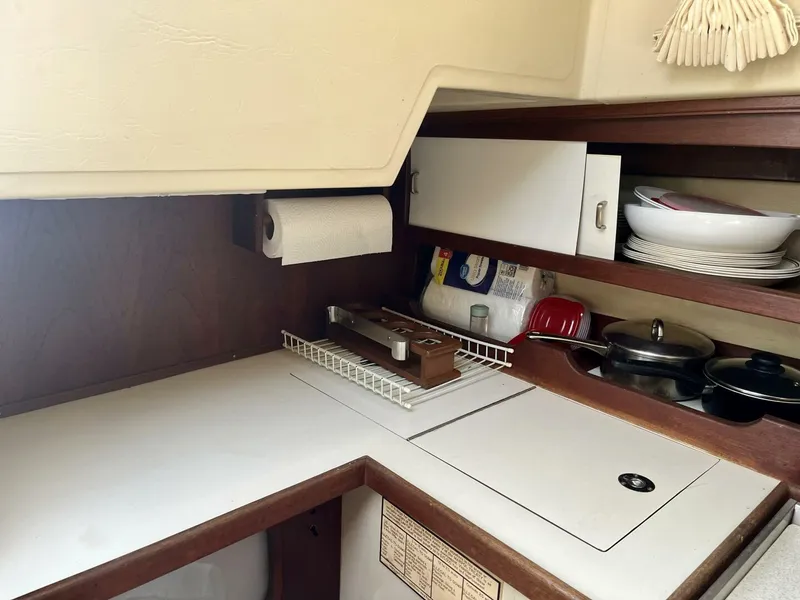
head. When that tank is empty, switch tanks using the two valves under the deck in front of the galley
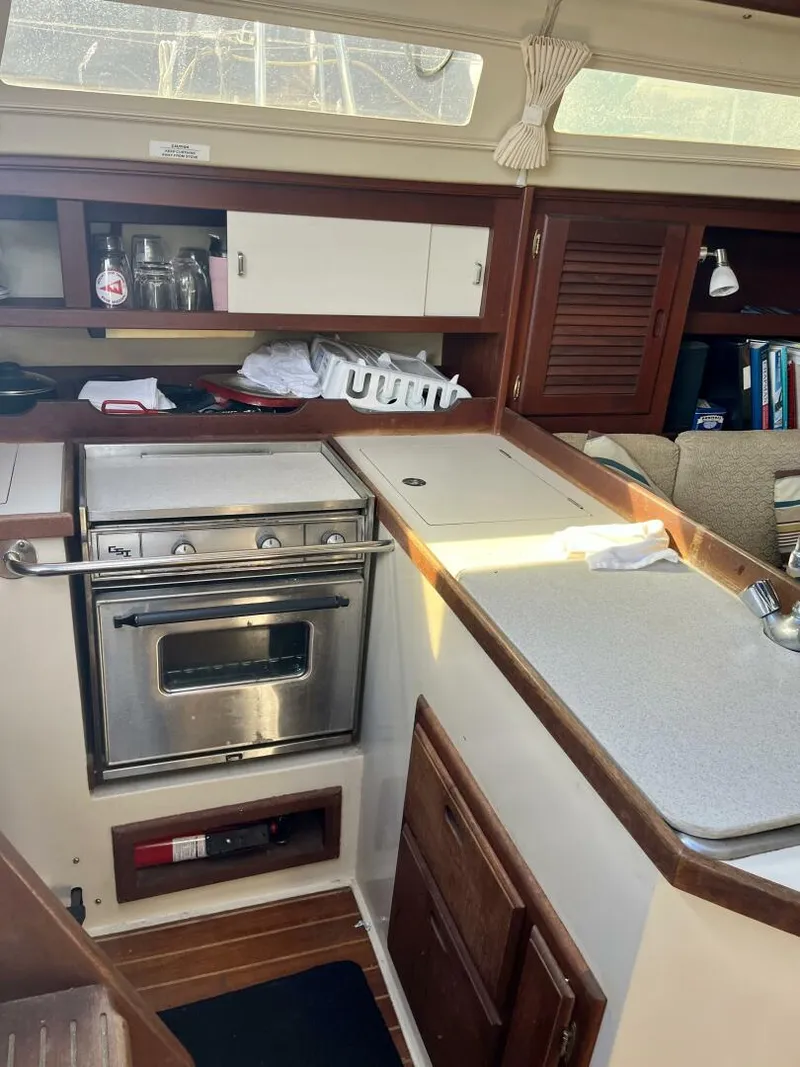
sink. You have to remove to large bottom drawer under the sink to gain access to the two valves. One
should be open while the other is closed. When both tanks are empty, drain the hot water heater which is
located just to port of the diesel fuel tank under the settee. Drain it into the bilge, make sure the bilge
pump is on so the water will go overboard (it should always be on). Then remove to two hoses from the
water heater that are part of the water system, not the two hoses that come from the engine to heat the
water. Don’t touch those as they will be winterized later when you winterize the engine. There is a ½”
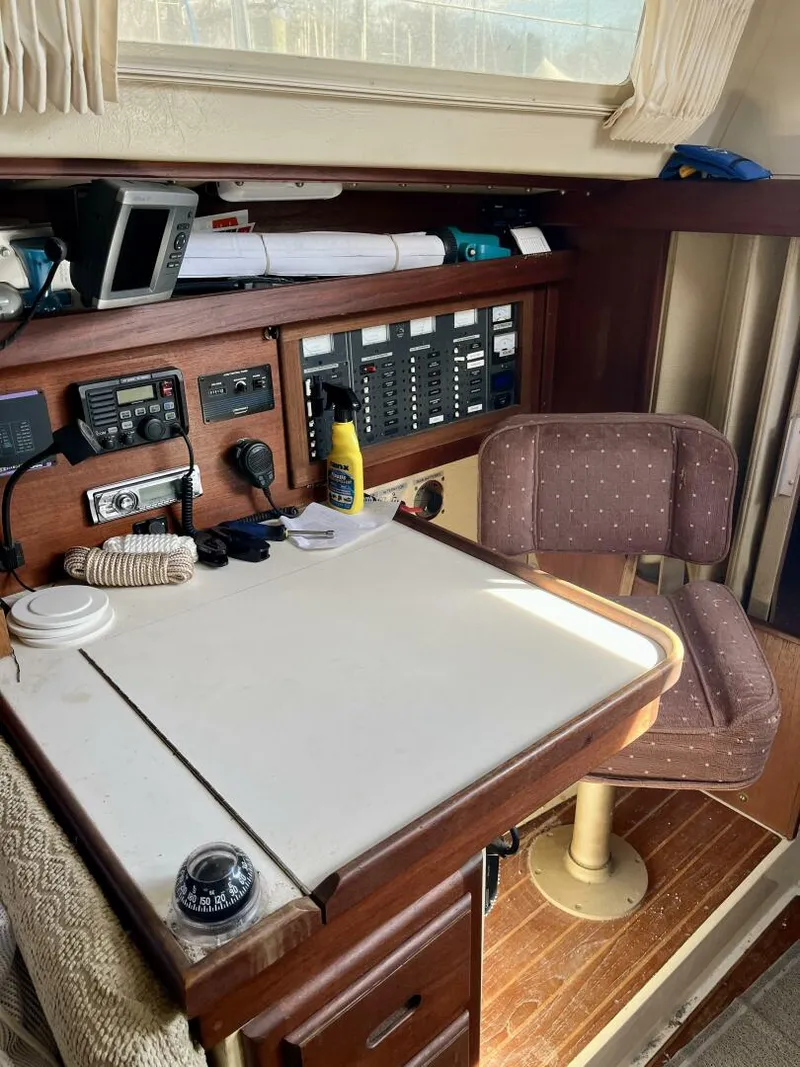
barbed hose coupling in the chart table that is used to connect those two hoses together. Now put onegallon of antifreeze in each tanks using the deck fills at the two after corners of the cockpit. Run the water
system until the water in the head is pink from both hot and cold valves, then repeat for the galley sink.
The switch back to the opposite tank and repeat the process with the head and galley sinks.
Next winterize the head by closing the inlet through hull and put three gallons of antifreeze into the head
and pumping it into the holding tank. Next, use the key from the shelf behind chart table to unlock the
holding tank switch over valve and switch the valve to pump overboard. The run the macerator pump for
about 15 seconds to pump some of the antifreeze from the holding tank through the macerator pump.
Then switch the valve back and lock it.
Use the galley foot pump to empty any water in the bottom of the fridge, then pour a half gallon of
antifreeze into the bottom of the fridge and pump that out using the foot pump.
Remove the bottom drawer from the V berth and you will see a plastic bag with a depth finder transducer
in it. Empty the water and replace with with antifreeze.
Winterize the bilge pumps by pouring a gallon of antifreeze into the bilge, the use the cockpit manual
pump to pump it out until you see pink coming out of the transom. Then run the electric bilge pump until
you see pink at the overboard on the transom. This is a two person job. Save another gallon of antifreeze
for when there is water accumulation from condensation over the course of the winter.
By now the dinghy engine should have run out of gas to you can change it’s oil. Follow the Honda manual
instructions. Then remove the outboard from the rail and store it below on the deck of the aft cabin.
The engine oil changer is in the aft lazarette. Shut off the engine and insert the oil drain tube into the
dipstick tube and pump up a vacuum and the oil will be pumped out by the vacuum in about 5 to 15
minutes. There should be oil in the port lazarette, but I’m not sure if there is enough. I prefer to use Shell
Rotella T diesel oil, 10W-40. Once the engine oil is changed, winterize it by shutting off the water intake
thru-hull at the little door by the deck in the deck in the aft cabin. Then remove the hose from the thru-hull
and stick the hose into a bucket of antifreeze. This is also a two person job. One person holds the hose in
place in the bucket and makes sure to keep antifreeze in the bucket while the other starts the engine and
stops it as soon as pink comes out of the transom. This will usually use about 1 or 2 gallons of antifreeze.
Once the boat is fully winterized, close all the through hulls, two in the head, two port side under the
settee, one behind the tall skinny locker under the galley sink, and one under the aft cabin bed by the
engine. Unplug the AC power from the dock and store the cable in the port lazarette. The solar panels will
keep the batteries charged. Remove the jib by unrolling it on a calm day. The is a three person job. One
person on the halyard lowering it slowly, the other two folding the sail on deck as it lowers. Then fold it
again to fit in on of the sail bags that are stored under V berth. The sheets are really one long line that can
be stored with the sail in the sailbag. Remove the main by first removing the sail cover, then from the
starboard side of the boat, lift the main where the two dutchman monofilament furling lines come down.
There you will see a pocket attached to the main at the bottom of the two furling lines. Use a Phillips
screwdriver to free the two furling lines from the sail and pull them straight up and out of the sail I usually
tie them to one of the flag halyards on the shrouds. Put duct tape over them to be sure they don’t come
loose over the winter. Hoist the sail on a calm day and remove the two reef lined from the sail. Take a
picture or two first so you know how to rerun them. Then unscrew the large flathead bolt in the mast
grove just above the boom that keeps the mainsail slides from coming out of the slot. Lower the mainsail
and the slides will come out freeing the luff from the mast. Put the bolt back in the mast. Then disconnect
the outhaul from the clew on the mainsail and then mainsail boltrope can then be pull by the clew and the
main will be free. Fold it and store the reef lines with the sail in the sailbag. Both sailbags can be lowered
into the V berth through the foredeck hatch. Store the cockpit cushions on top to the sails. Make sure the
dinghy is tied down over top of the foredeck hatch as it has been known to leak. Good Luck! Call if you
have questions.
In the spring, reverse the process! Don’t fill the water tanks. Run the water pressure pump while you run
water into each tank until there is no sign of pink antifreeze, then fill the tanks.
Catalina 36 “Take Five”
Anchor Windlass New 2023
Standing rigging New 2023
halyards 2 new 2023, 1 new 2013
Fully battened Main very good
Dutchman New 2023
Roller Furling 130% genoa very good
40# Anchor, rode, 20’ chain 150’ ½ nylon New 2023
refrigeration New 2013
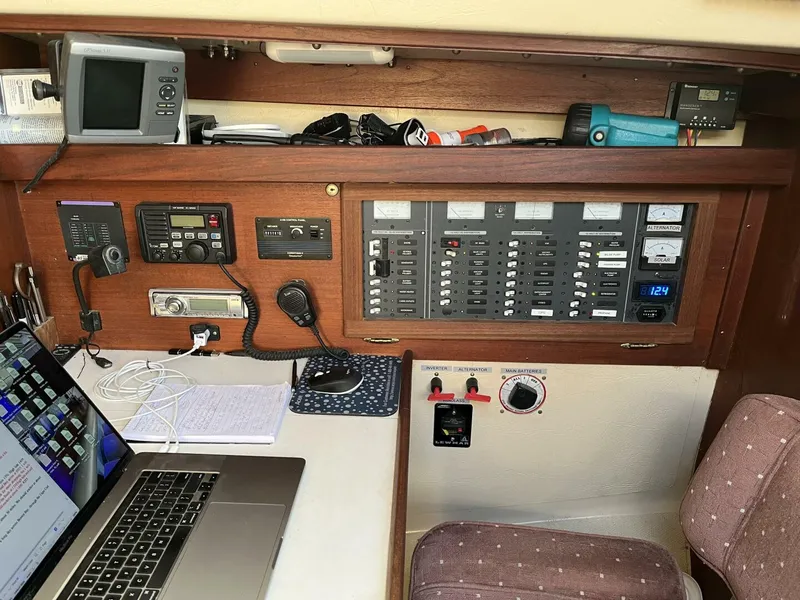
Garmin 740s chart plotter with Radar New 2013
Radar with overlay on chart plotter New 2013
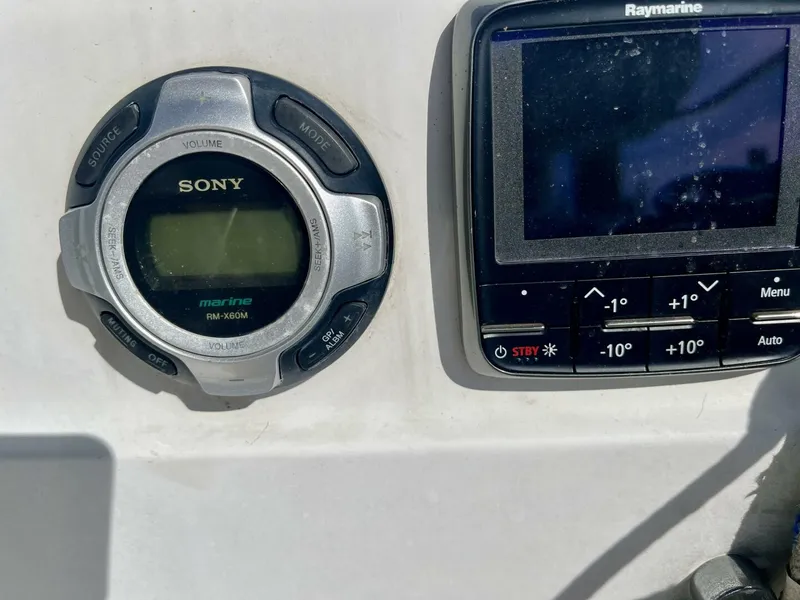
Raymarine Autopilot New 2013
2 130 watt solar panels and controller New 2013
2000 watt inverter New 2013
new fresh and raw water pumps New 2013
transmission rebuilt 2016
new glow plugs 2016
rebuilt and cleaned the injectors 2015
new electrical panel 2015
Sanyo 32” Tv and marine antenna 2023
Dinghy New 2013
Honda 2.3 outboard New 2013
Complete set of spares for head, pumps, engine, etc
fans
propane grill
several sunshowers
oil changer
dinghy bilge pump
bosuns chair
The boat spent most of its life on the Chesapeake, sailing from Gratitude
Very low engine hours (estimated to be 1000 hrs) because of the proximity to the bay
I installed the hour meter in 2013, so add 1000 hrs to that for total estimated engine hours
I believe we were the third ownersWe lived in Arizona with very hot summers and we wanted an escape from the heat.
We bought the boat in 2013 and did many improvements, then took her Maine
That’s why she carries a home port of Tuscon AZ.
From 2013 to 2017 she was in the water in Maine for 3 months each year
Hauled the rest of the time.
Yachting Select is pleased to assist you in the purchase of this vessel. This boat is centrally listed by Annapolis Sailyard. It is offered as a convenience by this broker/dealer to its clients and is not intended to convey direct representation of a particular vessel
Price History
| Date | Event | Price |
|---|---|---|
| 5/1/26 | Initial price | $19,500 |
1986 Catalina 36 Video Tours
Overview from around the web 1986 Catalina 36
The Catalina 36, particularly the 1986 model, has garnered praise from enthusiasts and buyers alike for its exceptional blend of performance, comfort, and design
Customers frequently highlight the spacious interior layout, which offers ample living space for both relaxation and entertaining. The well-thought-out accommodations, including a roomy galley and a comfortable salon, make it ideal for extended cruising or weekend getaways. Many sailors appreciate the boat's stability and ease of handling, complemented by its robust construction that provides confidence whether out on open waters or navigating through tight marinas. Reviews often mention the Catalina 36's reliable performance under sail, balancing speed with the ability to maintain a steady course, making it a favored choice for both novice and experienced sailors. Additionally, the responsiveness of the rig and the smooth sailing experience are frequently noted, which enhances the overall enjoyment during outings. Many owners feel that the Catalina 36 is incredibly versatile, serving well as both a capable cruiser and a cozy liveaboard option. In terms of maintenance and support, owners report that parts and upgrades are generally easy to source, contributing to the overall satisfaction with maintaining the vessel. Overall, the enduring reputation of the Catalina 36, particularly the 1986 model, reflects a well-engineered sailboat that continues to win over the hearts of sailors around the world.
The Biggest Pros and Cons
Certainly! The Catalina 36, especially the 1986 model, is a popular choice among sailors for its balance of performance, comfort, and build quality. Here are some pros and cons of this particular model:
Pros
Spacious Interior: The Catalina 36 boasts a roomy cabin with a well-designed layout. It offers ample space for living and storage, making it ideal for extended cruising.
Good Sailing Performance: Known for its balance and stability, the Catalina 36 offers a solid sailing performance with good wind handling capabilities.
Versatile Design: The boat is well-suited for a variety of sailing activities, whether it's day sailing, weekend trips, or longer voyages.
Easy to Handle: With its manageable size and user-friendly features, the Catalina 36 is suitable for both novice sailors and more experienced mariners.
Strong Build Quality: Catalina Yachts is known for their solid construction, and the 1986 model is no exception. It's built to withstand the elements and provide longevity.
Good Resale Value: The Catalina 36 has remained a sought-after model in the used boat market, which can make it easier to sell in the future.
Cons
Older Technology: As a boat from 1986, some systems and technology may be outdated. Upgrades for electronics, rigging, and other components could be necessary.
Maintenance Requirements: Older boats may require more maintenance, and prospective owners should be prepared for potential repairs or updates.
Limited Speed Compared to Modern Designs: While it performs well, the Catalina 36 may not match the speed and agility of more modern designs, especially those built with lighter materials.
Potential for Wood Rot: Boats of this age may have issues with wood components, particularly in the interior and deck, which can be susceptible to water damage if not properly maintained.
Less Efficiency Under Motor: While the sailing capabilities are robust, some owners find that the engine performance might not compare favorably to modern designs, particularly in rough waters.
Made For
The 1986 Catalina 36 is ideal for a diverse range of sailing enthusiasts. Whether you're an experienced sailor looking for a reliable cruising vessel or a beginner seeking a comfortable entry into the world of sailing, this classic design meets the needs of many. Families will appreciate its spacious interior and thoughtful layout, providing ample room for everyone to relax and enjoy time on the water. Couples and solo sailors will find it easy to handle, with excellent performance and stability, making weekend getaways a breeze. The Catalina 36 is also suitable for those wanting to explore coastal waters or embark on longer offshore journeys. With its sturdy construction and reputation for durability, this boat offers peace of mind for both short excursions and extended cruising adventures. Whether for weekend sailing, liveaboard living, or simply enjoying the beauty of the open waters, the 1986 Catalina 36 serves as a versatile and enduring vessel for a variety of sailing lifestyles.
Be the first to know when similar boats hit the market
Get notified when new boats become available
Boats For Sale in Maryland, United States Similar to the 1986 Catalina 36
Compare with similar boats and find the perfect one for you.
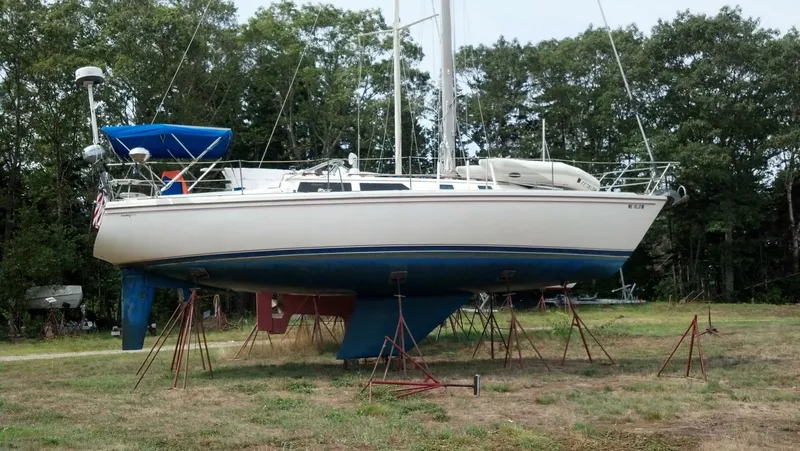 1986 Catalina 36 1986 Catalina 36 | |||||
|---|---|---|---|---|---|
| $19,500 | $18,000 | $22,500 | $31,900 | $36,000 | $44,900 |
| Pasadena | Solomons | Pasadena | Baltimore | Chesapeake City | Annapolis |
| 36' | 30' | 34' | 30' | 36' | 36' |
| - | Universal | Universal | Westerbeke | Yanmar | - |
| - | 18 hp | 25 hp | 18 hp | 40 hp | - |
| 0 | 0 | 0 | 0 | 0 | 0 |
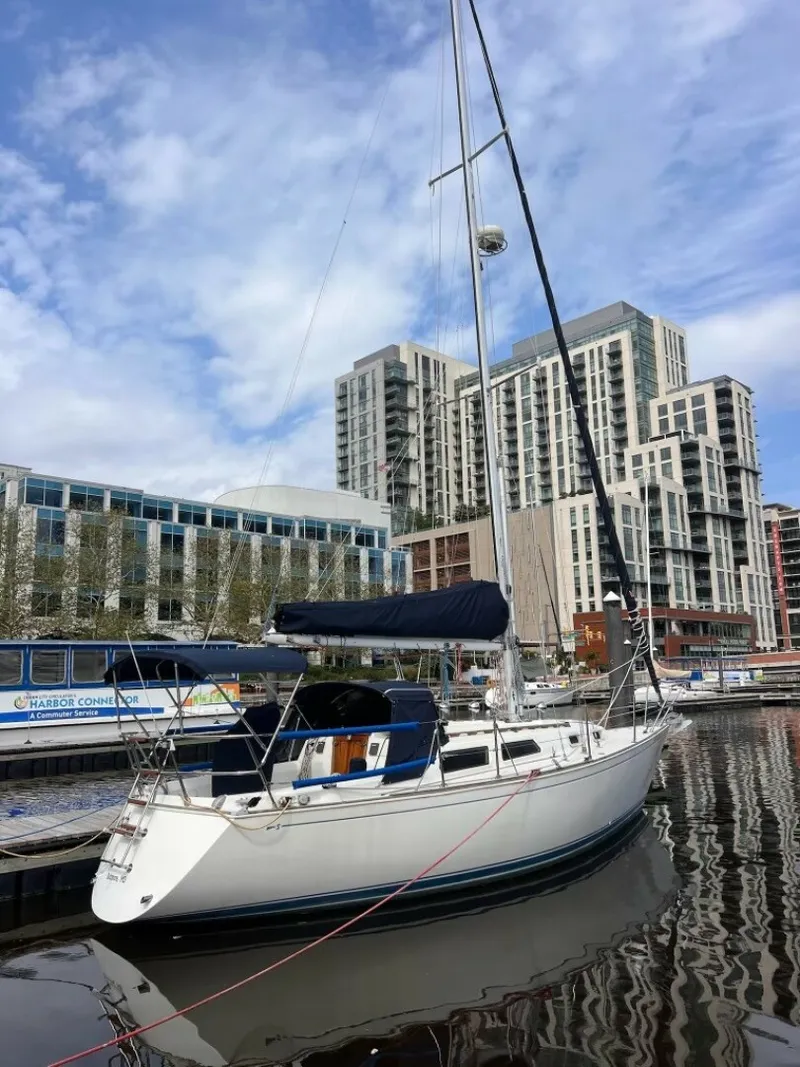
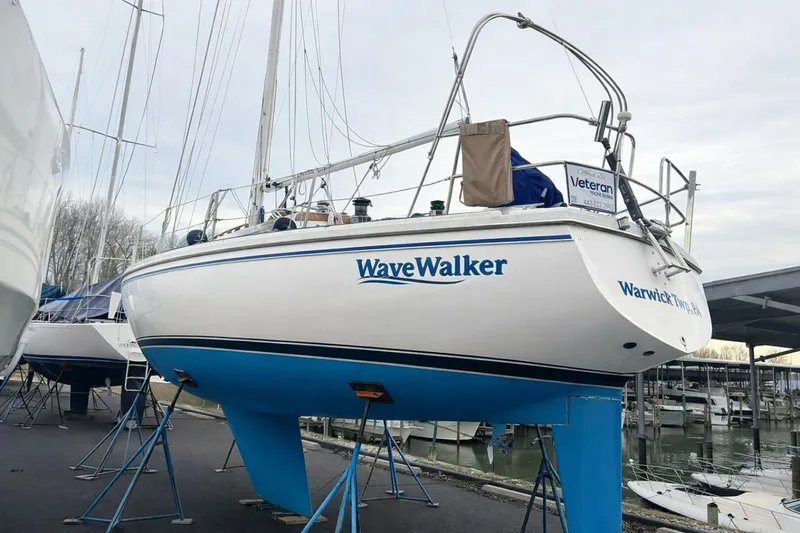
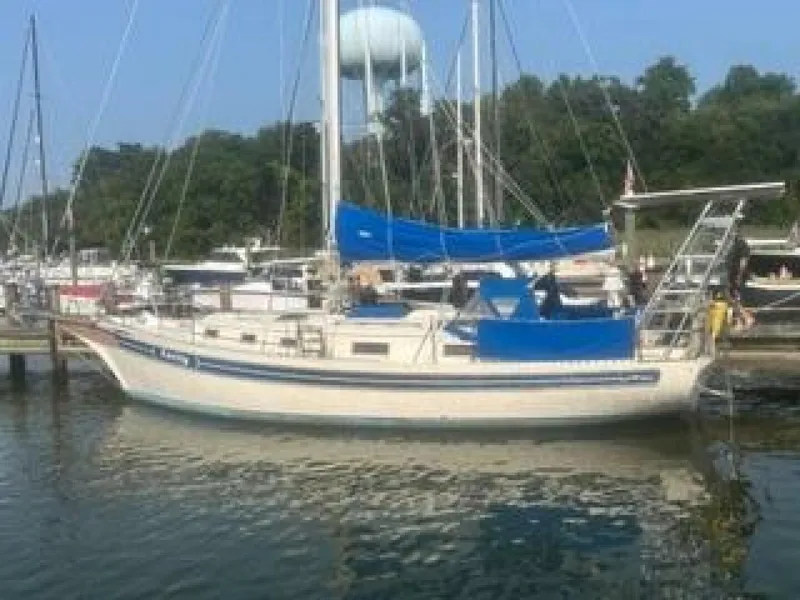
Other Catalina boats for sale in Maryland, United States
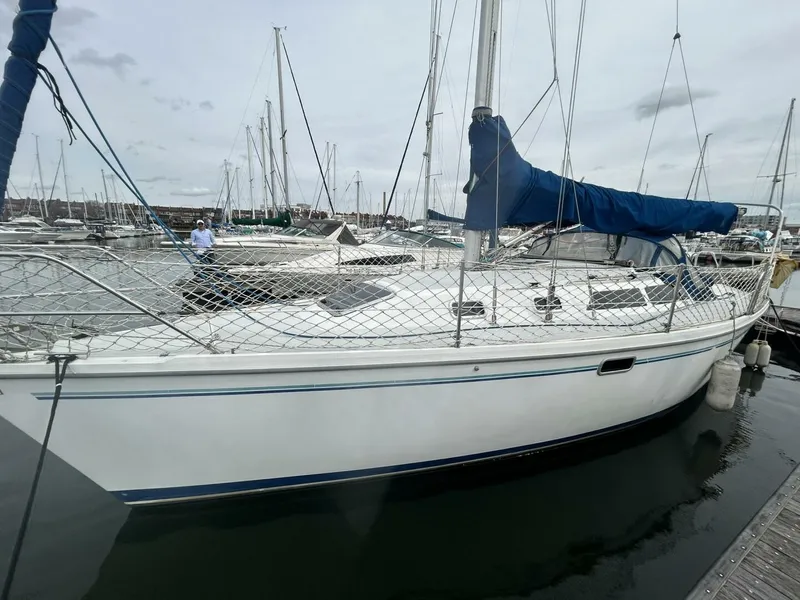
Meet the Broker

Address
 Login with Google