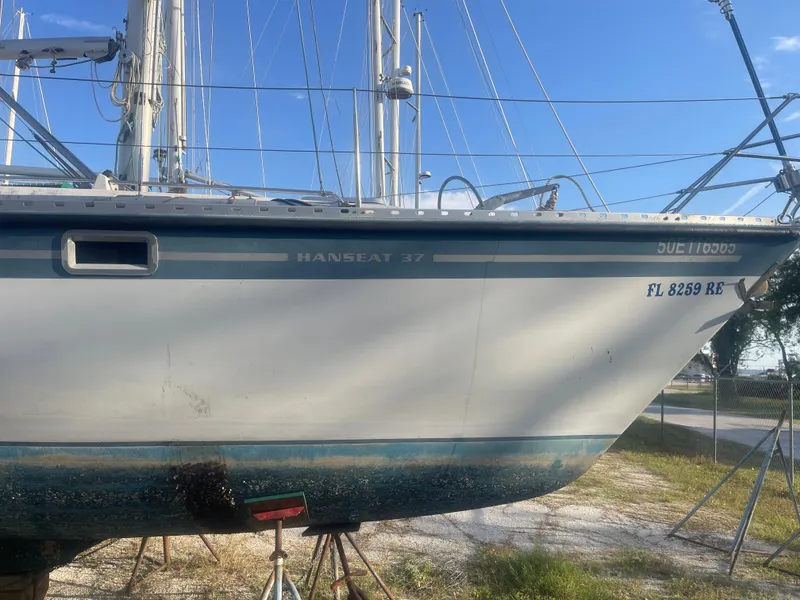
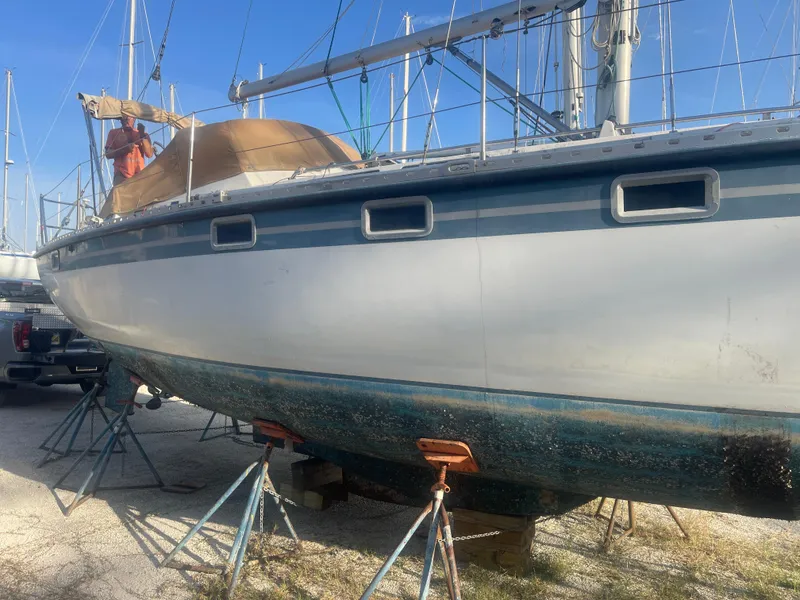
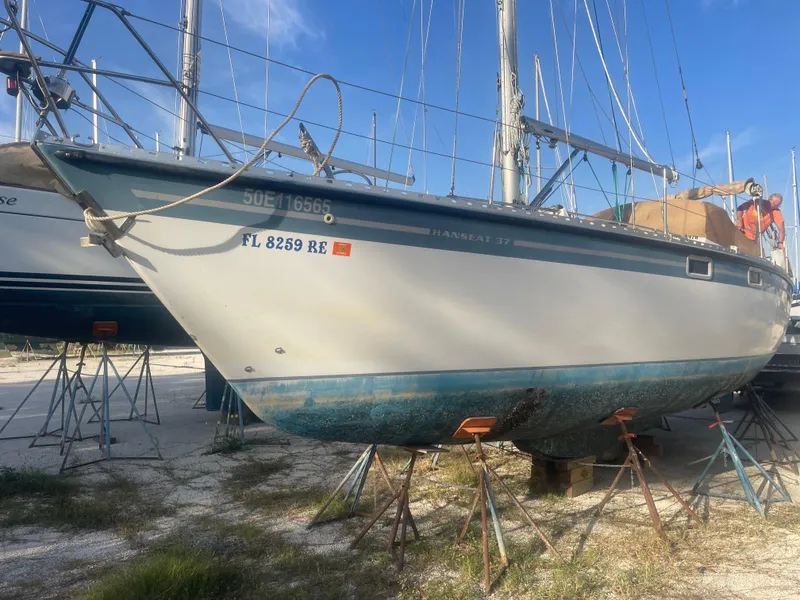
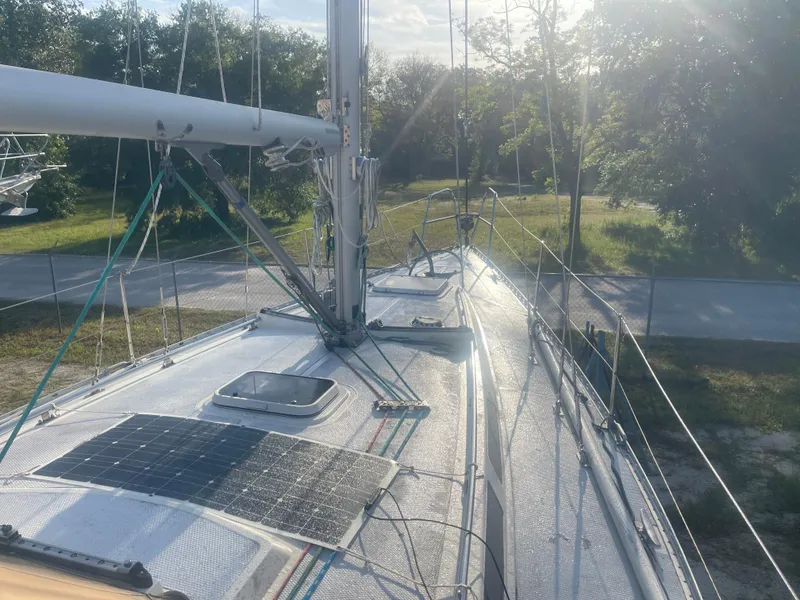
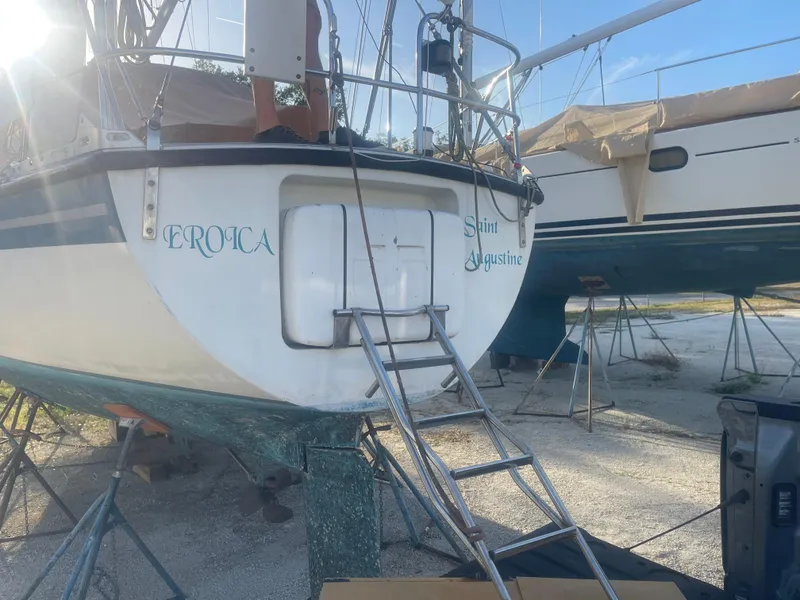
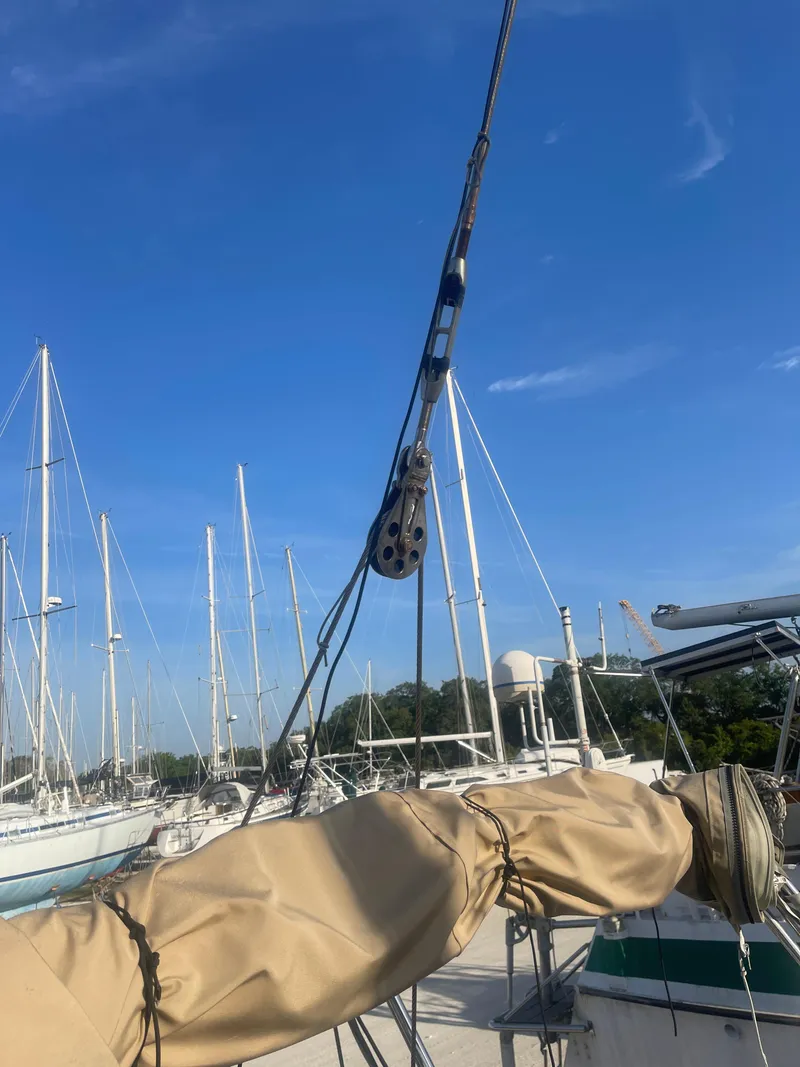
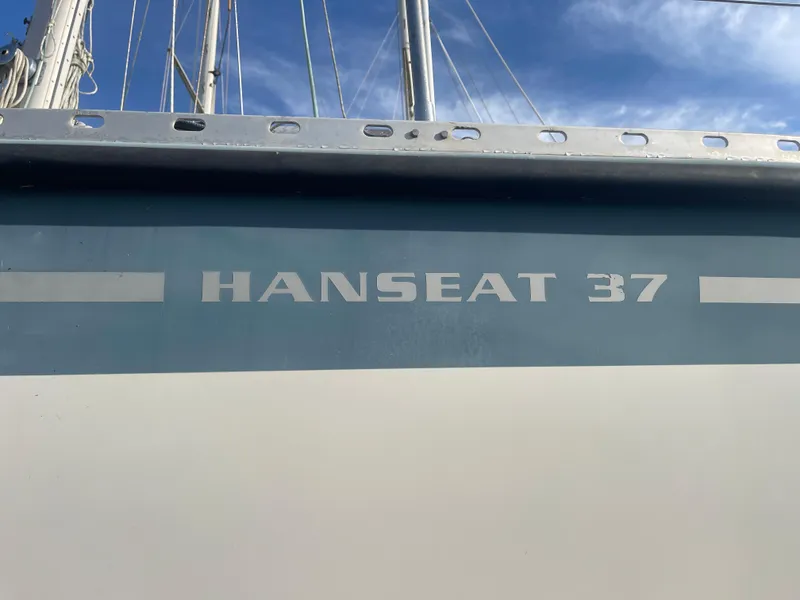
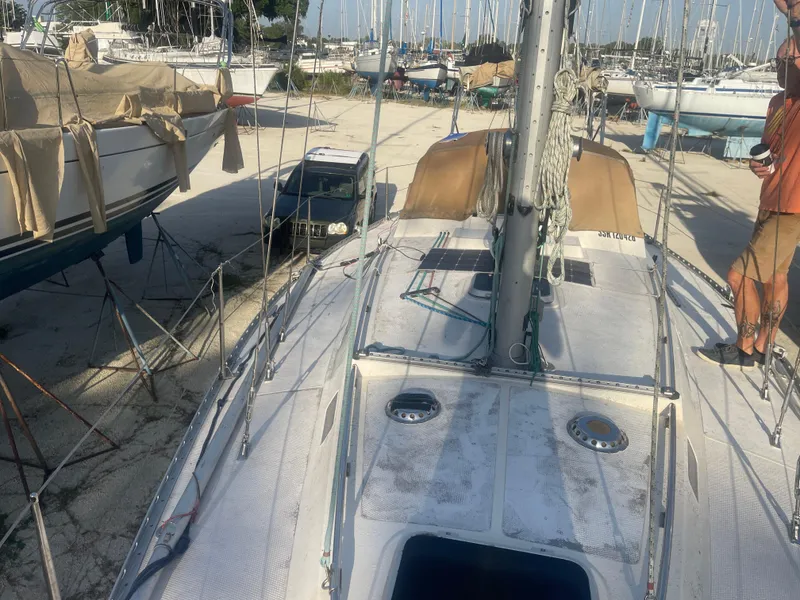
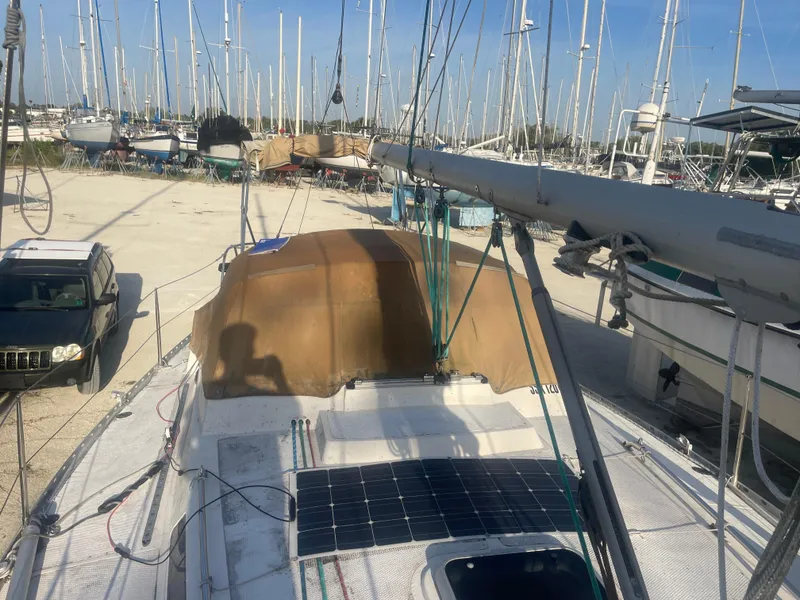
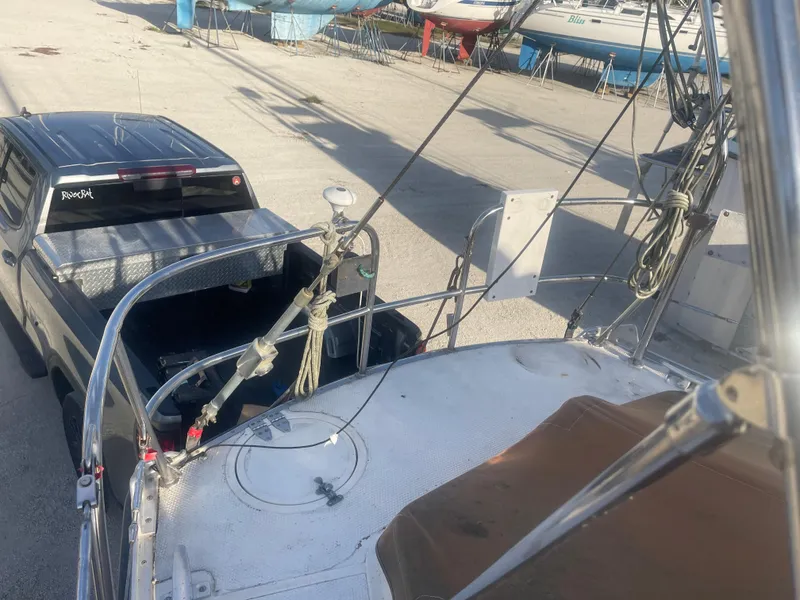
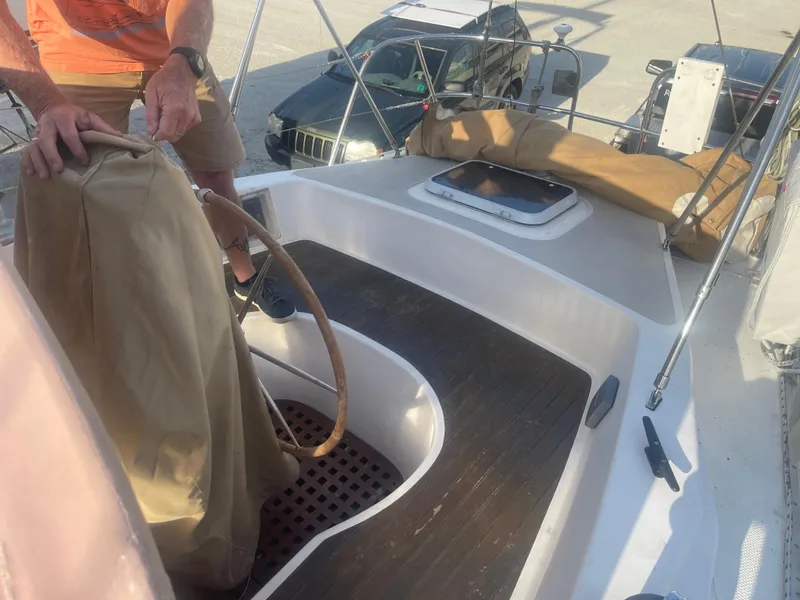
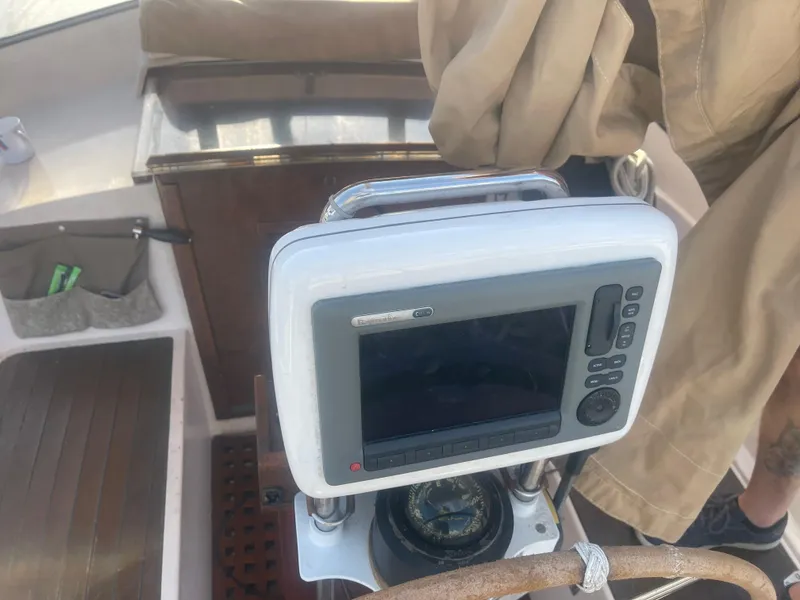
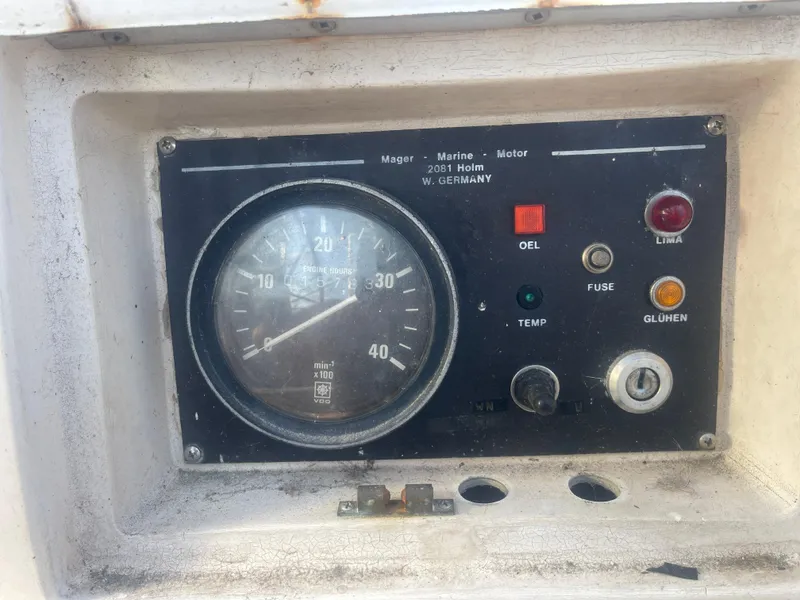
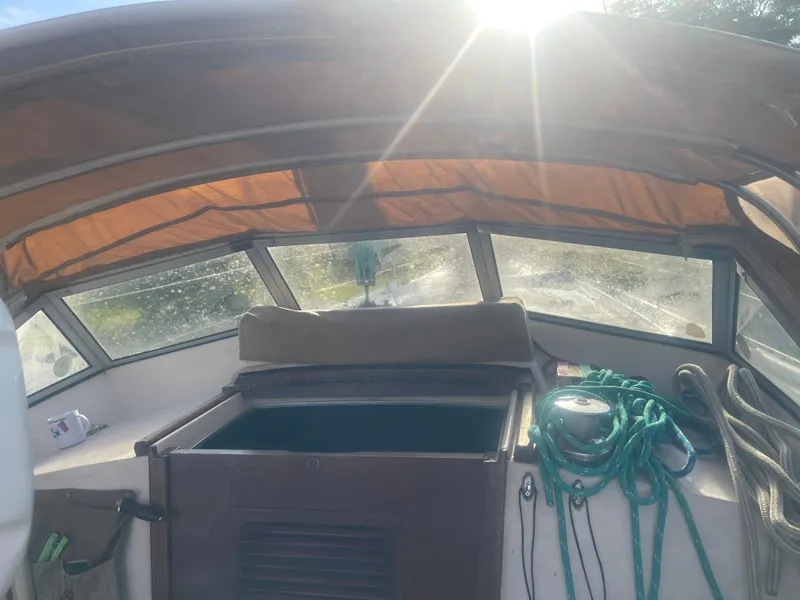
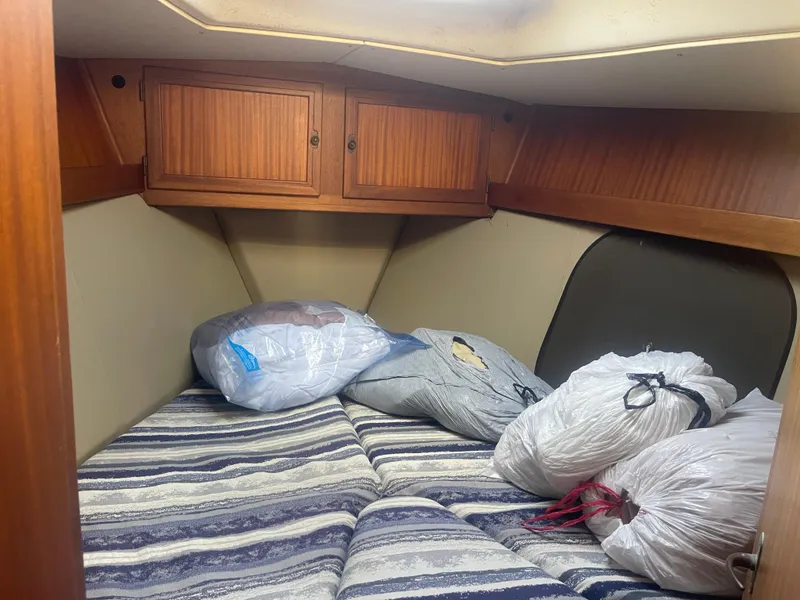
1984 Hanseat Hanseat 37 Swing Keel
$45,000
Boat in Green Cove Springs, FL 32043 US
 Built in 1984
Hanseat 37 Swing Keel

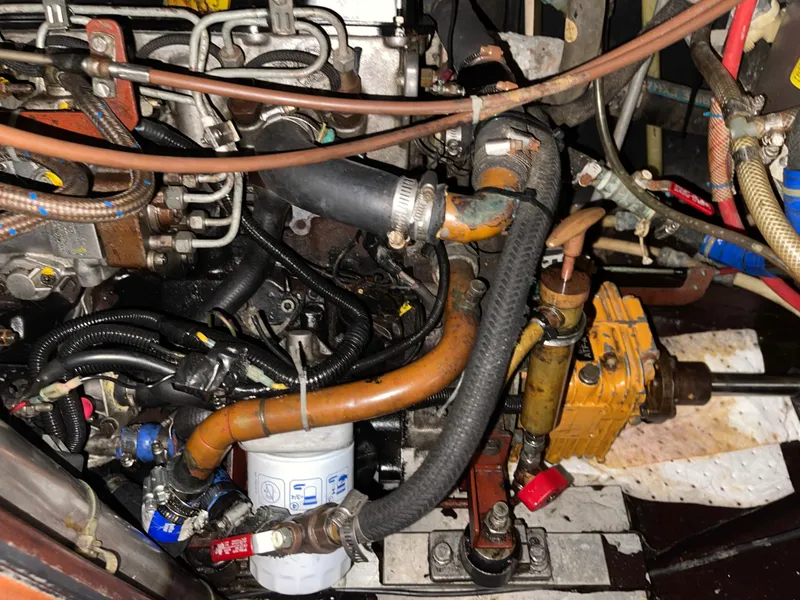
1 Engine (Pathfinder)

37 feet

Diesel

Fiberglass/Reinforced
The Hanseat 37 (often called theAsmus Hanseat 37) is a legendary German cruiser often confused with the modern "Hanse" brand. Built by theAsmus Werft in Glückstadt, Germany, it represents the pinnacle of 1970s and 80s "heavy-duty" German boatbuilding.
1. Technical Specifications & History
Produced primarily between 1976 and 1987, only about30 to 40 units were built, making them rare and highly coveted. Unlike modern production boats, these were semi-custom, hand-laminated "tanks" designed for North Sea conditions.
• Designer: Willy Asmus
• Keel Type: The "Hubkiel" (Lifting Keel) or "Schwenkkiel" (Swing Keel) version.
• Draft: Approx.1.10m (Keel up) /2.35m (Keel down).
• Displacement: ~7,500 kg (varies by ballast/interior setup).
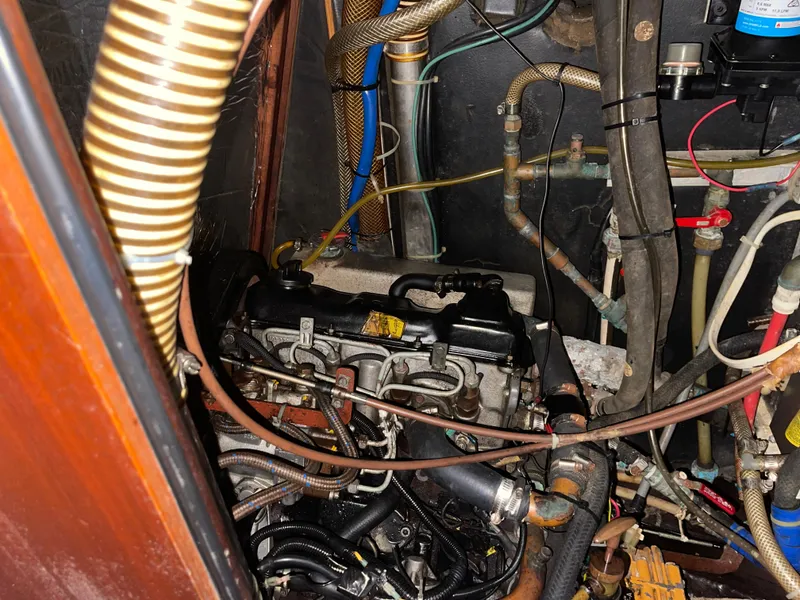
• Engine: Frequently equipped with aPathfinder VW Diesel (54hp) or Yanmar/Volvo 30hp.
• Historical Note: Willy Asmus was a pioneer in GRP (fiberglass) in Germany. The Hanseat 37 was famous for its "bulletproof" hull-reports from the magazine YACHT mention hulls surviving groundings that would have totaled other vessels.
2. Review Summaries (Translated from German Marine Media)
German periodicals like YACHT and Segeln have revisited this model as a "Used Boat Classic."
• Sailing Performance: "At the Kieler Woche, the Hanseat shot out of the field like a rocket. Under spinnaker, the ship was almost unstoppable" (Willy Asmus via YACHT). While heavy, the hull is surprisingly slippery and handles heavy weather with a "stiff" and "dry" ride.
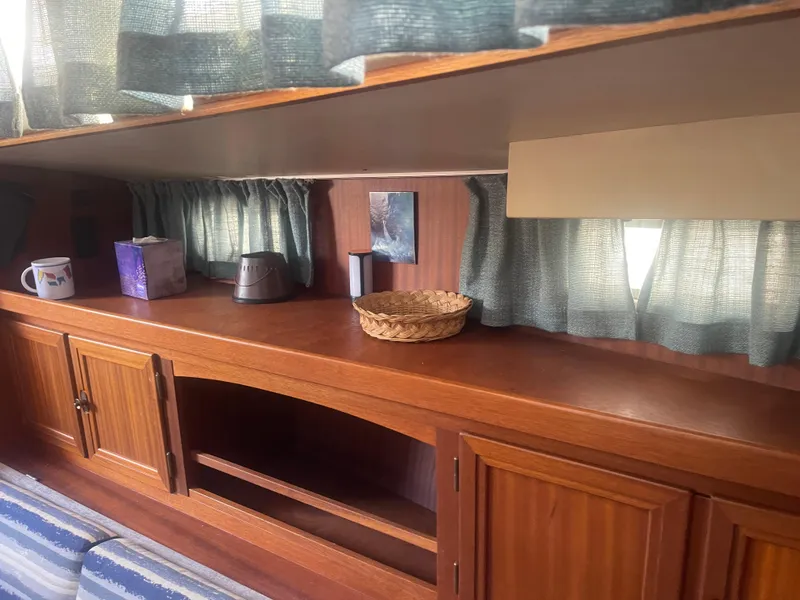
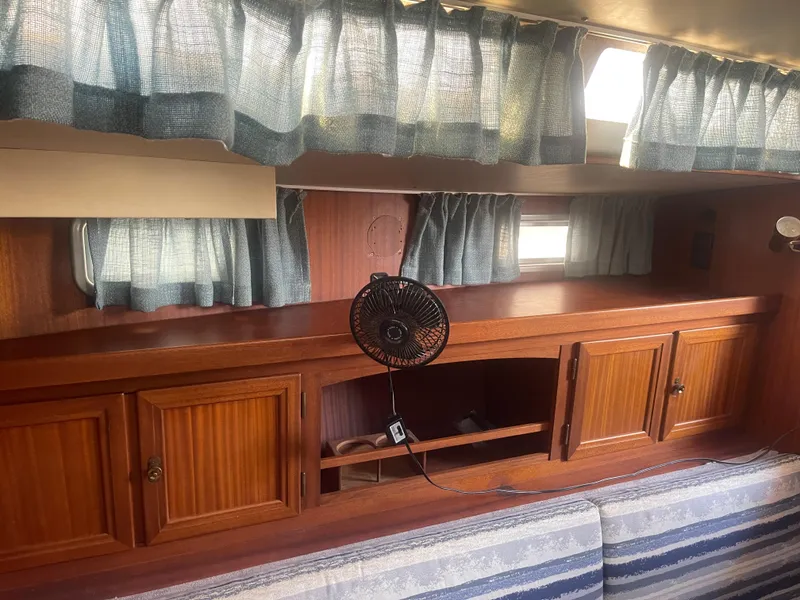
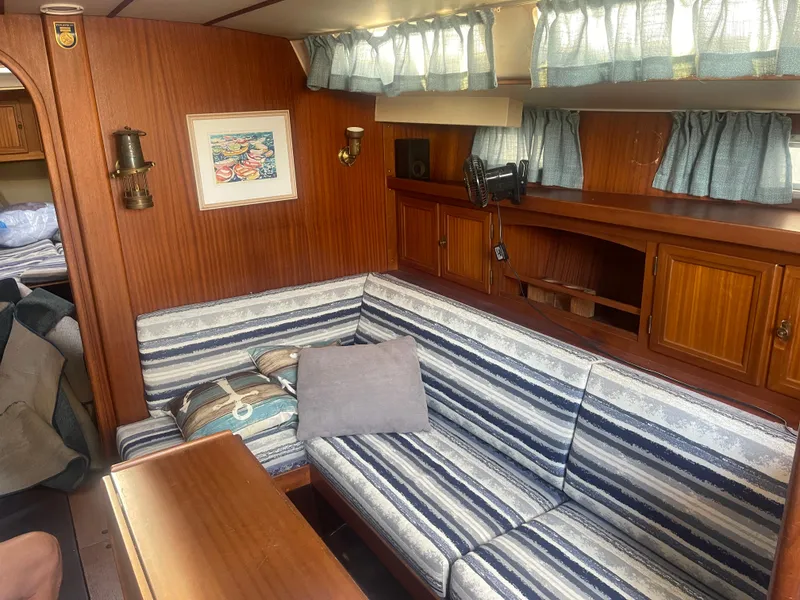
• Build Quality: Reviewers consistently highlight the hand-rolled, hand-annealed laminate. "No cracking or crackling can be heard even after 40 years." The mahogany interior is described as "traditional ship-building art," far superior to modern veneer-over-foam.
• Lifting Keel System: The hydraulic system is noted for its reliability, though the German forums (Segeln-Forum.de) warn that the keel bolts and hydraulic seals should be inspected every 10 years for corrosion.
3. Safety Specifications
While built before the formal CE Category system (which began in 1998), the Hanseat 37 is universally regarded as aCategory A (Ocean) equivalent.
• Hull Integrity: Solid GRP laminate (no core in the hull below the waterline), making it highly resistant to osmosis and impact.
• Stability: The lifting keel version carries a significant portion of its weight in a fixed "keel shoe" or stub, ensuring high righting moment even when the keel is retracted.
• Safety Gear: Most models featured deep, secure cockpits and substantial toerails, designed for sailors who go out when others stay in.
4. Owner's Group & Resources
Because of its rarity, there isn't a dedicated "Hanseat-only" website, but owners congregate here:
• Segeln-Forum.deh is the primary hub for Hanseat owners. Search for "Hanseat 37 Refit."
• Freundeskreis Klassische Yachten (FKY.org): Though GRP, the Hanseat is increasingly accepted in German "Classic" circles due to its pedigree.
• Hanse Owners Association (myHanse.com): Note that most users here own modern Hanses, but there is a sub-forum for "Older Models" where Asmus owners occasionally post.
5. Essential Advice for Buyers
If you are looking at a Hanseat 37 lifting keel:
1. Deck Core: Check the deck for soft spots; while the hull is solid, the deck used balsa or plywood coring which can rot if deck fittings weren't re-bedded.
2. Keel Hydraulics: Ensure the hydraulic pump and cylinder for the lifting mechanism have been serviced.
3. Osmosis: While rare on Asmus boats, early 80s models should still be checked for moisture in the laminate.
Would you like me to translate specific technical maintenance threads from the German Segeln-Forum regarding the lifting keel mechanism?
1. The Lifting Keel Mechanism (Hubkiel)
The Hanseat 37 used a specialized hydraulic system designed for the Wadden Sea (shallow coastal waters). Unlike a swing keel that pivots, the Hanseat's keel moves vertically.
• The "Keel Shoe": About 50-60% of the ballast is contained in a shallow fixed "stub" or shoe. This ensures the boat remains stable and upright even when the keel is fully retracted.
• The Blade: The heavy lifting blade is made of cast iron or lead-filled steel.
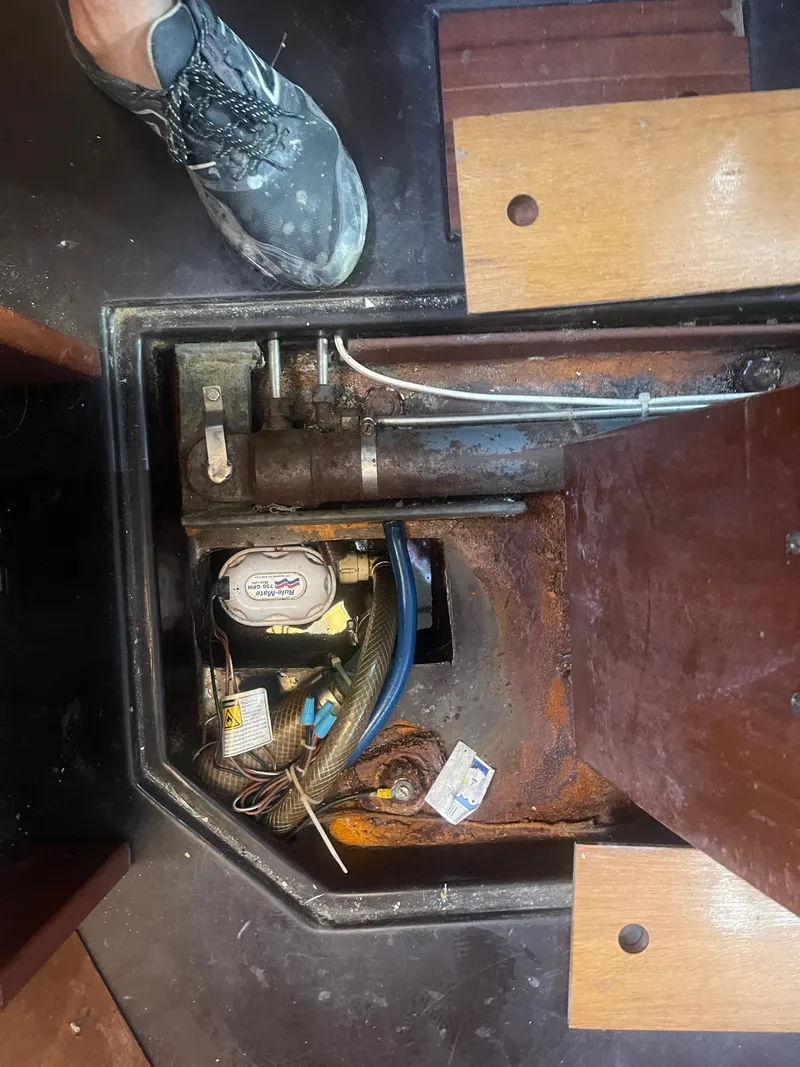
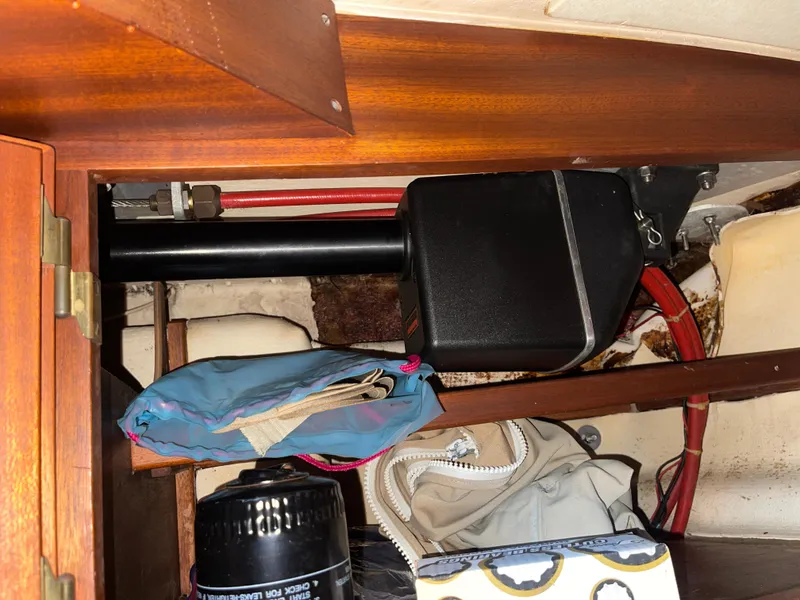
• Hydraulics: It uses a high-pressure hydraulic cylinder (often sourced fromHunger Hydraulik in Germany). Owners report that the pump is usually located under the salon seating or near the navigation station.
2. Critical Maintenance Points (Translated from German Owners)
German owners emphasize three specific "weak points" to check before a blue-water passage:
3. "The Asmus Standard" - Safety Specifications
The Hanseat 37 was overbuilt to a degree rarely seen today. Here is the technical breakdown of its safety profile:
• Laminate Thickness: Near the keel shoe and bow, the solid GRP laminate can exceed25mm to 30mm. This is double the thickness of modern 37-footers.
• Safety Factor: The standing rigging was originally sized for a 42-foot boat.
• Self-Righting: Even with the keel up, the Hanseat 37 typically maintains a positiveLimit of Positive Stability (LPS) of over 110°, making it safer in a knockdown than many modern shallow-draft cruisers.
German Peer Review Quote: "The Hanseat is not a boat you buy for the interior volume; you buy it because when the North Sea turns black, you want a hull that won't flex." (Source: Segeln Magazine archive)
1. Hydraulic Lifting Keel System
The Hanseat 37 "Hubkiel" is a vertical-lift system (not a pivot/swing keel), which is much more robust but requires precise alignment.
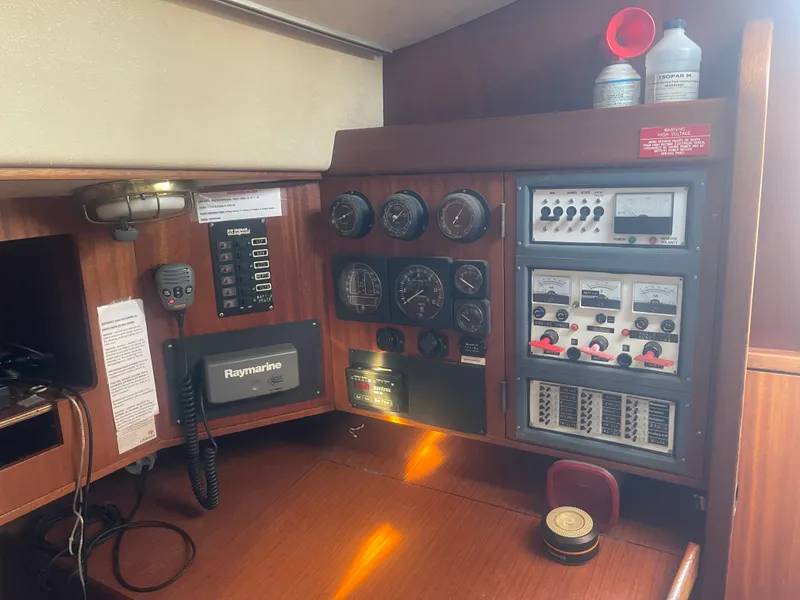
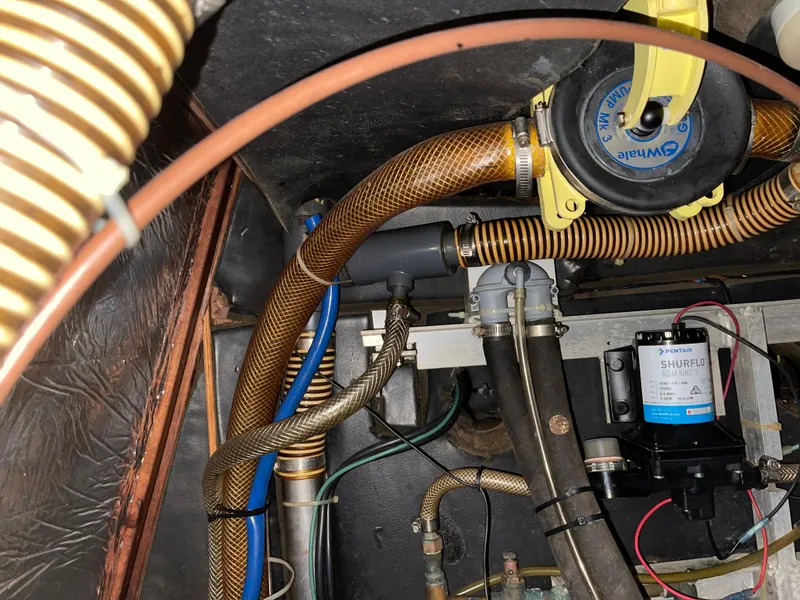
• The Pump: Originally, most were fitted with aHunger Hydraulik orHoerbiger 12V/24V power pack. It is typically located in the locker behind the navigation station or under the starboard salon settee.
• The Fluid: StandardISO VG 32 or 46 hydraulic oil.
• The Cylinder: A double-acting stainless steel ram.
Troubleshooting the Keel:
• Keel "Creeps" Down: This is rarely a cylinder leak (which would show oil in the bilge). It is almost always theCheck Valve (Rückschlagventil) in the pump manifold. Dirt or a worn O-ring allows oil to bleed back into the reservoir.
• Pump Runs but Keel Won't Move: Check theSolenoid Valve (Magnetventil). On these older German units, the coils can crack due to vibration. You can usually override them manually by turning a small screw on the valve body.
• Spongy Operation: Air in the system. The Hanseat system is "self-bleeding" to an extent, but if the reservoir is low, it will suck air. Cycle the keel 3-5 times fully up and down to purge.
2. Electrical Wiring (The "Asmus Standard")
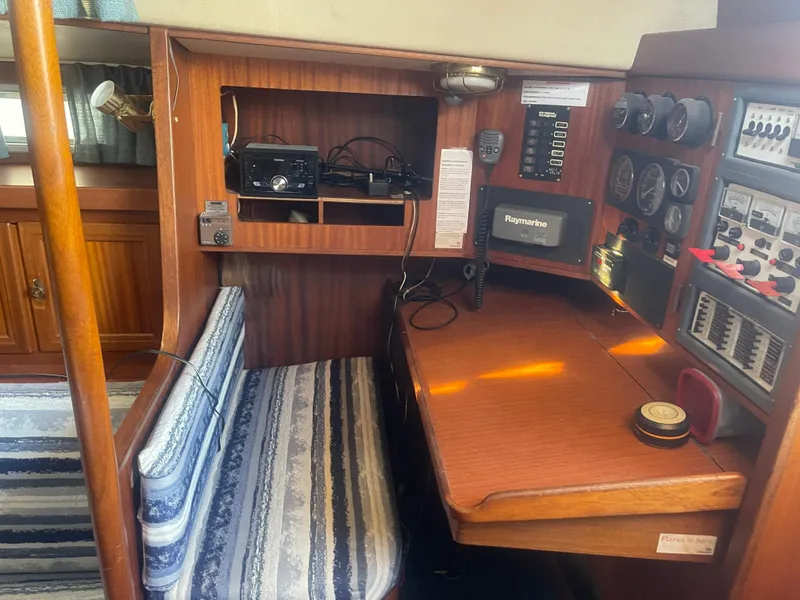
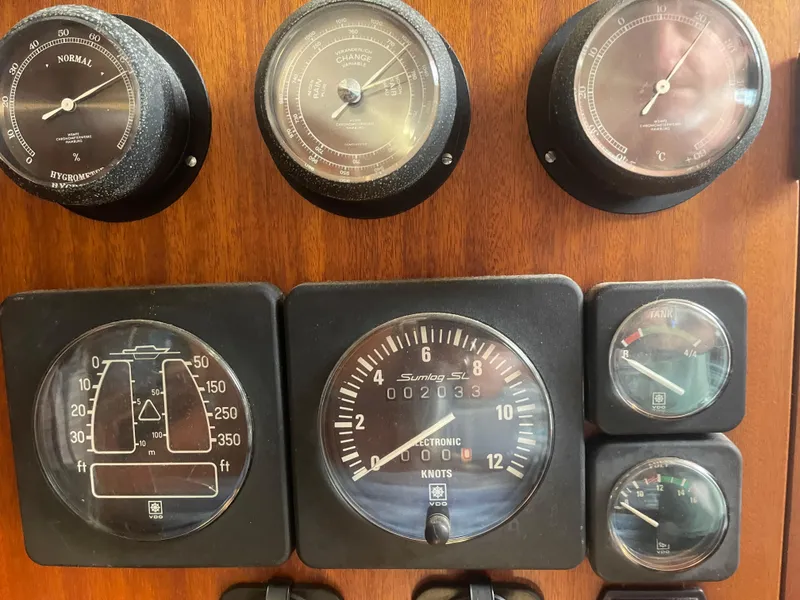
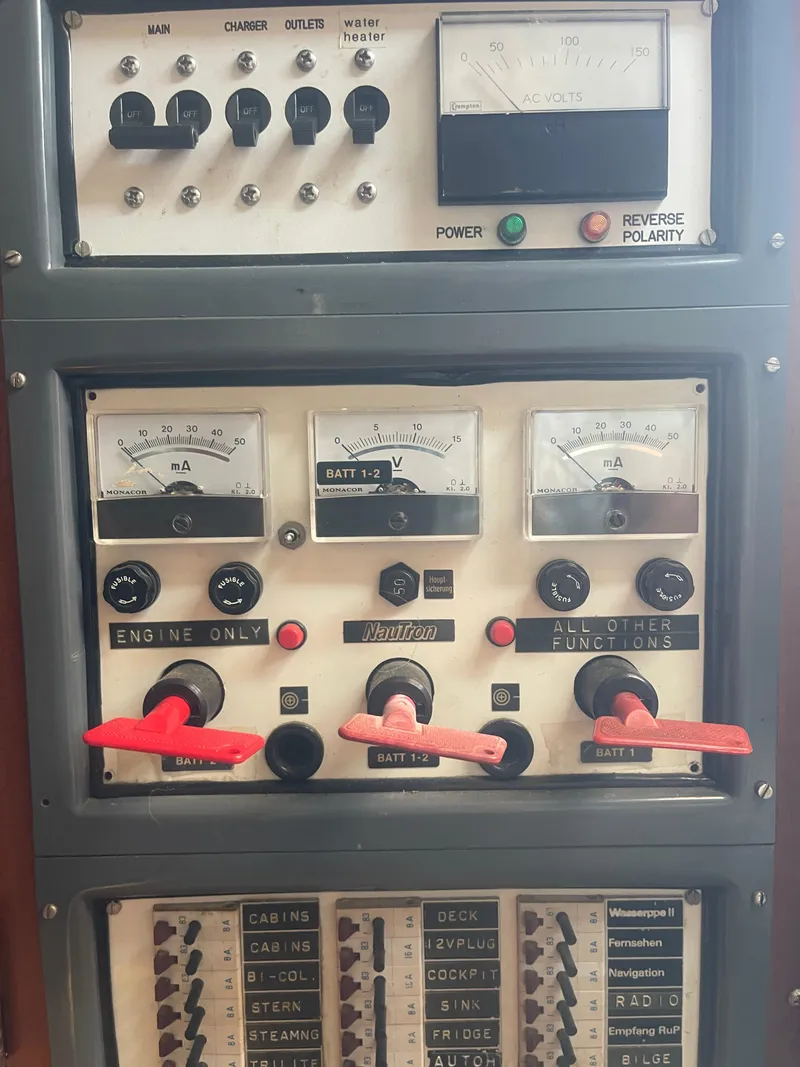
Willy Asmus used a "centralized distribution" philosophy. Unlike modern boats with networked NMEA backbones, the Hanseat 37 is a classicPoint-to-Point system.
• Wiring Looms: Cables are typically run through PVC conduits glassed into the hull-deck joint.Note: If you are pulling new wires, use a snake; the conduits are tight.
• The Panel: The original "Schalttafel" used thermal breakers (ETA brand). These are highly reliable but can become "weak" with age, tripping at lower currents.
• Common Issue (The "German Ground"): These boats often used aTwo-Pole system (isolated ground) to prevent electrolysis in the aluminum mast and bronze through-hulls. If a previous owner added a "one-pole" automotive-style accessory, you may find mysterious stray current.
3. Plumbing & Tankage
The Hanseat 37 was designed for long-distance autonomy, often featuring oversized tanks.
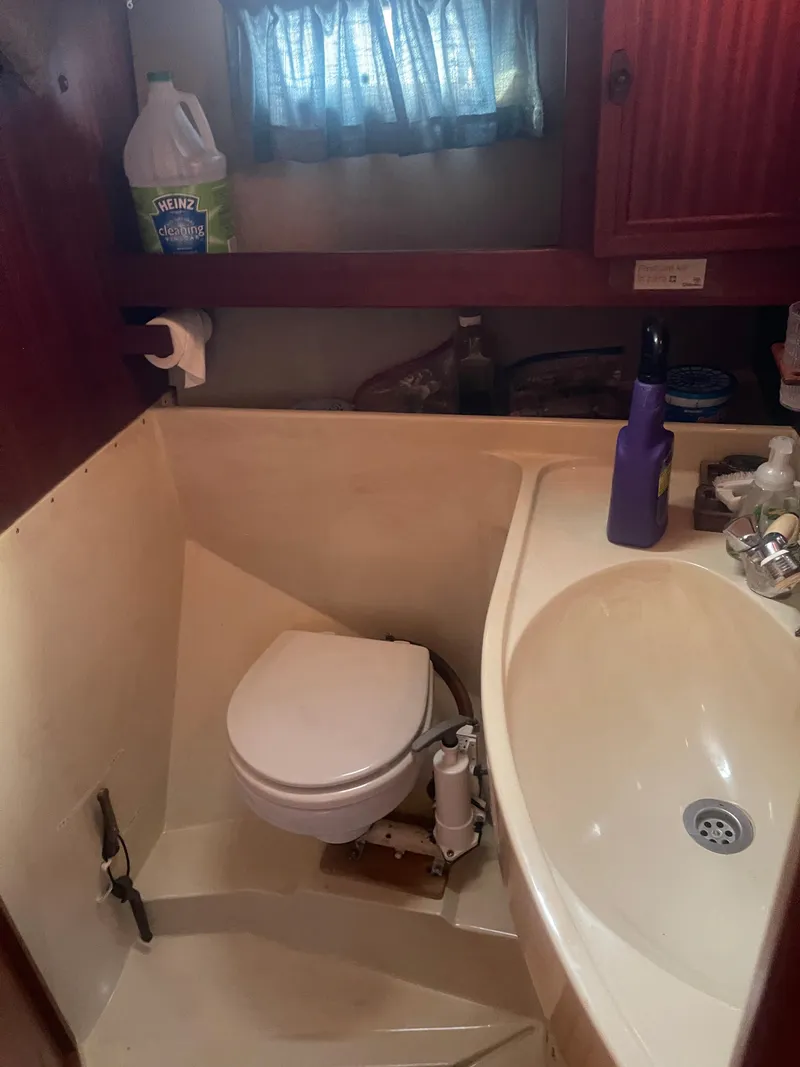
• Fresh Water: Usually two stainless steel tanks (approx. 300L total) located under the salon floors to keep weight low.
• The Pump: OriginallyJabsco Par-Max orFlojet.
• Troubleshooting: If the pump "stutters" (cycles on/off rapidly), the Hanseat's long pipe runs often lack anAccumulator Tank (Druckausgleichsbehälter). Adding a 1L accumulator near the pump will save the motor.
• Thru-Hulls: Originally high-qualityred brass (Rotguss). Unlike modern brass (which de-zincifies), these can last 40+ years, but the seacocks are often the "gate valve" type.
• Recommendation: Owners on Segeln-Forum strongly advise replacing these with modernTrudesign (Composite) orBronze Ball Valves during the next haul-out.
The Company offers the details of this vessel in good faith but cannot guarantee or warrant the accuracy of this information nor warrant the condition of the vessel. A buyer should instruct his agents, or his surveyors, to investigate such details as the buyer desires validated. This vessel is offered subject to prior sale, price change, or withdrawal without notice.
Price History
| Date | Event | Price |
|---|---|---|
| 2/24/26 | Price increased | $45,000(+80.0%) |
| 1/20/26 | Initial price | $25,000 |
Be the first to know when similar boats hit the market
Get notified when new boats become available
Meet the Broker

Address
Boat Location
Contact McNally Yacht Sales
16895 121st Terrace North, Jupiter, FL, 33478
 Login with Google